Hmmm, hadn’t thought of surface area. My main worry so far is that the iron (45W) is used for SMD soldering normally and uses those standard small fine tips. All of a sudden you stick a lot more mass to it and it might not be able to handle that too well. Figured it will just take a while, but once it’s hot, it’ll keep the temperature relatively well.
Think of a cast-iron pan. Heavy, lots of thermal mass, takes a LOT of fire to heat it up, but once it’s hot, it’s that thermal mass which keeps it hot even if you toss in a lot of food, whereas a thinner steel pan could “get cold” if you crowd the pan.
In this case, a small/underpowered iron would be like a small flame under the pan. It might equilibrate at a constant temperature with lots of thermal mass behind it, but might not be hot enough to reflow anything. Or it might. Never know ’til you try.
Ahhhh finally did it properly.
I first gave it a go by sticking an aluminium block on a gas burner with no temp measurement and it wasn’t so great. I’m going to take a wild guess the block was getting up to 400-500 degrees C.
Month or so later I got delivery of a peasant grade hotplate off aliexpress: https://www.aliexpress.com/item/1005002009167032.html?
It’s a 300W heating element crushed into an aluminium extrusion with two wires sticking out and you hook that to the mains electricity in a responsible way 
It also came with no legs so I screwed a couple bits of wood to lift it which are very slightly charring from the heat where it touches the metal.
BUT IT WORKS FLAWLESSLY
There’s some kind of preset temp control since it claims to have a max of 300W but a sustained 30-50W so something is switching it. Anyway it gets above 200 degrees C quickly and holds it steady.
Fluxed everything, used solder paste, checked polarity on Cree website twice, gave leds a few bonks to squeeze out excess solder and it went EXACTLY like all the demo videos 
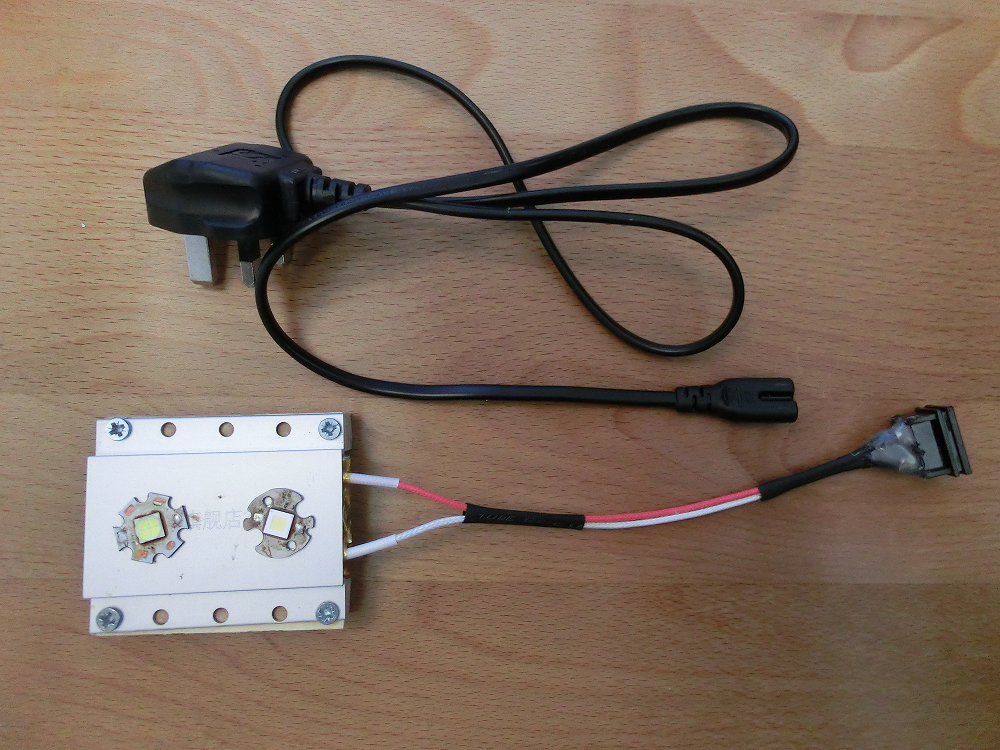
Just need to wash off the flux everywhere now 
Just wanted to say thanks to VOB for this tutorial. I’ve reflowed several 20mm 3xp mcpcb’s with my MHP30 using his video as a guide. I can even tap the led’s without the board moving on the MHP30 to get the extra solder out.
Congratulations
That looks like a great little reflow station!
and thaks for the Aliex link and test report…
My first non ghetto reflow (before I did this with a tealight candle…), But I didn’t want to risk 3*519A at once
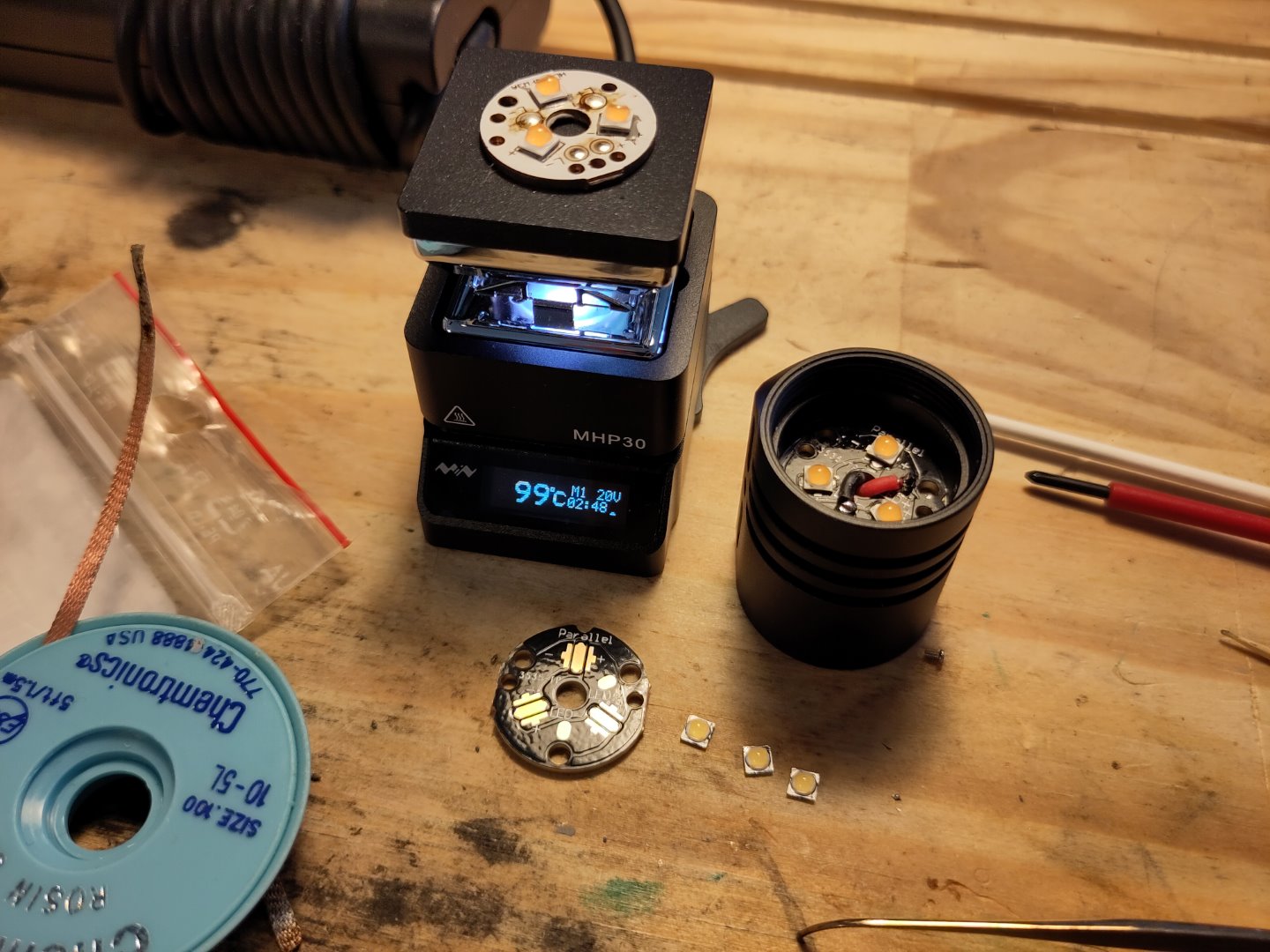
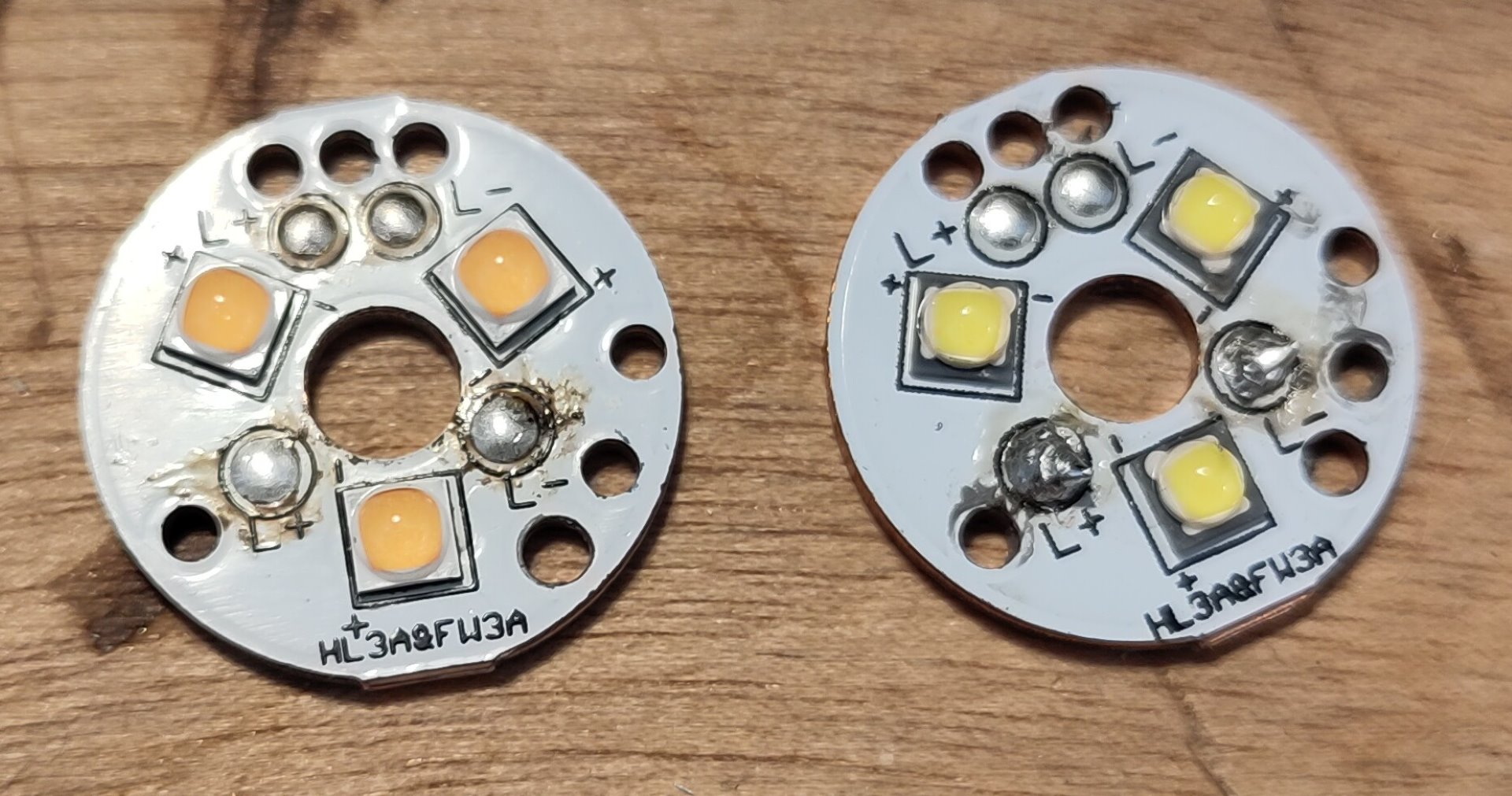
2 Thanks
That’s a mighty fancy hot plate. I’m using one of those $5 aliexpress ones sitting on a brick 
I considered them too, they are perfectly enough for casual reflow… But I didn’t want it to be directly on main’s voltage
Great instructional content!
Only thing that comes to mind. I actually desoldered a Cree XHP70.2 LED yesterday and what struck me was the amount of solder. Very little. And that sparked a memory where I somewhere read that for optimal thermal performance keep solder to a minimum. Cant remember where that info came from. Maybe actually the Cree datasheet. Will have a look.
Yes, better for conductivity and junction temp, but also very important to have the emitter sitting FLAT on the board and also not to bridge the tiny gaps between pads (that last part is important and hence the “boop” at the last moment…gotta be careful doing that with softies like the 519A).
I recently bought a small ‘Mechanic i5X Ultra’ hot plate which was/is on ‘sale’ on Aliexpress (see this link: Aliexpress Super Deals - #485 by Wingman) and I just did some quick tests with it.
Here are (some of) my observations:
- It seems to be a bit lower on temps than what it states, although my IR thermometer did read a bit higher temps/hot spots than my thermocouple.
-When it reaches the set temperature it fluctuates around a bit. (6-7 degrees centigrade range from what I observed.)
-The heating element (square) heats the center of the top plate the most, so there is a substantial temperature difference between the center and the (top/lower) edge, but the center hot spot should be big enough to (easily) heat a 20mm MCPCB.
-The UI is a bit “quirky”; when you select the wanted temperature with the ‘+’ and ‘-’ buttons, you have to press and hold the ±button quite rapidly to set the temperature, otherwise the screen will revert to ‘current temperature’ quickly. When the temperature is set (with the ±button) you can only change/adjust the temperature (up or down), when you first “cancel” the actual temp setting by press and holding the ‘-’ button first. (Only then you can set a new temperature.)
-It doesn’t need (or has) an external power supply, so be aware of choosing the right voltage when you buy one, since it has a proprietary power plug!
Here are some of the tested temperature settings:
At 100°C:

At 150°C:

At 200°C:


Above 210°C my thermocouple sleeve started to smoke, so the measurement of it’s max temperature (of 260°C) I only took with my IR thermometer:

It seems to reach well above 200°C (at least in the center/hot spot), so it should be quite capable of reflowing LED’s with most solder pastes quite easily.
3 Thanks
Nice write up and pics. What’s the power supply? 24v DC barrel jack?
1 Thank
Its AC you either choose 110v or 220v.
2 Thanks
Dare I ask… If it’s running on the mains, is it earthed correctly…?
I much prefer (Chinese) stuff that has a separate power brick, at least then the product is only dealiting with low voltages.
1 Thank
The 220V EU version doesn’t have a earthed powercord, but for the 110V I don’t know.
I’m not able to do this in the next few days, but after the weekend I will take some pictures of the cord and add them to this topic.
1 Thank
I thook some photo’s of 220V version cable, plug and hotplate. Obviously this doesn’t say anything about the 110V cable/unit, but it might give some idea.


I also took some pictures of the inside, for those who might be interested in it:


2 Thanks
I’ve used the Mechanic i5X a couple of times now, and it works fine for reflowing LED’s, but I noticed something that totally escaped me when I dit my small “review”: it quite slow with heating up!
For some reason I didn’t notice it during my “review”, but you do have to wait for some time for it to reach the set temperature. I would have liked it to be a bit faster, but I can live with it.
Besides that I’m quite happy with how it works; simple functionality but it works perfect for soldering/reflowing LED’s!
1 Thank
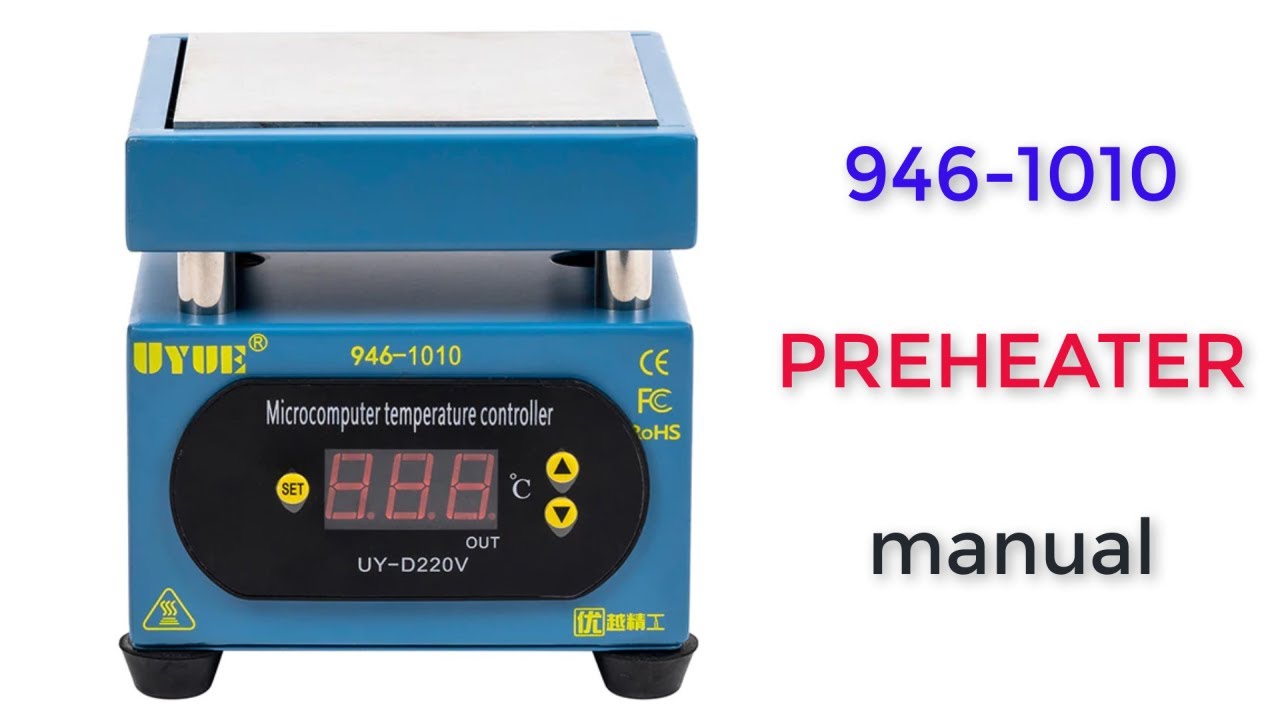
My Eyue 946-1010 heats up very slowly I usually get 63/37 solder to melt at around 190c If I set it to start at a higher it heats up slight faster then I adjust it back to 190c before it reaches the peak. The paste I use is pretty old too (stored in the refrigerator) but it works fine. The re-flow profile is based on unleaded solder at a much higher temp so it’s probably not that bad if it doesn’t hit the mark exactly.
1 Thank
Bravo, good video
I found the culprit as to what was causing the Eyue 946-1010 to have slow heating, the duty cycle needed to be adjusted, there is a hidden setting that you can access. Higher number = faster heat up. Change it so it heats up according re-flow profile of the LED.
3 Thanks