Cozy retro LED camping lantern
Nitecore LR40 camping light review
warning: for those, who complained that it takes a while for pics to be downloaded. this review had been written before i talked to you,guys, and promised to compress pics. so, next review (nitecore p23i) will be with way more lightweight pics
“Flashlight in a helmet” as my wife called it, Nitecore LR40 is a surprising model. It does not have high lumens, but it has an affordable price, damn pleasant retro design and warm light with stepless brightness regulation. All these features are (except for the appearance) that you do not expect from Nitecore with it`s high price, high lumens and “cold whitel light only” approach to light. Well, did Nitecore succeed or not?
You can buy Nitecore LR40 here:
➤ AMAZON

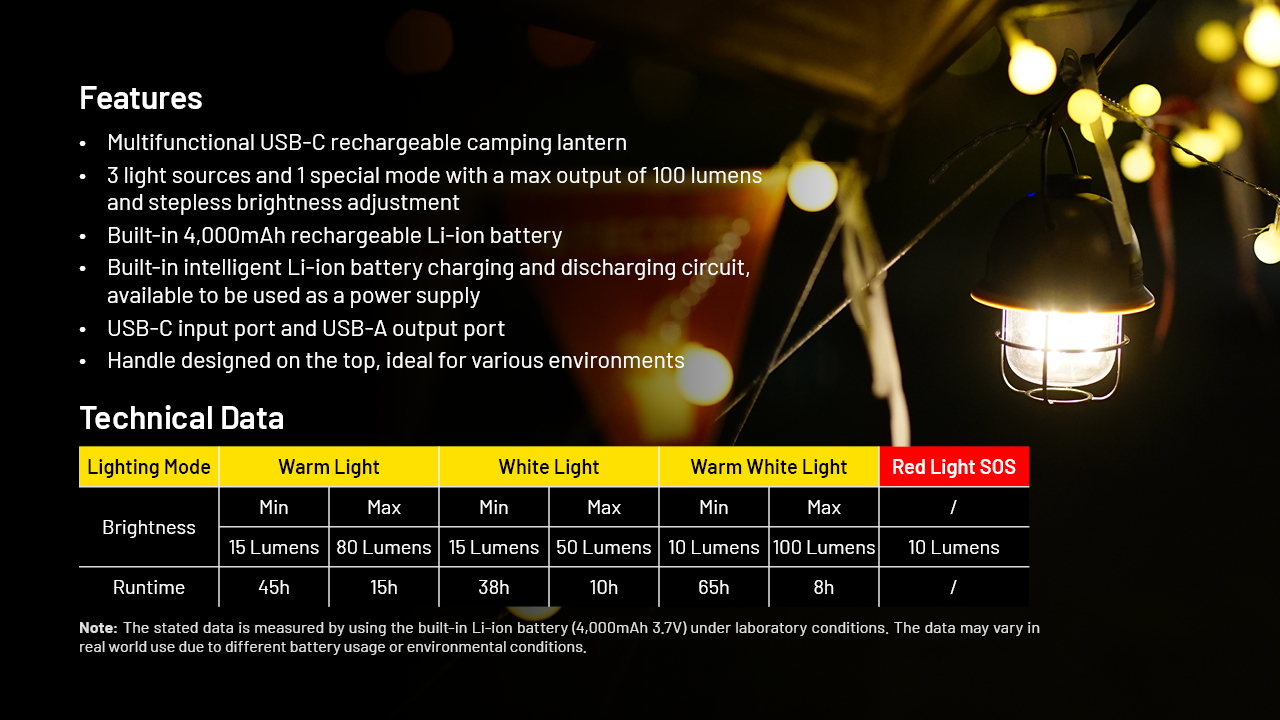
Specifications
Maximum brightness 100lum
Battery 4000mah 3.7v
Smooth brightness control
Warm/Cool/Mixed/Red (SOS mode only) light
Type-C charging
Power bank mode
Housing material - plastic, protective mesh material - metal
Size and weight: 117mm x 96mm x 96mm (4.61” x 3.78” x 3.78”) , 222 g / 7.83 oz
Package and appearance
The flashlight is packaged in a nice looking cardboard box. Quite suitable as a gift.
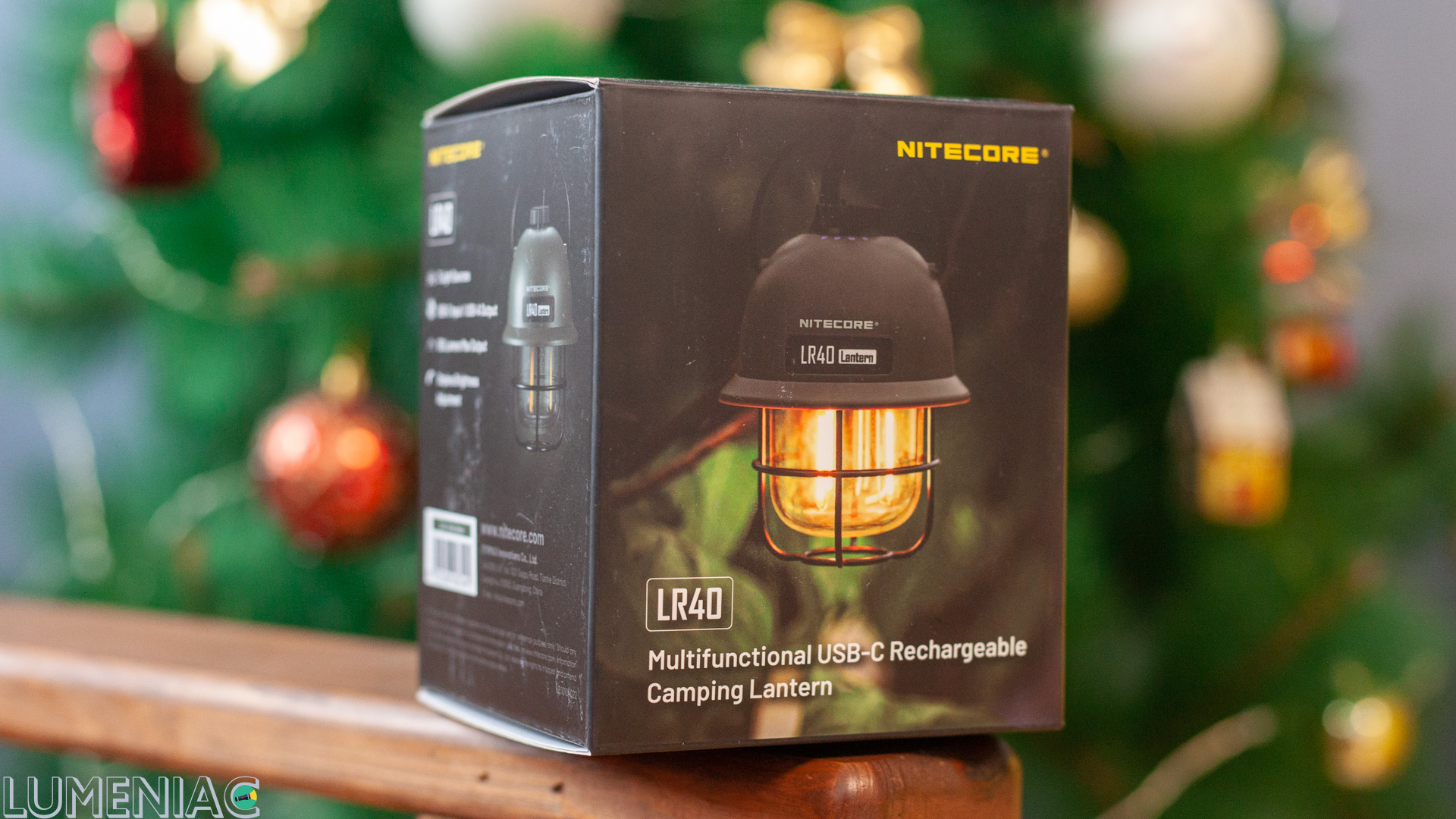
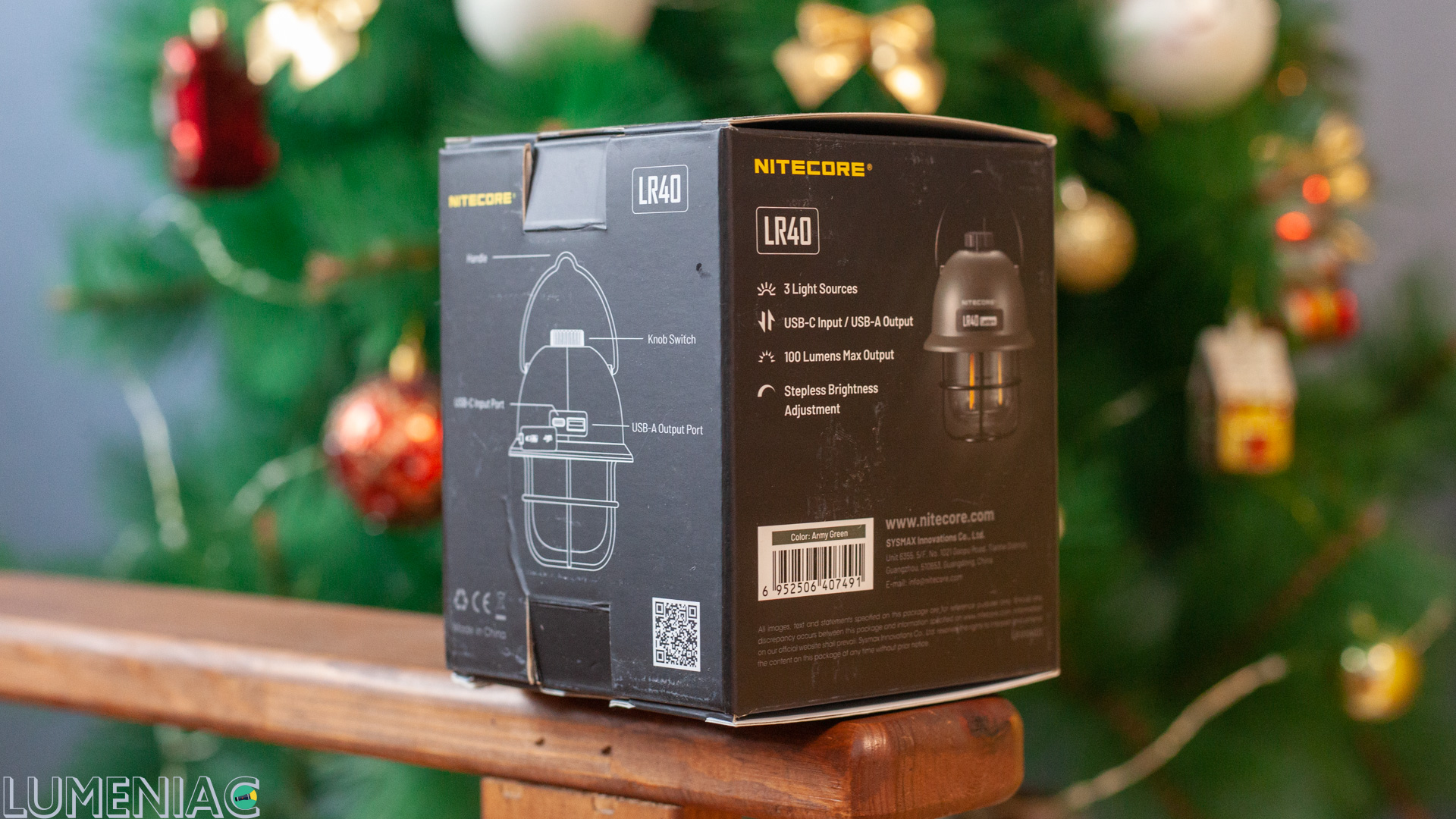
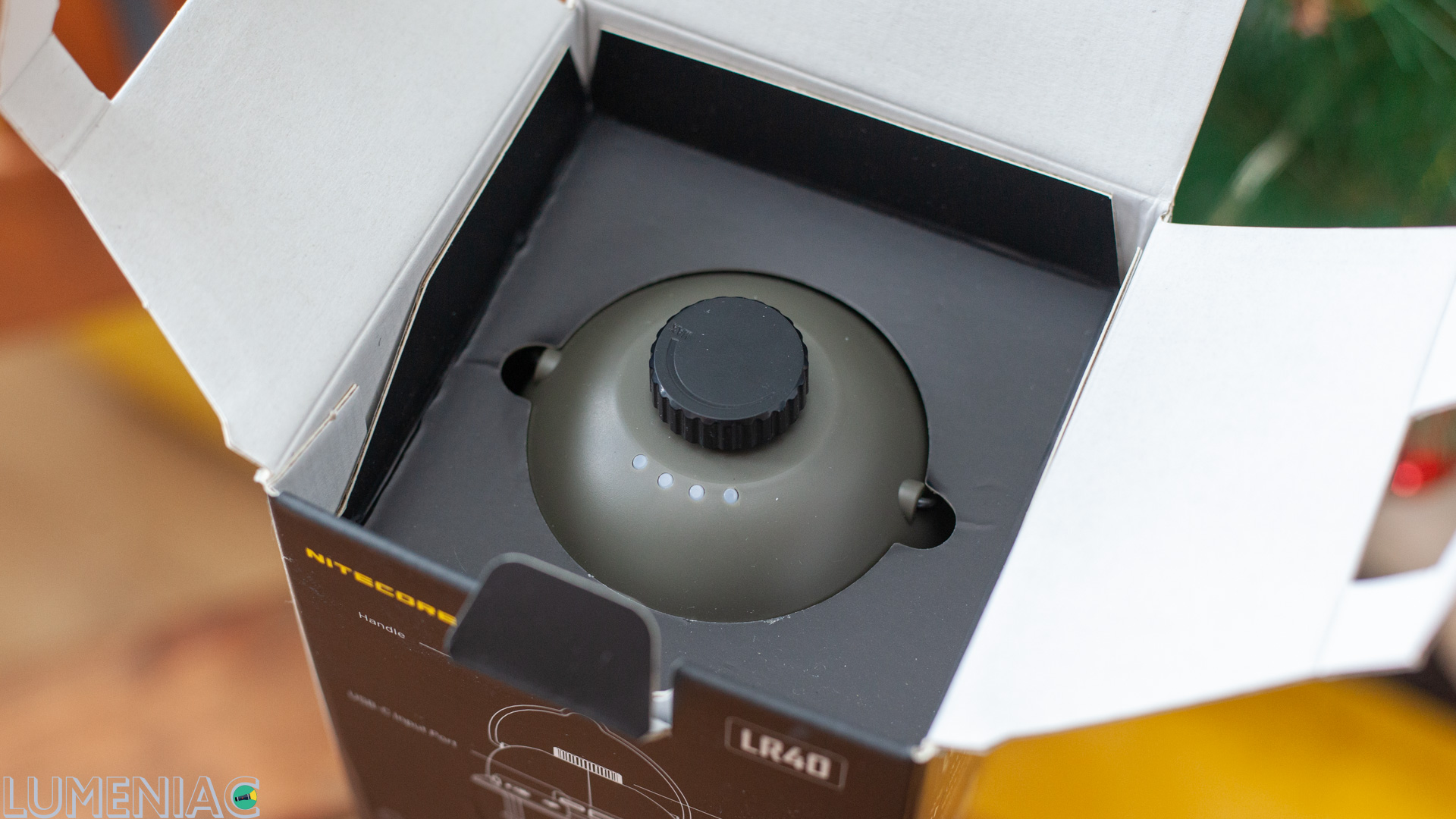
The kit is modest, but is it possible to add something to it? There is a lantern itself, there is a Type-C charging cable, there is a manual. Well…a carabiner hook would be the only good addition to kit, perhaps

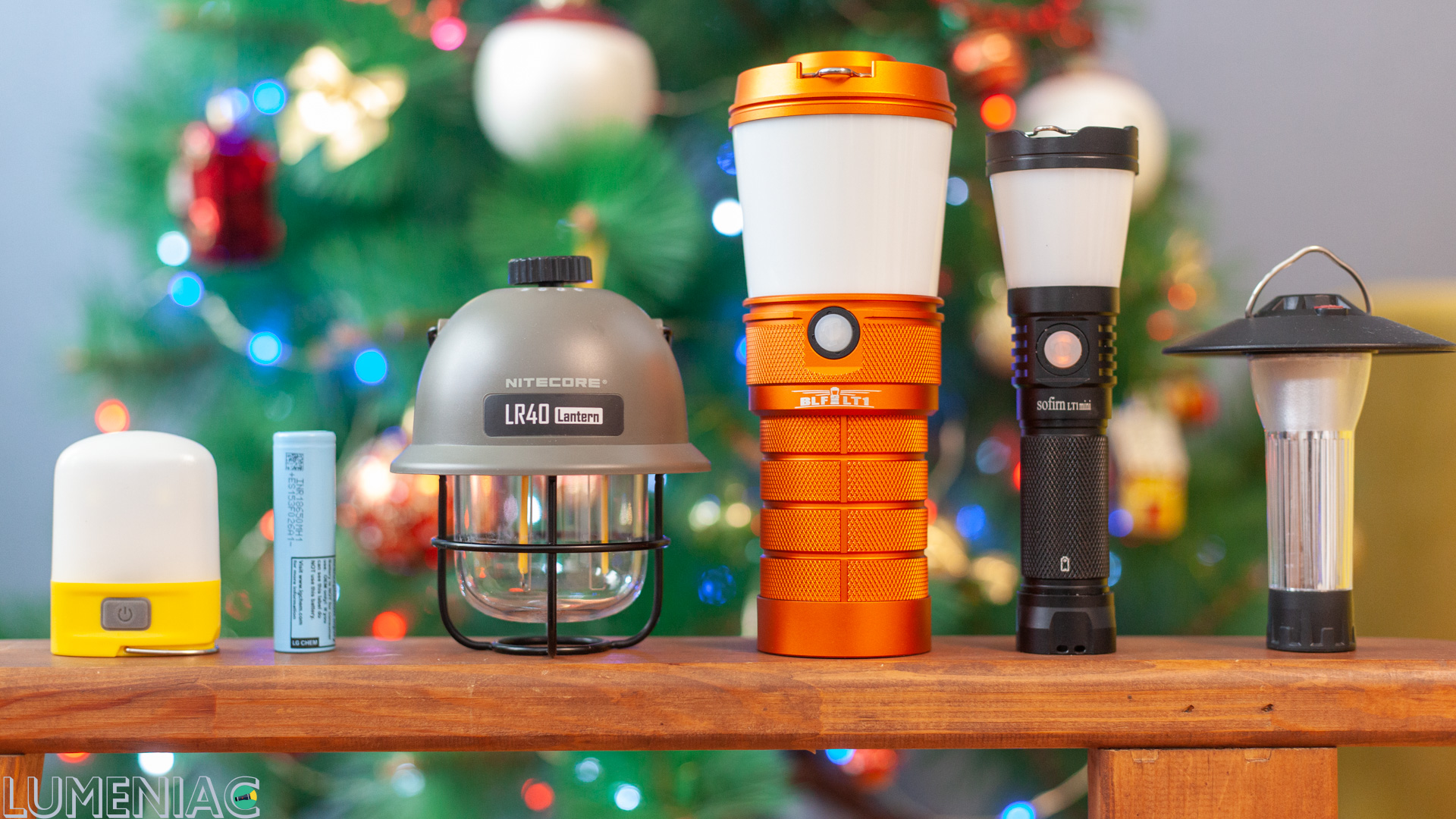
Nitecore LR40 is a lightweight (222g/7.83oz) but far from compact camping flashlight. This back-to-back pics below lacs Sofirn LT1S that i left in my countryside cottage, but i feel that LT1S is even smaller than the LR40. Significantly heavier, however, too. That is, as you can understand, the Nitecore LR40 is not a flashlight for hiking and cycling, for all these ultralightweight going to outdoor. This is a flashlight for situations where you have no size limit. Caravanning, party in the yard, occasional fishing or hunting. Well, you are grown up, i bet you can imagine others similar situations.
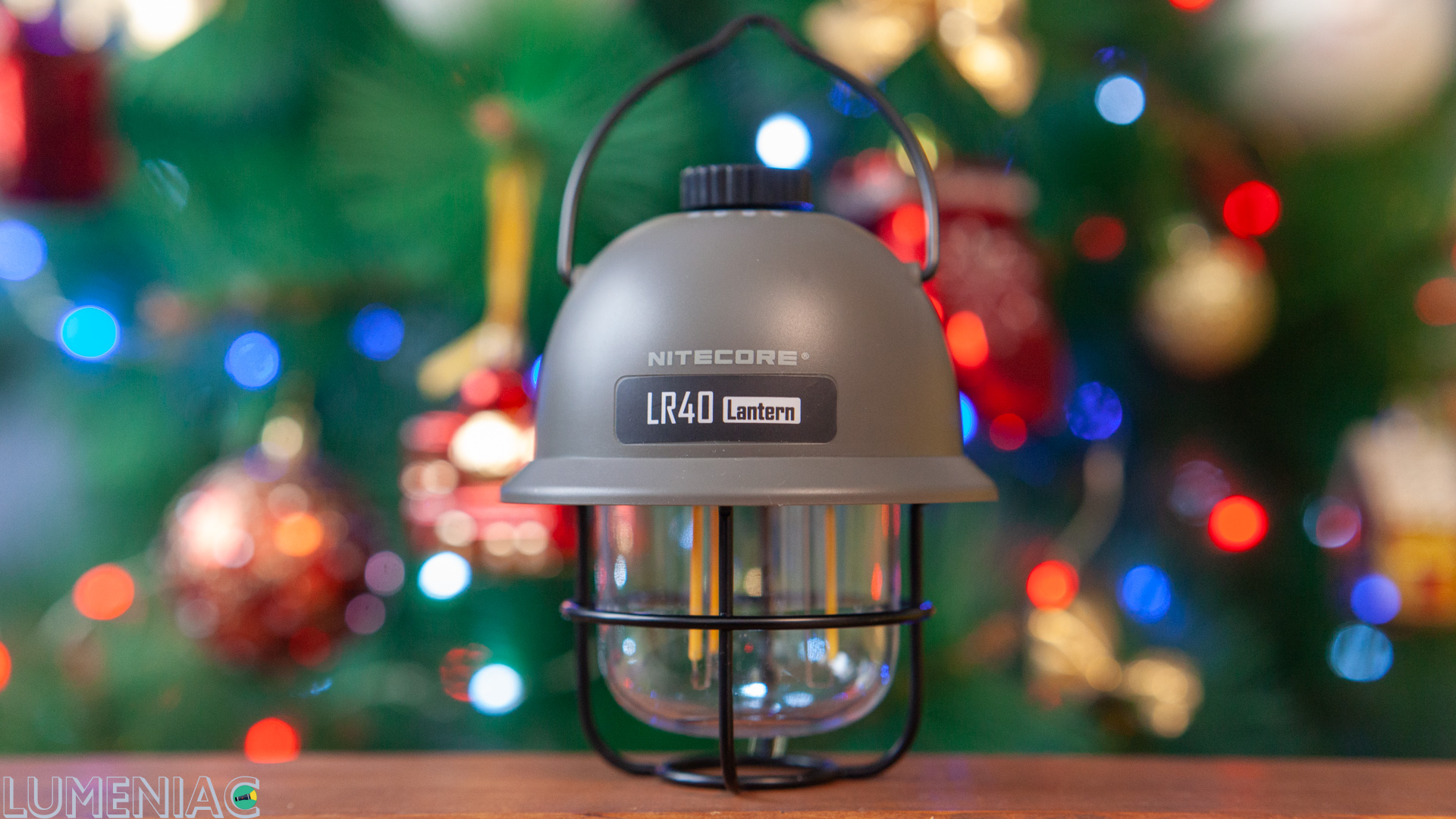
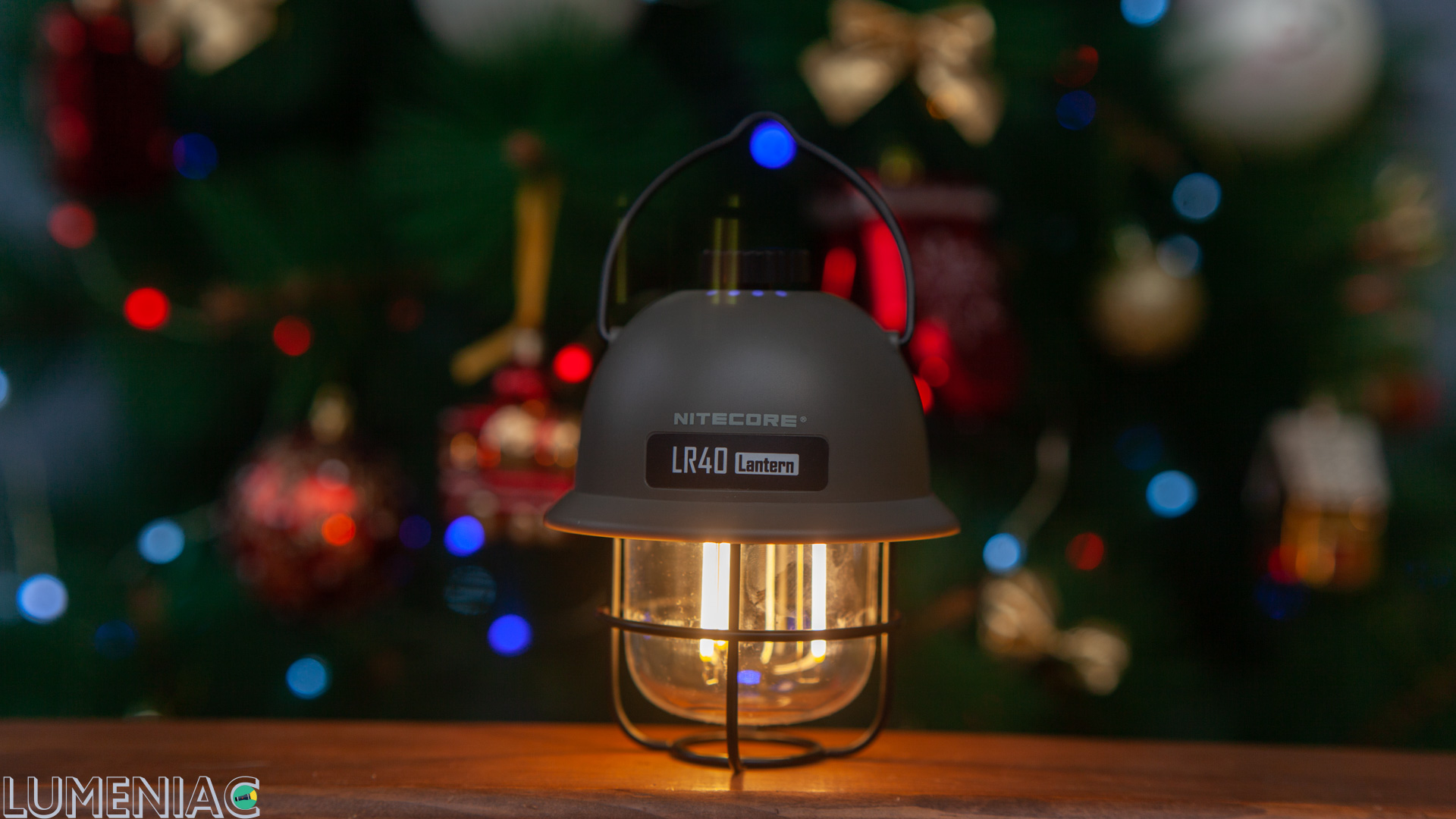
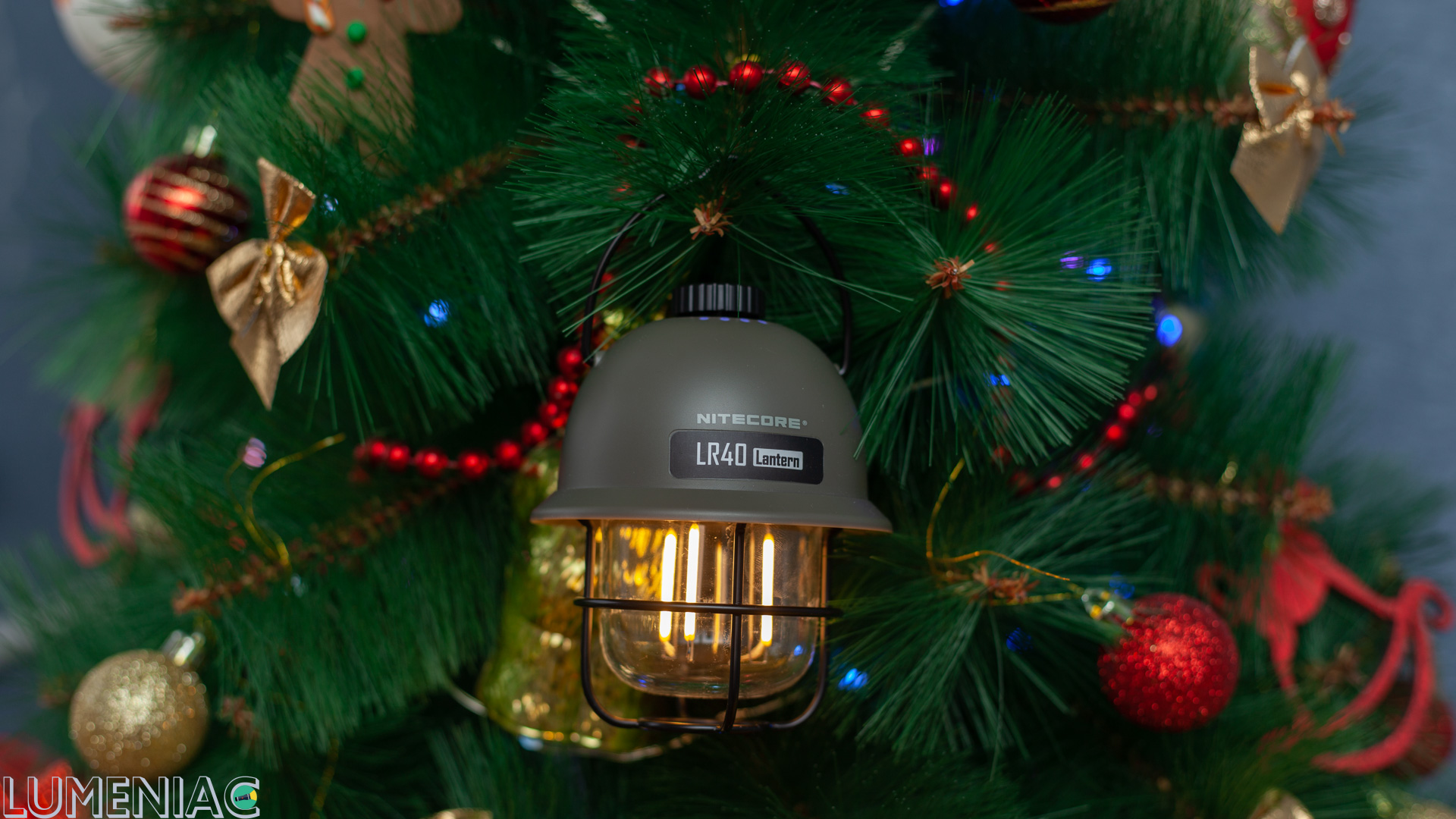
This cozy retro design of Nitecore LR40 is sooo pleasant. My wife called Nitecore LR40 “a flashlight in a helmet.” Indeed, it really looks like a head in a helmet.
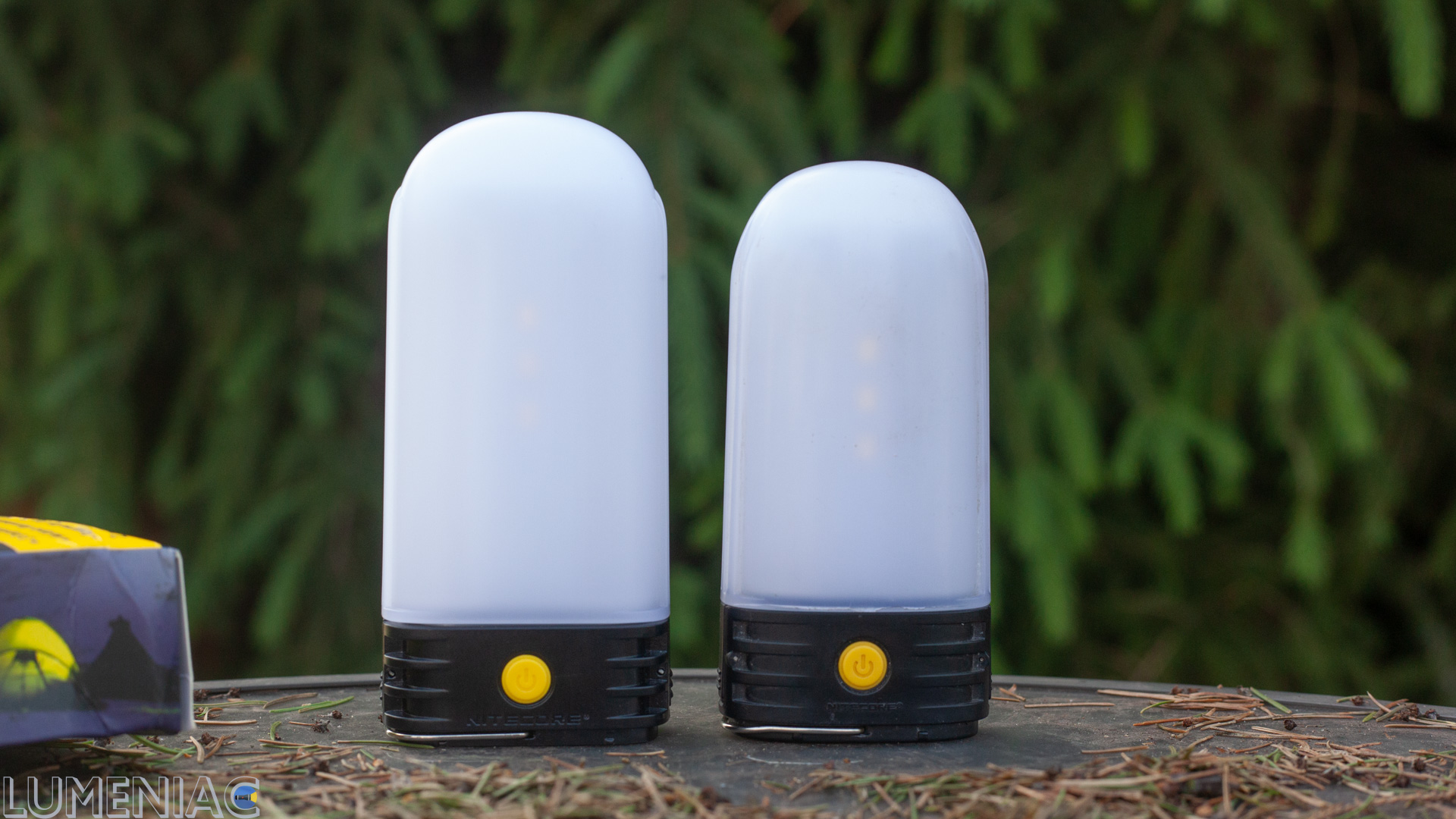
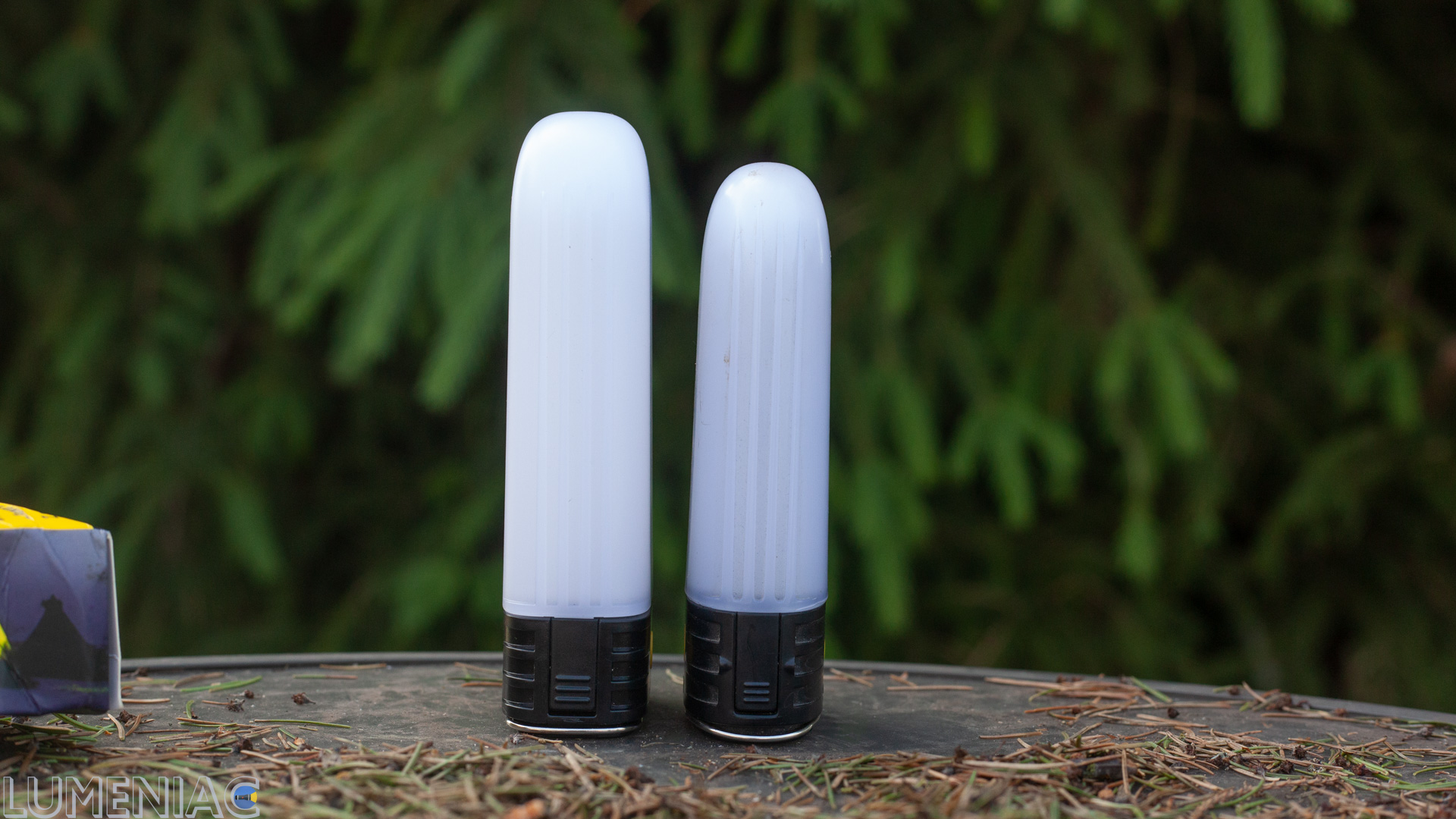
Other models in the LR line also looked unusual, but it was a completely different kind of unusual, Nitecore LR50 and LR60 are purely utilitarian “soap bars”.
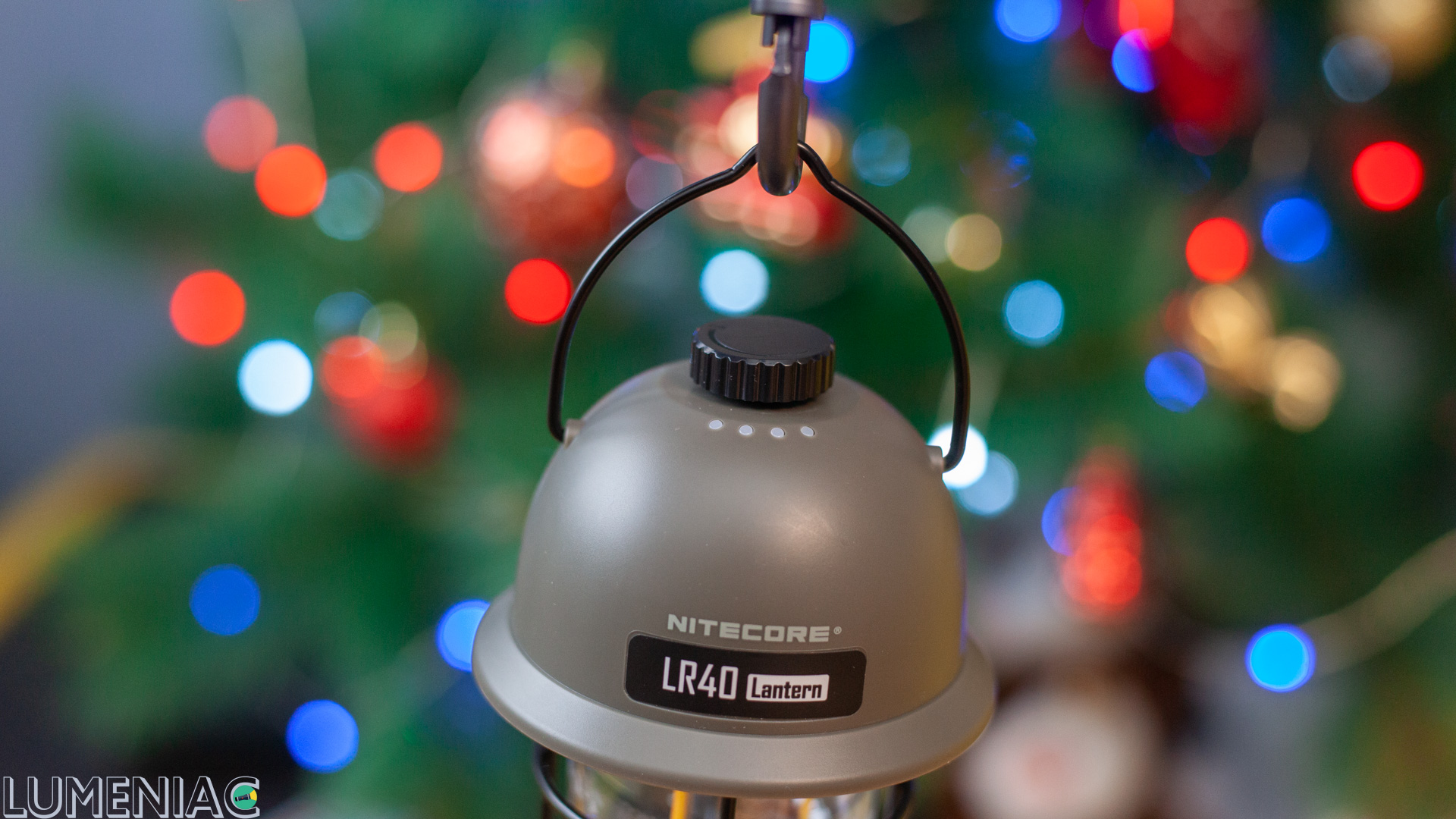
So let’s take a closer look at the camping lantern. There are two installation options. The most logical (due to light distribution) is to hang it. So, there is is an eyelet to hang Nitecore LR40 anywhere u want. Here you can see the rotating brightness control knob on lantern top.
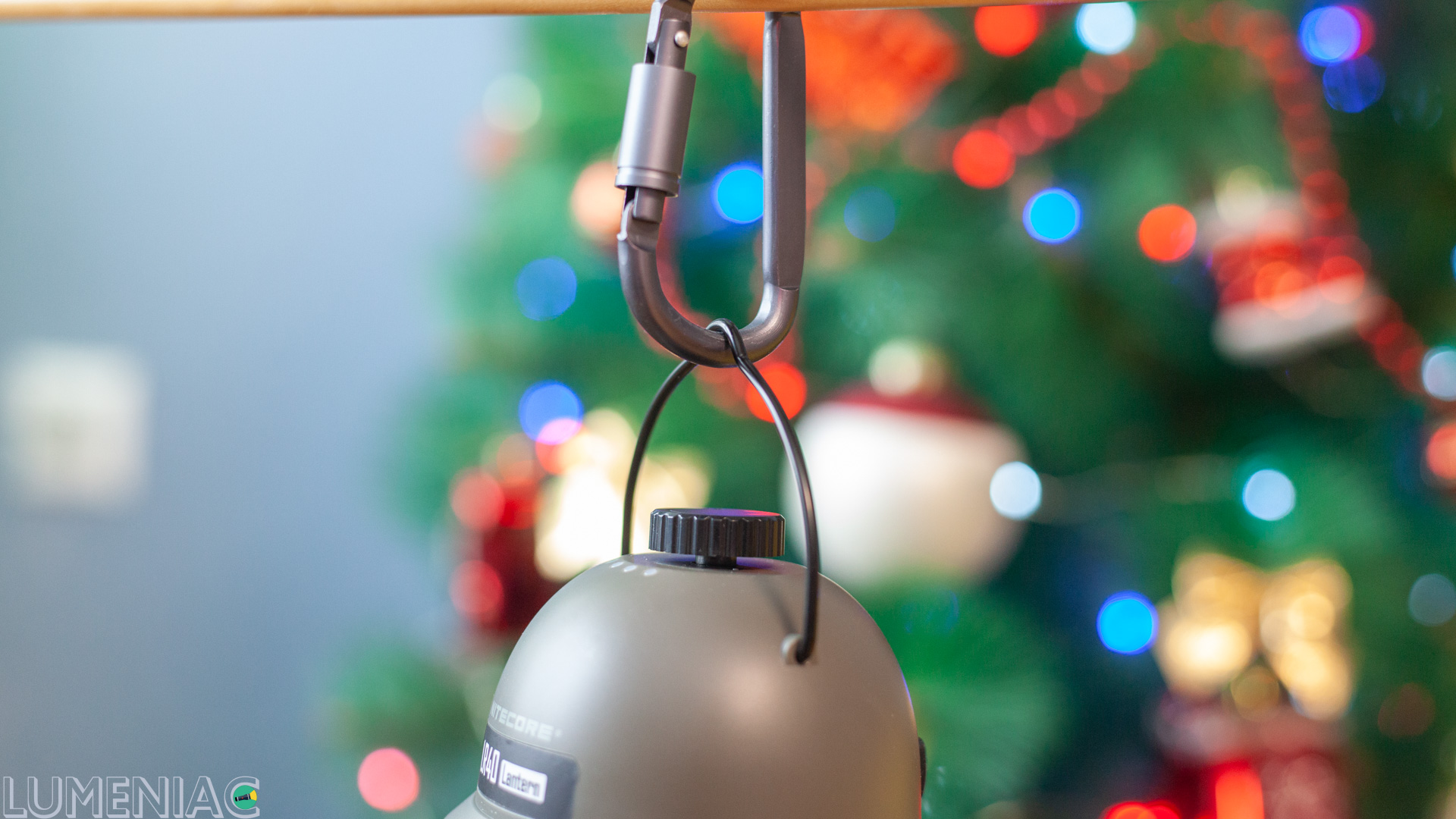
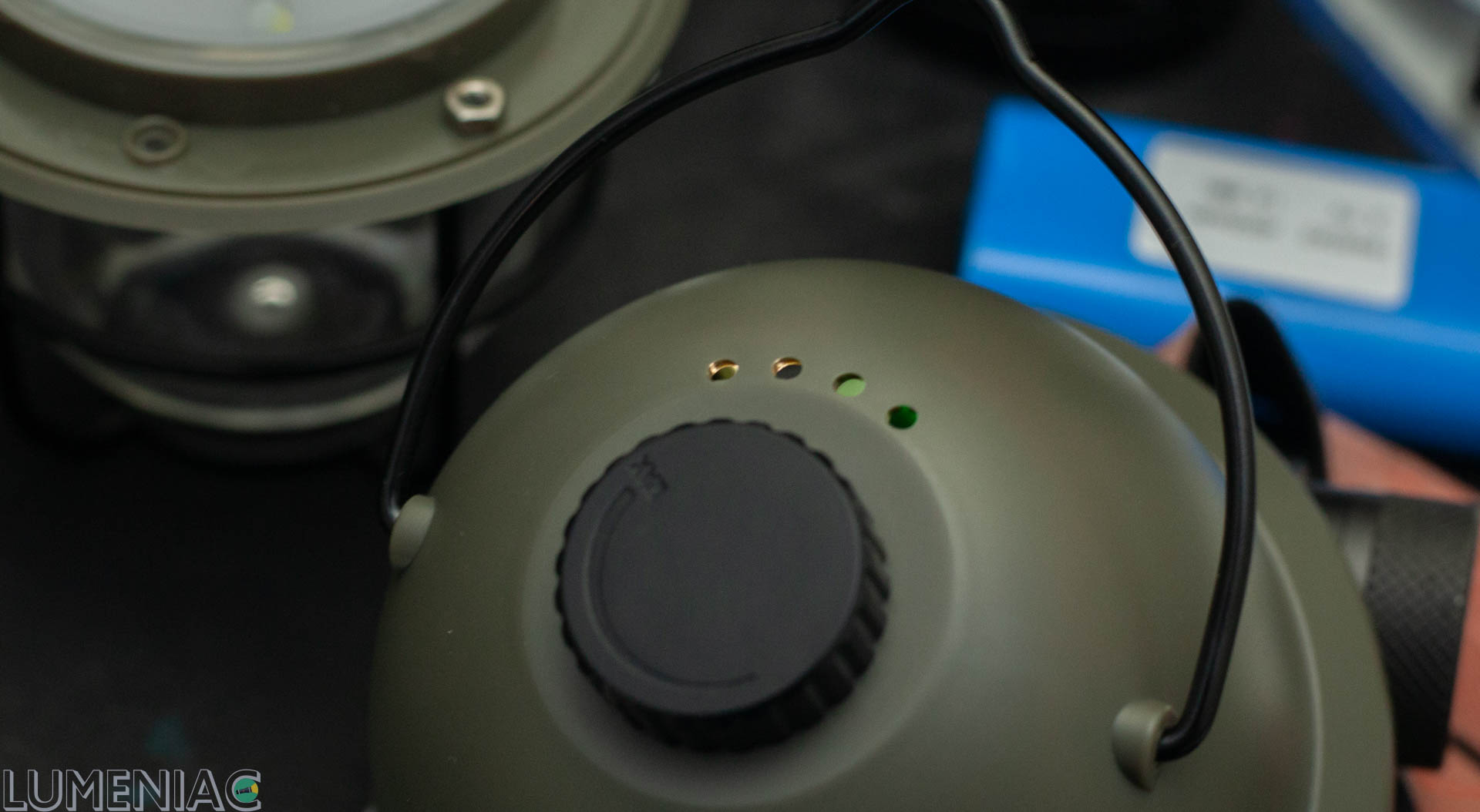
There are 4 blue charge level indicators right below it.
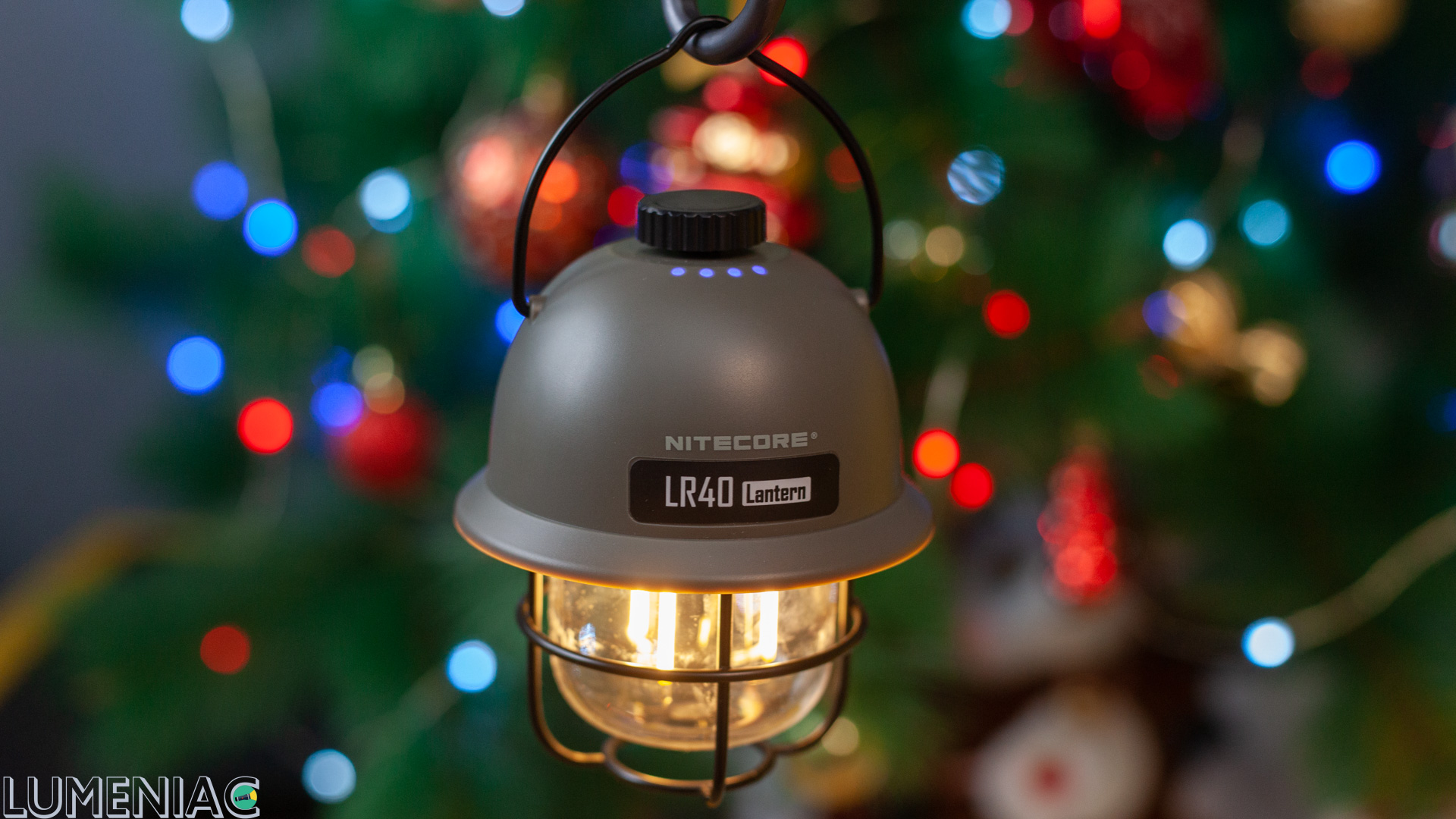
As you can see, there is nothing on the front except for a sticker with the model name.
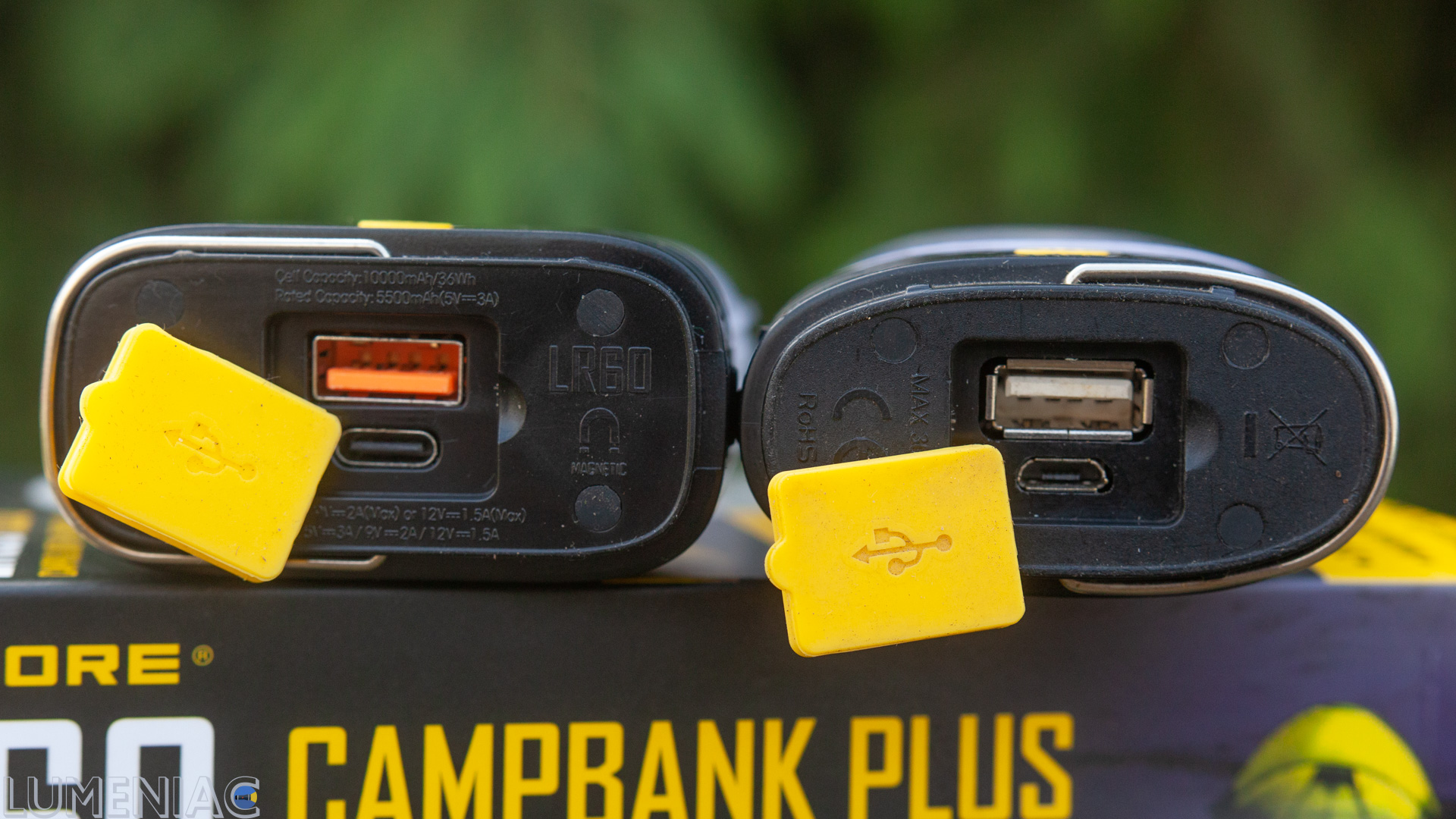
But there is a solid thick rubber plug for charging ports and usb-a output on the reverse side.
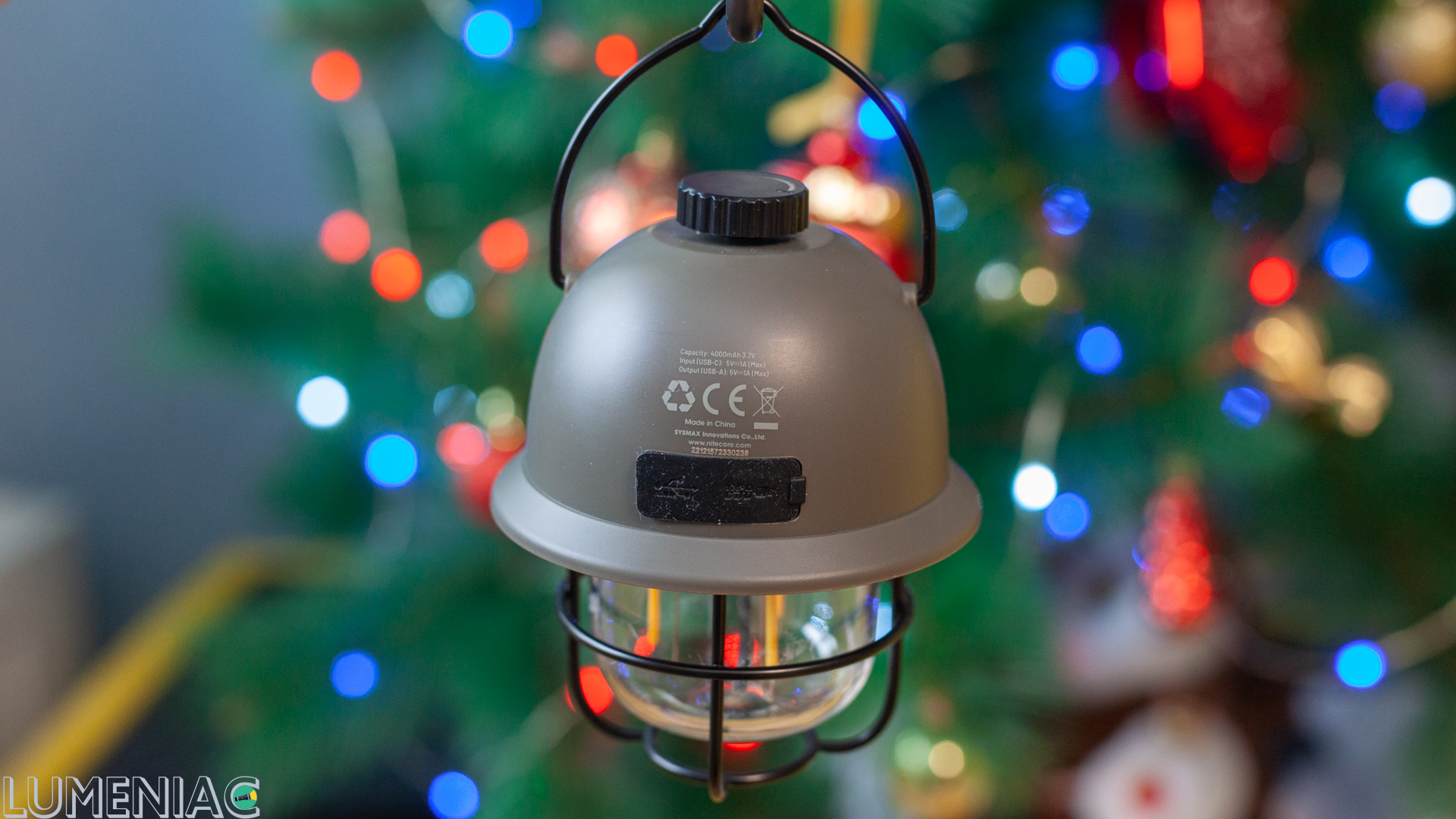
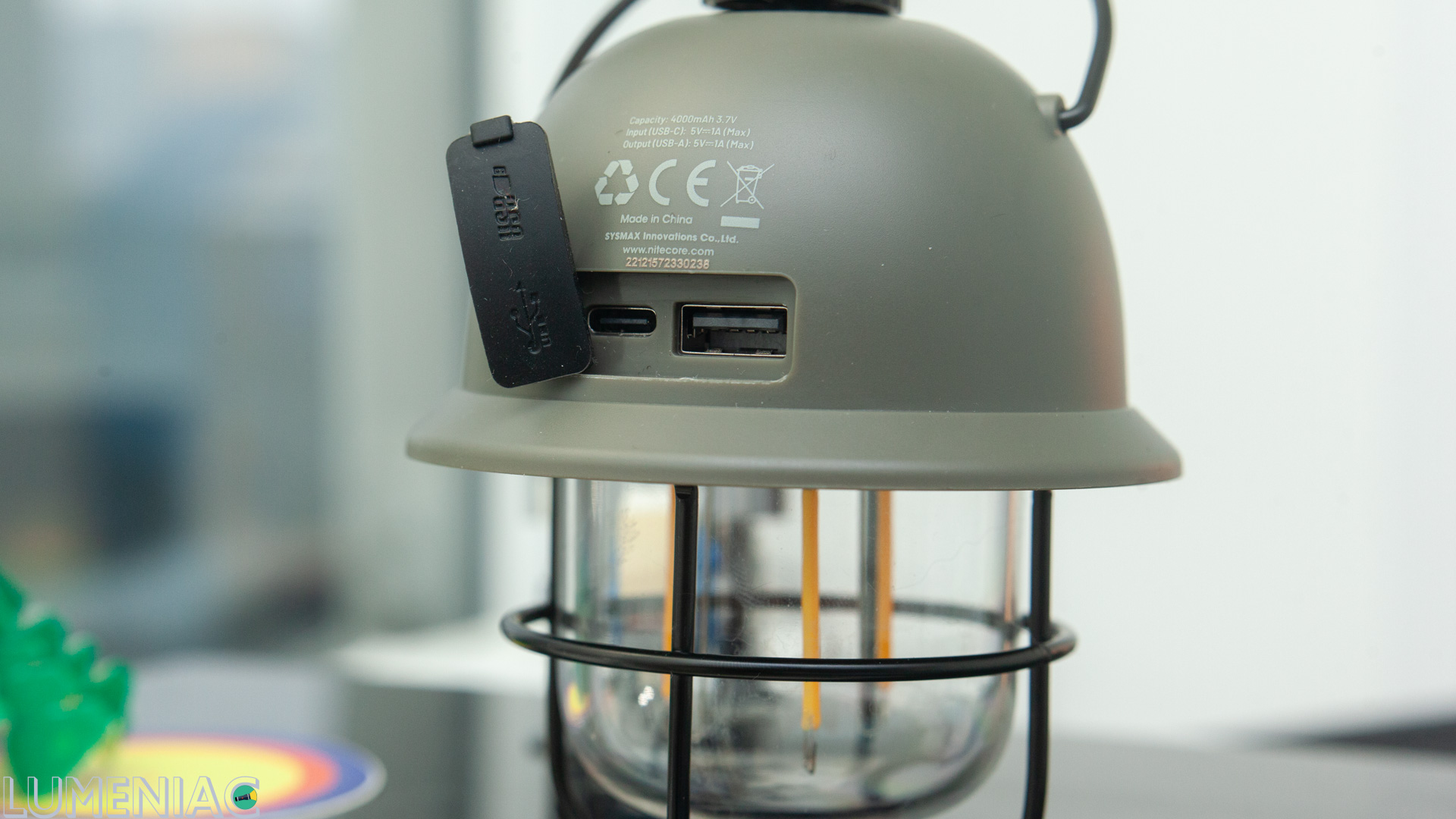
However, thick or not thick - there are some other spots, where waterproof protection is discussable. I`ll show all this later.
The flashlight supports PD charging and charges quickly enough.
In power bank mode, you can count on quite decent 10 watts and given capacity.
The plastic cover is reliably protected by a metal grill (there is also a nuance here, will show it some paragraphs below). It is protected from drops on a flat surface at any angle. If the lanterns turns sideways and falls onto some large gravel, then there is a lottery - are you lucky or not.
But you can safely drop it on a path made of asphalt / concrete / tiles.
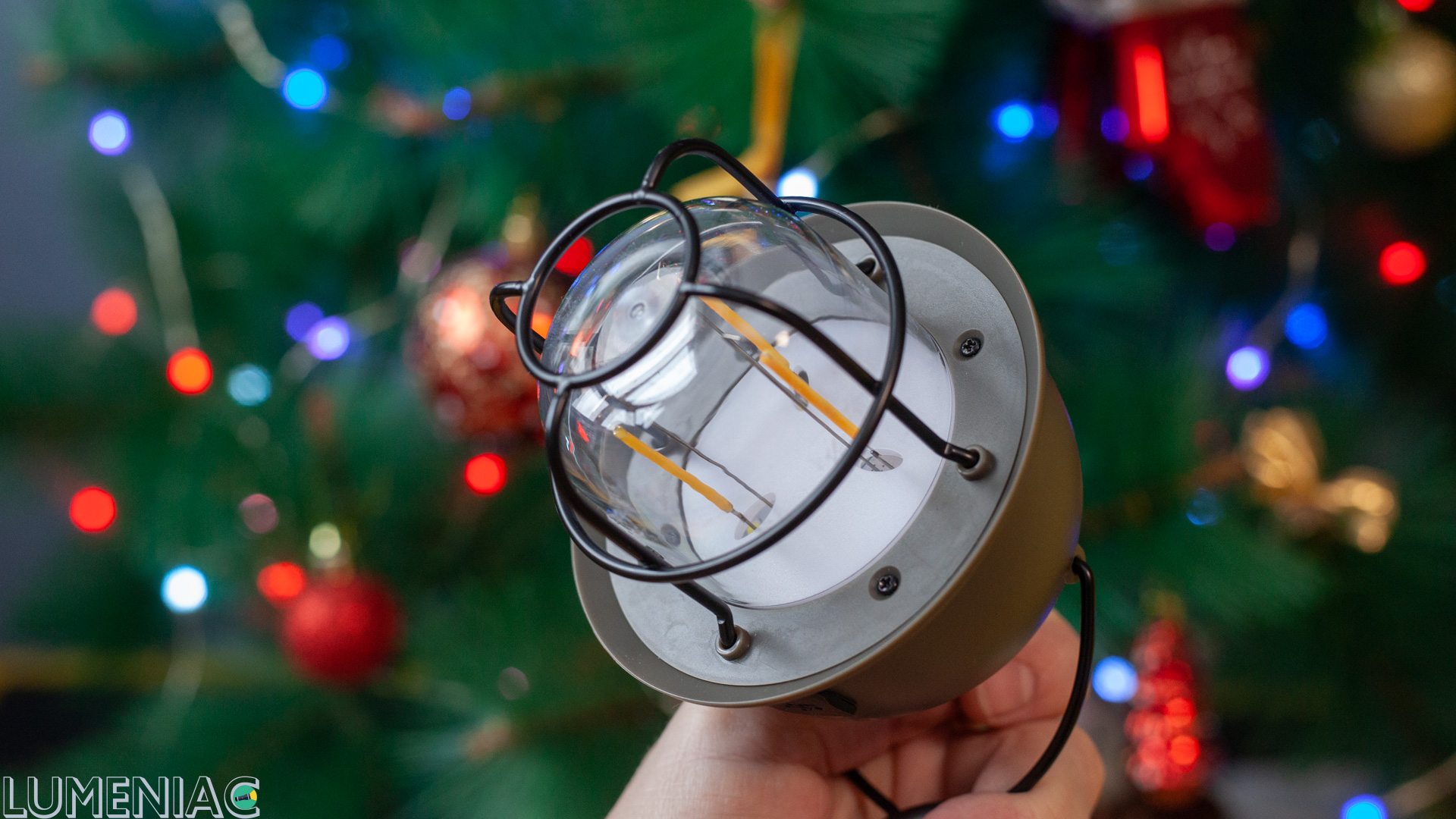
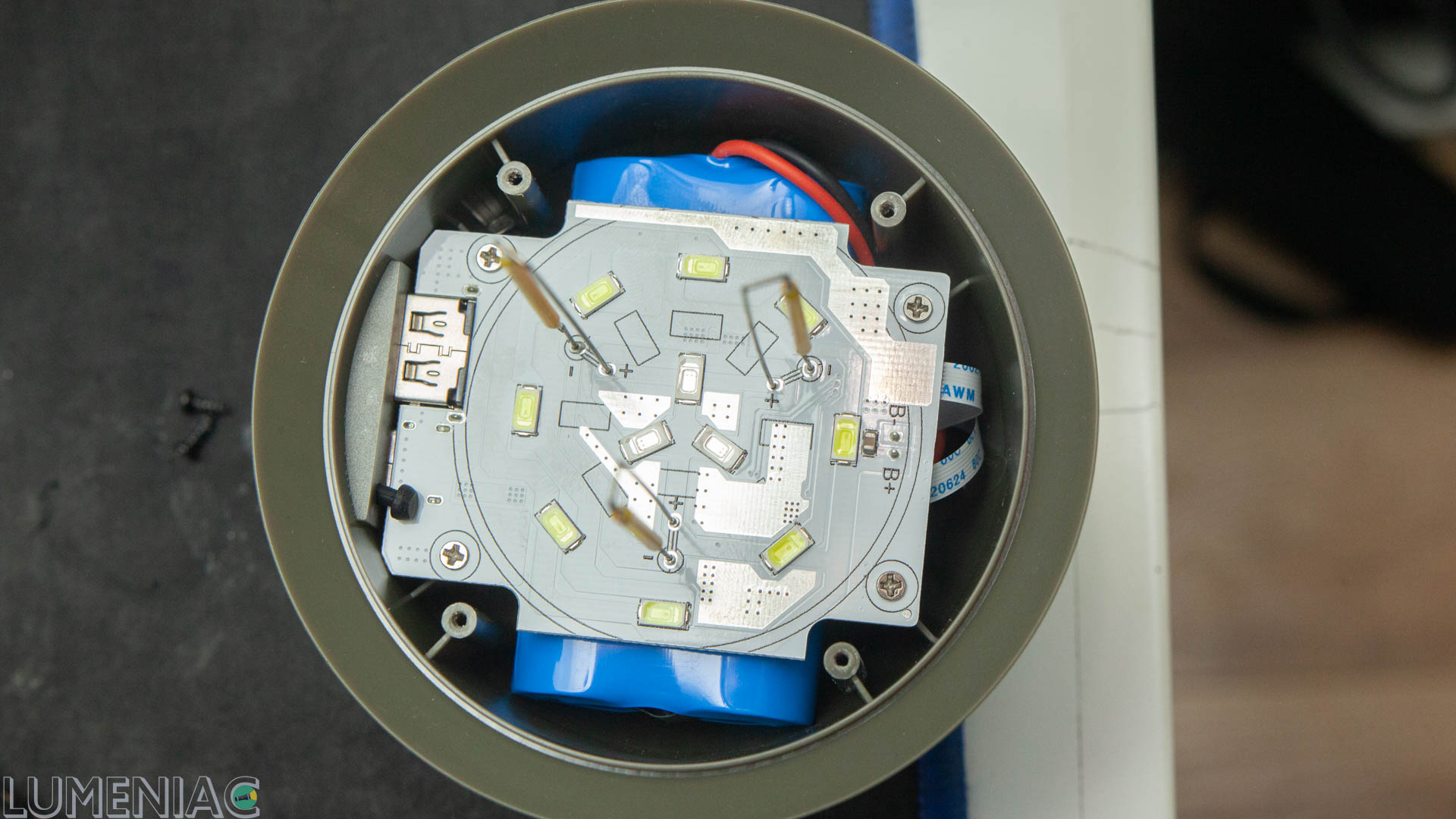
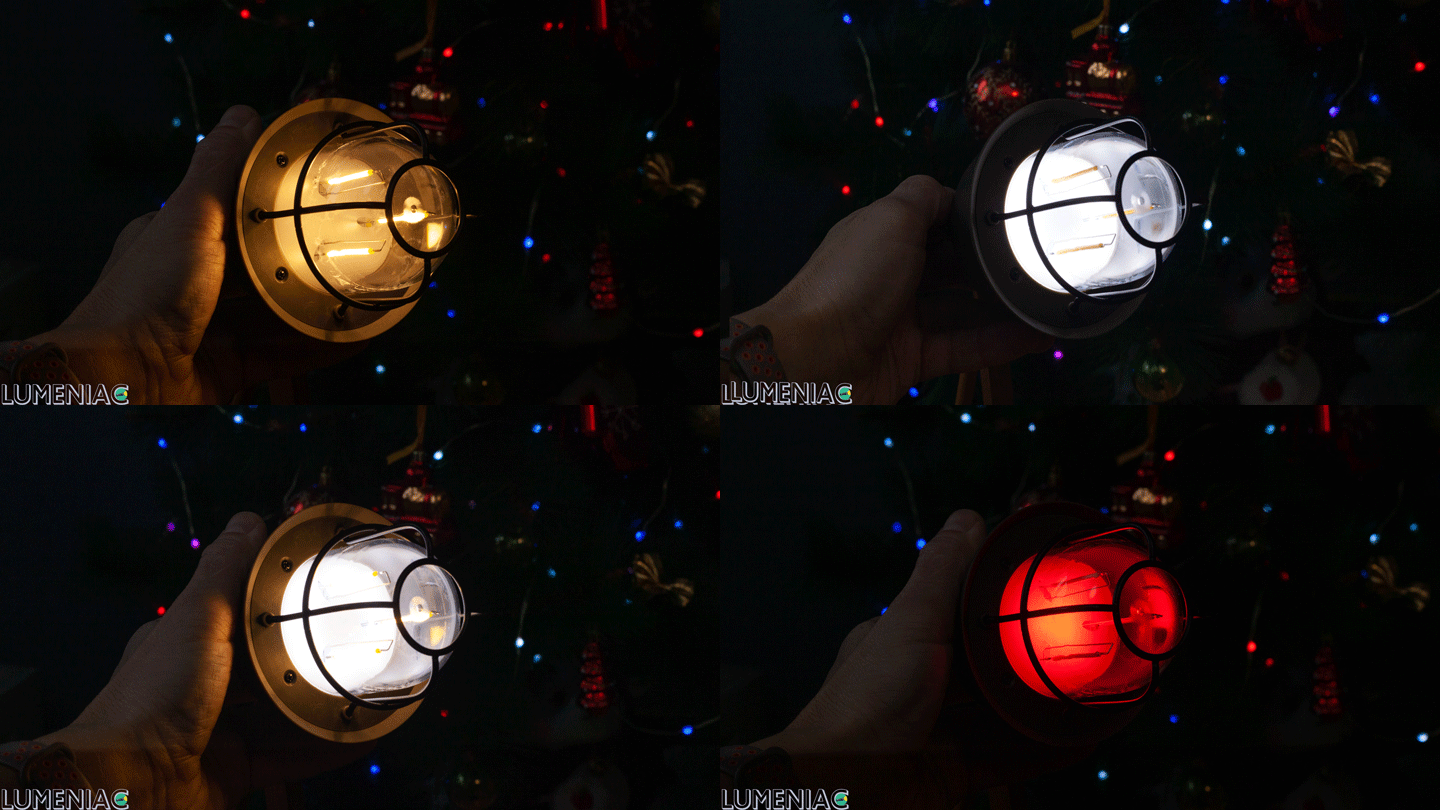
Cold and red light LEDs are usual ones, and they are placed on a usual MCPB.
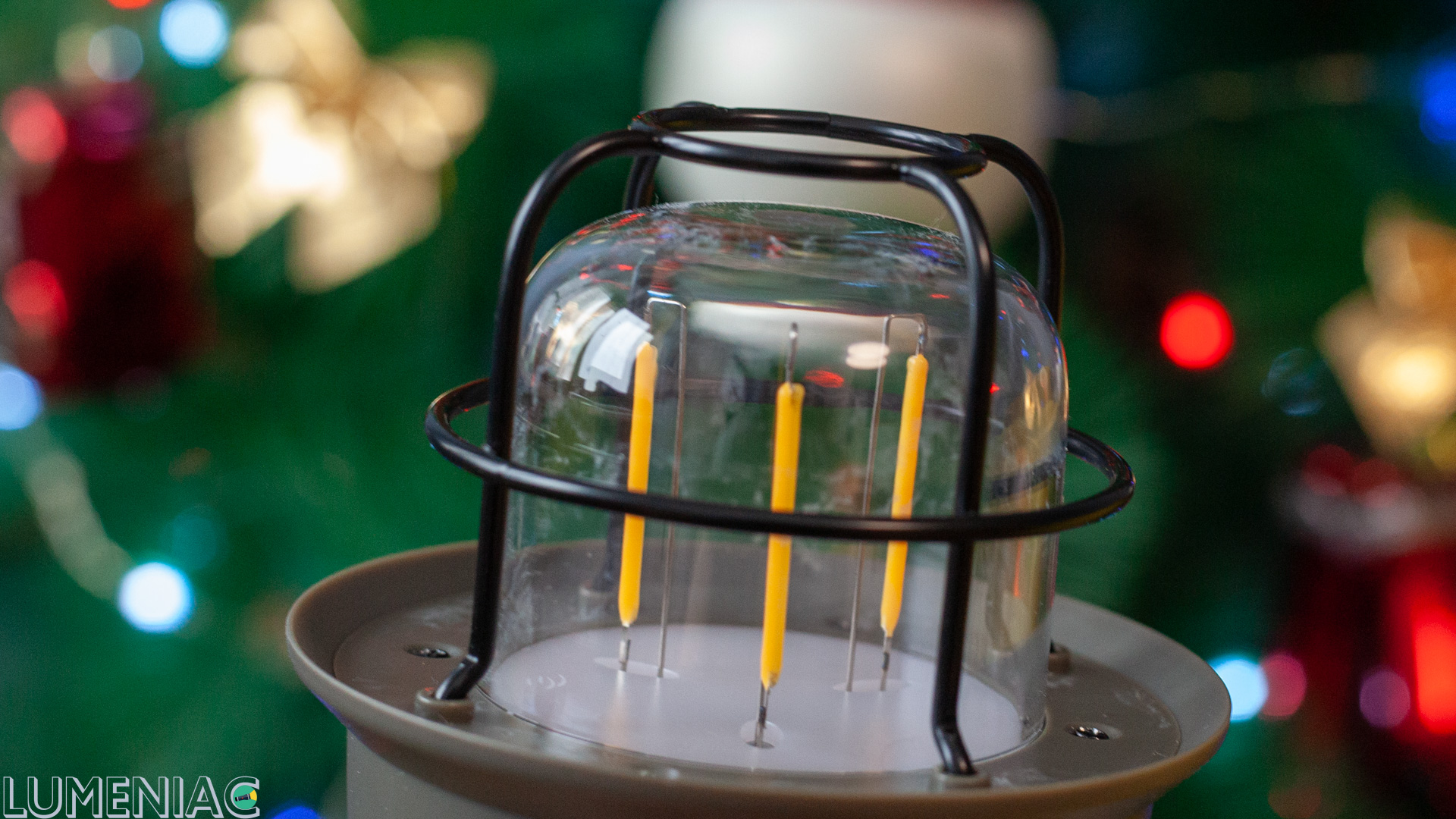
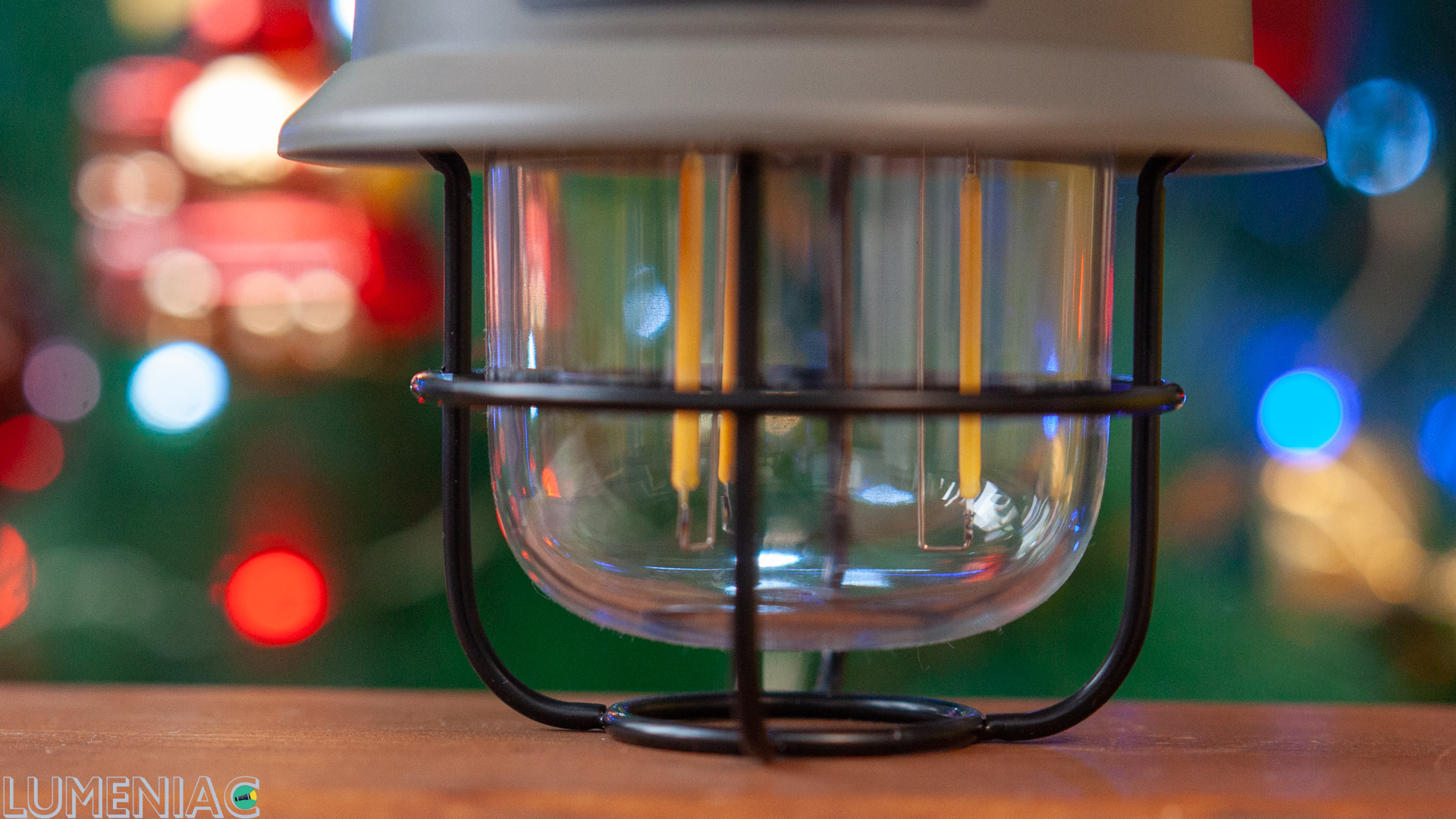
But everything is completely, completely unusual for warm light light.
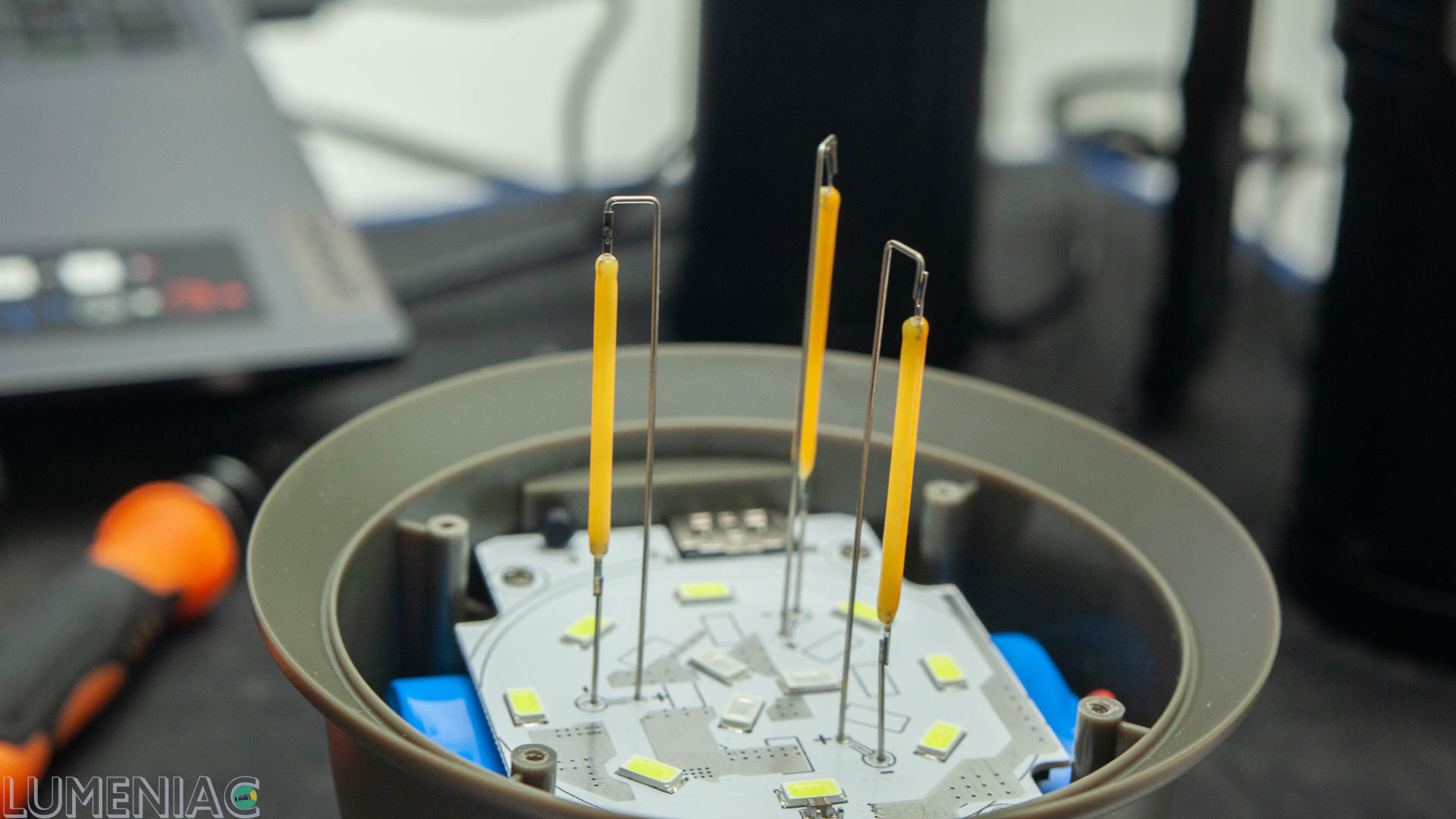
I have never seen filament LEDs used in a camping light before. Haven’t heard of these? So what is a filament lamp?
Here’s a simplification for you. We take a rod (most likely glass one). We sequentially place tiny LEDs close to each other on it. Fill with luminophor layer. This is not just a yellow layer. It is what converts the initially cyanotic light of the LEDs to the color temperature you need. Electrons jump-jump, quantum there, photon here…And let there be light!
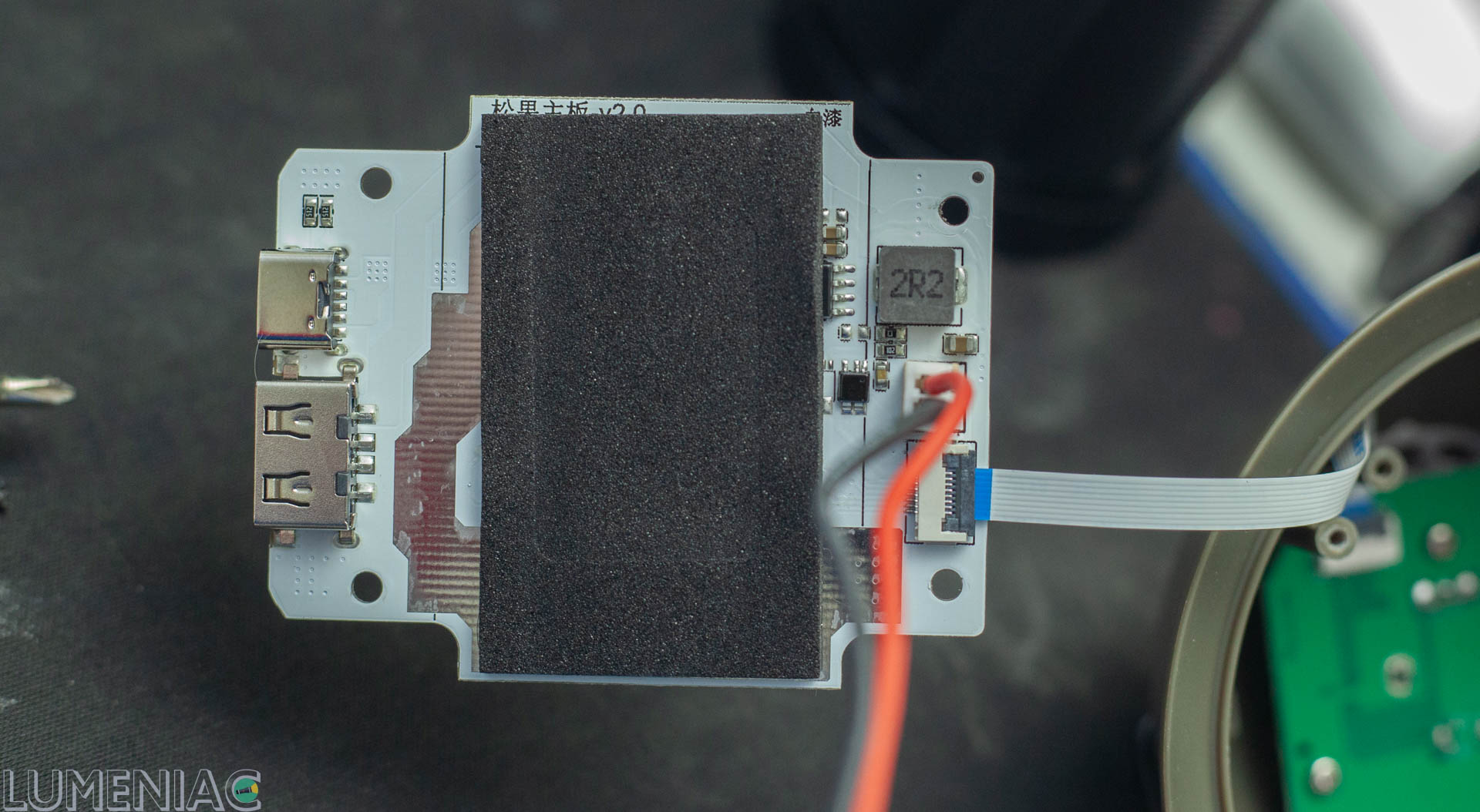
Due to the proximity of the LEDs, the “thread” of the filament will glow evenly on the eyes, you dont see a single LED there. It will glow beautifully. And…dimly. The reason is simple - there is no normal heat sink. Look at the photos above. White and red light LEDs are on a MCPB that absorbs heat. The fact that in the case of LR40, the MCPB has nowhere to give off heat is another matter. Here it is from the back
So the filament thread is simply very hot. The phosphor gradually burns out and the quality of the light decreases.
However, in our case, there is no need to worry. i turned on Nitecore LR40 at maximum brightness and mesured temperature of these LEDs after some time
61C \ 145Fis not a problem at all

Agree, it is unreasonable to compare the overall runtime time of a camping lamp and a constantly working indoor lamp.
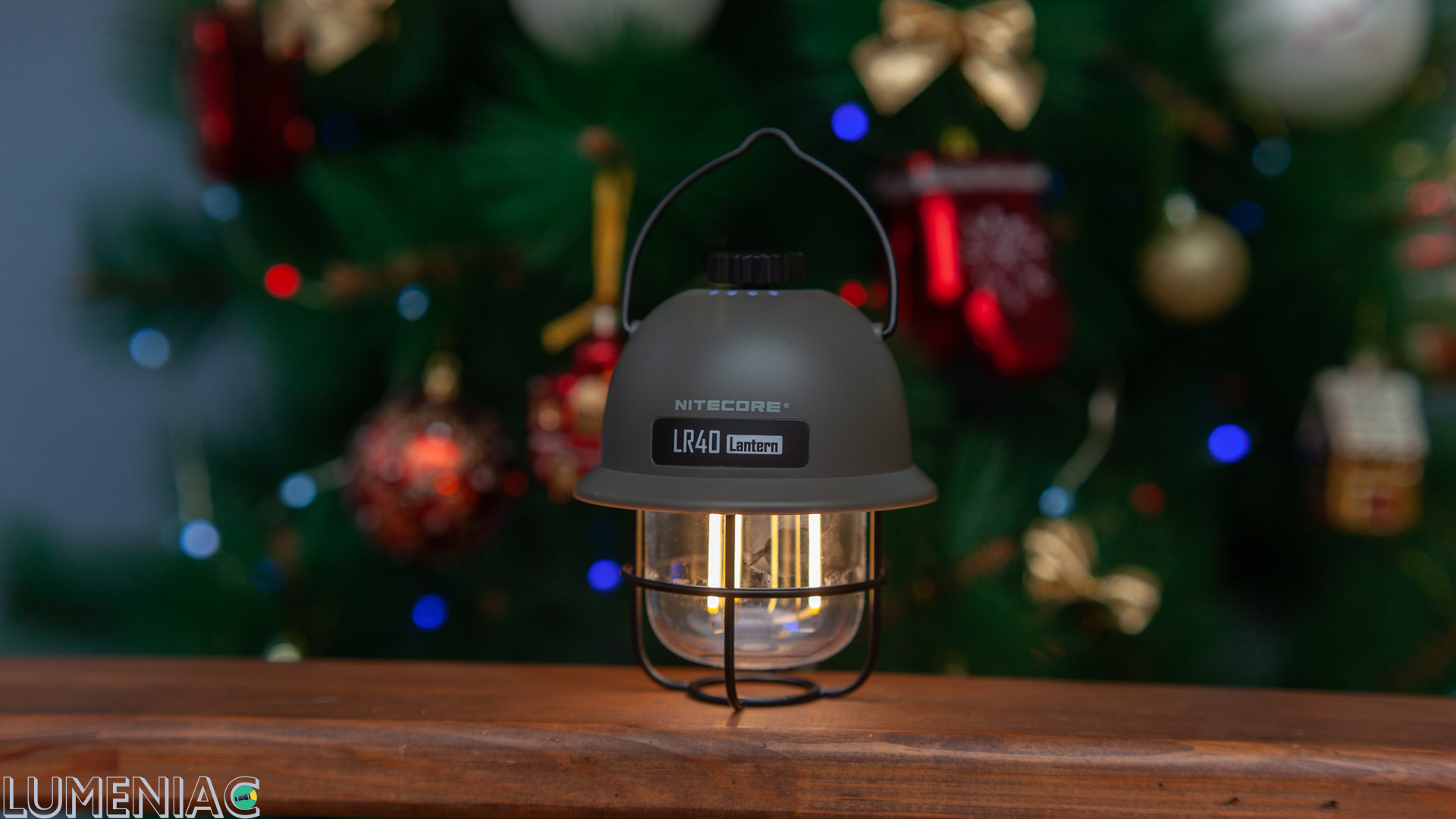
Well, here’s what it looks like alive.
Now let’s disassemble the lamp. And, well, i see some points to point at
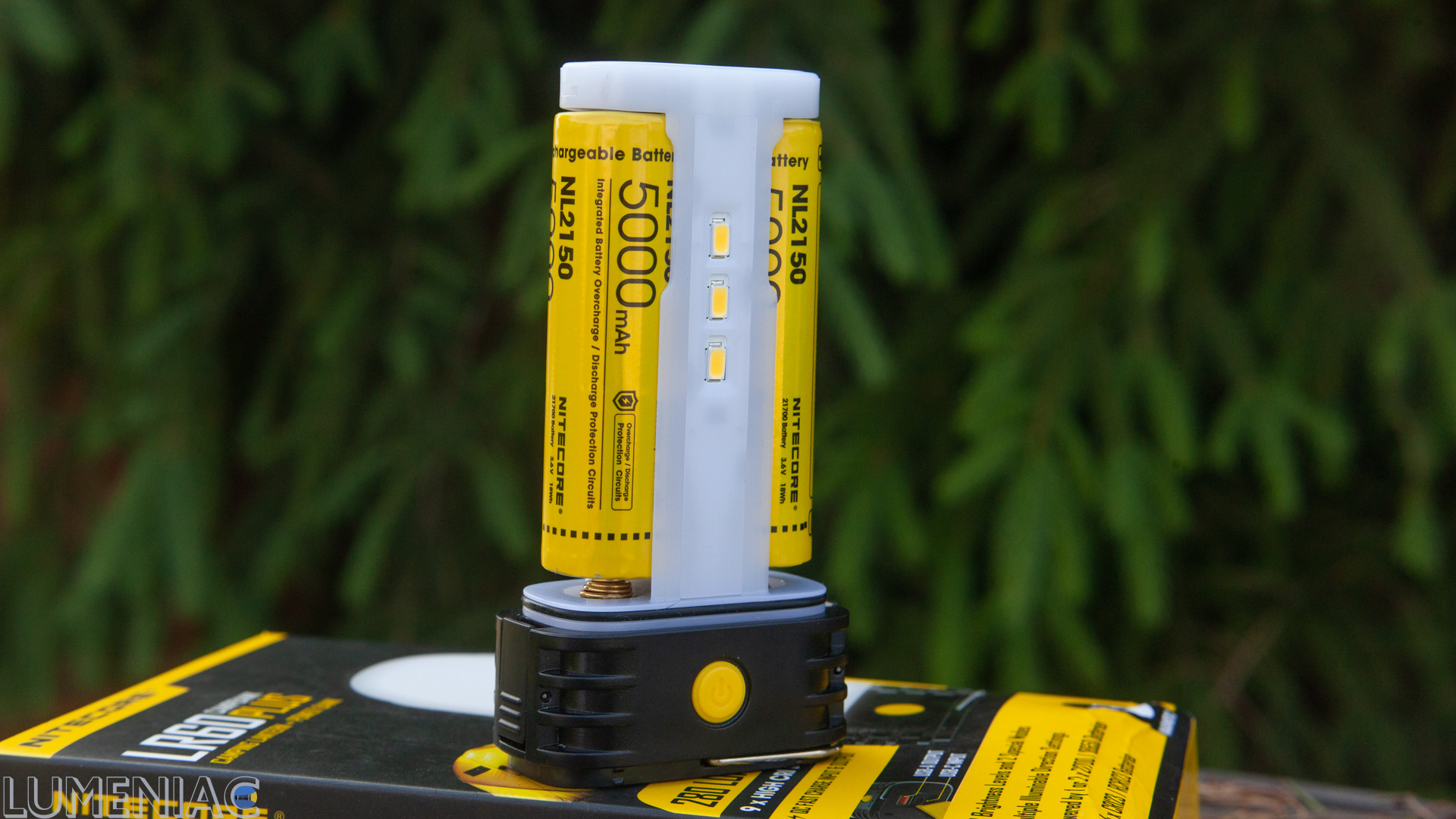
When i just took LR40 in my hands, I heard that something rumbles inside. It turned out that this was one of the nuts of the protective grille, see the photo below. It unsrewed. And I was lucky that it did not short-circuit anything … In general, I recommend disassembling (actually, a matter of minutes) and stretching the nuts tightly. And it’s better to put a drop of glue on it, finally securing yourself.
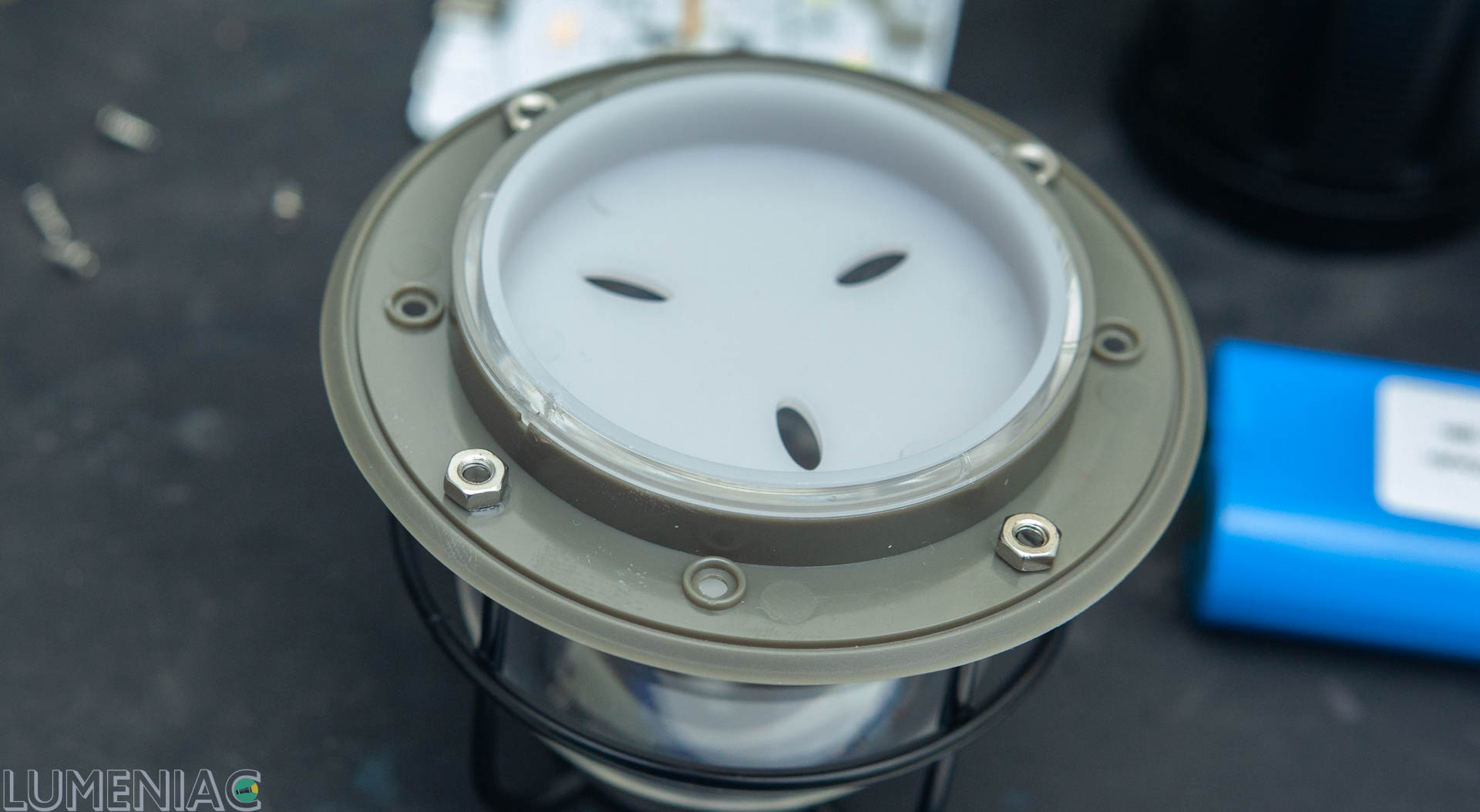
At the same time, pay attention to the ersatz-reflector-diffuser made of white plastic.
U can see the circuit board under the rotary regulator. To remove this board, you will have to not only unscrew the three screws, but also unsolder the regulator legs that go through this board.
So, here’s an important point about waterpfoof protection. Red arrows mark the places where the suspension arms go inside lanten body. There is tiny between suspension and hole for it plastic body. The gap there is tiny-tiny, but it will be enough for water. So I recommend stuffing lithol or another similar lubrication inside, since it seems that these two plastic “pockets” perfectly suit for this.
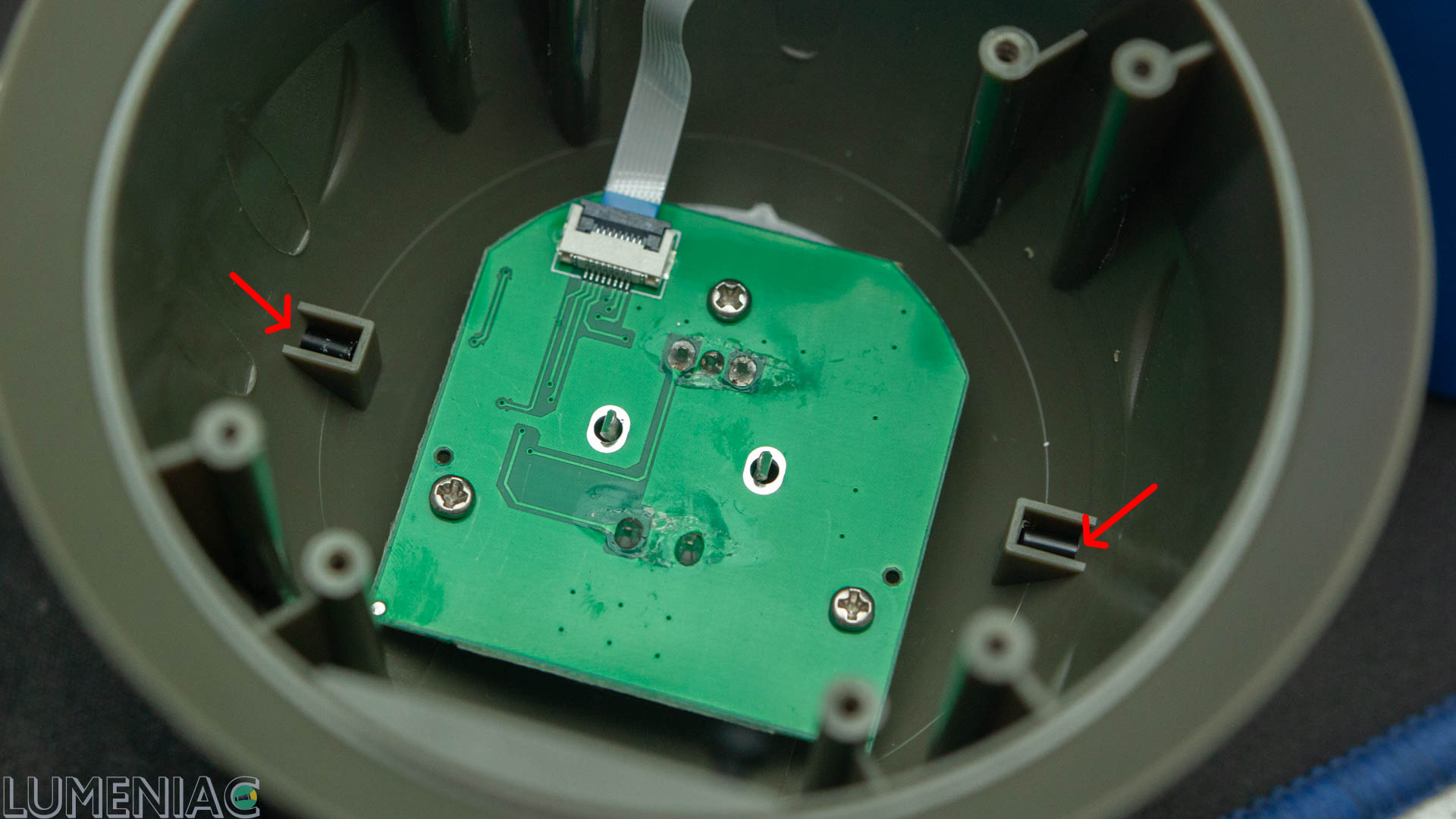
Do you see these holes for charge indication LEDs? I recommend adding some glue over it. Ideally, I would also fill the some thiiiick layer of lubrication around the axis of the know. All the work on waterpoof protection will be completed after these steps and i really feel that Nitecore LR40 wull surviv heaviest rain and even falling in puddle or pool.
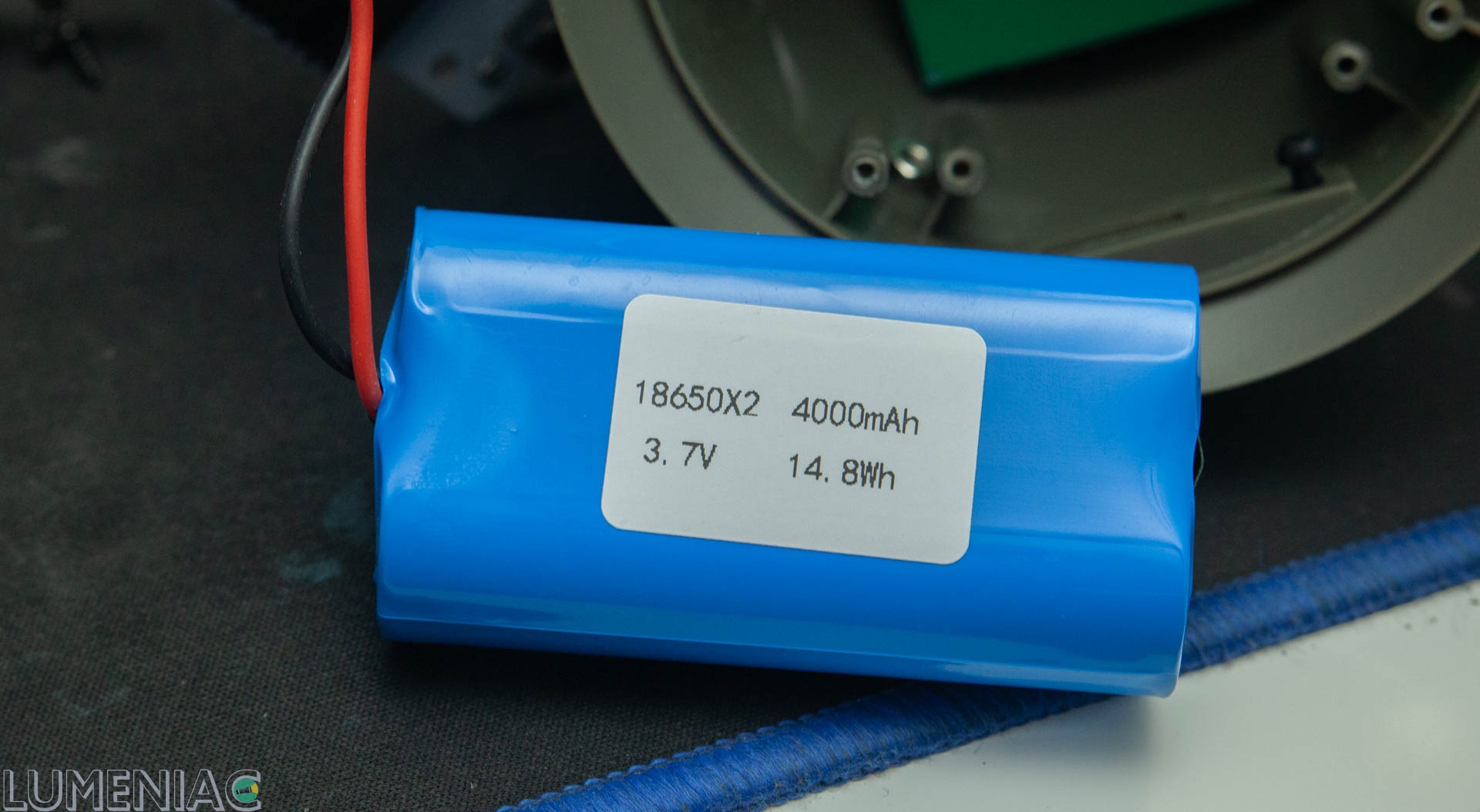
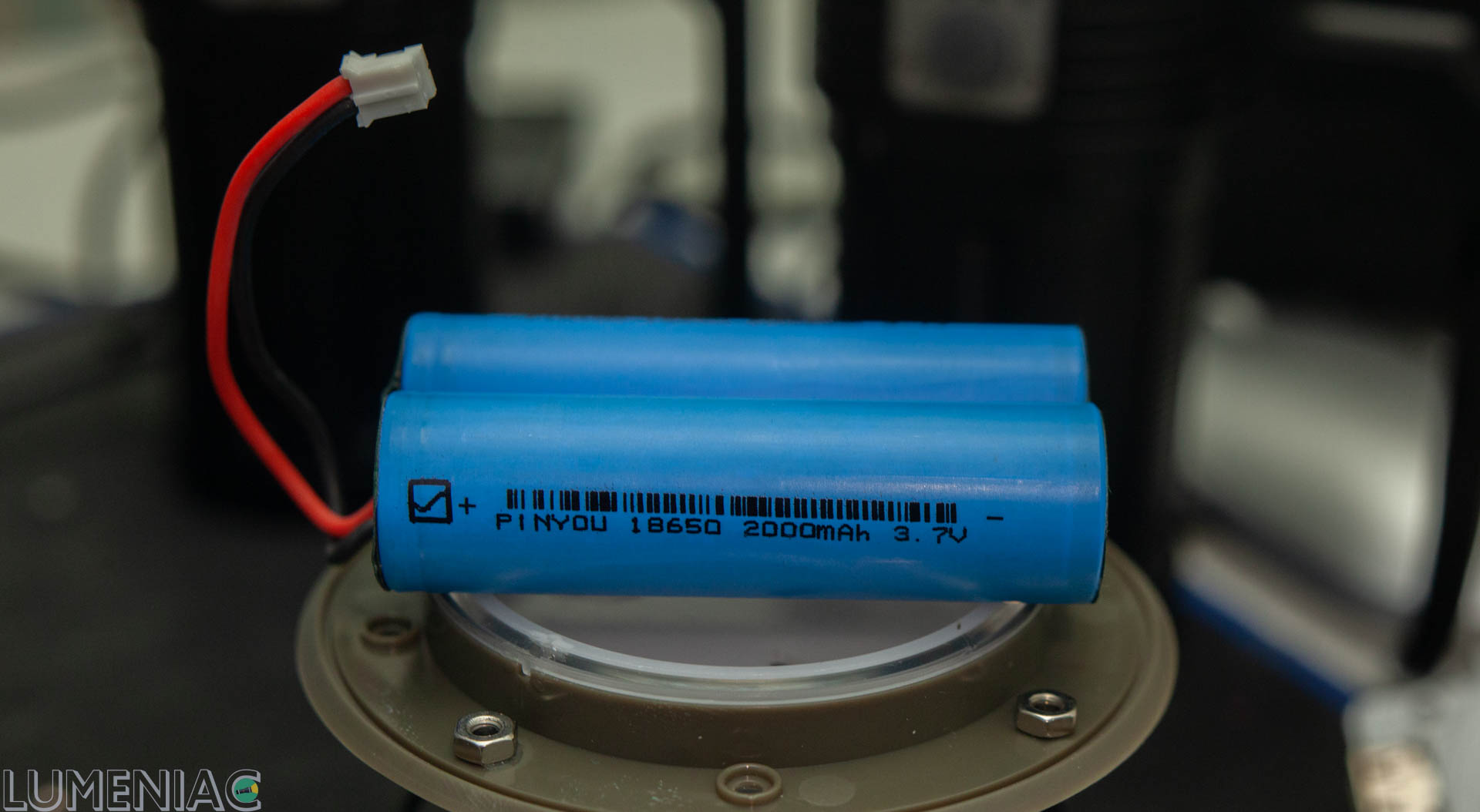
I am of two minds about batteries. On the one hand, 2000 mah each is not exactly the bottom (all sorts of ultra-budget crafts have 1200mah batteries), but don reach even 5 years ago standard of 2600mah. The total capacity of 4000mah is actually definetely not bad, but it could be effortlessly up to the 6000+ mah level. And it would add only a couple of bucks to the total price.
But, in fact, according to frankly low (by the standards of Nitecore) price, this capacity looks quite suitable. If you know what part of soldering iron to hold in hand and what not and if you have some supply of batteries, you can change and increase the capacity by half. If you do not want to spend time on this, then the battery as is will definitely be enough for you all night. And in the afternoon, they connected a solar panel or a portable power station (Nitecore NES 1200 review) and charge Nitecore LR40. 4000mah is actually pretty good.
Competitors? They are not even close among the lanterns by big brands for such a price,
Ali’s nameless camping lanterns? Well … you can search.
Actually, if you are looking for a camping lantern as a light source, then among the branded models there are plenty to choose from and besides the LR40. Assuming you’re willing to pay extra, of course. Here the Nitecore LR40 frankly plays in an unexpected budget-ultra-budget price league. But if you want to choose a camping flashlight that is cozy, warm and pleasant both in terms of light and design, then the position of the Nitecore LR40 here is unusually, unusually strong.
UI
simple. no need to read manual
ON-OFF - long press the switch
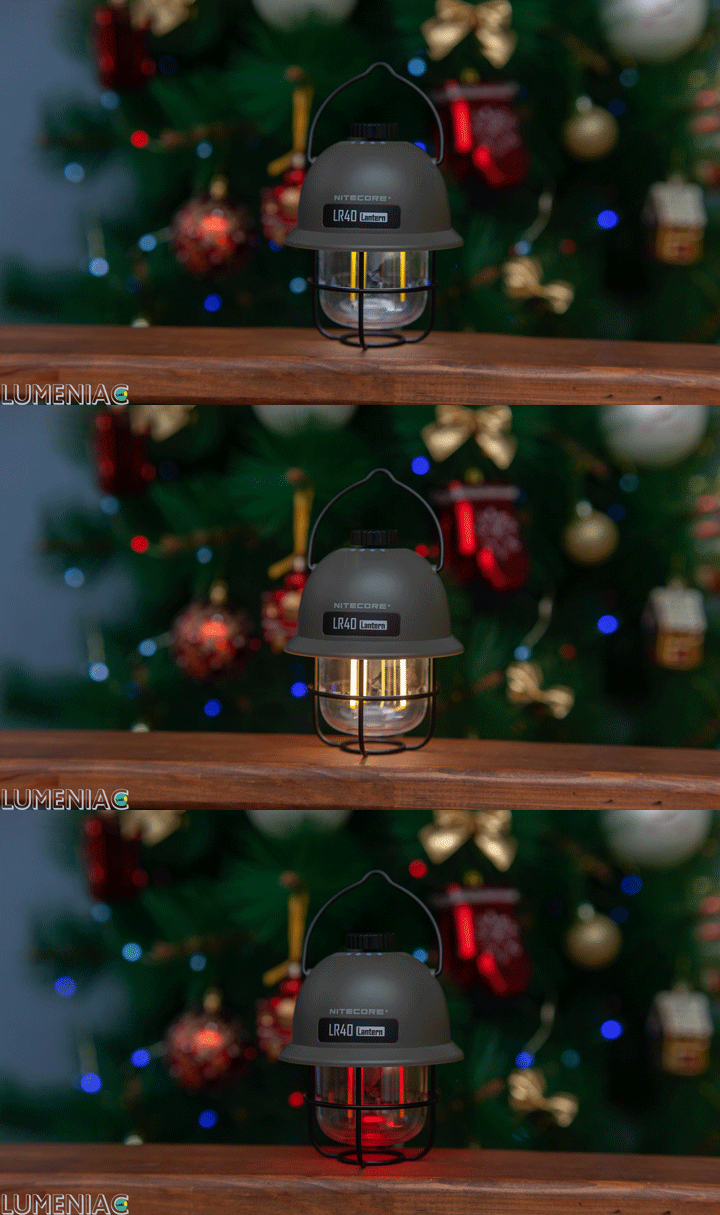
Switching modes (warm, cold, both, red SOS) - pressing the switch
Adjusting the brightness by turning the knob
Flashlight turns on at max worm white light brightness each time.
How Nitecore LR40 illuminates
It seems that with 2 batteries of 2000mah each and a small brightness it would be possible to make brightness stabilized. But, alas, as the battery discharges, the brightness will sag. The chart is definetely not bad, however. I use camping lanterns with way worse stepdown without any inconvenience. And here line is pretty smooth.


If you look at the numbers, then the brightness here actually seems small. But! Before the Sofirn LT1\LT1S showed that a camping flashlight could actually sustain high brightness, almost all camping lanterns could not keep more than one and a half hundred lumens. There is nowhere to transfer the heat in the plastic case… For most of camping lanterns situation is the same, so you will find brightness of LR40 as “that is ok for me” .
Hang the lantern lower above the table or don’t expect to light up the whole room and then Nitecore LR40 light will be enough for you. The maximum brightness of the warm light is enough to illuminate the table under the lamp. Hang the LR40 in a 2x2m pergola and you will have enough light for evening gatherings. If you lower it, you can even read comfortably.
Actually, a lantern performs best when suspended. And here, in terms of light distribution, cold white light is good, it goes down without scattering on the sides like warm light. But it is better only in light distribution. I doubt that anyone will like the cold white light.

I think that Nitecore shouldn`t install cold light LEDs, all the WW would fit perfectly. There would be beautiful filaments to shine in breadth and just LEDs for light down. And the ability to include them together.
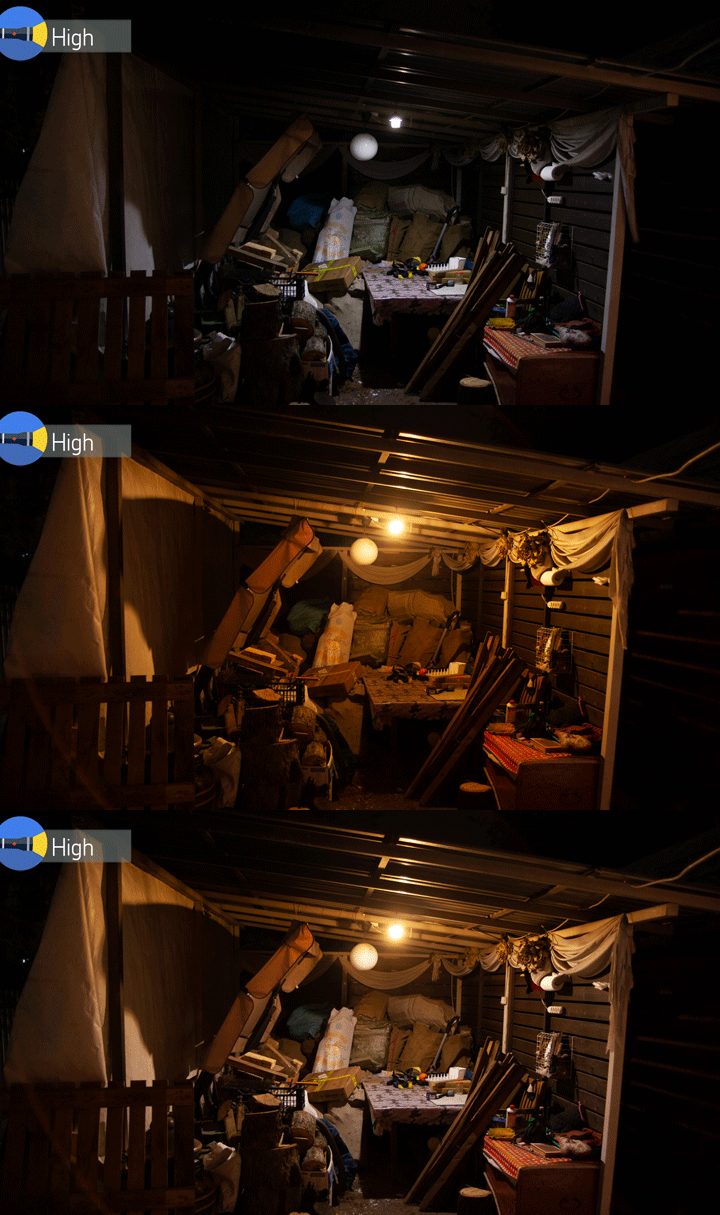
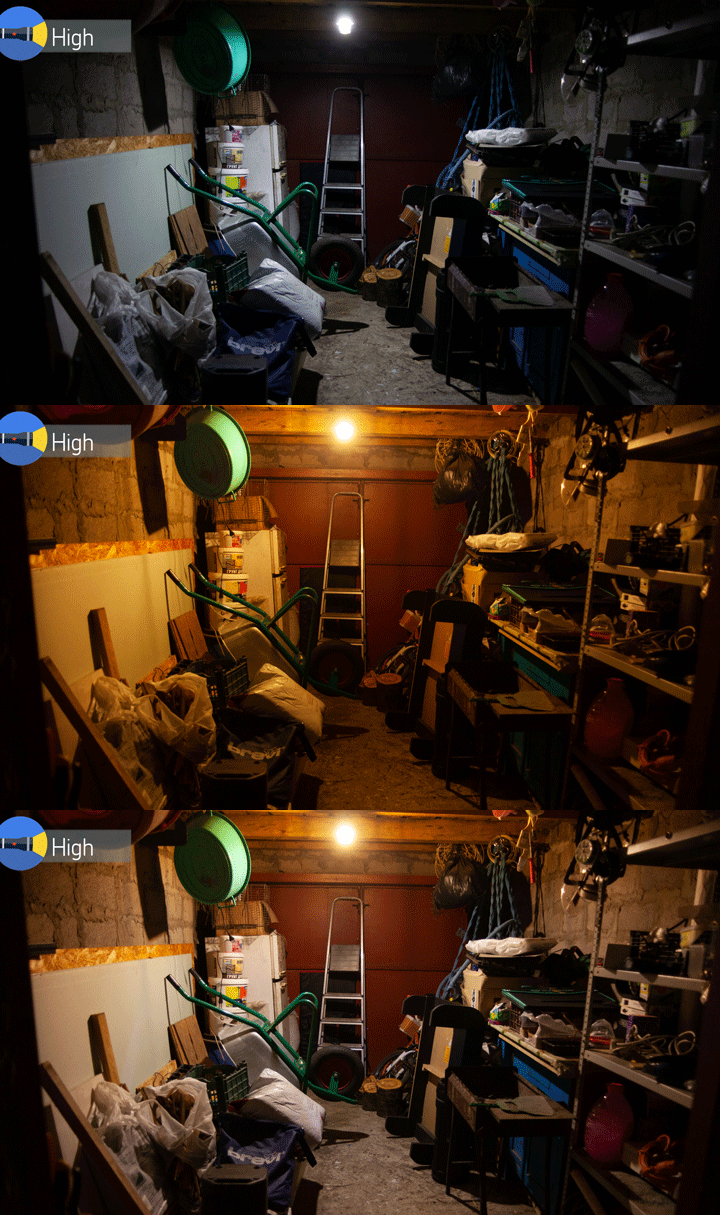
Warm and cold light turned on together will not be visually brighter. But a place directly under the lamp will definitely be better lit. This is perfectly visible in the gazebo, look at the table. But it’s much clearer in the gif below. Here the distance from the floor to the lamp is about 180cm.
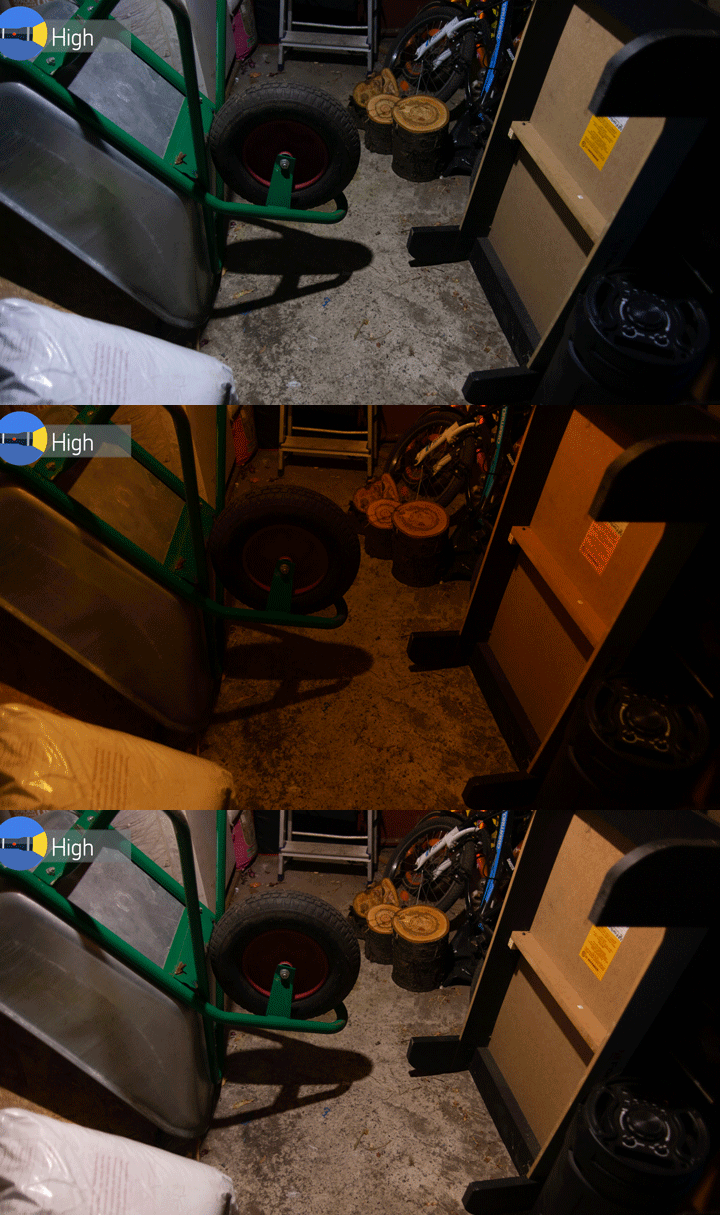
10-15lum of minimum brightness is an insignificant figure. But for a room the size of the same garage, it will definitely be enough to move around without bumping into walls.
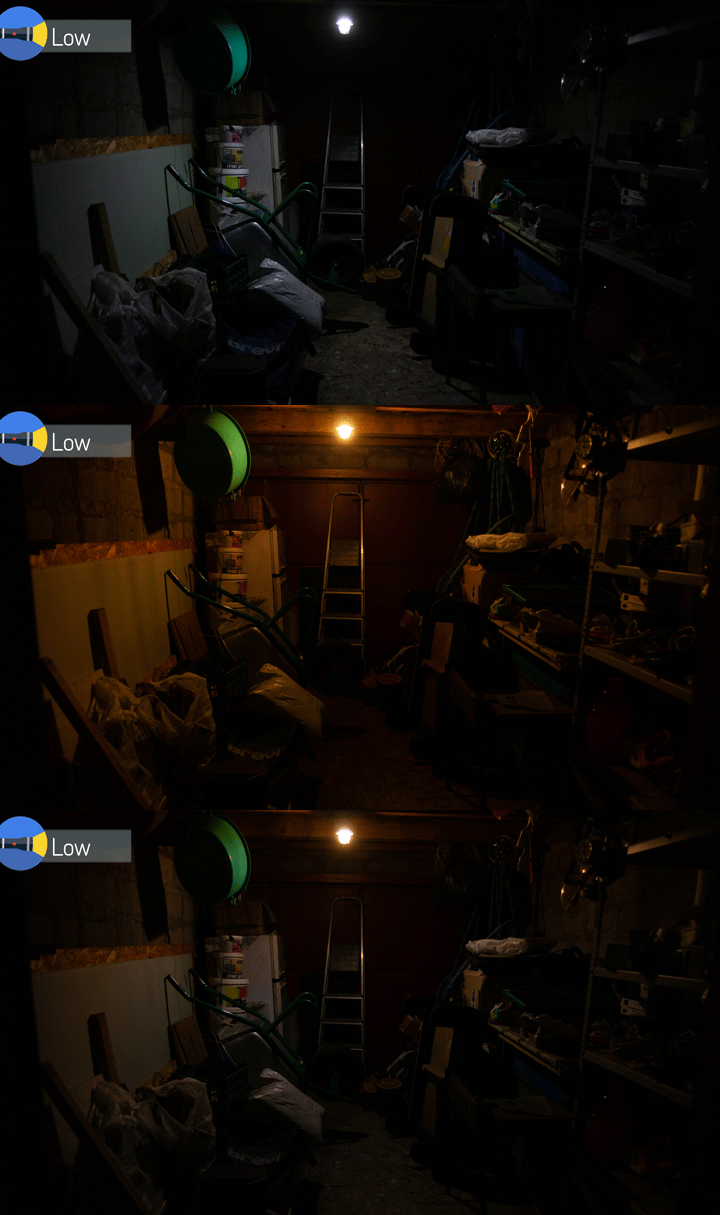
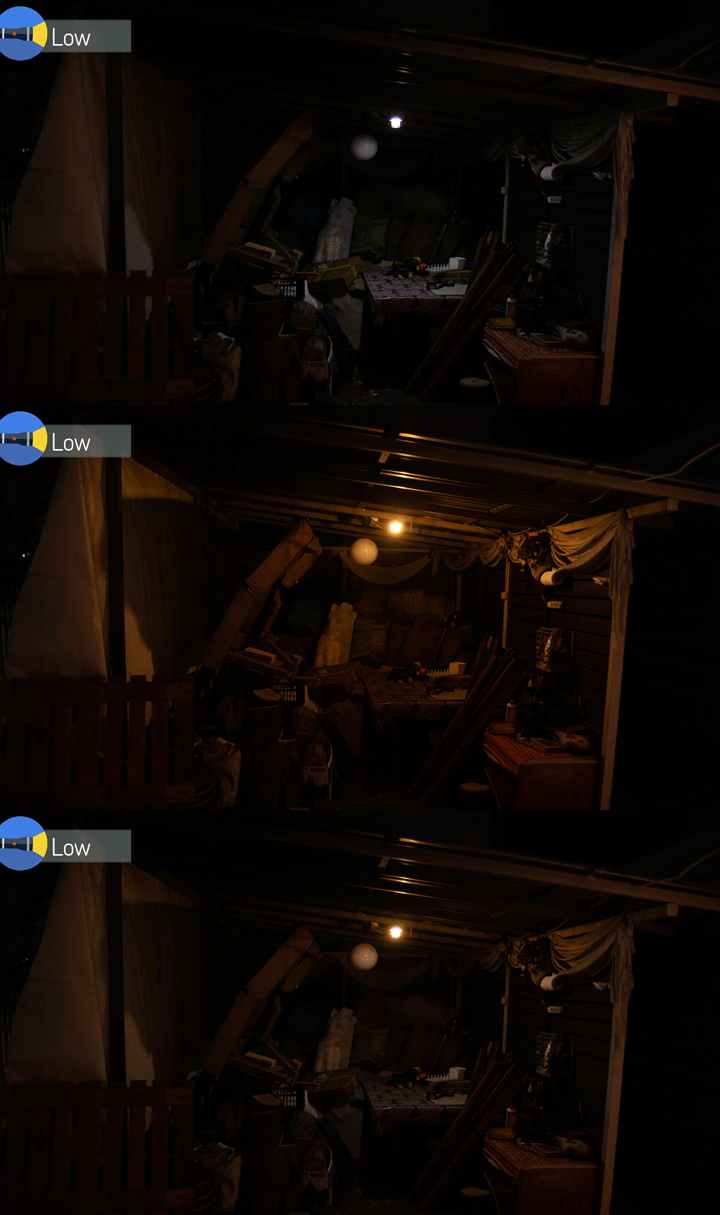
10-15lum of minimum brightness is an insignificant figure. But for a room the size of the same garage, it will definitely be enough to move around without bumping into walls. And here is one great advantage of LR40. Unlike no-name camping lanterns, Nitecore LR40 has no PWN shimmering in low mode.
5$ Mingray soapbar, for example, reminds me about this, when is turned on or reach low brightness. So i use it to highlight garage, not for constant illumination of spaces where i spend time.

Actually, when my eyes were already accustomed to darkness, i turned LR40 on and realised that even ~50% of Nitecore LR40 brightness was surprisingly enough to illuminate bedroom. Not to the level where i could read without harm to eyevision, but to the level i saw everything. I guess to the level i could play cards and clearly see them. So, numbers are numbers, but biology of eyevision also greatly compensate lack of lumens.


Nitecore LR40 can also be placed on the table, there will be enough side light. But it won’t be very convenient. Hanging is best.
If you have a short tripod - Nitecore LR40 will perform way better, table will be illuminated exactly as needed. U can also use plastic cup.


Overall impressions
Despite the relatively long list of shortcomings, I have no doubt that Nitecore managed to make an interesting camping flashlight, which i fell in love with from the very 1st time when i saw it in promo-pics. Camping lanterns are my favourite light source, heh.
The Nitecore LR40 is a real gem, when it somes to design and light quality. The idea to make a retro-lantenr with modern circuitry is a great. And no less great is the fact that Nitecore LR40 costs symbolically more (or even less) than noname lanterns similar in design and functionality. If the price of LR40 were at the level usual for Nitecore, my impressions would be more sceptical.
I judge by price\design\functionality ratio. And it is perfect here.
Competitors? There are no even close among lanterns by big brands. They all cost more or way more.
No name camping lanterns at Ali or Amazon? There are several with similar design. But once they cost the same, who would pick no name if you can get big brand model?
Here the Nitecore LR40 frankly plays in an unexpected budget-ultra-budget price league and i feels it dominates there. So, if you want to choose a camping lantern that is cozy, warm and pleasant both in terms of light and design, then the position of the Nitecore LR40 here is unusually, unusually strong.
Regarding price and brightness - i`d pick pair of LR40. This will give you good combination of brightness and runtime and you`ll pay the price of almost any usual camping lantern.
Advantages:
price
super-duper cozy retro-look
smooth brightness control
warm light
USB-C charging and power bank mode
battery capacity
drop protected
no PWM-shimmering in LOW mode
Disadvantages:
no brightness stabilization
small maximum brightness
I don’t see the point in the cold white light
red only in SOS mode, no constant light
battery capacity could easily be increased to 6500mah
turns on on max each time
