Nitecore release quite a lot of flashlights. Some of them i like, some of them, obviously, not). And there is whole “i” model line that i dont like for its proprietary battery. But sometime really cool flashlights emerges within this model line. And Nitecore SRT7i is one of them.
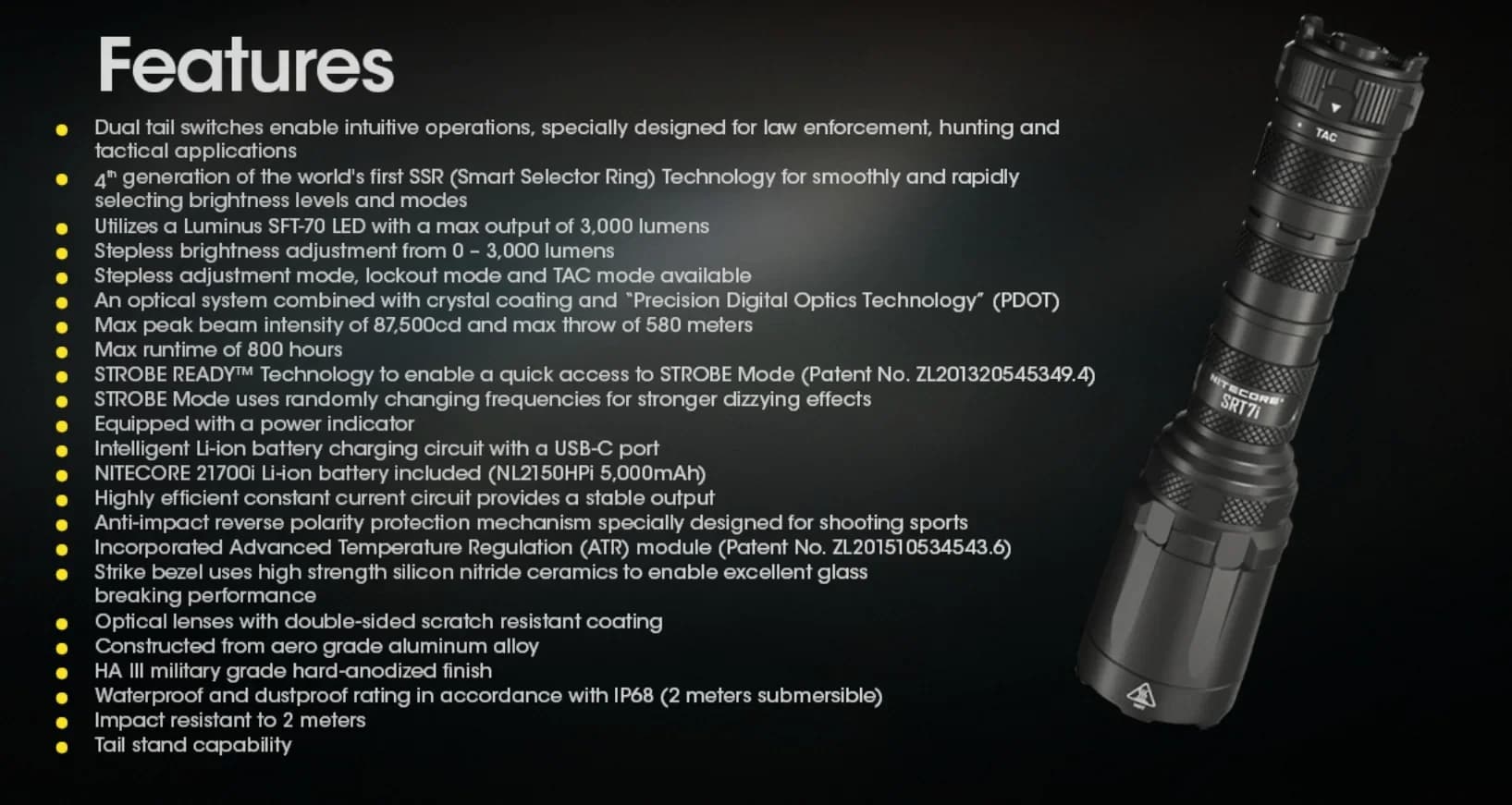

Specification
LED Luminus SFT70
maximum brightness and range 3000lum and 580m (87500cd)
battery 1 * 21700 battery (only native i-series)
built-in type-c charging
tailcap ring for adjusting brightness and modes in the tail
instant strobe and turbo
size and weight 163x40x25.8mm (6.42*1.57in) and 175g\245g (without and with battery)
waterproof protection ip68
You can buy Nitecore SRT7i at:
➤ AMAZON
Package and appearance
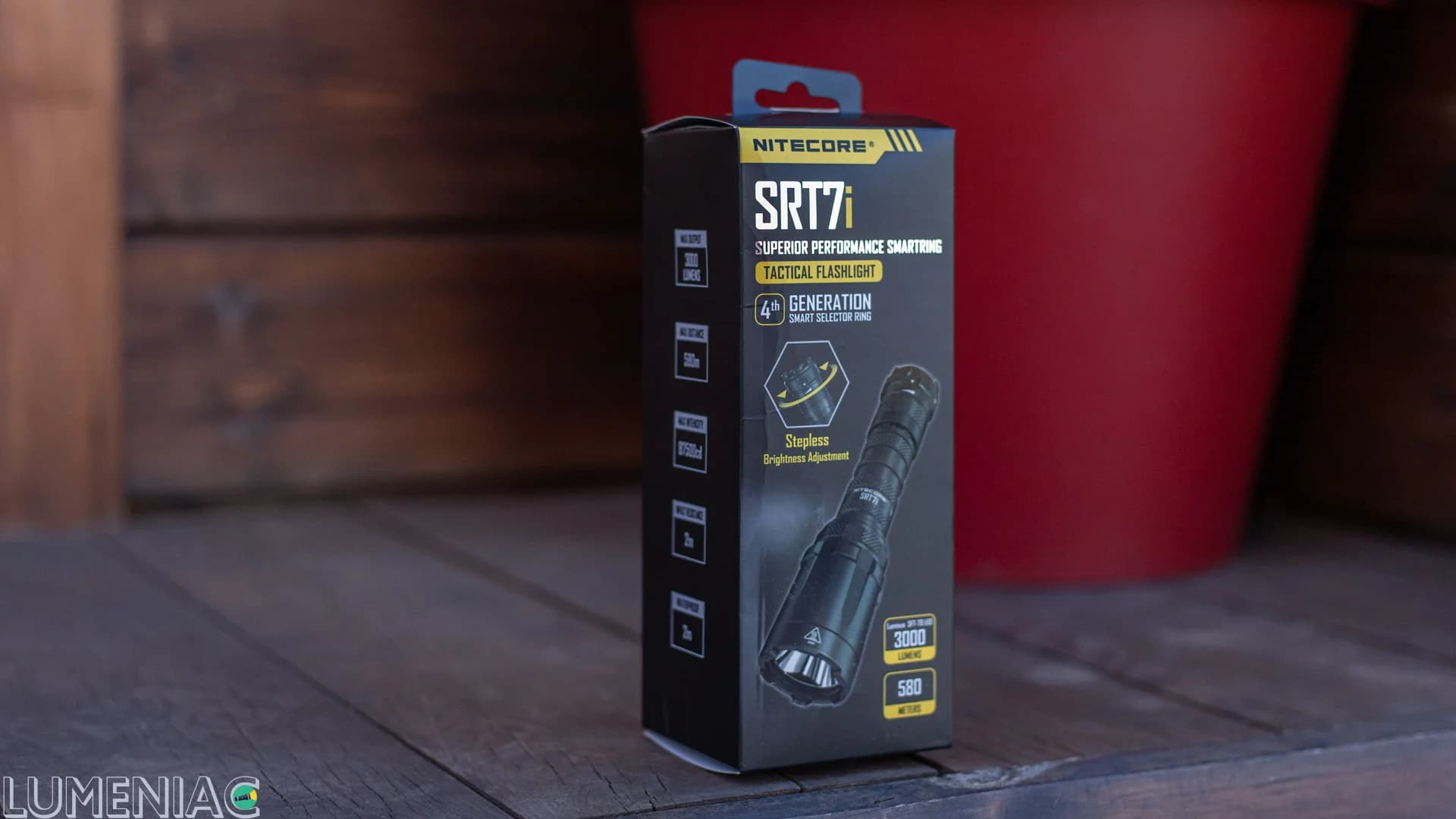
Excellent gift packaging. In my opinion, Nitecore has now come to an extremely “self-selling” package, much more attractive then the one that was about 5 years ago.

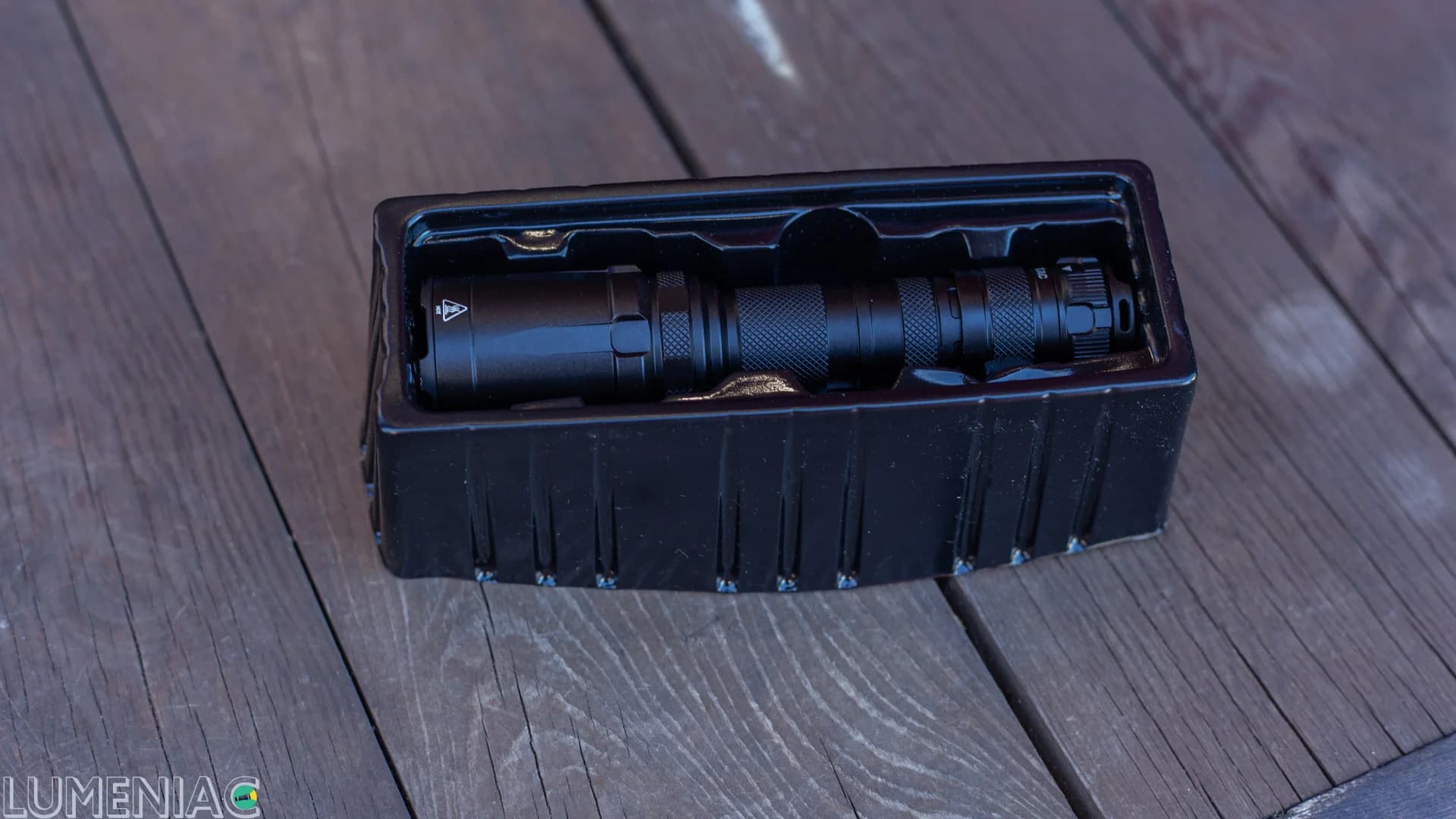
The kit includes the flashlight itself with a 21700 5000mah i-series battery, a holster, a charging cable, an o-ring, a manual, clip and a warranty. Actually, everything that you would expect to get included in kit.
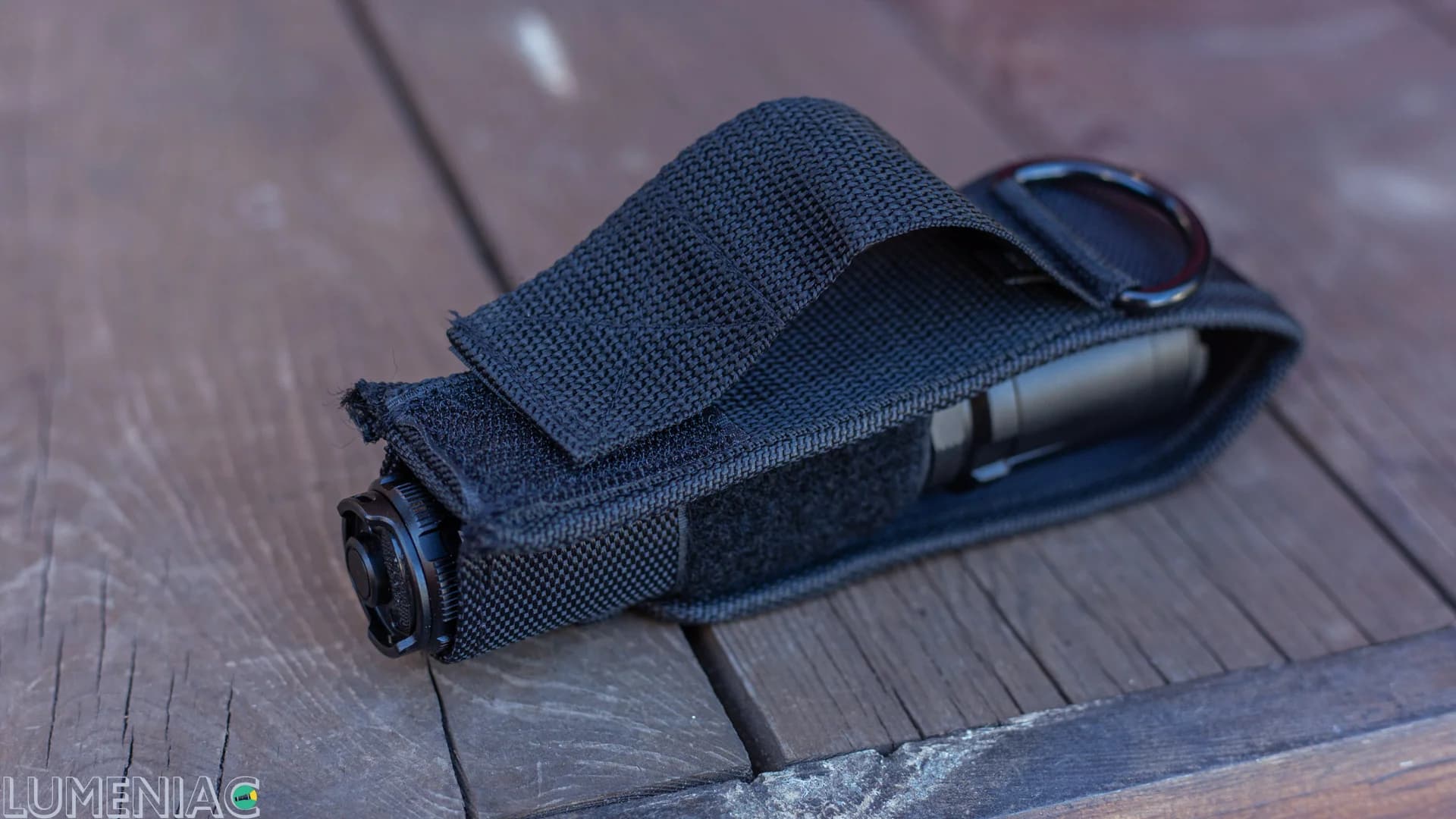
The holster is good. And that’s all I can say about the kit.

Nitecore SRT7i is a rather large tactical flashlight, so, no surprise it is significantly larger than Sofirn SP35, quite a large EDC flashlight. However, it’s not that the Nitecore SRT7i is actually large, it’s just that there are models with a less prominent head. But, for example, Nitecore SRT7i is completely medium-sized by the standards of long-range flashlights.


The flashlight itself has design in siprit of the rest of the i-series (with the exception of the stand-alone Frankenstein Nitecore P35i). So looks as thoroughbred as all the other representatives of this series. However, only Nitecore P35i has its own individual design, all other tactical models in this line are extremely similar to each other. However, this situation with similar design is usual for tactical flashlights, I think that design is not as important for a tactical flashlight as it is for an EDC.


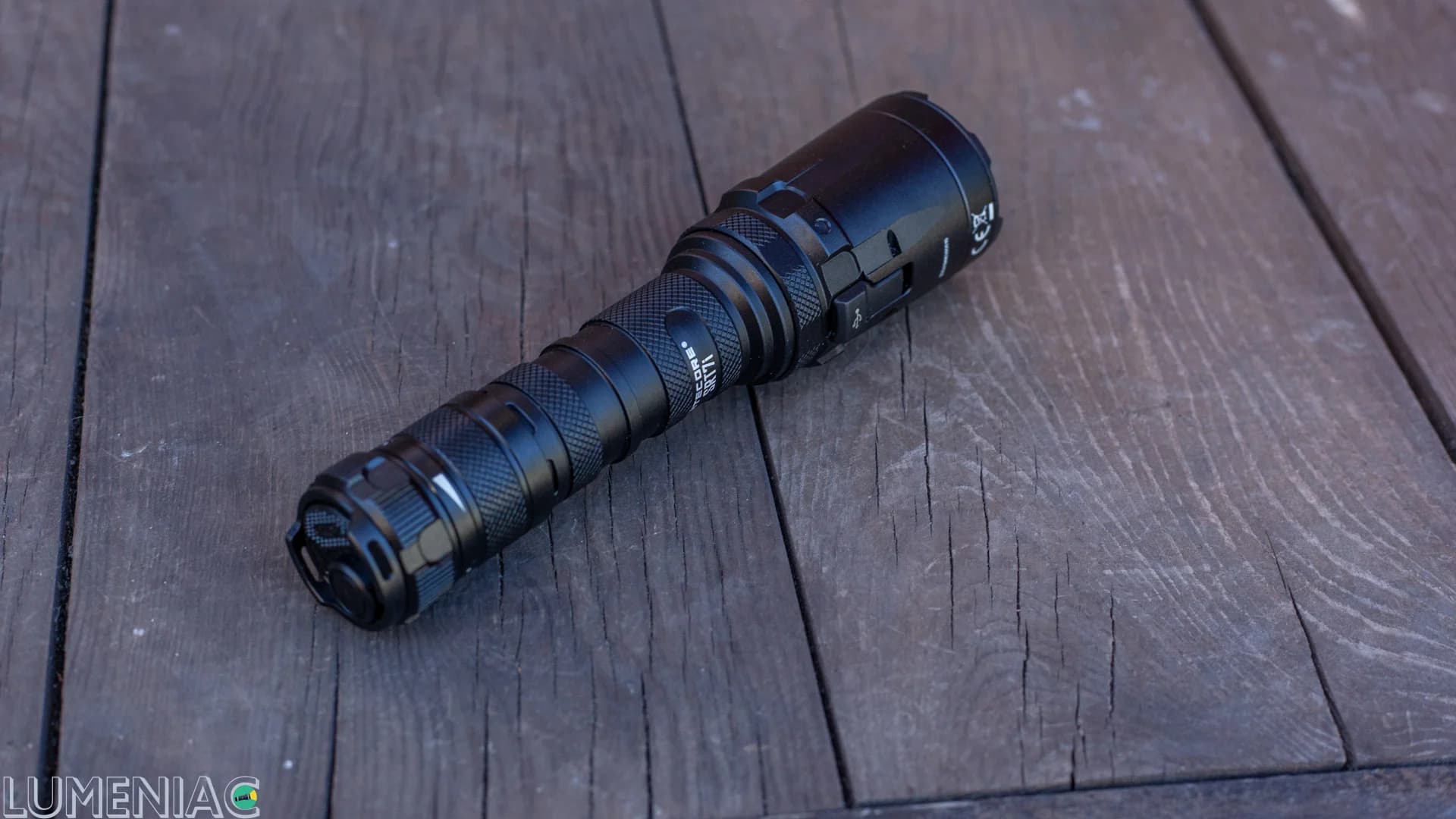
A distinctive feature of the SRT series is the ring in the tail. It switches LEDs in some models, and changes brightness in some other. Here it contols:
- smooth brightness adjustment (at extreme positions, you can turn on a firefly or turbo)
- tactical mode
- lock-unlock
Mark clings a little to the blocking points, tactical and normal mode marks. So it will be easier to understand that you are in certain mode. The closest analogue is like when you run into a dividing line on the road.

There is also a pair of buttons at a tailcap, sort of standard for tactical flashlights. The coolest thing about them is that each of them has 2 levels of activations , which greatly increases the flexibility of use.
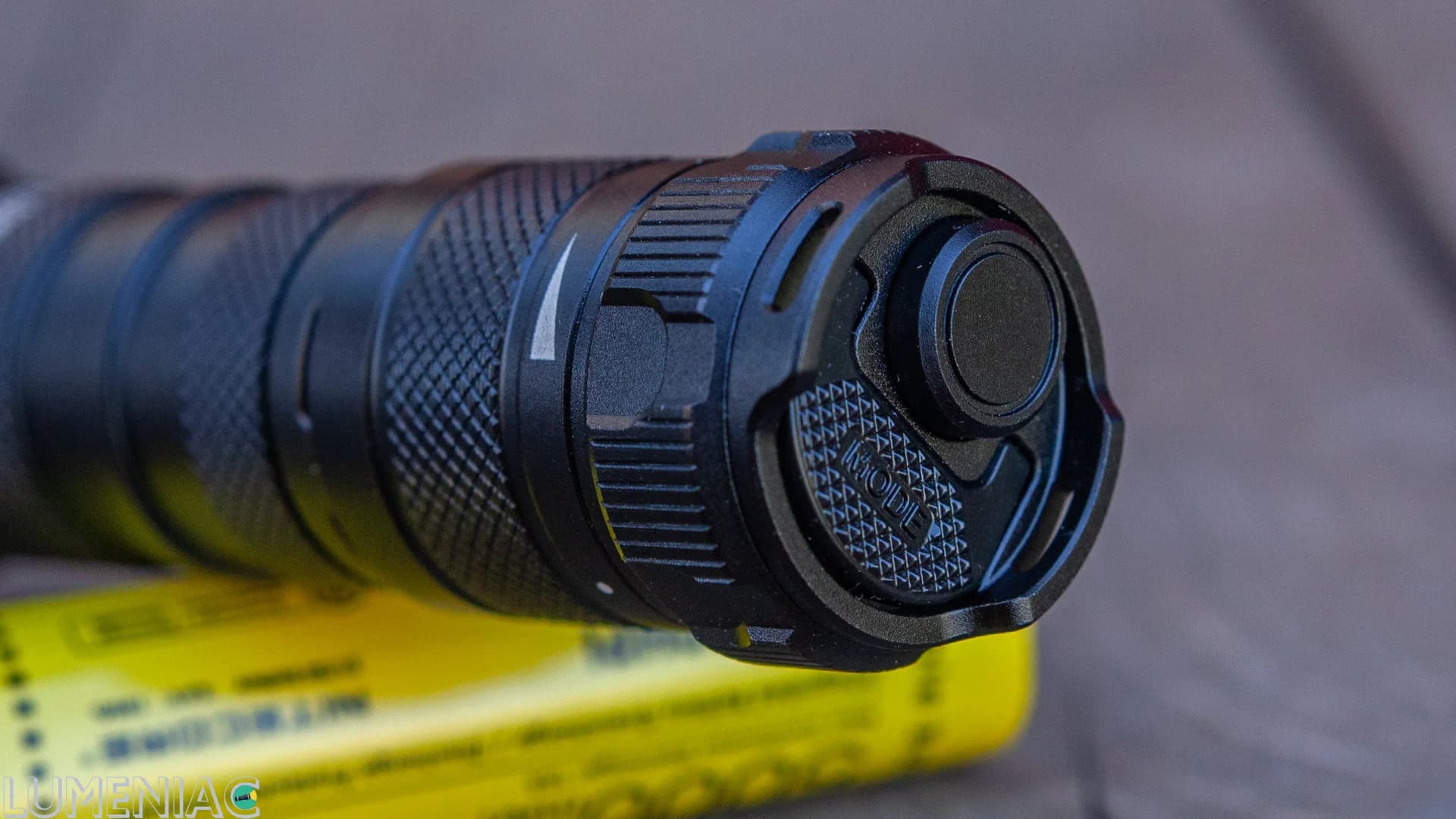
The second button is responsible for access to the strobe and is flush with the body.

The flashlight belongs to the i-line, which means it is powered only by its own proprietart “i”-battery. I have always been and will be against it.


There is a spring in the head of the flashlight and in my case it turned out to be a curve. There is also a litlle bit sping loaded contact pad at the tailcap
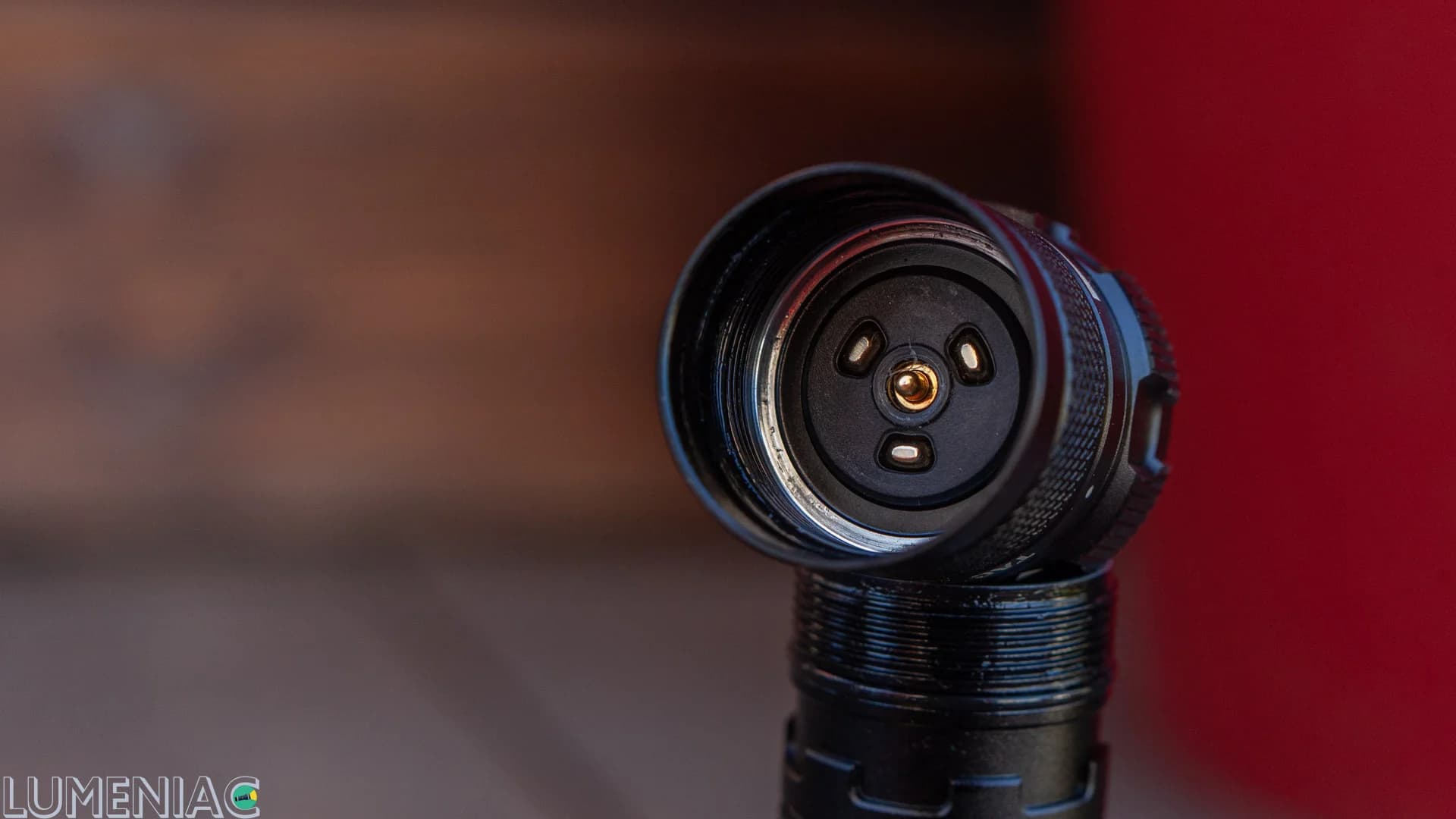

The thread is small, many turns. There is plenty of lubrication. The machining, of course, is impeccable as always - that is Nitecore.

The knurling is tenacious and deep. The grip is comfortable and reliable (even more reliable due to the clip)


I have seen different ways to close the charge port. But I see such a metal cover for the first time. And here everything is ambiguous. On the one hand, you can easily open it and never tear it off like a regular rubber cover.


But the gap between the lid and the head is wide enough to pass the water inside charge port. Not inside head itsef thoug, Nitecore wrote me that head and charge port are is isolated. But, stil, water can get in charge port. However, water can be easily blown out and you can charge flashlight. I have several camping flashlights with torn off charge power covers. All them work flawlessly even after lots night-long rains.

Charging is fast though. With a good charger , you can charge a 5000mah 21700 battery in just a couple of hours. Heh, do u remember that just 6-7 years ago, 0.5A was the standard and it took a whole night to charge 18650 battery.

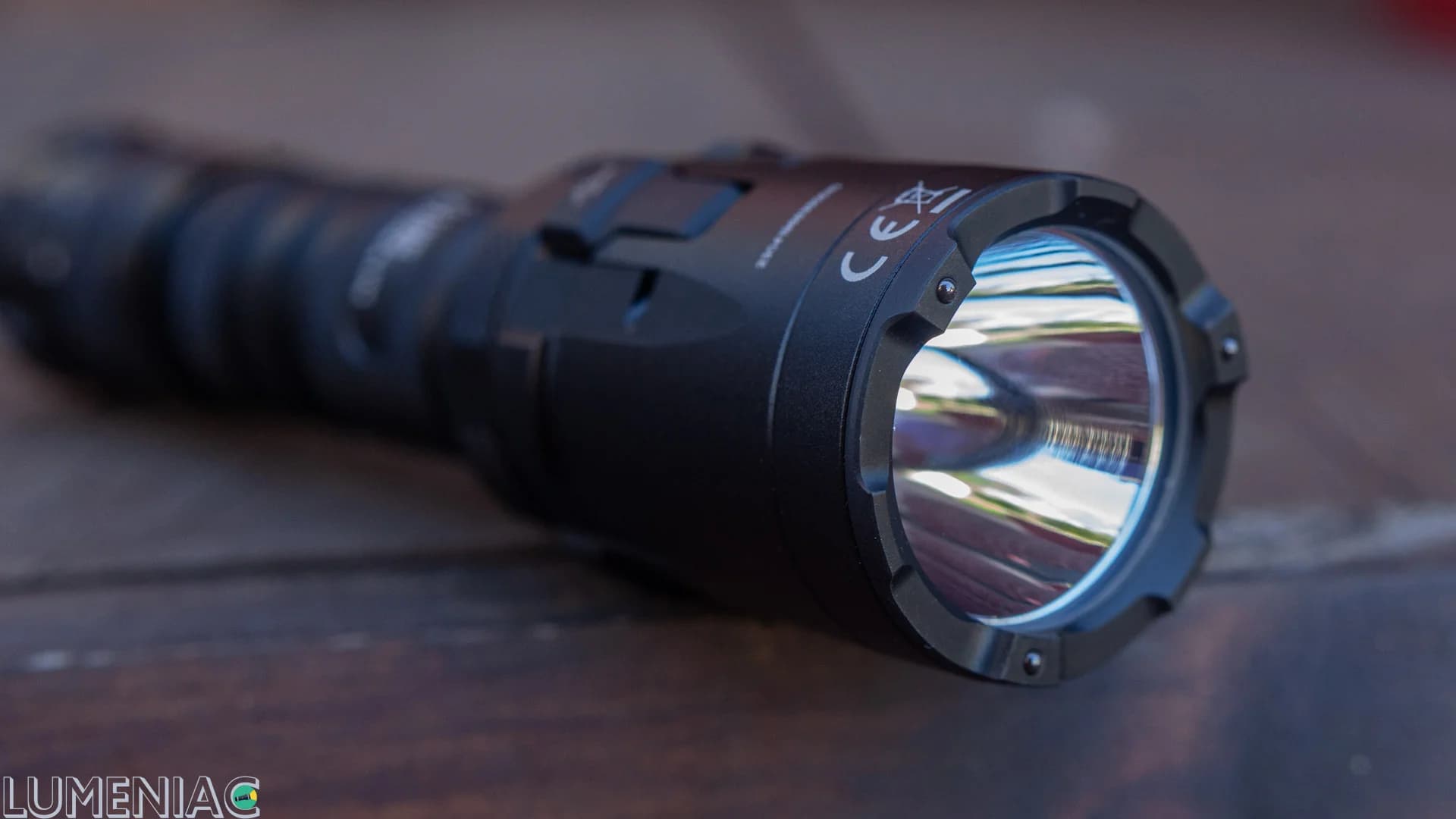
The flashlight is tactical, so the bezel here is “toothy”, and even a ball of glass breaker is built into each tooth

Reflector is quite deep and smooth. There is a Luminus SFT70 at its bottom , which is very pleasant LED in terms of brightness and throw. It seems that it is not centered according to my photo, but this is nothing more than an unfortunate angle.


UI:
UI
I liked UI of Nitecore SRT7i, really.
There is a normal mode with smooth brightness control, there is a tactical mode with instant access to turbo and strobe both from ON and OFF (!) and to 100 lum mode
However, this is a tactical flashlight, and I can’t judge how convenient all this is in situations of tactical use. In situations of normal use, UI seems to OK.
How Nitecore SRT7i shines:
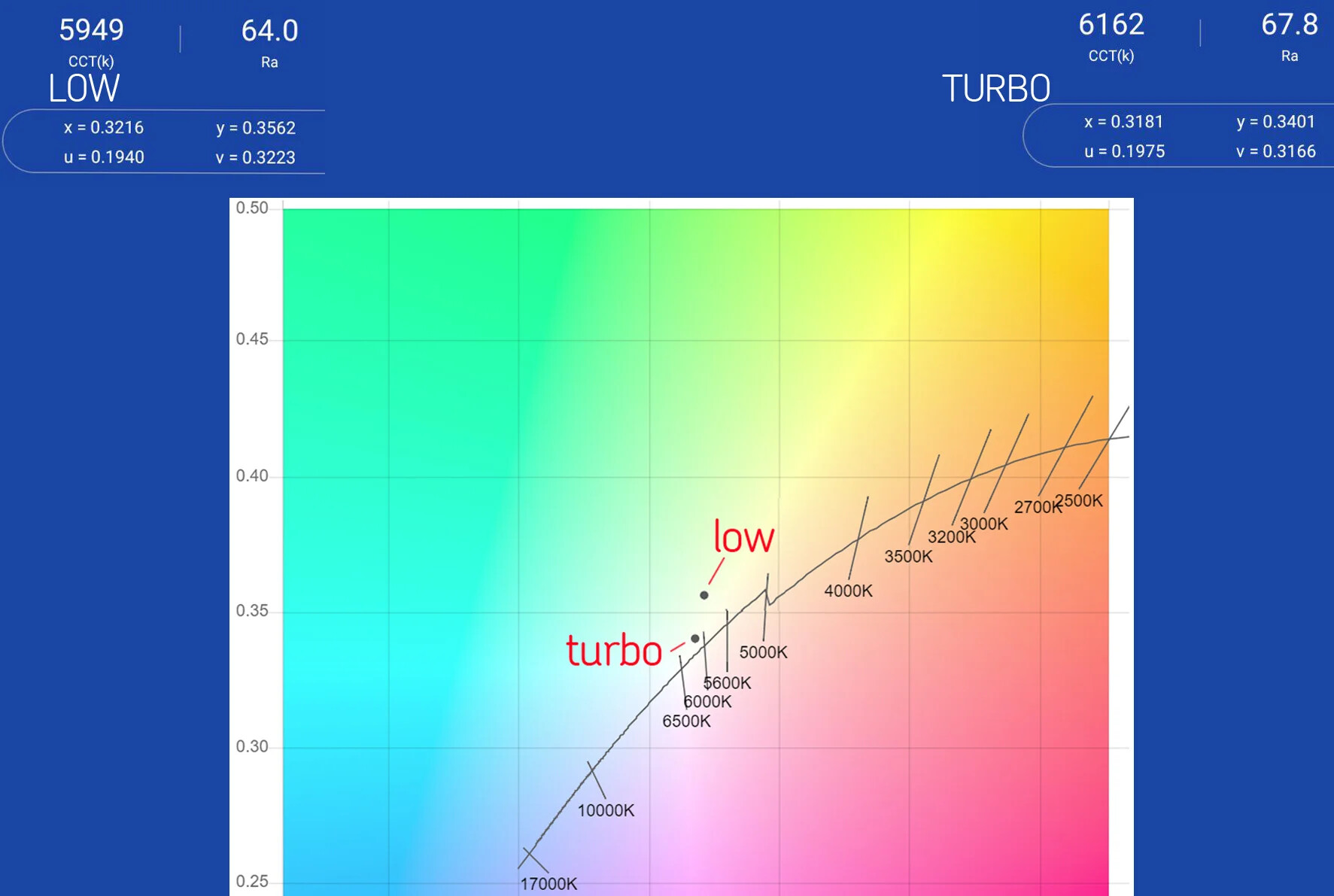
The light isn’t perfect, but could be much worse, the SFT70 LED has the risk of seriously turning green at low levels. For a tactical flashlight, everything here is definitely suitable.
The flashlight does not sustain a turbo even for a second even with cooling. The brightness starts to dive down instantly. However, with cooling, the brightness drops to an excellent level of about ~50% (i.e. conditional 1500lum) and to an acceptable level of 25% (i.e. ~750lum). And what is important - the fall lasts 4 minutes and I am sure that this time will be enough for sure.

And in the presence of some kind of wind, you will have a whole hour of work at excellent brightness, or 2 and a half at an acceptable one. This is more than enough for “on-off” use. For full-fledged work, you will definitely need a spare battery and, alas, it will be monstrously expensive.
I tried to get a level somewhere around 1000lum (1/3 of the turbo) and this is what I got. The flashlight reacts well to cooling. I have no explanation why after the brightness drop from the turbo, the flashlight keeps 1/2 of this mode, and does not keep 1/3 if this brightness is turned on separately.

As for the light itself, I really liked it. Even at 100 lum, the flashlight allows you to illuminate the yard of my poor old summer cottage.

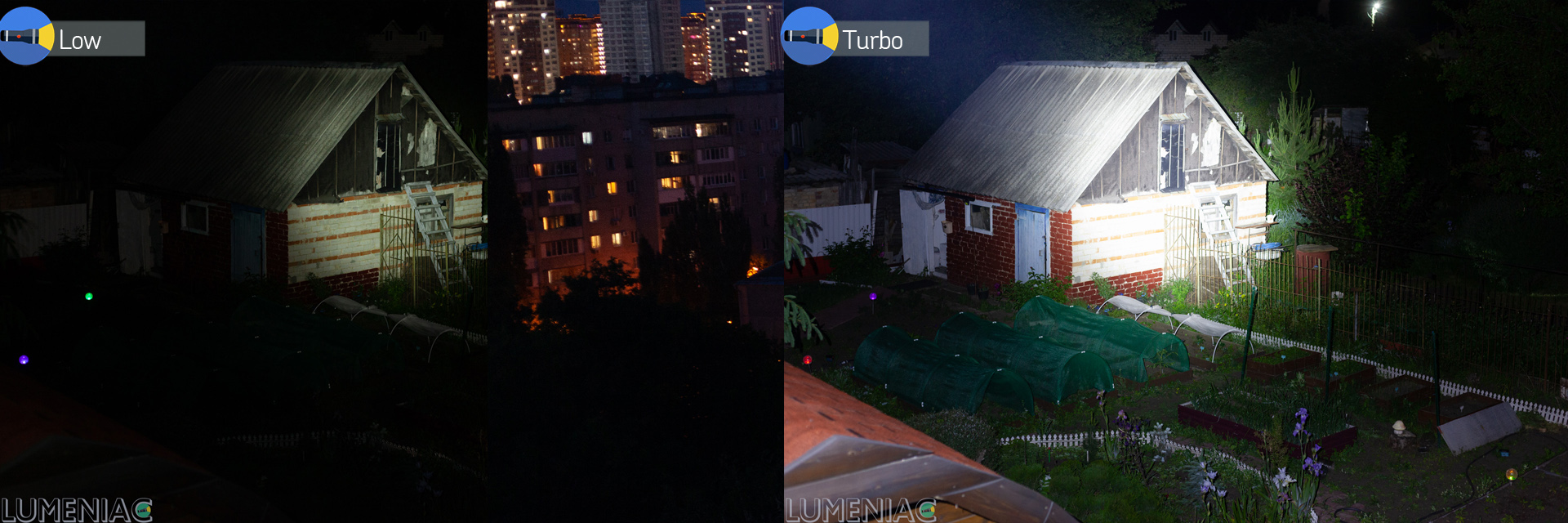


The flashlight cuts out a wide and a fairly evenly lit tunnel in the dark in turbo mode. With this sharp light-shadow border, the Nitecore SRT7i reminded me of zoomie


By the way, these 100lumes are quite a low browtness, but to my surprise i saw some light in this mode even at a distance of 200m.

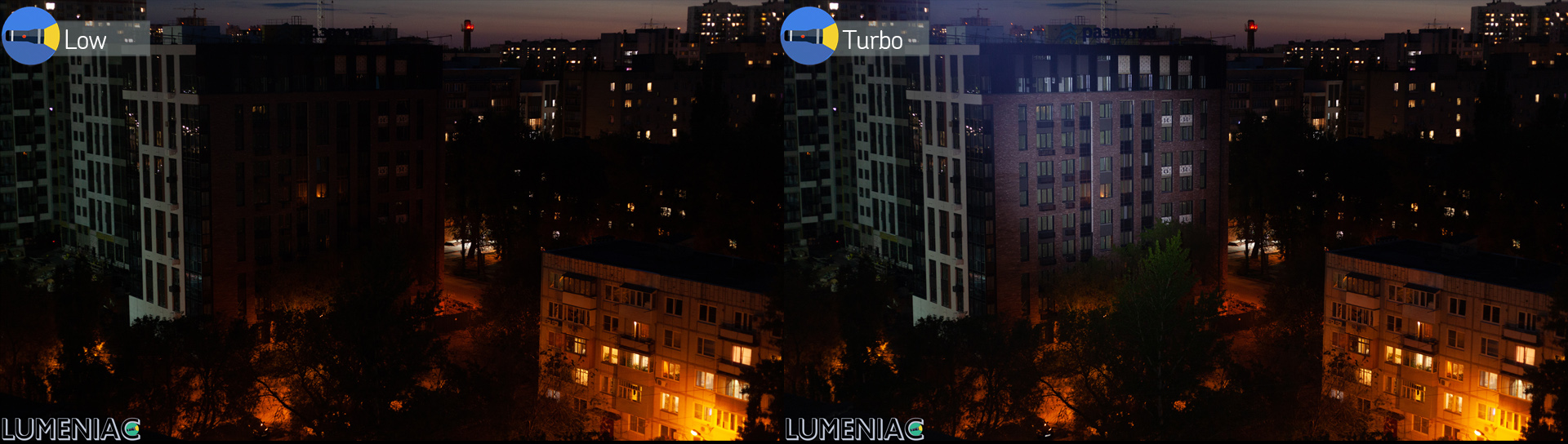
I would estimate the maximum range at a little more than these 200m. Still, the SFT70 LED is good, but it requires a completely larger reflector size for range. Throw of Nitecore SRT7i looks way better, thanx to bright dedomed LED


OVERALL IMPRESSIONS
To soften overall positiveness of this review i should repeat - i don’t like proprietary batteries . And this is perhaps the only bad thing I can say about the Nitecore SRT7i besides “waterproof” charge port cover.
But i really like Nitecore SRT7i for everything else besides proprietary battery. Flashlight looks good (although this is not so important for a tactical flashlight). It has unexpectedly good UI , which seems quite sane to me. At least at the level of use within the framework of making Nitecore SRT7i review.
Nitecore have been able to do a good job of combining UI for general needs with purely tactical UI with it`s instant access to turbo, strobe and 100lums.
The flashlight has a good runtime and charges quickly.
Nitecore SRT7i has a good medium-long-range light with a clearly defined light-shadow border. It is not ideal for close range work, but still it can be used as a walk around light or for indoor use (i mean something larger then bedroom - warehouses or hangars). For parking lots and other places that need to be patrolled. It seemed to me definitely suitable for these needs.
Nitecore SRT7i provides with a good wide light at a distance of 200m. A flashlight at this distance will almost completely and brightly illuminate 9-10th floors building. The light is stabilized and with the ability to keep more brightness in the presence of cooling.
Briefly speaking, I like this flashlight. I do not undertake to say exactly how much its light and UI meet all kinds of security and patrol needs, but it seemed to me id does. It’s a pity, I repeat, that this model was created within the i-line. I think that an extra battery is always needed, and forking out for the 21700i will not make you happy. Although some English-speaking security guard wrote to me in the comments to another flashlight in this series and he said that constant light is not needed, so one battery is enough for a shift. Well… maybe so. Or maybe not.