Model Name: Acebeam P20 mini
Body Material: Aluminum alloy
Max Brightness and Throw: 4000 lm and 1035m / 1132 yards (267,608 cd)
LED: 1x Luminus SFT60-W
Power Source: 1 x 21700 (6400 mAh included), built-in USB-C charging
Size and Weight: 175 x 65 x 26 mm / 6.89" x 2.56" x 1.02", 305.8g / 10.79oz (including battery)
Other: IPX68 , drop resistance up to 1.5 m


DESIGN
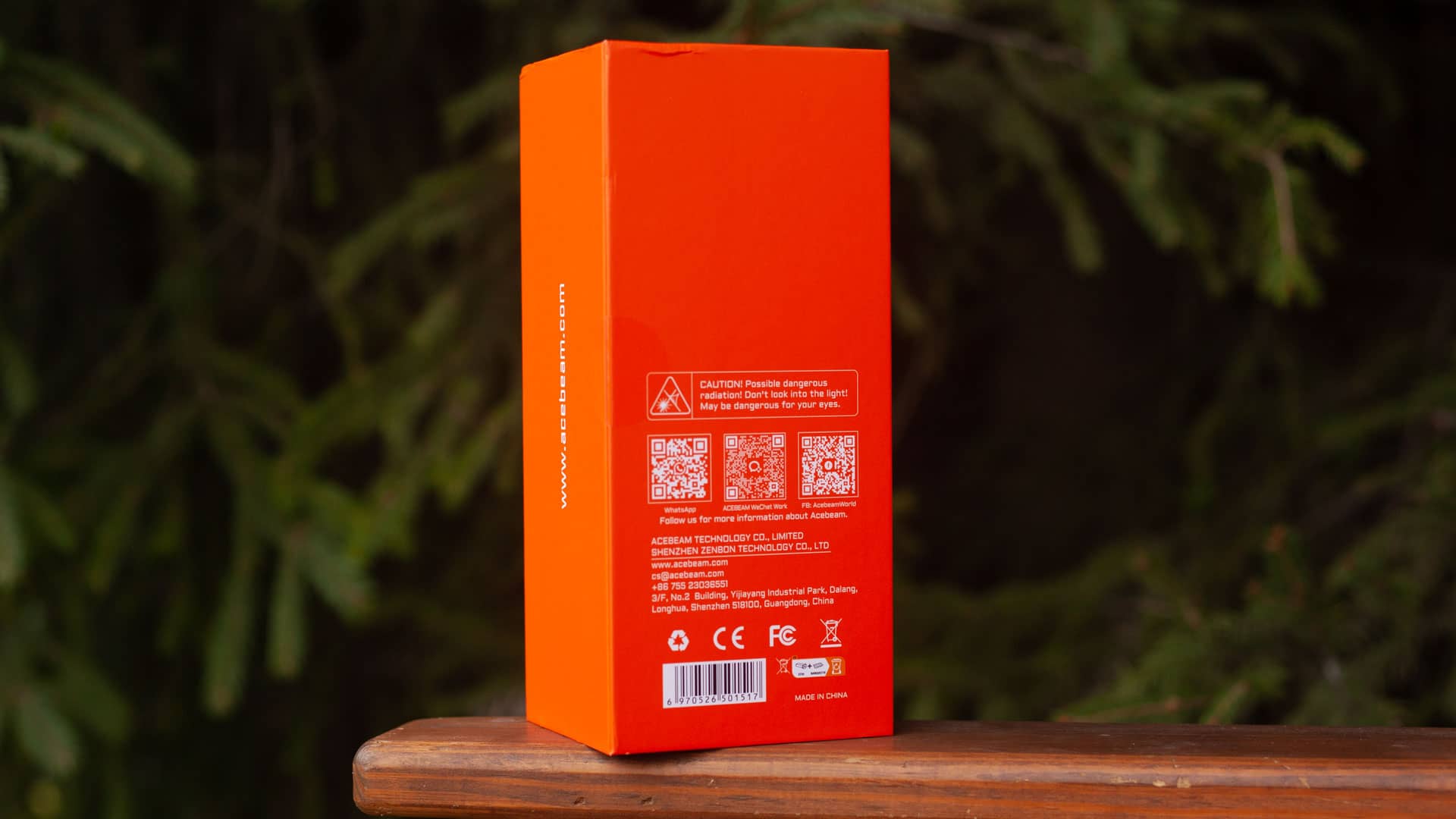
A large orange box made of thick cardboard. The front features a schematic image of the flashlight and large, eye-catching figures for brightness and throw. The back lacks the usual table showing brightness levels and runtime. This is not a sort of premium package with super-design, but it is immediately clear that this box contains good brand-name product.

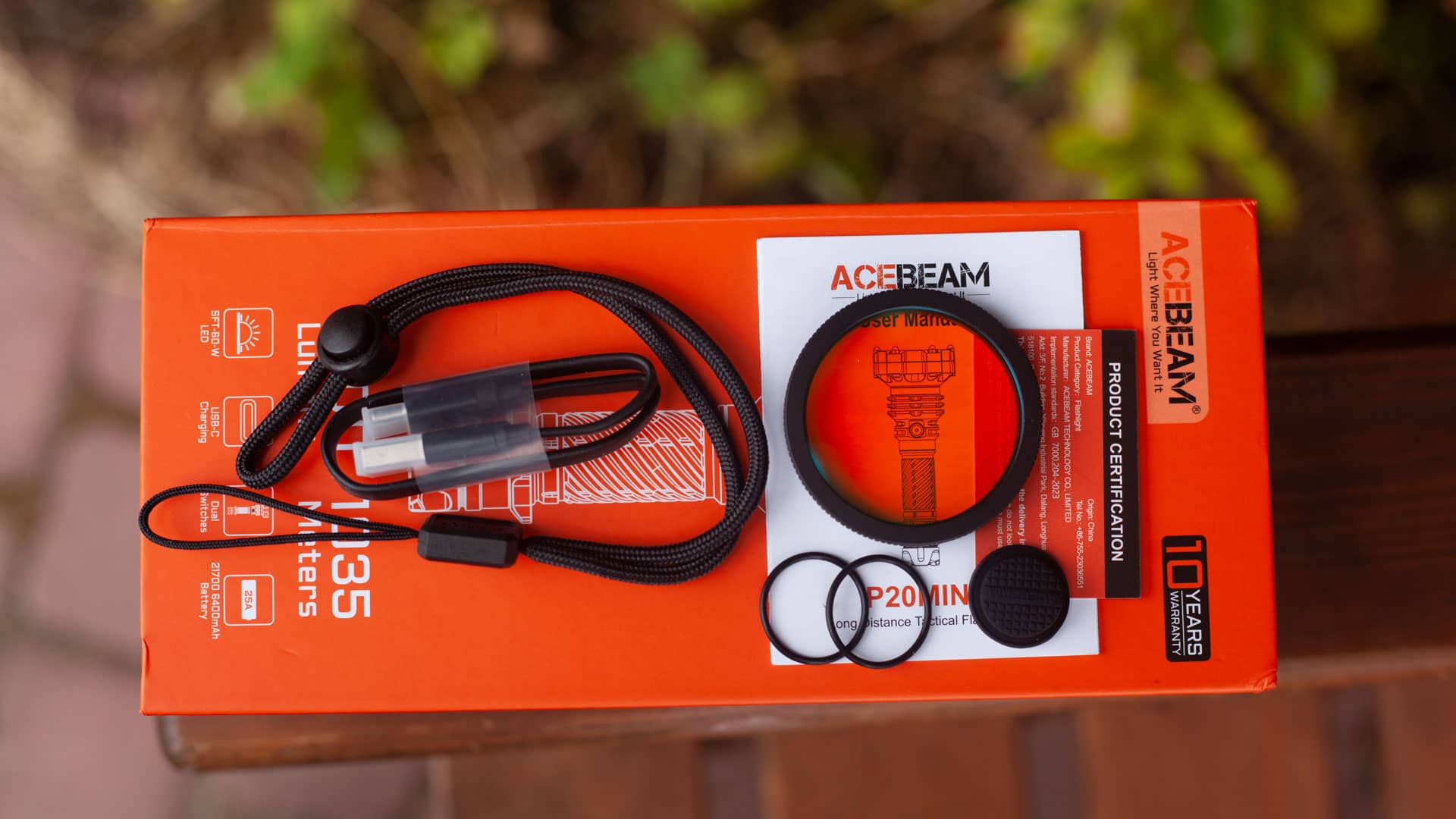
Acebeam P20 mini kit includes:
- flashlight
- holster
- short USB-C charging cable
- pair of O-rings
- spare tail switch cover
- lanyard
- orange light filter



The holster is excellent. It is made of sturdy fabric and features a choice of a carabiner loop or a Velcro strap on the back.


And here is the star of the review. Acebeam P20 literally oozes testosterone and looks incredibly rugged. All those cooling fins and the spikes protruding from the head make it a 100% "manly toy, the kind you simply can’t take your eyes off or put down once it’s in your hand. It looks great with the matte black anodized finish, but I’d be very interested to see it in a camouflage pattern; after all, Acebeam releases many of its flashlights in various colors, including camo.


As for size, its 175mm / 6.89 length and 65mm/ 2.56" head diameter mean it is definitely not a pocket-sized flashlight. Here it is next to a 21700 battery for scale. And this isn’t a standard flat-top battery, but a longer proprietary one (more on that below).

I really like the spiral knurling, and I’m glad Acebeam chose it over the standard “pineapple” pattern. The knurling is deep and offers excellent grip. The flashlight fits perfectly in the hand, aided in part by the grip ring at the tail.


The grip ring is removable and held in place by a separate O-ring. Besides improving grip security, it also prevents the flashlight from rolling off a table. One of the ring’s protrusions features a hole for attaching a lanyard.


The tail switch is protected against accidental activation by three raised, flat tabs. The body section between them is thoughtfully beveled to make pressing the switch easier. It might seem like a small detail, but it’s attention to such details that shapes the overall impression.


The springs in the tail cap and at the head end are single-coil , but thick ones. The threads are flat and not anodized, so you cannot lock out the light by slightly unscrewing the tail cap.


Note that an additional signal-carrying tube is press-fitted into the flashlight body.

The side switch located on the flashlight’s head plays the primary role in controlling the Acebeam P20 Mini. It is small and flat. I would definitely prefer a raised button, it would be easier to locate button. While the flat surface surrounding the button does some help with finding it, I simply don’t see any advantages to a flat button over a raised one. Or a concave one, for that matter - I’ve used those before, and that unique shape made it very easy to find, as your finger naturally settled into the depression.

While placing the charging port on the side opposite the button is a classic design choice, the decision not to use the standard rubber cover is quite the opposite. Instead, it features a metal cover similar to the one found on the Keylite 500 (review keychain light. I was initially skeptical; after all, a standard snug rubber plug is one thing, but a simple metal cover is another. However, after nearly a year of use, I’ve found the metal cover very convenient and reliable -unlike a rubber plug, it certainly won’t tear off. I have several flashlights which lost these rubber plugs.


It is also worth noting that many devices now come with water-resistant charging ports, and the P20 Mini is rated for submersion up to 2 meters. That said, it is best to avoid pressing the buttons while underwater.
Regarding the full charging time via the USB-C port: if you need to keep using the flashlight, you can simply swap in a fresh battery and charge the depleted one directly via its own built-in charging port! In either case, you’ll know charging is complete when the indicator light changes from red to green. It takes around 3 hours to fully charge depleted battery via charging port in flashlight.


And finally, one simply cannot overlook the amazing fact that the included 21700 battery has a capacity of 6400 mAh. After all, some 7 or 8 years ago, the newly introduced 21700 batteries offered 4000mAh - capacity that seemed amazing for battery slightly larger then common 18650. Heh, time have passed and 18650 batteries have the same capacity now. Who knows, perhaps in a few more years, we’ll be able to cram a mind-boggling 10000 mAh into the 21700 cell…
As you can see, the flashlight’s head is quite substantial. It’s not truly massive, but certainly large for a flashlight powered by a single battery. That amount of metal in the body, combined with the deep, chunky cooling fins, should definitely help the light maintain high brightness levels. I’ll be testing that later on.
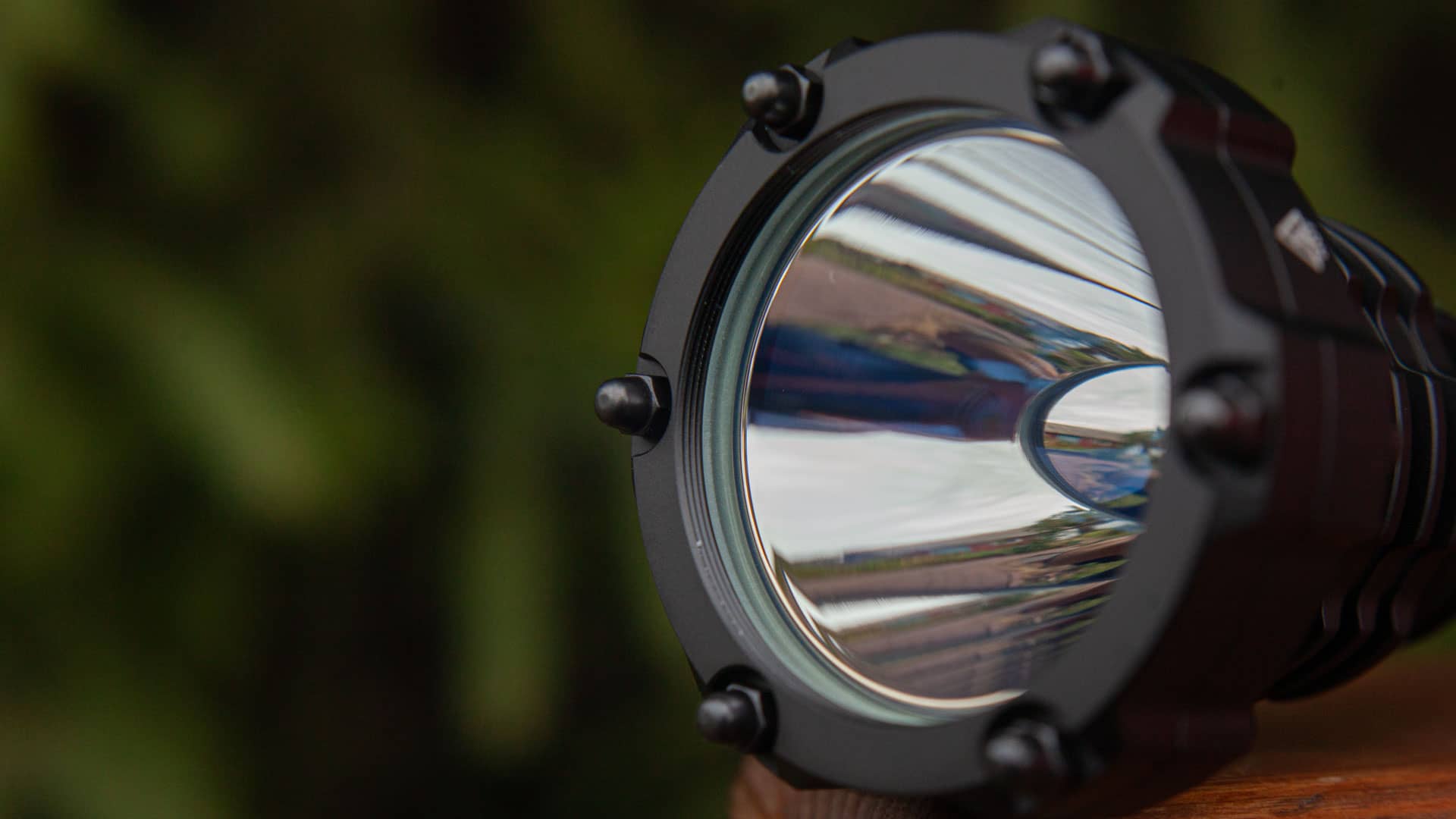
The bezel is secured to the body by protruding studs-spikes, that really give the P20 Mini the look of a compact mace that nazgul might hold in hand.

The bezel is deep, and for good reason: it’s threaded to accommodate the included orange filter.


Attaching the filter instantly transports the flashlight from a Nazgûl’s grip into a steampunk world - at least for my eyes. All that’s missing is a toggle switch instead of a push-button.


Long-range flashlights often use TIR optics (like the L17, L18, and L19, for instance). Here, however, Acebeam has opted for a tried-and-true solution: a deep, smooth reflector housing the somewhat rare Luminus SFT60R LED at its base. This LED strikes a balance between the large, power-hungry, ultra-bright SFT90 or SBT90 and the tiny, less powerful “piercer” like SFT25R or the now less popular Osram TG.

UI
UI is simple and user-friendly, a setup proven by many other models.
Tail switch is dedicated solely to activating Turbo (via full press or half-press).
Side button operates using a familiar, popular interface:
In OFF state:
- Short hold - Moonlight; 3-seconds hold - lock mode
- 1 click - Turn on at the last used brightness level (mode memory included)
- 2 clicks - Turbo
- 3 clicks - Strobe
- 4 clicks -Unlock
In ON state:
- Hold - Cycle through brightness levels (ascending order)
- 1 click - Turn off
- 2 clicks - Turbo
- 3 clicks - Strobe
Acebeam P20 mini in action
I would naturally prefer the 5000K SFT60R version (and yes, it exists!) for this flashlight, However, that specific version of LED might suffer from terrible green tints, so Acebeam likely chose the cool white version for its cleaner beam. Incidentally, the tint does shift slightly, specifically toward yellow, dropping the color temperature to around 5700–5800K at Low mode.

In any case, the orange filter effectively handles challenging conditions; with it attached, the color temperature drops drastically to around 1700K! The low CRI isn’t an issue; it is entirely expected and justified for a long-range flashlight. What is the point of high color rendering at the cost of brightness and throw when the goal is long-distance illumination? High CRI makes sense for headlamps and EDC lights used for close-range tasks.
One important point: brightness drops to about 40% of the original level when the filter is attached. Given this, it makes sense to use the filter in heavy fog or dusty conditions, where cool white light would otherwise create a blinding wall of reflected glare.
Brightness is fully regulated, and thanks to the high-capacity battery and the substantial amount of heat-dissipating metal in the body, the flashlight can sustain it for a long time. What matters most here isn’t the initial two-minute burst of Turbo mode from a cold start , but the runtime when re-activating Turbo after the body has already warmed up - exactly what happens in real use. Depending on cooling conditions, the light sustains output for 30 to 60–65 seconds - an excellent result for this level of brightness during a restart.

Wind or cold weather similarly increases runtime in “High” mode. As for the other brightness levels, they hold steady without active cooling; Acebeam P20 mini handles 1000 lumens just fine. And how about 7 hours at 500 lumens? That runtime is particularly impressive considering the distance the light covers at this setting.


Despite Acebeam P20 mini being a state-of-the-art flashlight featuring modern power capabilities (referring to the included battery’s capacity, not just the form factor) and a cutting-edge LED, believe or not, but it`s beam profile strangely reminded me of the good old Convoy C8+ XPL-Hi. From a distance of one meter, they produce an identical spill width and a similarly sized hotspot. I tested it alive, seriously. Of course, there are differences (inevitably so), but P20 mini’s hotspot is definitely more sharply defined and way brighter relative to the spill.
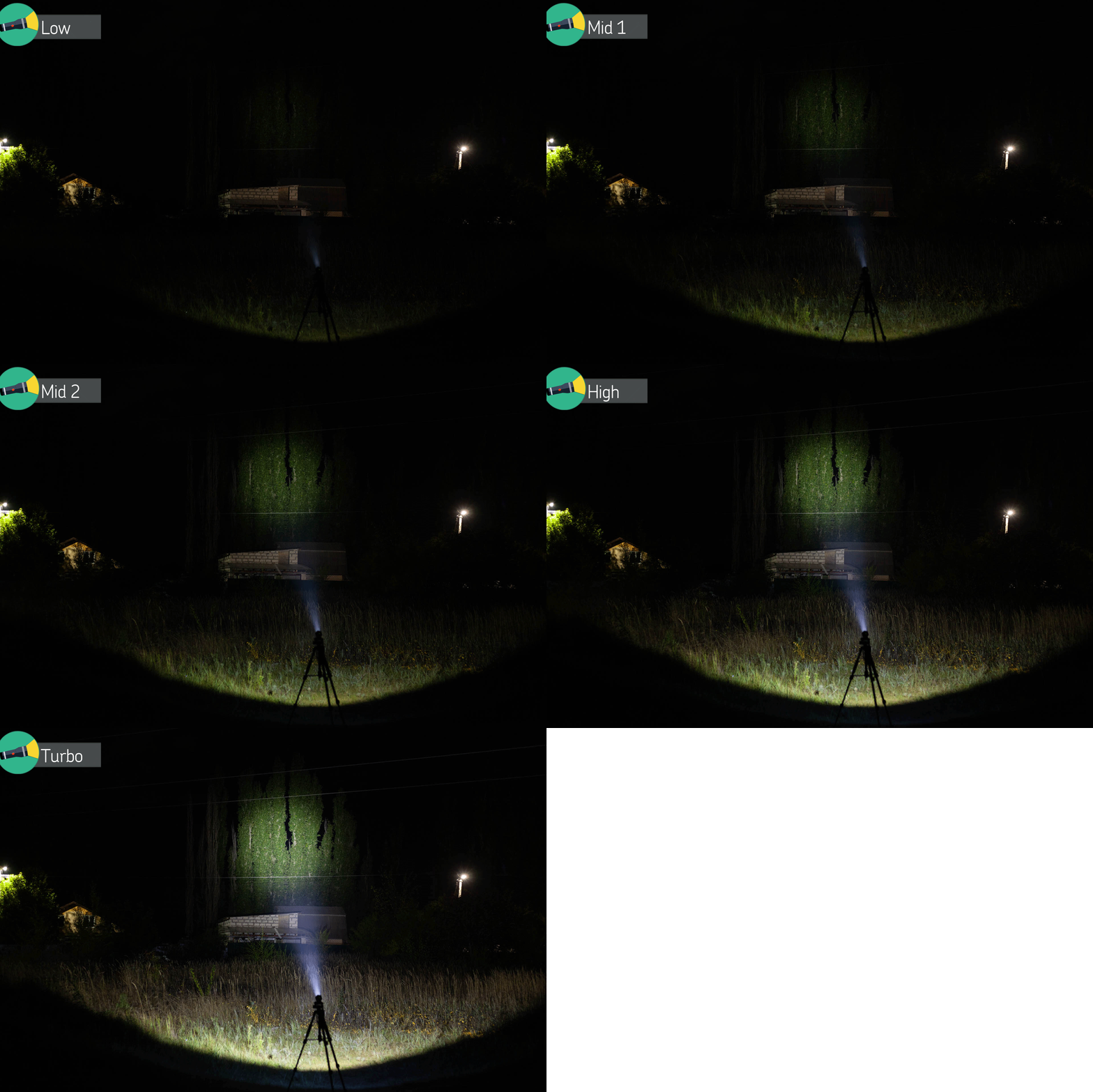
Now for the interesting part: let’s see how it performs. Even at the minimum setting of 15 lumens, the light reaches out about fifty meters. While the brightness figure might not look impressive on paper, in reality, it provides clearly visible light across a typical backyard or cottage plot. Oh, here’s another important point: the flashlight automatically drops to this brightness level when the battery can no longer sustain higher power output. And it will keep squeezing those 15 lumens out of the battery for a very long time. So, finding yourself in total darkness would actually be difficult.
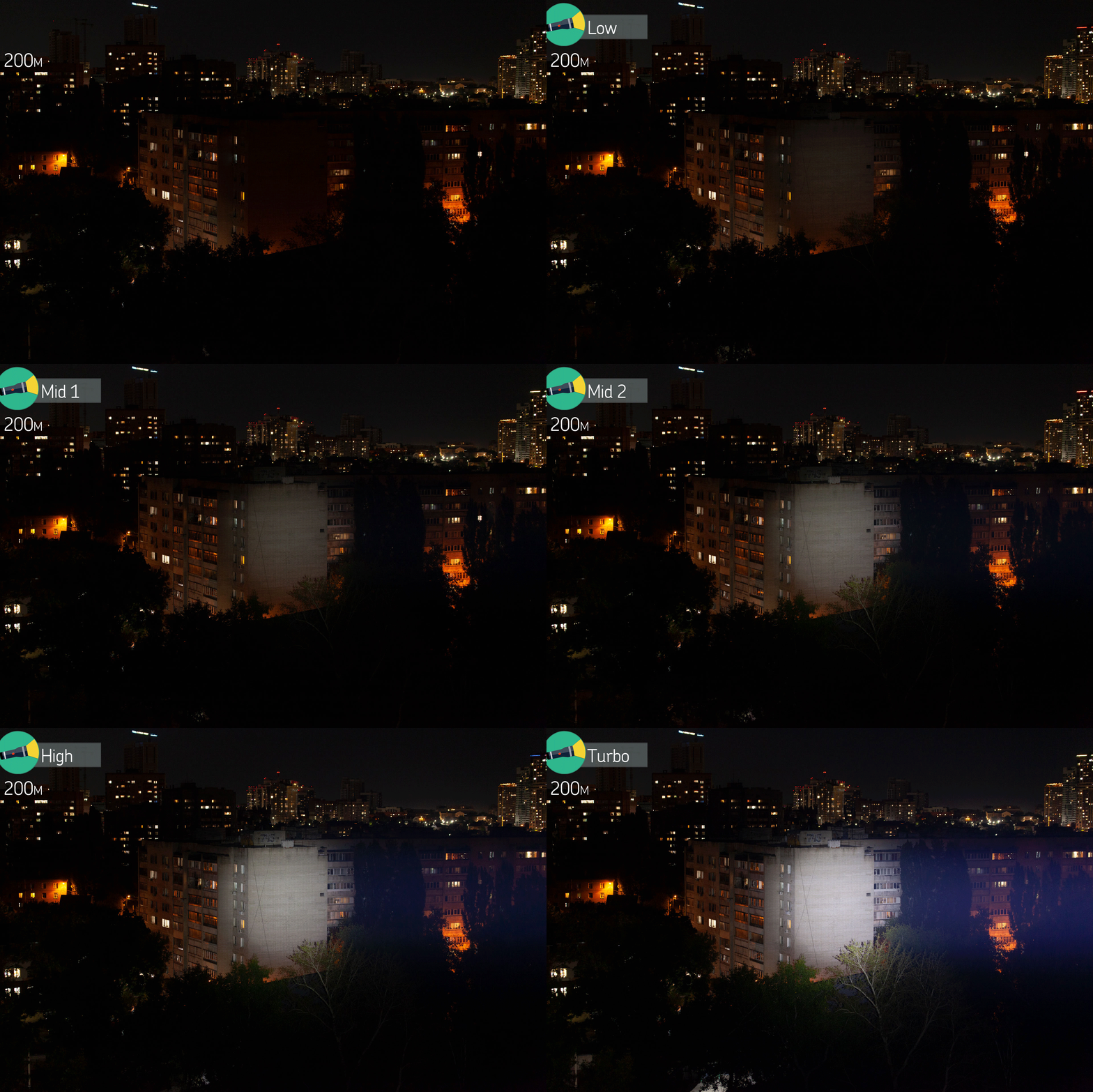
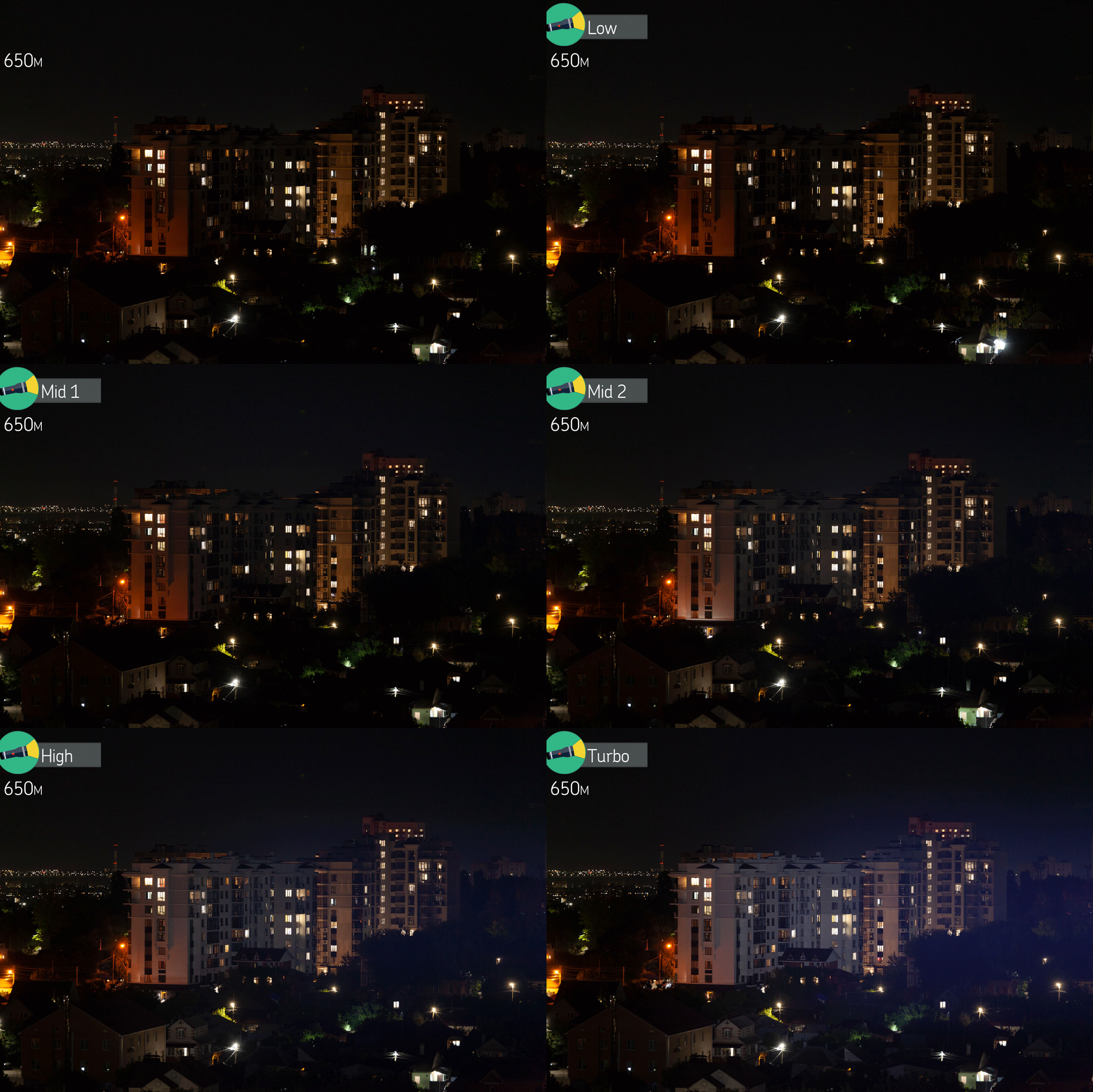
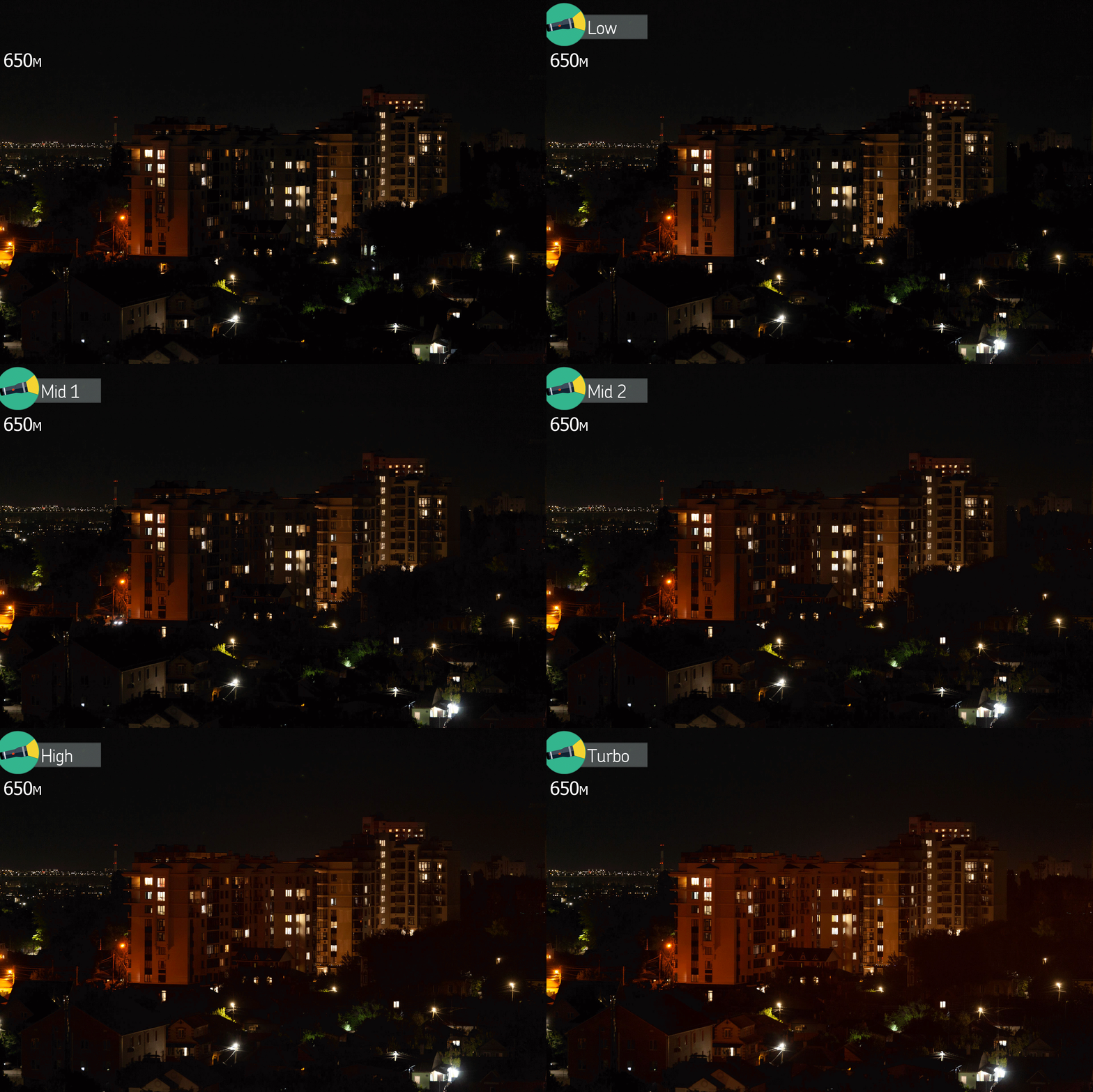
Acebeam P20 Mini full review wouldn`t be “full” without most interesting part - examples of illumination. So, enjoy!
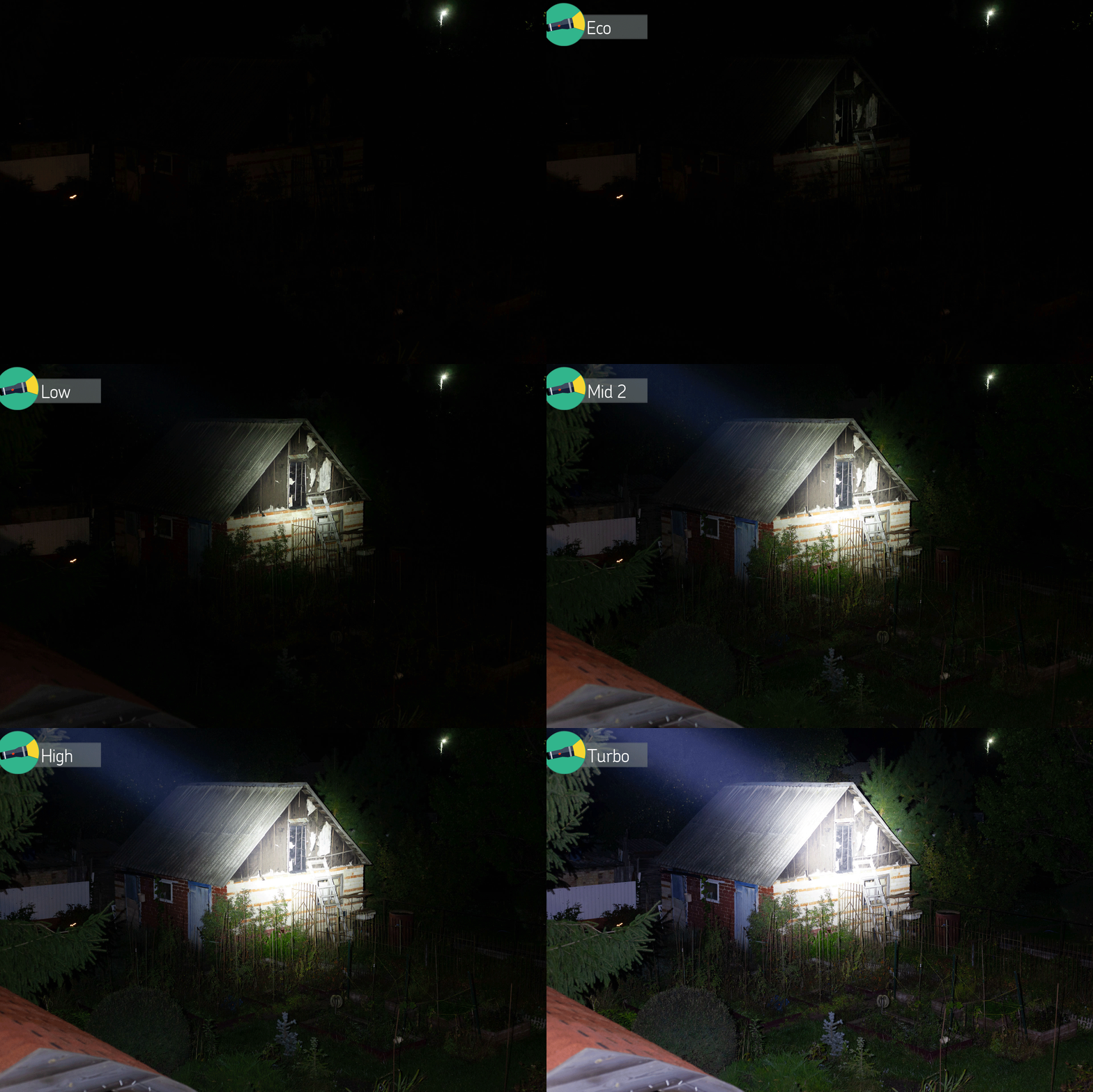

As for other distances, the LOW mode allows you to work comfortably within a hundred-meter range - which is often plenty for large spaces like hangars or warehouses. And remember, the runtime here is 14 hours! The Mid1 mode, with its 500 lumens, easily reaches 200 meters and remains effective even at 300 meters.
For the vast majority of everyday needs, you won’t need to shine the light any further than that. The Mid2 mode, with its 1000 lumens reaches out half a kilometer - the limit for many standard long-range flashlights. Yet, you get two and a half hours of runtime at this range without any drop in brightness! The High mode (2000 lumens) extends beam to around 750 meters, a distance where the naked eye could barely distinguish a passenger car from a truck.


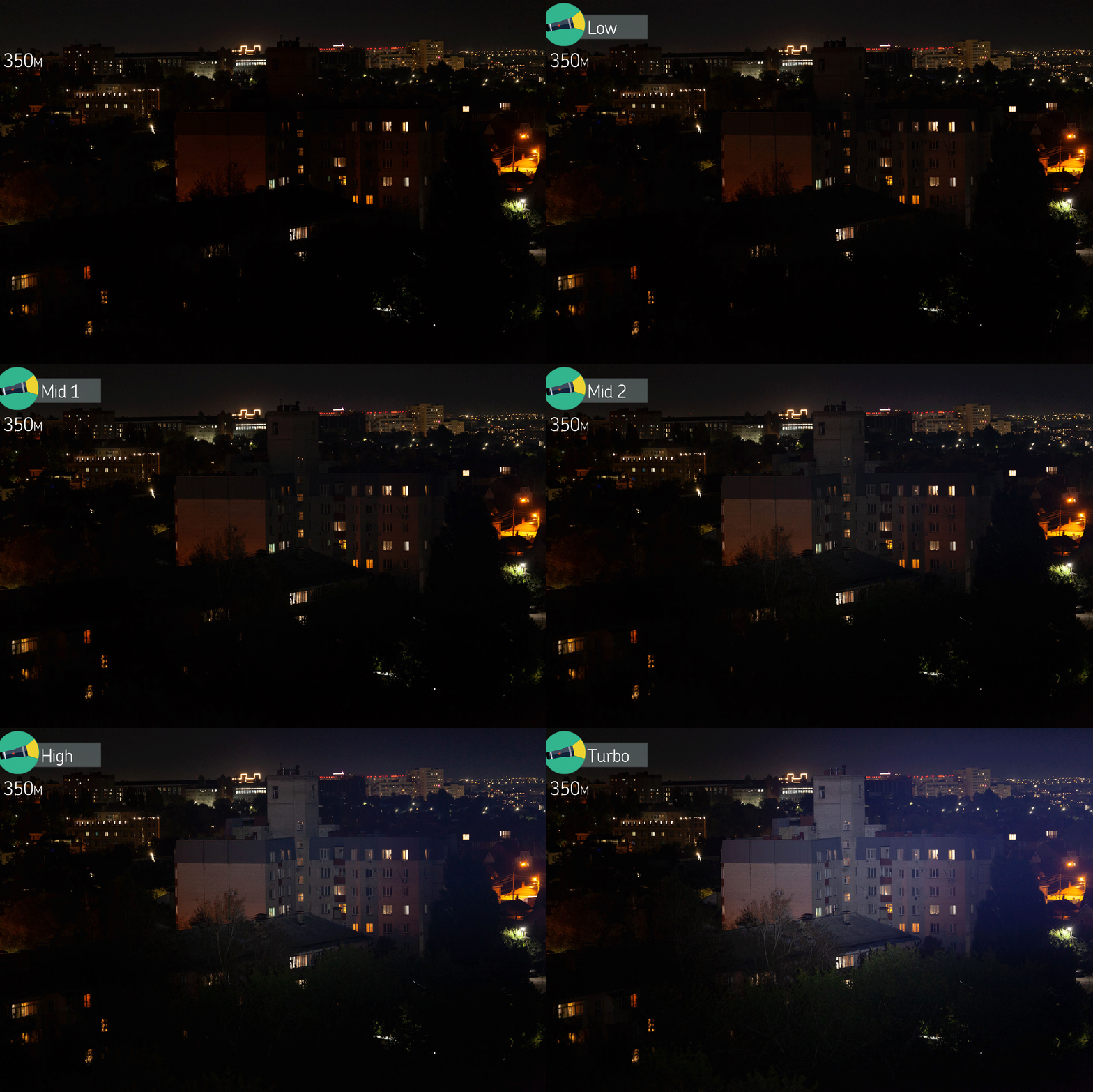

As you can see, Mid2 mode (1000 lumens) is perfectly usable at 650 meters distance and remember that comes with two hours of runtime! High mode would certainly be better, of course, but the key takeaway is that you don’t even need Turbo at that distance!

As for Turbo, that majestic Turbo mode, it’s justified at ranges of 700–800 meters and beyond, pushing the beam out to a full kilometer. That’s a distance where the naked eye can usually only make out buildings. Frankly, I’ve never quite understood the real-world need to shine a light a kilometer away. I’m not talking about showing off a “Jedi lightsaber” beam that reaches the clouds, but rather a practical application. Mountain operations or marine use come to mind - and in both cases, incidentally, an orange filter would be a great addition. Still, it’s nice to have that capability.
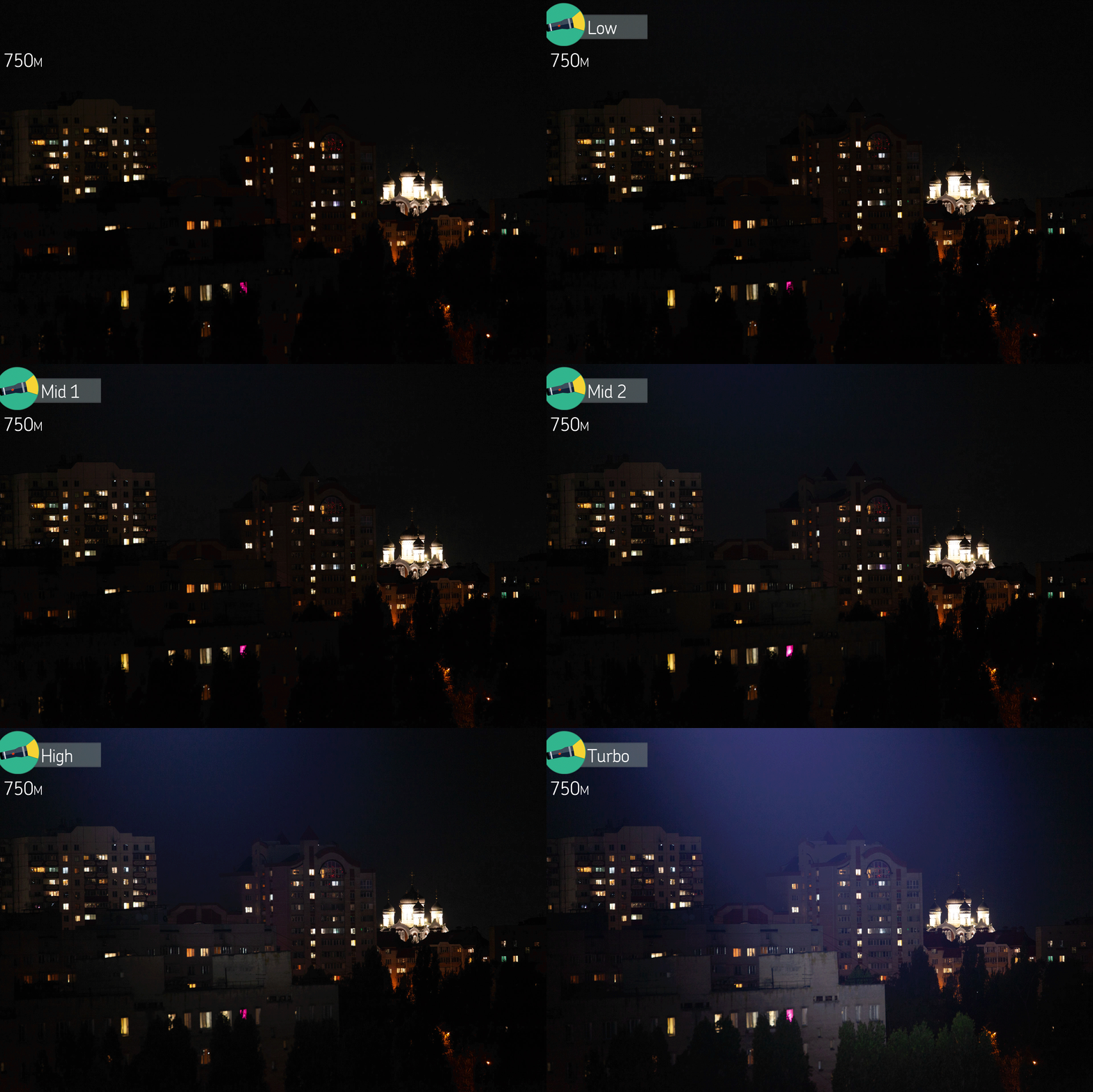

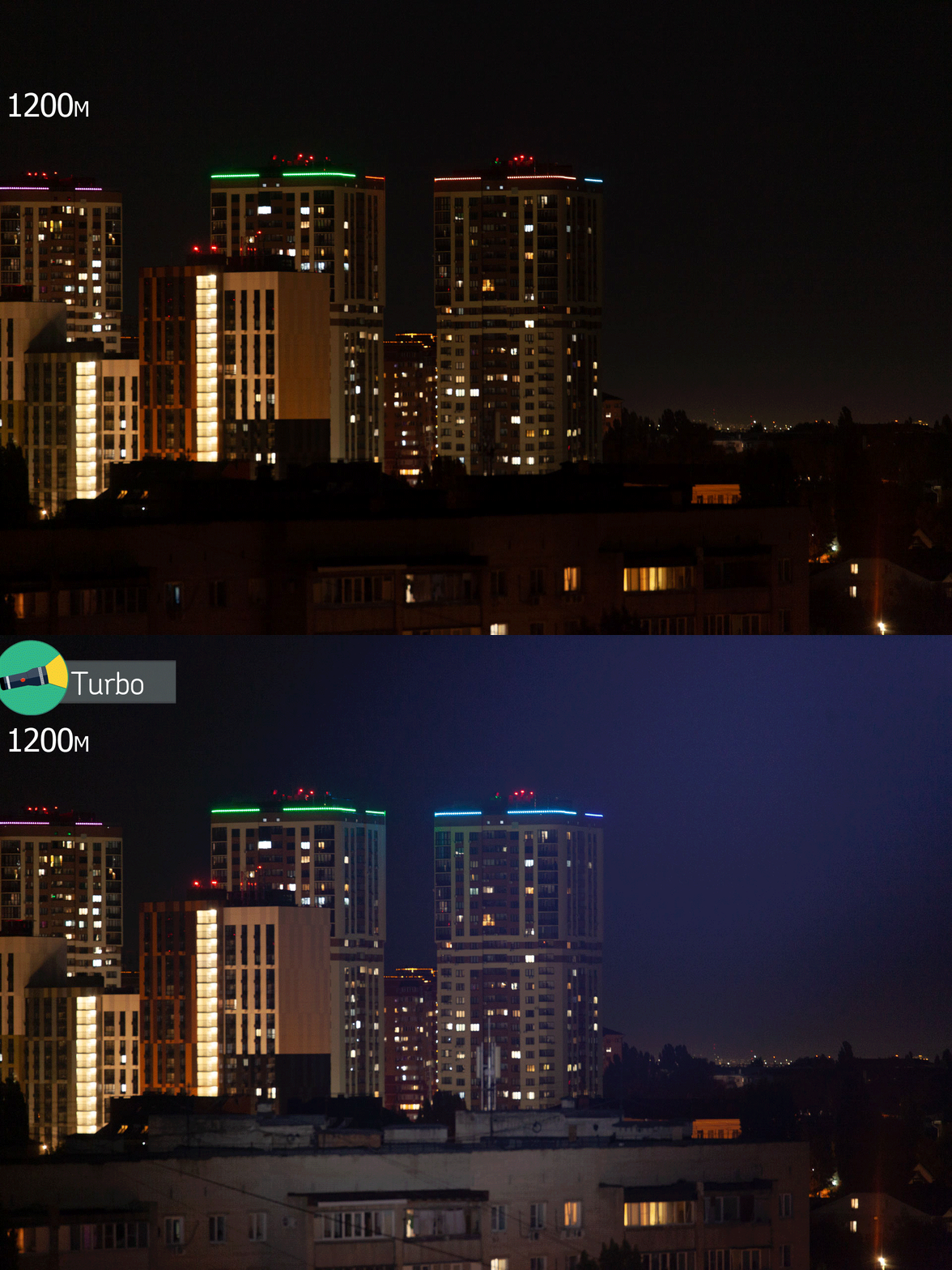
What’s more important here is a fact that isn’t immediately obvious to many people. Let’s say you need to work at a range of 500 meters. That’s a distance well within the capabilities of many long-range flashlights…but usually only in short bursts of Turbo mode. But what if you need continuous illumination at that distance? That’s where the advantage of such extreme throw really steps in. The larger the throw, the less brightness you need for intermediate distances. That means lower battery consumption and the ability to work continuously at that intermediate range (the aforementioned 500 meters).
Orange filter
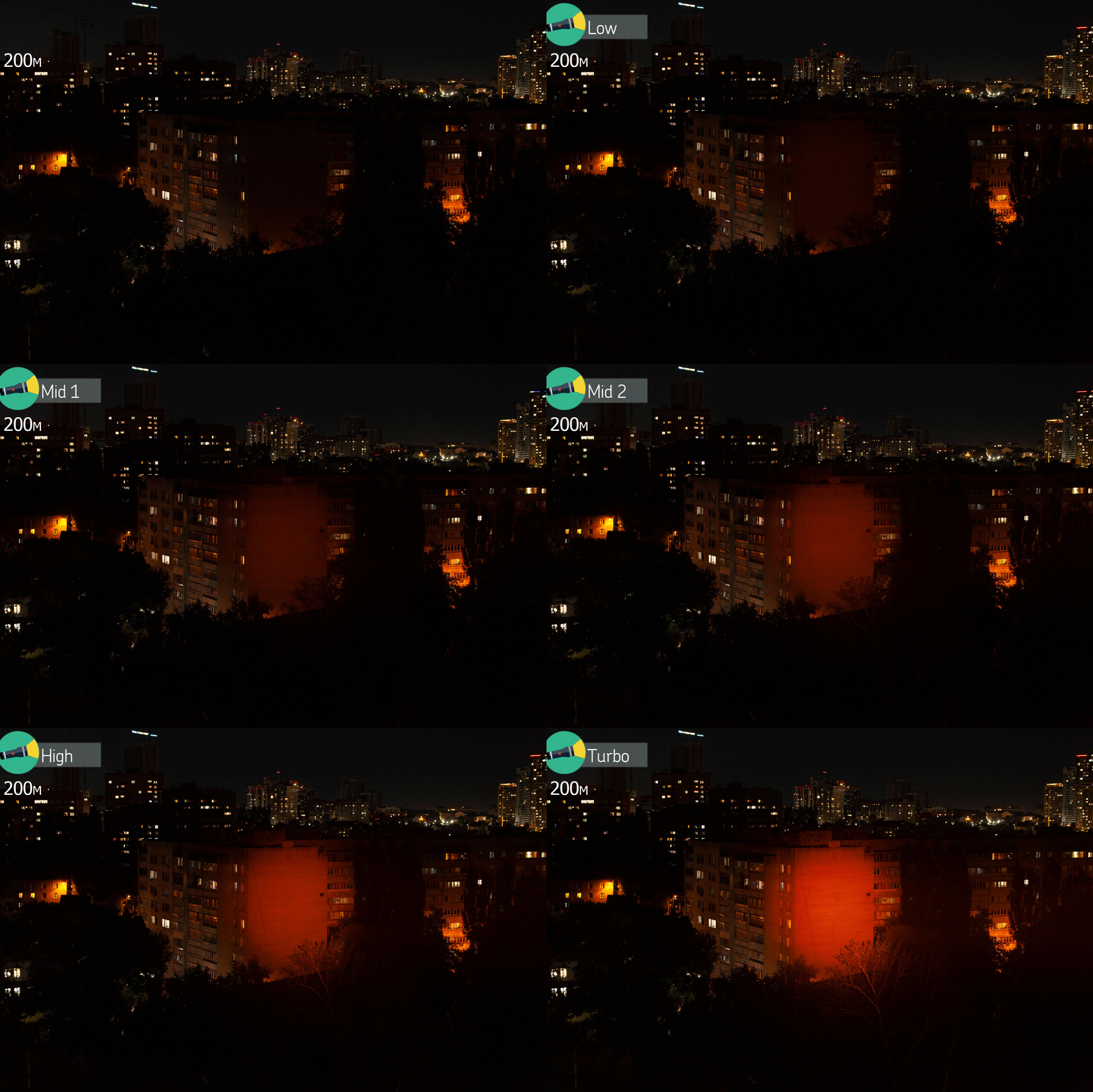
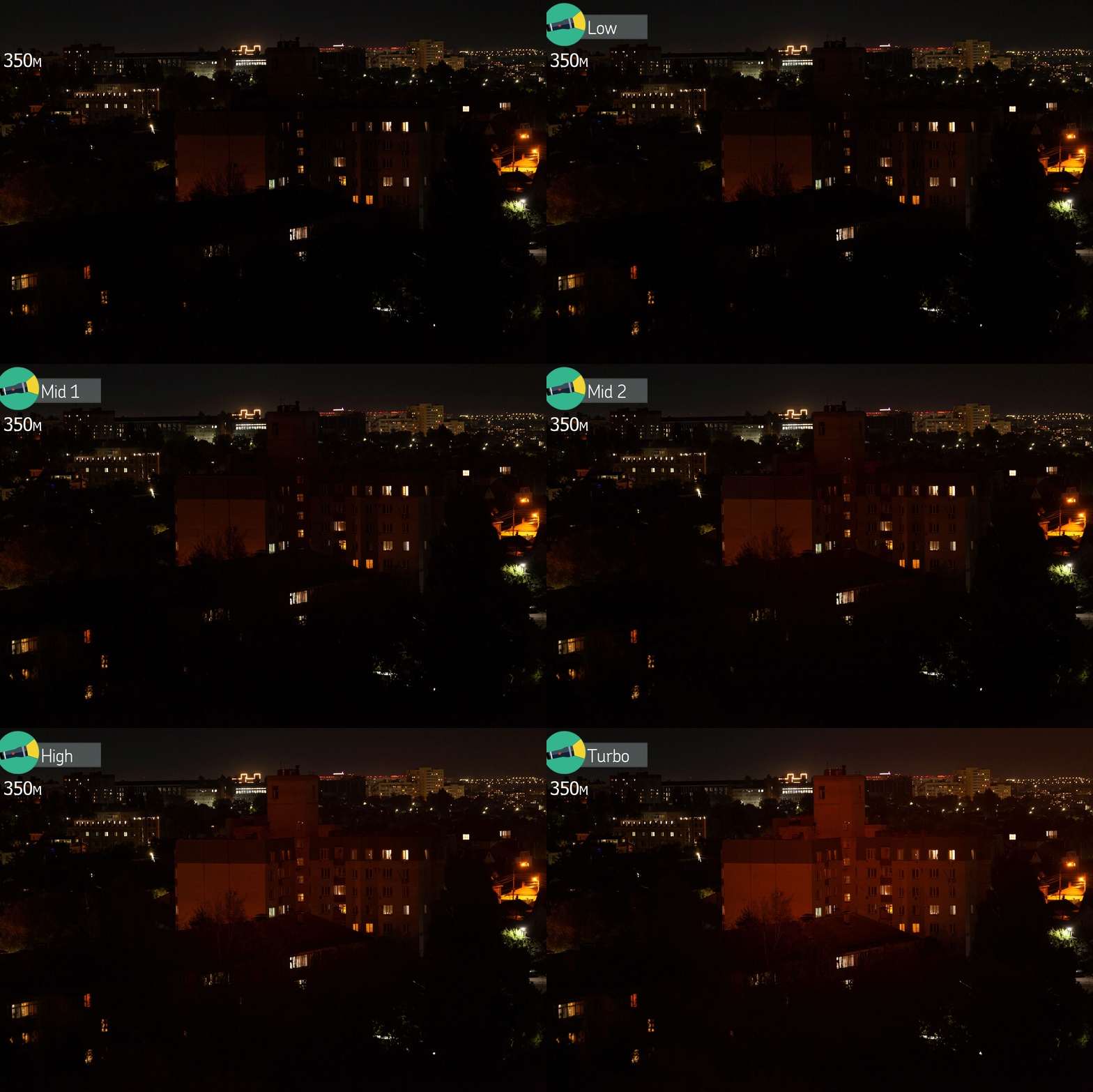
So, what happens if you put a filter on the flashlight? Despite a significant loss in brightness, the flashlight’s extreme throw gives it enough headroom to illuminate objects up to half a kilometer away. See for yourself.

OVERALL
What are my impression after completing Acebeam P20 mini review? Acebeam has created a truly impressive flashlight. It impresses not only with its exceptionally aggressive and eye-catching design but also with it`s capability of throw, runtime and sustaining high brightness. It allows you to shine light at distances where the naked eye can barely make out buildings, or to operate effectively without brightness stepdown at ranges of around half a kilometer!
Unlike models using the XBT90.2 or SFT90 LEDs, which offer wider beams and really high brightness, SFT60 LED is less power-hungry and, consequently, hot. This allows flashlight to sustain high output modes better and eliminates the need for extreme brightness when operating at distances of, say, 300–400 meters. I mean, that where P20mini needs 1000 lumens, SBT90 would require, let`s say, 2000 lumens. The included high-capacity battery also ensures a long runtime.
The interchangeable orange filter allows for use in fog or dusty conditions - environments where cool white light is usually ineffective. Combined with its long-range capability, this makes the flashlight a compelling option for handheld flashlight for fishing or boat sailing.
Due to its head diameter, this model may be too large and heavy for to be gun mounted, here Acebeam L18 should be best choice
Undoubtedly, P20mini’s price and throw range exceed the needs of the average user. This model is designed for those who require maximum throw and are willing to pay for it.
PROs
- Appearance
- Brightness and throw
- Runtime (see point 9 below)
- Ability to sustain high brightness levels
- Interchangeable orange filter for use in adverse weather conditions (dust, fog, rain)
- User-friendly controls
- Metal charging port cover (more durable than a rubber flap)
- High-capacity included battery with a built-in USB-C charging port
- Runtime (due to the above mentioned)
CONs
Something should be mentioned to make review balanced and unbiased. Oh,well… i would prefer non-flat button