I just read this over, and the problem with this method of calculation minimum hotspot diameter is that the point on the edge of the reflector, depending at what angle from the LED it is, will give a different “reflection” image.
For example, if your reflector has the furthest edge at ~60 degrees to the side from the LED, the LED will no longer be square (when viewed from that point)
Which means the reflector will be projecting an image like this:
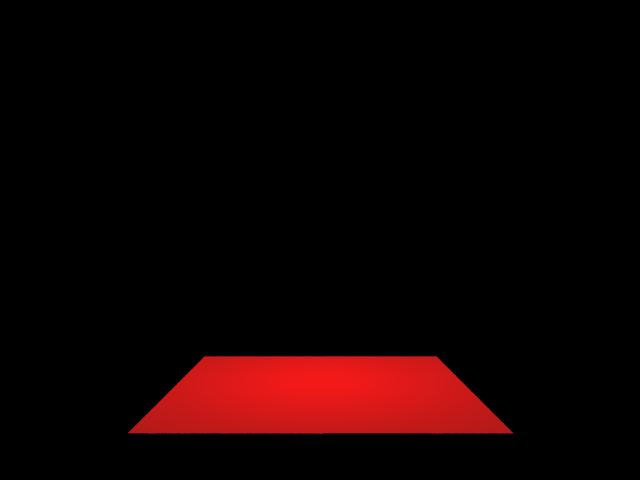
And not like this:

.
As the angle gets bigger, this effect increases, up until your reflector point is at 90 degrees to the side of the LED and only reflects a line, making the theoretical spot size the same as the reflector diameter.
Then when you add all these ‘lines’ together you end up with a circle, which is why reflectors make a more circular spot than lenses.
.
So this “minimum spot diameter” would only be accurate for a lens/reflector directly in front of the LED.
Since a lens usually does not collect at large angles from the LED, this would be an OK approximation for the spot size with a lens.
For a type-1 reflector it would only be accurate for a deep reflector, and for a type-2 reflector it would only be accurate for long focal length and small diameter (large F-number).
.
.
What get-lit did on CPF is make a program that brute-force calculates this by taking many points and then adding up the projected images:
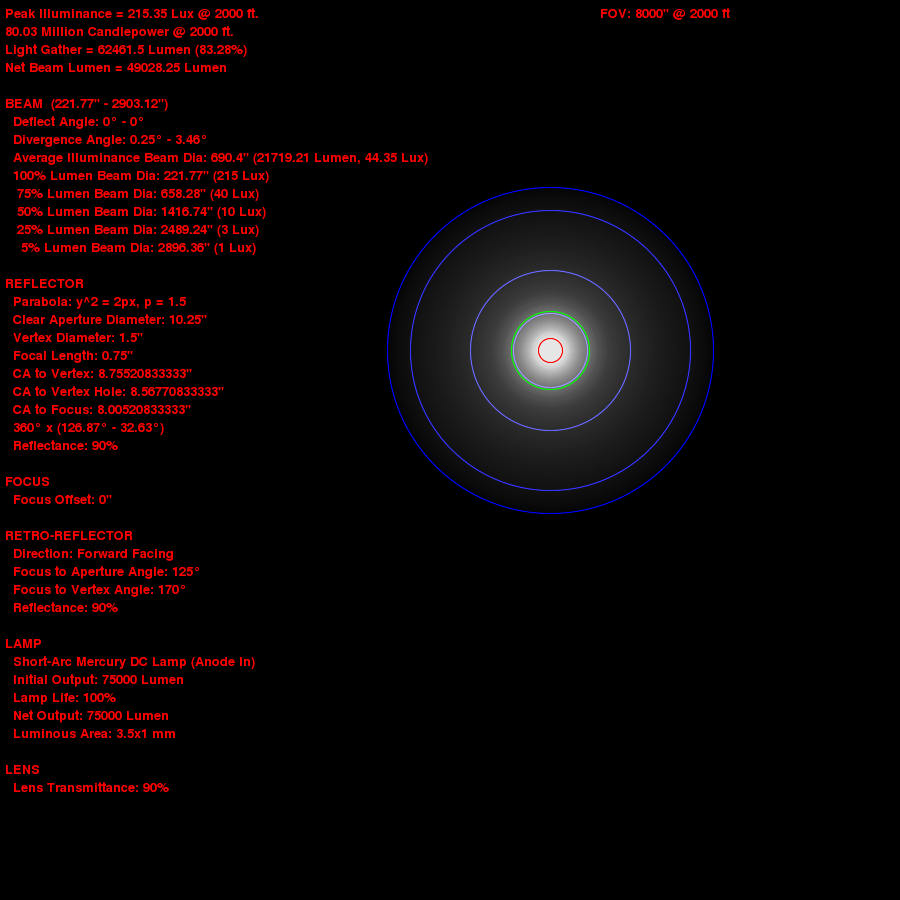
AFAIK this kind of calculation isn’t possible using a simple calculator like desmos, this would require a coded program.
.
I can probably do that in matlab, but it will take a lot of time which I currently do not have, and I’m not sure if there is a way to make the program available online for anyone to use.