I did a small direct-drive test on a XM-L2 with this battery holder and three charged XXX Eneloops (don't have any other AA NiMh rechargables), this is the set-up:
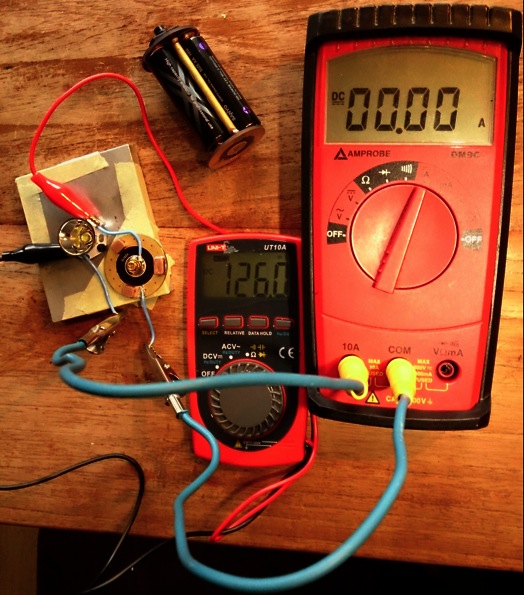
The led was on an alu board screwed to a block of aluminium, voltage was measured at the led-board solder joints, current to the meter went through thick massive copper leads.
A few seconds after start I measured 2.87 A with 3.17 V over the led, 5 minutes later it was still 2.50 A with 3.10 V over the led.
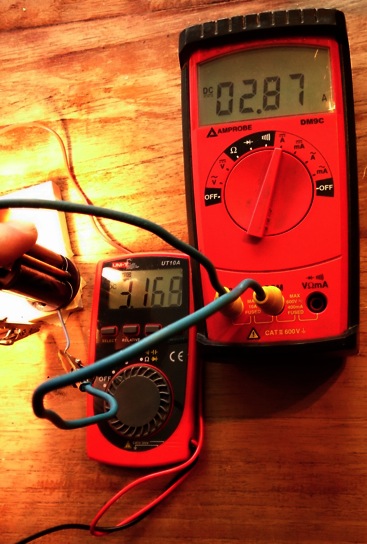 5 minutes later: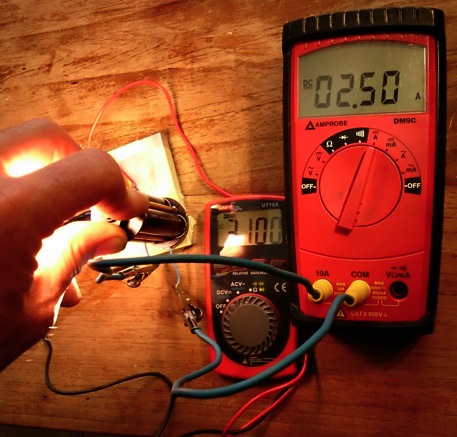
If I read HKJ's tests of these cells correctly, after five minutes, at 2.5A load, the voltage of each cell should be about 1.24 V, so 3.72 V the total of three.
I measured voltage directly against the battery under load: 1.18 V at 2.5A (that is 3.54 V the three), batteries had run for 7/8 minutes , that is lower than HKJ's measurements, could be that my batteries are already a bit worn out. At the led-board there was 3.1 V leftover, so apparently I have lost 0.44 V underway (more than I hoped, and I don't think it is mainly in the DMM/leads), that is a 'travel resistance' of 0.18 Ohm, or a power-loss of 1.1 W. I have no idea how good or bad this is actually, I never did these type of measurements for any other battery/flashlight circuity.
Concluding: you can indeed make a serious output flashlight this way, with three Eneloops and using a direct drive FET-driver and XM-L(2) led or any other led with a low Vf. But for instance a XP-G2 in this set-up will probably already run under 2A. But it is never as good as a single high current 18650 li-ion cell: in a flashlight that can deliver over 5A with an XM-L and FET-driver. To get that performance, you need 4 NiMh cells in series, not 3, and you even need some current regulation then.