Recieved my ‘Q6 DIY power bank’ today. Fortunately the housing is build really solid, because packaging by the seller was ‘mediocre’, to put it mildly.
First of all: the batteries are NOT connected in pararrel, but are in series. I was ‘fooled’ by the orientation of the batteries and didn’t look good enough to the photo to really notice how it was designed. The batteries seem to be being balanced though, but more on that later.
I have taken some QUICK photos with my phone, which are not of the highest quality, but they give an initial impression!
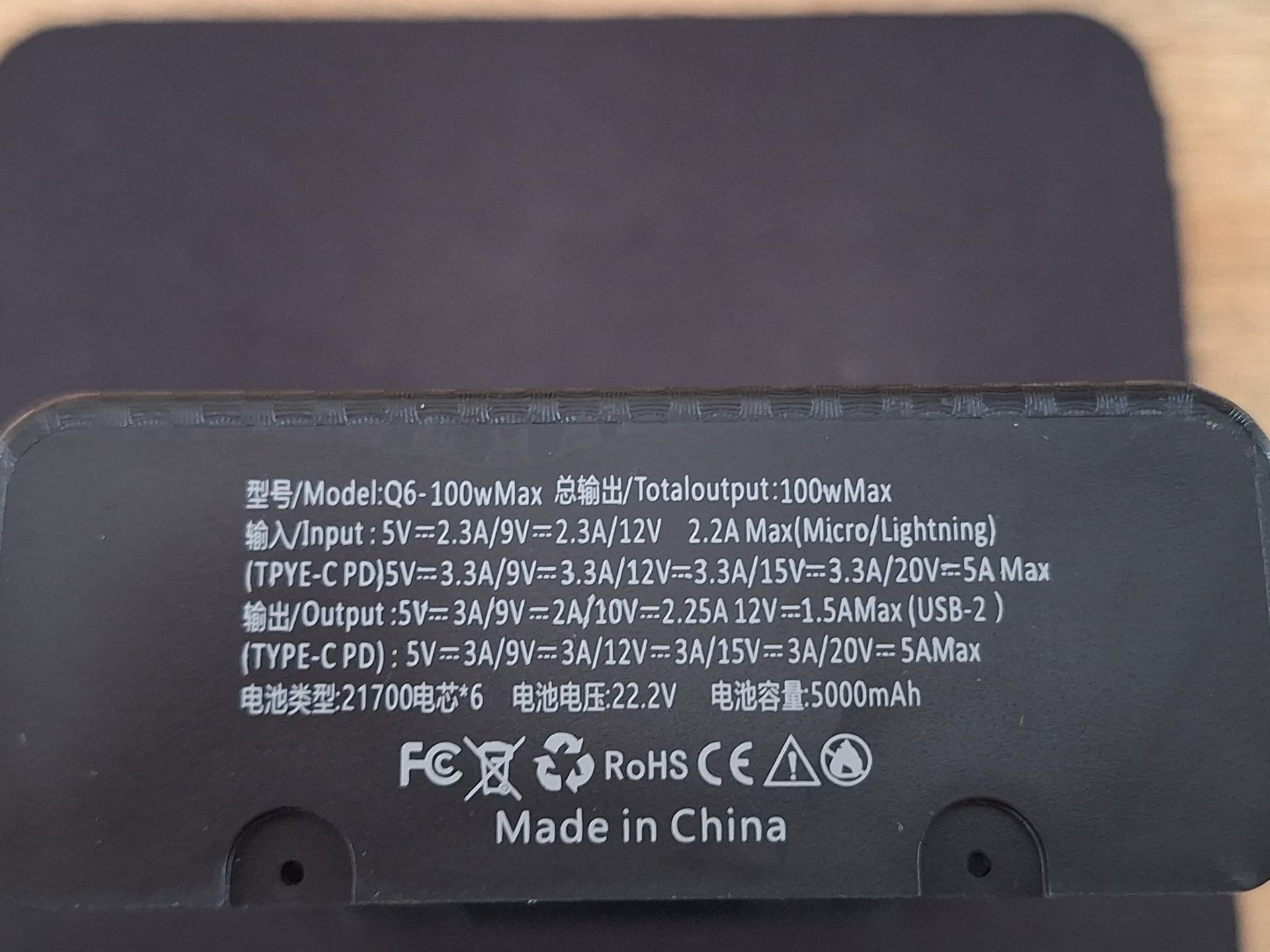
Photo of the text on the casing, confirming the series connection (22.2V):
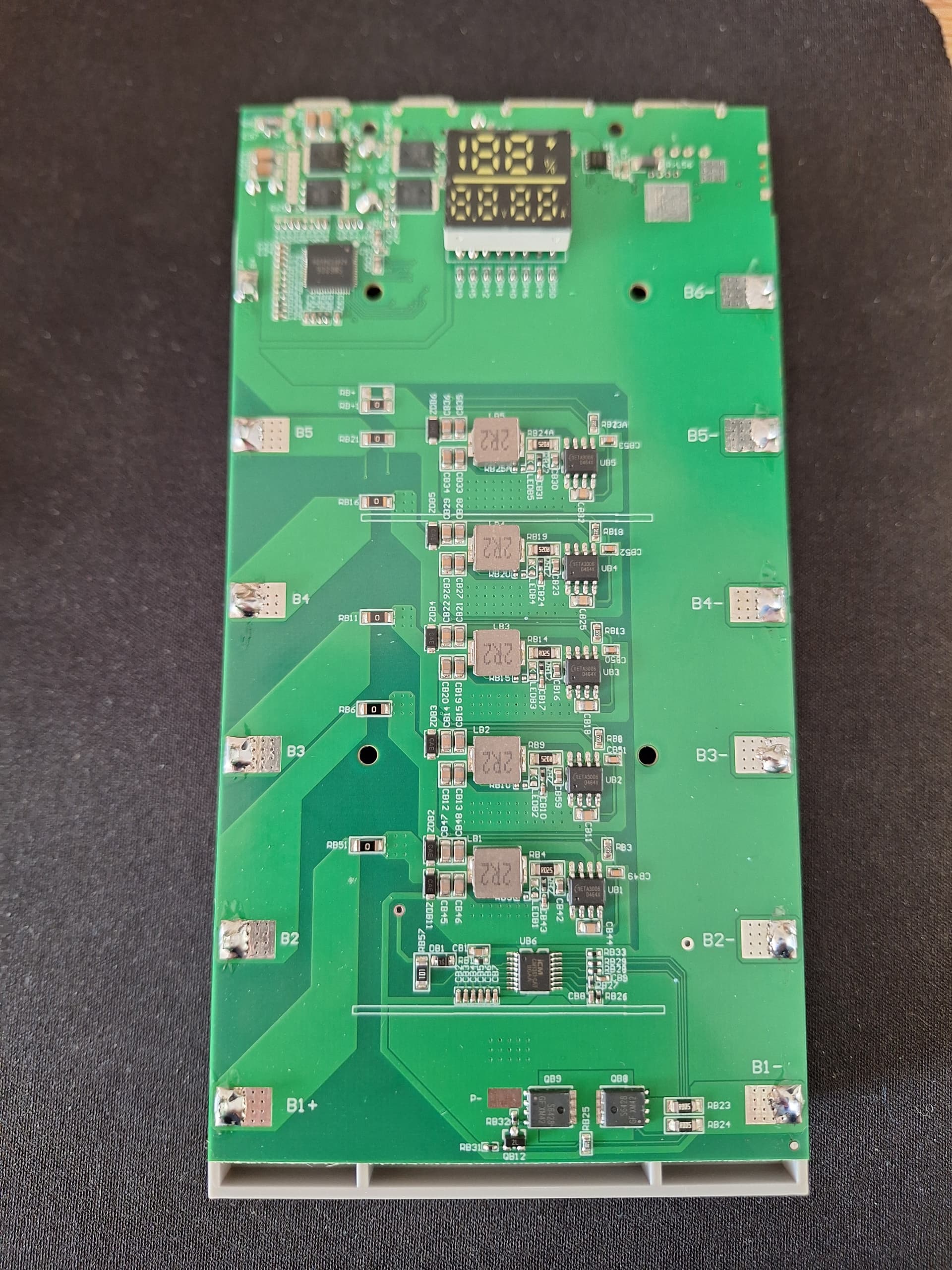
Here are some photos of the backside of the PCB, giving a better view of its design:
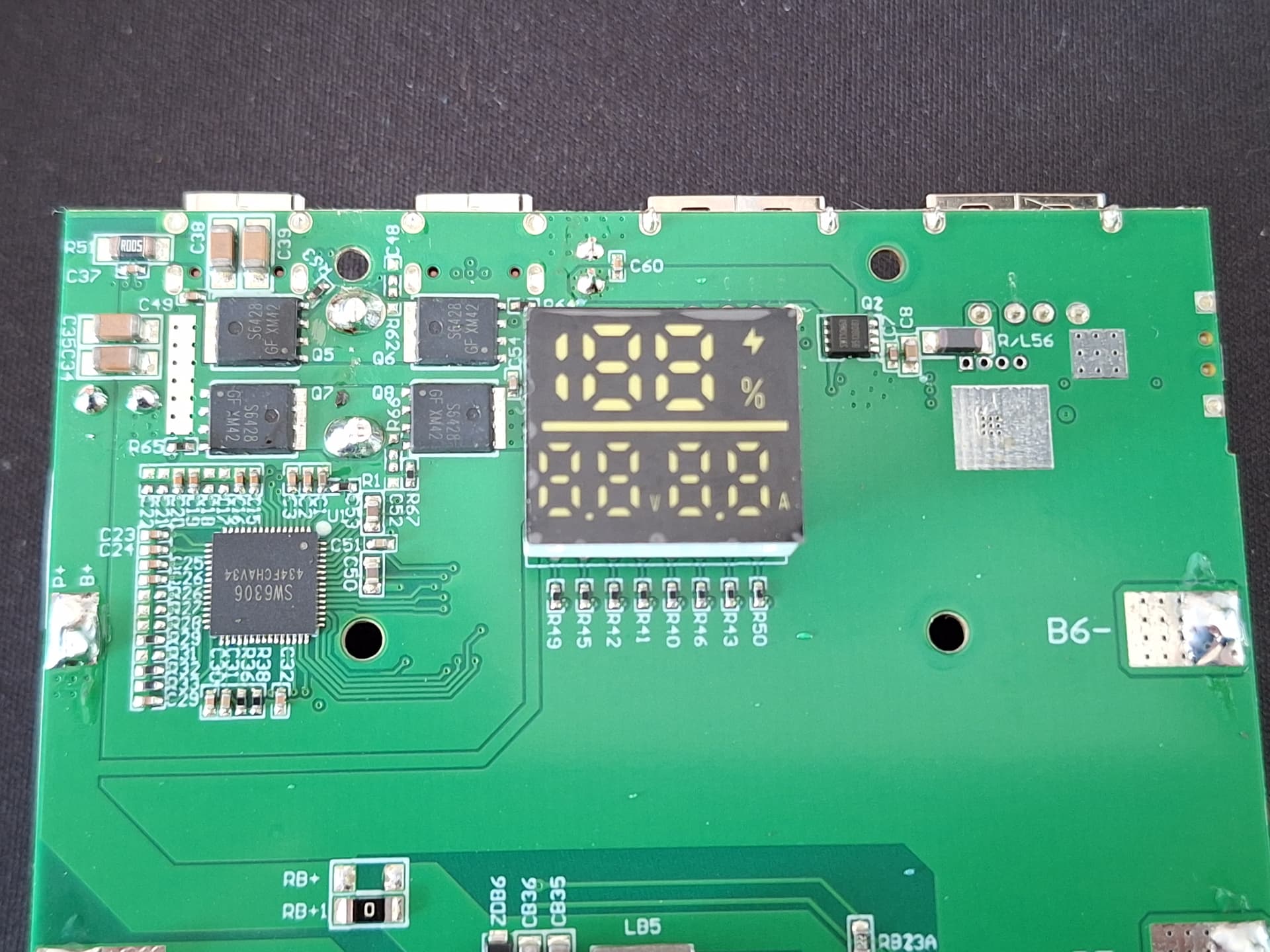
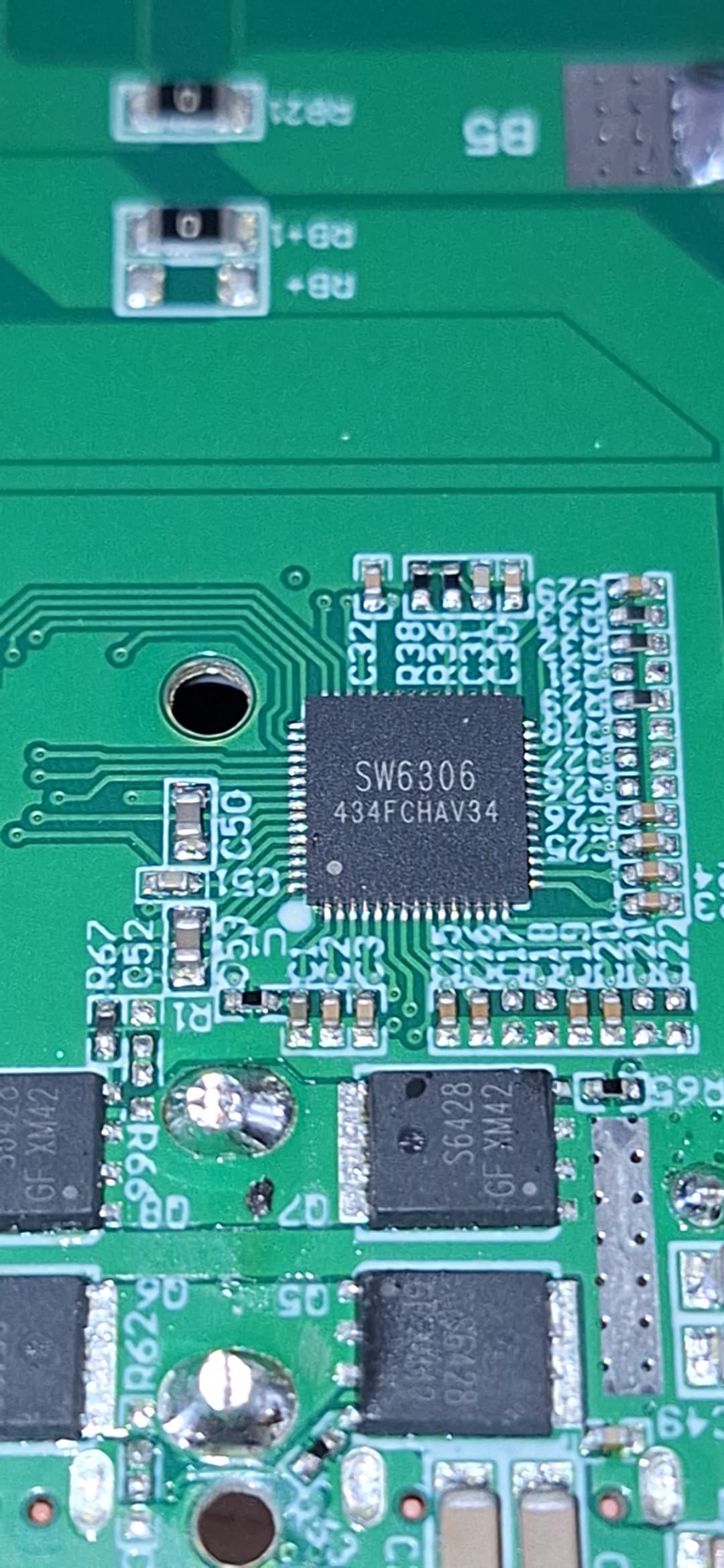
The SW6306 chipset (seen below) is the (100W) Fast Charging chipset used, which according to a website I found via Google, is described as: “It is a highly integrated four port multi protocol buck boost mobile power bank SOC.” (More elaborate details on that website I mentioned.)
Between all batteries, and placed besides the inductors, is an ETA3006 ‘Inductive Cell Balancer’. The description in the (official) datasheet says:
“ETA3006 is an inductive cell balancer. Unlike conventional passive balancing technique, ETA3006 utilizes a control scheme with an inductor to shuffle currents between two cells until the cells are balanced. Due to the switching nature, the heat and power dissipation generated in conventional linear balance technique are greatly reduced. The balance time is also significantly reduced due to higher balancing current not being limited by package thermal dissipation.”

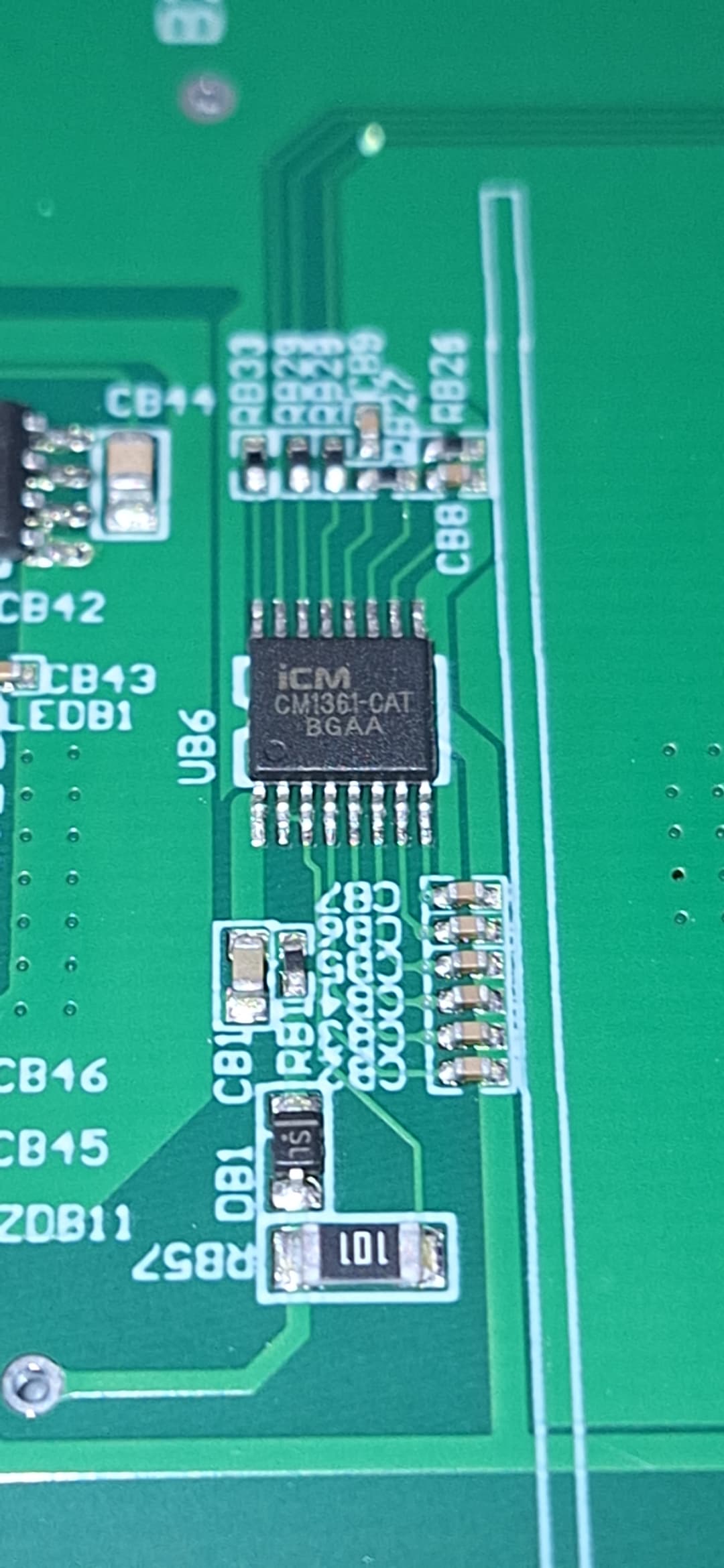
The ICM CM1361 is a battery management/protection chip. The website Chargerlab(.com) describes it in this article (although that is the ‘-DAT’ variant, not the ‘-CAT’ shown on my photo) as follows:
" The iCM CM1361 is a battery protection chip designed for applications with 6-cell battery packs and supports battery balancing functionality. It features high-precision voltage and current detection circuits built into the chip, allowing it to monitor the voltage, current, and temperature of each cell in a series-connected battery pack. The chip provides multiple protection features, including overcharge, over-discharge, charging overcurrent, discharging overcurrent, overheating, and battery pack disconnection protection."
If anyone wants more (detailed) photos of certain components or specific parts of the PCB, let me know.