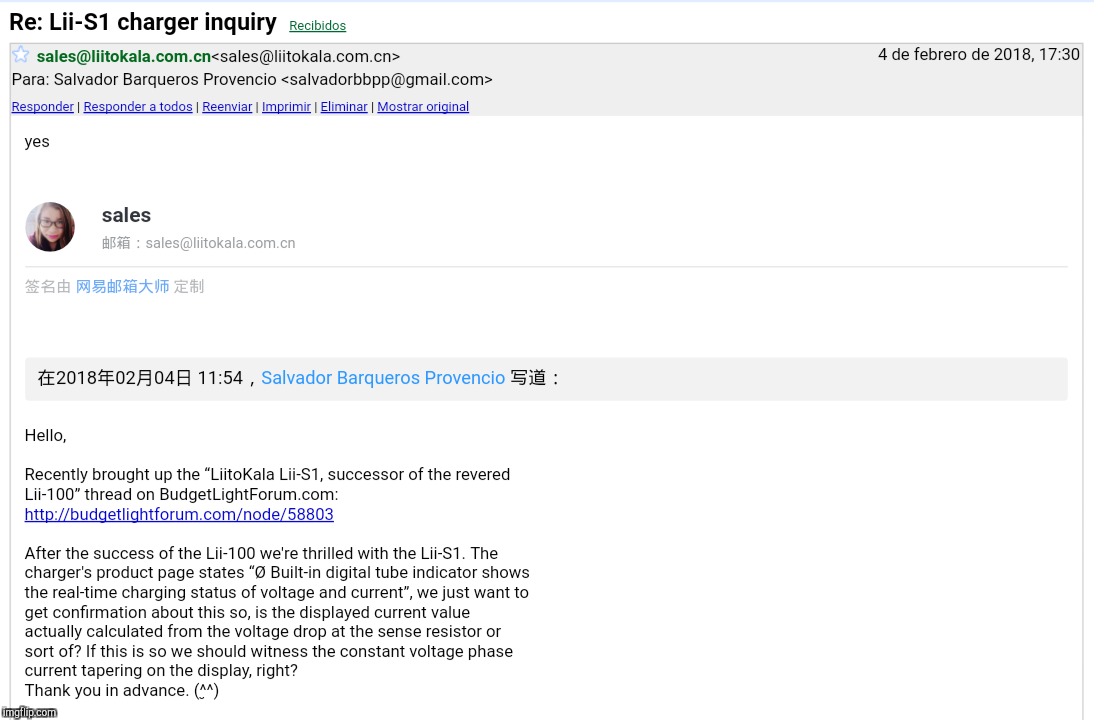
Well fellows, this demonstrates either their obvious lack of language understanding and/or their dishonesty. And I do not mean to judge. 
I'll try to be as clear as possible. This has to do with component tolerances, target consumer market's awareness level and related belief systems (more is better maybe?). Charging voltage is determined via a resistor divider, if this divider is made with 1% tolerance resistors it is quite likely that about half of chargers will “overcharge” to some extent. Since termination current value also plays a role, causing a slight additional drop in charging voltage, it is likely that the default maximum charging voltage is by default set slightly high to compensate.
So sorry Bushmaster, what you're asking for is still only possible for the DIY crowd. Fix your Lii-100 units, here's the information: How to fix high charge voltage in Liitokala Lii-100 and how to make lower charge currents
By the way, a 1% variation in final charging voltage is no big deal for quality cells. If you really want to boost your cells' lifespan aim for higher reductions, the less voltage the better but only down to 14/15th (3.92/4.2) of maximum value. In a Samsung INR18650-35E datasheet a reduction in charging voltage down to 4V is mentioned for UPS applications, see that also.
Cheers 