Yes, it cut the power when hit the critical voltage, the only problem of that is you never know how the amount the charge remains because the voltage is continuous 9,5V
HKJ Test/review of Znter S19 9V 400mAh USB (Black-green)
Conclusion
This battery is not the most impressive 9V I have seen with one battery partly defect.
It is a neat solution in some cases:
- Charge (replace) batteries at regular intervals, to avoid them running down, i.e. do not need the fuel gauge.
- Need 9V battery with high voltage.
Do not use the batteries for low power applications, the boost converter will drain the battery in 6 to 12 months.
Just to clarify: I have not tested the Soshine or EBL yet (The Soshine is nearly ready), but I have tested 2S LiIon 9V batteries.
It is iPowerUS in my comparator: Battery test-review 9V comparator
Screw PP3 2S li-ions. I'd go for this:
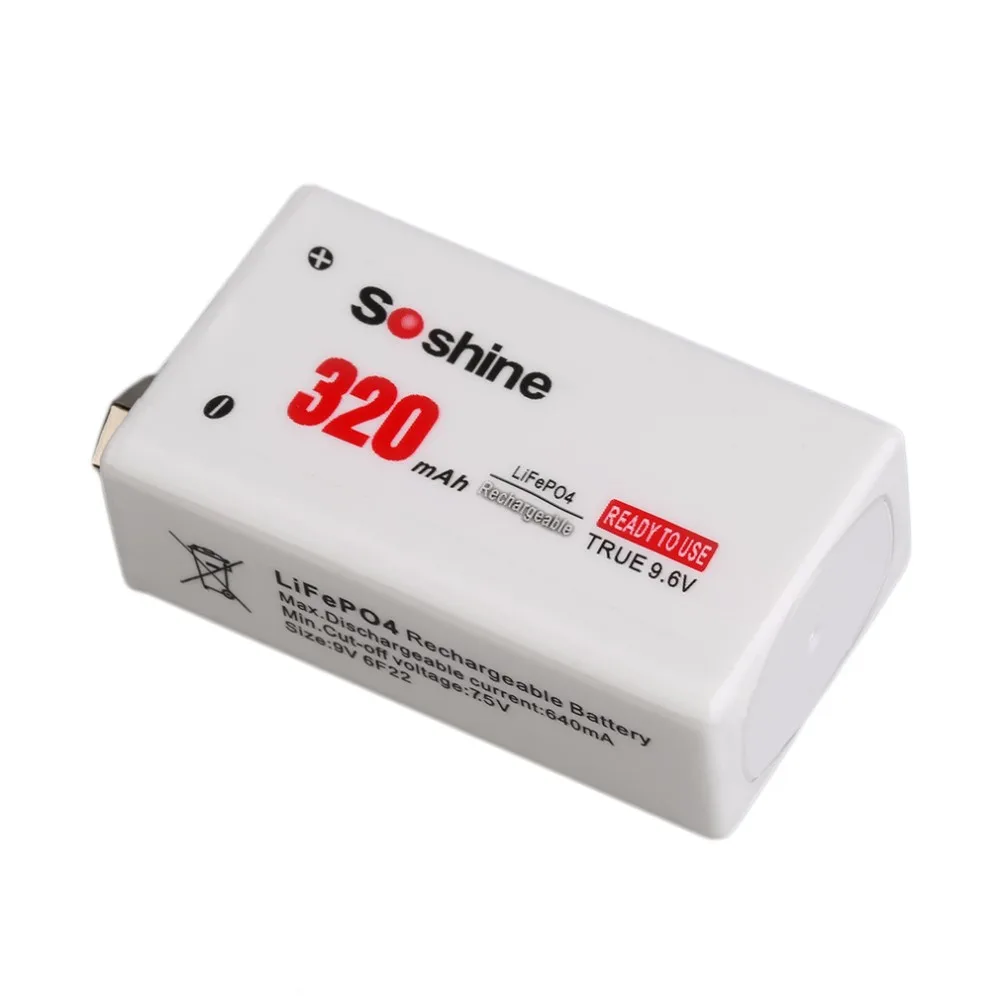
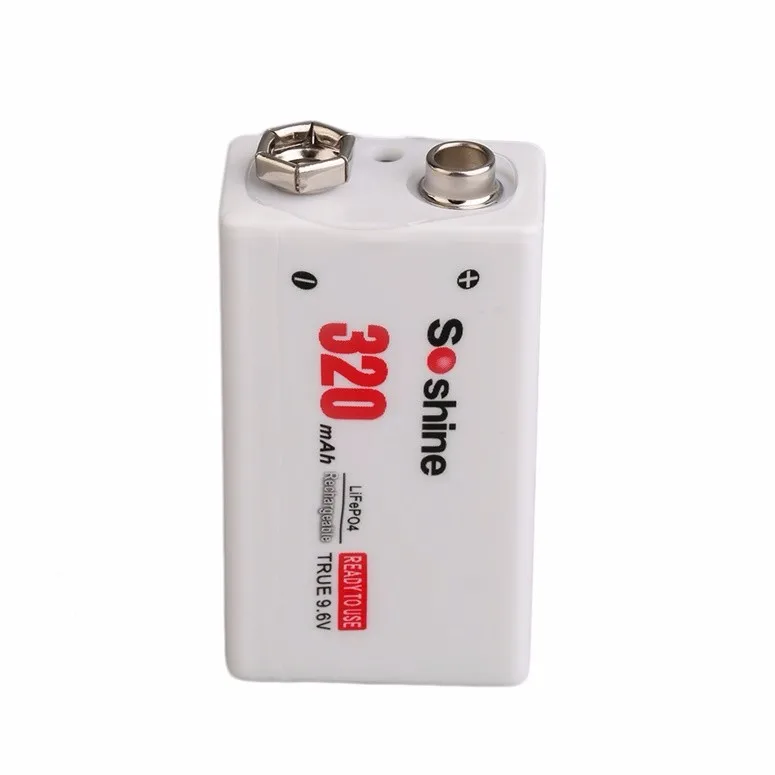
3S LiFePO4, spot on nominal voltage and ultra-low self-discharge. 
I dunno what the @#$% is going on with Aliexpress' search engine. Tried varios related searchs ("Soshine 320mAh", "Soshine 9V", …) and all of them were failing. This result came suggested after threshing out a related offer found on a "Soshine LiFePO4" search. PoS search engines…
Cheers ^:)
gauss163, your PoV is too biased. All of the PP3 powered gadgets I've ever meet are ultra-low drain, and some of them didn't liked low voltages; thence, my bet is with 3S LiFePO4s. Capacity is definitively lower vs li-ion, but hell this at most means I'd have to recharge 2 times a year instead of one, and no low-voltage worries. With a 3S LiFePO4 chemistry supply low drain appliances are guaranteed to receive at least 9V for nearly all of the discharge curve. 8^)
Cheers ^:)
I was not being pessimistic, just pointing out a 3S LiFePO4 PP3 is likely to be compatible with all appliances/gadgets, whereas a 2S li-ion PP3 *may not* work well with a few of these. Moreover, I dislike fully charging li-ions… but that's another story of course.
I've only gone as far as an old non-LSD 7S Ni-MH PP3, which worked like crap (likely because of self-discharge).
Further arguing unrequired. ;)
Cheers ^:)
Useful info in the thread, despite the strength of the convictions (-:
Yes, and that even without charge balancing.
This lack should be worse with 3 cells LiFePO4, but with a safer chemistry.
I just bought a 3 cell Soshine LiFePO4 for $5.74 + $2.21 to have something to “play with” and to gain some experience.
You know, I just measured a 9V battery I have here on my desk, and it’s 16mm thick. It would actually be possible to make an adaptor with a space for a 16340, using a booster circuit to get 9V. Capacity would only be about 200 mAh at 9v, but that could well be enough for low power applications.
Agreed, but are they really individually protected?
HKJ wrote in his test of iPowerUS 9V:
“This type of batteries are equipmped with a LiIon protection circuit. I tested one of the batteries it had over voltage protection at 8.35V and over discharge protection at 6.22V”
(copyed from his test, even the typo). This could imply that only the total voltage is supervised, perhaps HKJ could chime in with an answer.
I look forward to seeing the results regarding overcharge protection for other brands like Soshine, EBL and DUPU. Until then I wil be reluctant to buy more of this 2s type. I have plenty of Zenter 9V that I am happy with.
The iPowerUS is, as can be seen in my teardown: Disassembly of 9V LiIon batteries
I am not going to open the Soshine after the test, but maybe later when I have a couple more LiIon 9V batteries that could be interesting to look inside.
Really? Wheere is it? (Duke Nukem 3D/64 quote)
My quick search revealed retailers asking jackassly high prices ($20+) for the iPowerUS PP3s. Where are you getting them for $2 a pop? :STEVE:
Oh! By the way, take a peek at this:

1 Batterie 9V Li-ion 650Mah Rechargeable 6LR61 6F22 Accu Battery Pile Accus PP3 @Piles44 62 sold! €109 + €2.90 s&h!!!
 1 Batterie 9V Li-ion 780Mah Rechargeable Accu Battery Pile Accus Lithium ion PP3 @Piles44 84 sold!!! €129 + €2.90 s&h!!!
 Grand total 146 scams for now!
Can THAT be true? :facepalm:
Cheers ^:)
Thanks, Henrik!
It looks like the iPowerUS has a circuit that could do dual protection ie disconnect charging when either of the cells reach maximum voltage (but not balanced). Time will tell what is and what is not inside the cheaper brands.
I dont think it is true. I have seen this before on ebay that when something is sold out, then instead of informing that, the price are marked up so no one sane would order it. The 146 must have been sold before the markup.
Perhaps this is a better way to keep the customers interested than writing “sold out”, don’t know…
It might save them money on EBay listing fees - instead of closing the listing when the item is sold out, then paying a new listing fee when the new stock comes in, keep the old listing active with a ludicrous price, then drop the price back to normal when the new stock arrives.
I’ve also seen cases where listings were “updated by the seller” to describe a completely different product. That would save the seller money in a similar way - product A goes out of stock, so the listing gets “updated” for reuse with product B instead, saving the seller a new listing fee for product B.

0K. What's the reason, then, that related multi-pop listings also have their price proportionally jacked up?
4 Batterie 9V Li-ion 780Mah Rechargeable 6LR61 Accu Battery Pile Accus 9 volts €513 + 4.90s/h
Do the listings get auto-updated via software in a way that it multiplies the per unit price by a constant when the seller indicates “sold out” on it? All this stuff is stupidly misleading, to be honest.
Cheers ^:)
sorry no link (no mouse) but an ebay or other search will pull up info on the chemistry.
any thoughts?
is 1200mAh possible? in the 6f22 package size.
oh and on the back of my soshine charger is says it charges
liFePO4 to 10.8V
Is that correct? What type battery is then used for equipment with build in 10 year + lifetime batteries.
low-temperature and military
Many apartments around here has a couple of devices with 10+ years of lifetime, I would expect that to use a Li-SOCl2 battery.