I bought 6 of them a couple of weeks ago… Shipping was an additional $16 … so take that into account.
2 Thanks
They seem to be rating the cells for their lowest capacity so that more can pass QC, people have measured some going up to 7Ah (iirc they are QB cells). All of the ones I have measure over 6.8Ah (only 2 were unused when purchased).
1 Thank
It’s not the QC it’s the fact that they are salvaged from vehicles. Used and unknown on the life left.
1 Thank
As nothing is written on my pale green 26800 cell, I suspect I shall write on it myself. “Li-ion rechargeable, 26800, year 2024.”
I’ve had a similar experience with my (used) Vapcell-branded 26800 cells, some are just over the rating at 6.3Ah and some others are over 6.6Ah in capacity. All of them had a decently low IR, so it doesn’t worry me too much.
Post a picture and I’ll try to get you something about the cell.
I received my cell inside my new Convoy M3-C light. The cell has no tabs at the ends, and perhaps it is a Queen Battery cell.


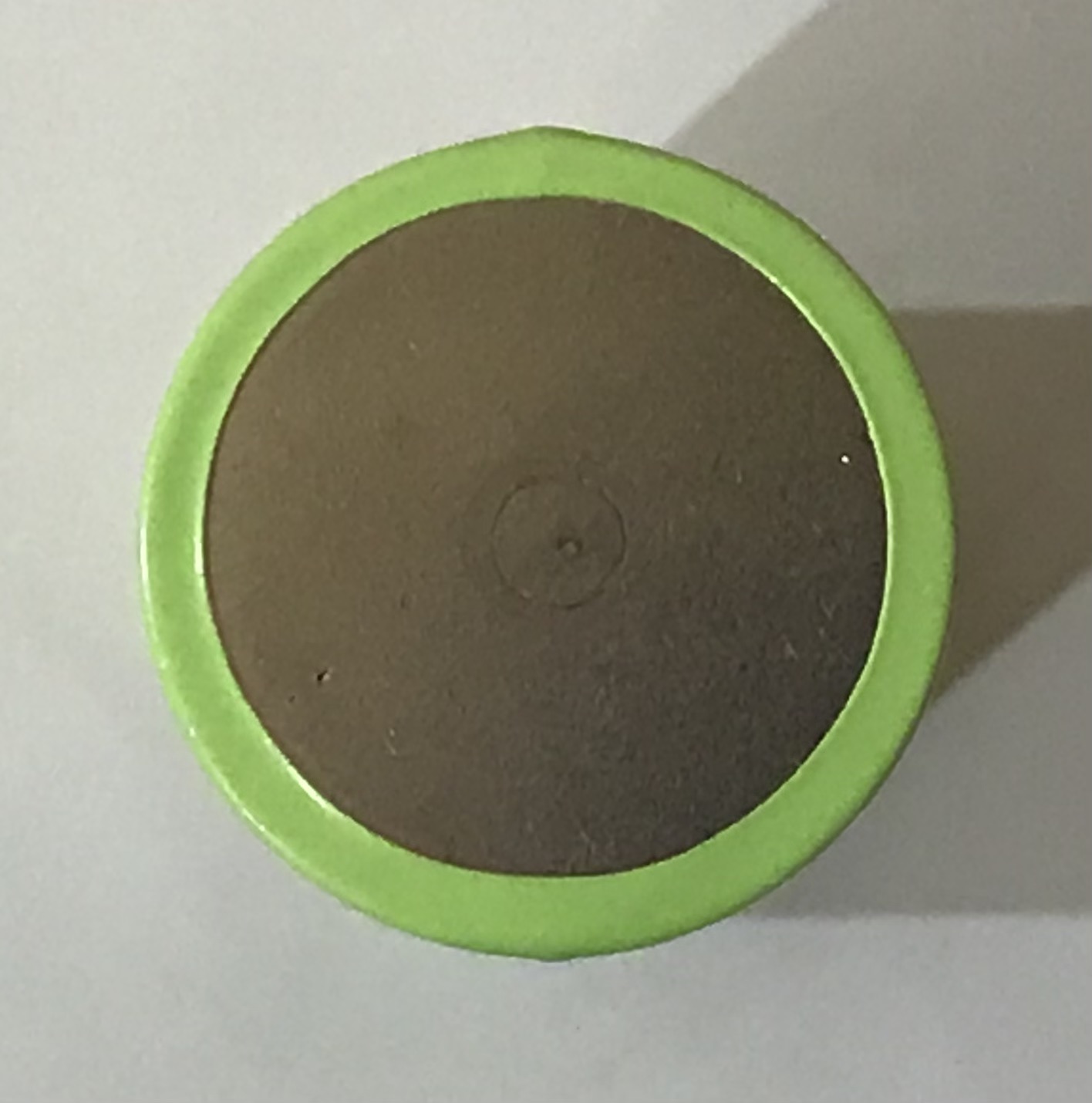
It’s probably a Queen cell that’s been rewrapped. Positive ends looks like a clean tap removal. Negative end ding in the 8 o’clock position might be a tab weld. If you have a charger that can check capacity, it’s your test to tell if it’s still got a bit of life in it. High capacity new cells on a 1amp drain usually run 7300 mah or slightly lower. Hi amp cells usually start at 6800 mah these are rare usually found from Vapcell. Sorry it’s not much.
I have a few of the convoy 26800 cells. I bought 5 , then got two lights with them inside. I have not cut the wrapper off of them. They do seem to be pulls He even clearly states on the page for them that they are not new. The only one I have tested so far I tested with an Accucell 6 hobby charger, (I don’t have any charger analyzer that these fit in) It came out at about 6400mAh. But this isn’t directly comparable with what I get from my MC3000. For one, the termination voltage on discharge can’t be set at anything under 3.0 volts. (Plus I am using magnets to connect the battery). I typically go to 2.5 for most cells.
I will be interested in reading any further info on where these cells come from.
End of life electric vehicles in China. Commercial vehicles, bikes, trikes, buses, cheaper cars. Yuliang Battery made a lot of them. Golden Sunshine. Probably others.
My understanding, from scrolling through google-translated Baidu posts, is that in 2015-2017, while Tesla was thinking they could make EV batteries cheaper if they made individual cells bigger, and decided on 21700’s, chinese EV manufacturers were already thinking, bigger cells=bigger savings, and 26800s were born. Initially put into an application that made a lot of sense, electric city buses.
But they might’ve jumped the gun. 21700’s had more power. LiFePO4 was safer. Prismatic was cheaper. A couple city buses catching fire didn’t help sway public opinion in their favor. So 26800s fell to the wayside.
Mostly relegated to being a low cost option for industry. E-trikes, buses, forklifts, the cheapest battery option on some cars and vans, stuff like that. But their popularity has declined to the point where they’ve gotten expensive and hard to find, even in China, and are essentially discontinued. The ones for sale today were salvaged from vehicle packs. I think. I’m not 100% on any of this. Google translate can only do so much. Not a lot of info on the English internet.
Link dump:
http://www.youlionbattery.com/#/pc/productIntroduction
5 Thanks
i charged this batteries in a 2A charger [those Jomii from Convoy] with a 2A adapter and they kept the Turbo for 46 minutes [i tested 3 min burning/15 min to cool down in L7]; but after that i charged them in same charger but with a 1 A adapter; in this way they kept the Turbo for 54 minutes [but some say is not good to use adapter which has less Ampers then the charger/or device… [?] - coz i was thinking to charge them with a 0,5 adapter and they will last more long [it seems]
26800 bridge a gap between 21700 and 26650, but (at least in my testing) don’t represent a worthwhile advantage over current 26650s or 21700s. They’re a lot heavier than a 26650 and 21700, and don’t give a remarkable runtime advantage over good 26650s. Lifepo4 is the future…
Ya, the voltage sag on them and the time they take to bounce back is really, really poor. Like, REALLY poor.
LiFePO4 is cool, thats what I would go with if I needed to convert my house to solar or w/e, but idk if it’s the future. Doesn’t feel like there’s any battery out there right now that screams “battery the future”.
I’m not sure the future is going to be batteries. Theres so many ways to store energy. Like what if we stored energy by just lifting a really heavy thing really high in the air?
Hear me out. So a windmill spins and turns a crank through some gears or w/e that slowly lifts a giant rock high high in the sky. When you need the energy you drop the rock, it’s attached to a cable attached to a generator, releases it’s stored energy on the way down. Boom, gravity battery.
Doesn’t lose capacity over time, works at any temperature, doesn’t use conflict minerals. Give me the Nobel prize.
They aren’t the present, despite them being widely available.
I like lifepo4 though. Modern low Vf LEDs can pull >10A at less than 3.2V, (SFH55 et al.) and a simple FET only driver can give very low moonlight levels. A major downside when using typical hardware/software is that you don’t really get battery capacity indication until the voltage hits the knee, and there isn’t much capacity left at that point.
The 6.5Ah 32700 IFR cells are nice (Vapcell G65) and can be used in D Mag conversions.
1 Thank
I never saw a 32700 before. But after looking at it now I’m disappointed.
Bigger diameter than a 26800 but lower capacity, what a shame
32 mm but only 6000 mah
I’d rather have it at 9000 mah or at least 7500 mah at 5-7 amps max discharge rate, for maximum runtime
The reason being, I rarely use more than 500 lumens but I also hate anything under 200 lumens…
I have no need for a battery capable of more than 10 amps
The IFR32700 is LiFePO4, Lithium Iron Phosphate, a different chemistry than typical lithium ion. It has less energy density, and exhibits a flat voltage curve over the discharge, averaging ~3.2V. From HKJ’s test of the G65:
%202020/Vapcell%20IFR32700%206500mAh%20G65%20(Blue)%202020-Capacity.png)
LiFePO4 has advantages and disadvantages. It is very robust and can tolerate abuse, has a flat discharge curve, delivers high current, and has a very high cycle life of 2000+ cycles.
1 Thank
There is a concept similar to this. Water is pumped to the top of a hill and stored for future release thru a turbine.
And this apparently unsuccessful GravityLight.
They will be hearing from my lawyers
6 Thanks