For multi-chip LEDs, a series configuration is preferable because it allows for longer and better regulation across the full battery charge. It also ensures that every LED chip receives the same current at every brightness level.
2 Thanks
Boost driver circuits capable of high-current output are relatively expensive.
10 Thanks
Buck-boost drivers are even more expensive…
Ultra-high currents with FET “drivers” or linear drivers are only a gimmick to show off or get higher lumen numbers. They are neither sustainable nor efficient, let alone useful in most situations.
This is why I would go with the more expensive boost driver that enables the overall more reliable and efficient tool, over a cheap FET-driven hot rod.
But this is just my opinion
3 Thanks
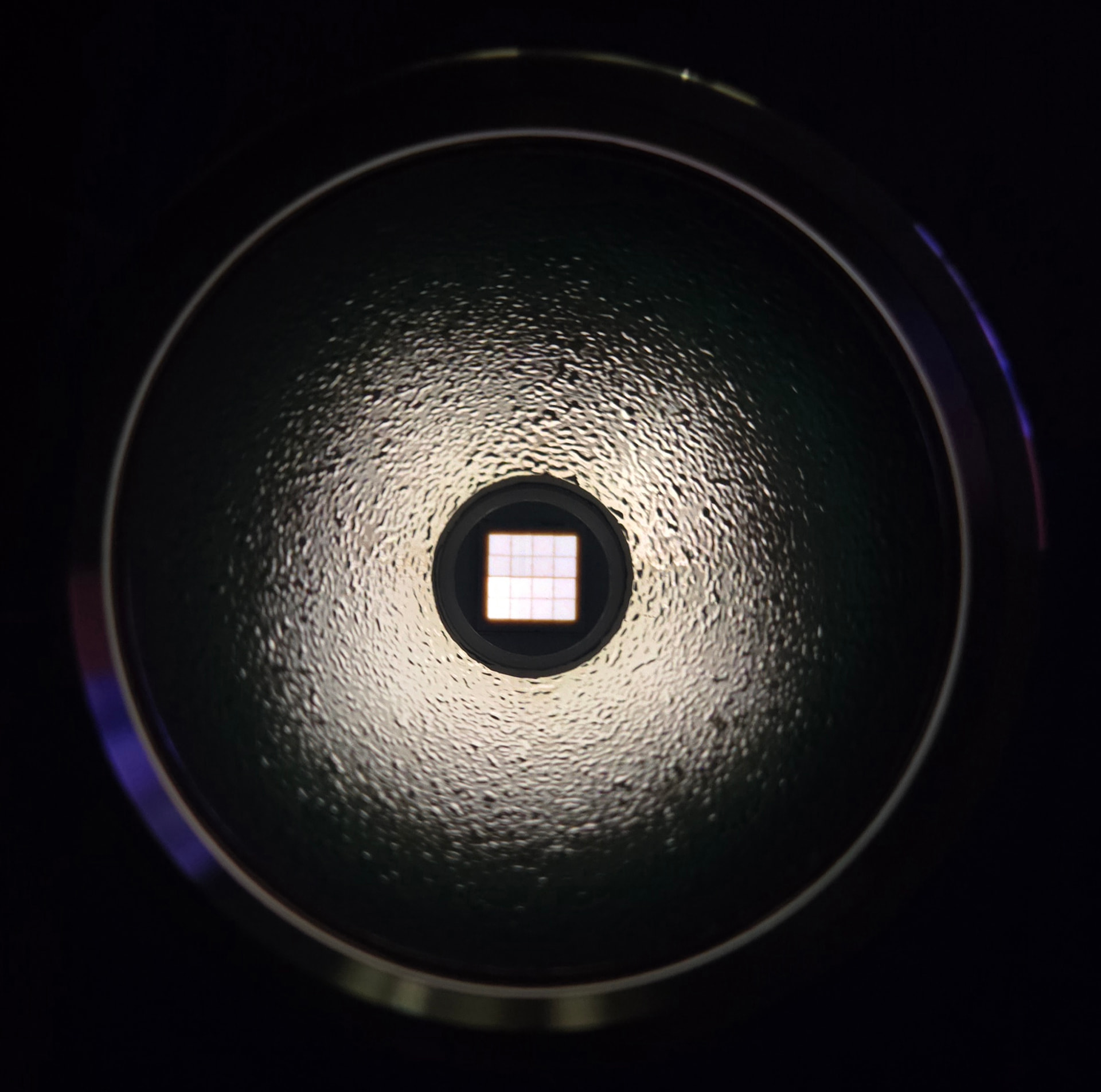
@Simon_Mao I wish there was a 17mm 15A buck driver. You already make a 20A version in 17mm.
Is there a 17mm 15A buck driver in development?
2 Thanks
Really crappy air quality this evening, but here are a few beamshots of the NV1010 4000k 9080.
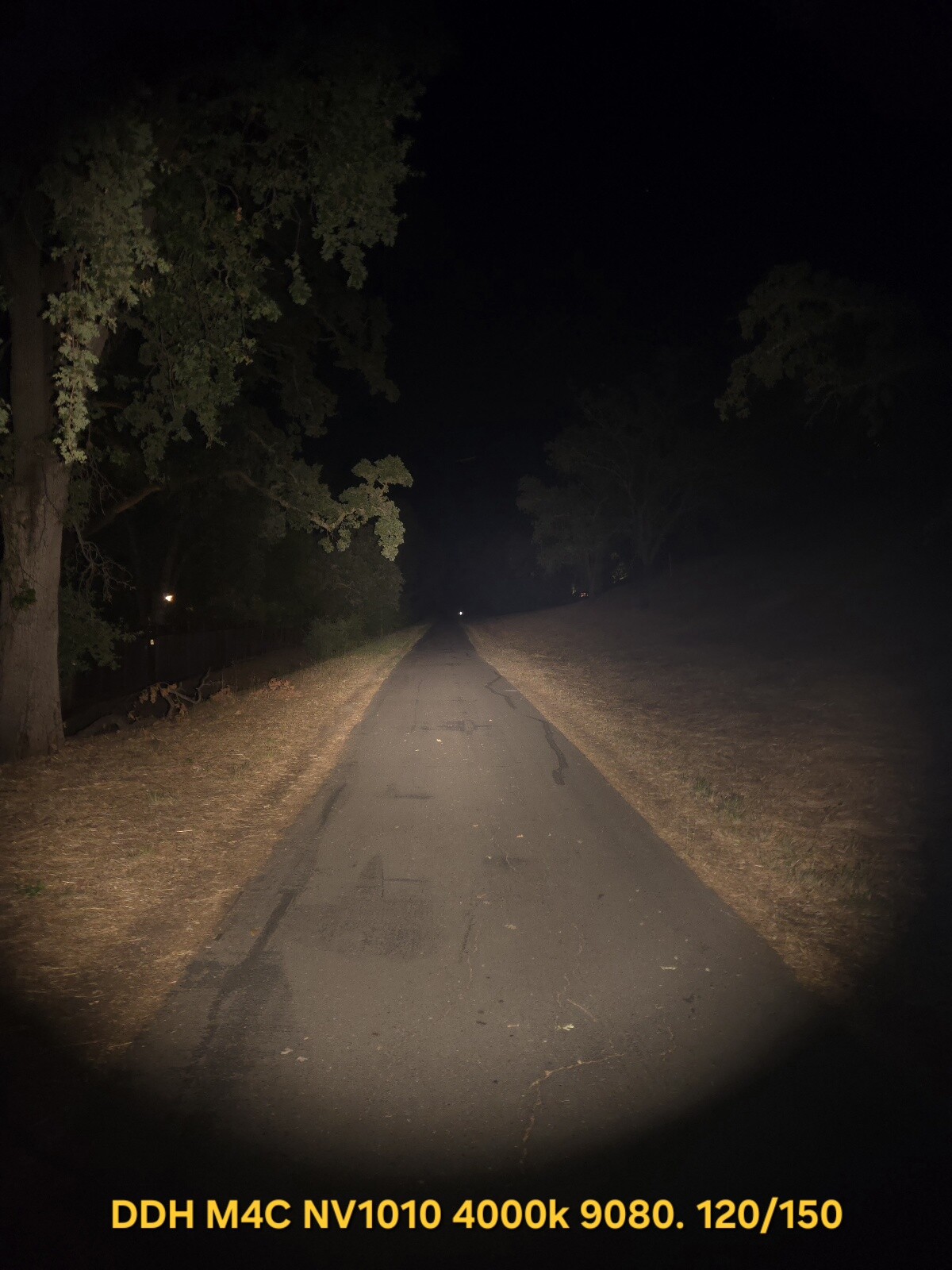

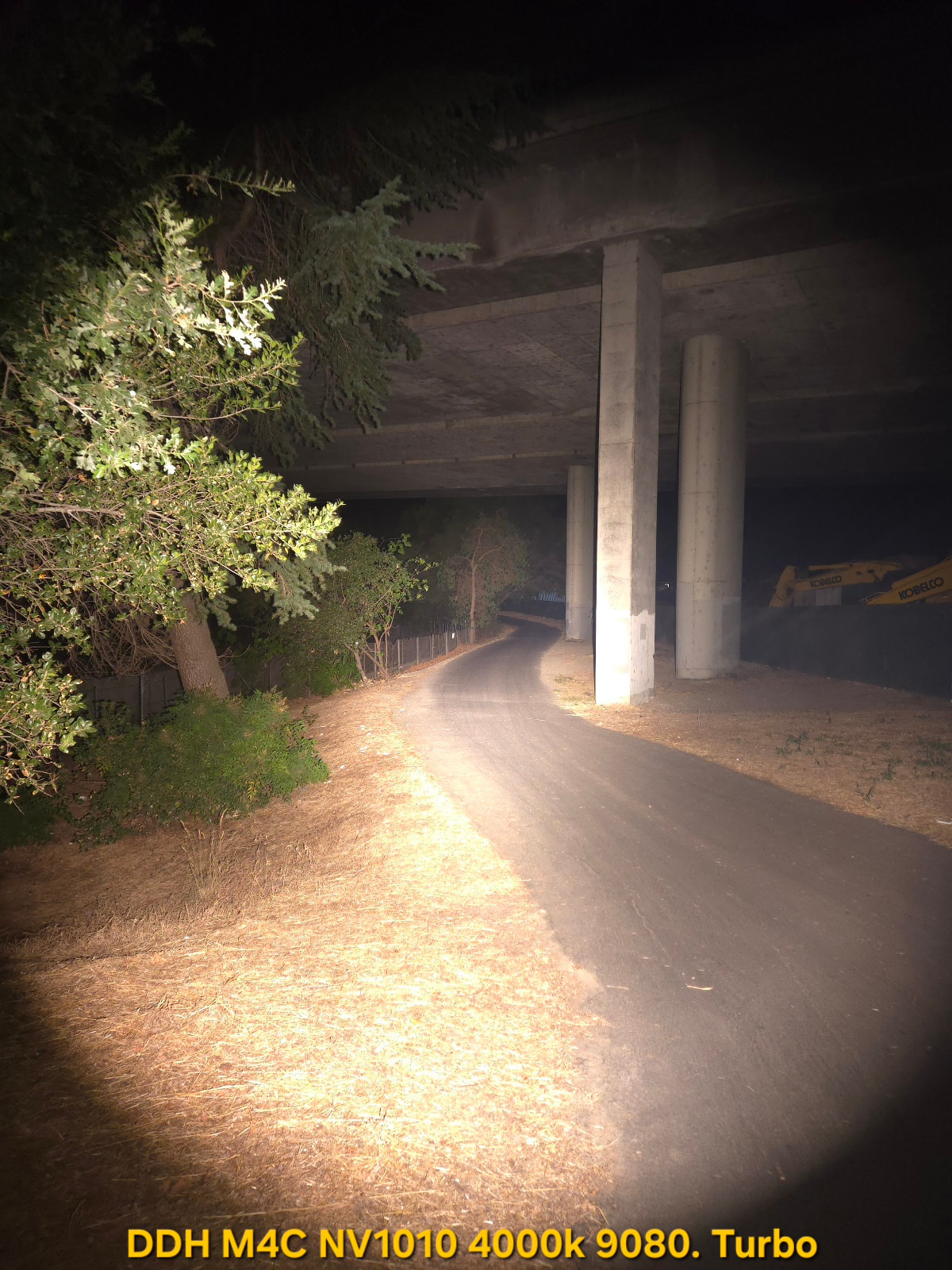
I forgot to mention photo settings locked to the following…

10 Thanks
I hear that a large part of the U.S. has terrible air quality today, mostly due to wildfires in Canada. 
I might not be able to link to the song “Blame Canada” because it’s a South Park song, but Blame Canada. 
2 Thanks
Unfortunately I missed on those. I’ll have to try the LHD7016 8n my M4C. Should have tighter hotspot and more throw not pulling much less power. Did you happen to measure the output/amps of the 110?
2 Thanks
No, I haven’t measured amps on many builds lately.
Last one I tested with the same driver was the SFP55. It was pulling around 50+ amps.
Same setup as mine, that’s why I’m asking. I measured 52.4A on SFP55. With LHD7016 rated at 40A (50A max) I think it should be around there too.
1 Thank
Including 6 wildfires burning in Colorado.
2 Thanks
I will release a 17mm 15A buck driver circuit in the future.
11 Thanks
Your idea is not wrong; we simply have different perspectives.
Initially, I did not plan for users to run the flashlight at maximum current for extended periods, because the flashlight itself cannot withstand such high heat. Even if the 54A FET solution were replaced with a 54A buck constant-current solution, the heat generated would still be very significant. If I were to design and manufacture a large flashlight in the future, more than twice the size of a 3×21C flashlight, I would prioritize a buck constant-current solution rather than an FET solution.
Previously, I have also encountered buck constant-current driver samples with output currents exceeding 100A.
In addition, production cost is also a factor that must be considered. No matter how outstanding the product performance is, poor market sales would still create considerable pressure for us.
12 Thanks
This is why I’m advocating for a sensible, sustainable current instead of chasing peak numbers.
I agree that a 54A boost (or, let’s say, a 200W) boost driver would make little sense.
So I would fit a boost converter with a sensible power rating for the size of the lamp. For example, a single- cell light model might use a 40W boost driver. This can fit into a 21mm diameter.
Trying to make a 200W boost converter would compromise other aspects of the design. Realistically, it’s not needed and would only be a gimmick to chase numbers.
But I agree that it comes down to whether you prefer practical, sustainable regulation and efficiency over peak numbers and low cost.
I would compare this to a “hot rod” or a cheaply tuned car with nitrous and aftermarket turbos. Sure, it may have an impressive 0–60 time or quarter-mile run, and it’s cheap.
But it blows head gaskets, burns up the clutch, relies on nitrous, and feels like the engine could blow up at any moment.
Now compare that to a well-engineered performance car like a Porsche or, let’s say, a Tesla. It might be slightly slower, if at all, but you can actually use it as an efficient and reliable daily driver. You could even hand it to your wife to go buy groceries without worrying about it.
Both have a market.
3 Thanks
I agree. I think we are past that first hype of extra bright flashlights that burn your hand in 7 seconds we had years ago.
Technology has advanced and a flashlight is still a tool at the end of the day. No one needs a 100k lumen light to walk around. But something that can sustain 2000lm for 2 hours is highly appealing!
Just like a few years ago with the megapixel war in cell phones cameras. We had phones with 200 MP until someone realized that they were crap and unnecessary. 12 or 24MP is more than necessary for 98% of people and provides better results in the end.
A pocketable flashlights does not need to have more than lets say 3000lm. However it should be capable of sustaining at least 1000lm for the duration of the battery. And that’s something only a Boost or Buck driver can provide. FET and Linear drivers have no longer a place in 2026 and shouldn’t be used anymore.
8 Thanks
Blame South Park, CO! 
1 Thank
There are times I’d like to have 2000 Lumens as sustained output. Even 1500 is nice and there are lights out there that can easily do it (Acebam E75, ArmyTek Viking Pro Max, The old ThruNite TC20 V2).
I’ve been a flashlight fan since the 90’s and still don’t any lights that can do 2000 lumens, much less sustain such output… LOL
I seldom need 1000 lumens, and most of my use cases are much lower than that.
2 Thanks
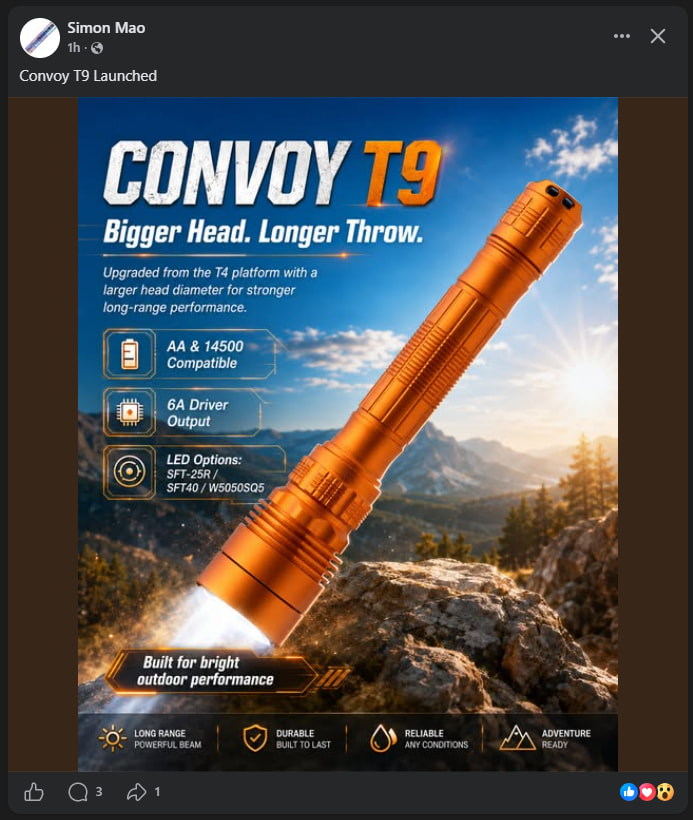
Just in orange for now. 
2 Thanks