Does anyone here know of a quality benchtop power supply kit (or design) that I can build myself? I am not thrilled at paying $100+ for a quality one. I am looking for 0-30V and 0-3A or more.
Thanks!
Does anyone here know of a quality benchtop power supply kit (or design) that I can build myself? I am not thrilled at paying $100+ for a quality one. I am looking for 0-30V and 0-3A or more.
Thanks!
I doubt you will save money building one yourself, but it can be interesting and you can learning something from it.
The actual regulation electronic may be fairly cheap, but you also need a trafo, enclosure (Requires some work to make holes), binding posts (or cheaper terminals), displays for volt and ampere, mains switch.
"mjlorton" is trying to do a fairly cheap DIY one on his video channel, but it is not finished yet.
If you want to build something youself, you can get a lot adjustable of buck regulators on ebay, they are only a few $. Depending on the regulator you might need voltmeter, ampere meter, two potmeters to replace the voltage and current trimmers on the circuit board. You might also want to place the regulator on a heatsink.
Then you need a trafo, a rectifier and a big capacitor before the regulator.
In addition to this you need the parts from my post above and some work to put everything together.
Thanks for the reply, HKJ. I may have mispoke in my first post, but this isn’t really meant to be a cost-saving exercise. I would rather build something from scratch and gain a true understanding of how it works than simply grab something off the shelf.
I will do some more research and post my thoughts in this thread.
I’m in the same situation. I would like to build it myself but don’t really know where to start. The biggest challenge is finding a case, pots and voltmeter and place everything together nicely. Thermal management might be an issue too. Dave from EEVBlog designed a nice one powered with batteries.
After many thoughts I think that I really need a two outputs PSU. I constantly use different voltages and it would make things simpler.
Right now I’m using some cheap ebay buck converters to get the voltage I want, but it’s a pain in the ass to change the voltage.
Where to find good (and cheap) pots?
You got get a multiturn from ebay (Remember to get about the same value): http://www.ebay.co.uk/itm/3590S-2-502L-5K-Ohm-Multi-Turn-Rotary-Wire-Wound-Precision-Potentiometer-Pot-/121144302052?pt=UK_BOI_Electrical_Components_Supplies_ET&hash=item1c34c359e4
For voltage adjustment multiturn is way superior to a single turn pot.
Thank you. Where do you get the knob that goes on that pot?
Potmeters usual has a 6mm shaft (I do not know if that one has) and you need a knob that can hide the nut.
Maybe this one will do: http://www.ebay.co.uk/itm/9-Pcs-Black-20mm-Top-6mm-Shaft-Insert-Dia-Potentiometer-Knobs-Caps-/121401798534?pt=UK_BOI_Electrical_Components_Supplies_ET&hash=item1c441c6f86
Thank you HKJ!
This is very interesting would be a good read if you put together a build log whilst undertaking this project

Depending on your requirements, a cv/cc capable circuit can be rather simple.
http://www.ti.com/lit/ds/symlink/lm117.pdf Look at page 21, for example. You could build that on a rainy Sunday and go from there.
Building one’s own lab PSU is a good tradition. There are probably still a couple of hundreds of thousands LM723/2N3055 based DIY lab PSUs out there, outliving their owners one after another. 
You can probably find lots of articles in electronics magazines in the library if you need some inspiration and tips for component selection. (is that to oldschool? )
Not the best chip for a 3A+ power supply, it requires a big heatsink to get rid of 100 watt.
The buck regulators from ebay has probably below 10 watt heat.
The LM317 will probably regulate better, with lower noise, but you need a fan to keep it cool.
Sure, a switcher would be nice. Buying a module from ebay is a little less “I would rather build something from scratch”, though. 
The linear PSUs are more fun when you can get your hands on a suitable multi-output transformer for different voltage ranges…
On eevblog there is a series of videos showing a small power supply build which works from 18650. You can learn a lot watching the videos.
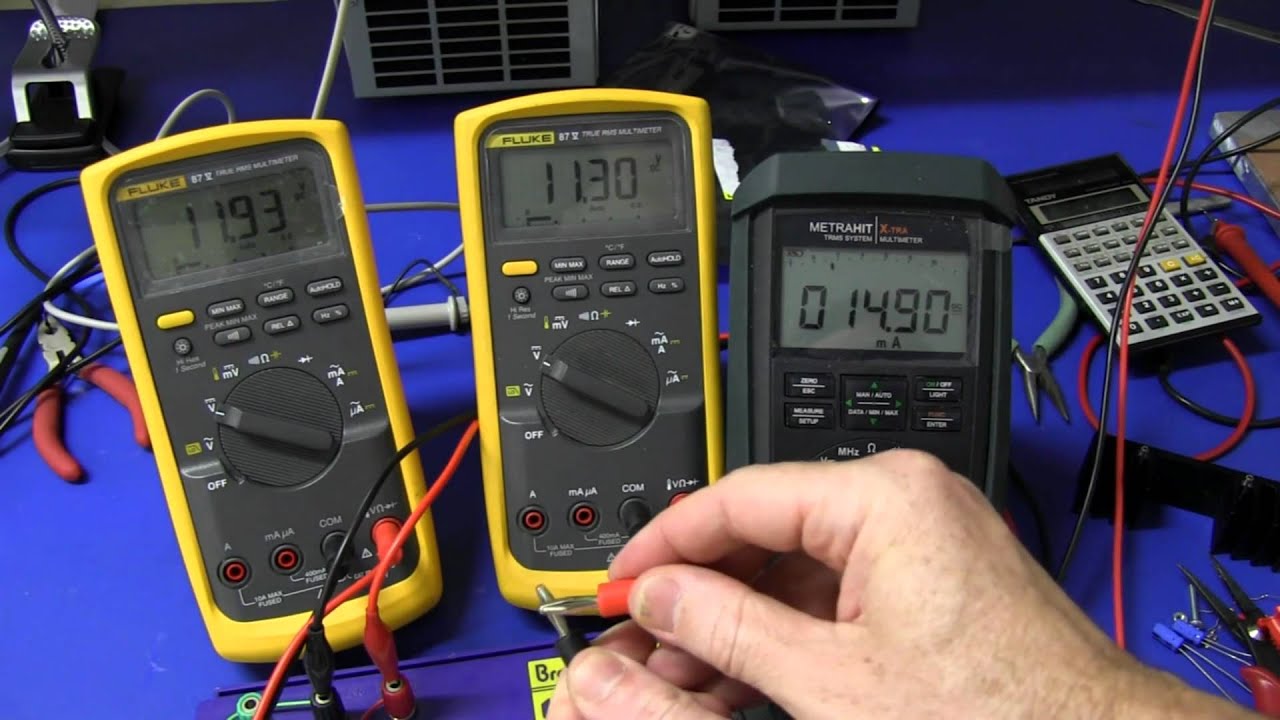
But it is probably not a good idea to copy it. David abandoned the design, because he had a problem with it.
For my personal DIY bench power supply, I use ATX (scavenged old computer PSU) which is quite easy to do. Althought few things to take note (example: ampere load)
It give you few predetermined ‘standard’ voltage, which is 3.3V 5V 12V –12V, which in turn you can make it different voltage by mixing the voltage reference to other instead 0V. (example: using 12V and –12V gives you 24V potential difference)
If you want to use different other voltage reference with little load (less than 1A) then you could just create your own voltage divder system with nearest reference voltage, or if not even better with zener. (I won’t use chip, its better to use chip to build alone)
Each PSU have slightly different configuration and output, so searching for information is important. (I learn alot of thing from it)
Yes, but it’s not the same as a real variable power supply. Plus with your setup you don’t have current limitation which is very useful in many situations.
Off topic or not, I don’t know, but this is one of my “home made” power supply.
Semi finished state, a little ugly but works. 1-15V 0-10A, voltage-current control. That wasn’t more than $20-30.


looks cool, i’m more interested in the display section :heart_eyes:
I have no experience working with those display, nor sensor (voltage/current)
I just received one of those volt/ammeters for a jump-starter I’m building.