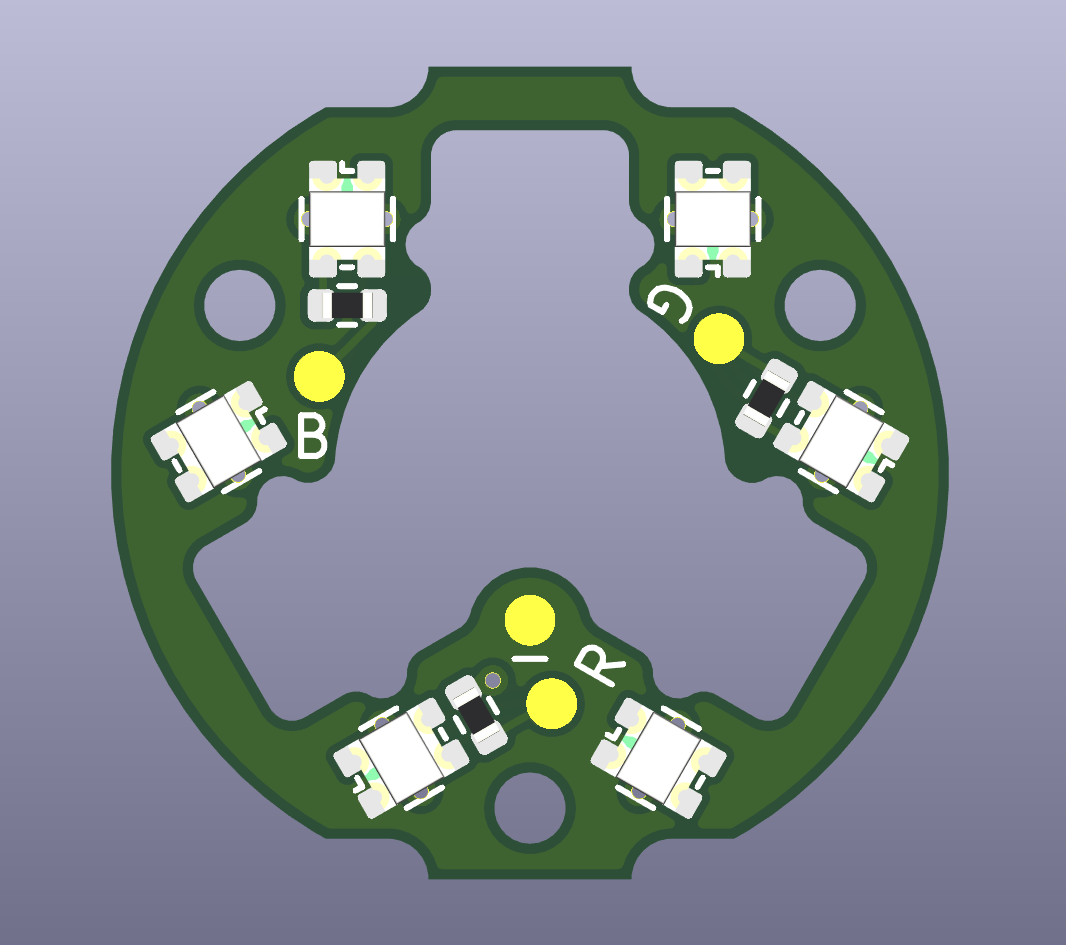
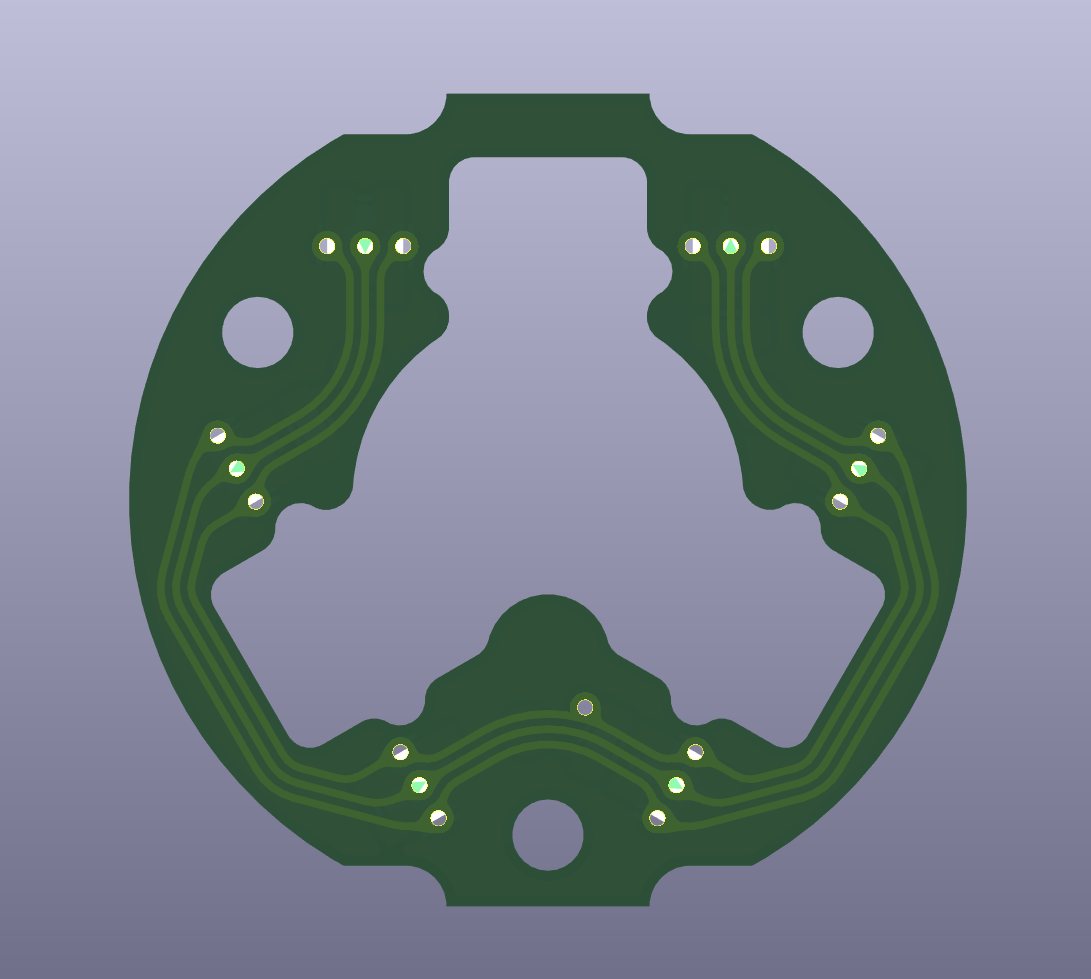
The smaller LEDs thefreeman recommended proved to be a godsend. Resistors now fit easily, and I could clean up my routing a lot.
2 Thanks
I use these:
$3.97 | 100PCS 1615 RGB Red+Green+Blue 1.6*1.5mm Full Color SMD LEDs Common Cathode / Common Anode 0603 1.8-2.0v 20mA
1 Thank
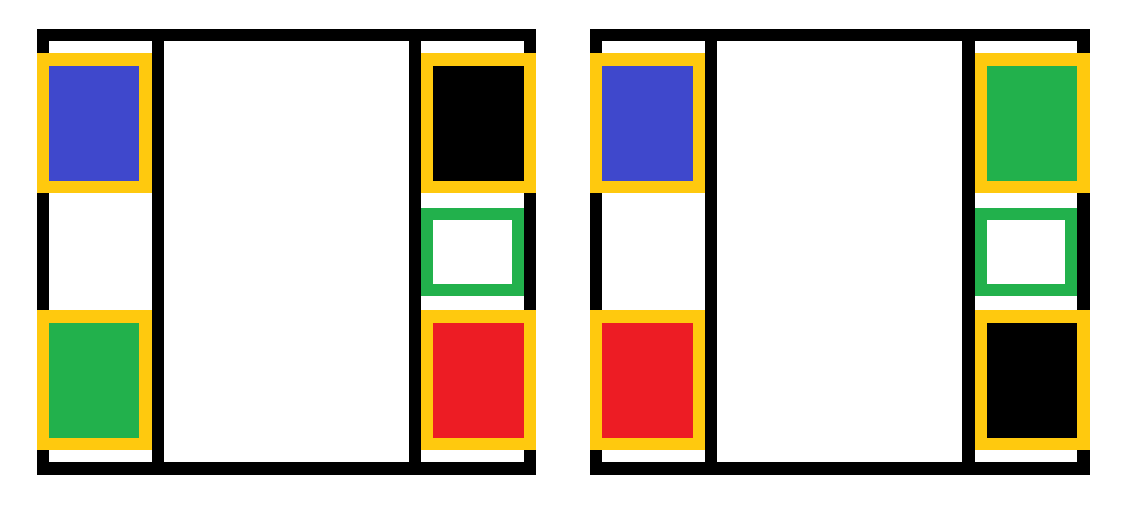
Wow, those have the exact same footprint but a totally different pin order. I wish some things just had a frigging standard. I’ll probably set off a big LCSC order anyway, so I can grab the ones I designed for on LCSC.
If i remember correctly the cathode is the same
Not even that…
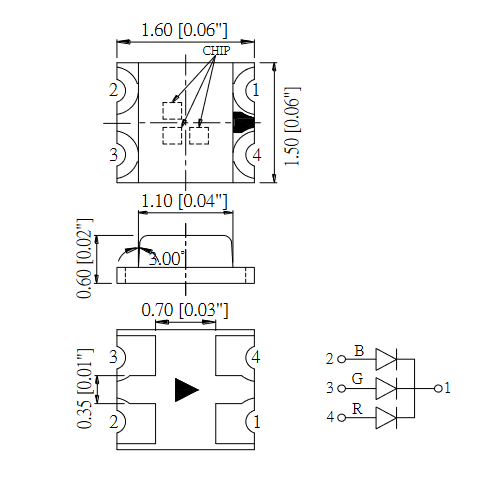

if I am not mistaking, this is the comparison between the two, thefreemans led left, yours right (both seen from top):
1 Thank
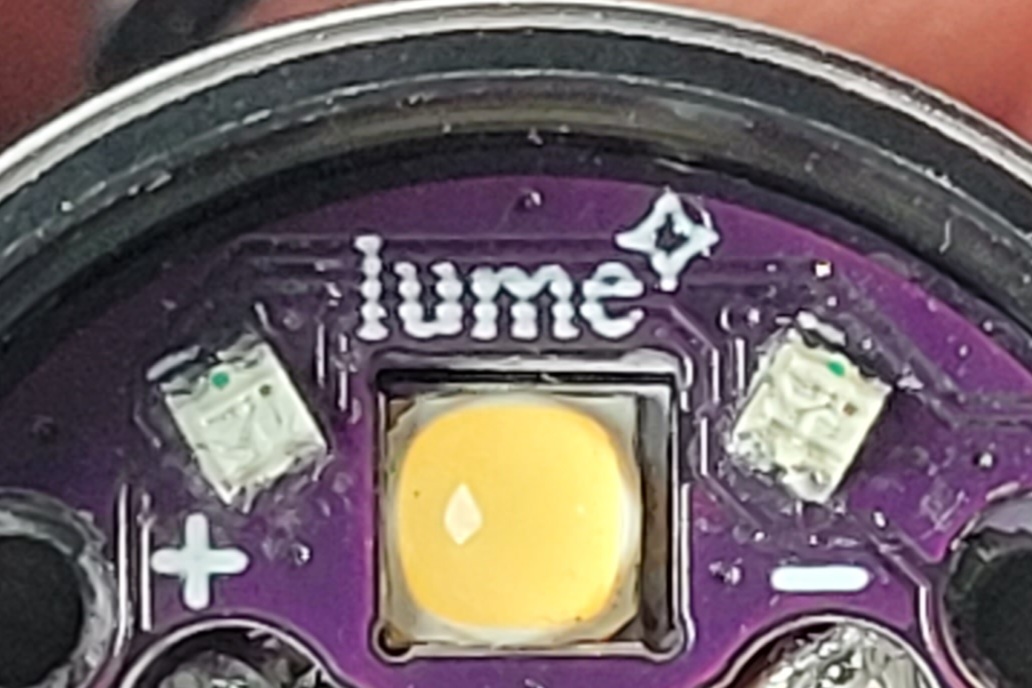
I just tested the last batch I got, and sure enough Pin2 is Cathode 
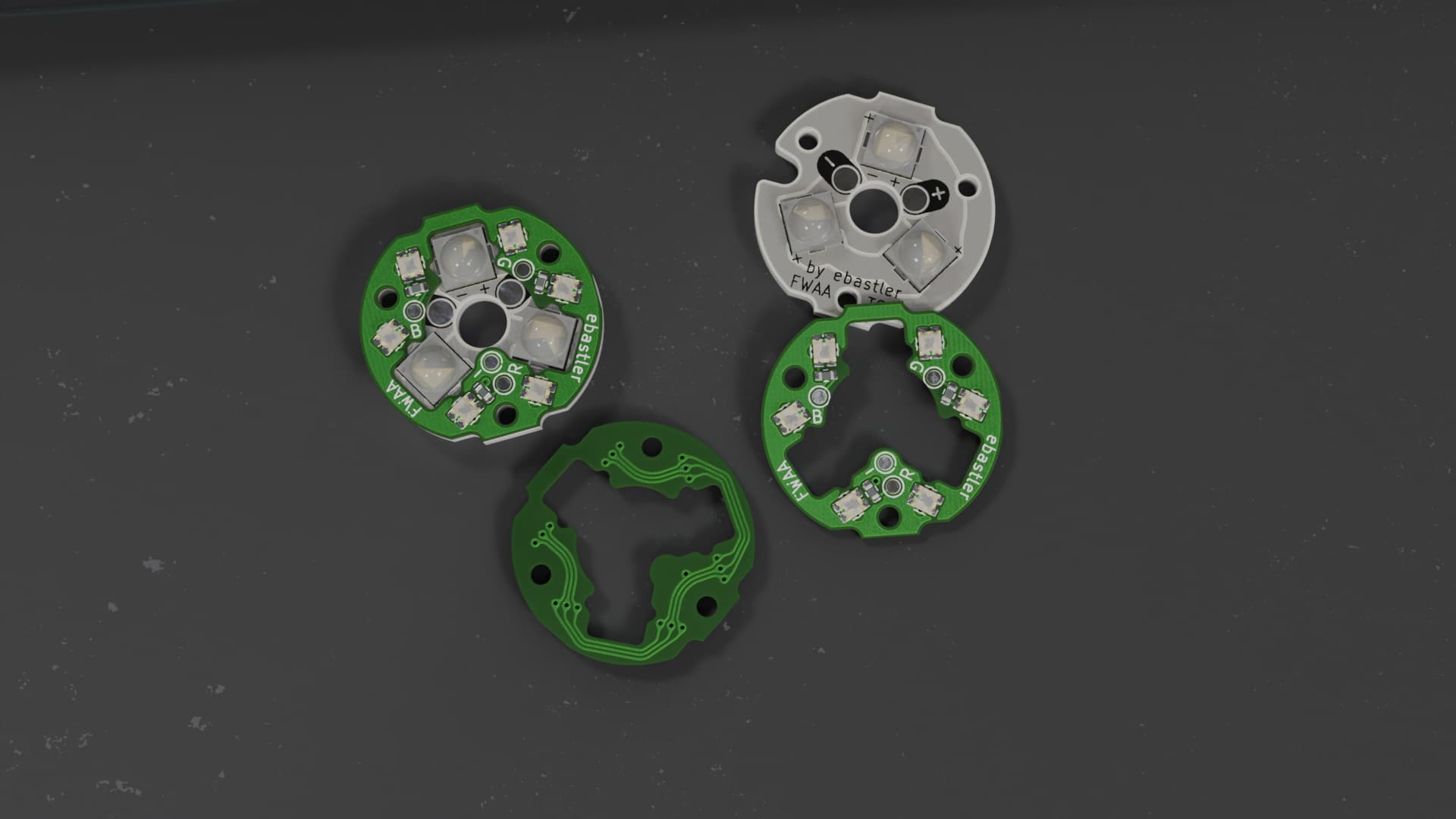
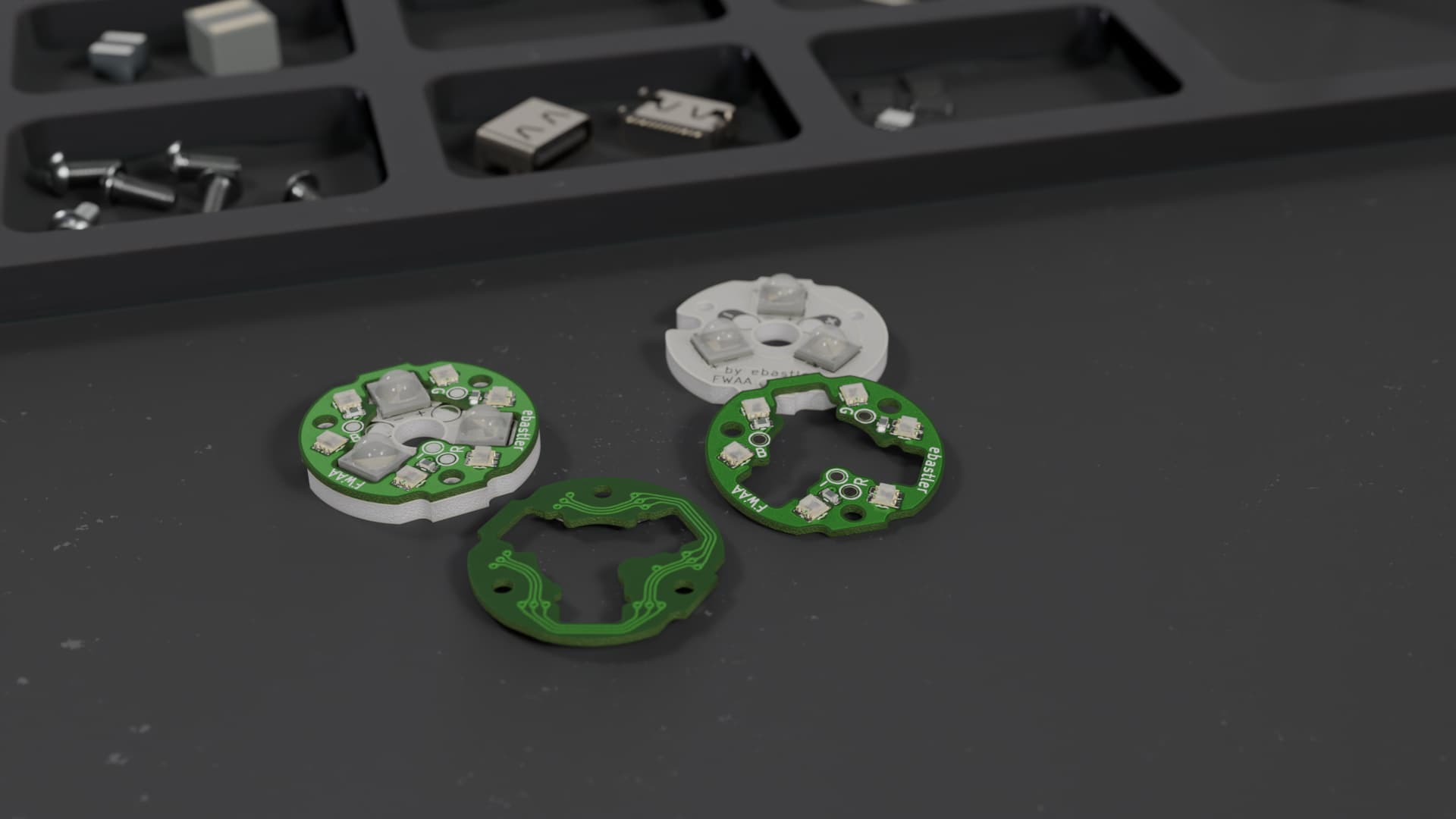
2 Thanks
Heh, I just asked Wurkkos nicely on AliExpress and they gave me a one-time link to purchase the same RGB aux LEDs on the TS10
1 Thank
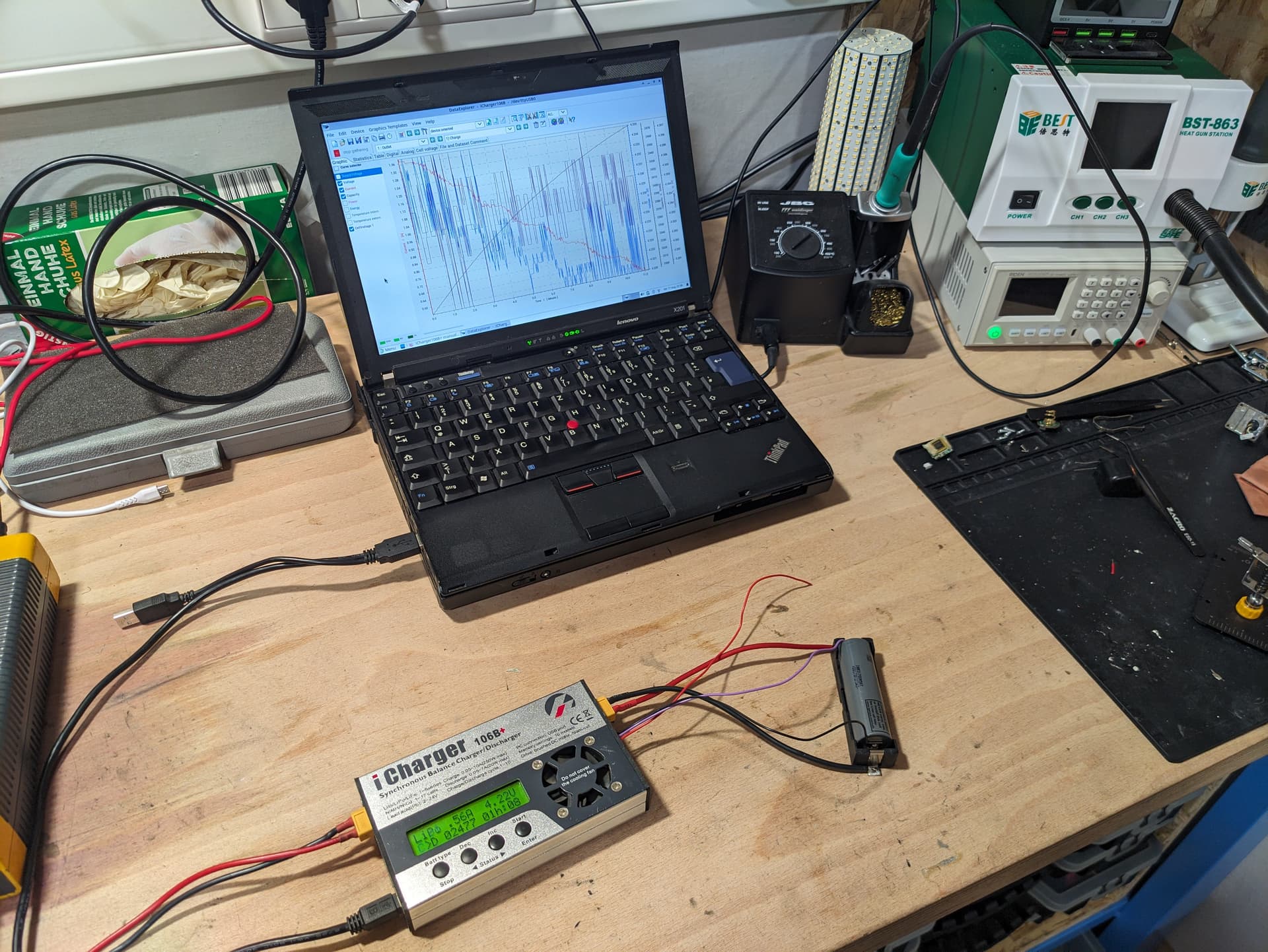
I realized my junsi 106b+, an RC LiPo charger, is actually pretty accurate (tested with a Fluke DMM) and can do 4 wire battery discharge measurements and log via USB… Trying to figure out a reasonable setup to test some new cells right now.
Currently charging to 4.2V, once full it should wait for 10min, then automatically begin the discharge at 4A. It should stop once it reaches 3.2V, same as moochs tests do.
During the last measurement it used the main battery connector voltage as cut-off instead of the balancer leads that serve as a 2 wire measurement, dunno why. It should not, according to the manual. Therefore it shut off too soon (3.37V). Hoping it’ll work better this time.
2 Thanks
Sample output of my data evaluation script. Looks a bit dumb for now, since I only have one full measurement, but had to try if the script is capable of plotting multiple traces, so I had it plot the same dataset twice with a different name. Looks good so far.
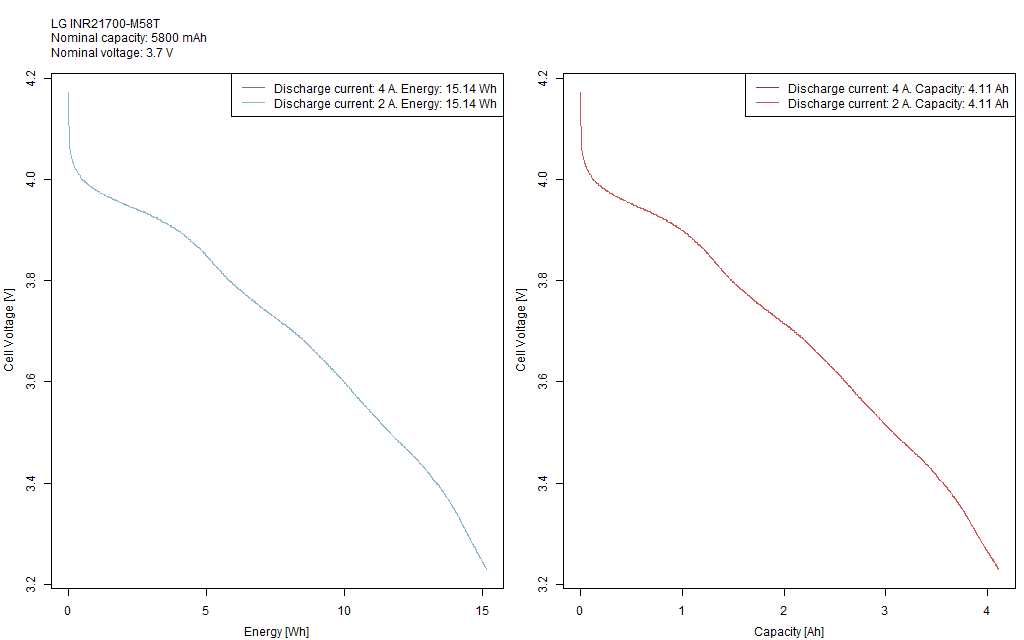
Also, this cell looks promising. At 4A discharge current I am getting a whole Wh more than mooch got from Vapcell F60 at 5A. While it has less capacity, the voltage drops slower. Definitely an interesting low current high capacity 21700.
I was expecting no less than a Linux Thinkpad from you. Are you on alternative firmware as well?
1 Thank
That’s my workshop computer, an old X201 (got it for free from my old university because it wouldn’t turn on, replaced the fan and got myself a perfect notebook) running Suse.
I can’t get along with this OS at all, however, so I’ll likely switch back to Arch when I have some time to spare. They tried to make UI settings for a lot of things, and in the process completely messed up the config file structure and no file is where I expect it to be (I spent 2 hours trying to set up an SSH server and gave up trying to get a working VNC server running on this OS). Probably Dualboot with some windows for a bunch of proprietary software needed in the workshop.
It’s still running Lenovo BIOS and no coreboot/libreboot, but it has a modbios allowing me to use modern Intel AC/AX wireless cards.
My daily is a newer T14s Gen3, but that one runs Windows 11 single boot. I got tired of booting back and forth depending on which application I need, and settled back on Windows singleboot.
2 Thanks
sorry to hear that 
I’m a (digitally) very lazy person, and often compromise on things I know are not great from a privacy/ideologic/company culture point of view, simply because they make my life easier (cough Android with full Google app suite instead of a degoogled ROM). Since a lot of my computer time is spent in Autodesk Fusion (that is an absolute bitch to get to work in Wine and breaks all the time according to people who tried), and I am often switching back and forth between KiCad and Fusion, Windows was the easiest solution. Also, Netflix app and videogames (that was before Valve went crazy about Proton and made huge leaps).
My server has been Arch with Alpine containers for a couple of years now, very satisfied.
My routers/access points are all various OpenWRT hardware since I don’t trust a firewall/router/AP that gets updates for 6 months and and never again 
That’s understandable. I have a company issued windows laptop used for AutoCAD and all the various control suites for different proprietary bits of hardware. For my personal use I’ve put in place a rule to not use nonfree software (and firmwares whenever possible) at all so my hardware choices reflect that. KiCAD is good, FreeCAD sucks major 
 but it’s a hobby so I stick with my ideals. FOSS studio (audio) software landscape is great though! Not gaming at all ever helps a lot too i imagine.
As for the phone, I have daily-driven my pinephone in the past but the hardware is weak for my ADHD-fuelled multitasking frenzy with tens of browser tabs open at any given time so i’ve settled on a GrapheneOS pixel which works fine. Thoroughly degoogled, don’t care about banking apps etc., all that can be done in a browser and i don’t mind the less-than-perfect convenience.
2 Thanks
Yeah, FreeCAD is just too much pain for me… But they got a huge financial support and have a lot of additional manpower since not too long ago. Similar to how the CERN at some point picked KiCad and started supporting them. I have high hopes of FreeCAD improving quickly in the next 1-2 years. KiCad and Blender are the gold standard of “open source showing expensive proprietary softwares how it’s done”
I’m on a 4yo Xiaomi with Paranoid Android right now - the name suggests a very privacy oriented ROM, but instead it comes with a full google suite Very slim and battery efficient OS, however.
Graphene is really cool, tried it on a friend’s phone a while ago. I love the concept, and it seems really well done. A breath of fresh air in the mostly dying customrom scene. It’s either Lineage, or some weirdo projects that get 3 updates and then get EOLd by now. Paranoid somehow survives too, but updates are slow as well.
1 Thank
No kidding, someone is financing FreeCAD?? 
 Fingers xed, hopefully we’ll have a proper 3D CAD suite soon! GIMP is also due that injection.
As for GrapheneOS, i love it. It might be that my previous contact with Android used to be a 6 y/o vodafone-branded company phone that got stuck at Android 7 and now all of a sudden there’s meaningful gesture control and overall pretty and snappy GUI. The niggle i have with android in general though is deeper customisability, like HW keyboard layouts or the fact that to get a ‘lock screen’ quick settings tile i need to have a 130MiB (RAM) daemon running.
Plot looks reasonable. Adding lower current measurements now. I expected a bigger difference in usable Wh between 4 and 2A.
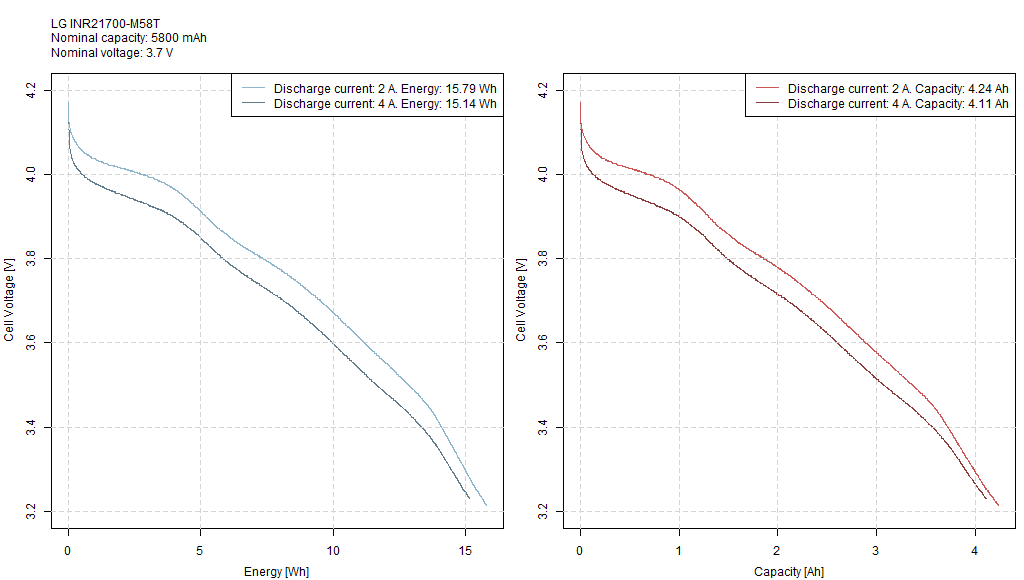
Given usable Wh hasn’t dropped too much, you might be able to pull some higher amps from this cell and still get reasonable capacity… 5A? 6A?