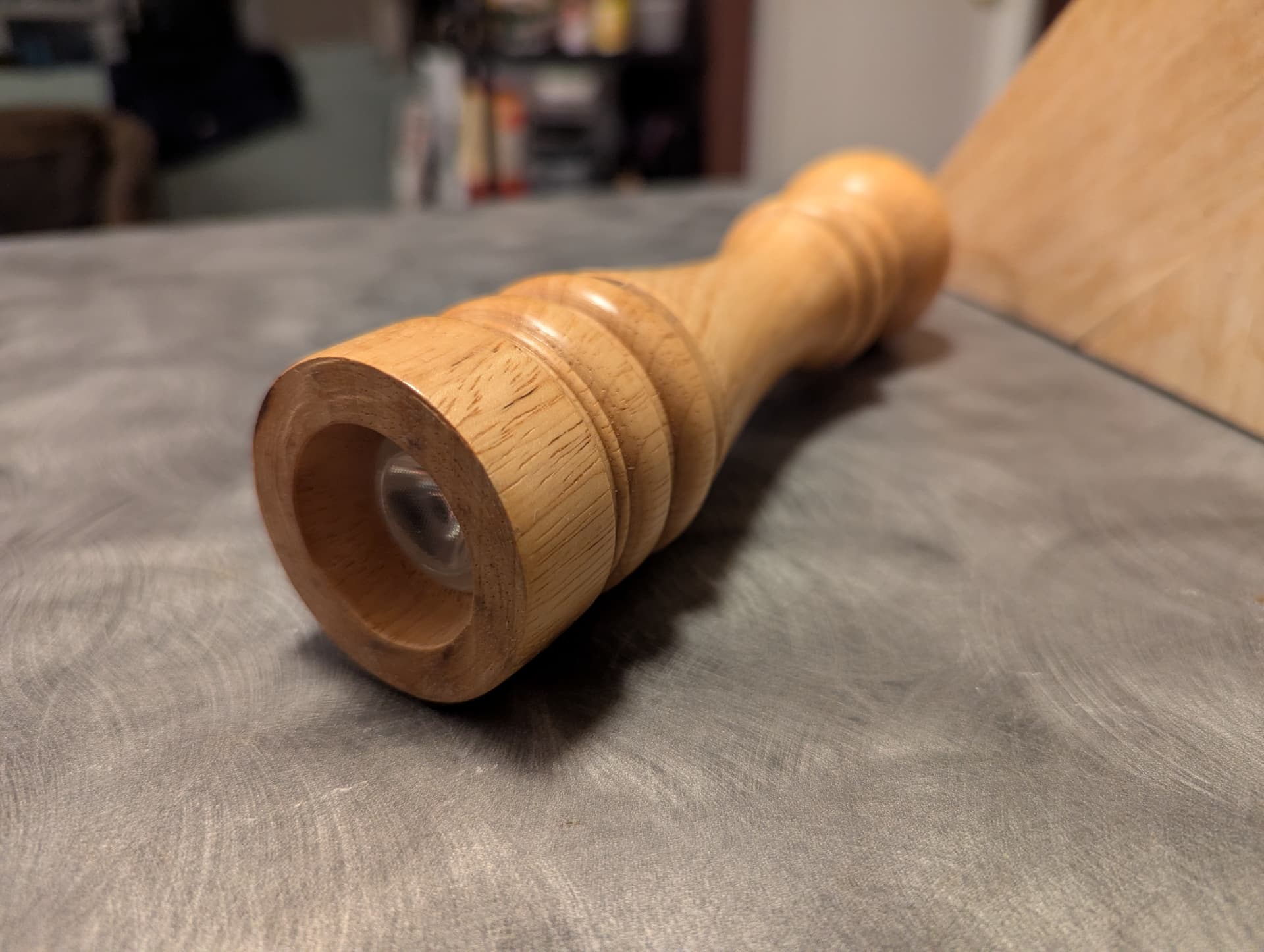
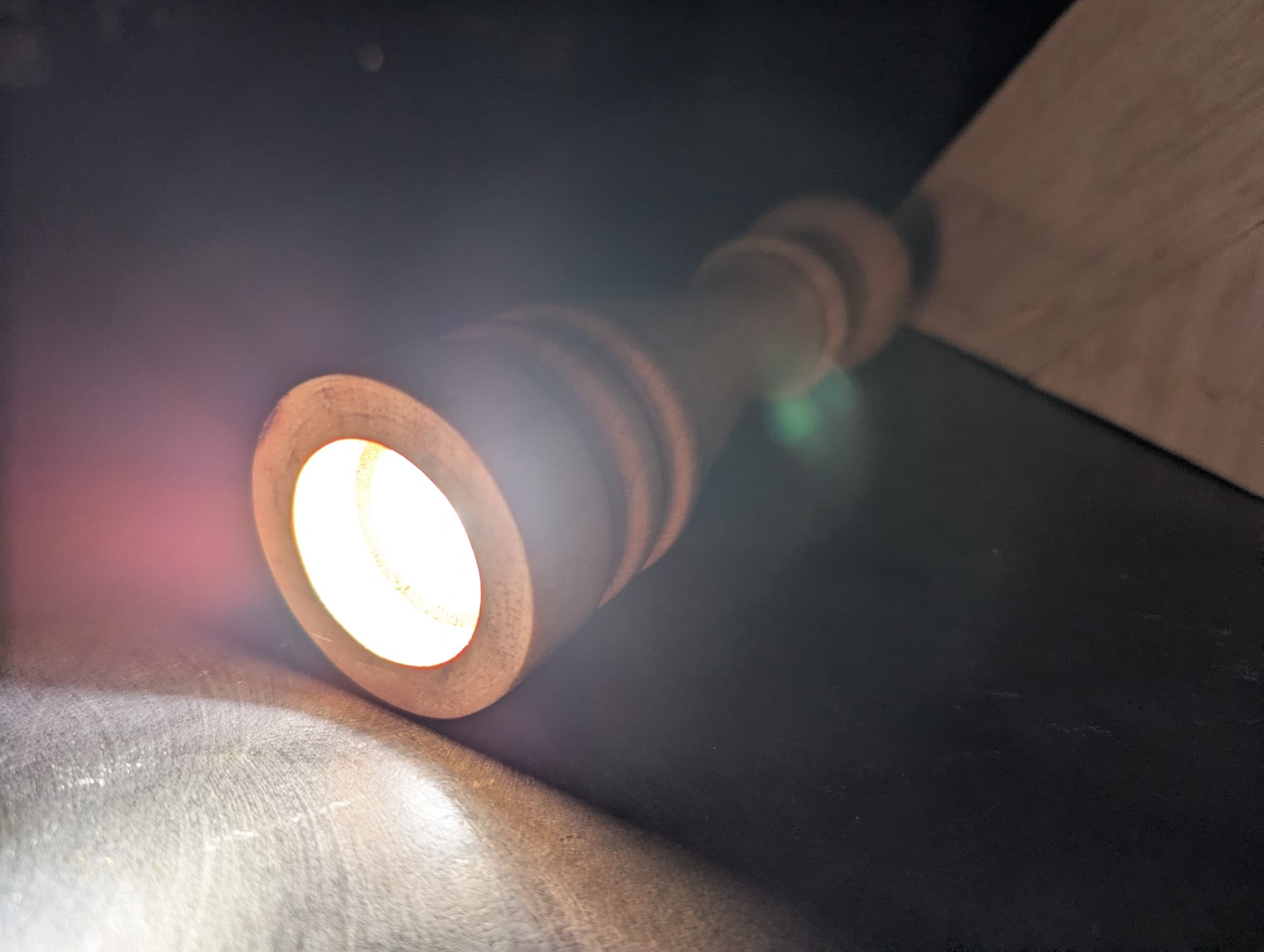
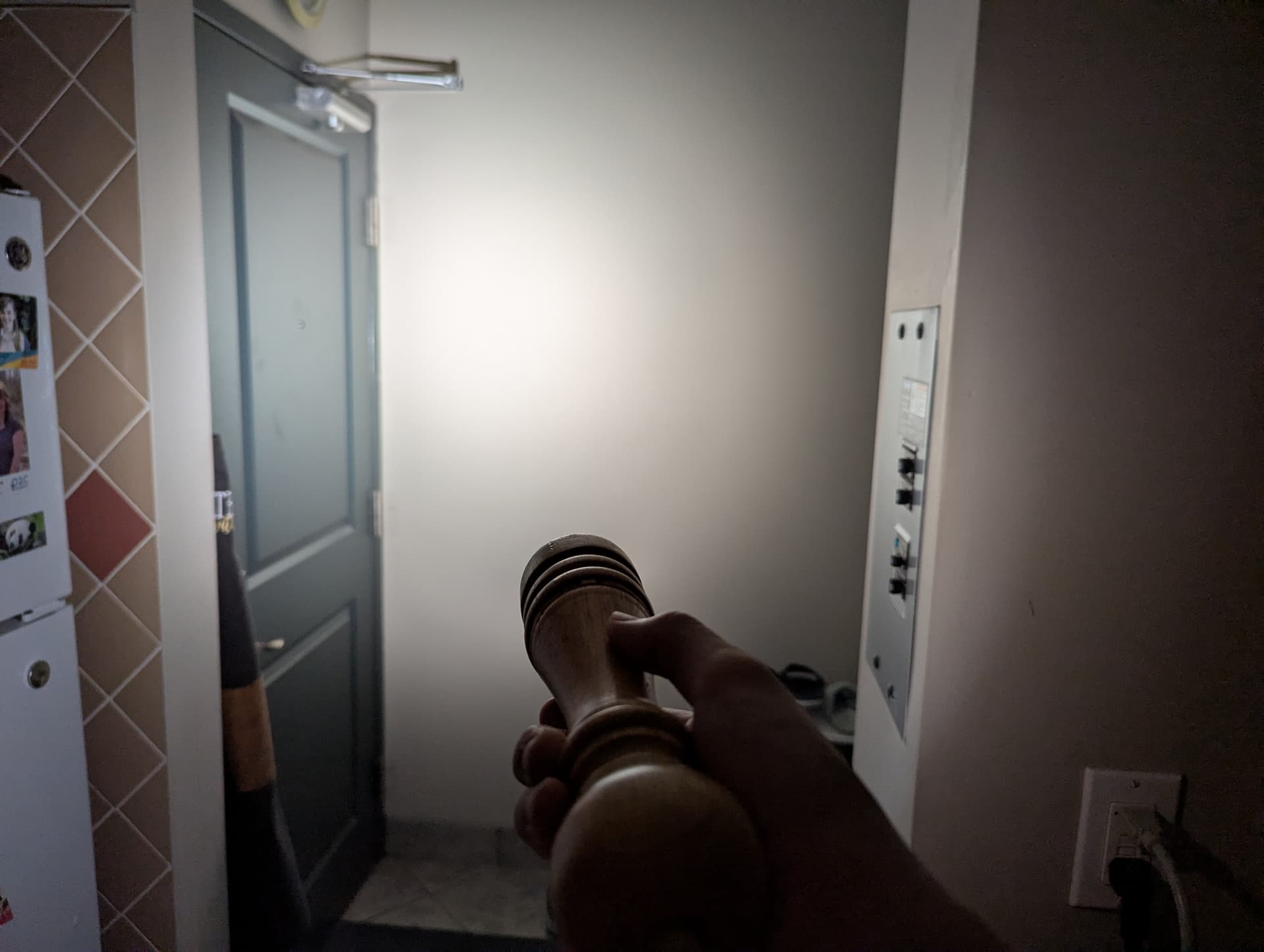
[Finished] Serlite's 13th Annual Old Lumens Challenge Entry - Hand Made

Another year, another White Elephant gift exchange in a couple weeks that I haven’t bought a gift for yet!
So like last year, I decided I’d make a gift to give - and naturally, that gift would be a flashlight.

My journey began at a thrift store, looking for something - anything - that was vaguely flashlight-shaped.

After an hour of wandering the cluttered aisles, lo and behold:

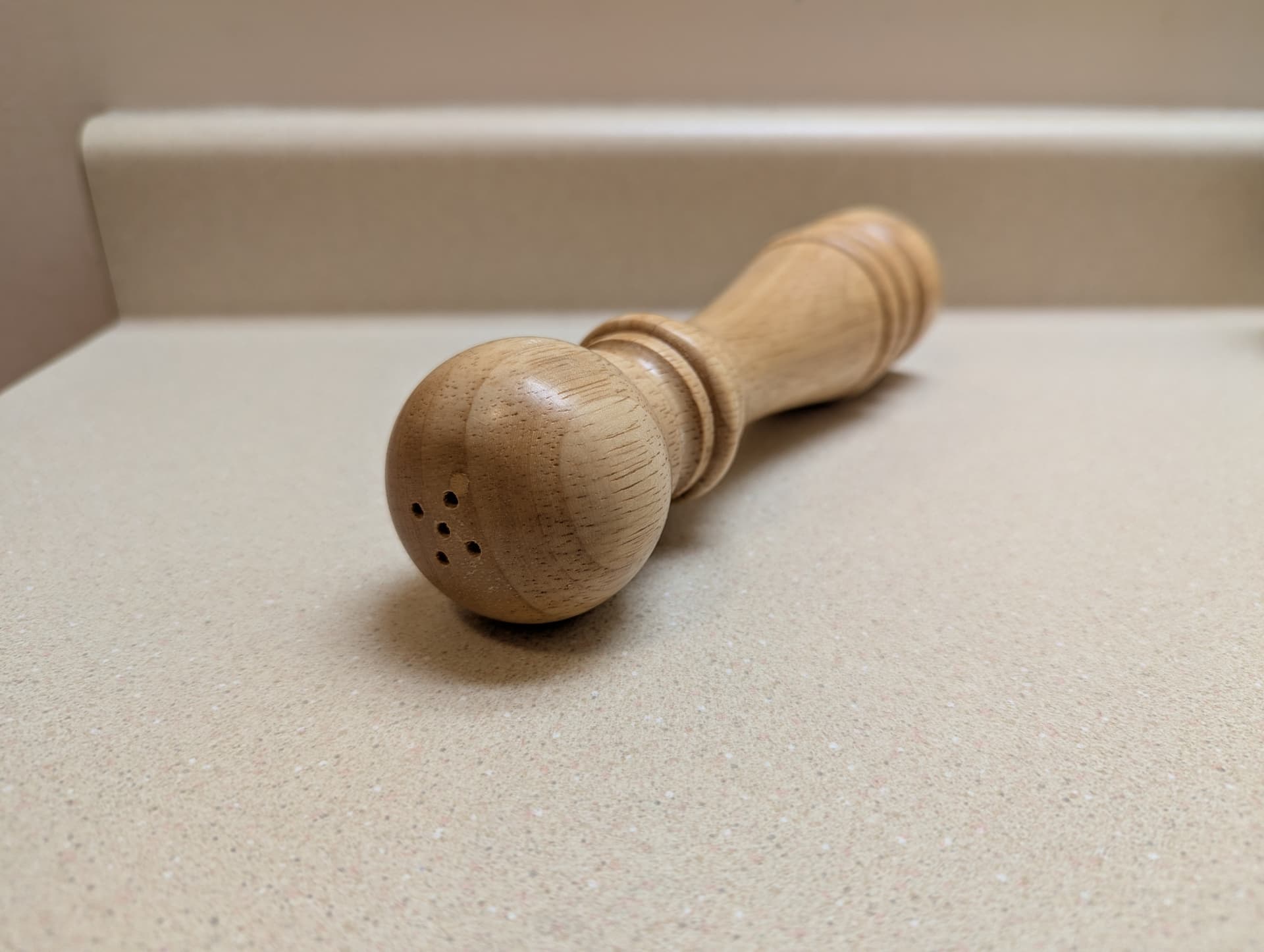
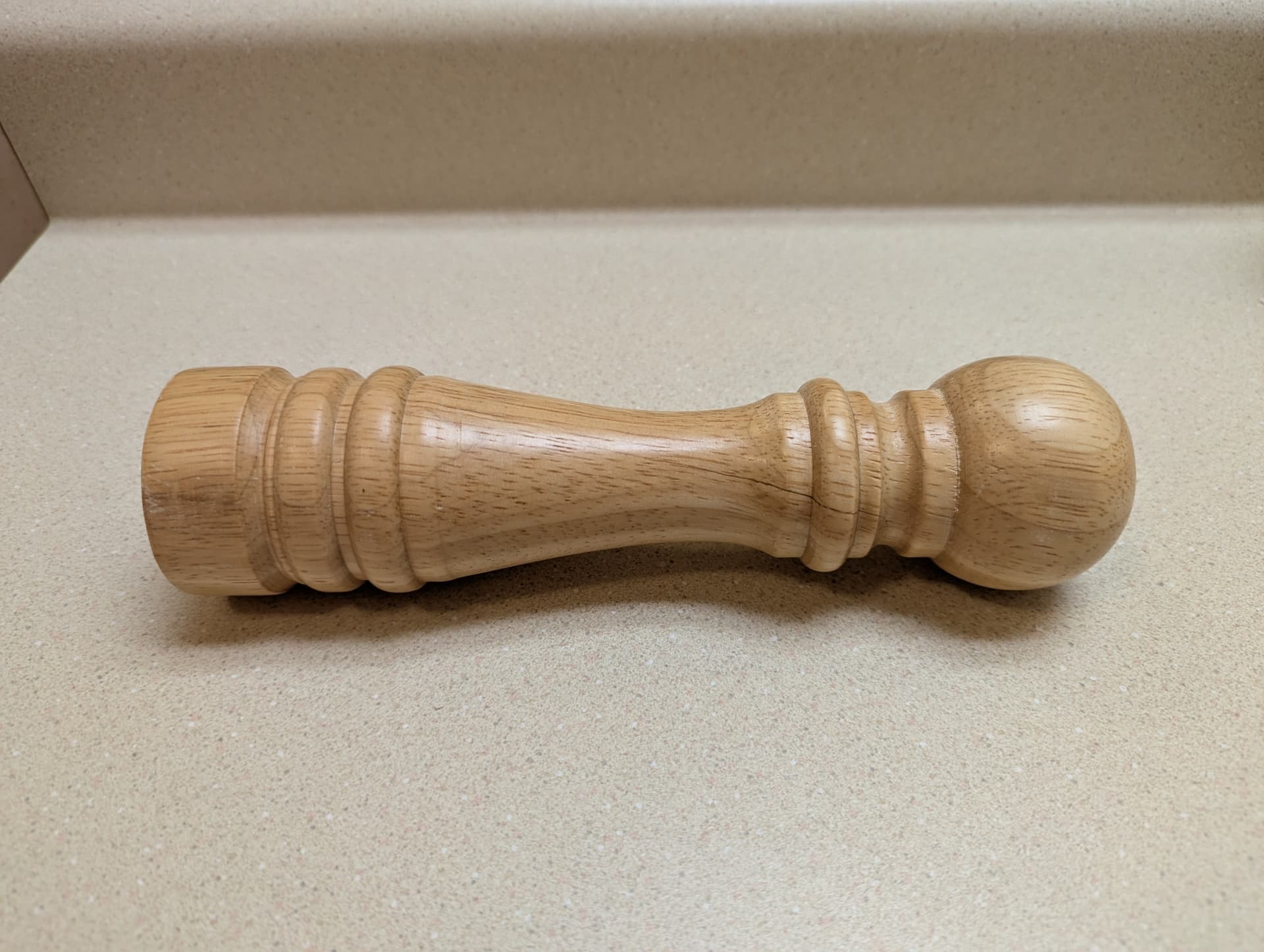
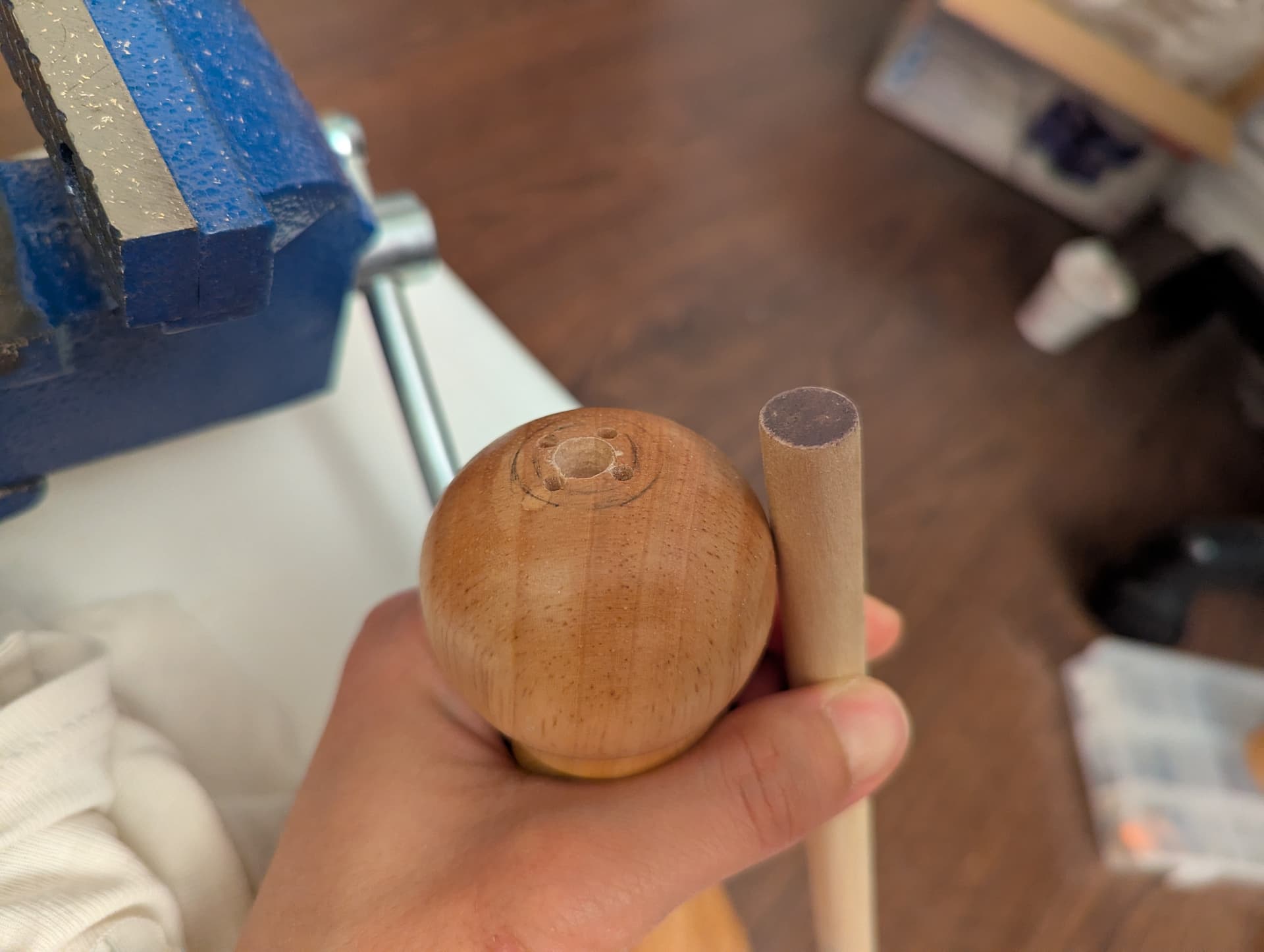
This salt shaker looked perfect! And because it lacked a price sticker, I got it for cheap - leaving me more budget to spend on modifying it.

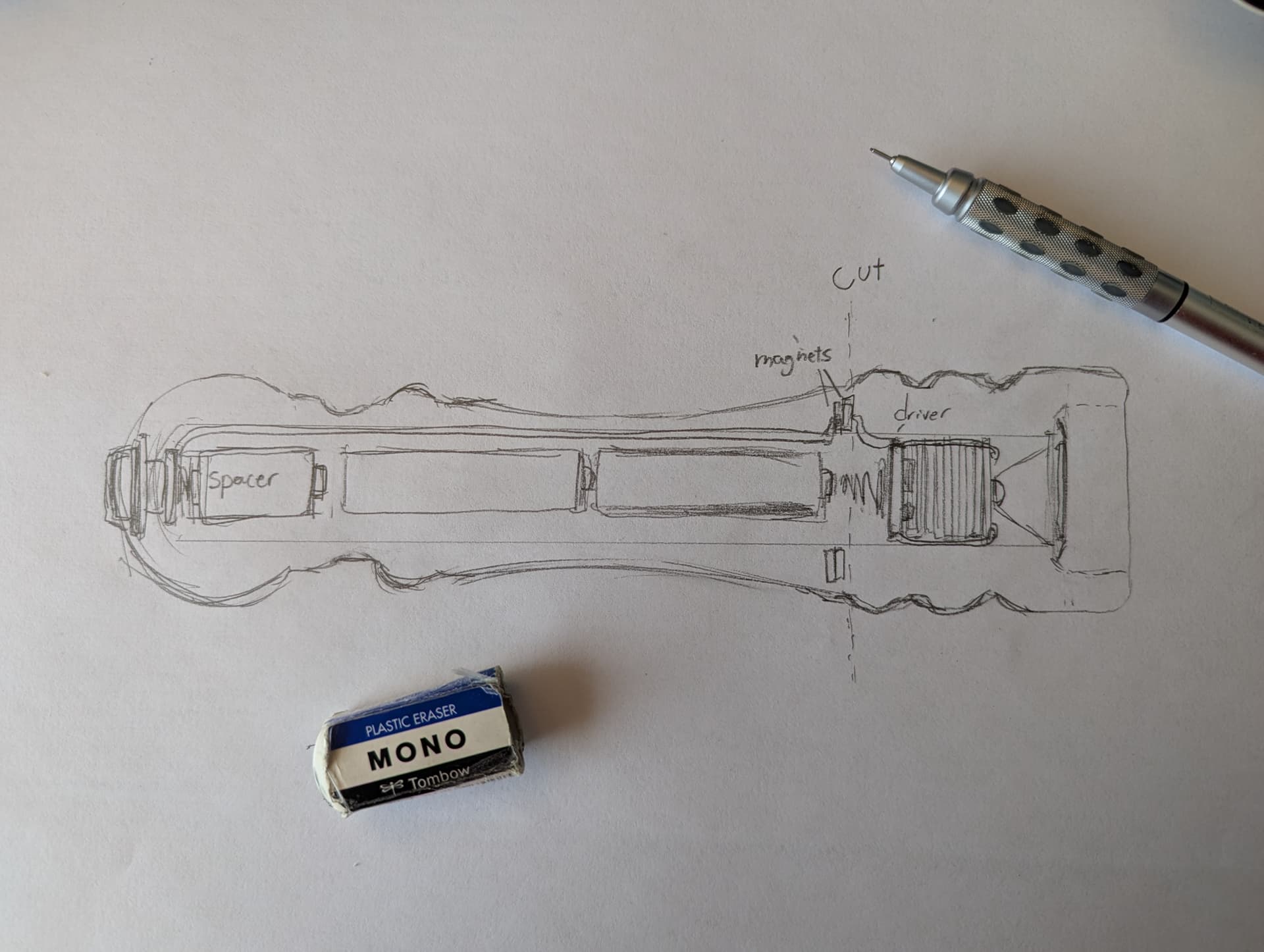
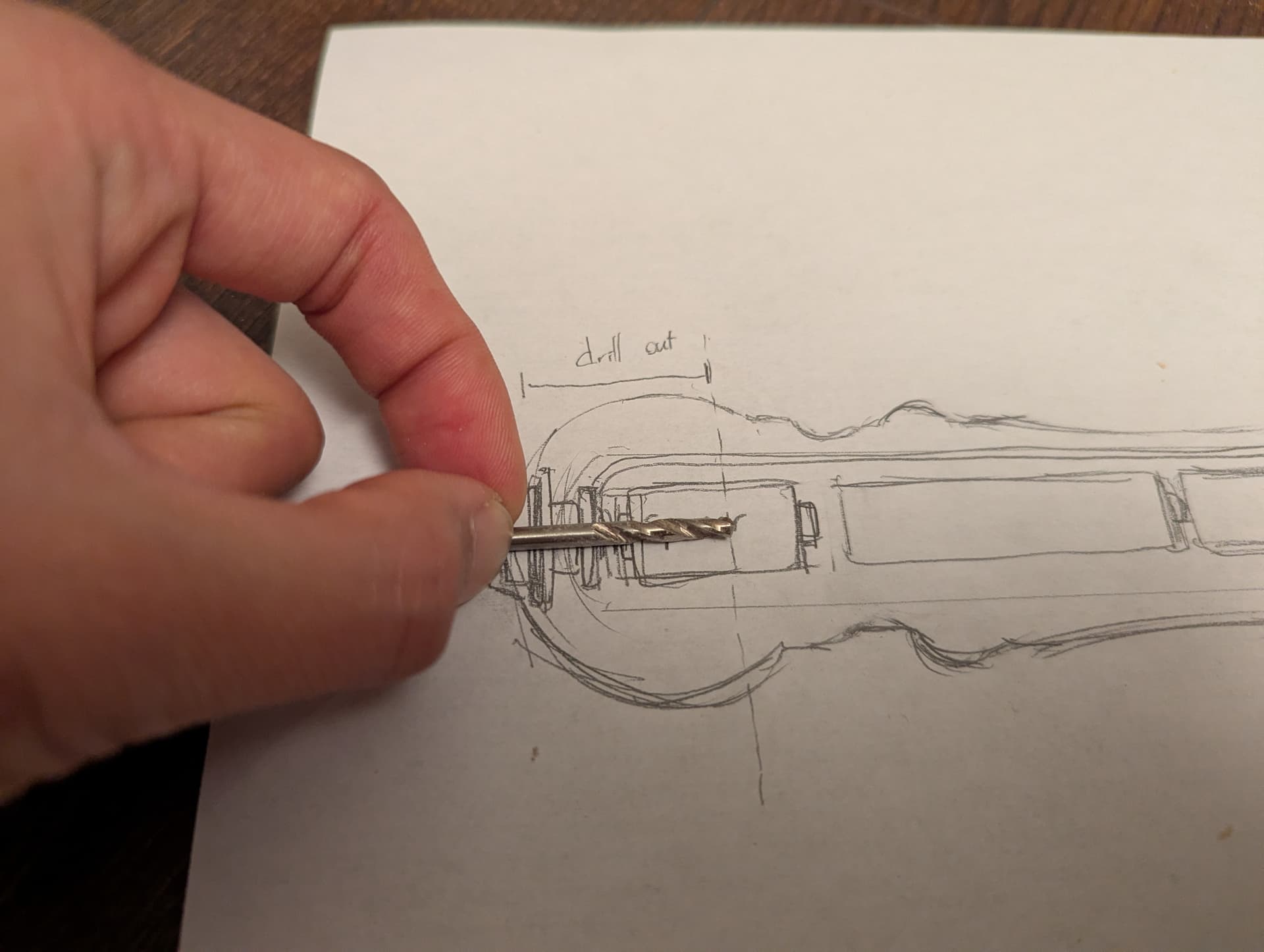
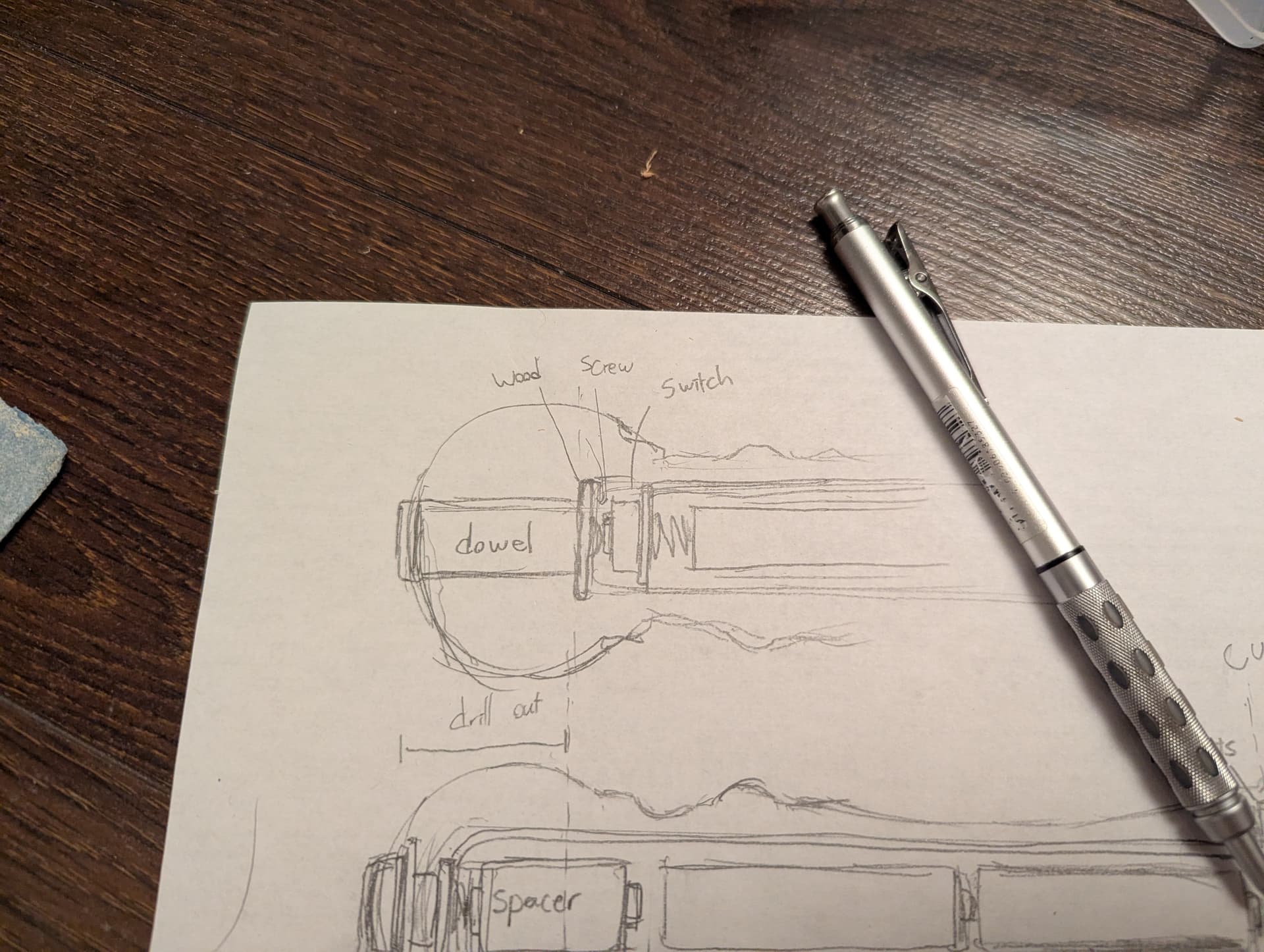
After making some measurements I sketched out a plan:

Here’s the details:

  • 2xAA driver (don’t want to give too much of a fire hazard to my friends!)
  • Rear tailswitch at the top of the shaker
  • TIR at the bottom of the shaker, screwed in using the cap as a bezel
  • The head and tail should come apart so batteries can be replaced - connected by…magnets, I hope?
10 Thanks

Looks like an interesting build. Can’t wait to see the finished product.

1 Thank

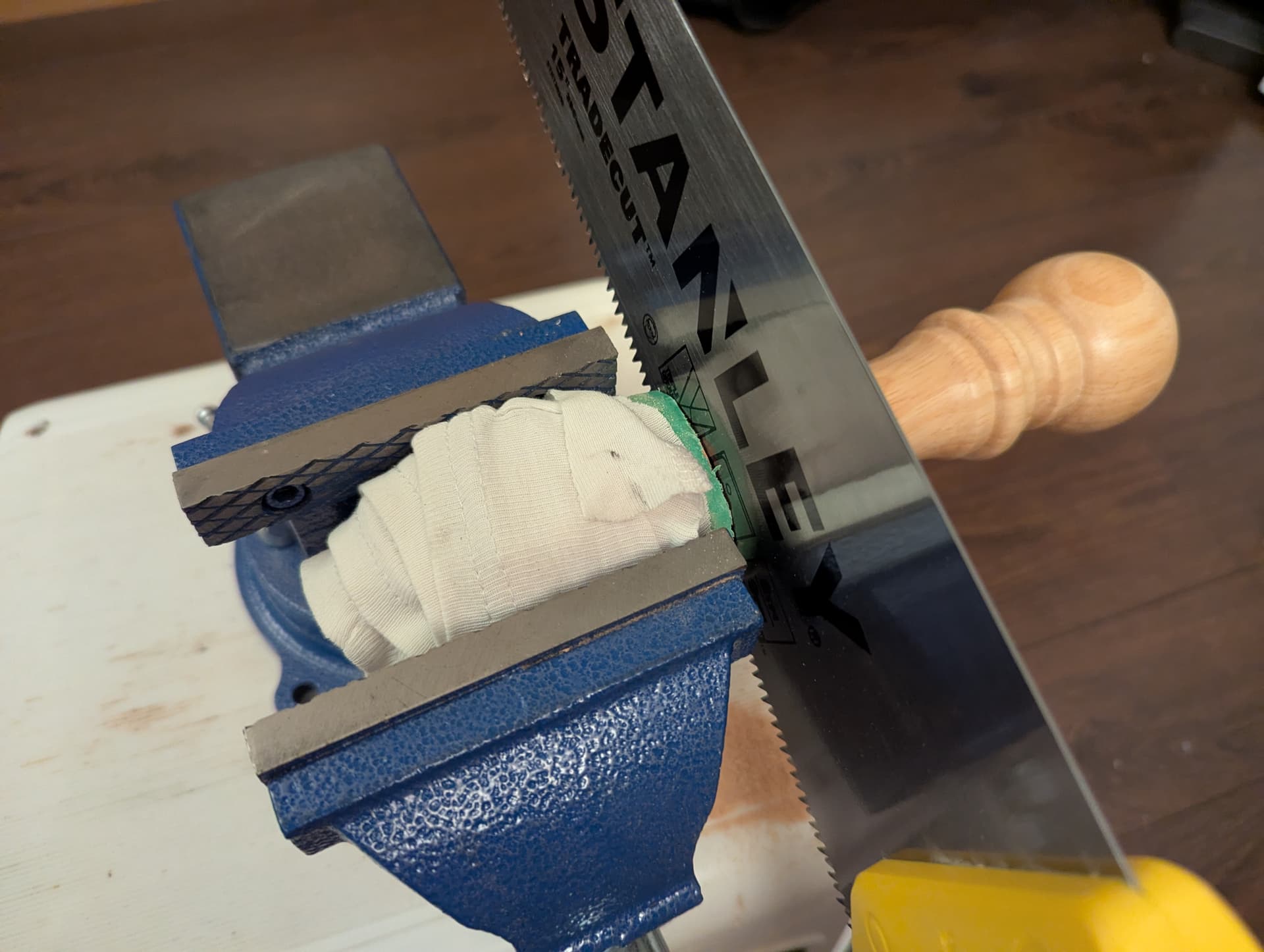
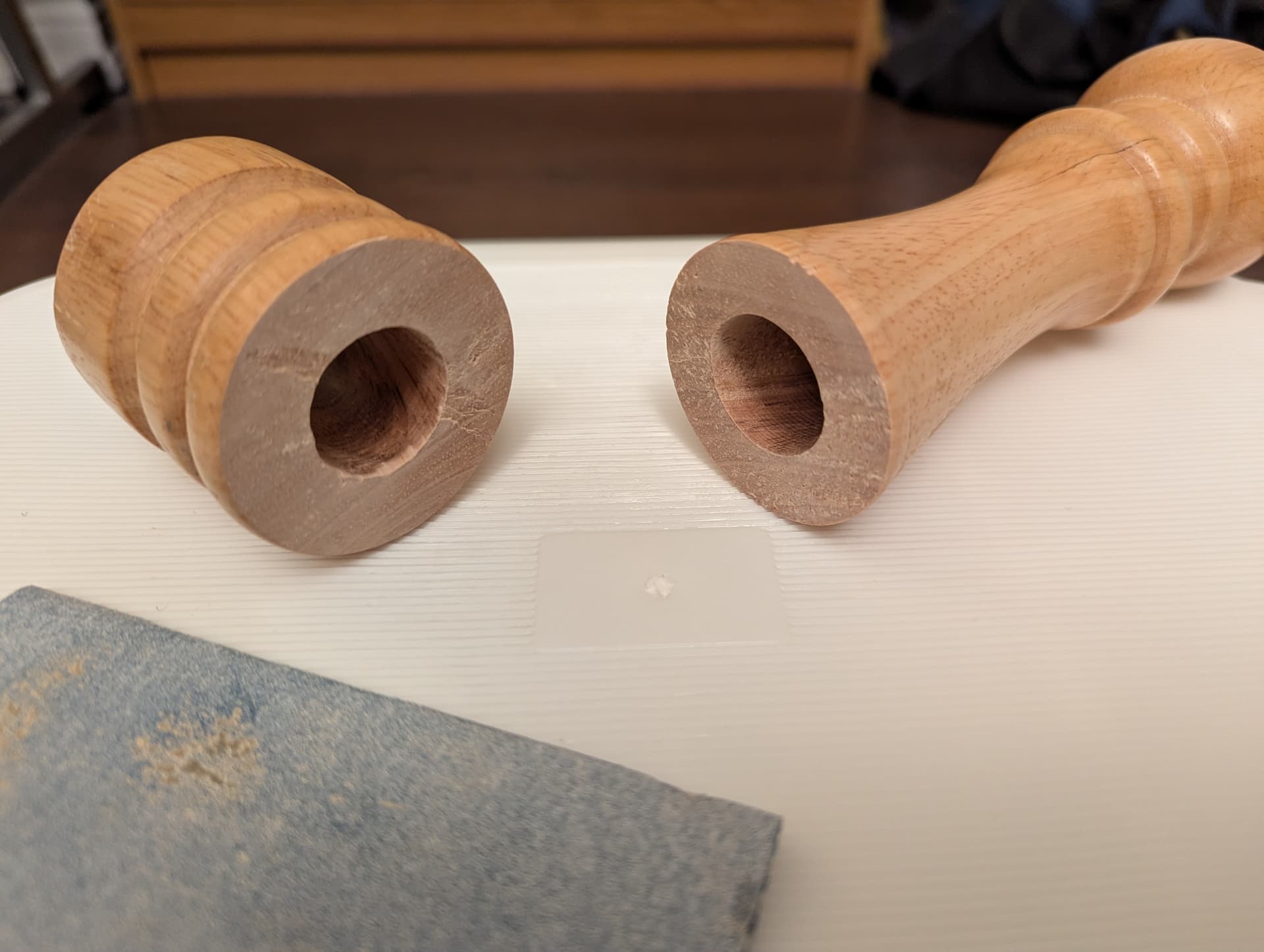
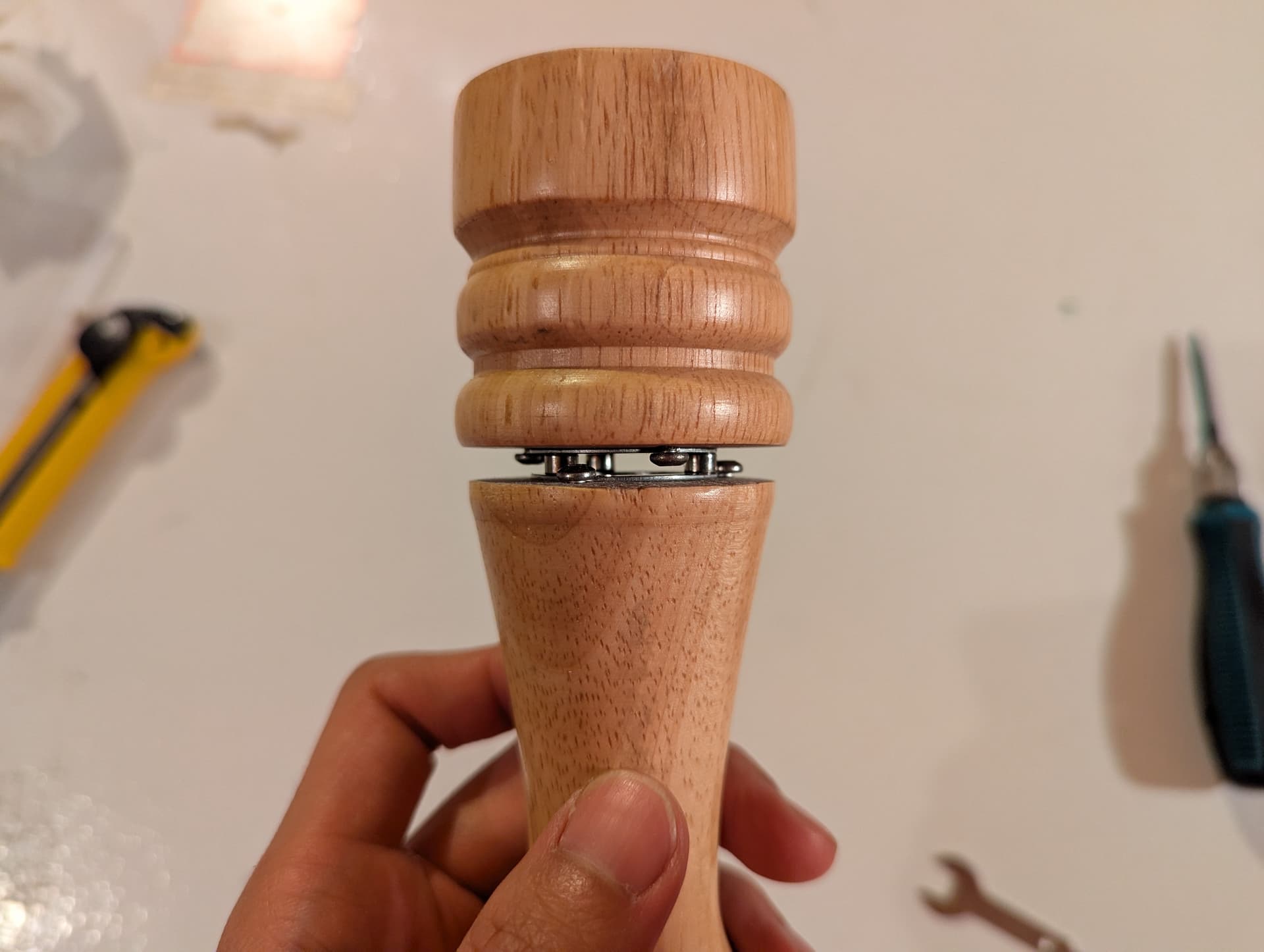
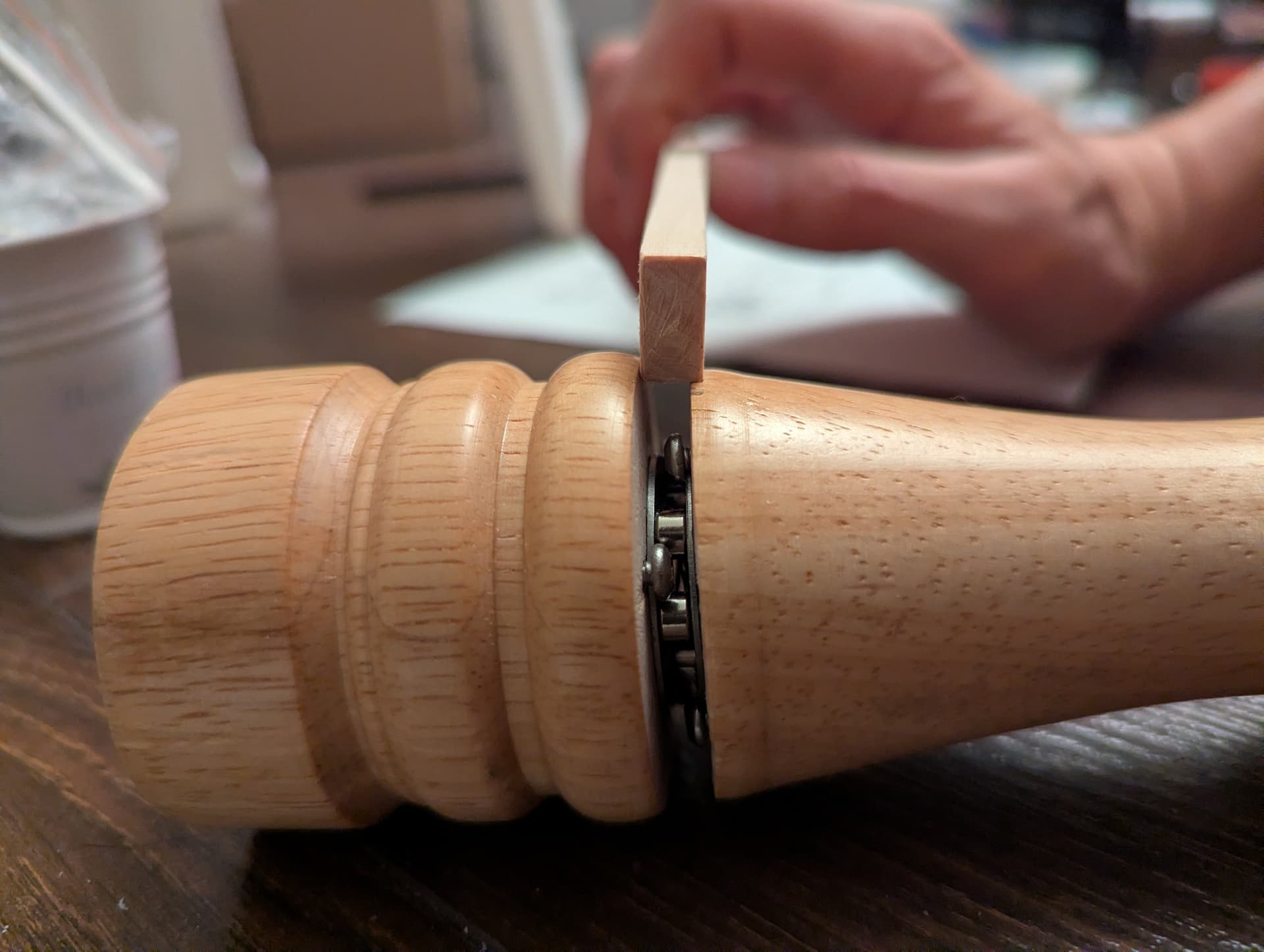
My first step was to cut the salt shaker into two pieces, to make a head and a tail - this way the batteries could be replaced without dumping out the LED/driver:

After some sanding, I was left with a pretty clean surface:

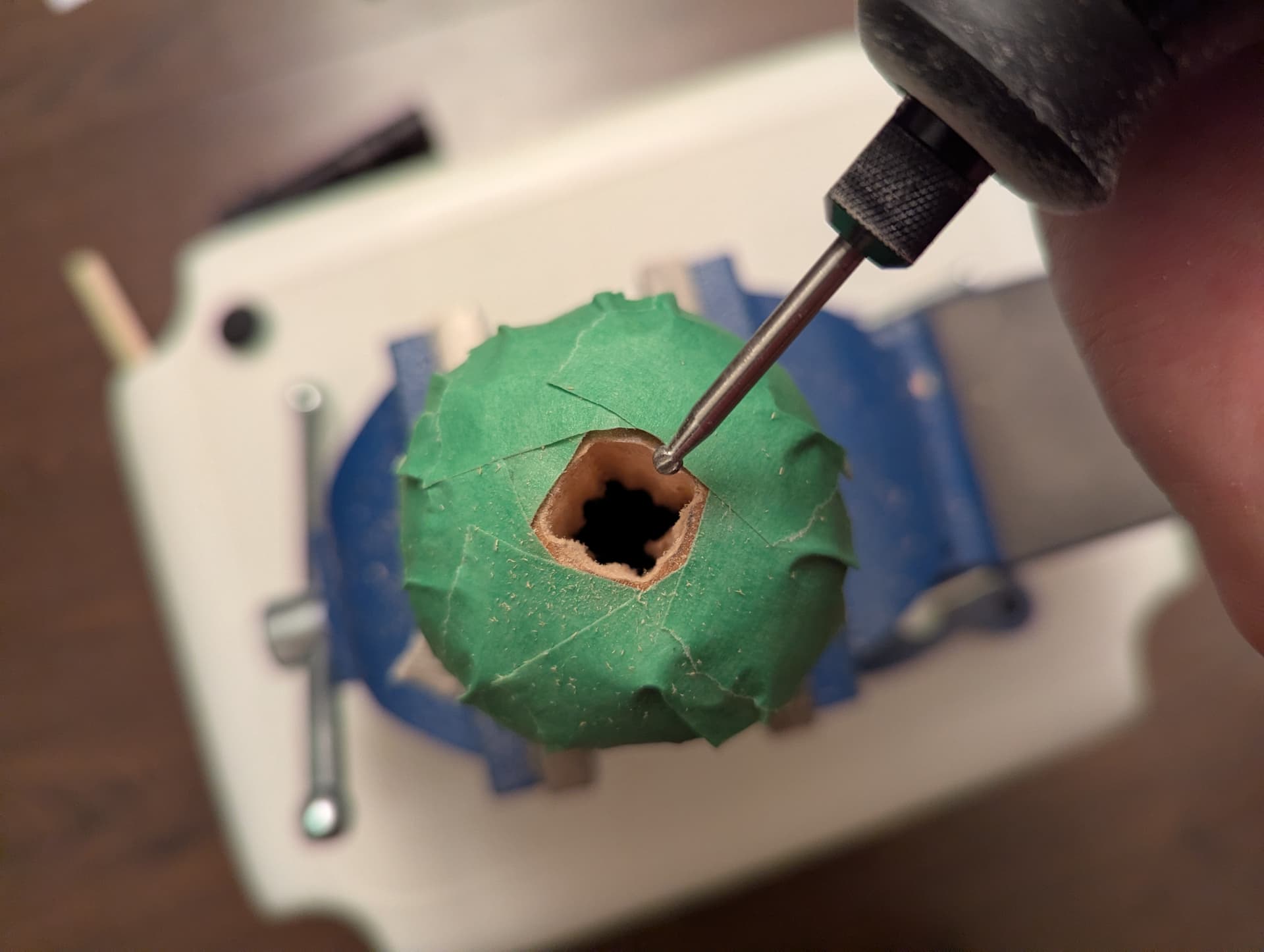
Next was to drill the end of the shaker to widen it for the button:

That was when I discovered that the wood at the end of the shaker was much thicker than I thought, closer to an inch thick. I wasn’t prepared to carve out that much wood to precisely fit the switch and hold in the boot.

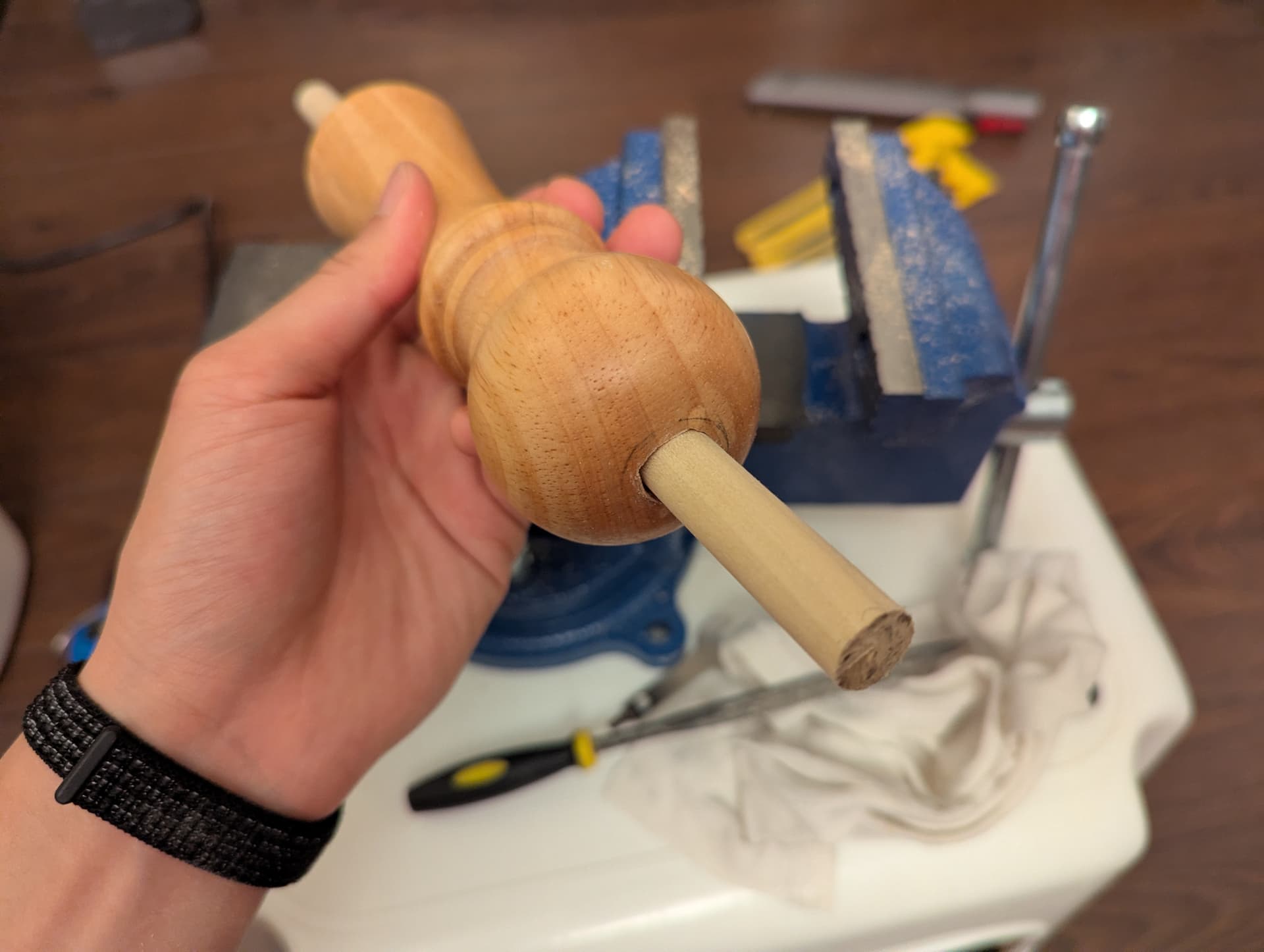
So instead, I got to thinking - what if I didn’t widen the hole so much, and had something long that could press the switch deeper in the flashlight? Something like…a dowel? This warranted a new design:

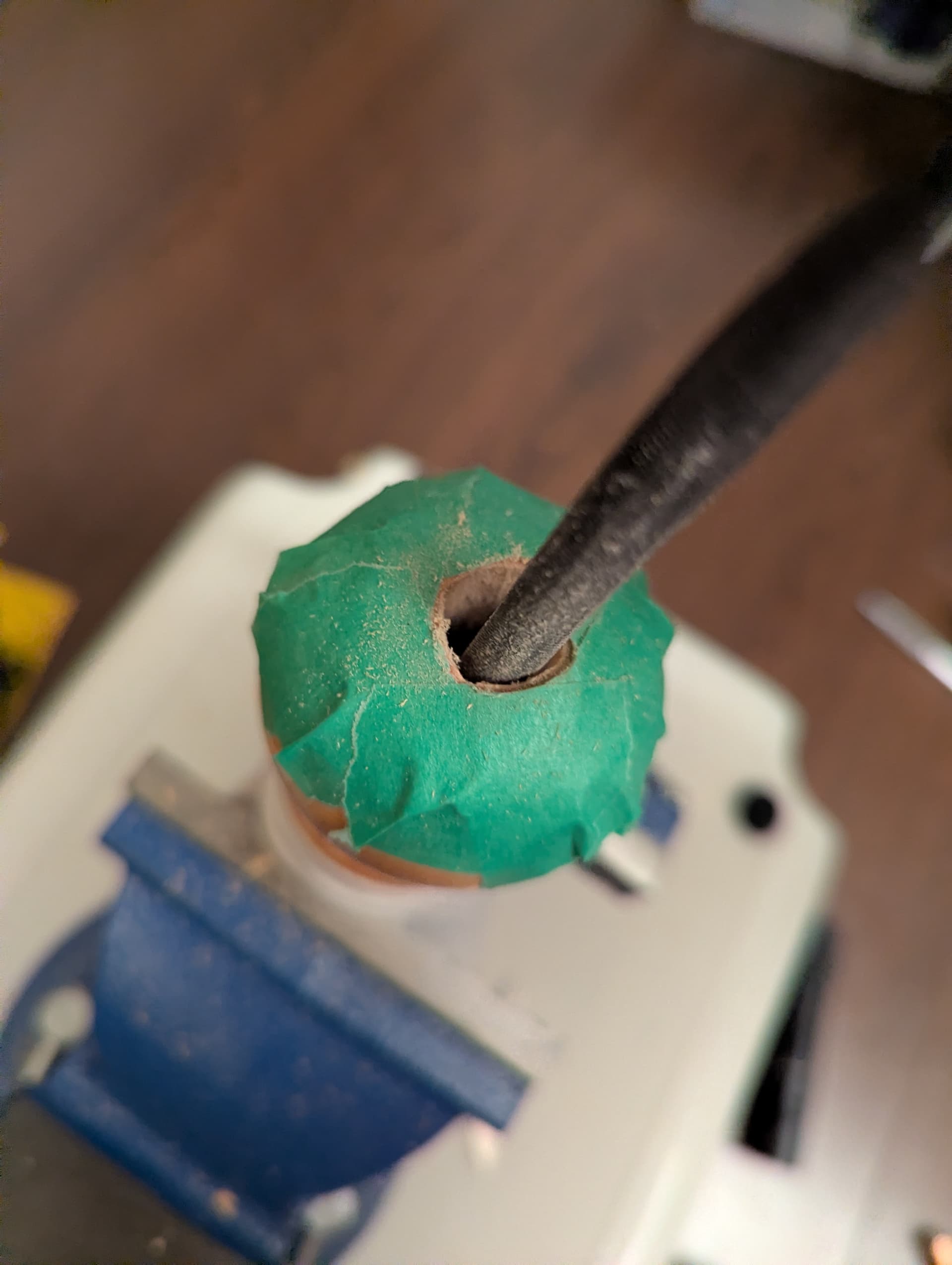
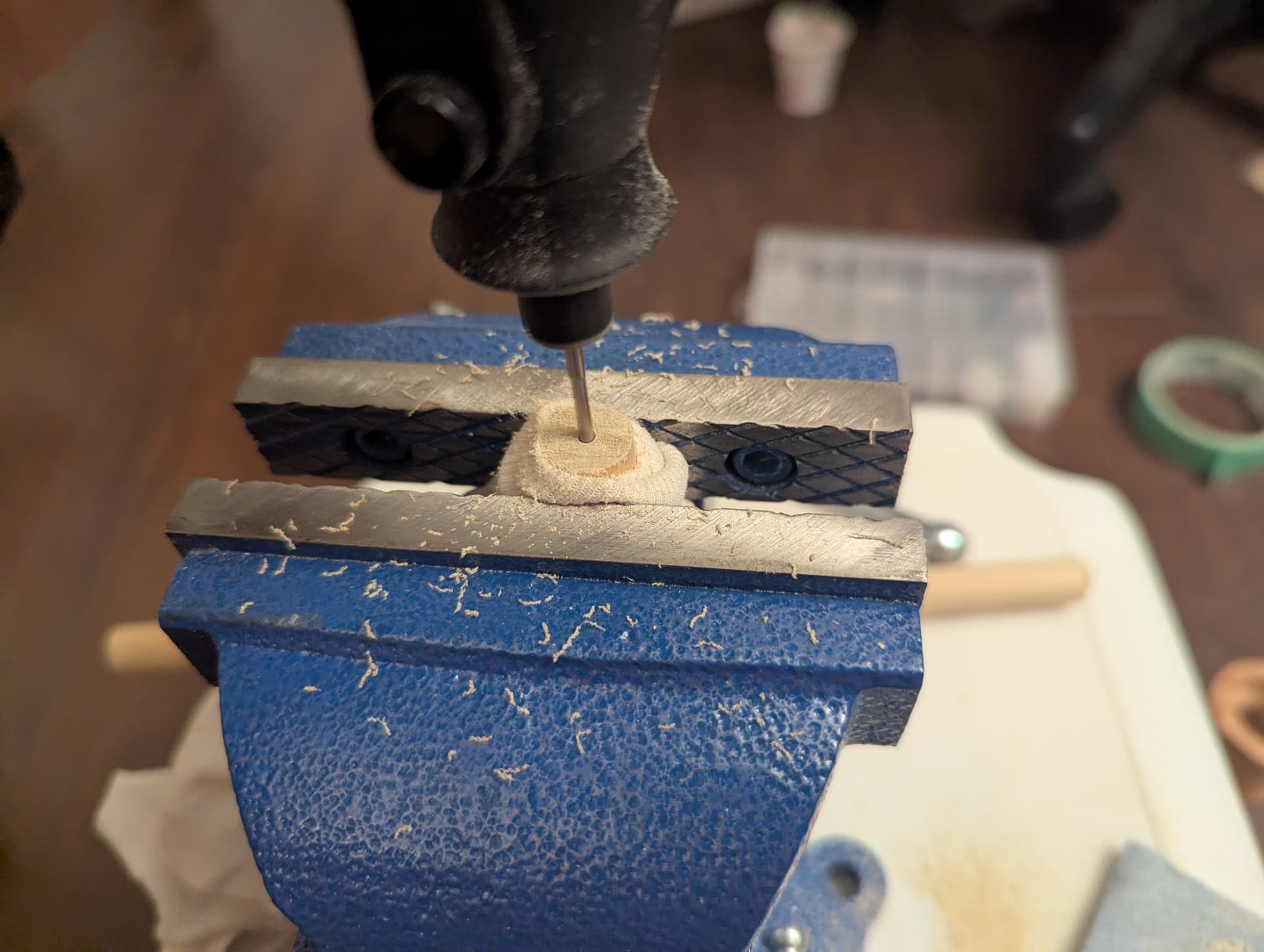
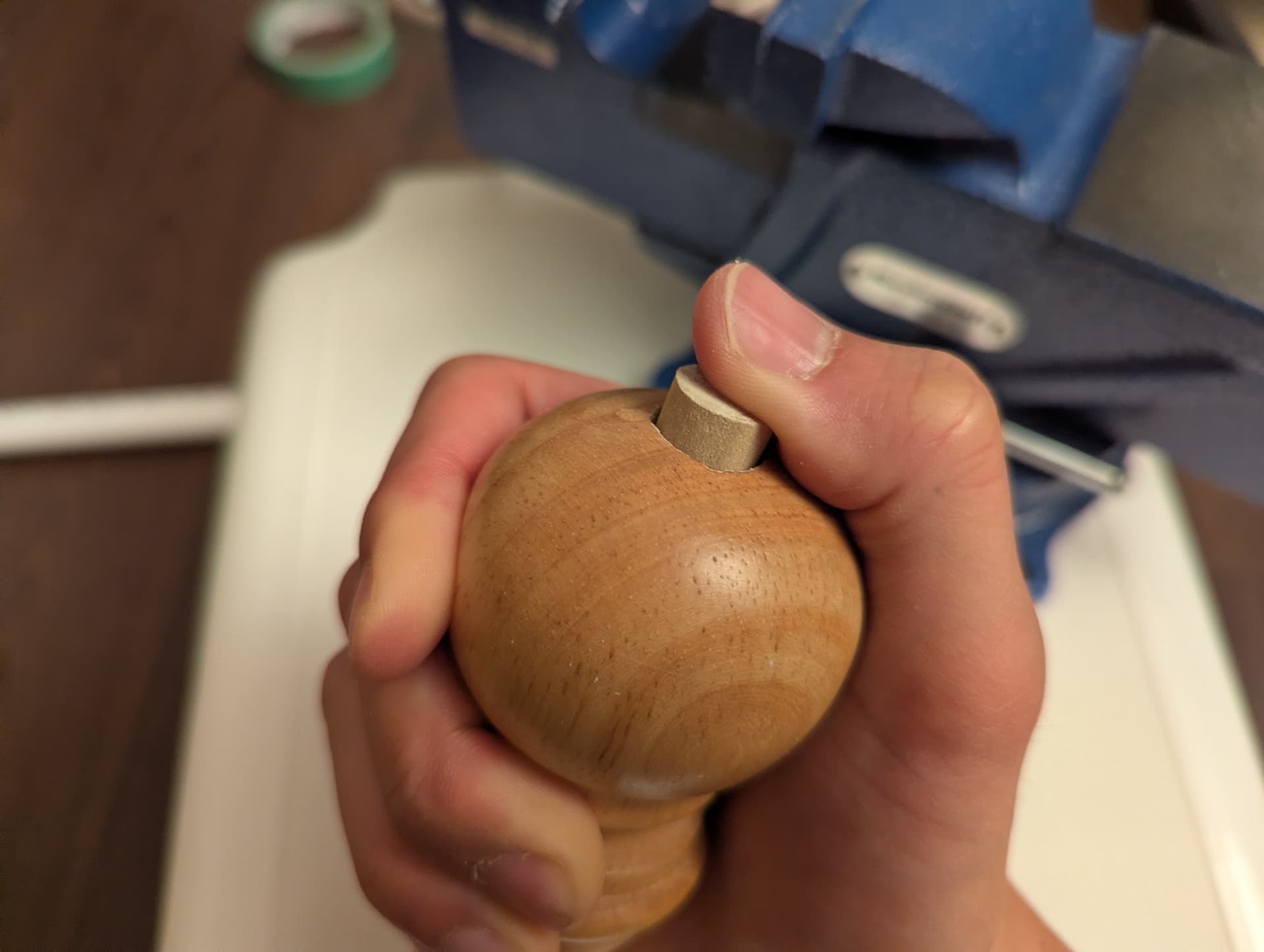
With a new plan in hand, I got to widening the hole to just wide enough for the dowel to slide in:

And that’s where I’ll leave it for this time:

4 Thanks

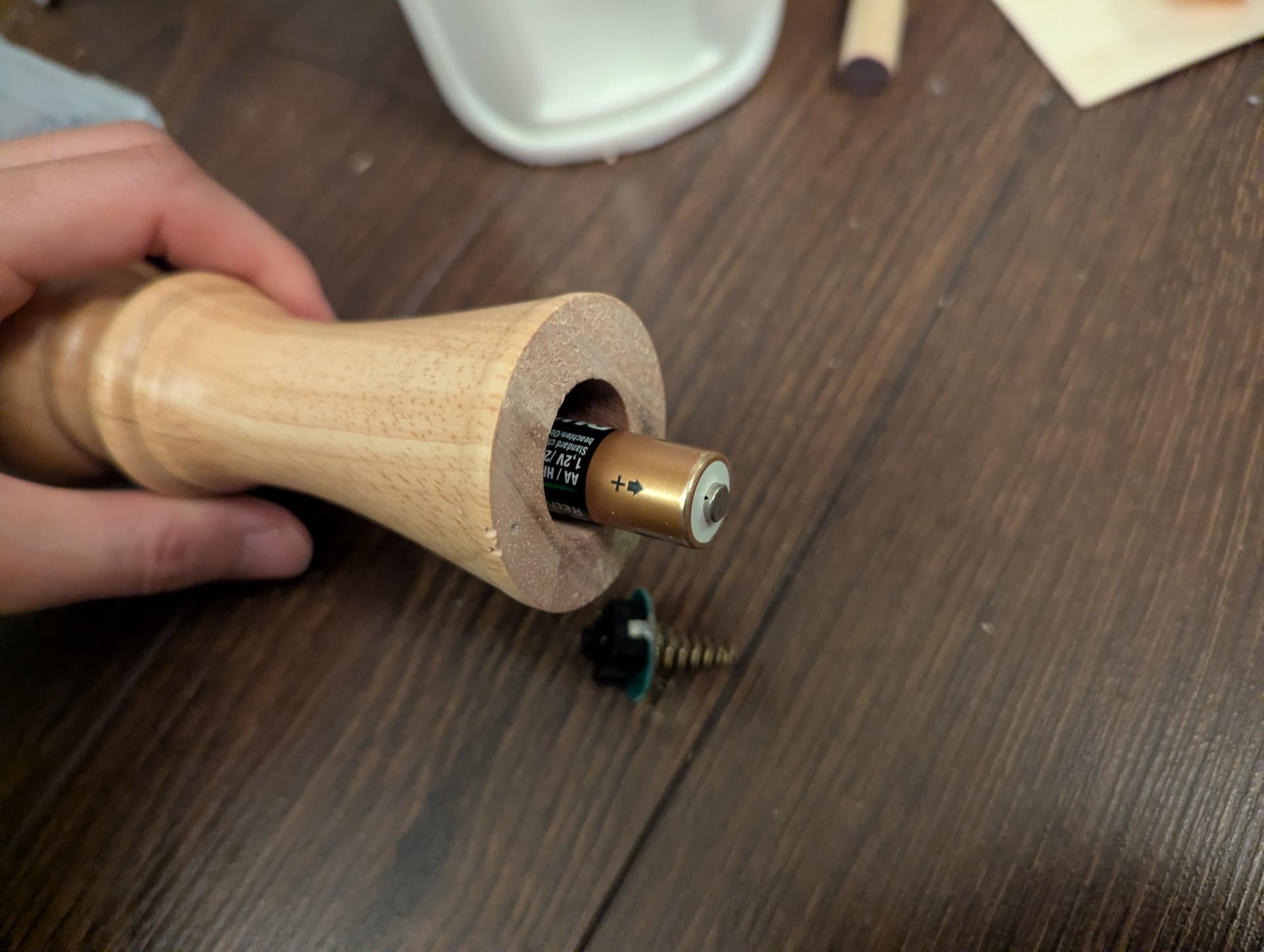
Looking at the tail piece, I had two problems to solve: 1) I had no mechanism to keep the switch in the light, like a retaining ring. And 2) the inner diameter of the light was a bit wide for AA batteries, allowing them to rattle and become misaligned:

I felt I could solve both these problems with one solution. So, off to the hardware store!


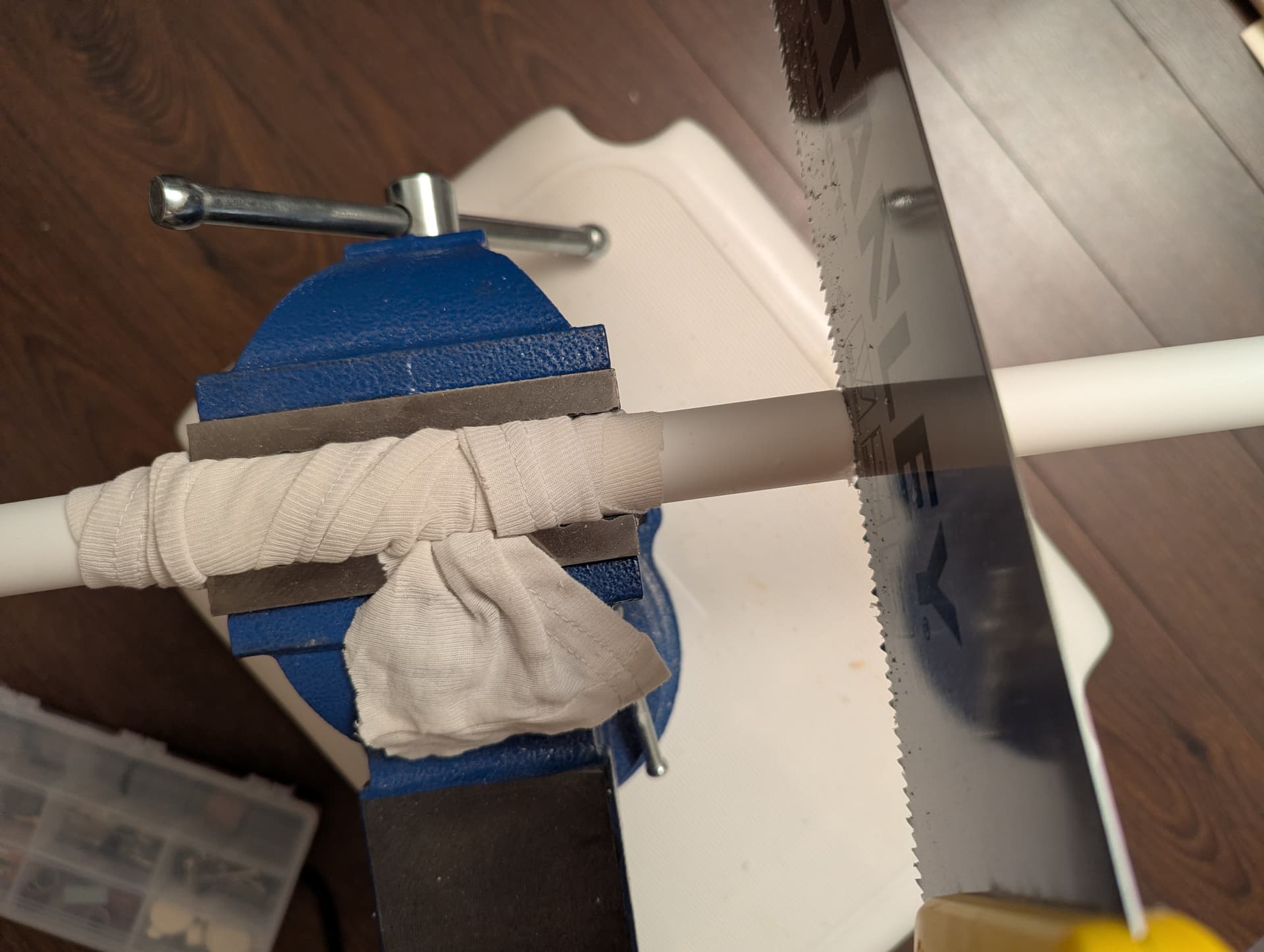
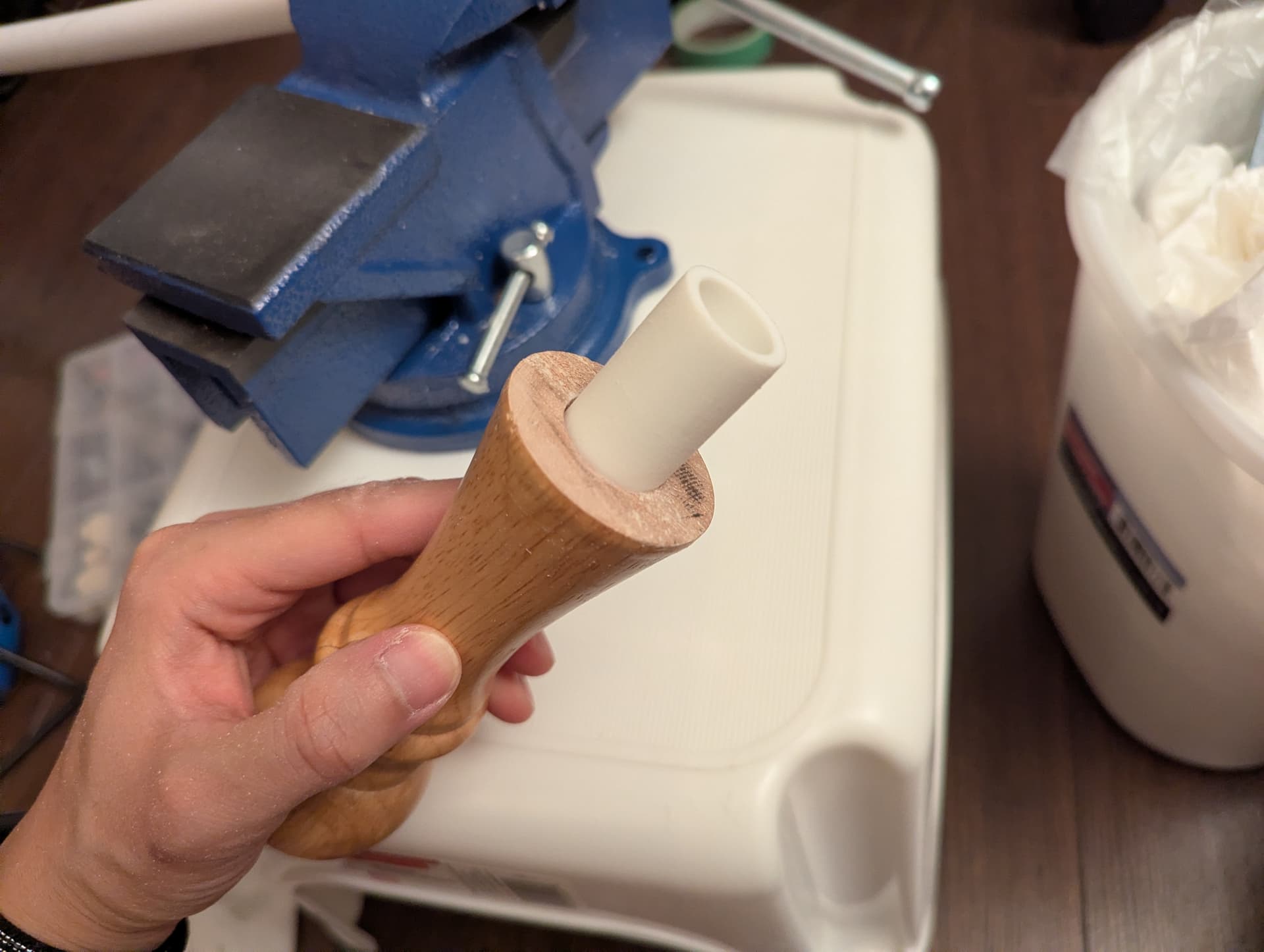
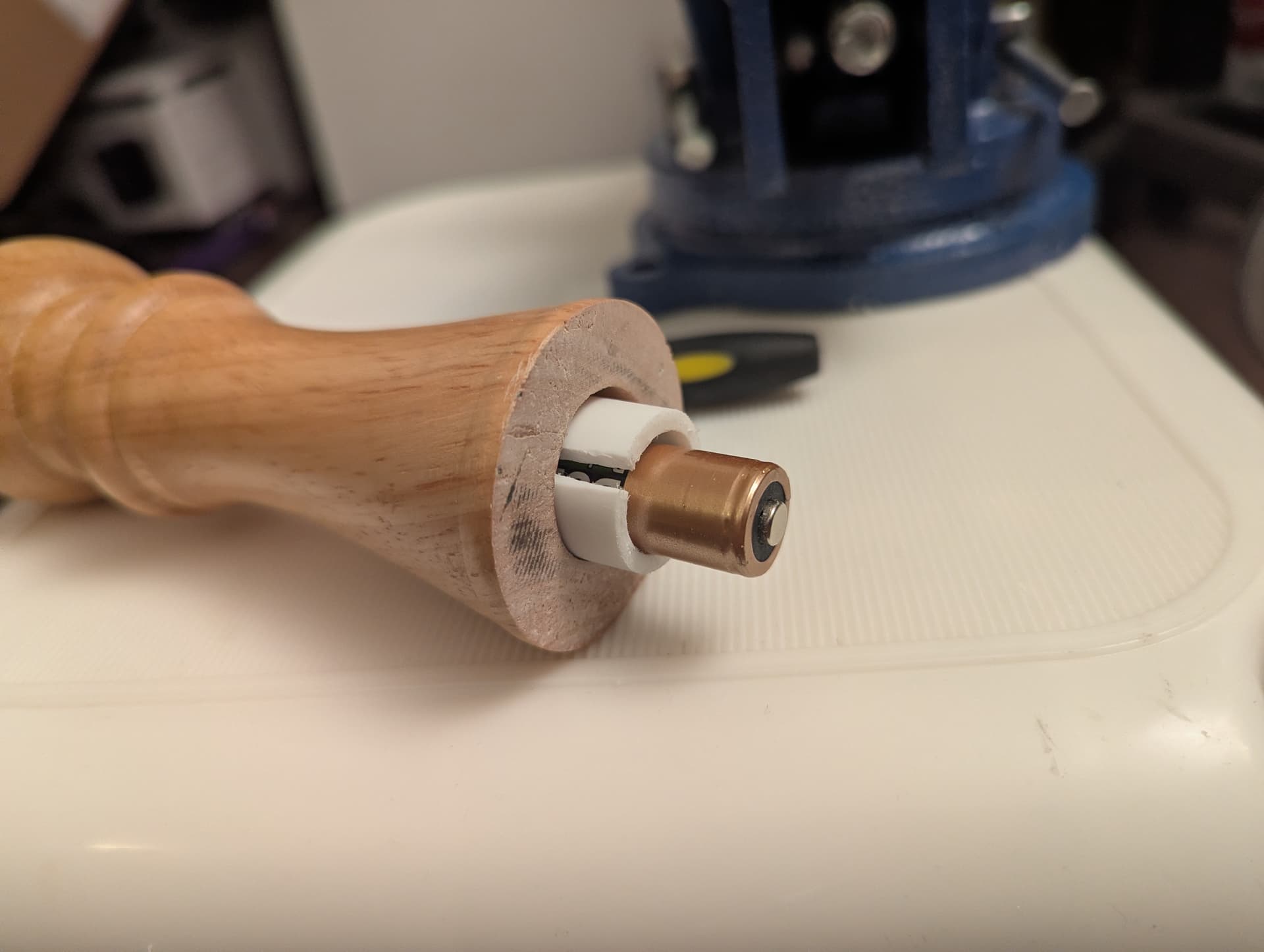
The 3/4" PEX pipe I bought was exactly what I needed…almost. It turns out the boring of the shaker was not as consistent as I thought, narrowing halfway down and causing the pipe to get stuck before reaching the end. So after fruitlessly trying to sand and file it to fit, I found another way. This solves a problem later too:

With the switch and the batteries in position, I now needed to cut the dowel-button to length - but also crucially, I needed something that would hold the switch away from the button so there was space to actually click it:


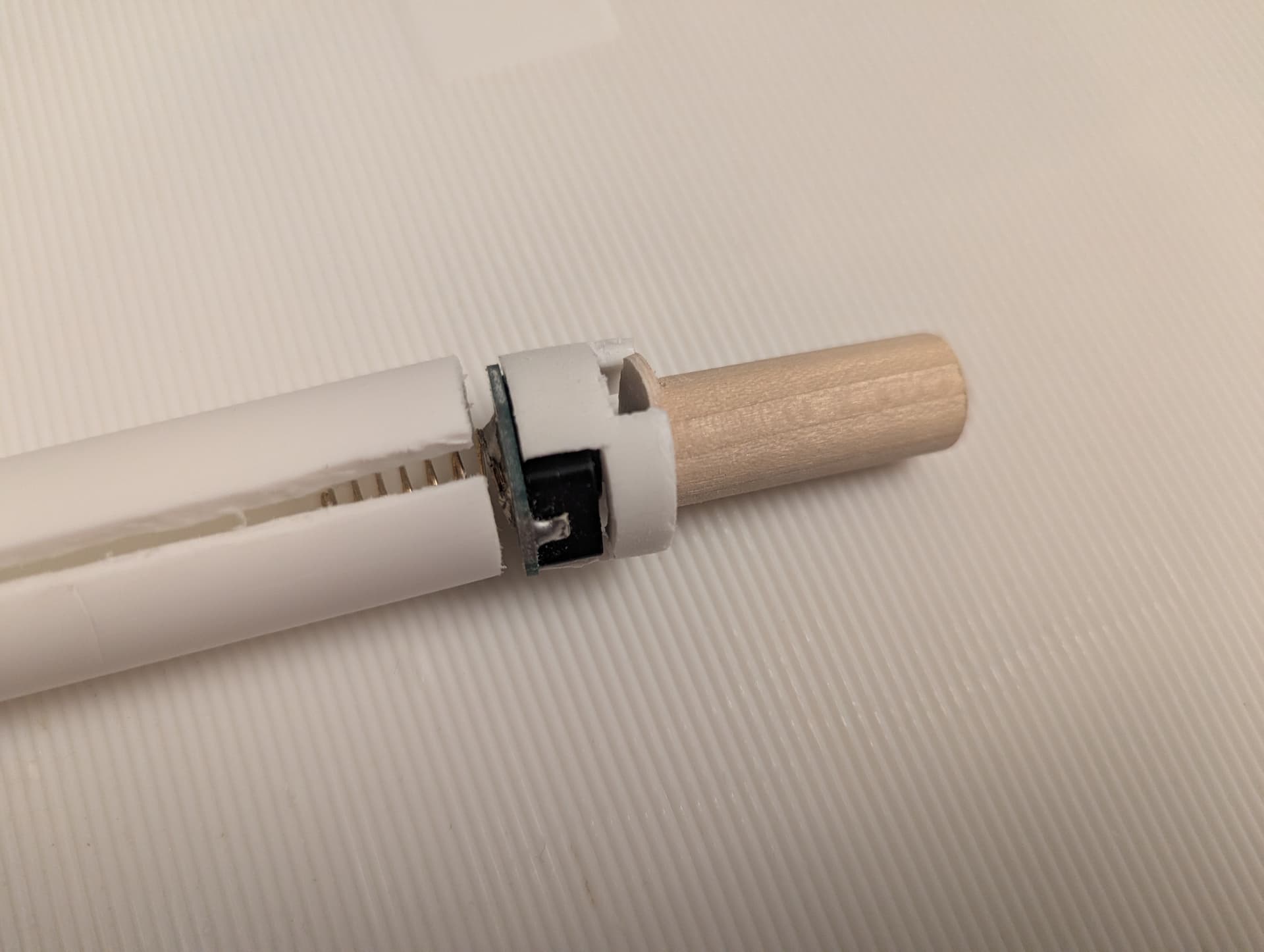
The dowel is prevented from falling out by a little piece of wood on the end, the switch is firmly sandwiched between PEX pieces so it neither squashes the button nor slides up the light!

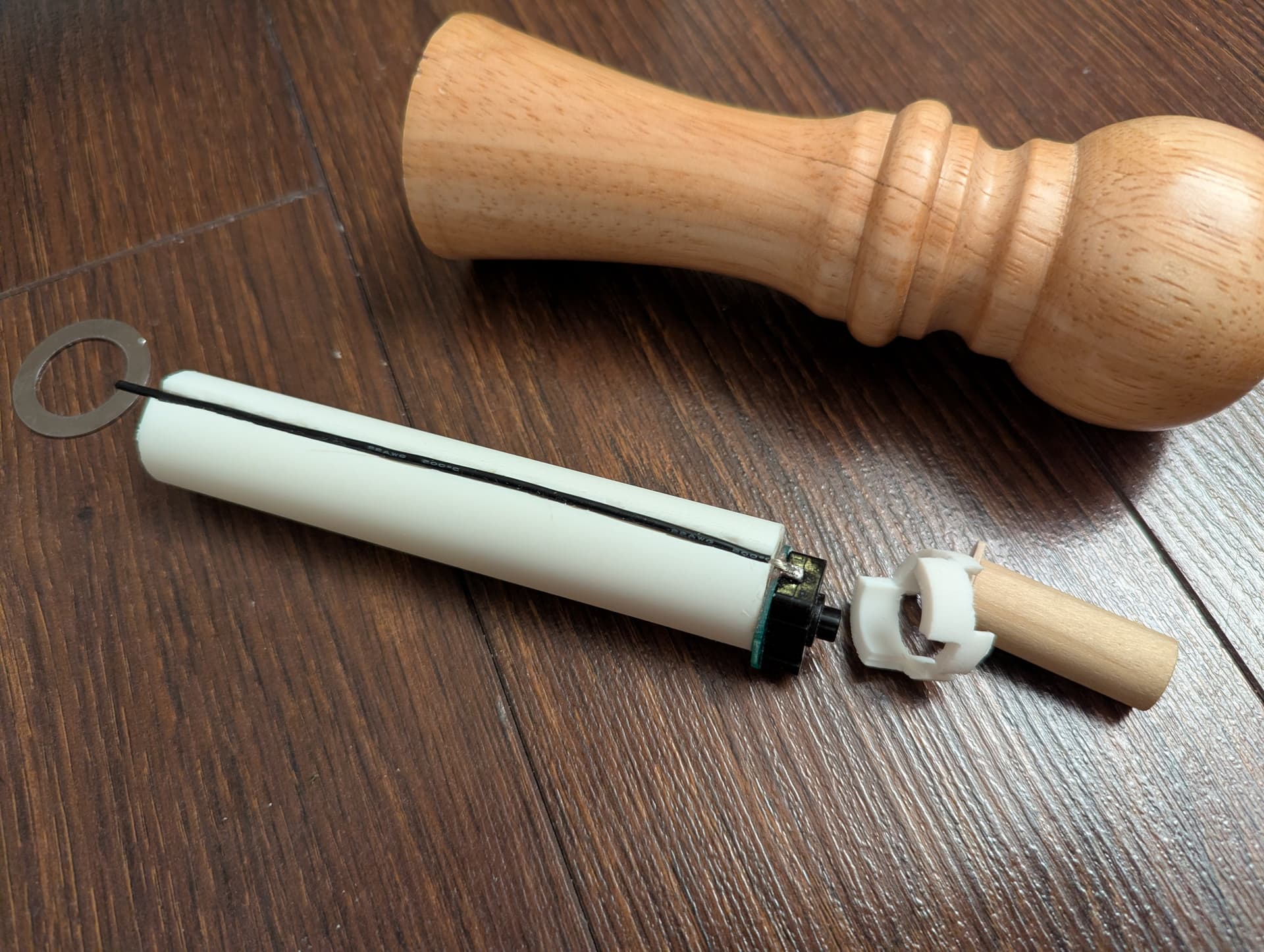
Pushing it all into the tail of the light, I finally have a clickable switch. The tail part is almost done!

7 Thanks

I love it!

1 Thank

Time for my next challenge: connecting the head and the tail!

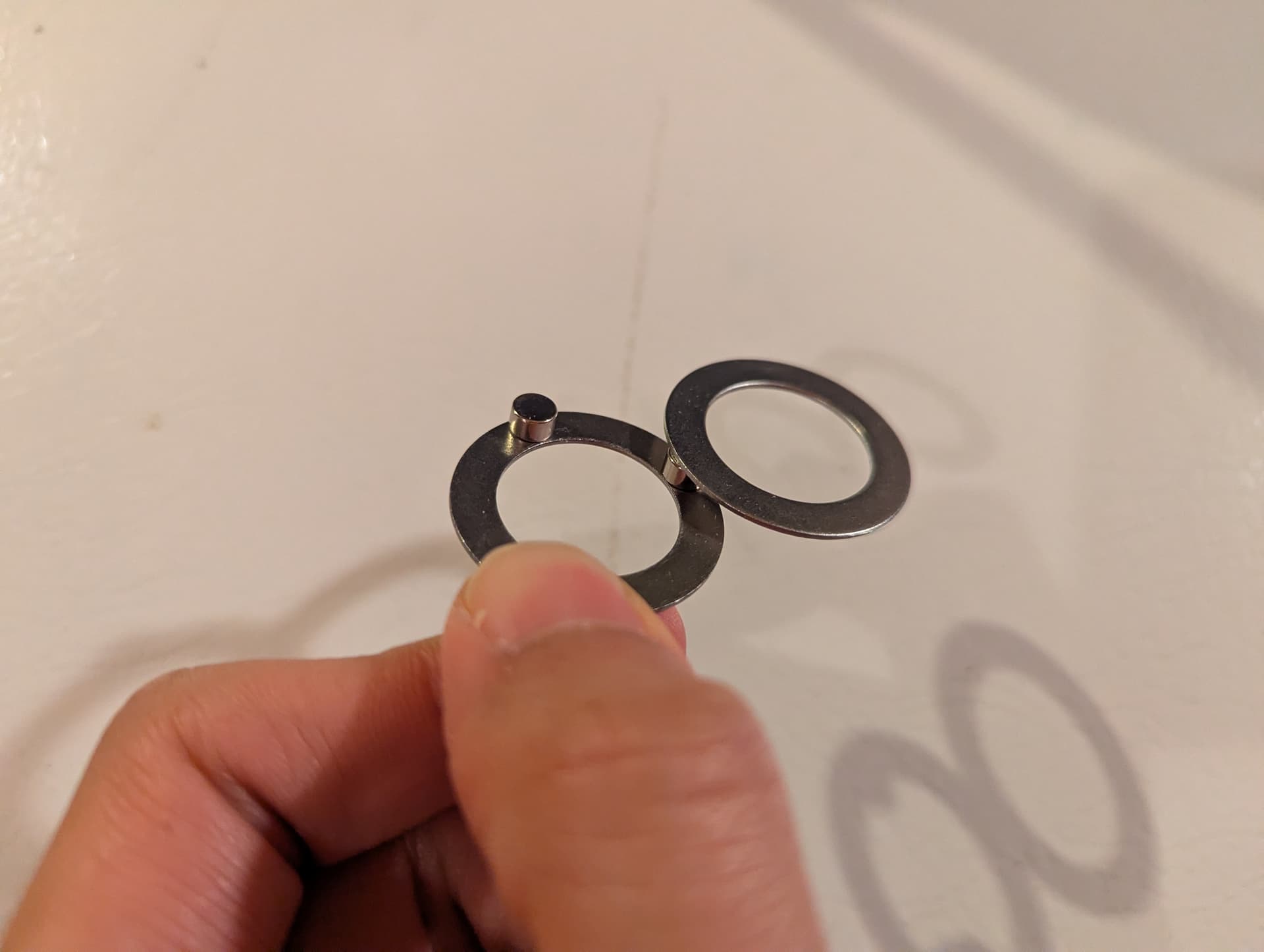
In my sketch, I proposed to do this with magnets. Magnets will be able to hold the ends together strongly, and if I’m smart about it, they’ll be able to complete the electrical circuit too!

However, wood isn’t magnetic. Or conductive. So I could drill holes in each end, and glue magnets within. But then they would be dependent on glue alone to keep them in place, and it would also make it hard to connect the magnets to the circuit. After some pondering and wandering the hardware store, it struck me: washers!


They hit all the criteria:

  • Ferromagnetic
  • Conductive
  • Small enough inner diameter to hold in the plastic inner tube
  • Large enough outer diameter to sit on the edge of the shaker’s hole

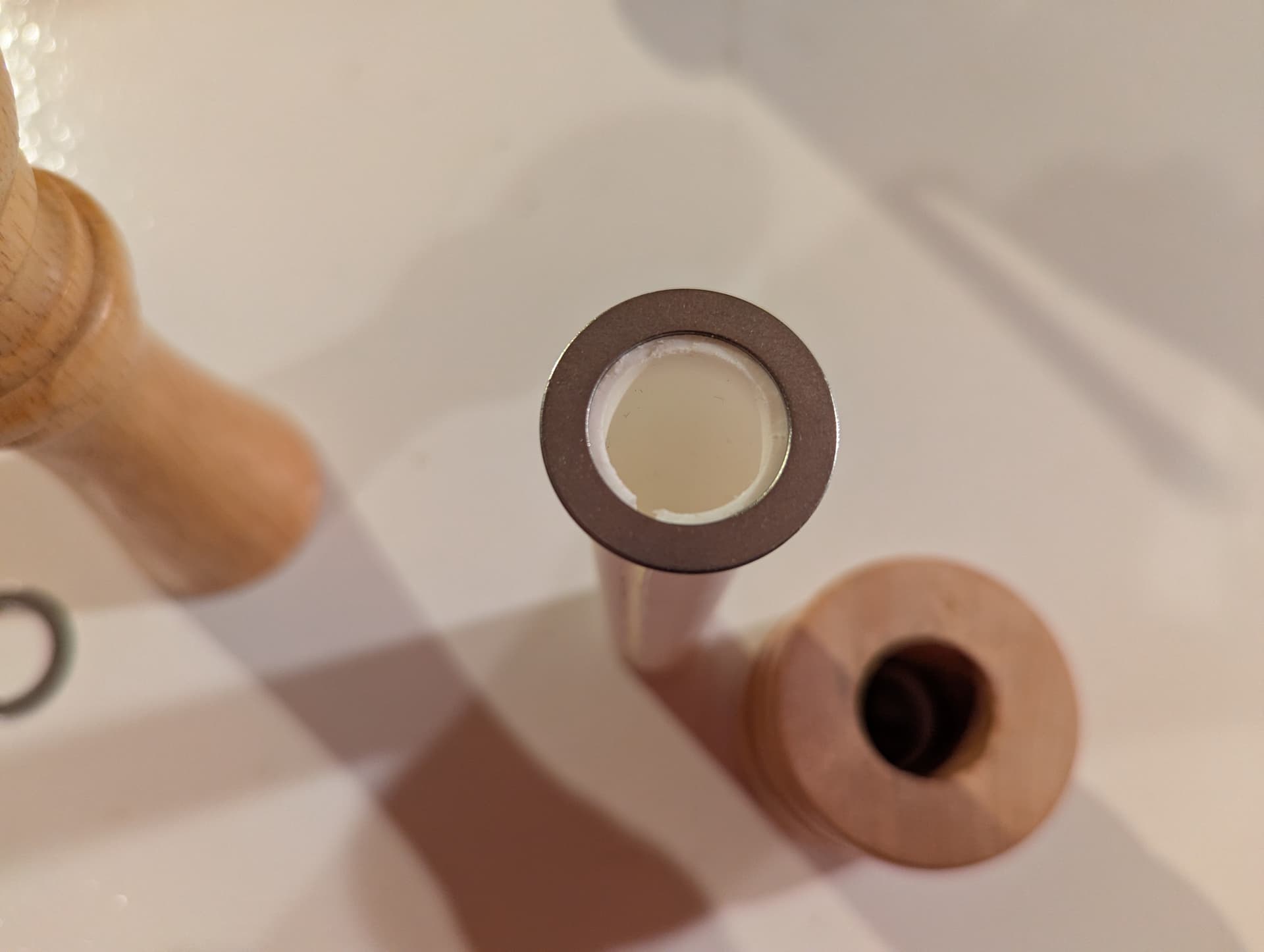
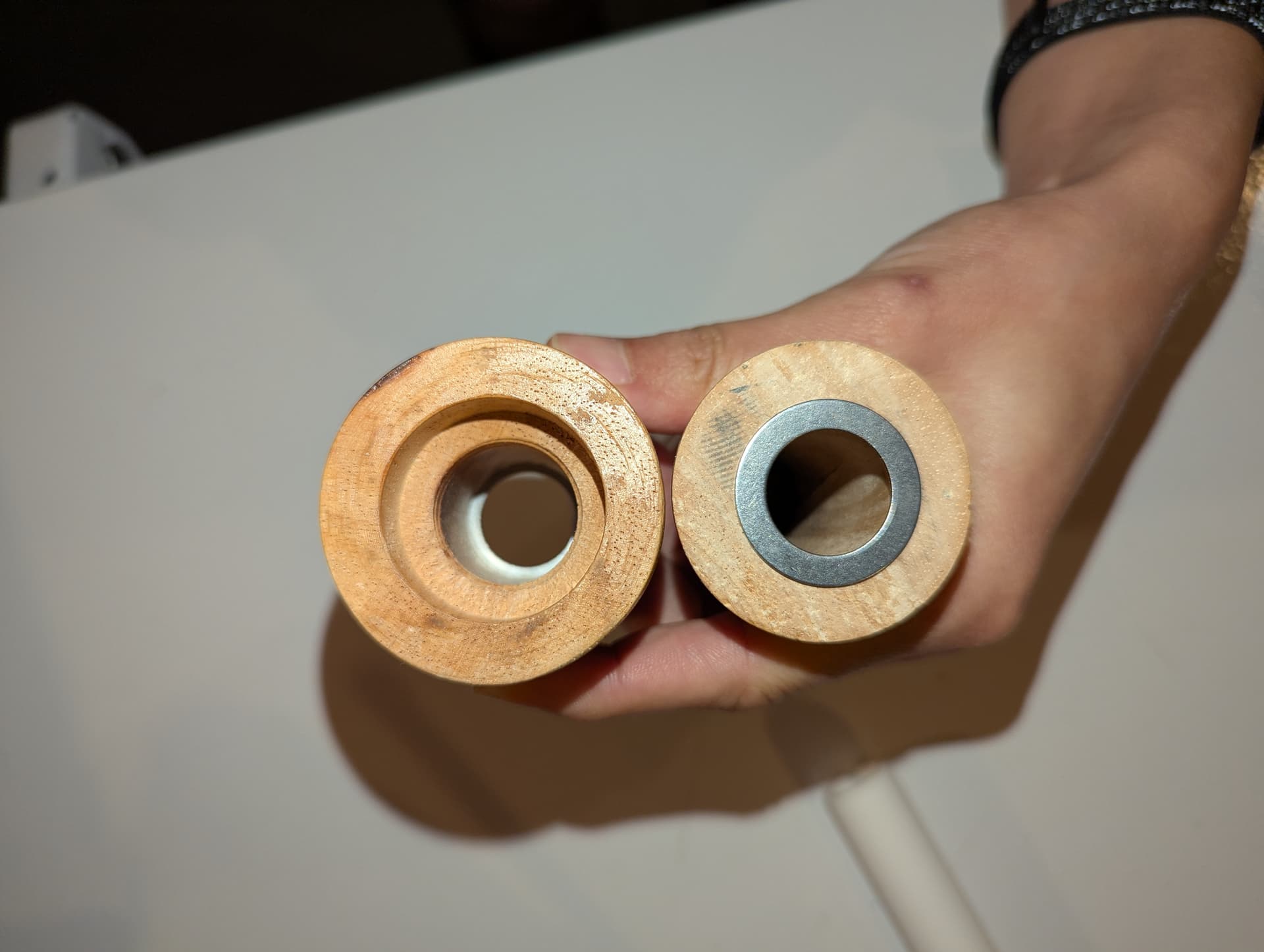
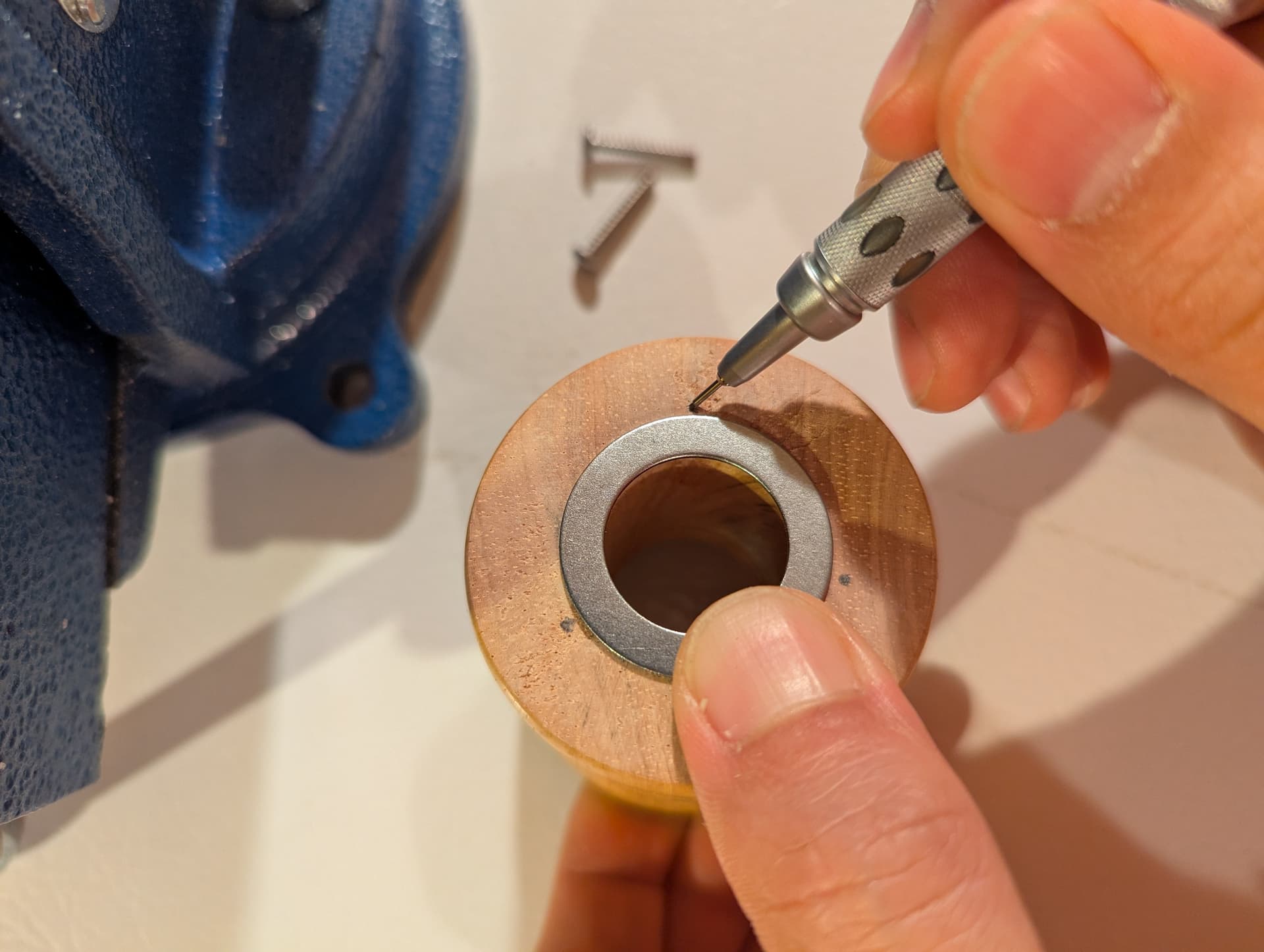
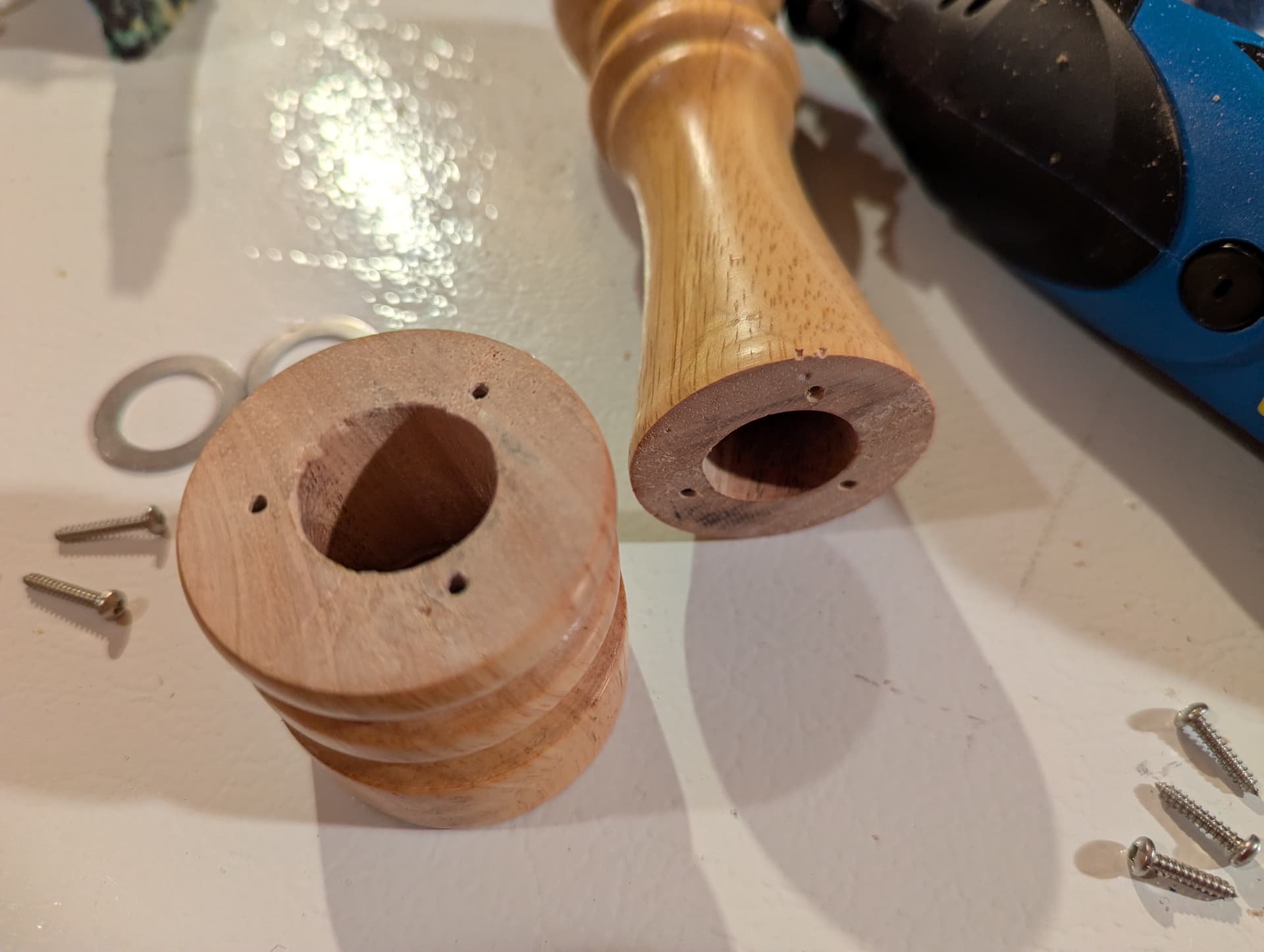
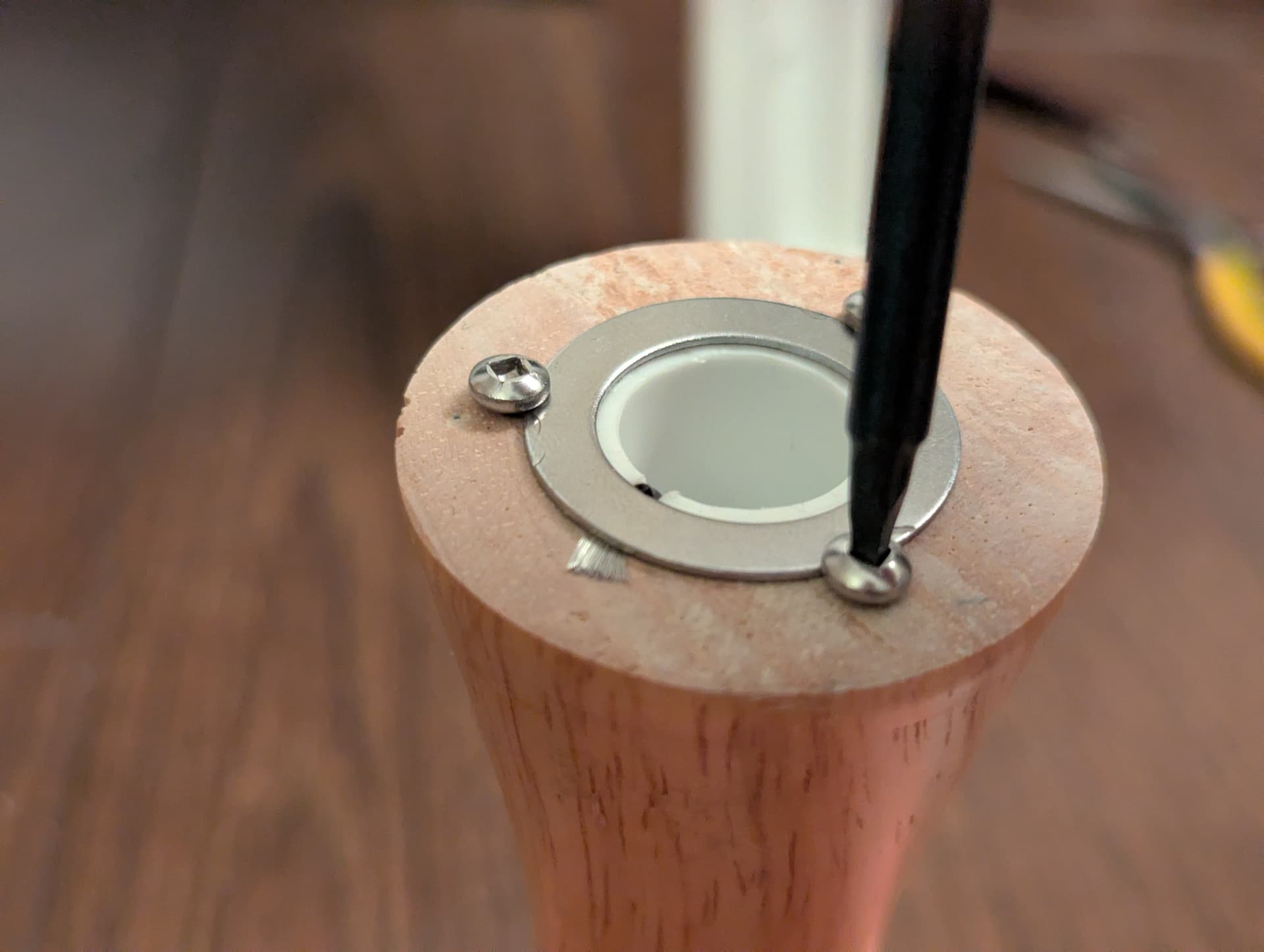
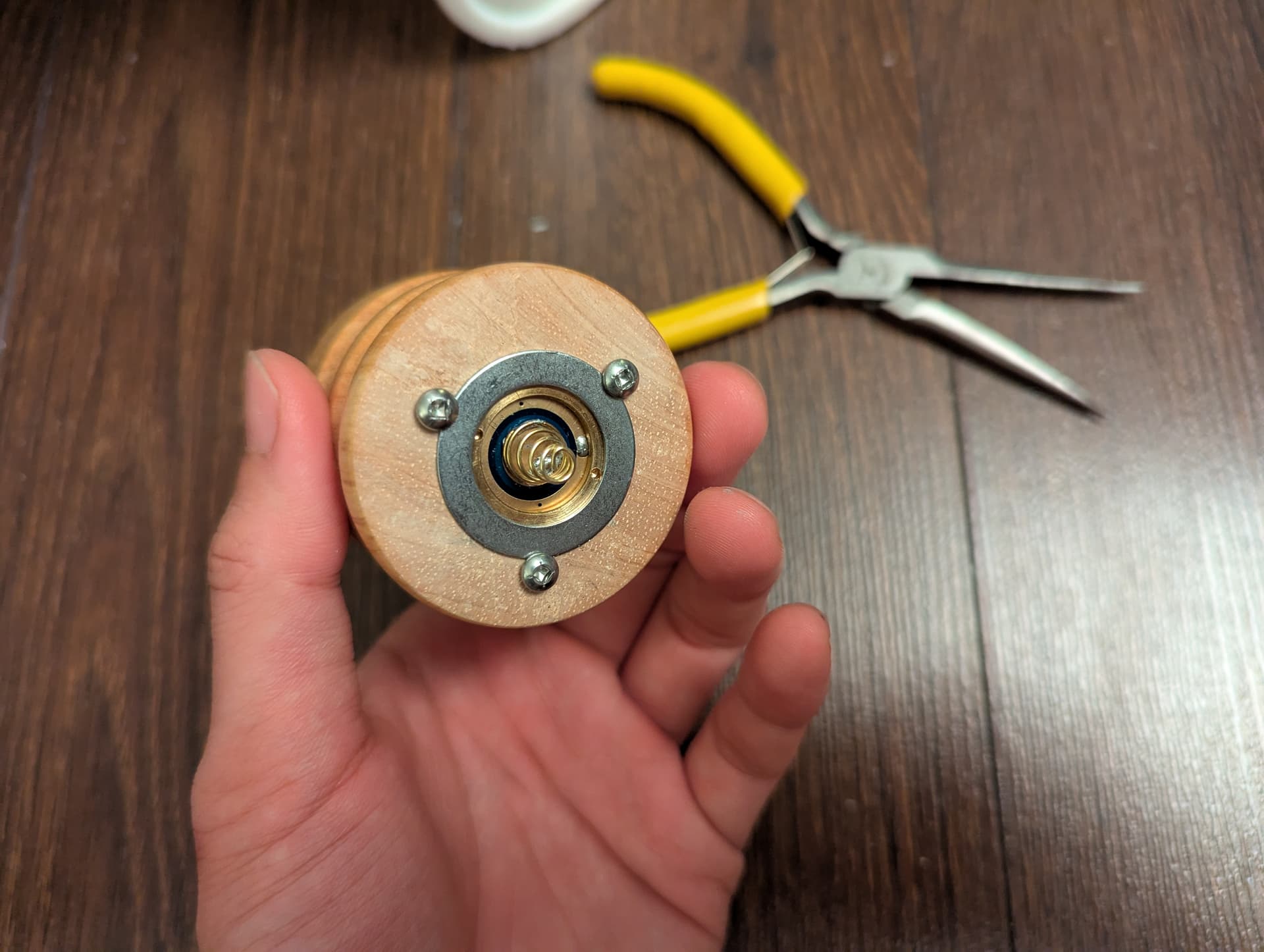
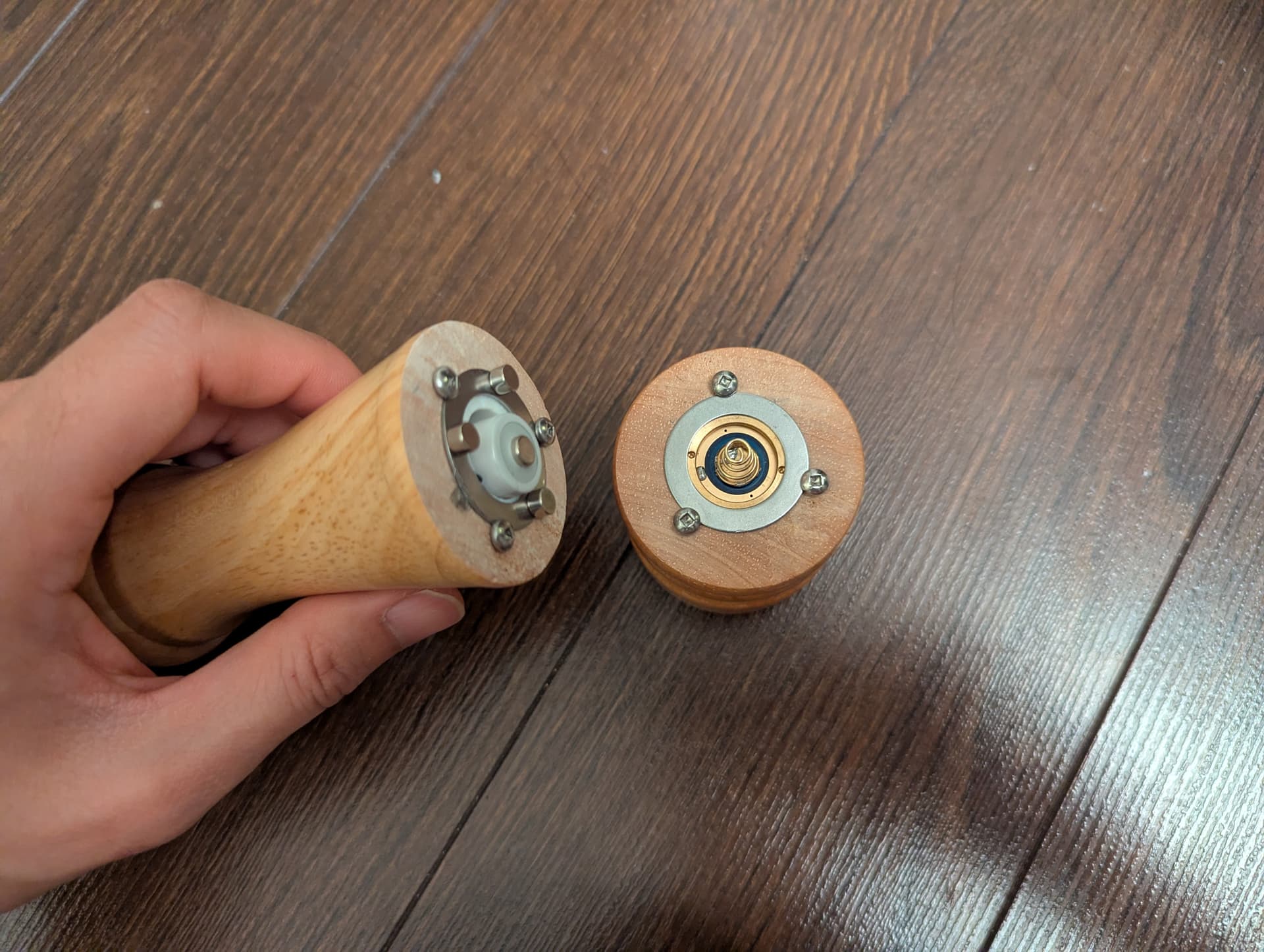
But while the magnets now have something to stick to, how can I attach the washers to each end of the light? That’s thankfully a much easier problem to solve, with screws:

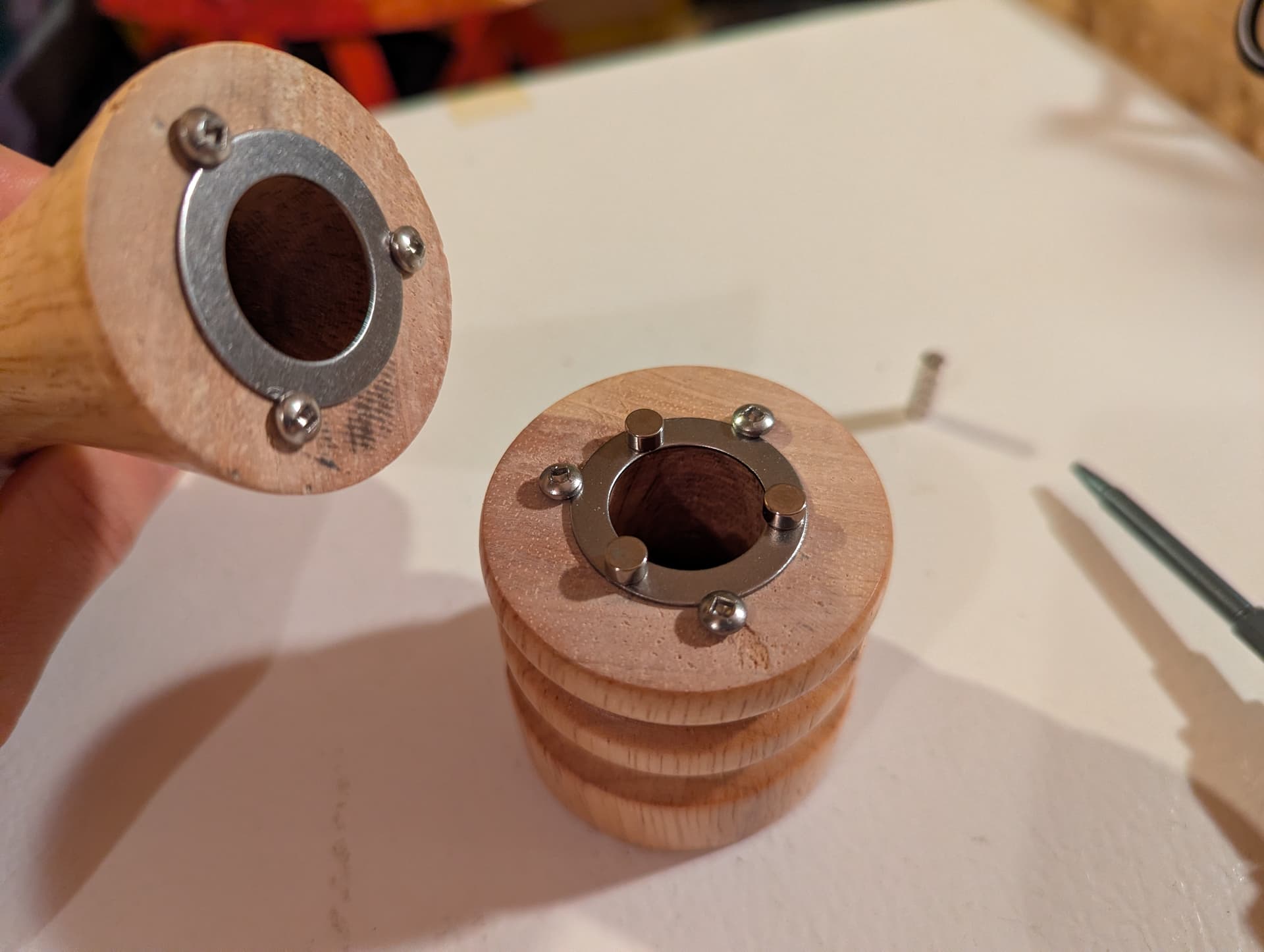
With the pilot holes drilled, everything can be assembled and we can see where the magnets will go:

The magnets and washers do a good job of both keeping the tail assembly together, and the two flashlight ends connected!


This light is starting to come together! Except, well, it doesn’t actually light up.

So now that we have the structure defined - it’s time to add the “light” to my flashlight.
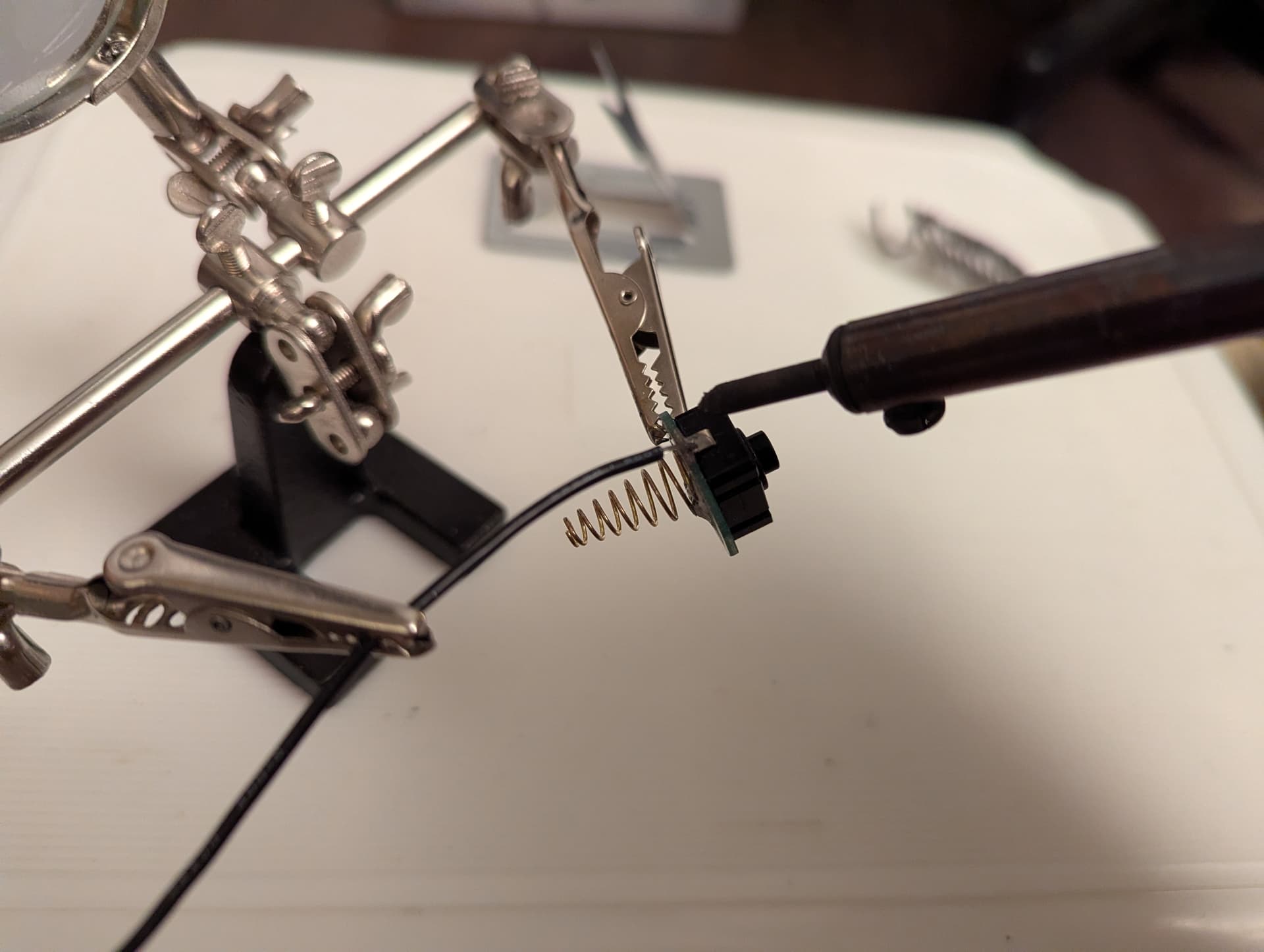
First, I need to ensure electrical continuity in the tail:

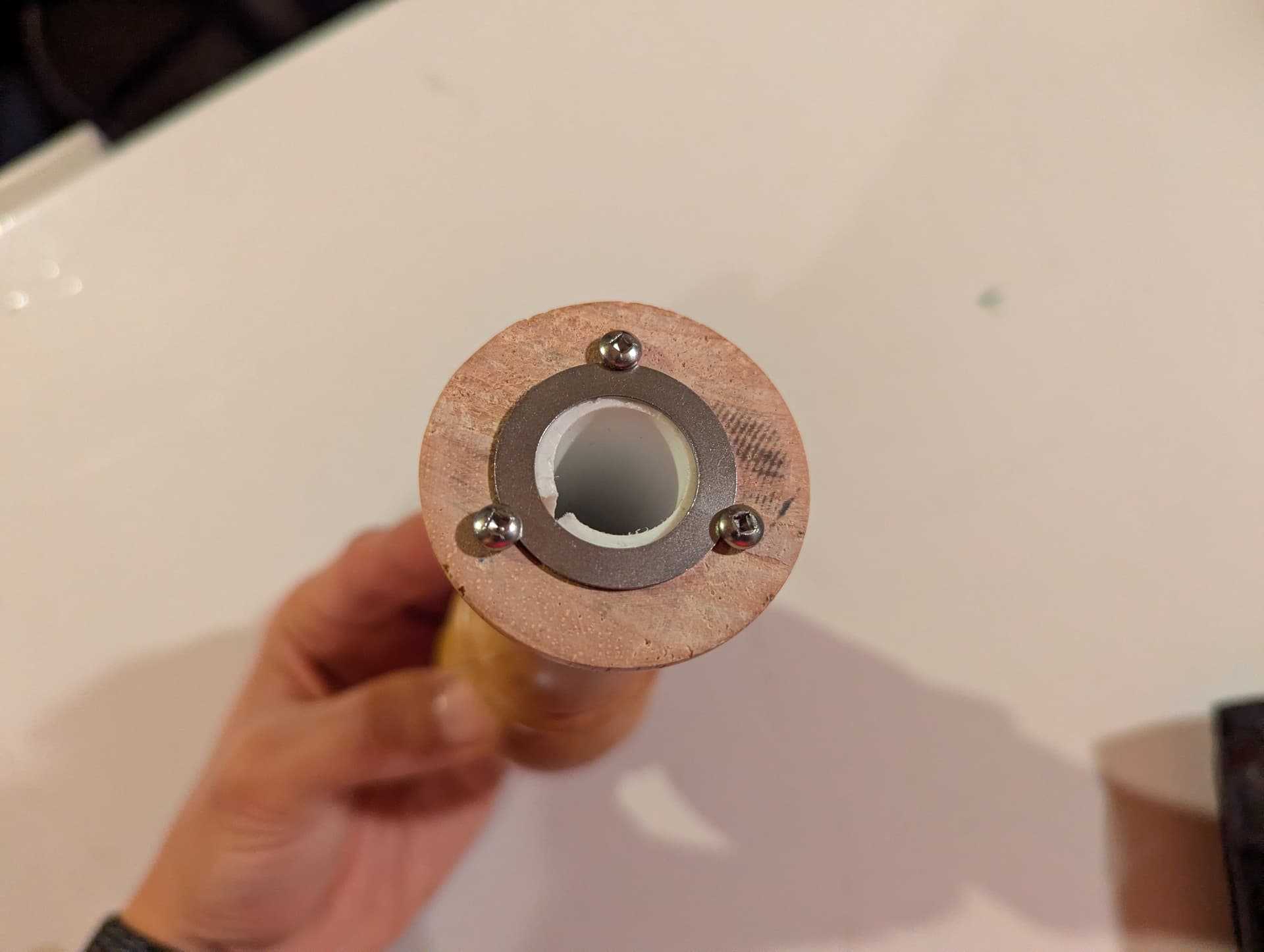
After soldering a wire to the tail switch, it can be run up the body of the light to reach the head. You can see how the channel I cut in the PEX pipe earlier works excellently for routing the wire to the front while segregating it from the batteries.

And with the washer screwed down, the tail is electrically complete!

With the tail dealt with, I can now focus on the head of the light! I anticipate this to be an interesting sandwich of PCBs and spacers, with some fiddling and filing needed to fit.

The emitter I chose is the Nichia 519A, for its pleasing tint and high CRI.

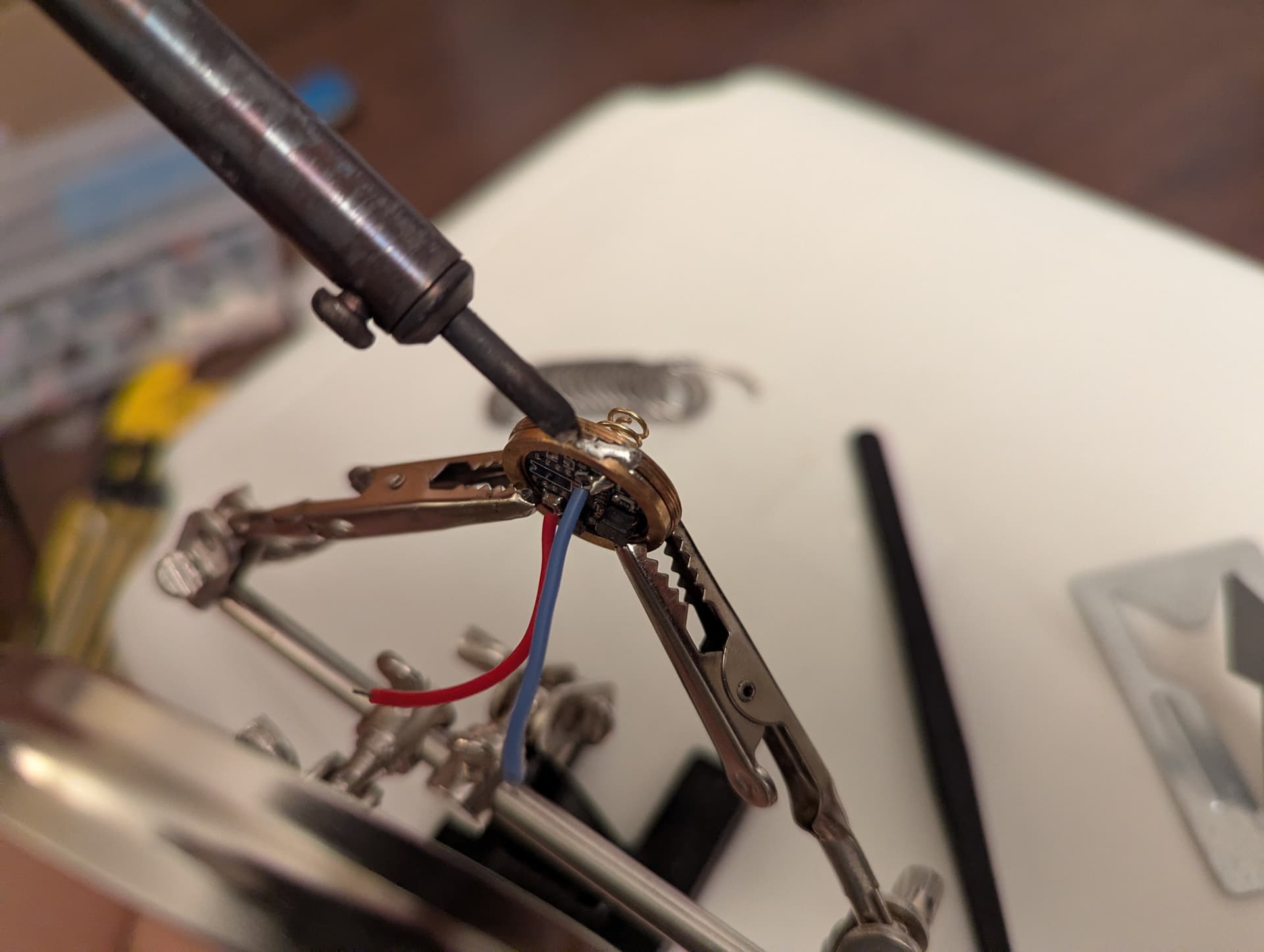
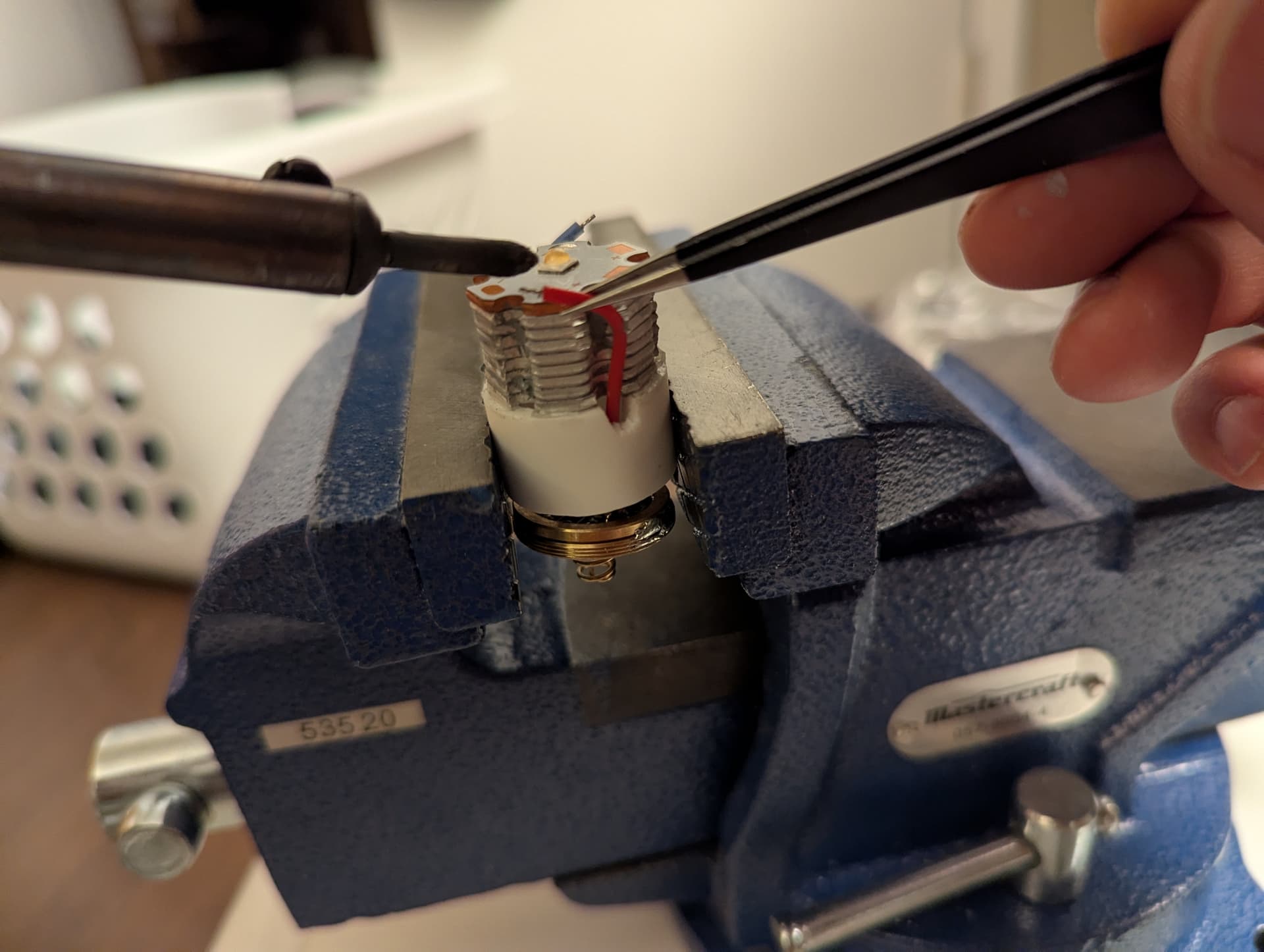
To prep the driver, I soldered a retaining ring to my driver to give it a bit more diameter, and protect it from being crushed in the assembly.

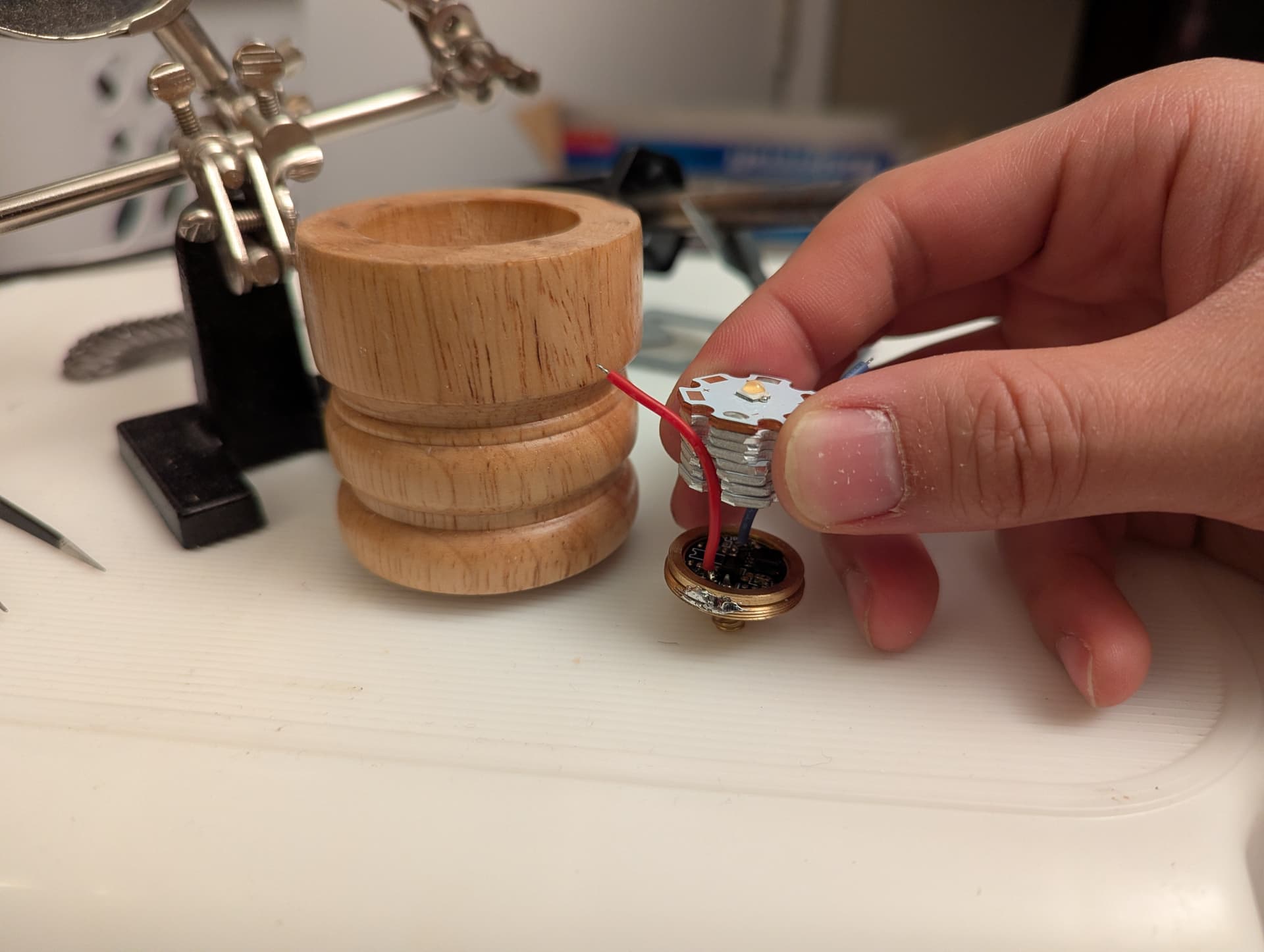
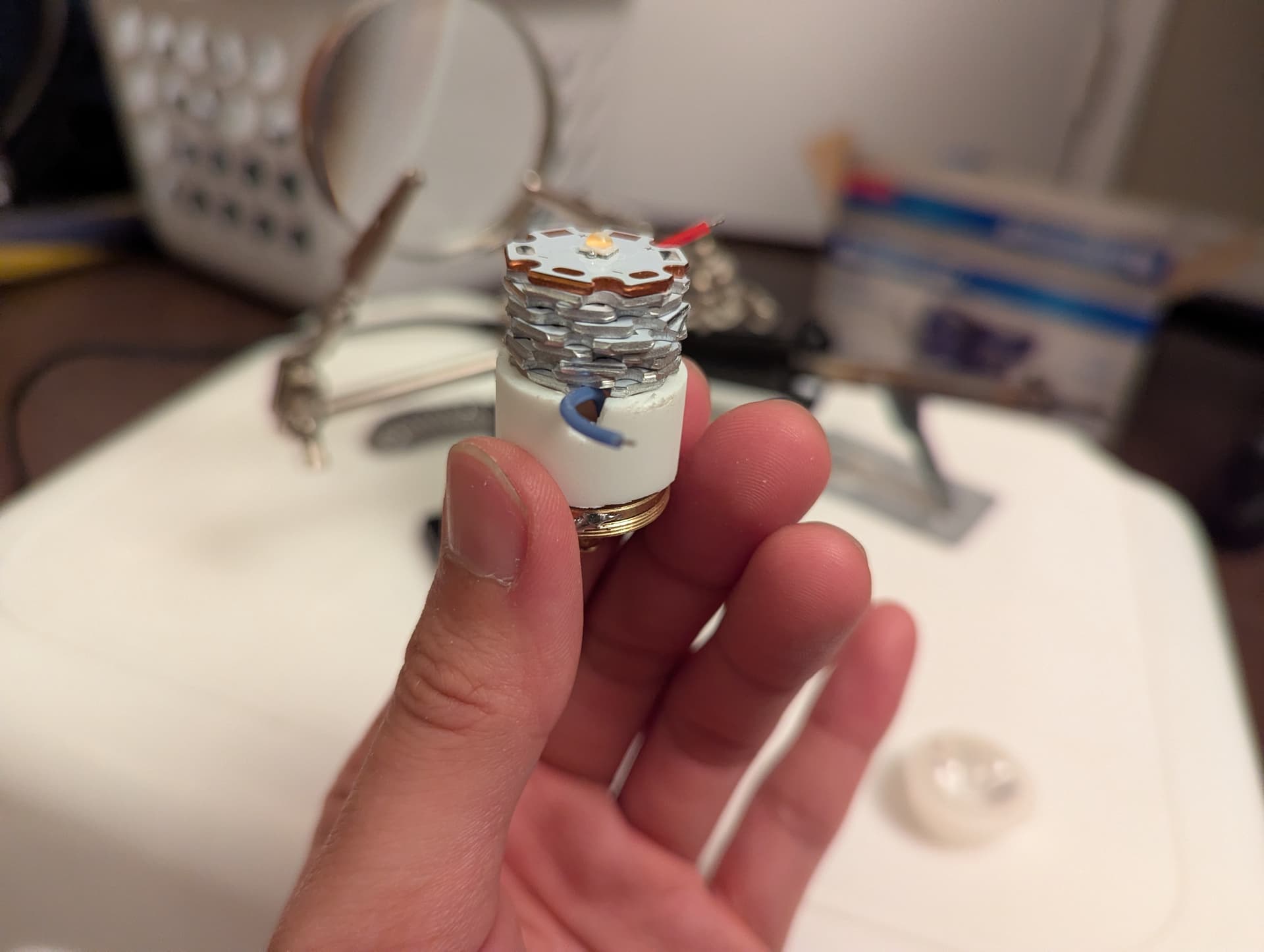
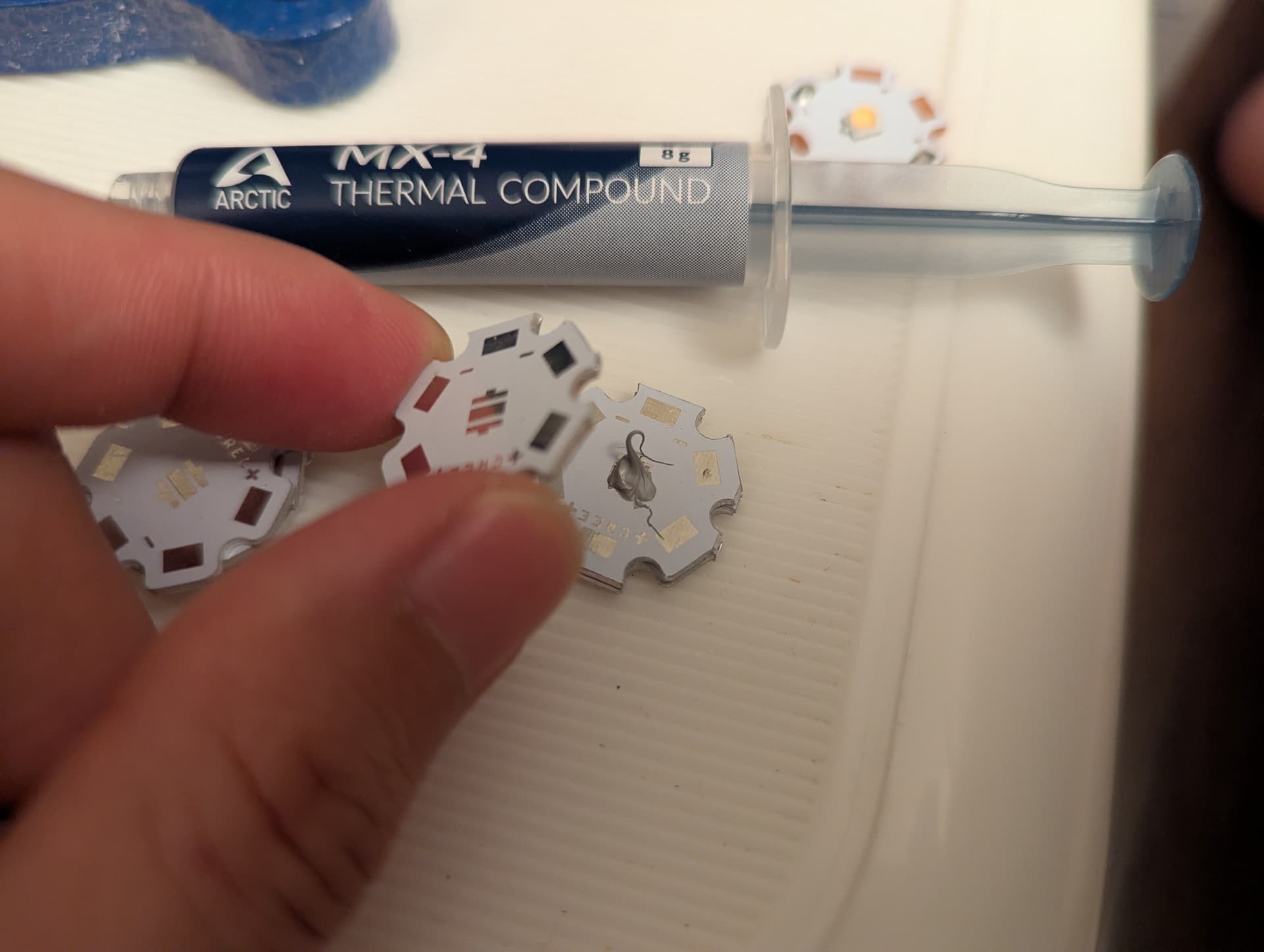
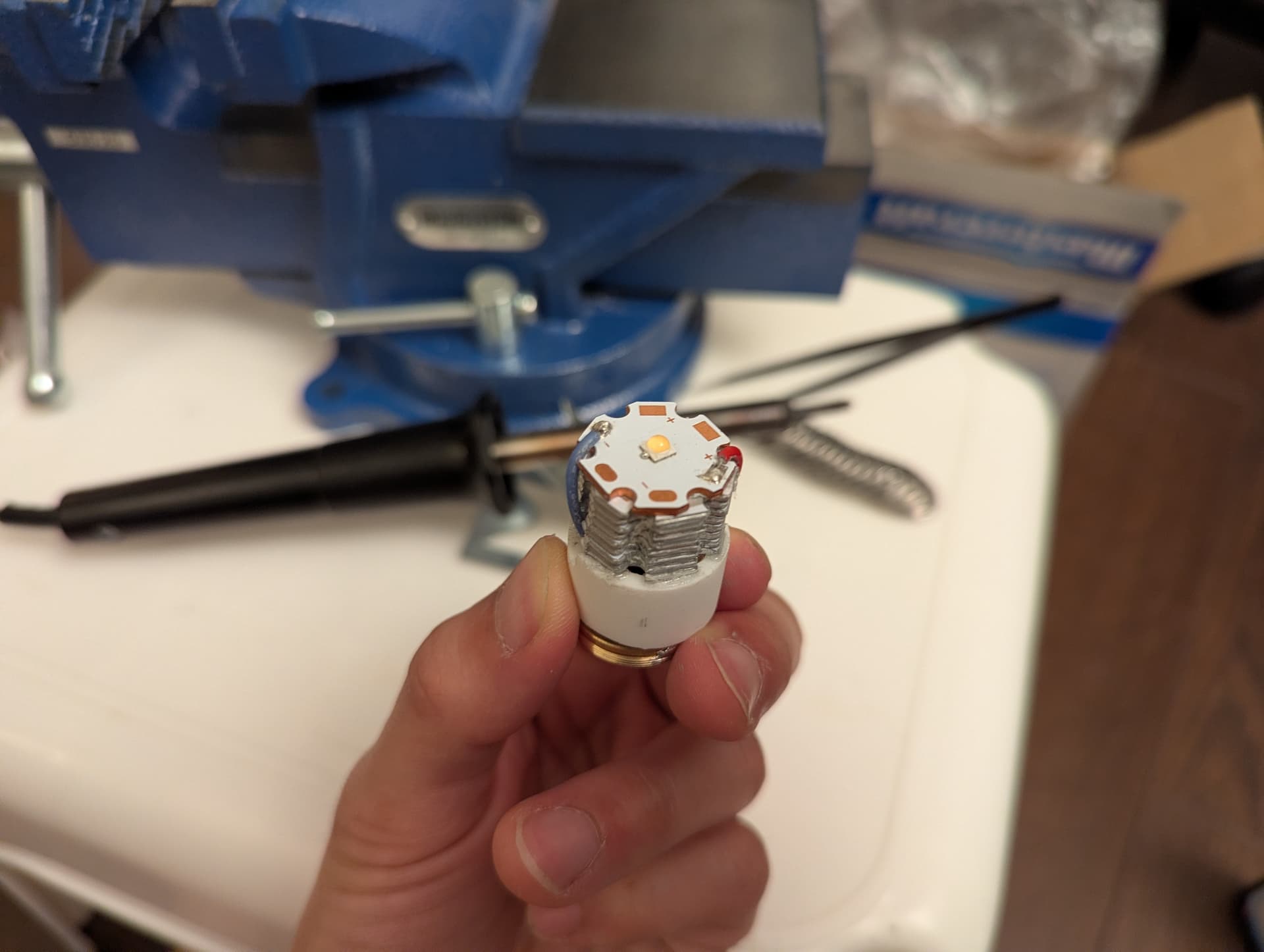
I stacked a bunch of cheap PCBs to serve as a heat sink, but was faced with a problem: how would I fill the gap between the driver and my ramshackle heat sink? As has become the pattern now, PEX came to the rescue:


And with everything glued and soldered together, this is looking a lot more like the guts of a flashlight!

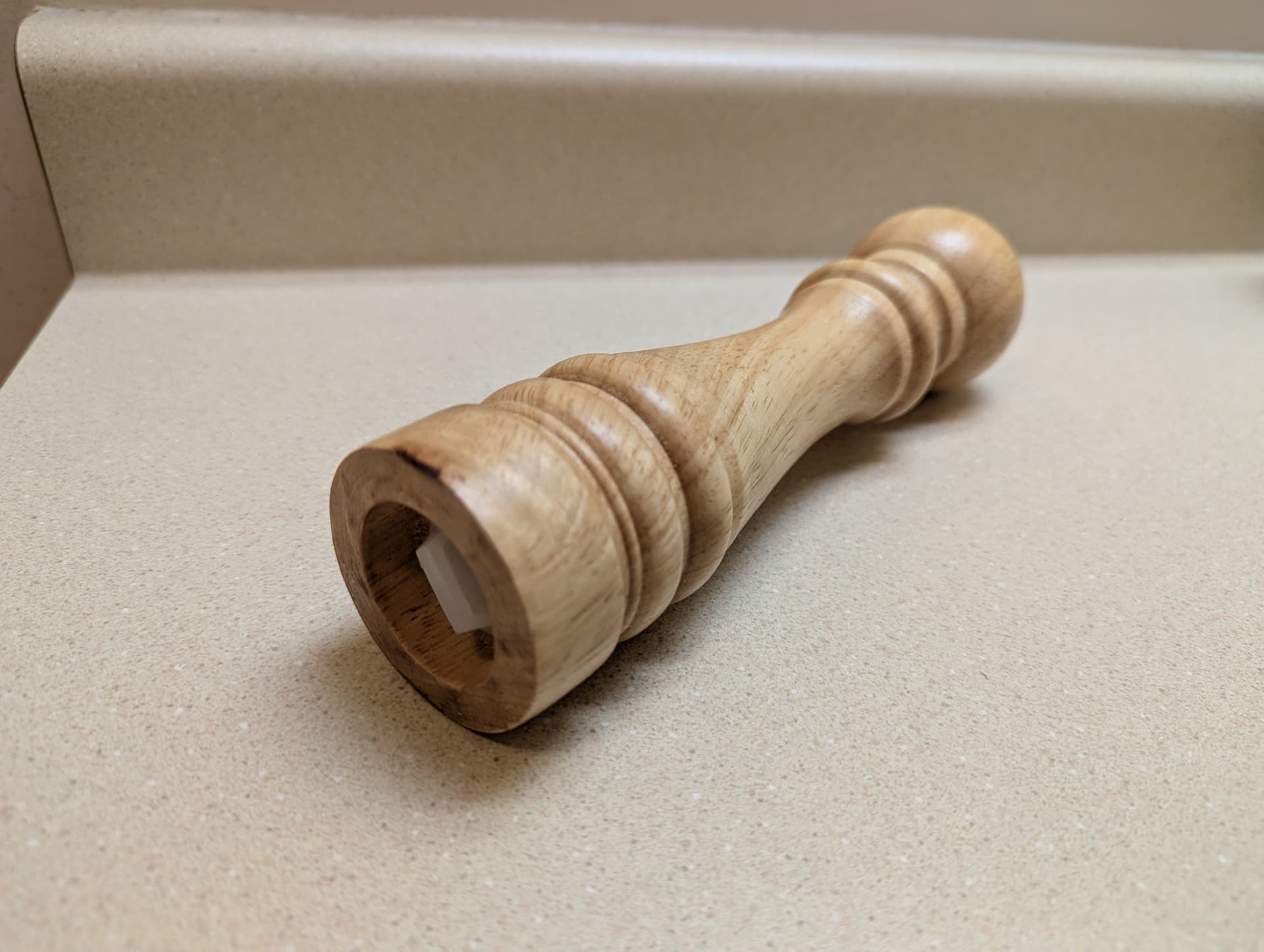
I’ll leave things here for today. Not many more steps left before I have a functional flashlight!

4 Thanks

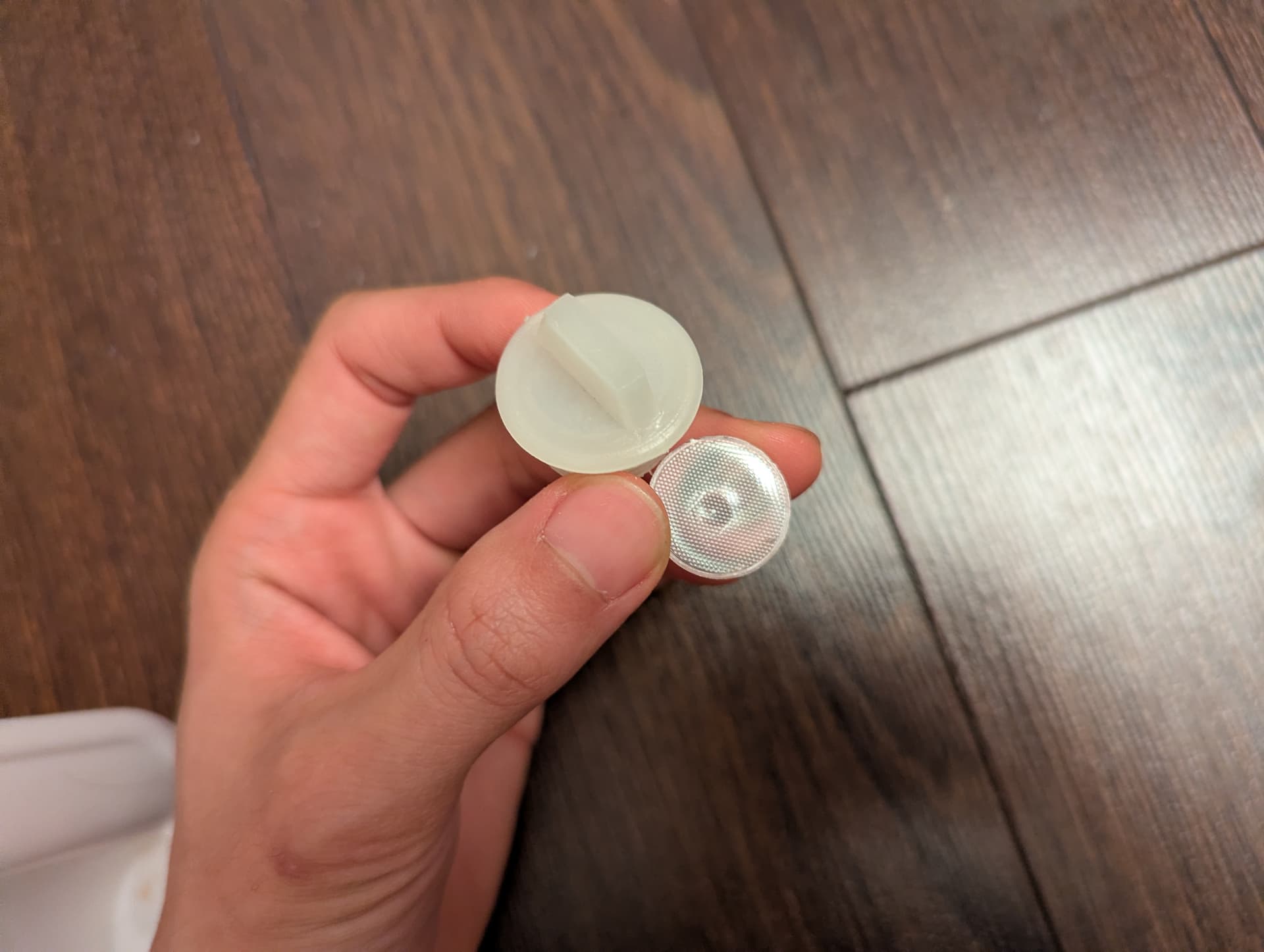
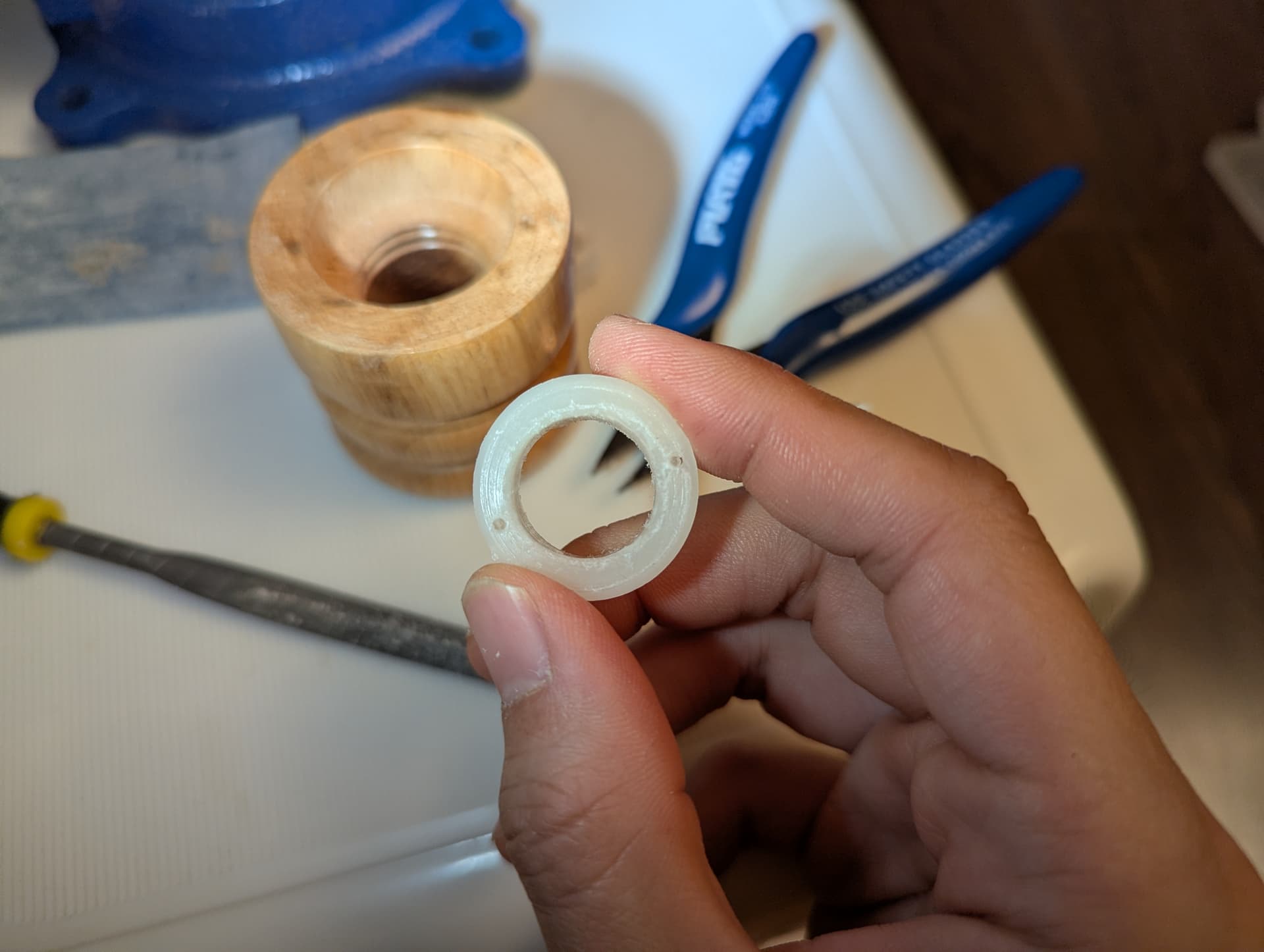
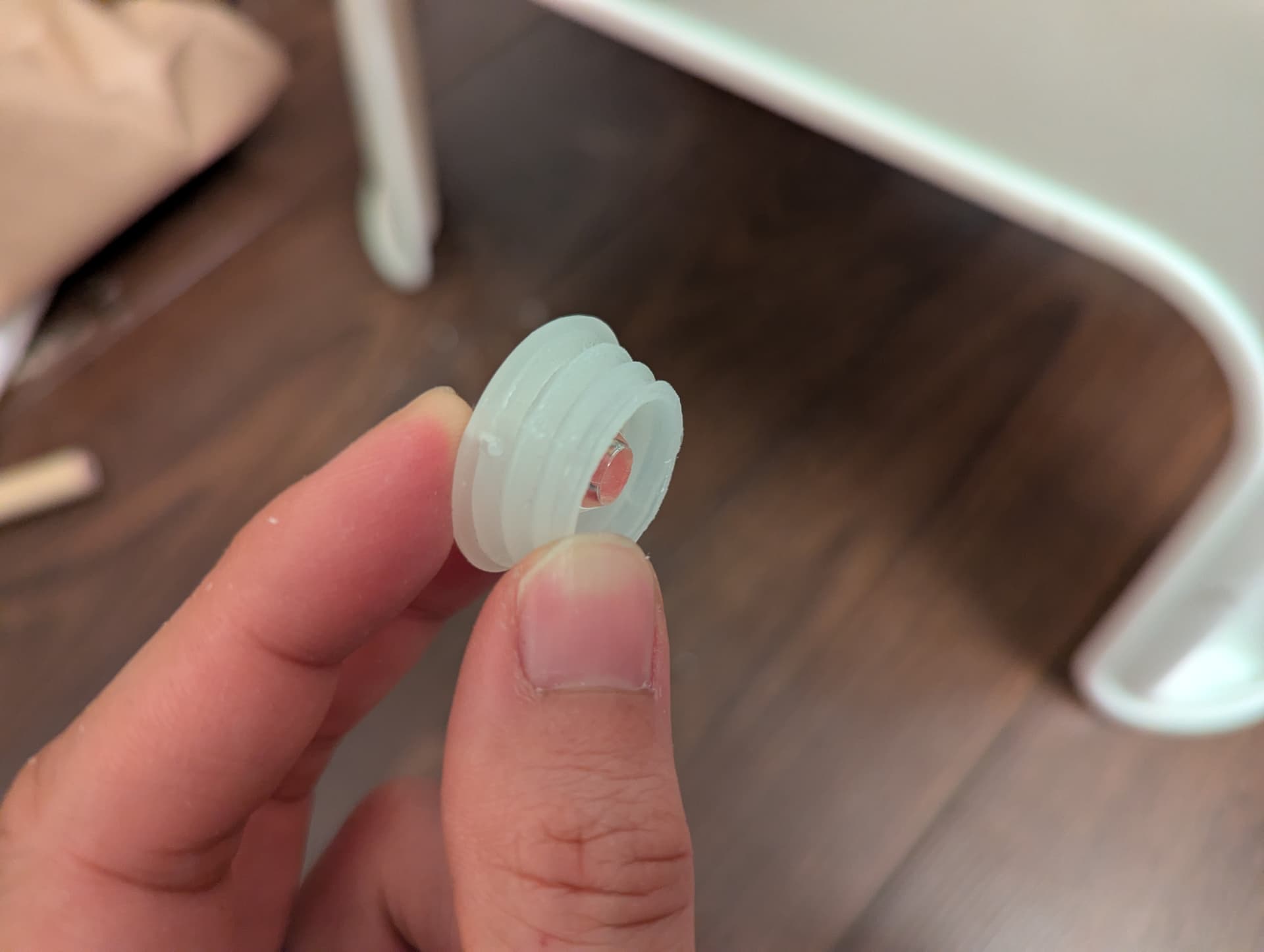
To finish the head assembly, I need to modify the refill cap of the salt shaker to accommodate an optic.
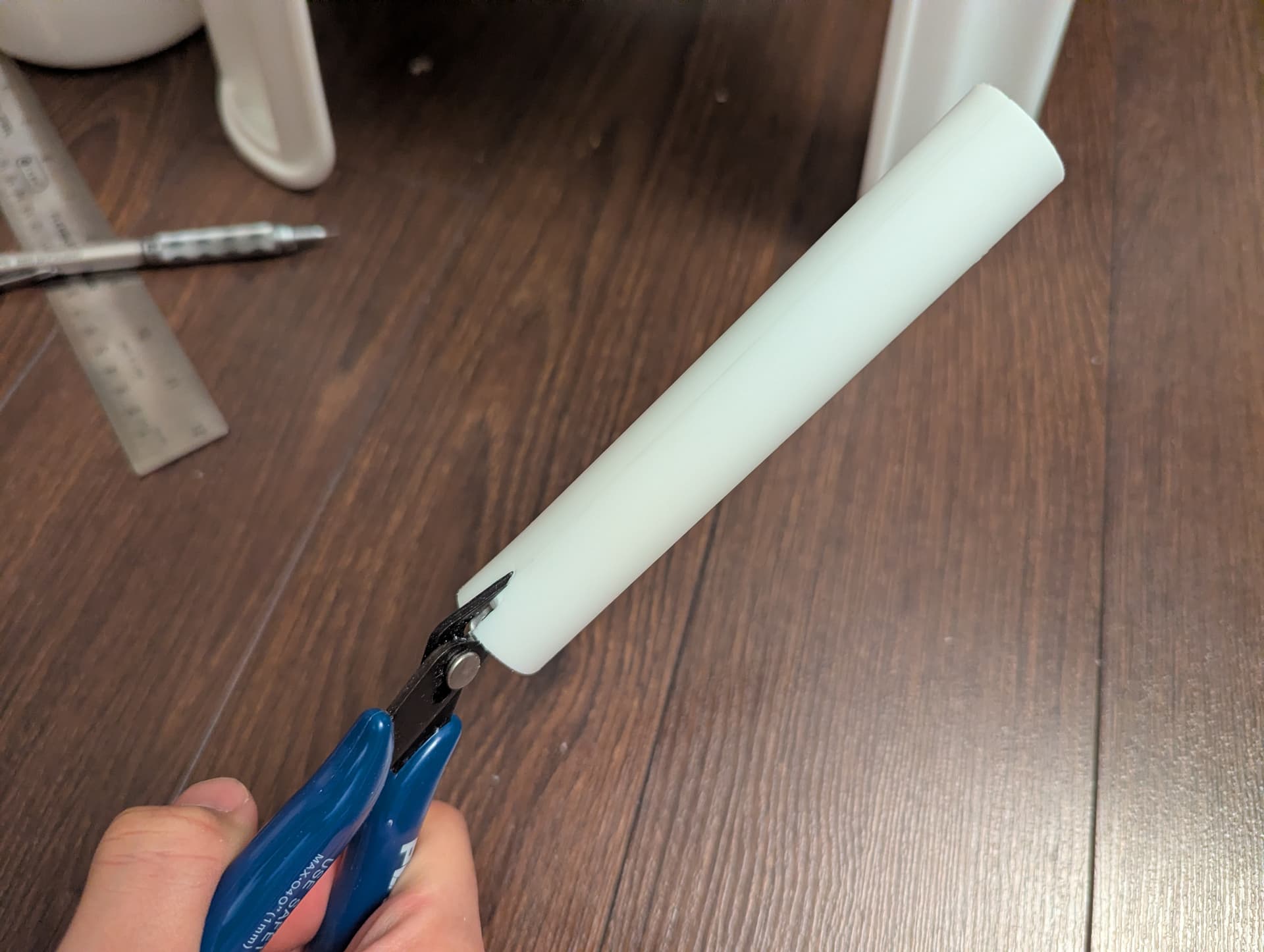
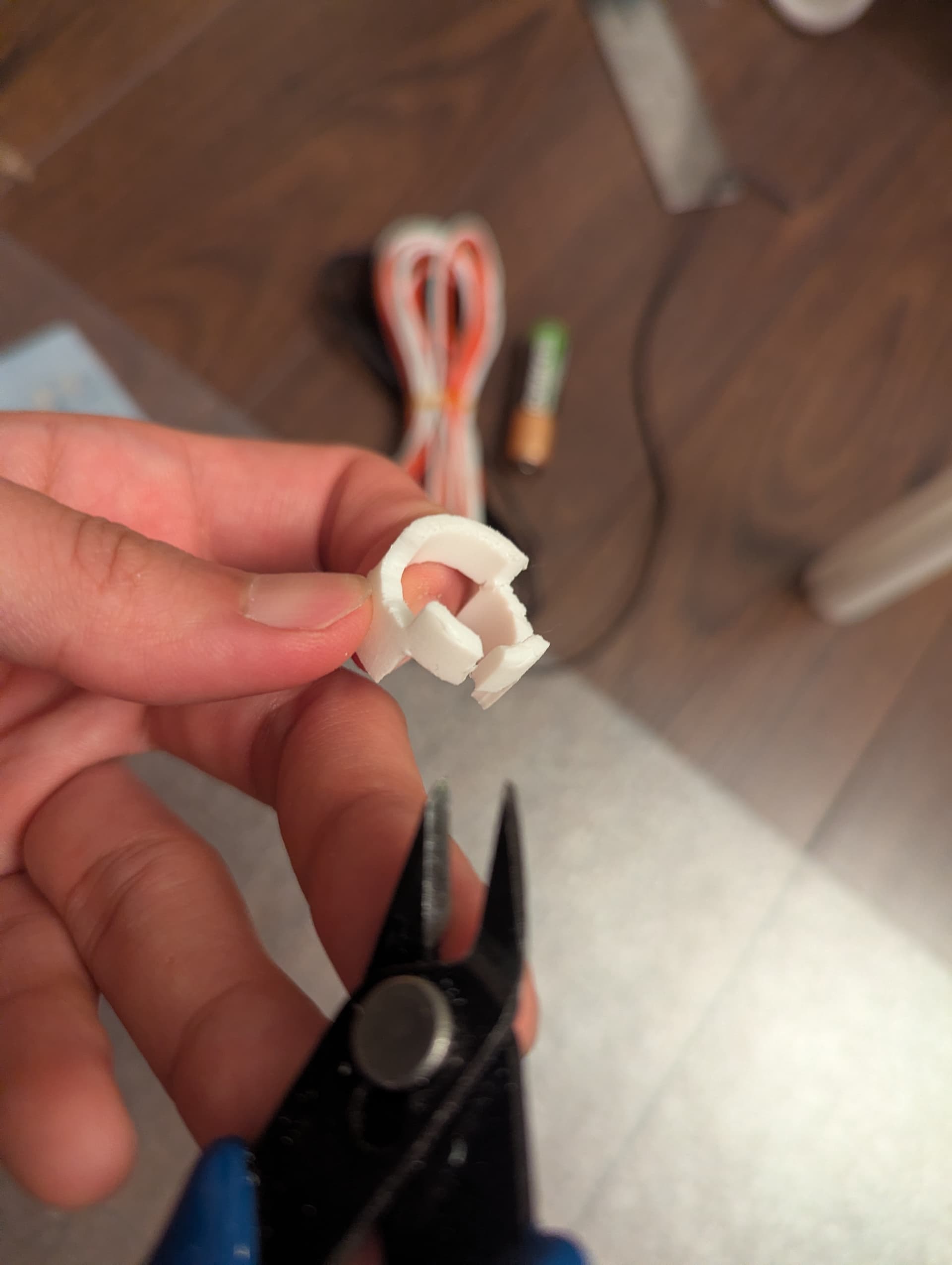
This warranted a bit of snipping and sanding:


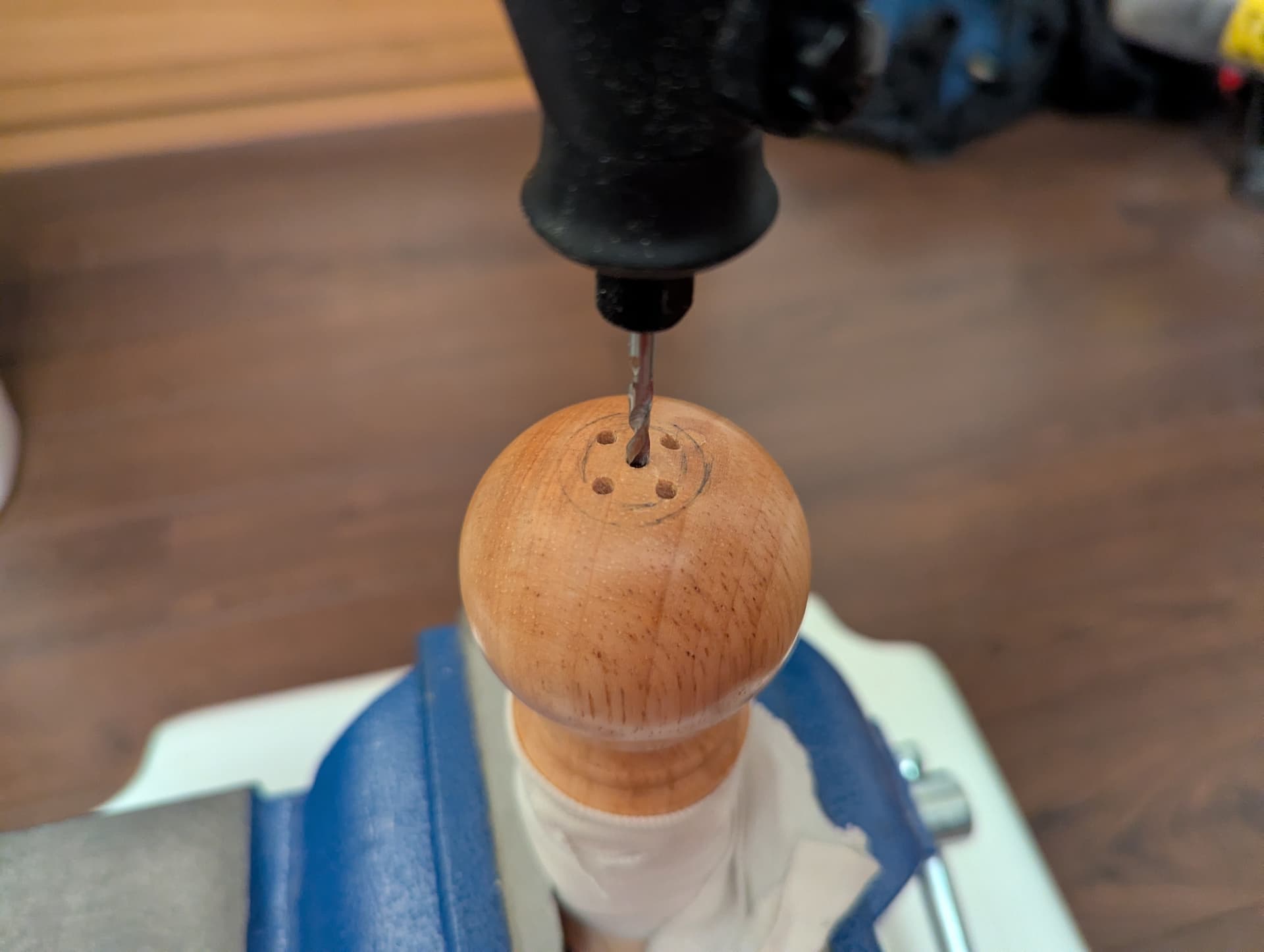
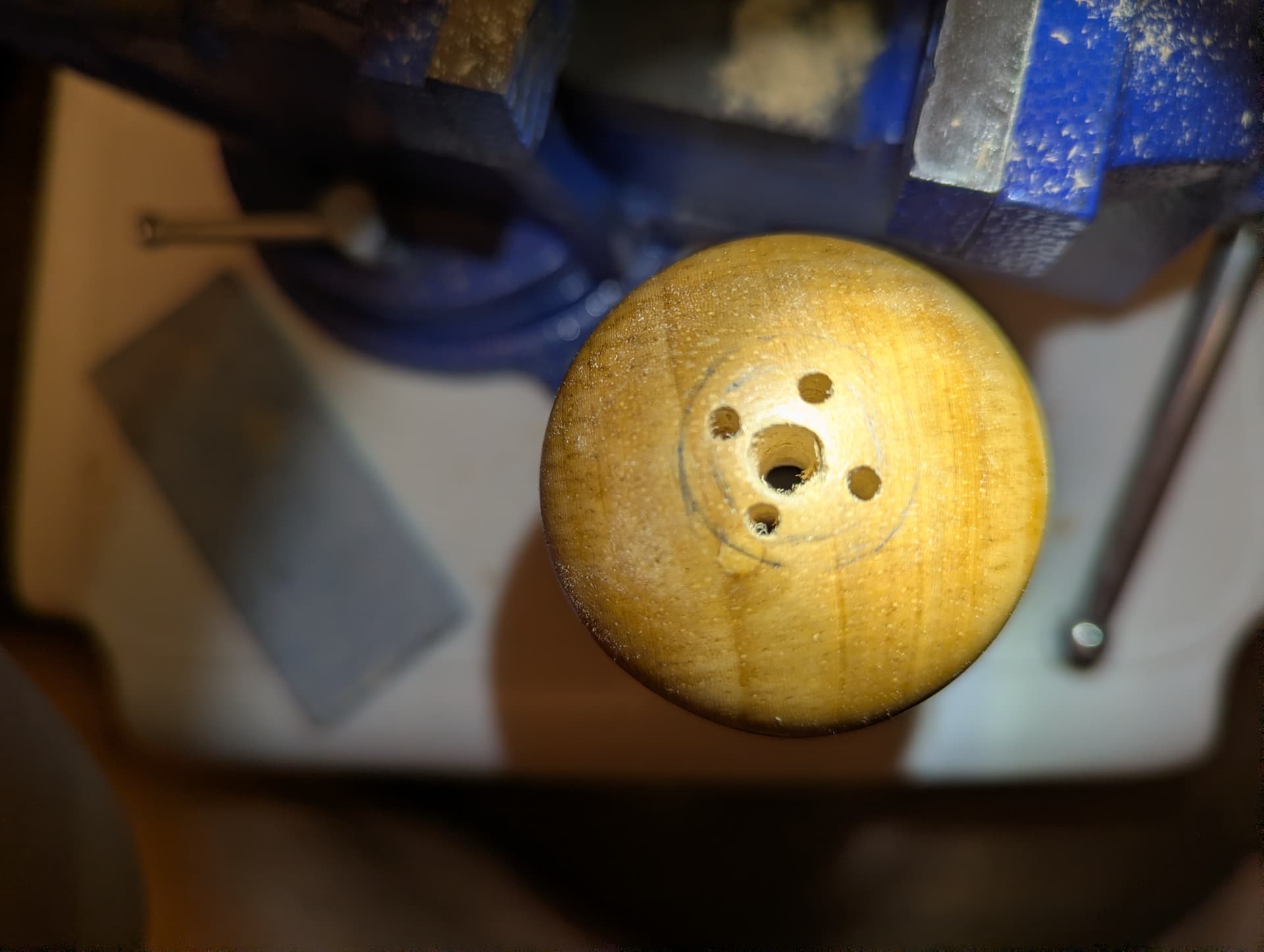
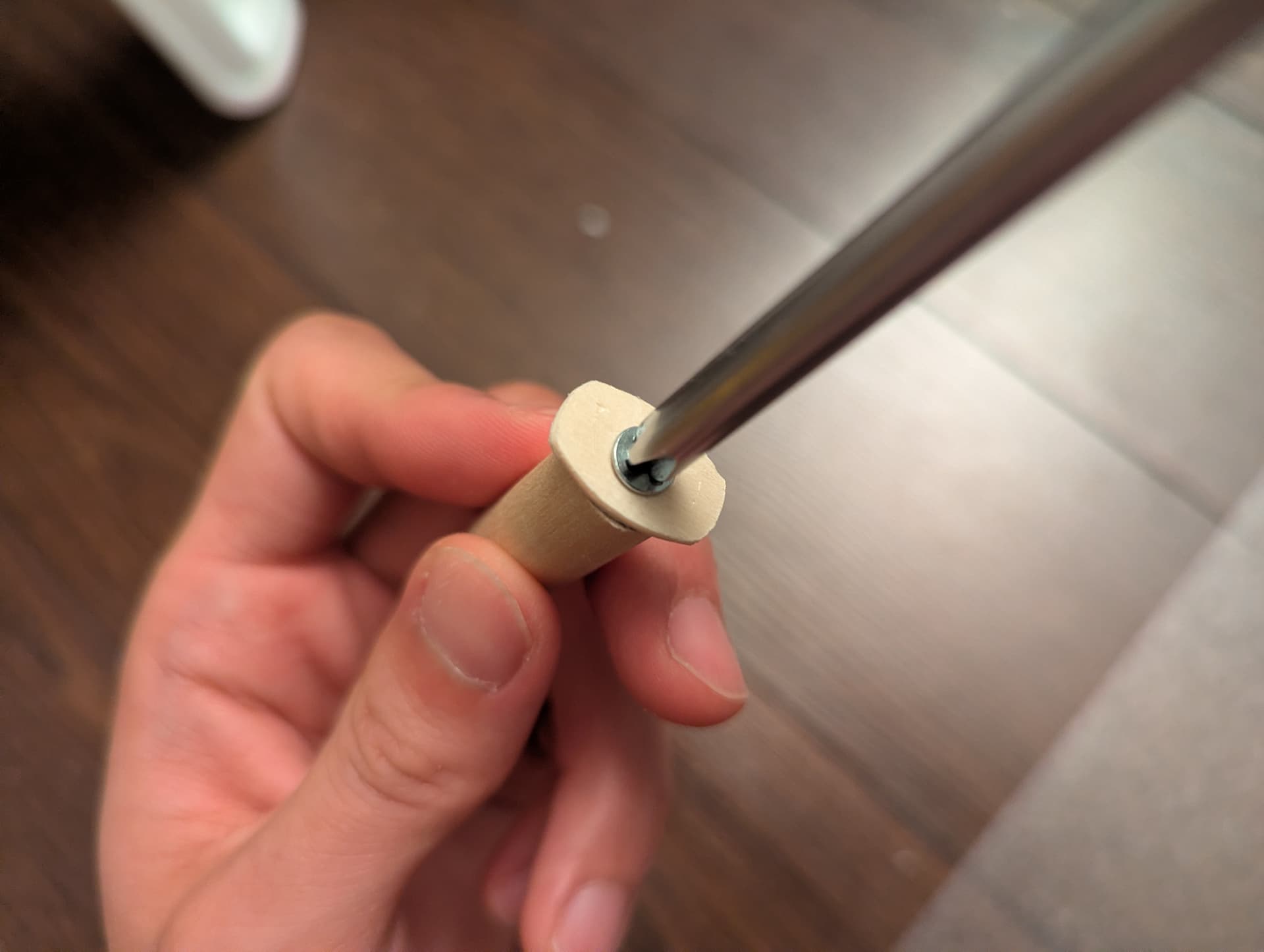
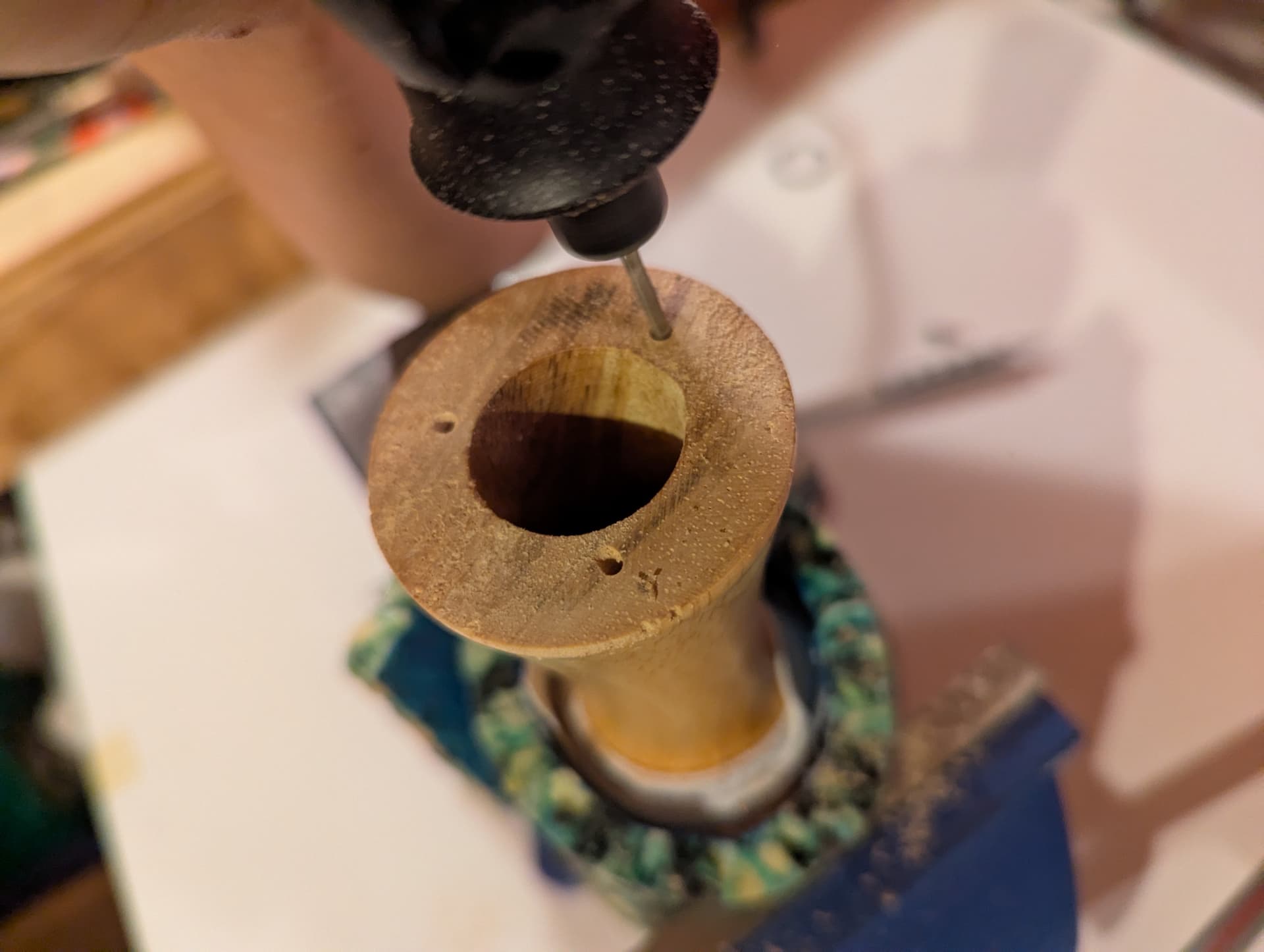
With the removal of the handle of the cap, I needed an alternative way to screw down the cap - so I drilled a couple holes to tighten it like a retaining ring!
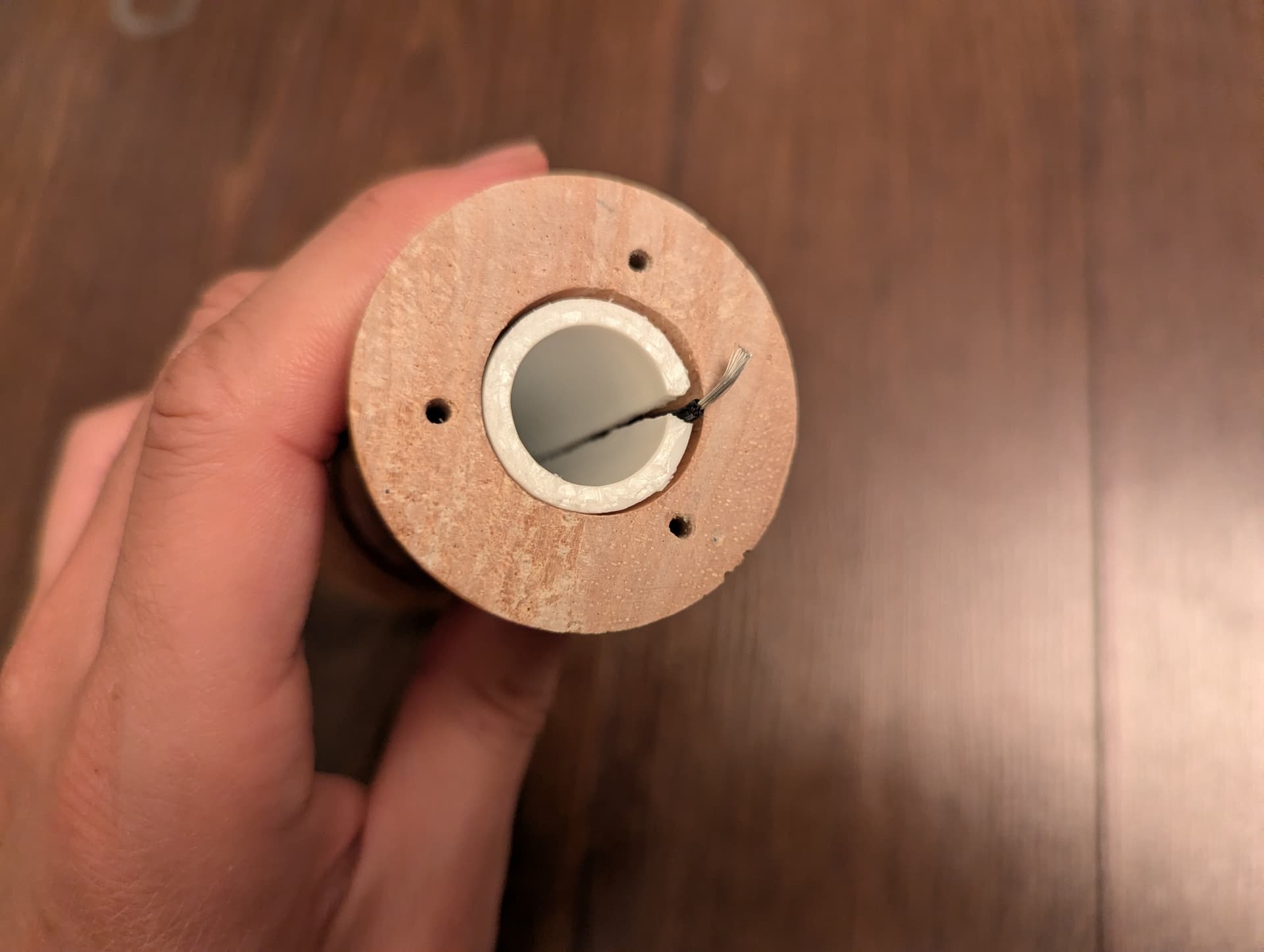
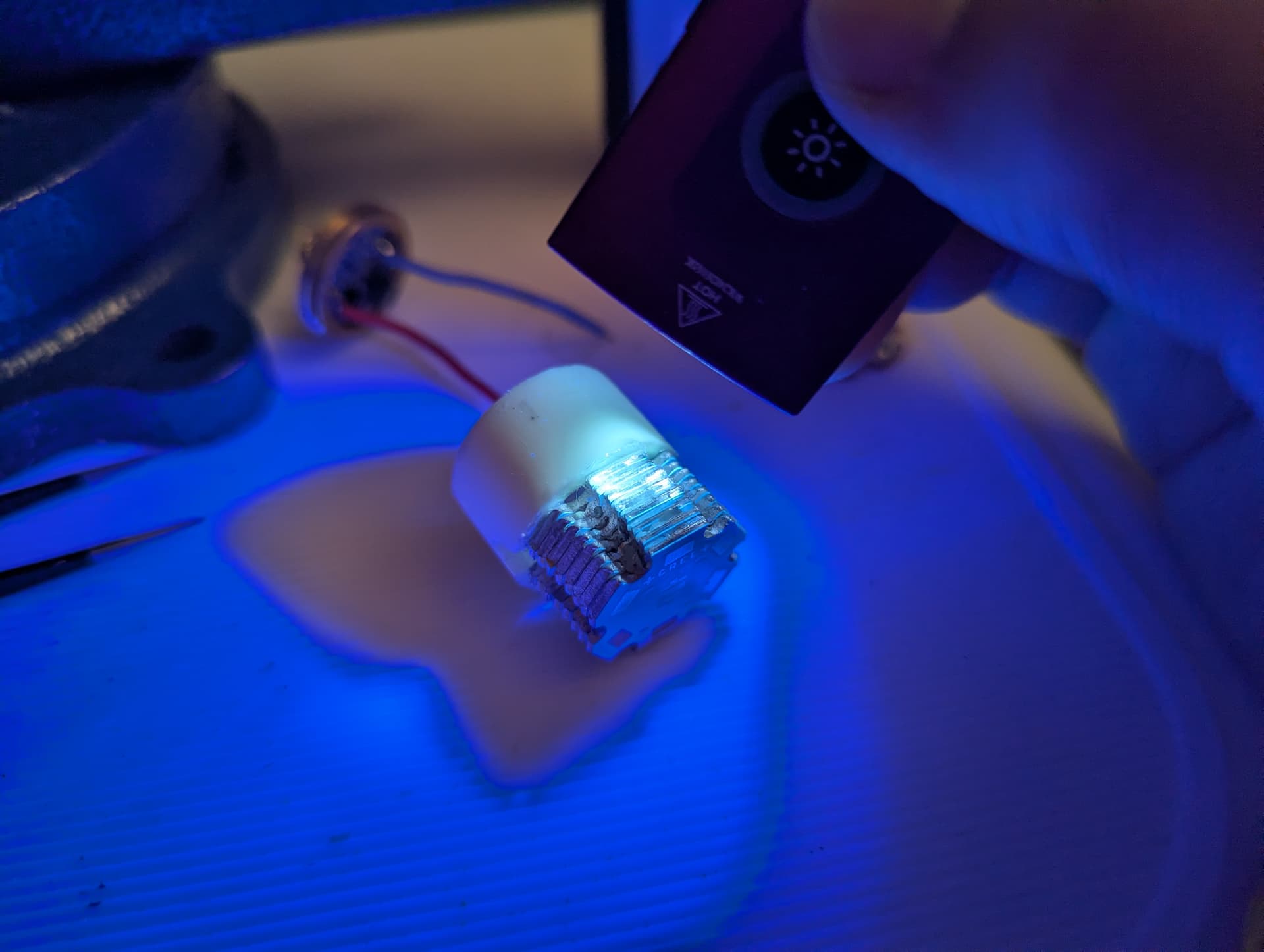
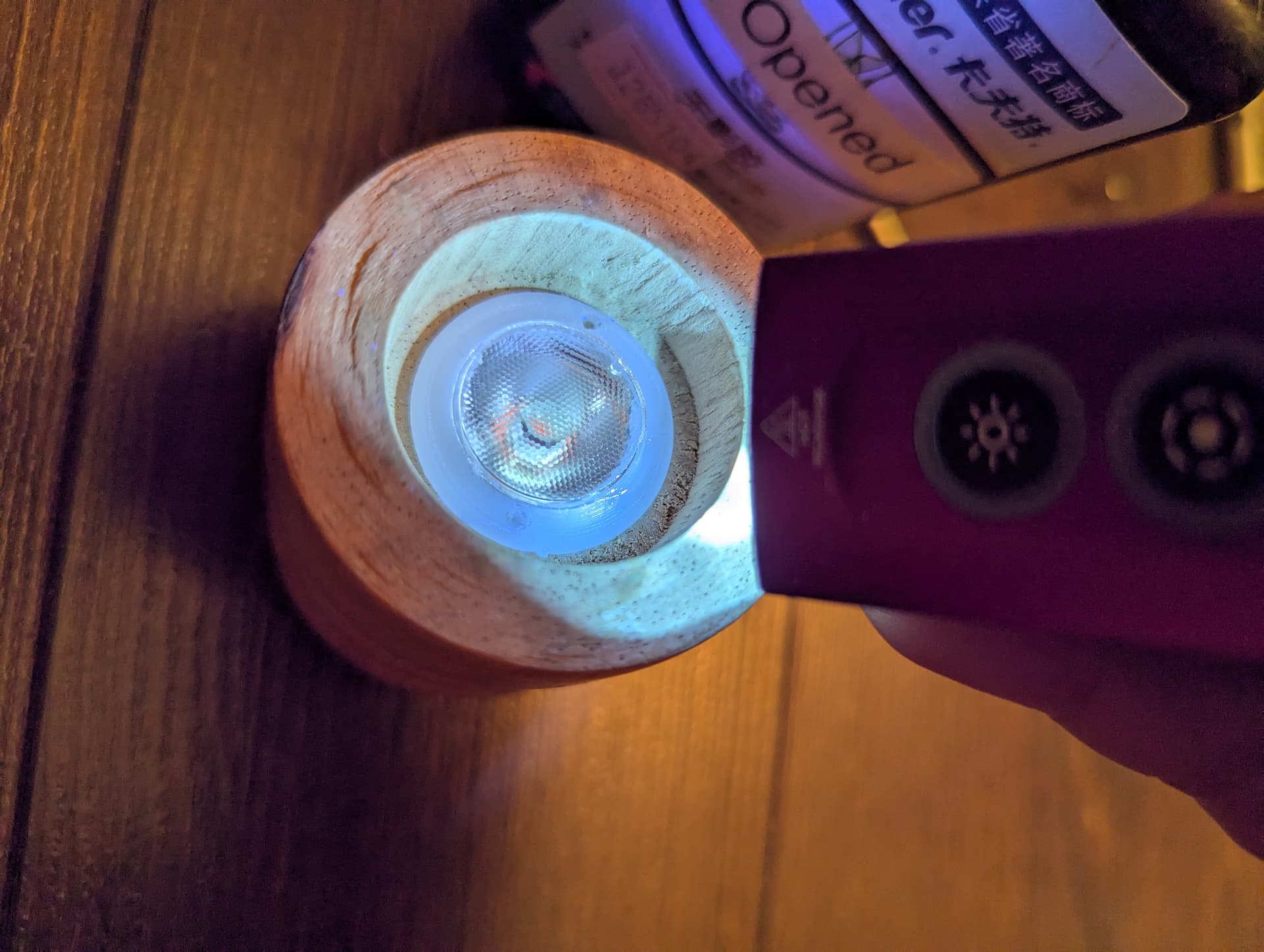
And lastly, I put the optic into place and glued the edges with UV-activated glue. The optic rests a bit above the LED PCB inside, so the edges of the cap are what press down on the PCB rather than the lightly-glued optic.

And the head is complete! The inner diameter of the washer is just small enough to allow the lip (negative contact) of the driver to sit against it, meaning the electrical continuity of the head is also finished - no extra wiring needed!

So in a way, the light is now finished! But there’s a problem…

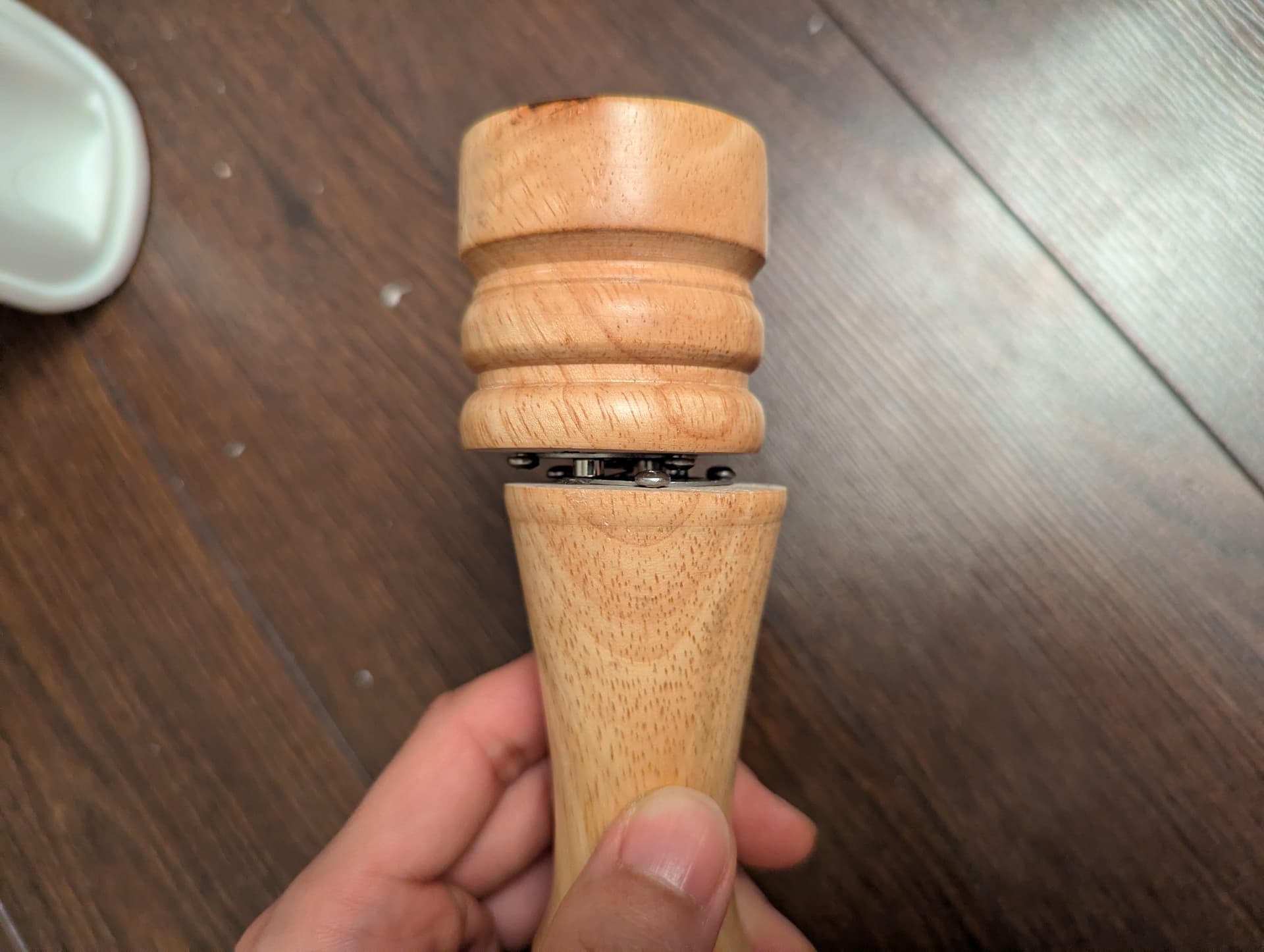
The ends fit together, the circuit is complete…but magnets alone don’t provide a reliable alignment of the head and tail. Something else needs to go in that gap to ensure the ends don’t slip laterally relative to each other.

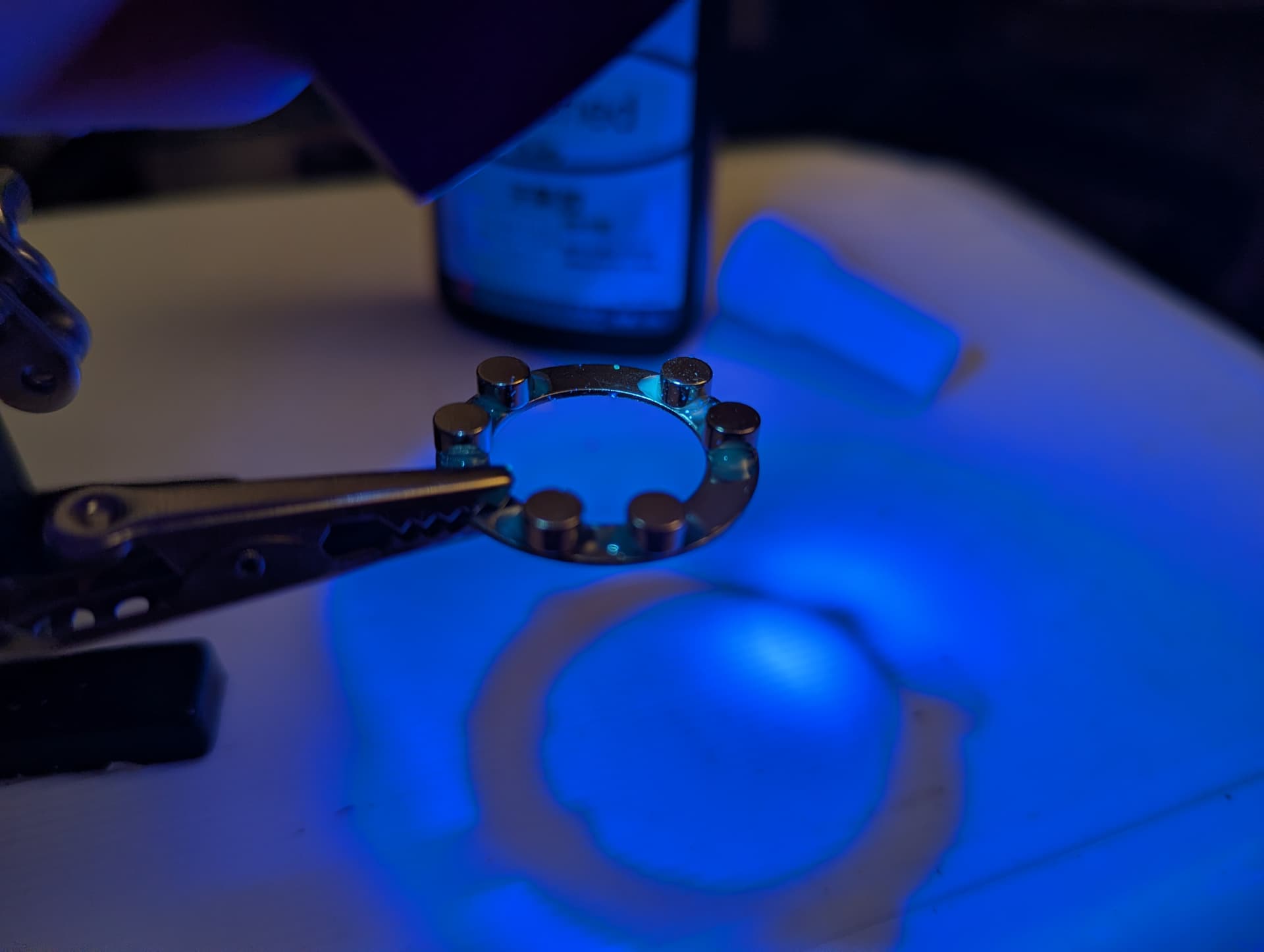
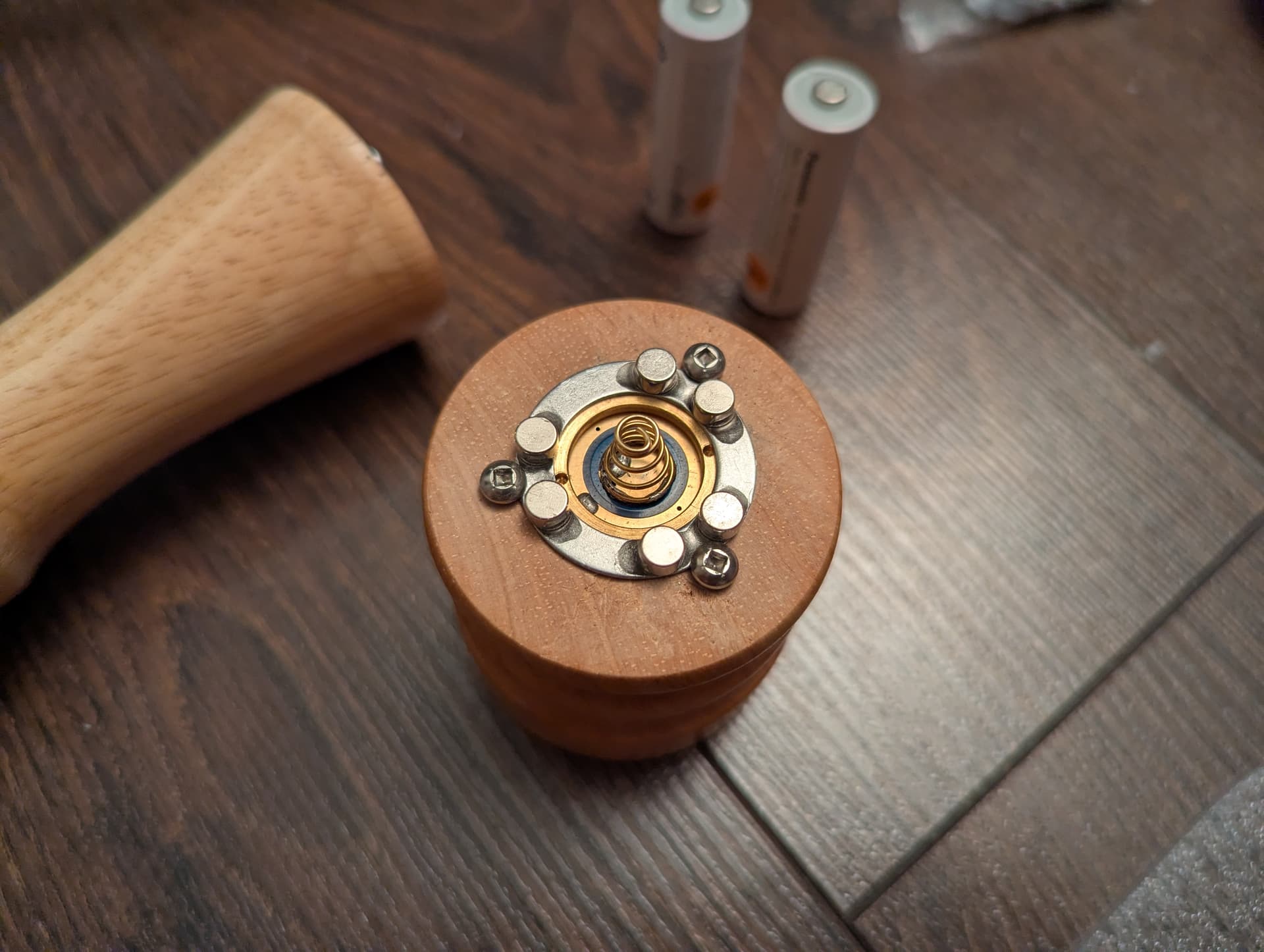
I started by gluing the magnets into place on the head, to at least ensure they remained stationary:

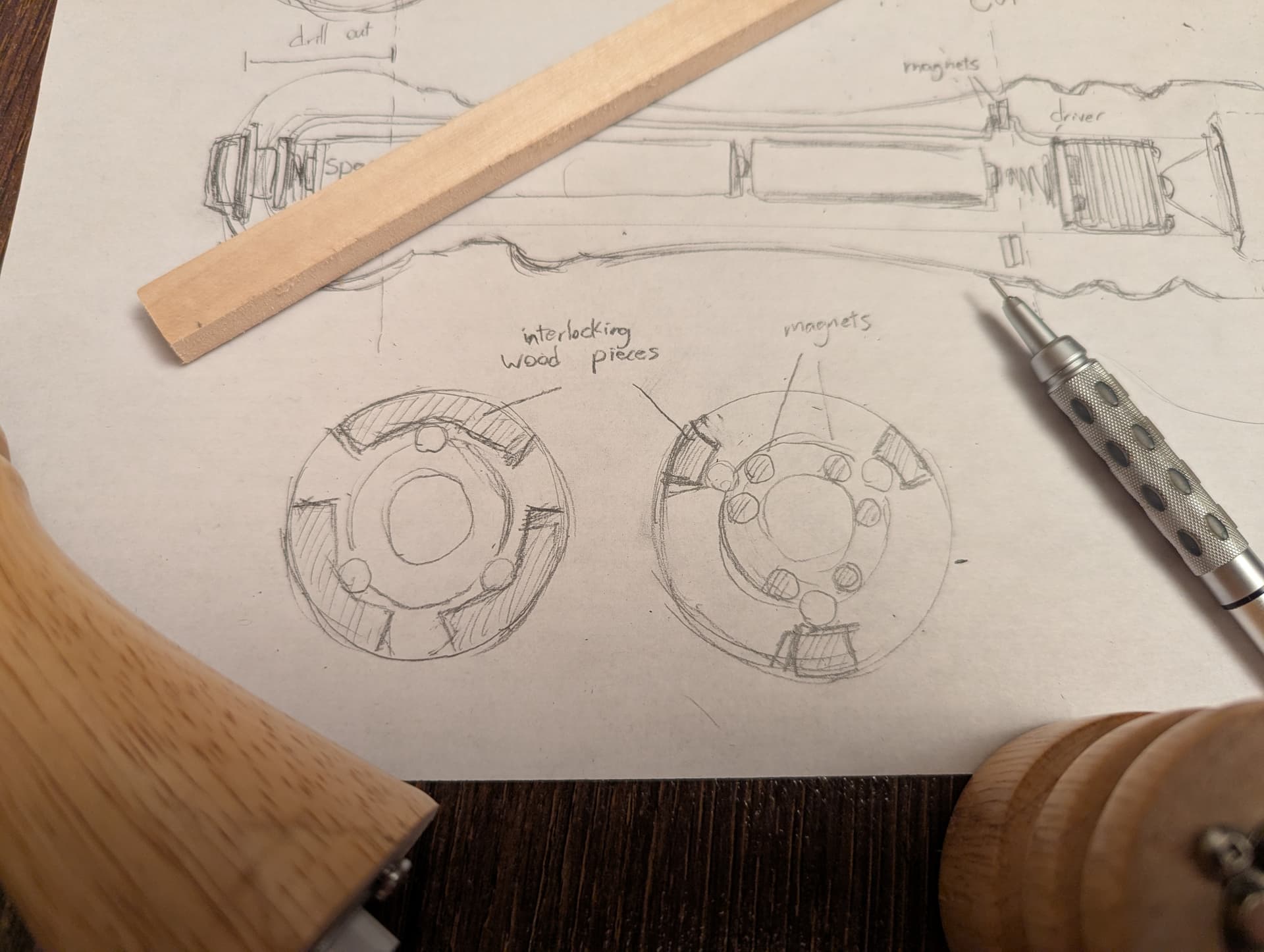
But that wasn’t enough, so I got to brainstorming:


My plan is to add wood pieces on both the head and tail centered on the screws, that interlock together. This will prevent the ends from twisting and sliding!

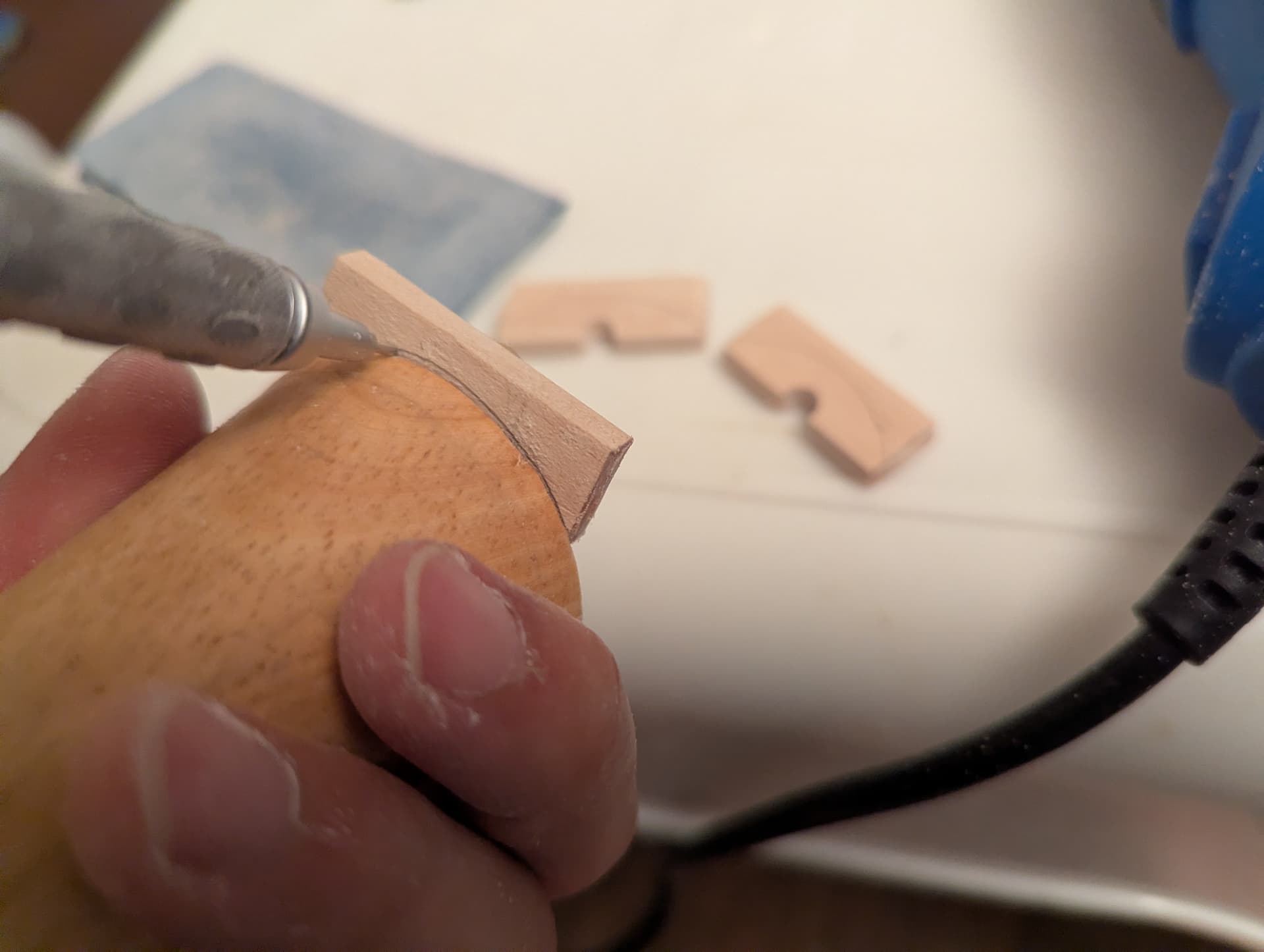
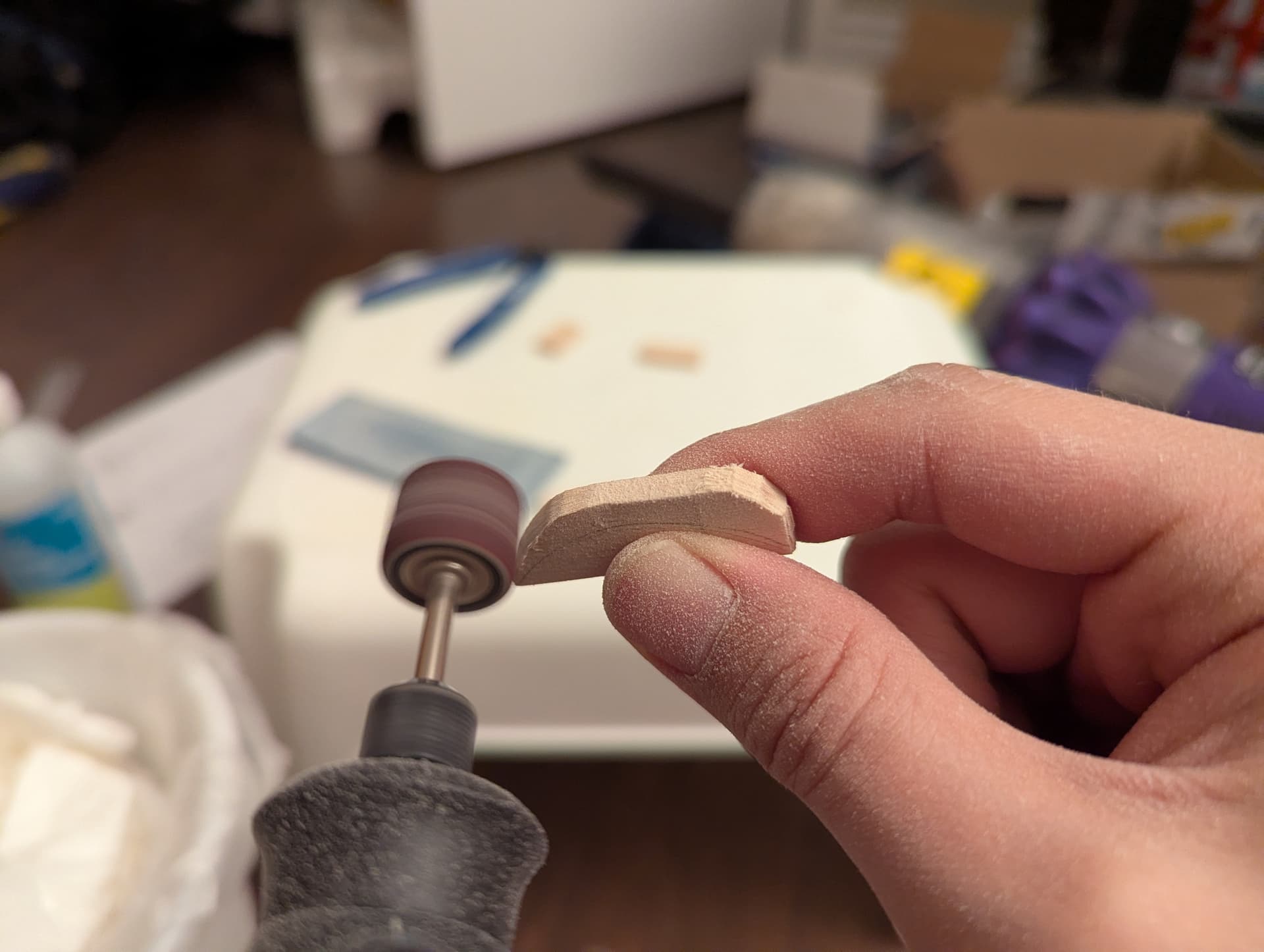
So I got to work on a spare wood strip - sanding, cutting, and grinding it down:

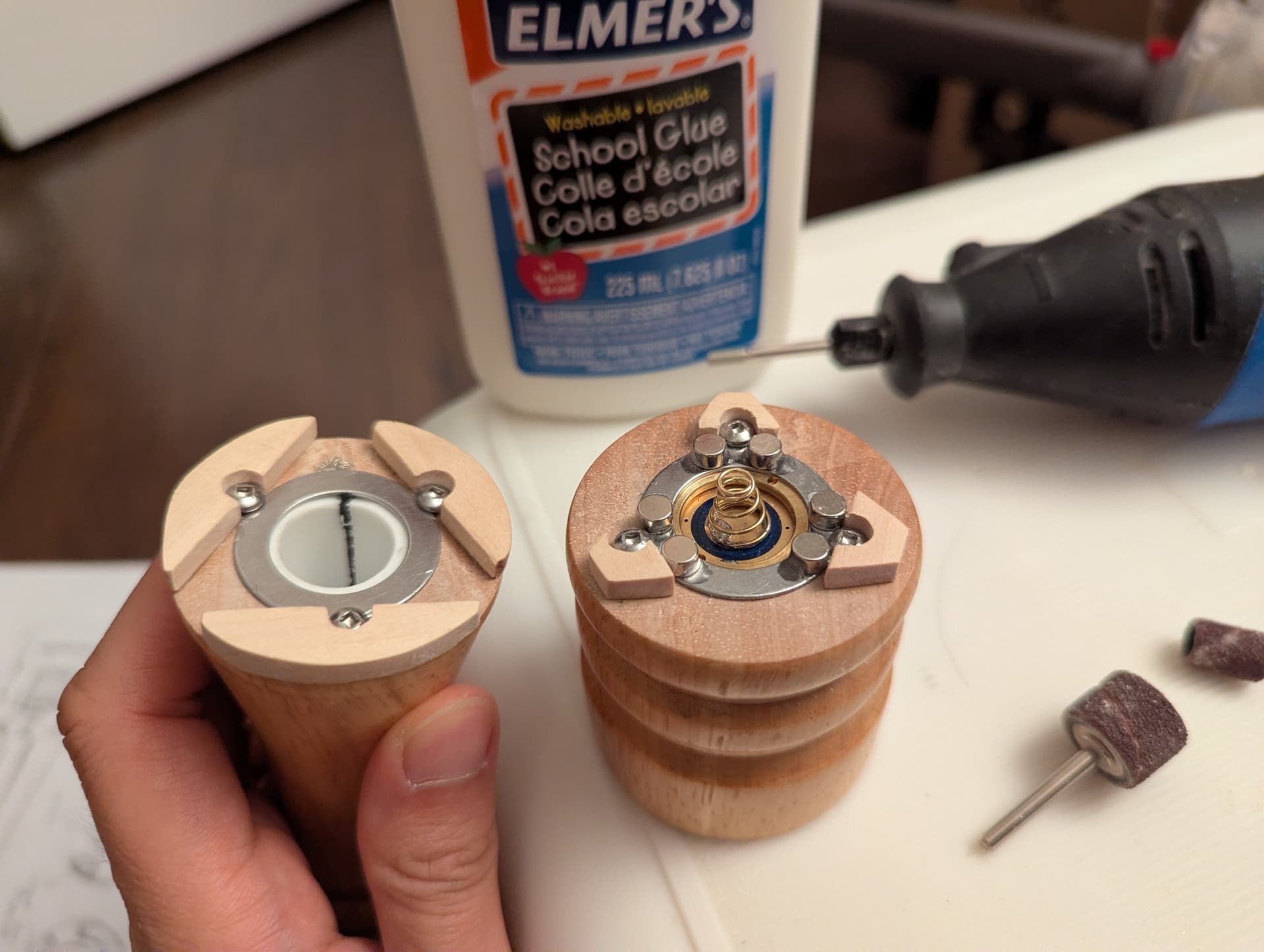
After getting the wood pieces into the right shape, I secured them in place with Elmer’s glue - I never realized this, but it’s surprisingly strong for wood projects!

(You may also notice that one of the wood pieces had to be offset from the screw - the consequences of eyeballing where I added screws and not planning ahead…)

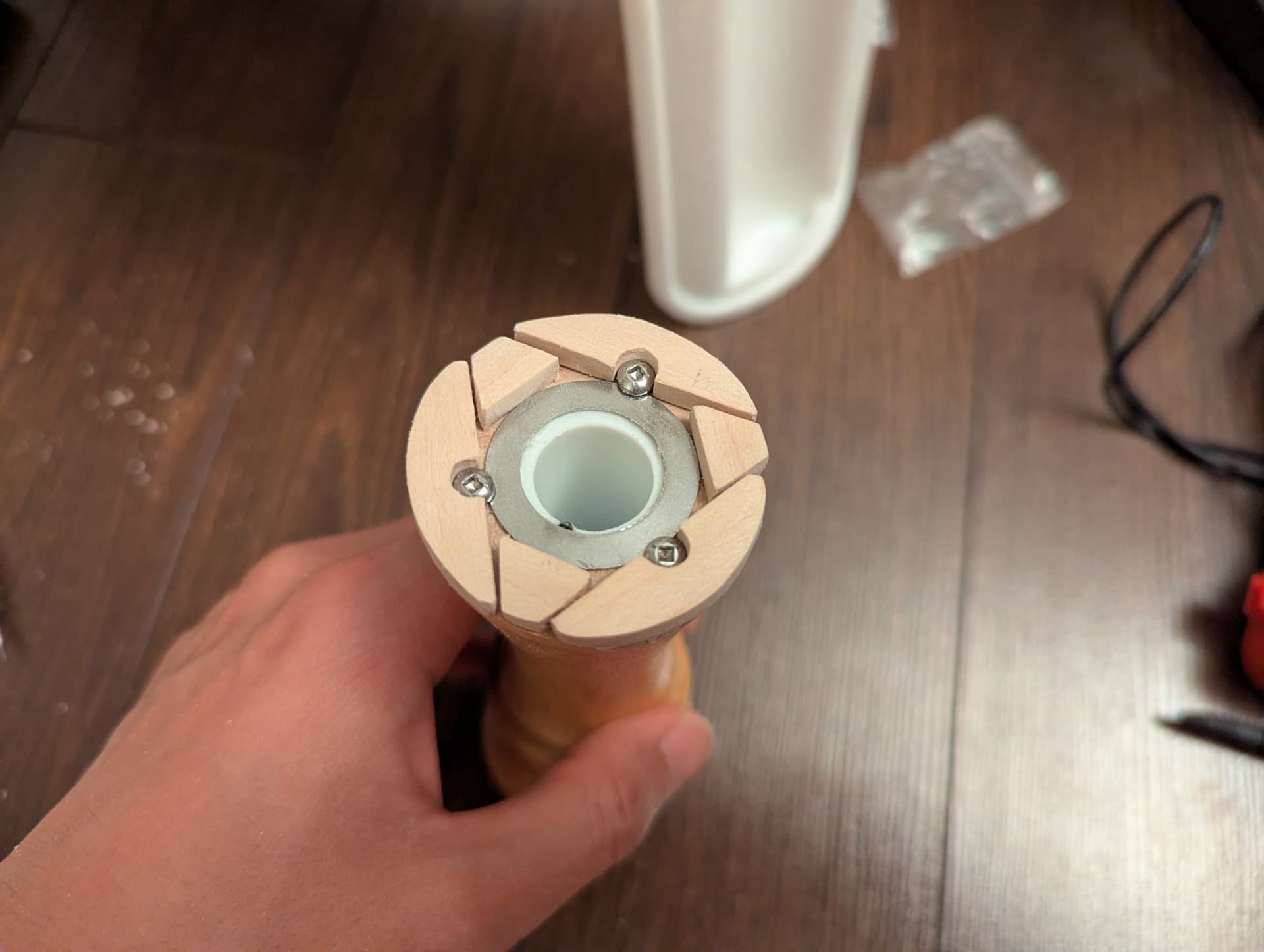
And the fit is just about as good as I could hope for! We’re in the home stretch now:

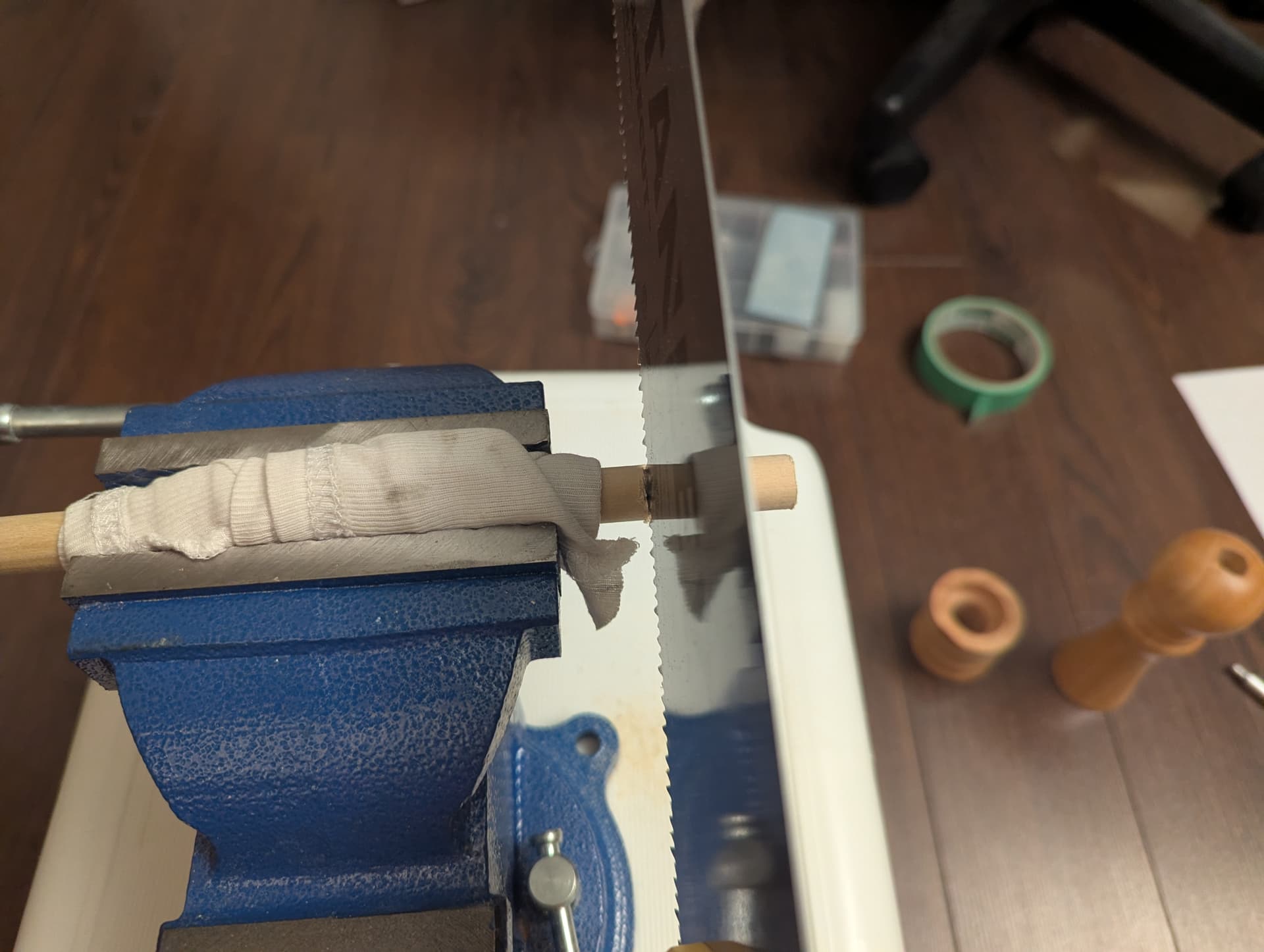
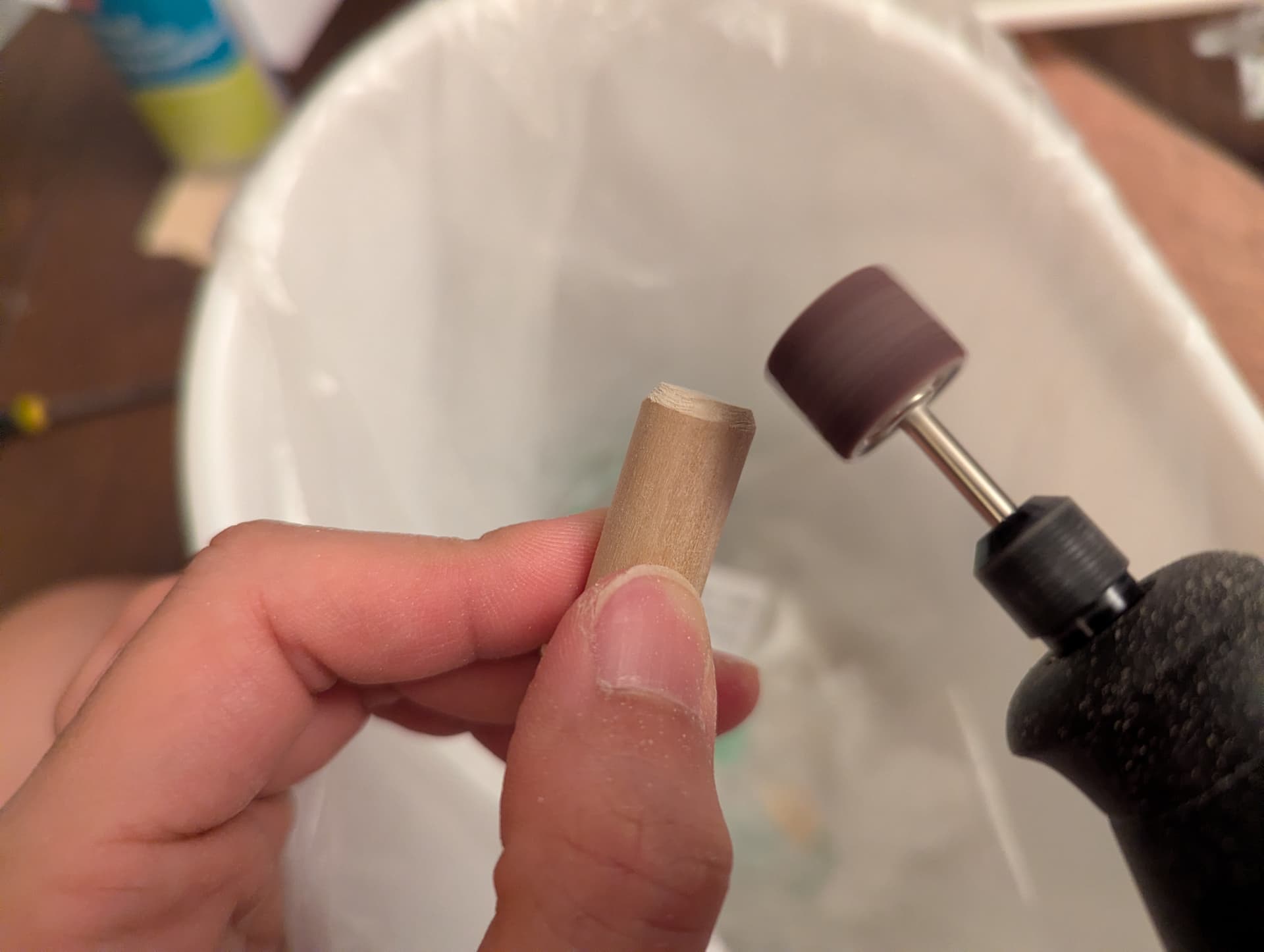
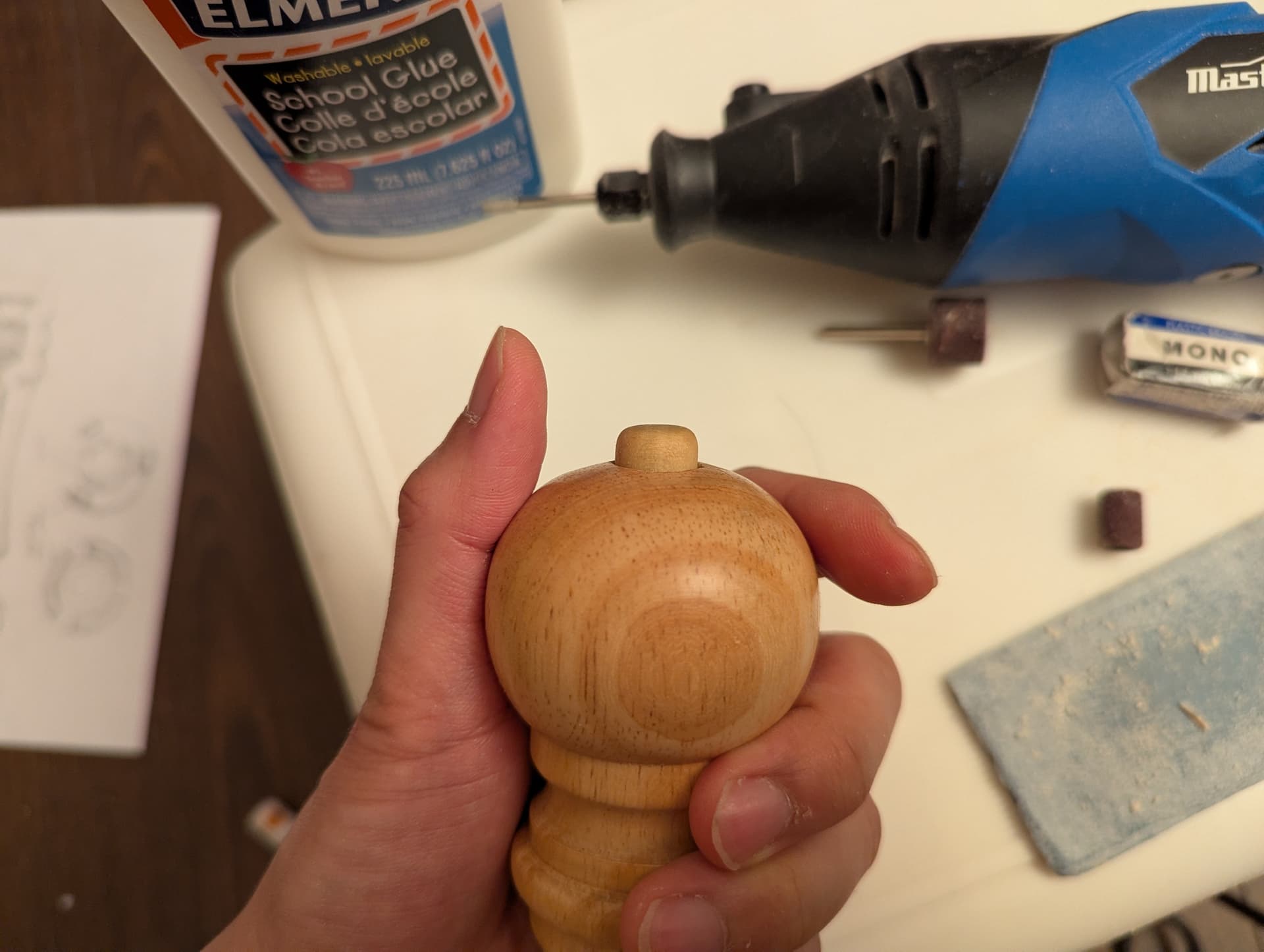
To polish things off, I rounded out the dowel that will serve as a button for the light:

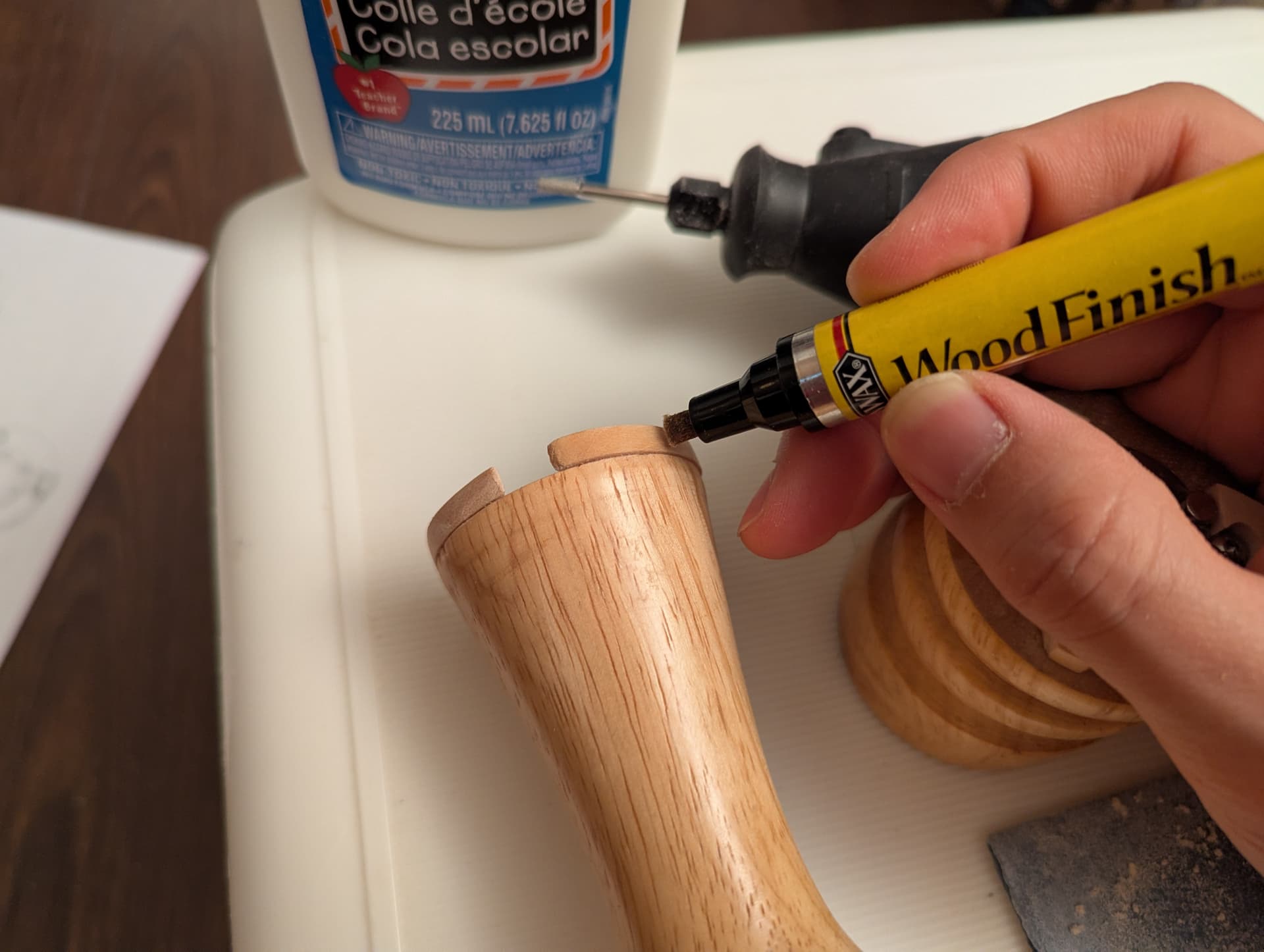
And for a finishing touch, I used a wood stain marker to colour in the interlocking pieces and the dowel-button:

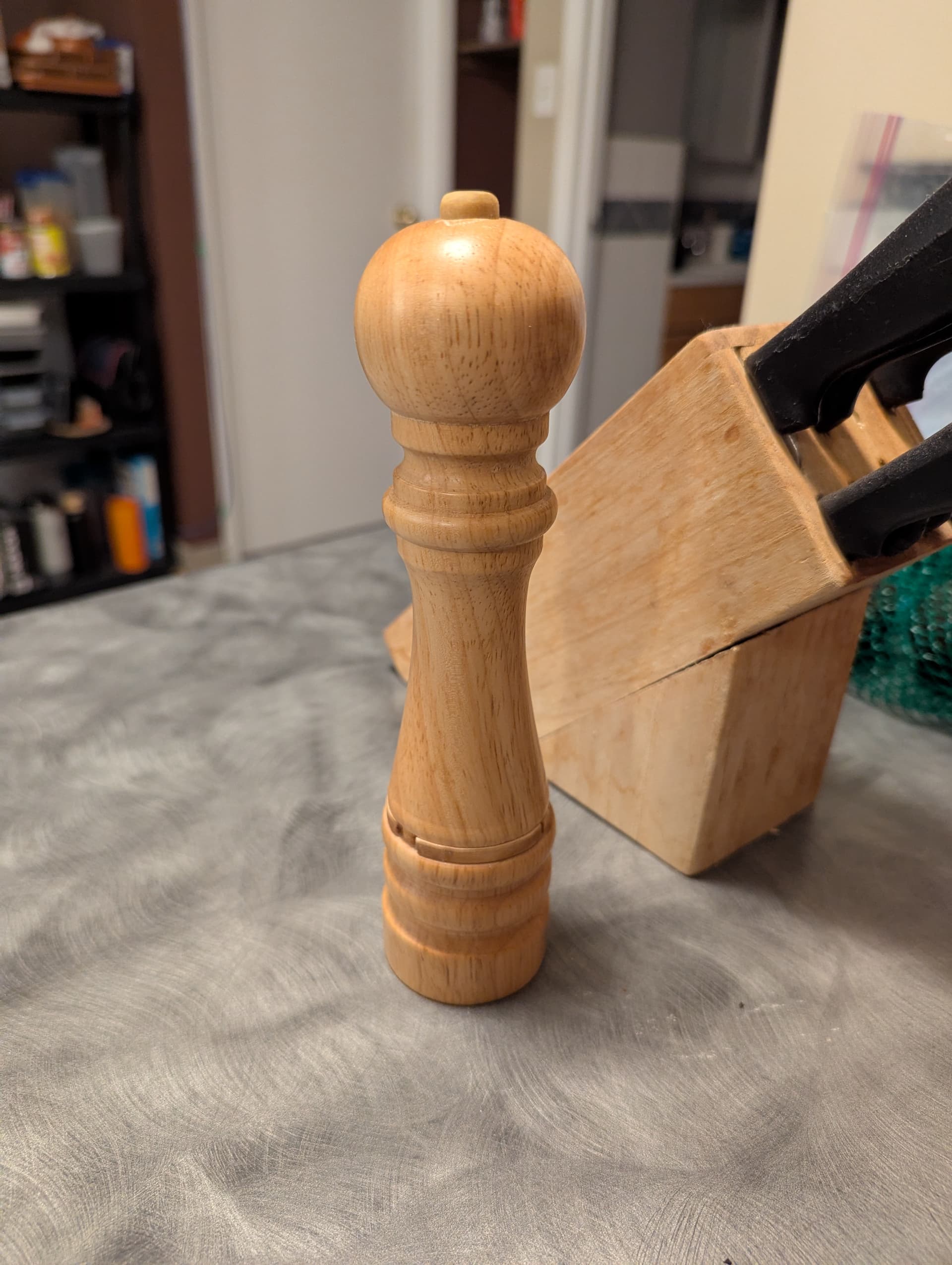
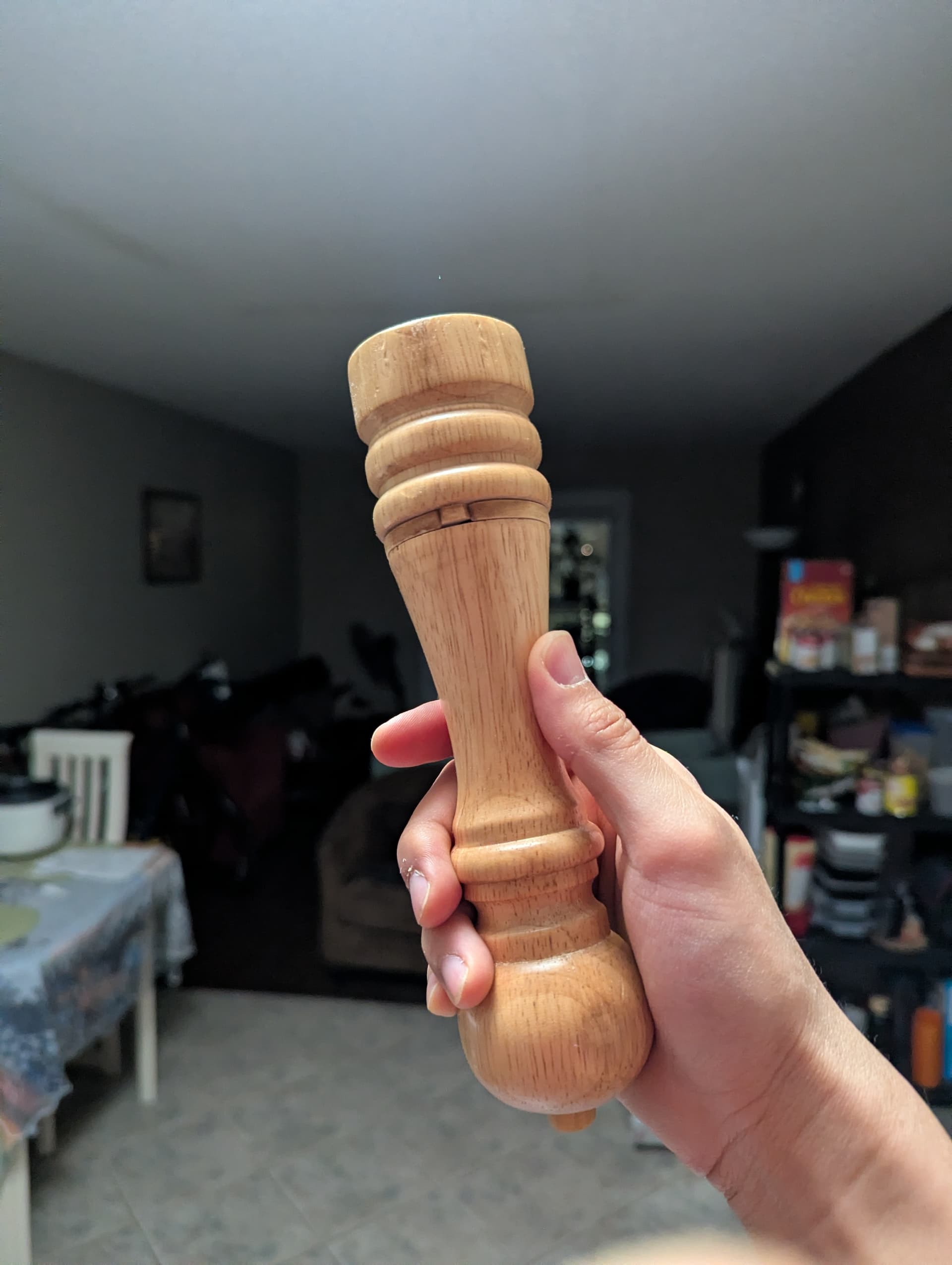
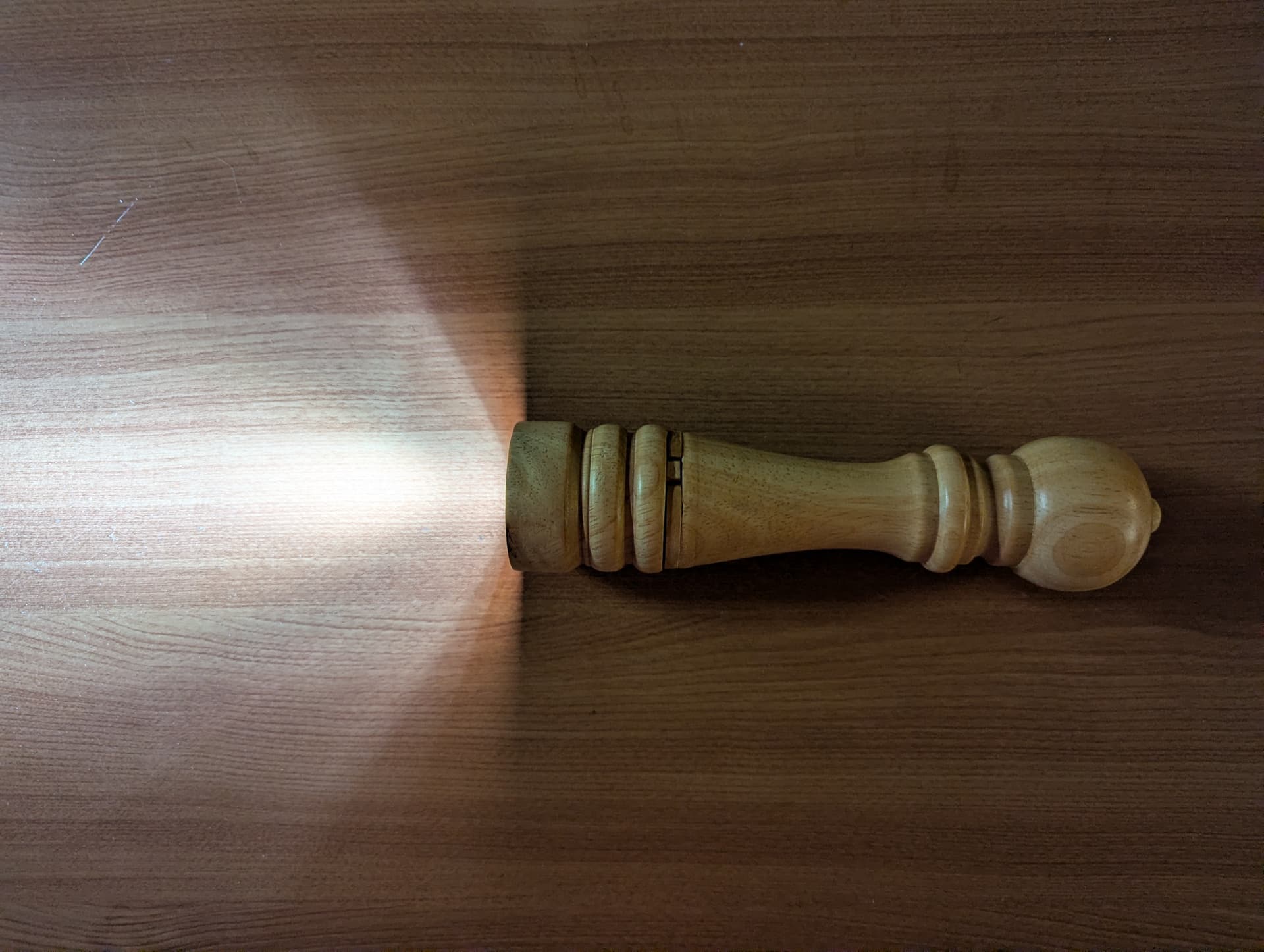
And it’s finally done!

Just in time to wrap up for the White Elephant gift exchange. My friends should get a real hoot out of this one!

Thank you for joining me on this journey!
It was a lot of fun going from half-baked idea to fully-functional flashlight, and this gave me lots of confidence to try more tinkering in the future.

10 Thanks

Well done! It looks awesome

1 Thank