
This is the FireFlies X1S Pharos Reflector version, a throwy flashlight with the new FFL707MD 4200K 95 CRI LED, LumeX1 driver, IPX8 rating, Anduril 2 UI, RGB AUX lights, a stunning beautiful MAO anodizing and more.
• Price
The X1S Pharos RE (Reflector) Void White with FFL707MD 4200K is currently priced at $89.99 on Firefly Outdoor official website.
This link is an affiliate link, you can use it to buy flashlights you like and support me. Thanks.
• My opinion
It was hard to find things I disliked about the X1S Pharos, it’s my favorite FireFlies flashlight now. It has an awesome Lume X1 Boost driver, RGB AUX, slightly recessed switch and IPX8 rating as most FireFlies, but this one has my favorite anodizings, it’s so good it almost feels like ceramic, with a very white color and being resistant too. The USB-C charging port is amazing, it has the patented magnetic cover and a fully potted USB-C. The FFL707MD 4200K LED is pretty good too, very high CRI (95) and a pretty neutral color close to 4000K, while also being powerful.
*The AUX isn’t as powerful as the version with TIR, as the light only passes through the LED gasket, I actually liked this kind of AUX and think it’s beautiful and not excessively bright like the TIR one can be sometimes.
The LED doesn’t look as powerful as it is advertised to be though, and the battery tube doesn’t fit protected cells.
| PROS | CONS |
|---|---|
| Excellent Lume X1 Driver | Doesn’t fit protected cells |
| IPX8 Water Resistance and potted USB-C with magnetic cover | Doesn’t look as bright as advertised |
| Pretty good Void White anodizing | |
| Recessed switch to prevent accidental activations | |
| AUX on the reflector with locator and battery indicator | |
| Very good Neutral High CRI FFL707MD 4200K emitter |
• Box contents
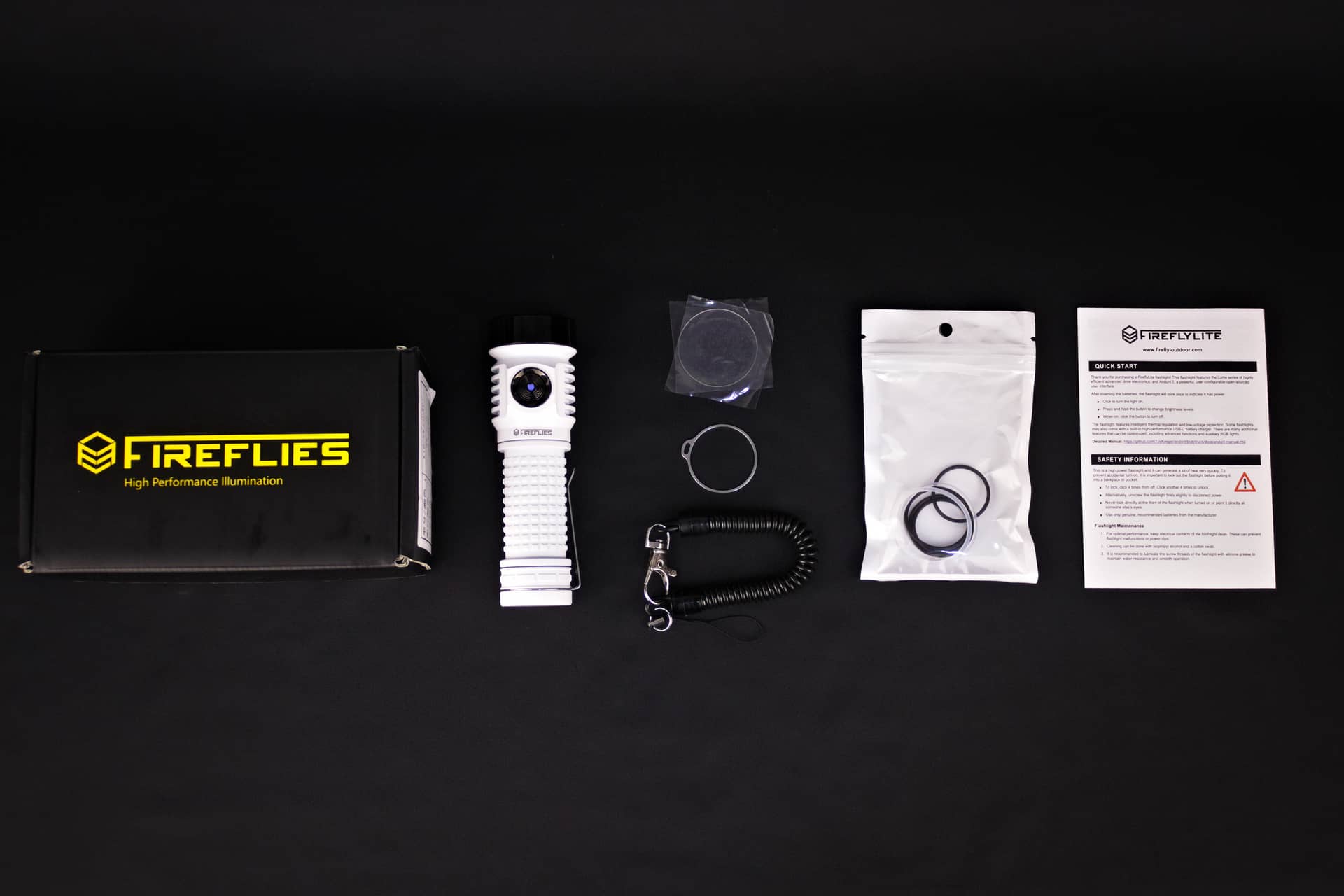
- X1S Pharos
- Stainless steel clip
- Stainless steel lanyard ring
- Plastic coil lanyard
- Extra clear lens (The Flashlight comes with a frosted lens)
- Extra O-rings
- User manual
• Body and build quality
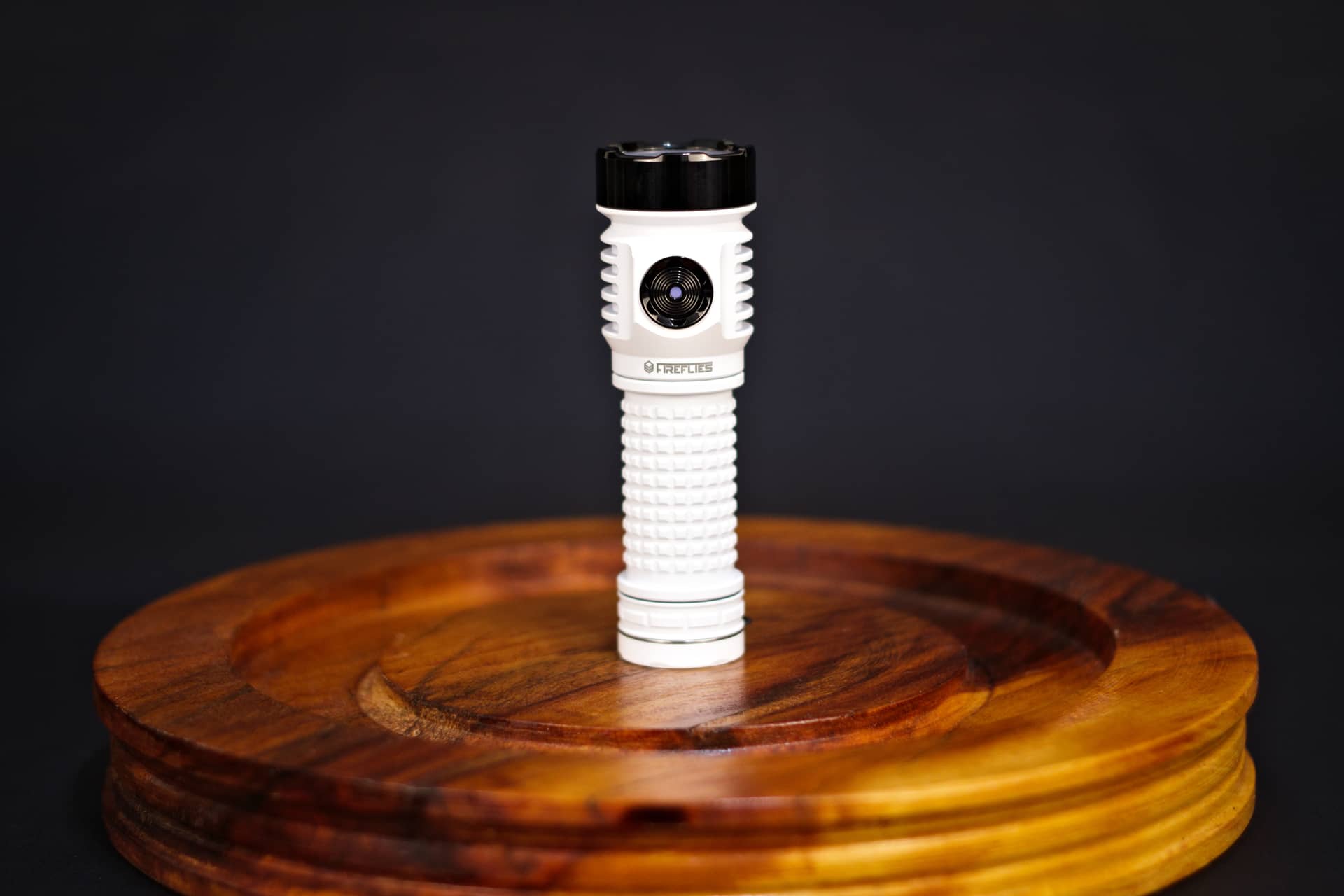
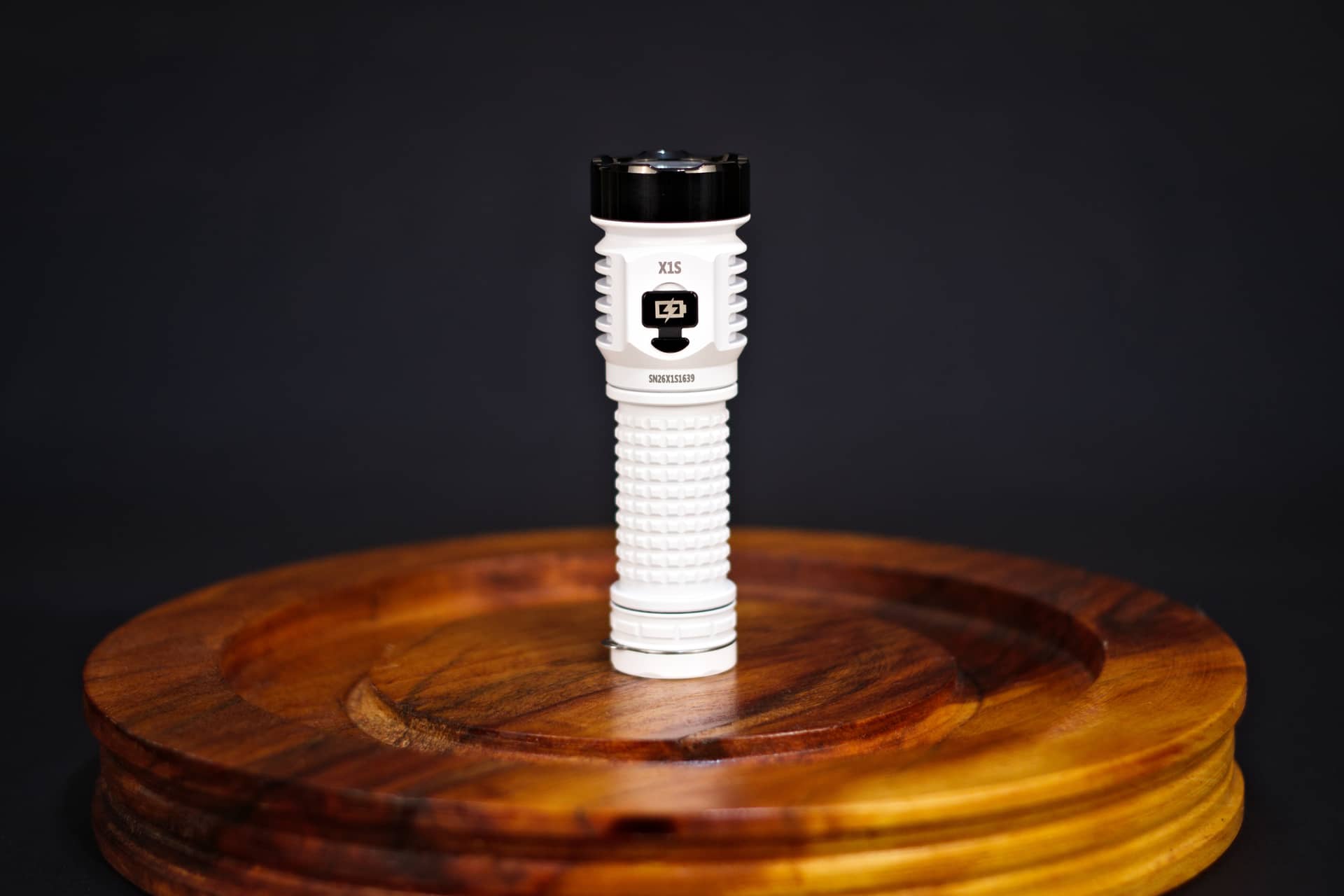

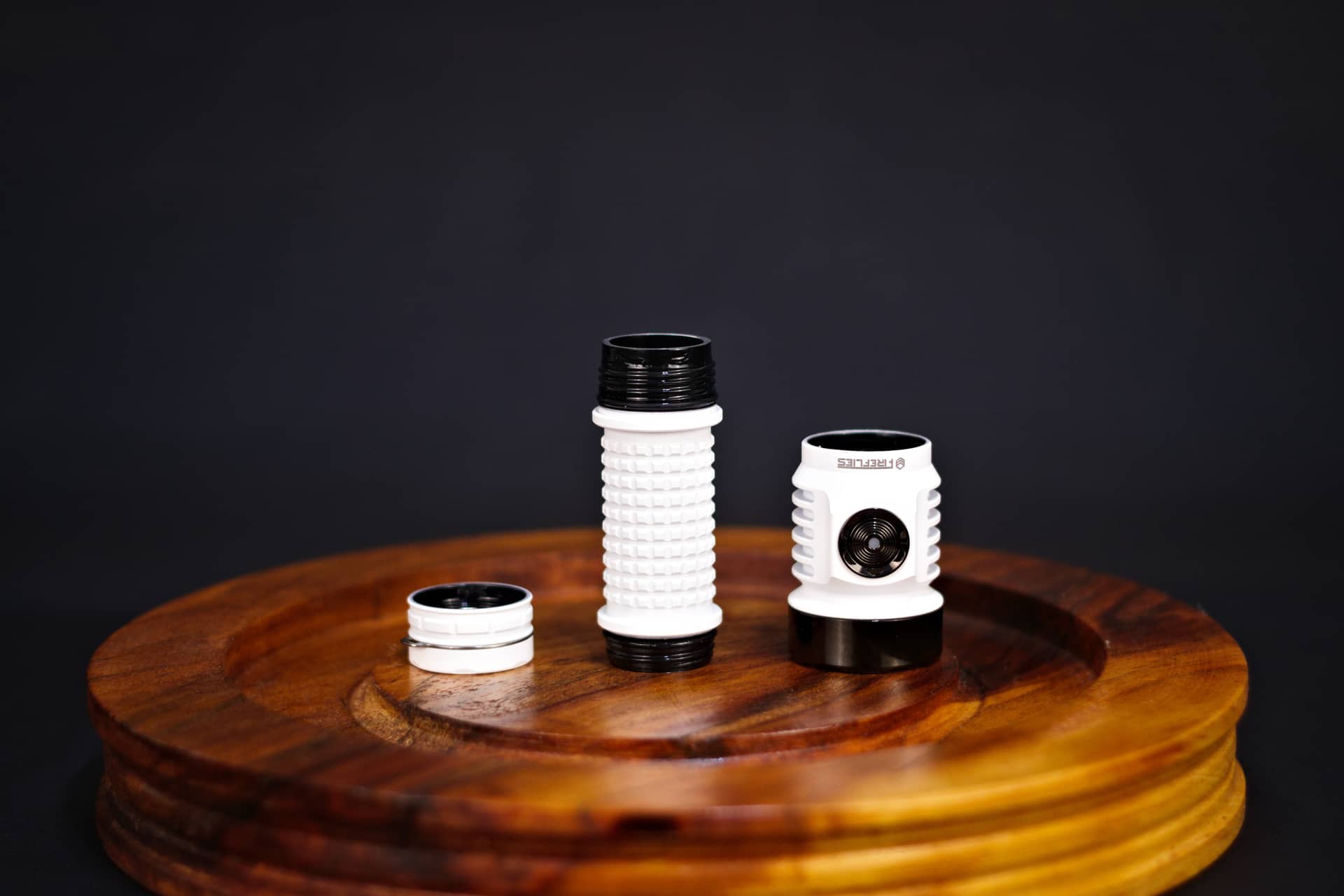
Anodizing Colors/Material Options: The X1S is only available in aluminum with 4 main body colors: Navy Blue, Matte Black HA III, Astral Aluminum and Void White (Featured on this review).
Main body/Grip: The main body has a slightly bigger size than the FireFlies X4 Stellar, using almost the same design, with squared big knurling on the battery tube, with round heat dissipation grooves on the head, one big difference from the X4 is the USB-C port on the opposite side of the button. The grip is good, probably better on the Matte black version.
Material: The flashlight main body is made of 6063-T6 aluminum with a thick (Void White) anodizing, It’s one of the best anodizings in my opinion, it almost feels like ceramic, it seems to be made by coating Black Hard anodizing type III with a White coating that is very resistant. After knowing about this I love this light even more. *I mistankenly thought it was MAO when first got it.
Threads: All threads are anodized with a black - probably type 3 - hard anodizing, for better wear resistance and smoothness when unscrewing it. The bezel and tail cap ones are trapezoidal, while the driver threads are squared. The tail cap can be a little hard to unscrew some times, as it’s very close to the magnet/clip cap and the surface is too small to get a good grip.
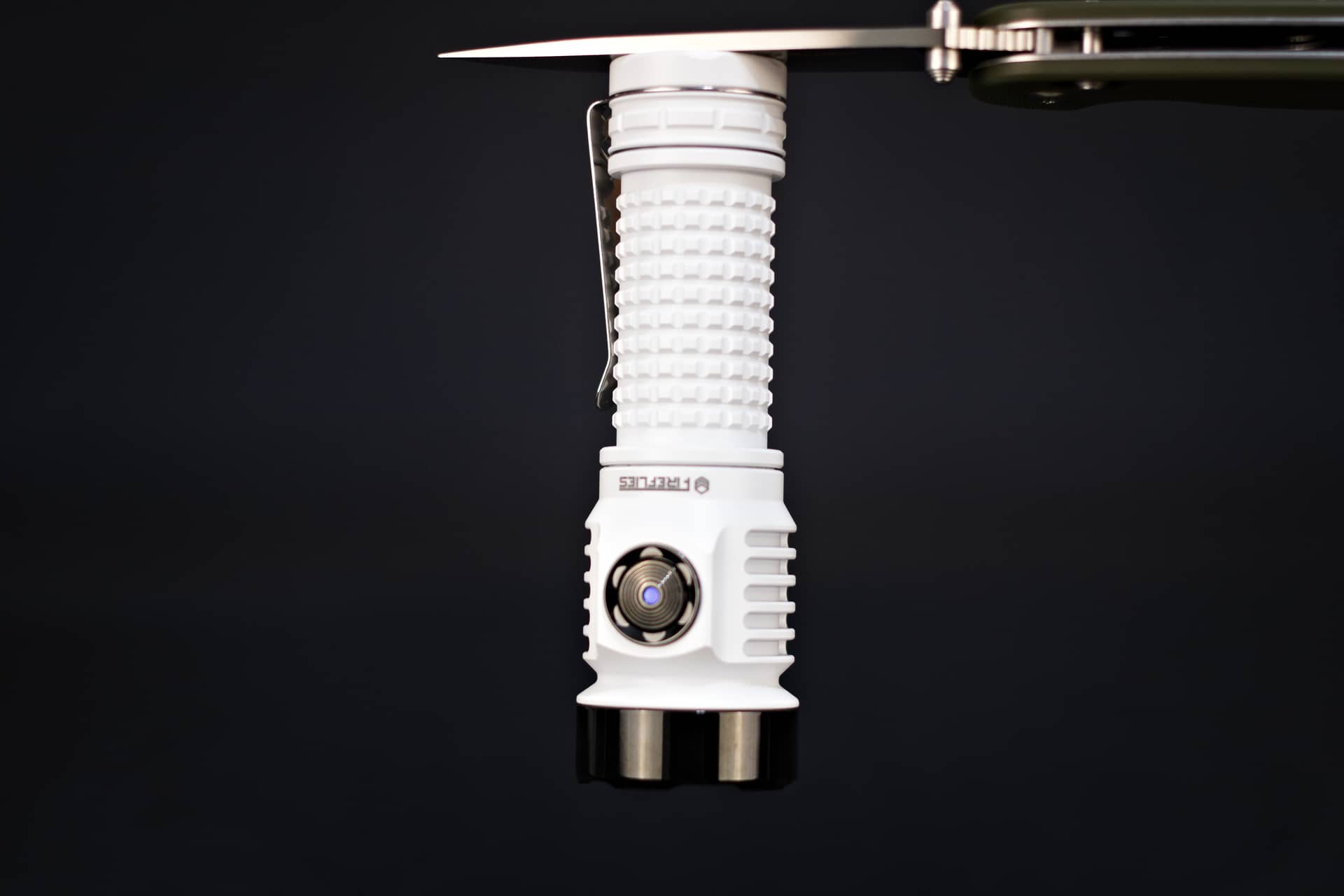
Clip: The X1S, like most Fireflies flashlights, comes with a standard Fireflies stainless steel clip. I like this standard clip, but I wish the 2-way clip was included for a more versatile use.
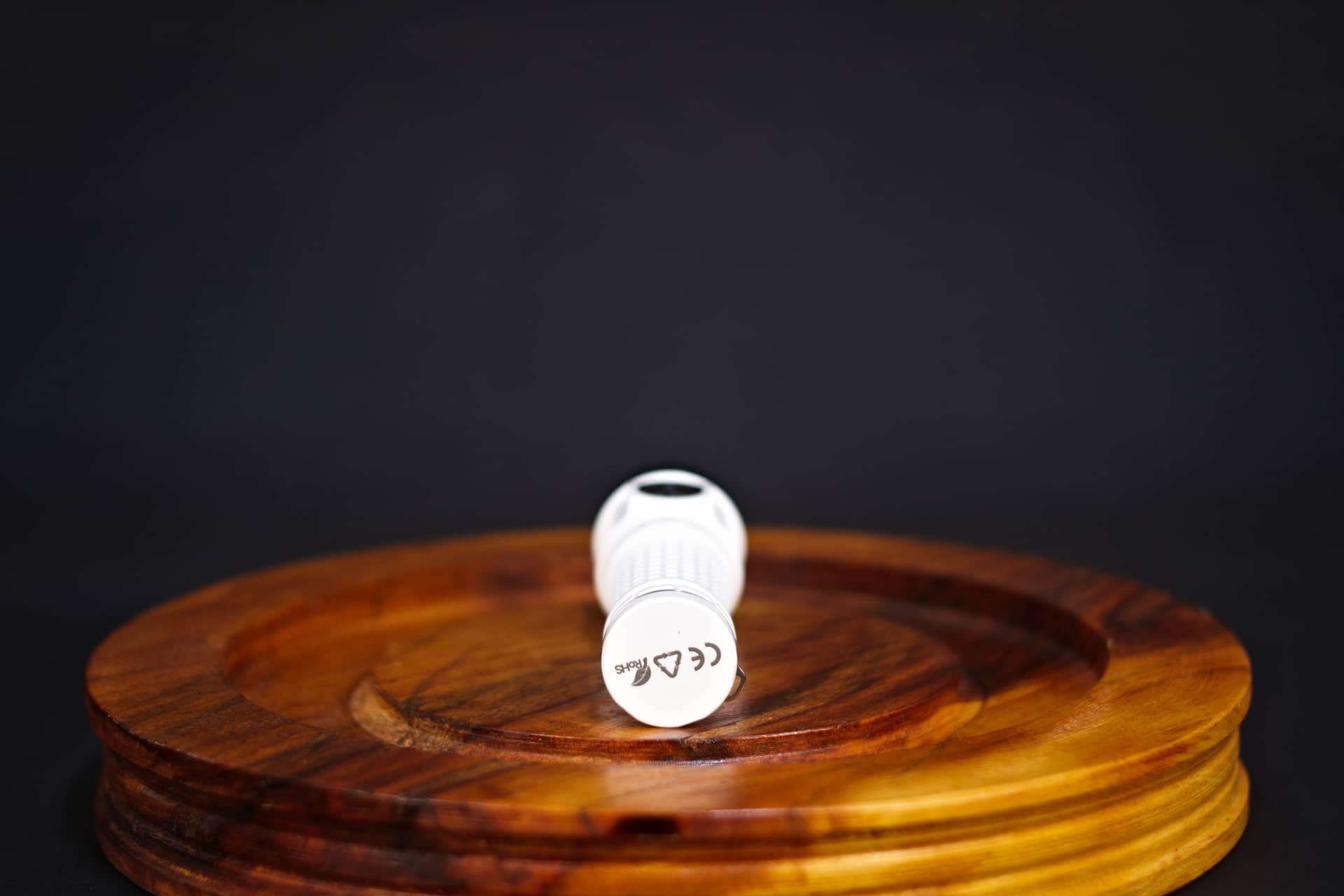
Tail stand and rolling: The flashlight can tail/head stand with stability, the flashlight has 2 bulges, one where the button is located, the other one at the USB-C, they prevent the flashlight from rolling, if the clip or lanyard ring are installed it prevents rolling even more.
Magnet: A strong N52 magnet is placed at the tail cap. The magnet is pretty strong and can hold the flashlight weight at almost any orientation if it has a thick enough metal surface.
AUX lights: The X1S features RGB Anduril AUX lights on the reflector, the light passes through a transparent centering gasket around the LED, so it’s not as bright as the TIR version, but in my opinion the brightness is almost perfect this way. The main button has a separate blue AUX that is not controlled together with the main AUX, it stays ON all the time, while the reflector one turns
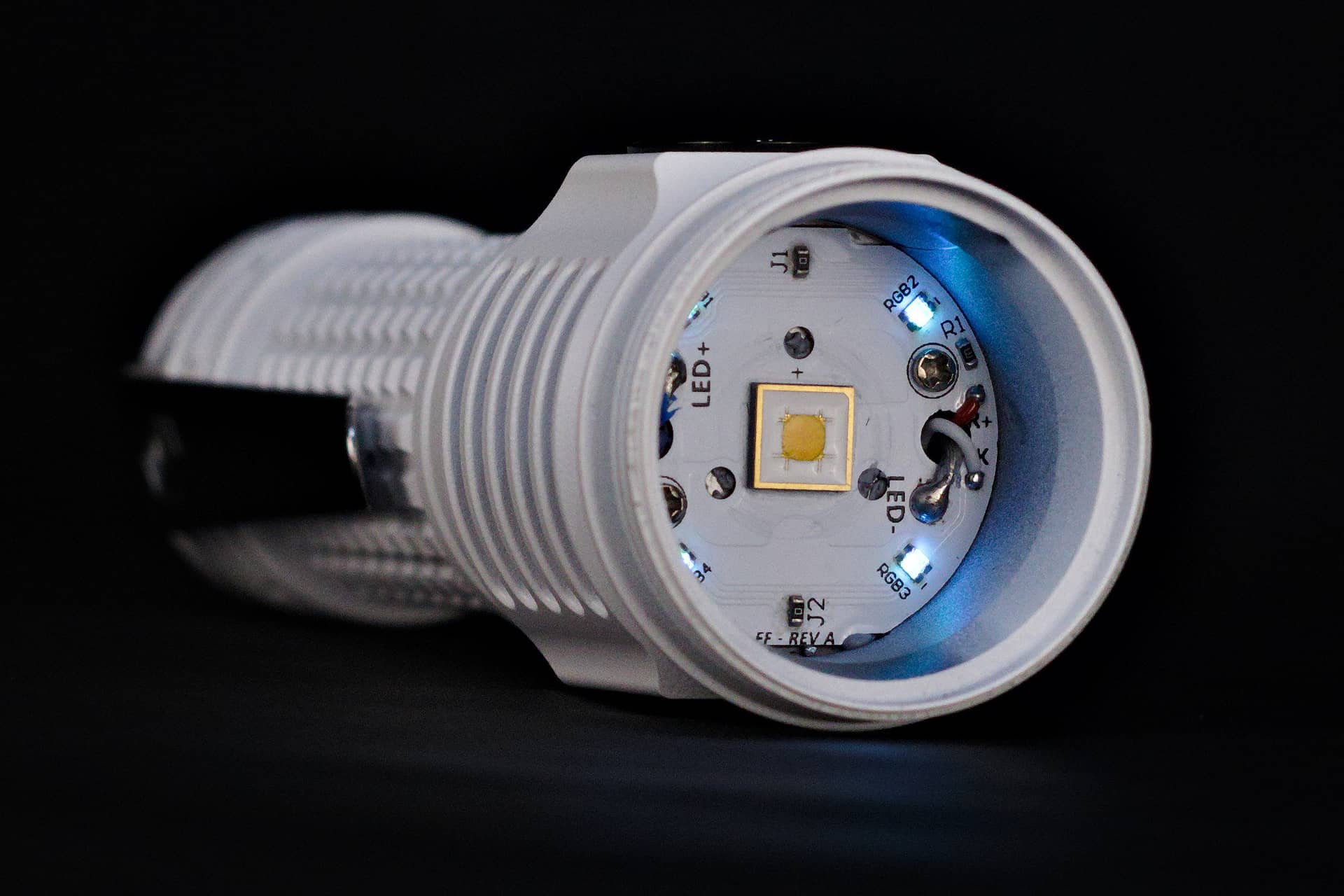
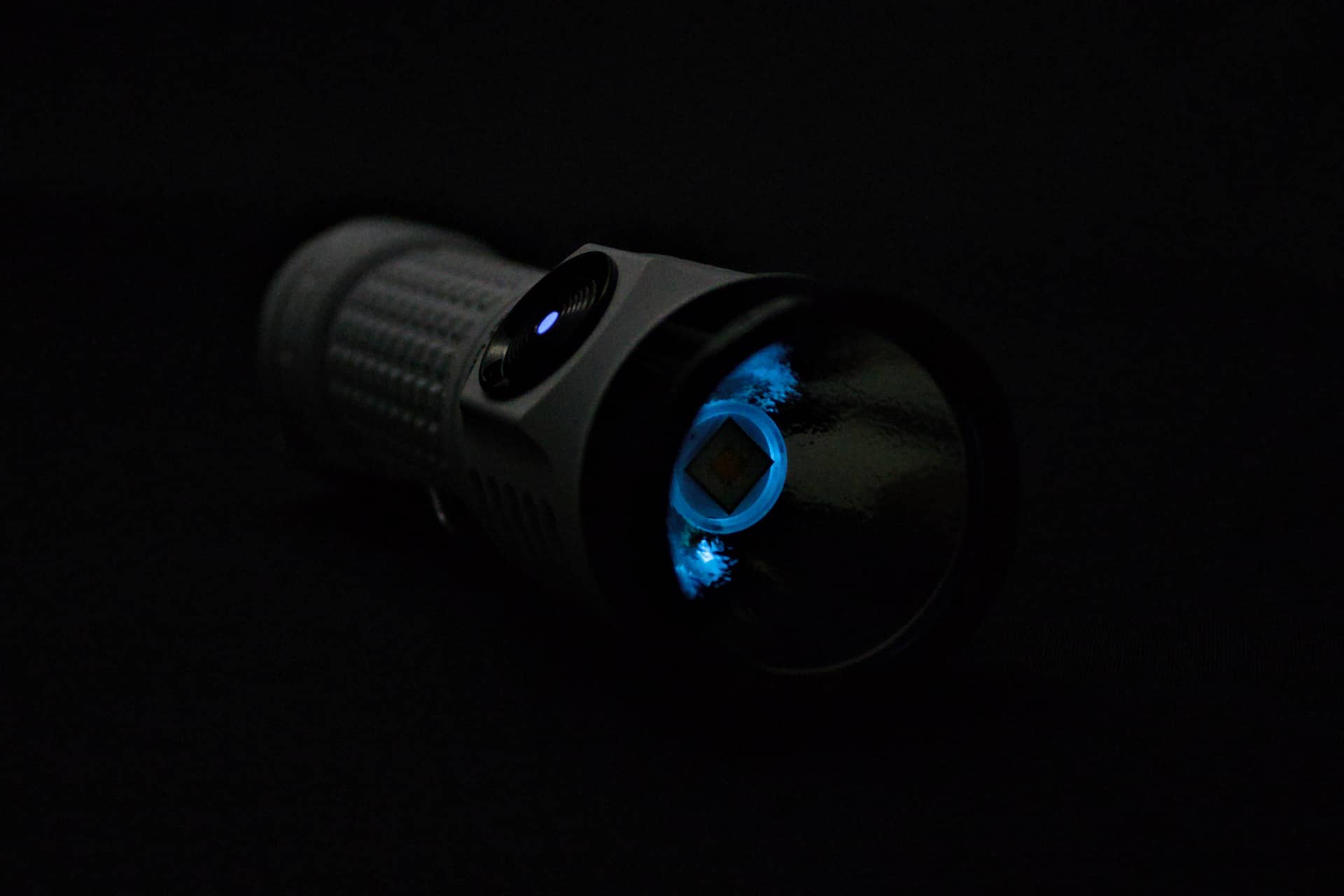
OFF when the main light is turned ON. It also has a red charging indicator together with the button AUX.
Buttons: This flashlight has a single e-switch - as most Anduril flashlights. It uses the standard Fireflies button design, a dome-shaped PVD-coated Stainless steel button protected by an outer stainless steel ring. (Comes with a standard ring and can be swapped for the even higher ring).
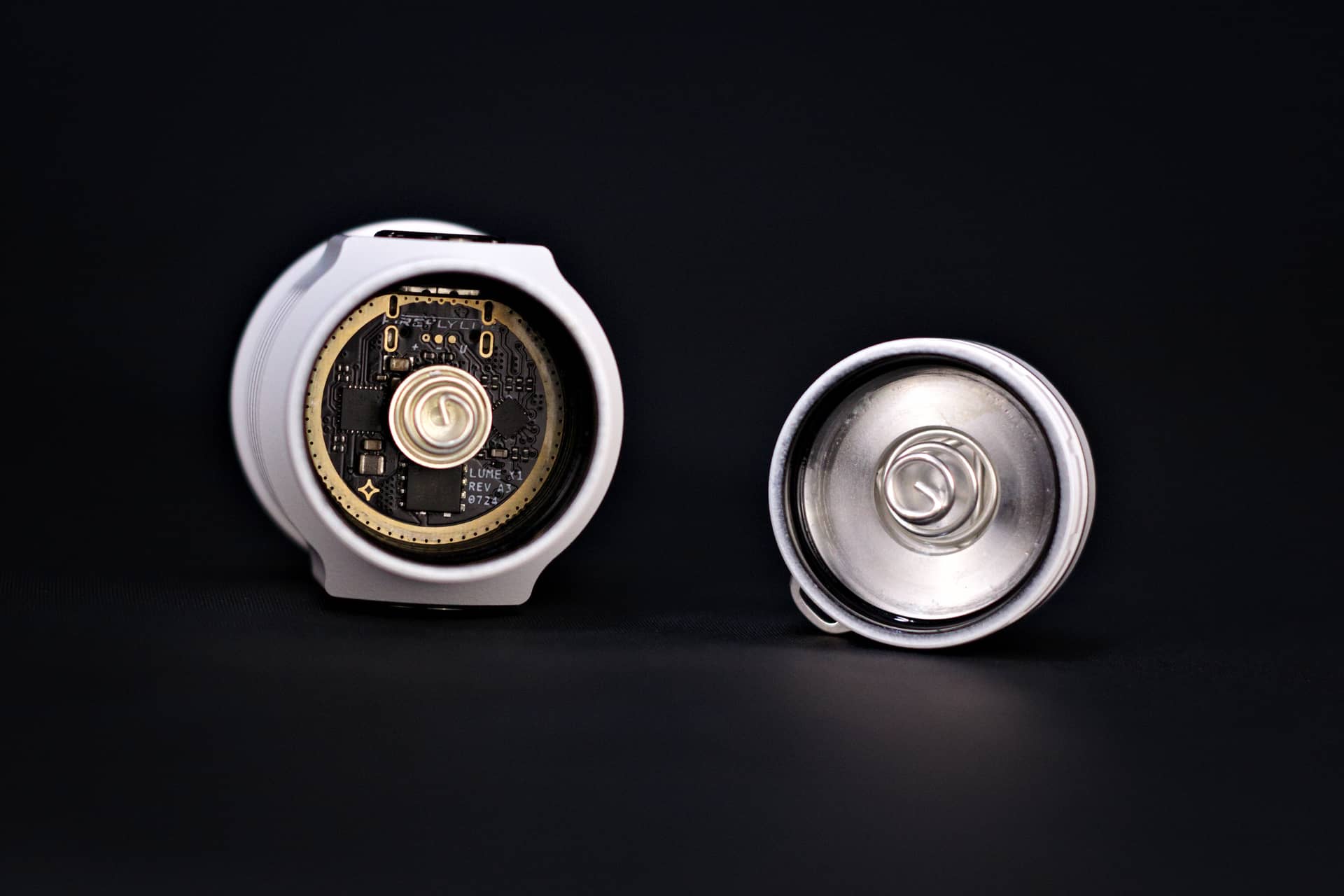
Battery contact: This flashlight has the Fireflies improved contact system. Contact is made with the battery by a Be-Cu spring on the tail cap and a a brass contact with a spring on the center, to prevent battery denting when the flashlight is dropped while also ensuring a great area of contact. All of the are Silver-coated for better electrical/thermal conductivity.
Bezel: A PVD-coated stainless steel crenelated bezel with 5 trapezoidal shapes. This PVD coating FireFlyLite uses feels very premium, I hope they make a flashlight entirely made of stainless steel with this coating on it.
Water Resistance: This flashlight has the IPX8 rating, A transparent O-ring is located on the lens, and black O-rings are located on the battery tube and tail cap. The main button is totally covered by a silicone cover under the stainless steel dome. The USB-C has a magnetic closing system I will enter in detail later, but the most important thing about it now it that the USB-C port is potted and totally water resistant even without the cover, awesome waterproofing.
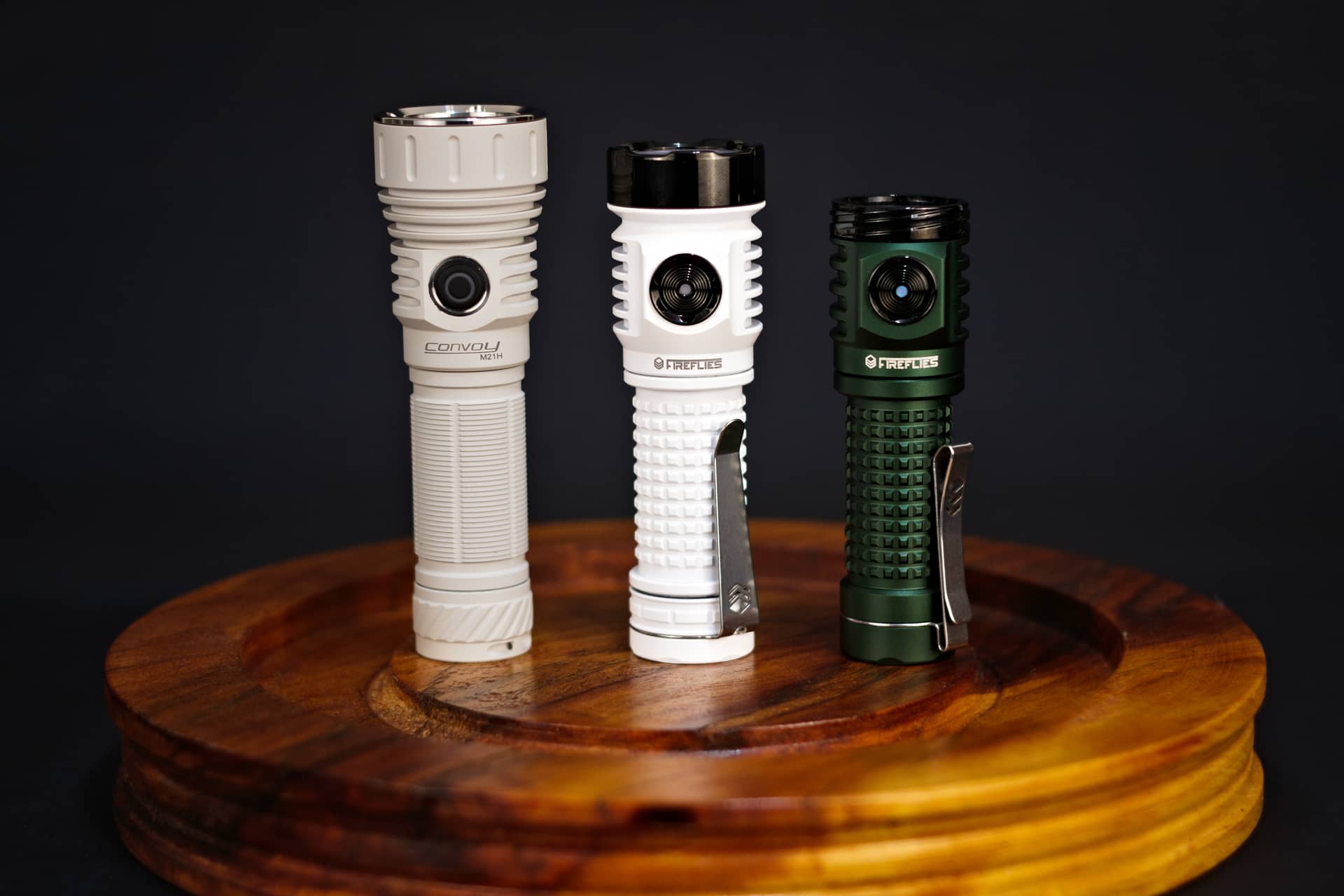
Size comparison: From left to right:
Convoy M21H (21700) - FireFlies X1S Pharos (21700) - FireFlies X4 Stellar (21700)
• Weight and size
Weight:
- With battery (Molicel P50B): 197.1g
- Without battery: 126.8g
- Battery (Molicel P50B): 70.8g
Size: 119.8mm x 36.9mm x 29.6mm - (Height x Head diamter x Tail diameter)
• Battery, runtime, and charging
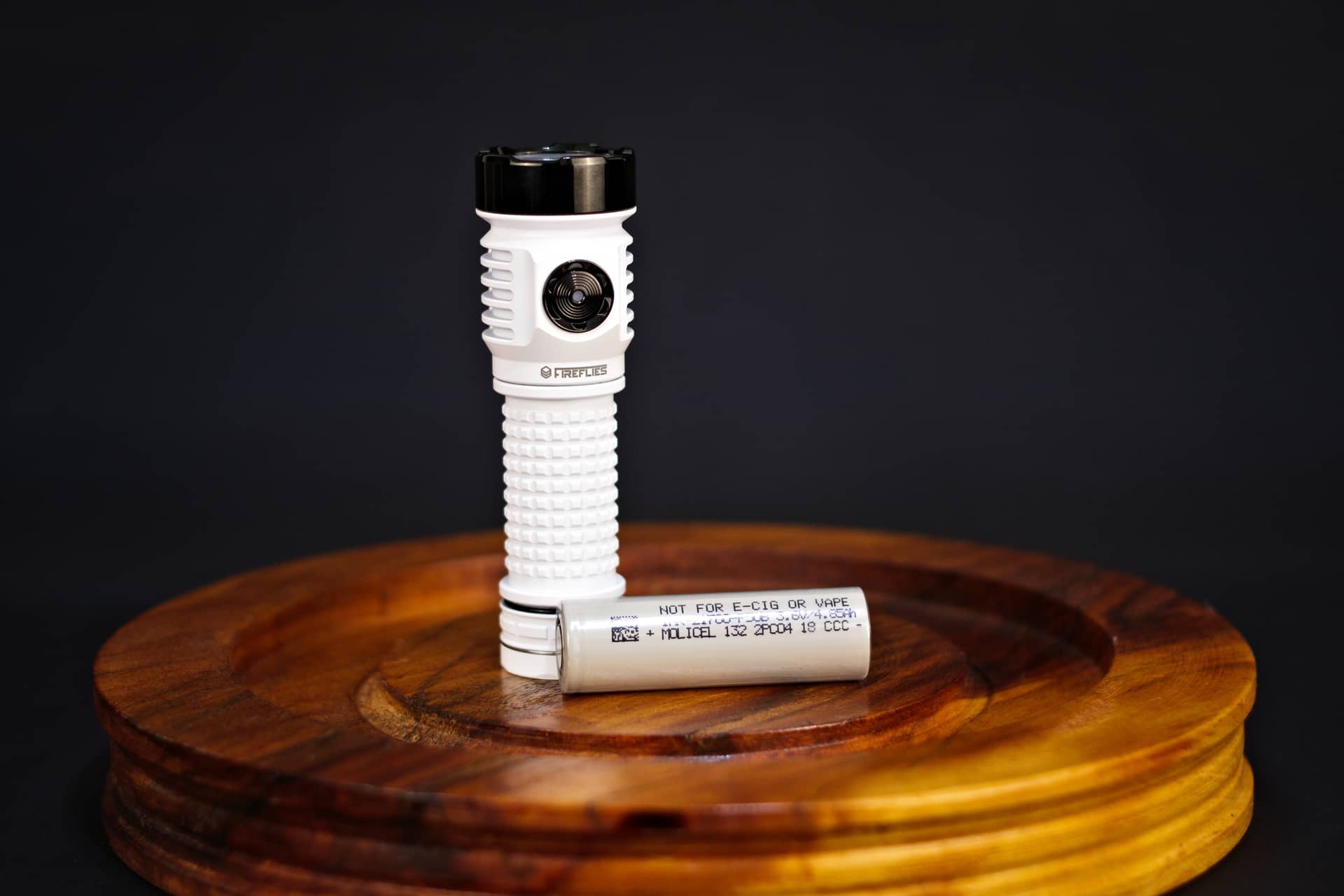
Battery: The X1S is powered by a single 21700 cell, it can use button/flat top cells, but not protected ones, they don’t fit inside the battery tube. The battery CDR is recommended to be around 15A (The driver drains around 15A on the L7 mode as I will comment later) or more as the driver has a maximum power of 40W. High drain cells are recommended.
Battery Indicator: RGB battery indicator is featured on the X1S by the AUX on the reflector. It also has battery check mode on Anduril, where the main light blinks a number of times corresponding to the battery voltage. Pretty awesome feature, as usual on FireFlies flashlights.
Powerbank/Reverse charging: This flashlight has powerbank feature though not much advertised as it is a little complicated to work, and doesn’t work everytime. I was able to charge my phone using the X1S and a USB-C to C cable. To enter the powerbank mode you need to enter Momentary mode first by clicking the main button 5 times while the flashlight is ON. After this you can connect the USB-C cable to the desired device and it should start recharging it.
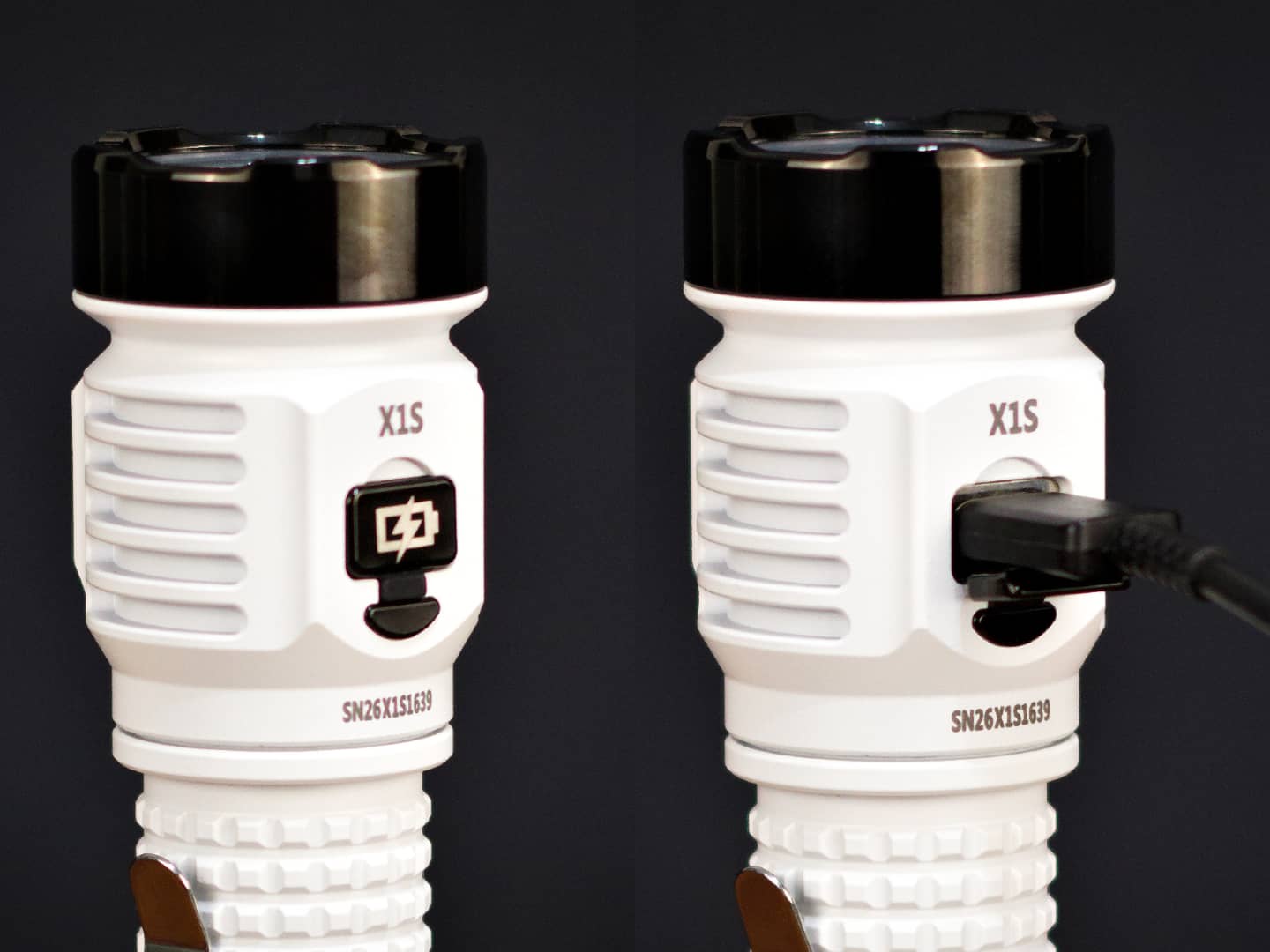
Charging: Charging is rated as 10W for fast charging; if the cell is below 3V or near full it will start the charging with 100mA only, to preserve the battery and guarantee a longer life span; also if the flashlight is charging for more than 10 hours it will automatically stop the charging to avoid damage. The main button AUX LED will light up red when charging and turn OFF when the charge is complete. It has a patented magnetic cover system, where the magnetic cover closes automatically when a cable is disconnected, making charging it very easy and also protecting the USB-C port - which is fully potted to prevent water ingress.
• Modes, Runtimes, Throw, Candela
Modes: The X1S comes with 7 pre-configured brightness levels, I will call them L1 to L7. L1 level is the Floor level, basically moonlight, it’s pretty dim and probably very close to 0.1 lumen, from L2 and up the levels will increase brightness until the Ceiling level, which is L6. L7 can be only accssed by double clicking and holding when the flashlight is OFF (momentary) or going to L6 and double clicking. I usually like very much the FireFlies spacing on the preset levels, and this one is no different, I usually use L3 mode the most, as it isn’t too bright or dim, perfect for most uses in my opinion.
Specs:
| Level | Brightness (Advertised Lumens) | Current( (At tail cap - Molicel P50B 4.06V) | Throw (Advertised Meters) |
|---|---|---|---|
| L1 | 0.1 | 4.48mA | - |
| L2 | - | 17.52mA | - |
| L3 | - | 124.8mA | - |
| L4 | - | 590mA | - |
| L5 | - | 1.81A | - |
| L6 | - | 4.94A | - |
| L7 | 3200 | 14.87A | 480m |
Turbo: L6 may be considered as the Ceiling level, as it can be accessed by cycling throw the levels, while L7 is the most powerful, being accssed by double clicking the main button while you are already on L6 (Or momentary but double clicking and holding the button while the flashlight is OFF). The L7 gets hot pretty fast, but also provides more light than the L6. I think they aren’t as powerful as advertised, probably due to the LED being high CRI, can be a batch issue too.
Moonlight: The moonlight - or Firefly mode - is also pretty good on this flashlight, as usual with FireFlies. It comes preset with a very dim, around 0.1 lumen brightness, but you can adjust it to your liking on the UI. FireFlies makes one of the best moonlight modes ever, I really recommend trying it if moonlight is useful for you.
Blinkies: One of the coolest things about Anduril is it´s blinkies modes, I really love the “Candle mode” and the “Lightning” one. You have some fun blinking modes, and others like tactical strobe to choose from.
Lockout: It features electronic lockout on the Anduril 2 UI, by clicking the button 4 times the flashlight will lock and only moonlight will be available for use; and also, mechanical lockout by slightly untwisting the head or tail cap, as all threads are anodized.
Throw: The X1S is advertided to throw to about 480m with the FFL707MD in 4200K, throwier than the FireFlies I have reviewed before, but it isn’t that super narrow beam that’s not useful from up close, instead it has a very balanced beam with a strong hotspot with high candela, while also having a ton of spill.
• Emitter, reflector and CRI
Emitter: This X1S is equipped with the new FFL707MD 4200K LED, it’s a 7070 high CRI LED made by Hopthink. The tint is pretty neutral, with a very slightly pink tint, almost none. Looks pretty similar to the SFT70 4000K.
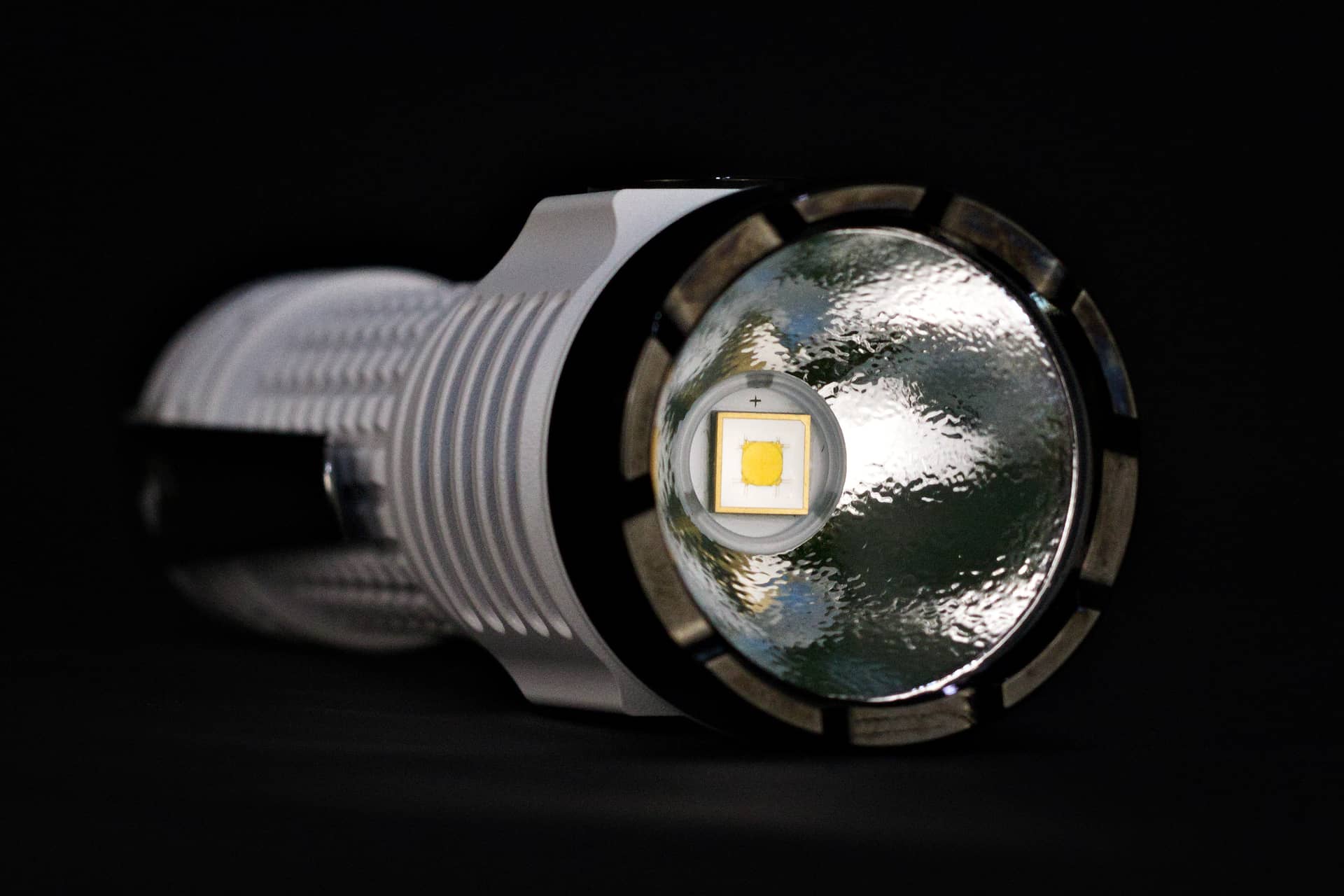
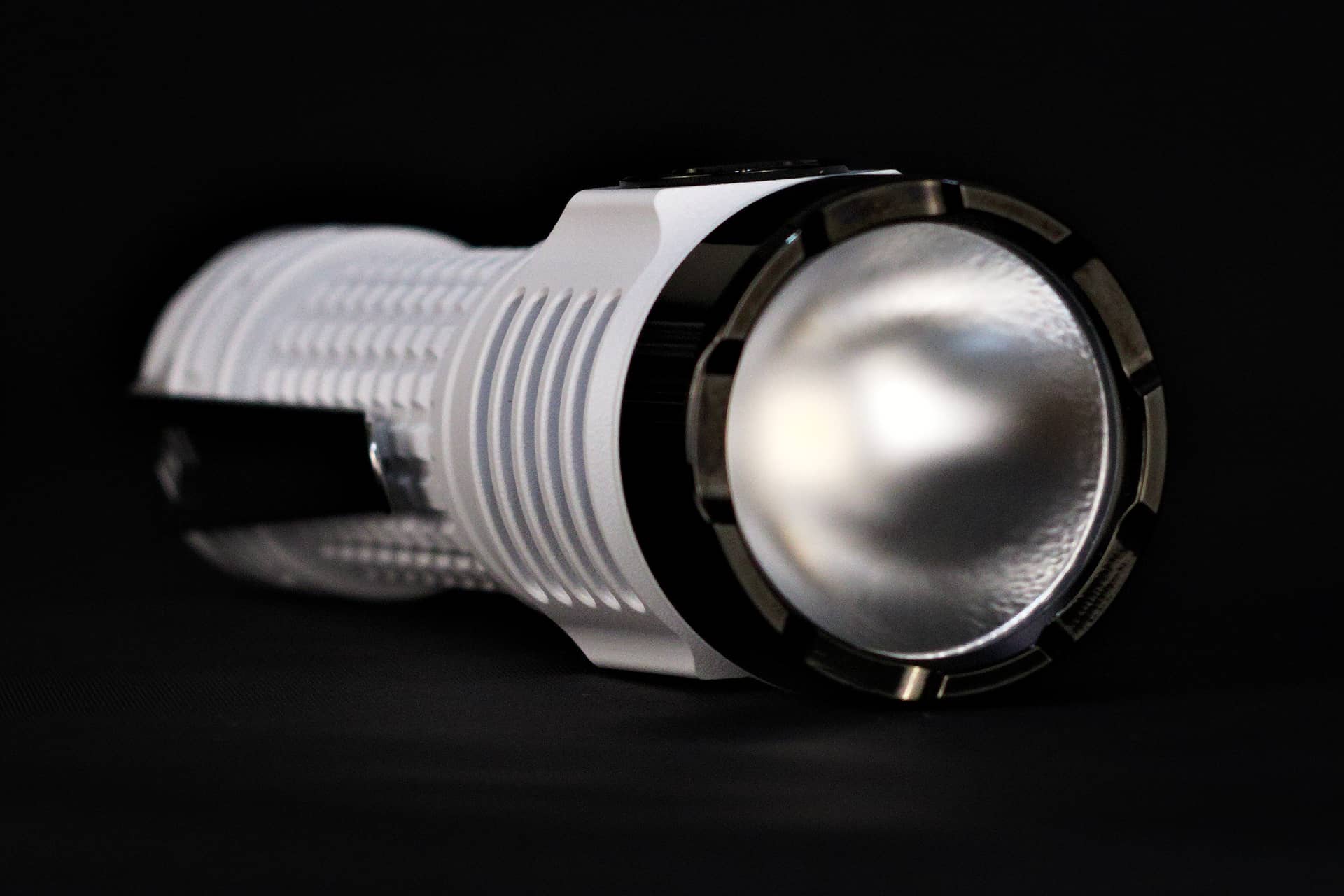
Lens: It has 2 options of glass lens to be used in front of the reflector, it comes pre-installed with the frosted lens and a clear one is included on the package. I, personally, prefer the clear one, it makes some small artifacts noticeable, but improves throw significantly.
Reflector/TIR: A OP (Orange Peel) reflector is present on the X1S Pharos.
Beam profile: The beam have a throwy pattern, especially with the clear TIR, the hotspot has a diffused transition from the spill with both glass lenses, but the clear one has more throw and a little of artifacts, while the frosted one eliminates artifacts while making the beam more diffused.


** PWM:** No PWM at all, the light is totally free of PWM on all modes as the driver is fully regulated and constant current. No PWM on Opple LM4.
CCT-CRI-DUV: The advertised CCT is 4200K, CRI 98. My measurements were close to that, the CCT was a little lower than expected, getting about 3800K to 3900K on lower modes, and 4000K on the higher ones. CRI was amazing as expected, around 95 CRI with 90 R9 and 97 R13, pretty awesome results. The Duv and tint were pretty neutral, about 0.0006 Duv, I wish it had a slightly more pinkish tint, but it’s pretty good, looking close to my SFT70 4000K 90 CRI.
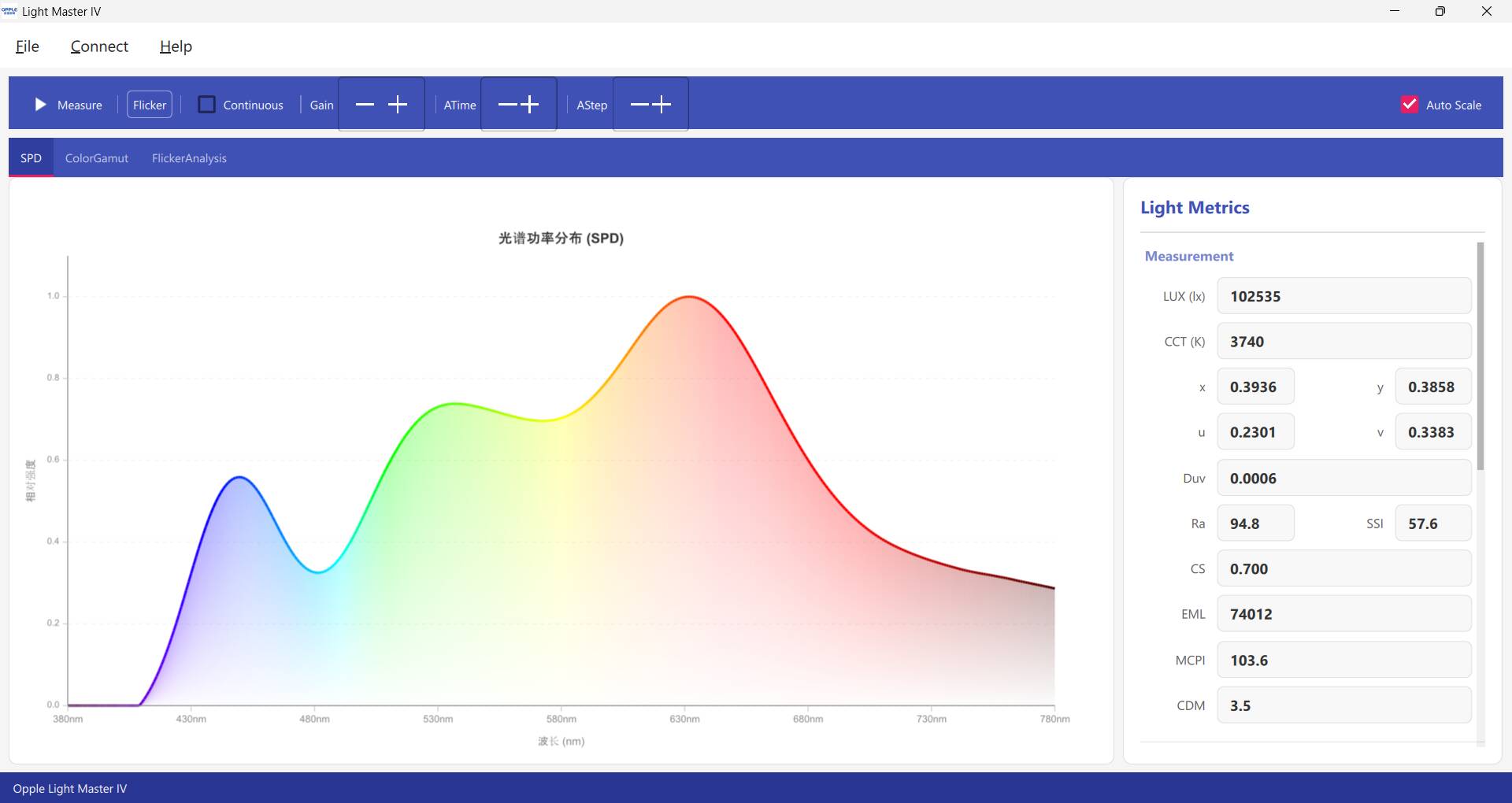
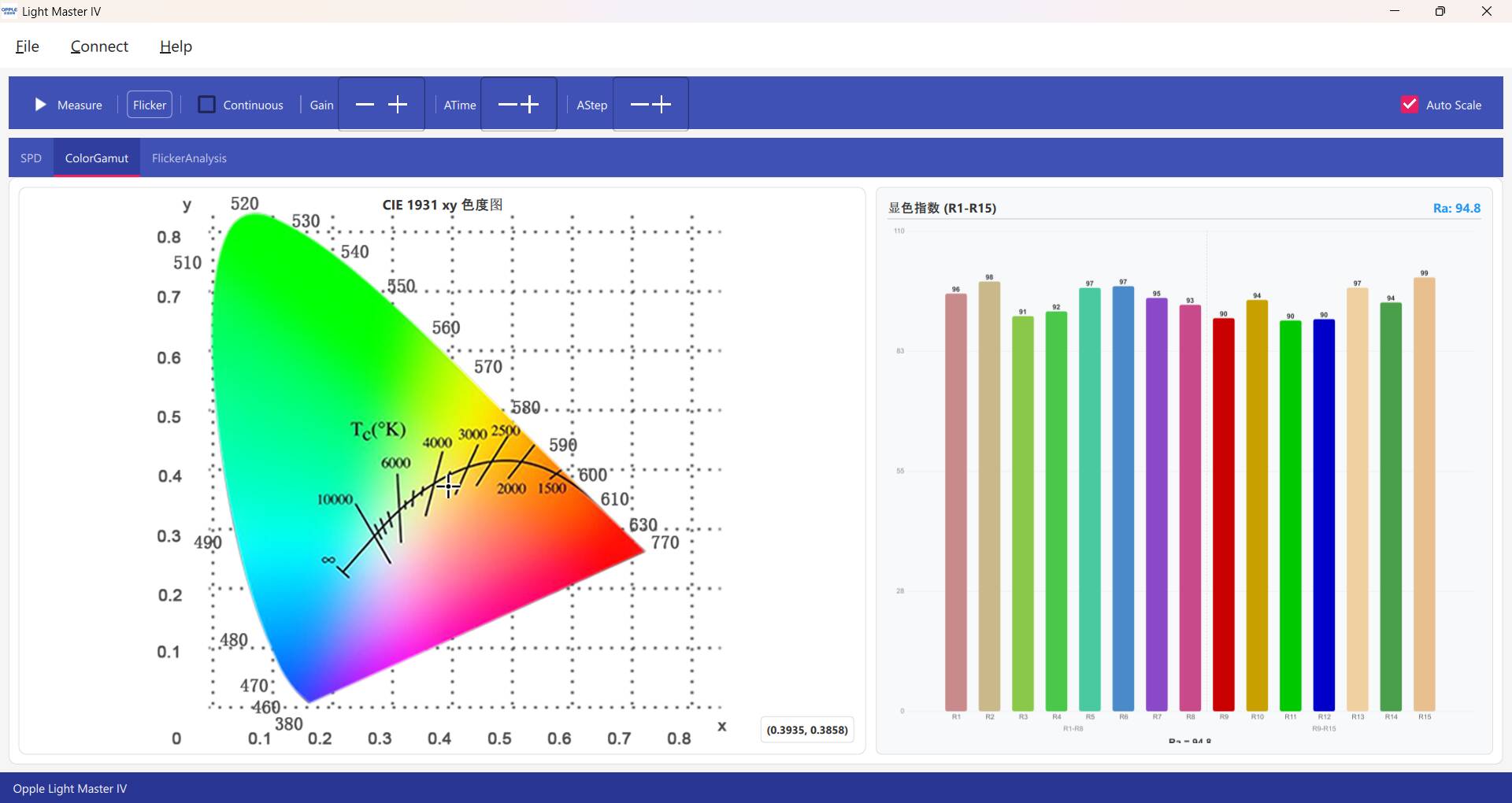
*All measurements were taken with an Opple Light Master 4 using the Opple app for Windows made by Steve Chang.
• Driver and UI
Driver: The X1S is equipped with the praised 40W Lume X1 constant current regulated driver. This driver is one of the top tier drivers out there. Featuring UDR (Ultra Dynamic Range) making it able to adjust the brightness to a super low (sub-lumen brightness) or high setting while being very efficient (95% efficiency).
UI: This flashlight uses the Anduril 2.0 UI, a very versatile and customizable UI focused on enthusiasts, but it also has a simple mode to beginners. You can find more about it on the Anduril Official GitHub.
Low Voltage Protection/Warning: The battery indicator will turn red and the main light will flash when the battery level is too low.
Reverse Polarity Protection: This flashlight has reverse polarity protection so you will not damage the flashlight easily by inserting the battery the wrong way.
Temperature Control: It has dynamic temperature control, by default when it reaches 45°C (113°F) it will lower the brightness to prevent driver and LED damage, when the flashlight cools down the driver will allow the flashlight to increase the brightness again. This can be changed on the Anduril UI, but be careful not to damage your flashlight by setting the stepdown temperature too high.
Thank you for reading my review <3
A special thanks to Ivy and FireFlyOutdoor for sending this flashlight for me to review!
*I am not being paid to do this review, everything here is my honest opinion.
**Some links may be affiliate links, this doesn’t impact on my opinion for the reviews. You can support me by using the links to buy flashlights you like.