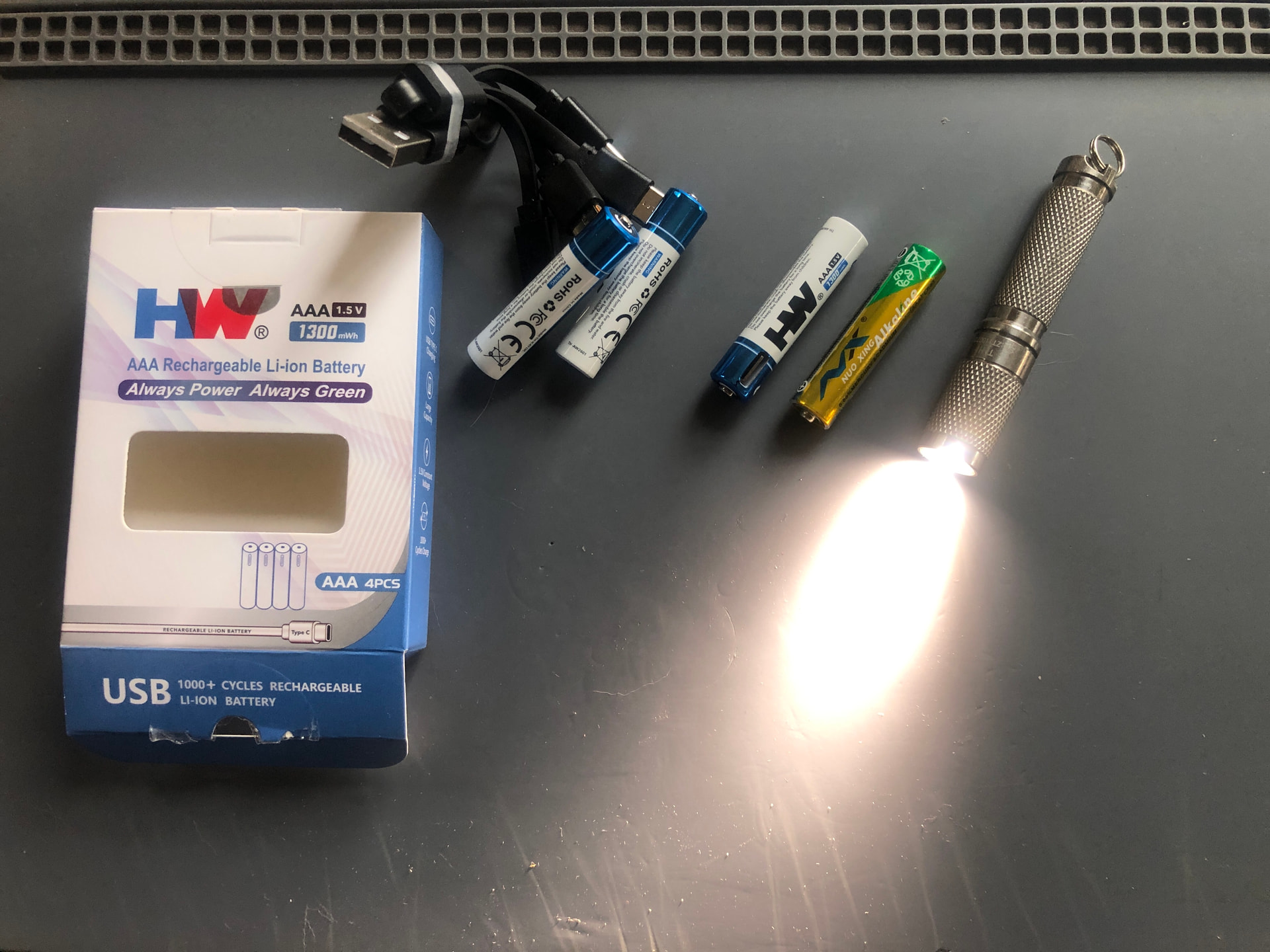
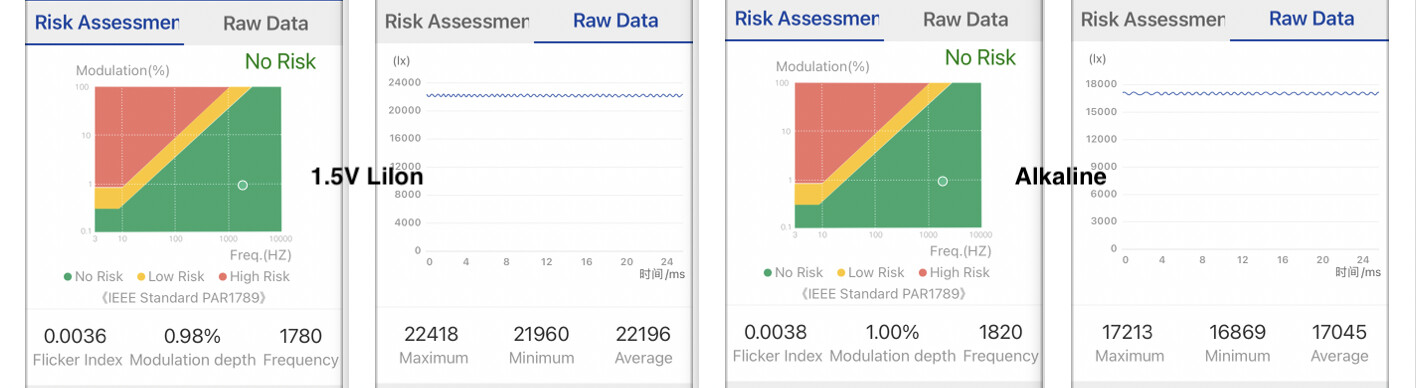
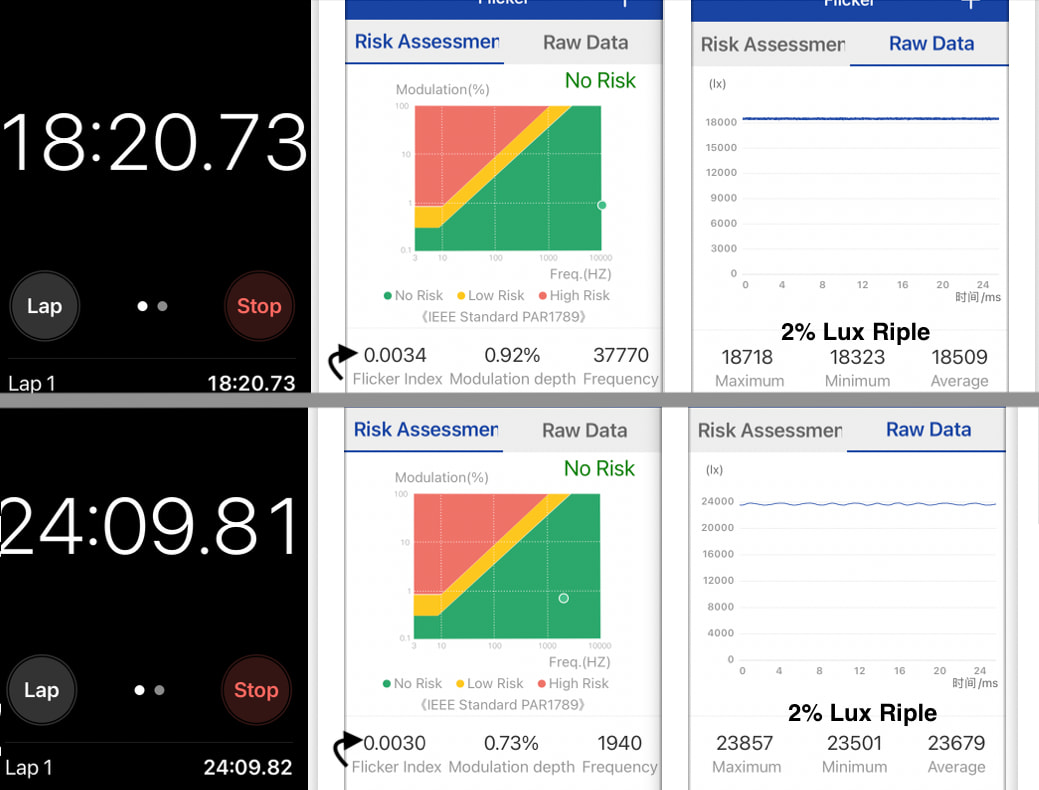
I have not done any runtime testing.. but my first concerns are satisfied.. No difference in Flicker Index, no audible sound from the 1.5V LiIon, and it does not trip protection.
Im very happy.. The 1.5V LiIon cost me a little less than some Eneloops, which dont have the convenience of USB-C charging.
Eneloops give a low battery warning in my DMM.. I plan to use these 1.5V LiIon in that device instead. This will free up a couple of AAA Eneloops for use in my other AAA flashlights.
I did this test with the 1.5V LiIon fresh out of the box. It measured 1.5V on my DMM. I dont know what the underlying LiIon charge level was. I put all the batteries on charge after the initial test and the indicator light is flashing, to indicate they are charging. The instructions say the light will go constant on when charging is done.
I would imagine the underlying LiIon shipped at half charge, as is normal for LiIon. I dont presently own a charger that can charge this chemistry, so the USB is important to me.. a new charger would cost me $32.. Im avoiding that expense. I find USB very convenient.
The 1.5V LiIon is the same physical length as the Alkaline, so no issues with fitting them into a device.
Im also happy that the 1.5V LiIon work without issue in my AAA flashlight.. Its good to have choices
This is my first foray into 1.5V LiIon and my initial impressions are Very Good.
One of my favorite things about these 1.5v LiIon is that they effectively turn all AA lights into regulated ones. Maybe we don’t need a buck driver in our light if we have one in the battery!
The challenges around external battery chargers is annoying though for sure. I have the new Olight Ostation 2 and it will only charge Olights own 1.5v batteries.
Usb-c in the battery circuit board solves that but I have a hard time believing one of these will survive 1,000 charges as advertised. I think even getting 100 charges out of a $5 battery is pretty good though.
The AAA is a very small can that needs the battery chemistry, + voltage conversion+BMS+USB charge electronics inside. This causes a probable low capacity. I don’t have HW AAA, but I do have 5 other USB AAA. None exceed 400mAh. The lousy ones are 200mAh. The average is 300-350mAh. I’d consider this to be reasonable expectation until actually tested. NEVER believe the marketing without proof.
There is a LOT of difference in quality. This shows up in the capacity, the current support, and the self discharge.
The ‘marketing claims’ are always exaggerated, to grossly exaggerated. I seriously doubt the 1000 charge life span. There is essentially no information about that out yet.
Self discharge is also all over the place-another variable it’s very difficult to impossible to get any real data on. Tests on some AA I have seen ranges from quite good, to pretty awful (old NiCad range).
Anyone trying this chemistry, especially in the AAA size, should consider themselves a beta tester.
Getting ‘real’ results like this is valuable.
Note-Voltage conversion does make electronic noise. That can be an issue with some products.
They generally cut off abruptly. There are a few makes that do have a voltage step down in AA size. I have not seen this in AAA. Often that is never noted on the product specs. I have only seen that on Xtar, a superior product but quite expensive.
but imo, the inability to check voltage of 1.5V LiIon is less convenient than Eneloop or LiIon, for my flashlight use.
My best use for these AAA 1.5V LiIon is in other devices than flashlights.. such as my heater thermostat and my DMM, which complains about lower Eneloop voltage.
Yeah. The point for me is that I keep cells in lights that are used infrequently, but occasionally, for months. Even with the eneloops, I need to remind myself to charge them occasionally. With the 1.5V LiIon cells, I just have to do that more often. One more thing to have to remember to do. by comparison I have lights with mechanical switches that have full LiIon cells in them for two plus years and the SOC is fine. Just one less thing to worry about.
I have a bunch of them now and have been trying them ins different application. For instance, wall clocks. I am happy that at least they will last between time changes. Which is when I would swap cells anyway. I got some AAAs and am doing a runtime test using them in the remote sensors for my weather station. I have had to use energizer ultimate cells in them. Thye don’t like NiMH cell. Regular alkalines die every couple of months. So far, no issues with RF noise. If I get decent replacement intervals out of these, it will save me a bunch of money.
Each unit take 4 cells and there are 4 of them. It is quite a financial hit when I need to Change them all out.
I think the 1.5 Liion cells definitely have a place. I just hope they continue to work to decrease the self discharge rate. They have already eliminated my concerns about capacity versus NiMH cells.
The RF noise produced is at higher frequencies than what you can measure in a flicker test.
So for flashlights it should not show up there. The effect that I have noticed is in clock (so called Atomic clocks) that sync time using RF. Also a couple of remotes that use Bluetooth. I think Lightbringer had a device where they interfered with the operation of one of his devices where he couldn’t use the buttons anymore. Meaning the noise, whether it was RF or just the voltage ripple produced by the converter actually crippled the electronics of the device itself.
But you are talking about using them in flashlights. At least in the one unit that you tested none of this was a problem. Which is great for your application, but doesn’t eliminate the potential for problems with other lights or devices.
BTW, I just put a pair of Xtar AAAs in a BT remote for my Nvidia Shield. So far they are working fine. I am tracking the change out interval. But this remote worked fine on Eneloops… so.