An adjustable power supply is a must-have for testing LEDs. Also a proper setup for measuring spectra and flux.
A reflow hotplate (or soldering iron with flat tip and much experience) is also necessary, and the reflow temperature diagram stated in datasheet which has to be followed as good as possible.
These Moonleds emitters are extremely sensitive to heat and overcurrent.
I built a triple with the 6000 K ones and had no defect. Also two 5000 ones are perfectly fine. I never got any defect.
I reflowed the Emitter onto a used 20mm MCPCB before sending it to Wolfgirl.
I didn’t have any issues with the reflow.
This one was a dud I guess, Sorry about that @wolfgirl42
Then it could be still massive overcurrenting. The dark spot in the middle of the LES is a very clear sign for this. The dark spot emerges if the LES gots too high, the phosphor is burned away.
Since I had three runs with this LED I never experienced any problems until I cranked up the current above max safe levels for more than few seconds (around 1.8 to 2 A). And the obviously wrong values from spectrometer (185000 K) even for the blue tint in the pics are also a problem.
Is the LED in the pic the sample for wolfgirl? If so, I cannot see any defect or other strange things on this sample. (Aside from scratching on MCPCB )
Yes, that is the LED I sent Wolfgirl.
I removed the Nichia 219B 4500K from that MCPCB a while back for a different light and it was the only 20mm 3535 MCPCB I had.
The scratch on the MCPCB was there already.
There was no dark spot? (There is no spot visible so I don’t think this defect was present while you are reflowing the LED)
I am pretty sure this LED was fried due to massive overcurrent. 1.1 Amp driver is fine, but since I even push the LEDs in my triple with more than 1.2 A (total around 3.6 Amp or so) they are able to withstand more than that.
That makes sense, although I’m not sure how it happened - there is a sort of ring around the middle of the emitter where the phosphor looks like it is damaged in some way, and when the LED is on, there is no light being emitted from the middle spot at all. I wonder if the phosphor separated somehow, perhaps due to an impact during shipping or something, although I’m not sure exactly how it could have happened as it was definitely packed well. I don’t think I heated the board excessively when I connected the driver, I didn’t bring the iron into contact with the pad for more than about half a second.
Whatever happened, I might put in an order for some more and put another one together, I definitely want to get the data after this disappointment, feeling a bit bad as so far every light I’ve put together except this one was successful.
I didn’t touch the dome, I used the standard ESD precautions I would for any electronics, but will definitely admit I’m still new to assembling lights.
Finally got all the data together and did some proper testing. Sorry for the constant delays, had a lot going on.
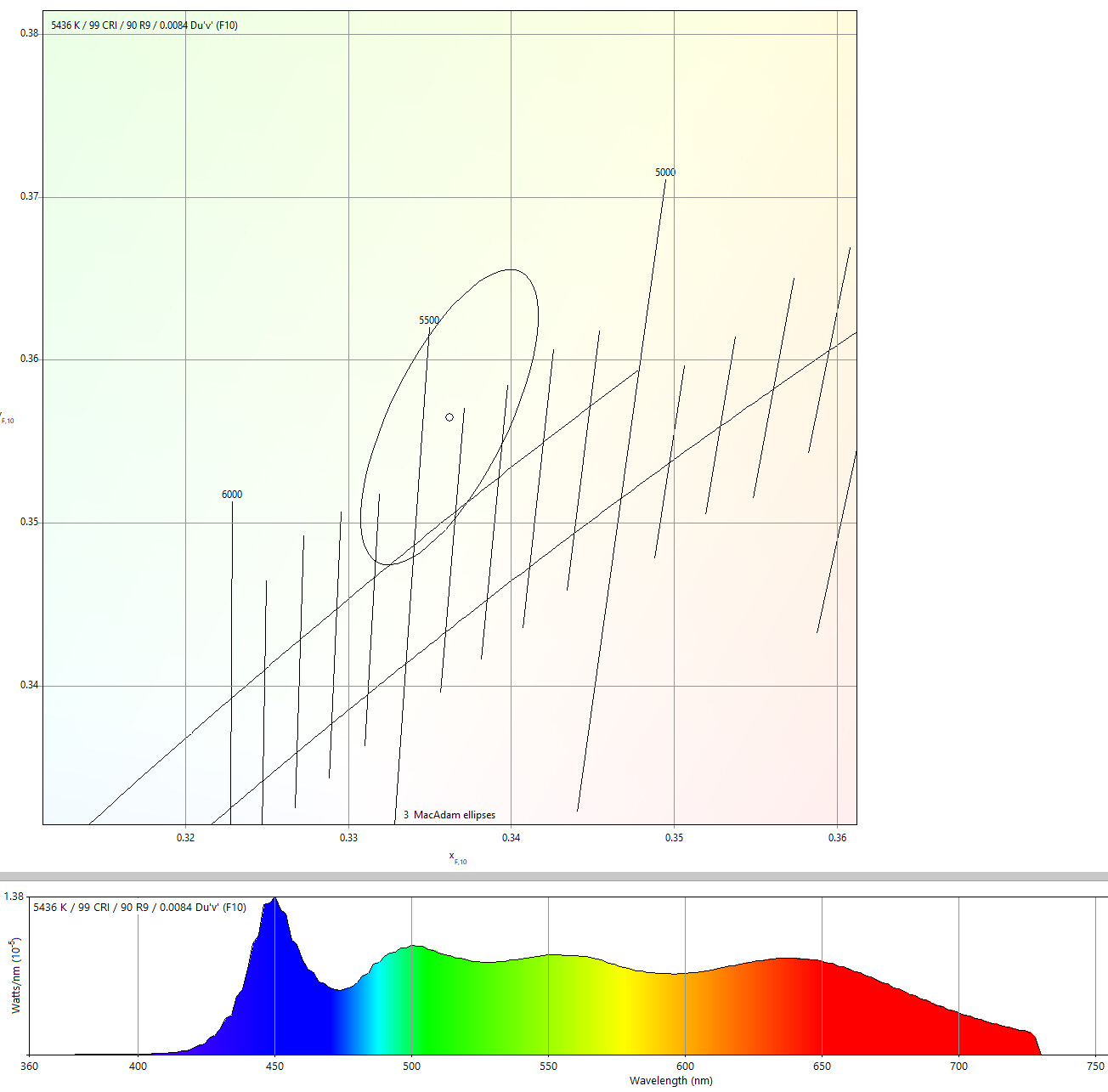
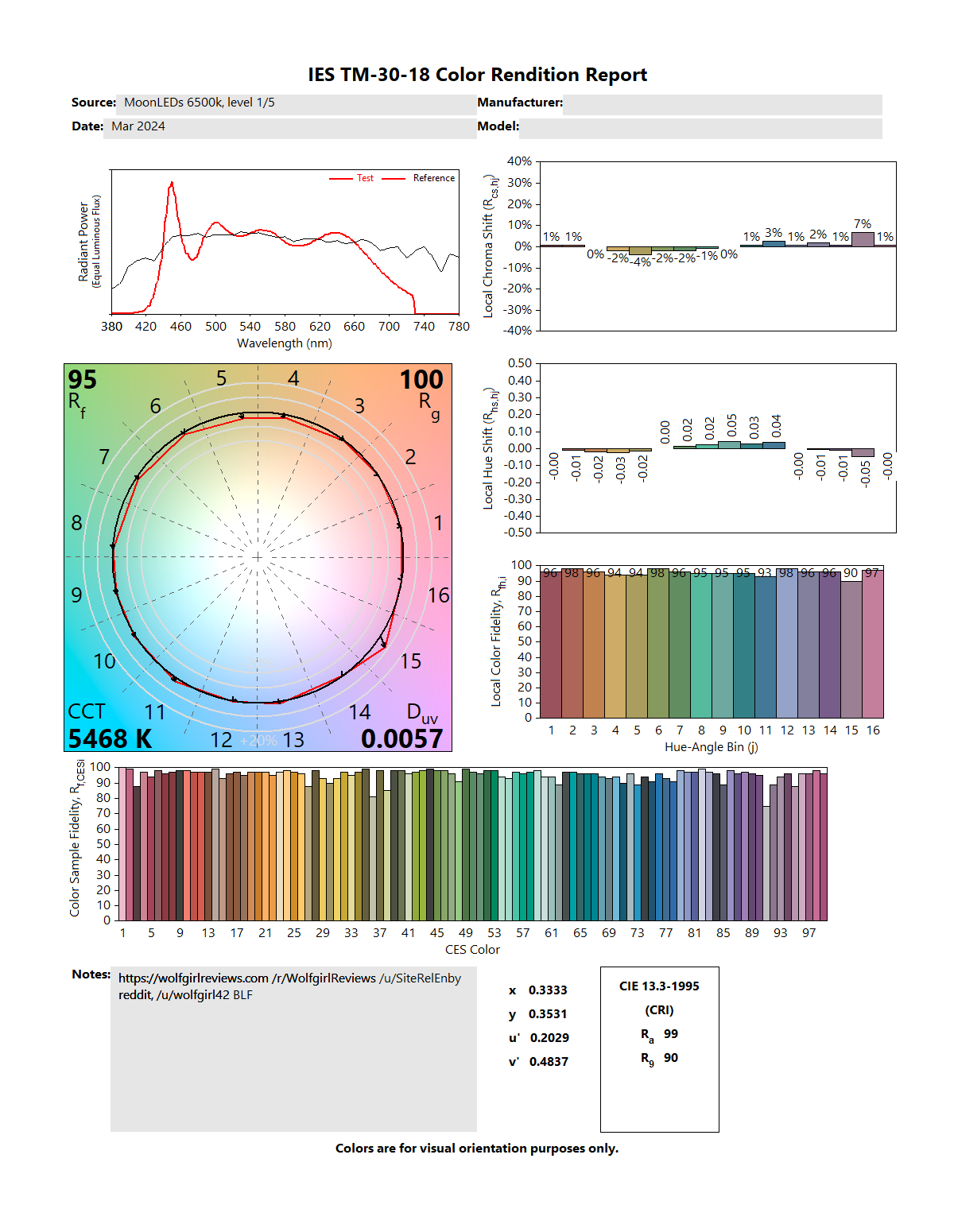
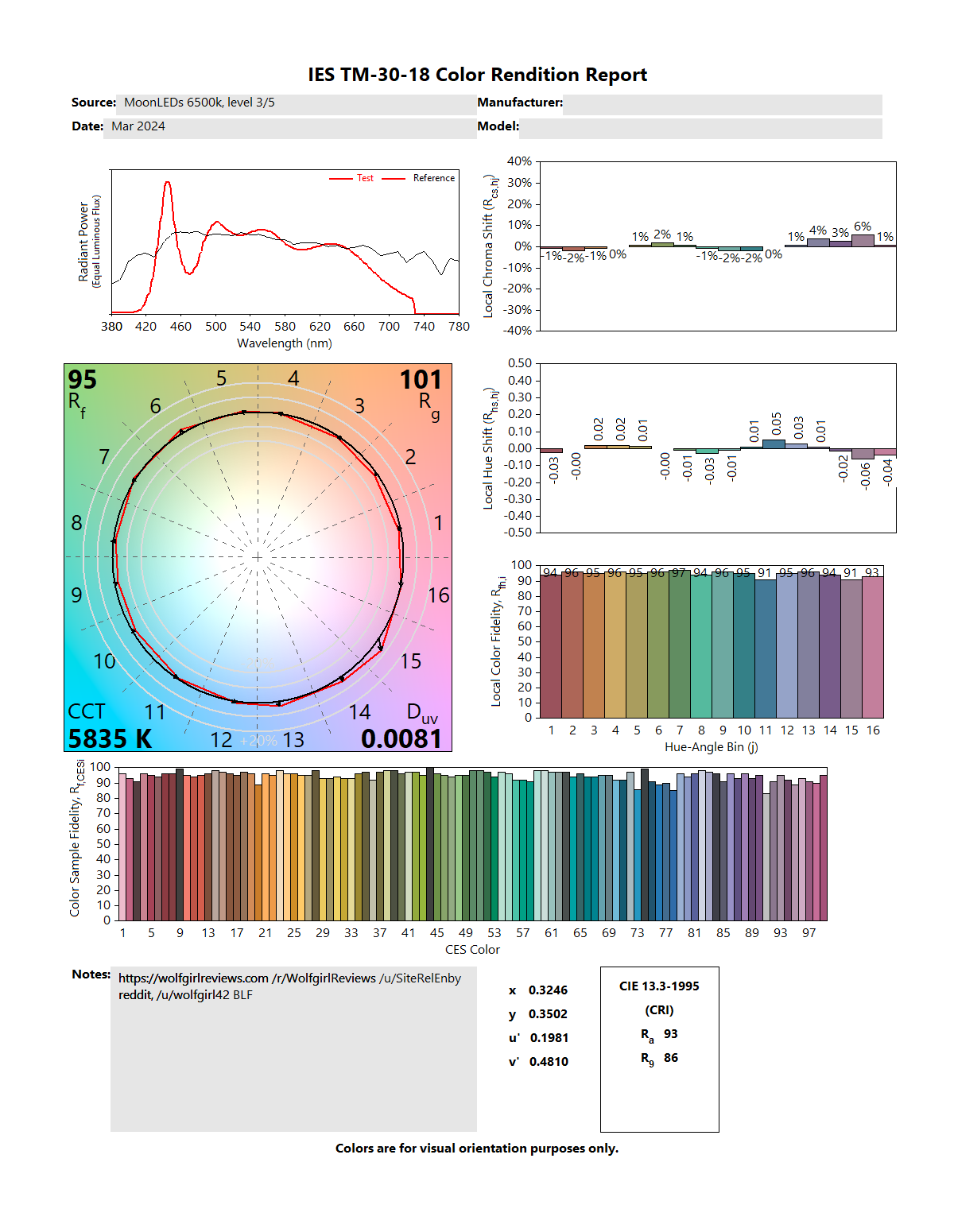
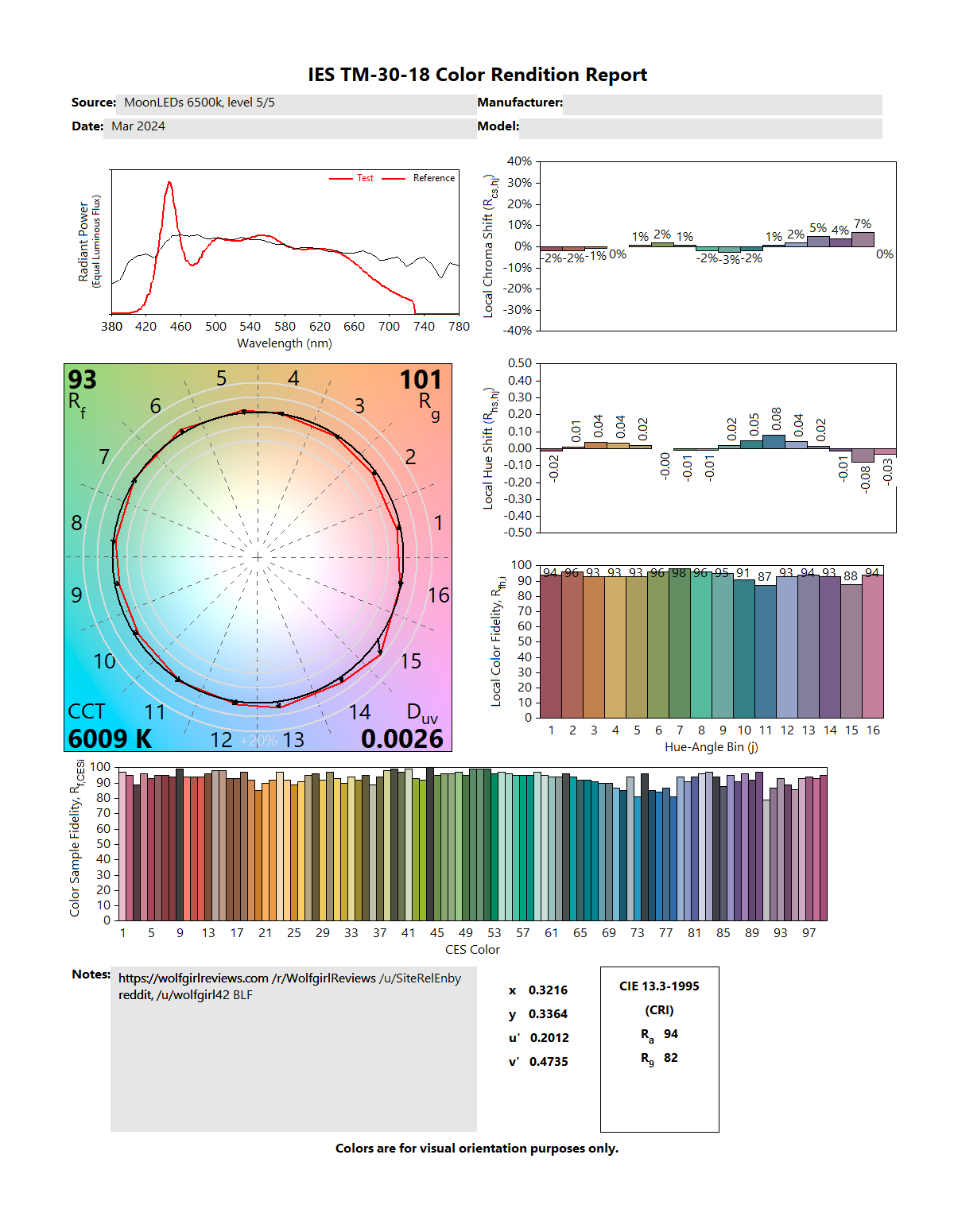
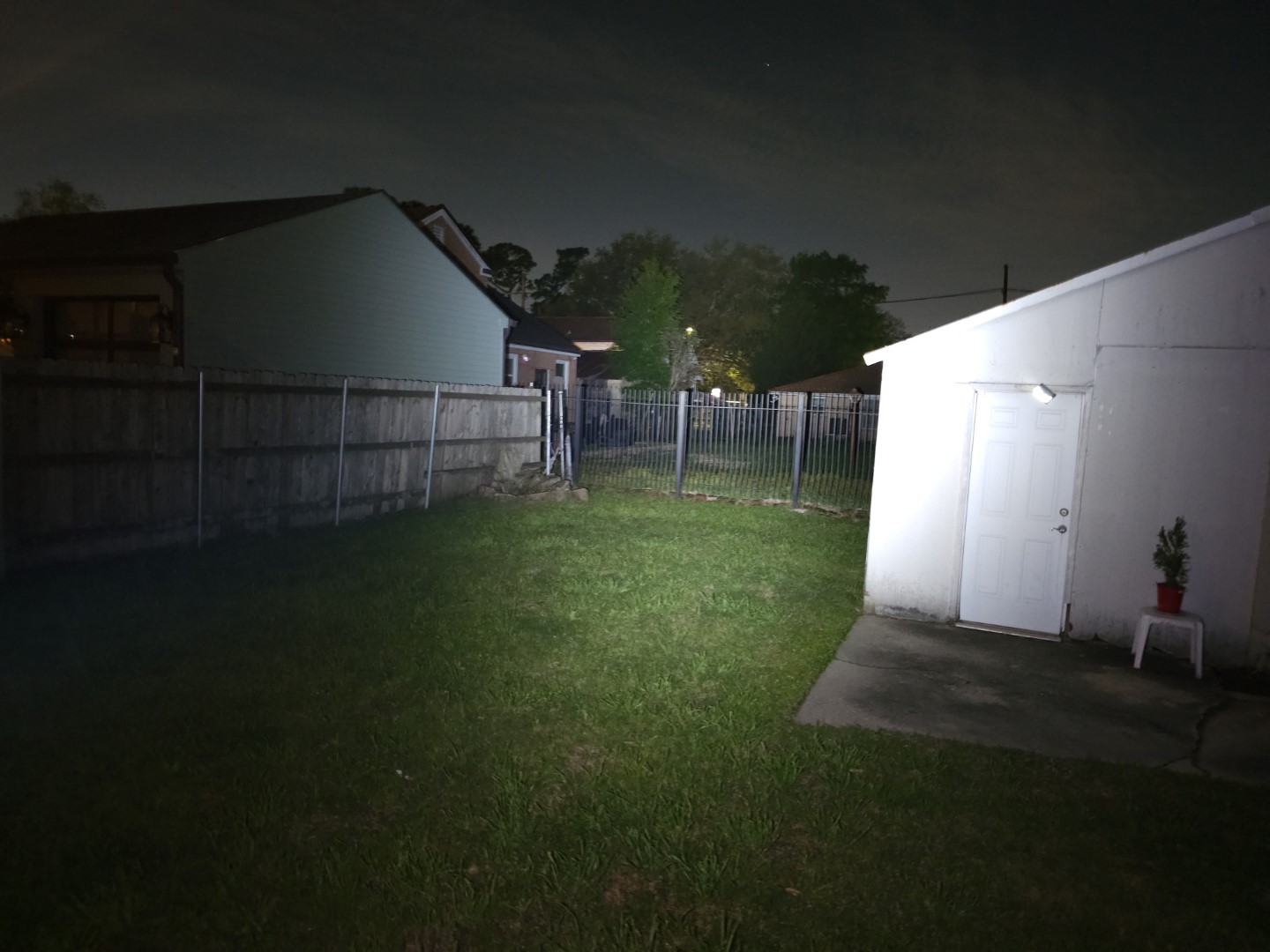
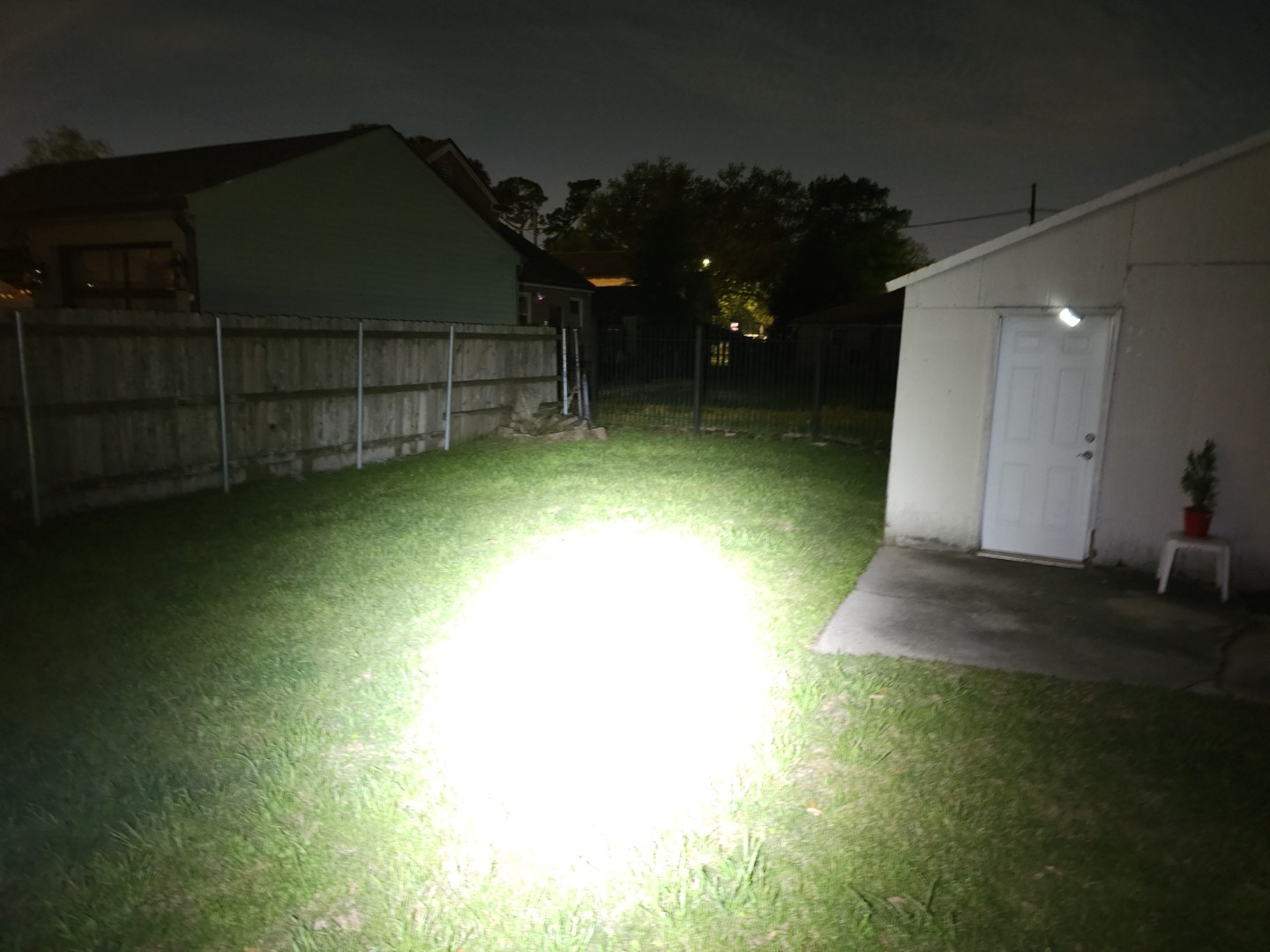
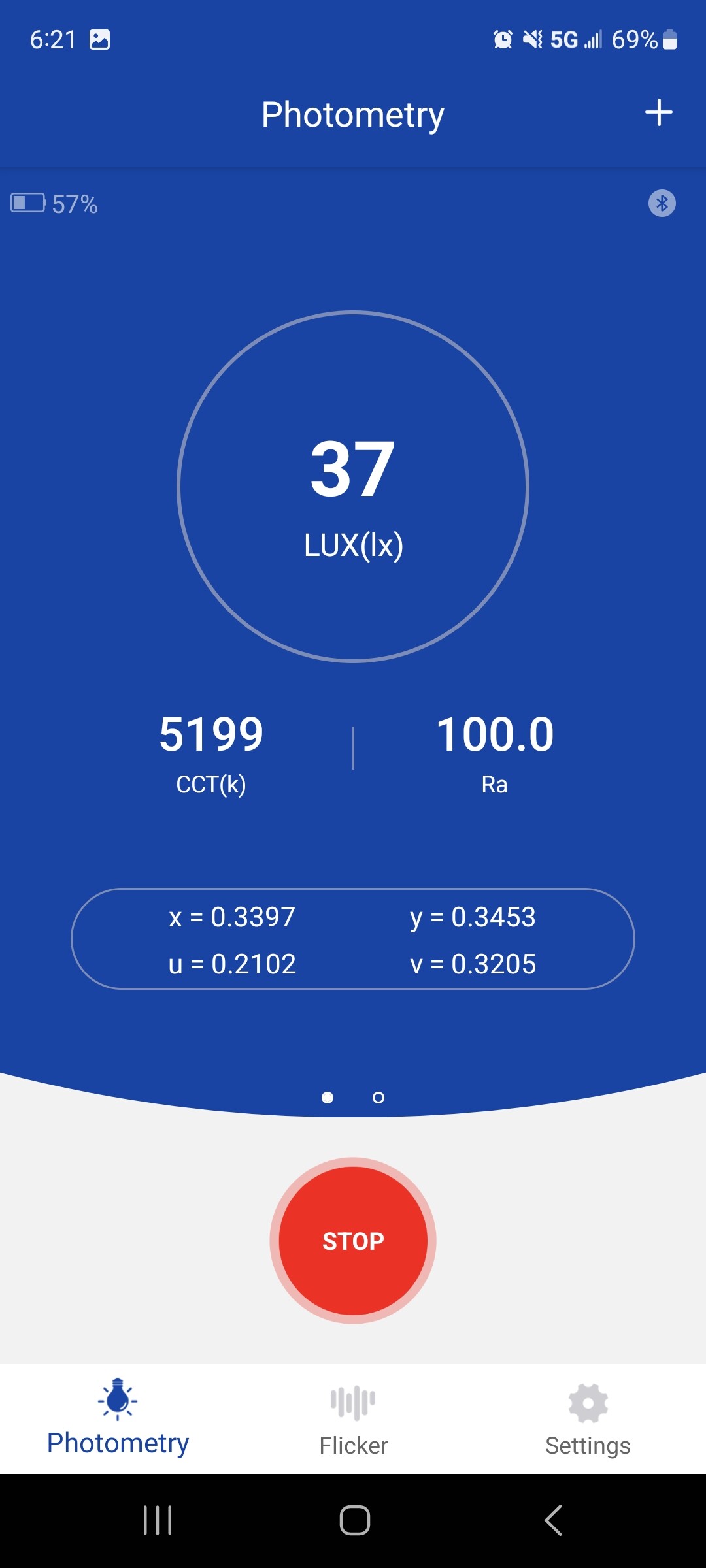
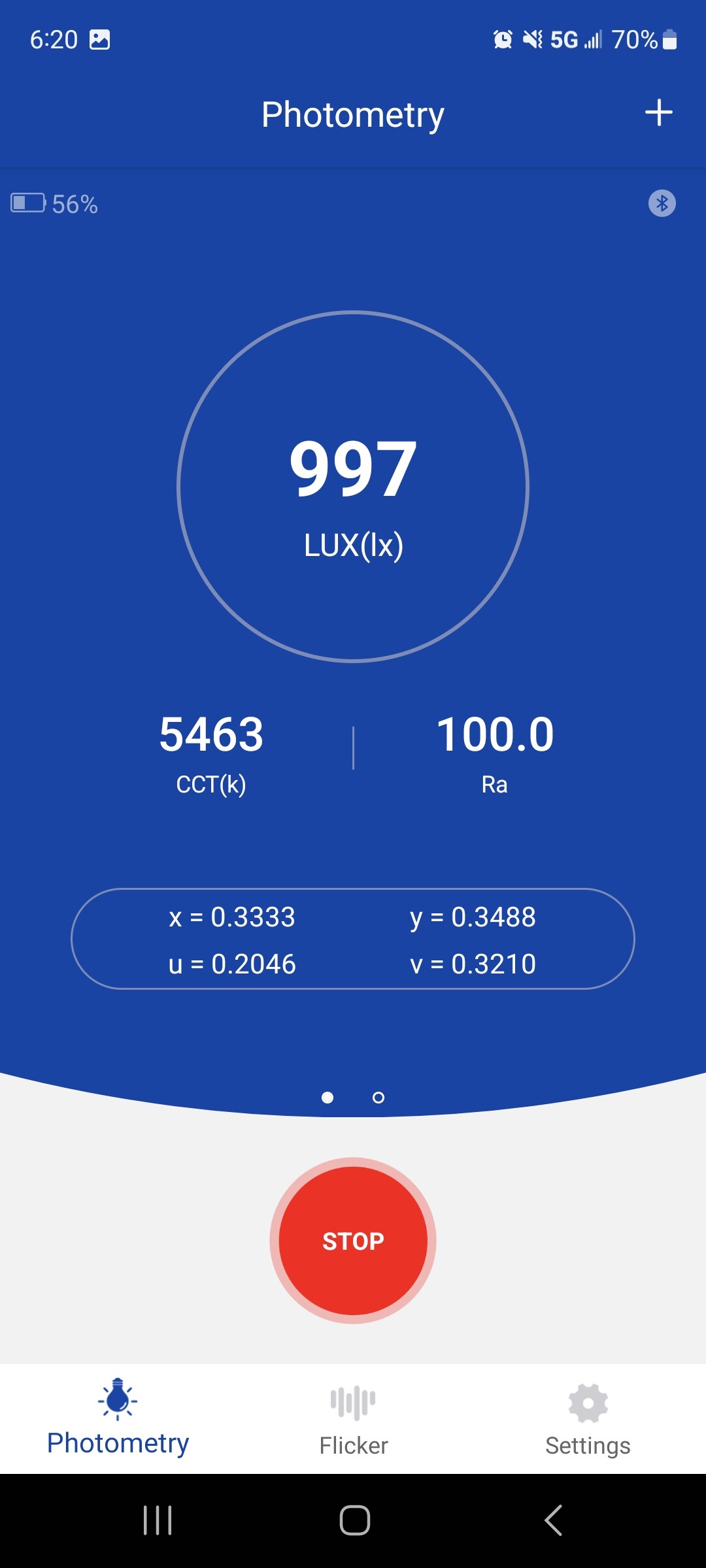
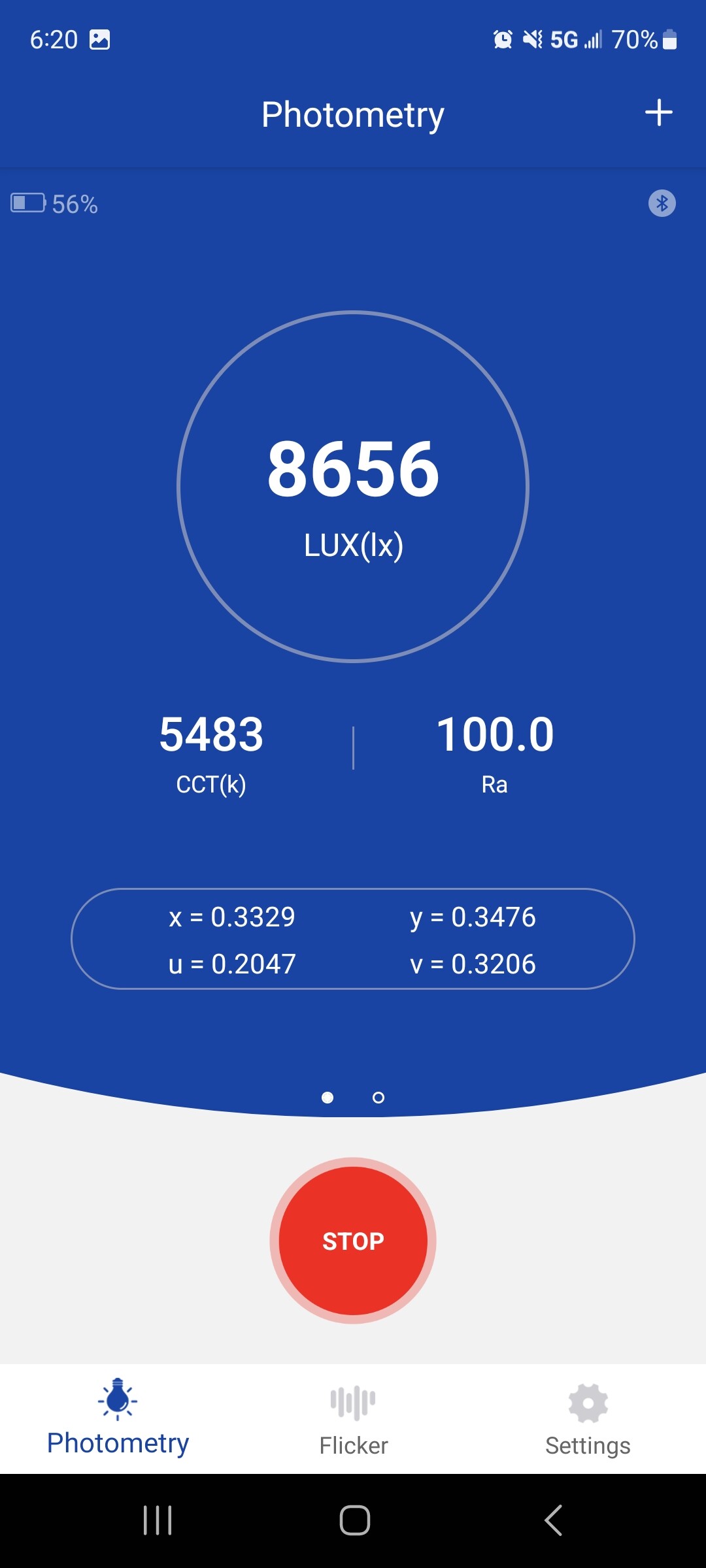
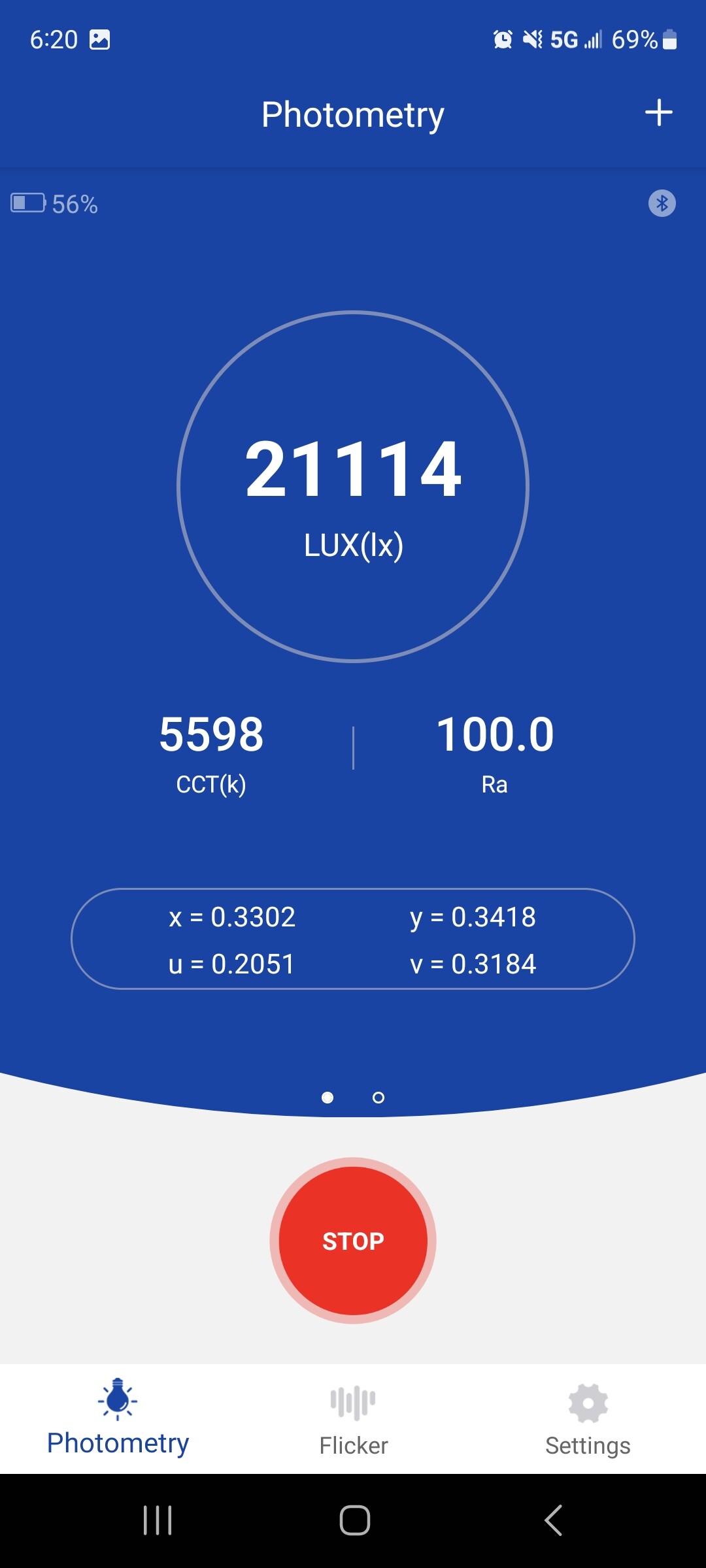
Overall really nice beam, throwier than I expected. 610lm in a triple on max, took readings at all 5 levels plus some beamshots. Through a TIR so probably ~200-300k higher for the bare LED.
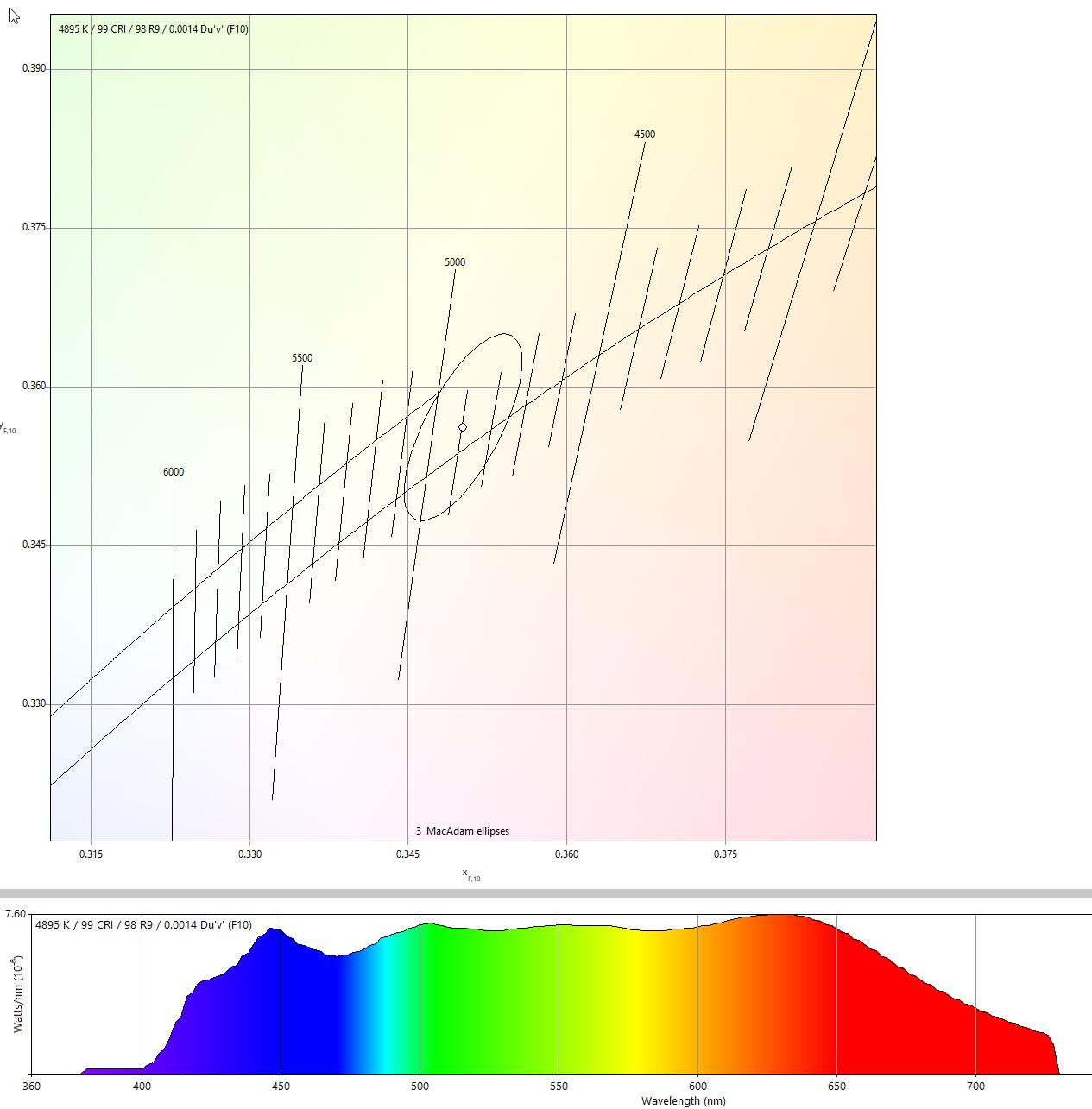
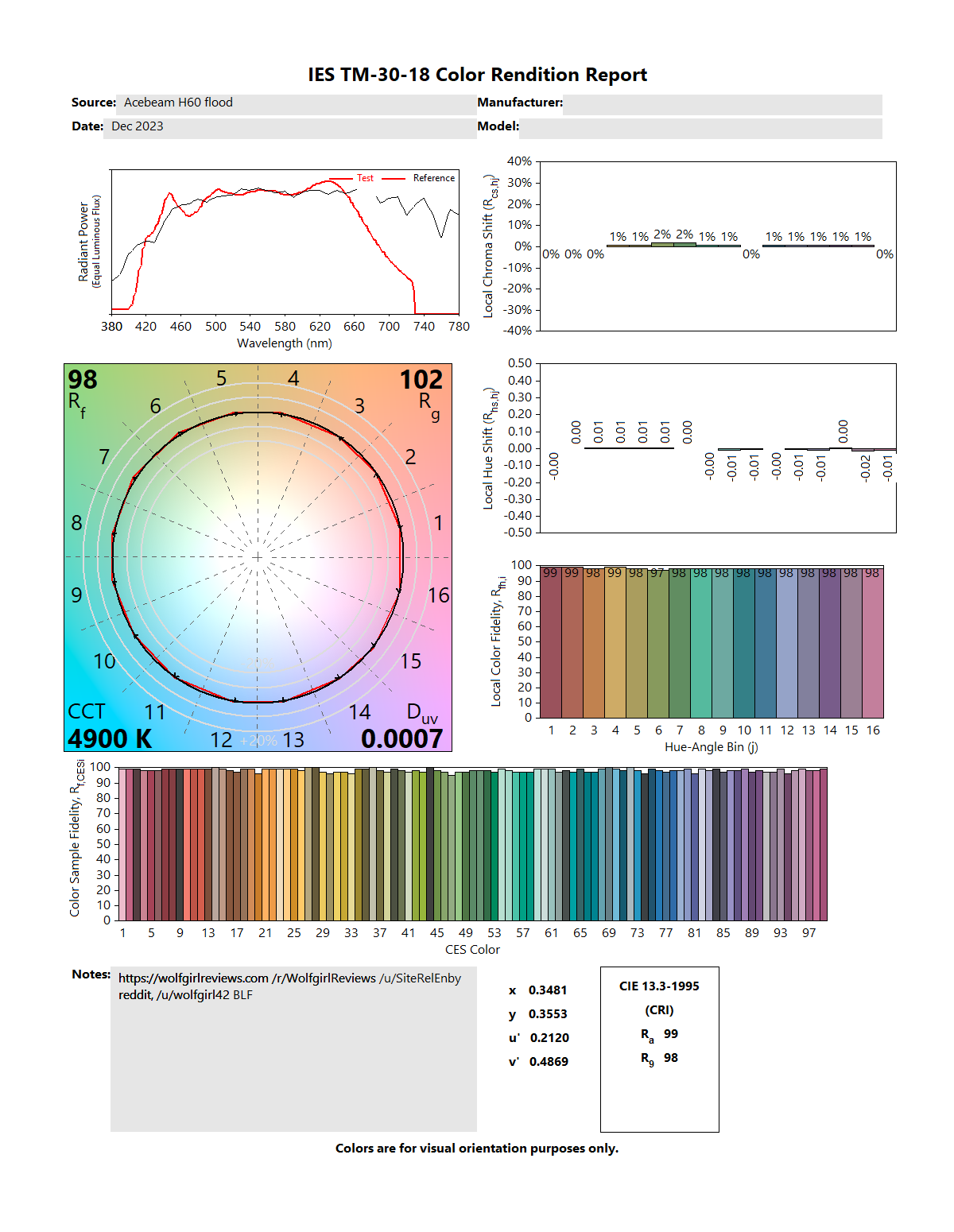
Overall a very nice shape spectrally, still has the cyan dip but it’s less than most. For comparison, here’s the best LED I’ve tested in that regard (Acebeam H60 with SunLike):
If they improve the thermal characteristics these LEDs have a lot of potential. Definitely throwier than 519A, and I’m always a fan of high CRI ultracool CCTs.
Something does not match here.
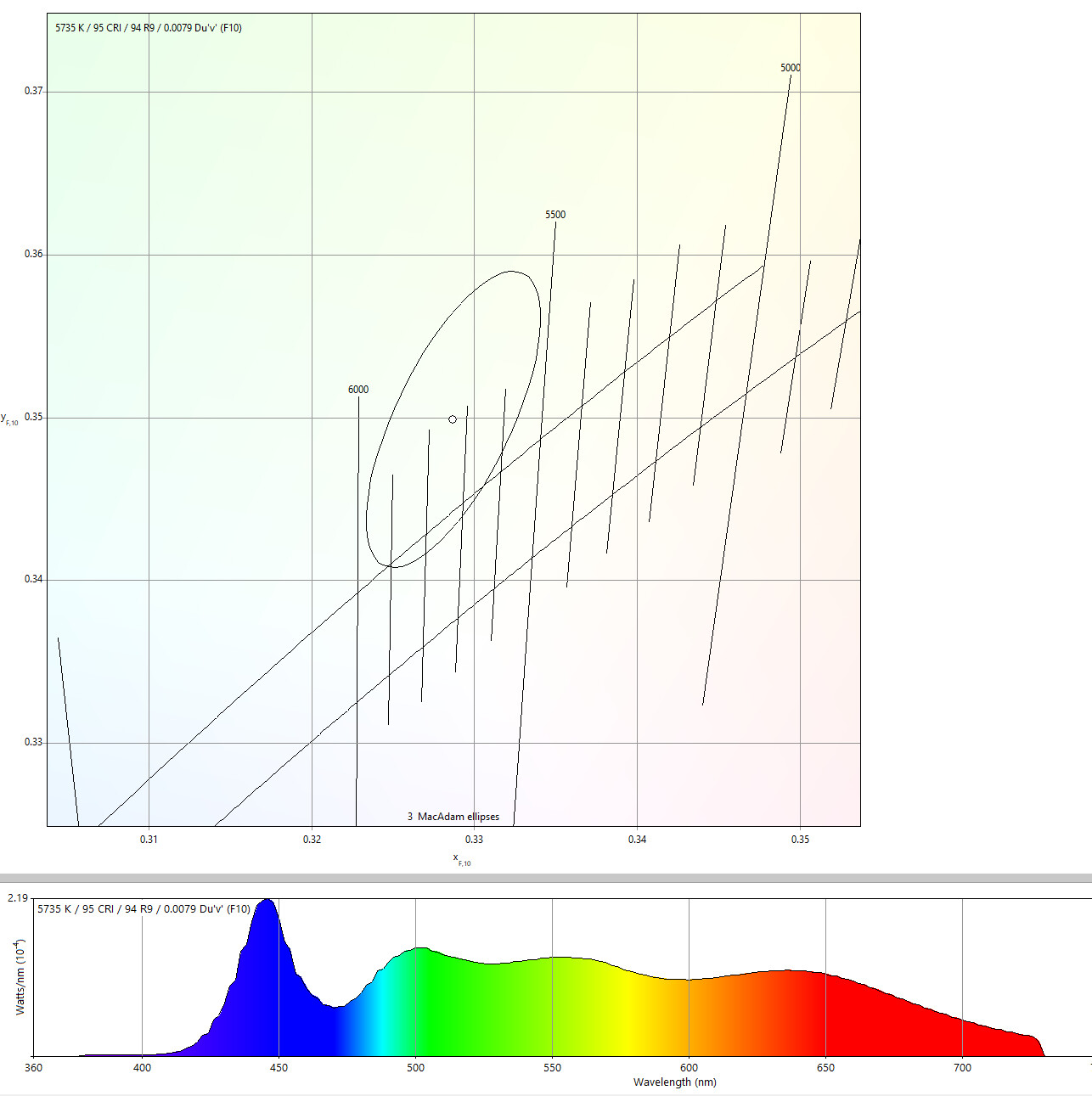
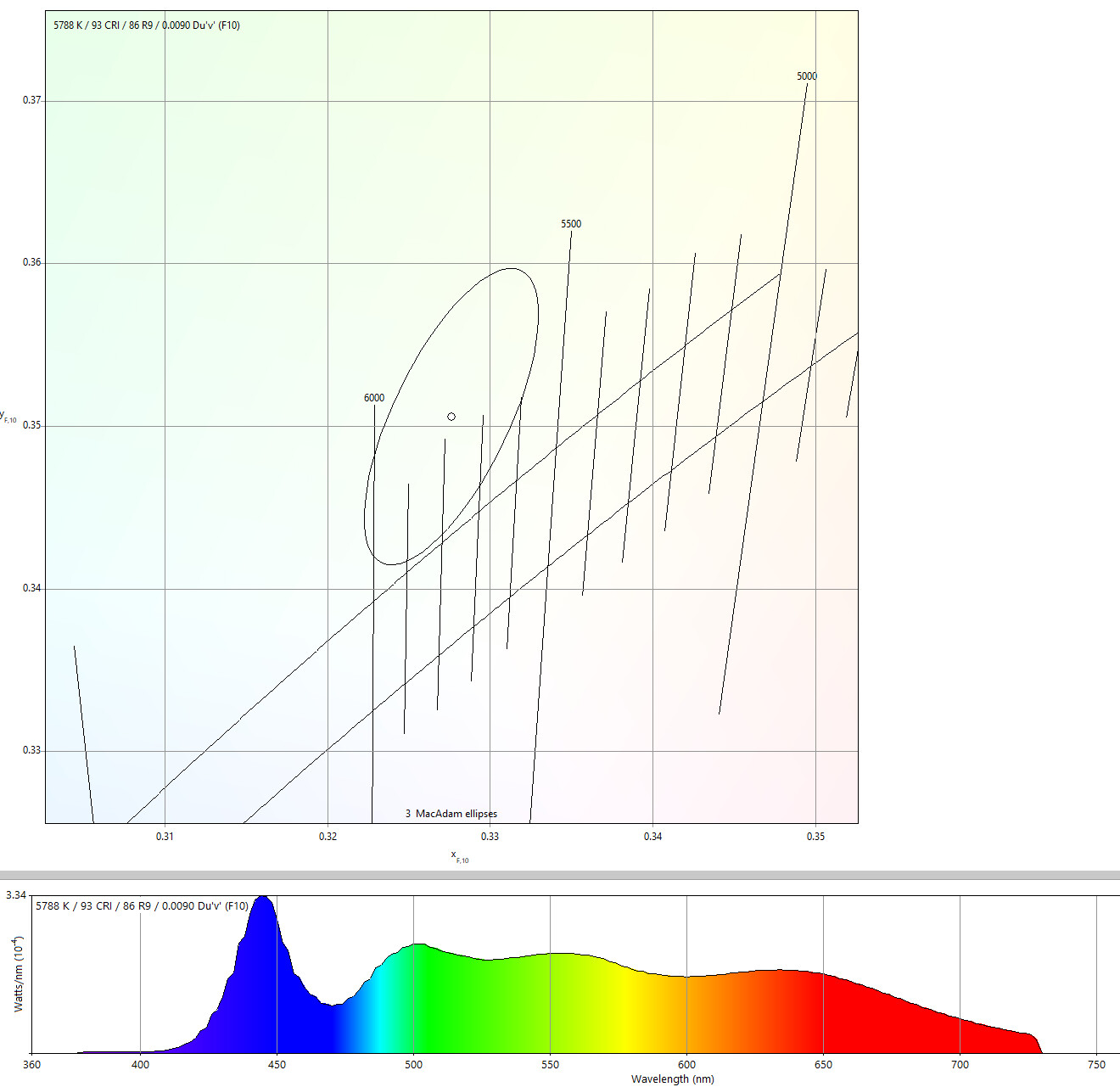
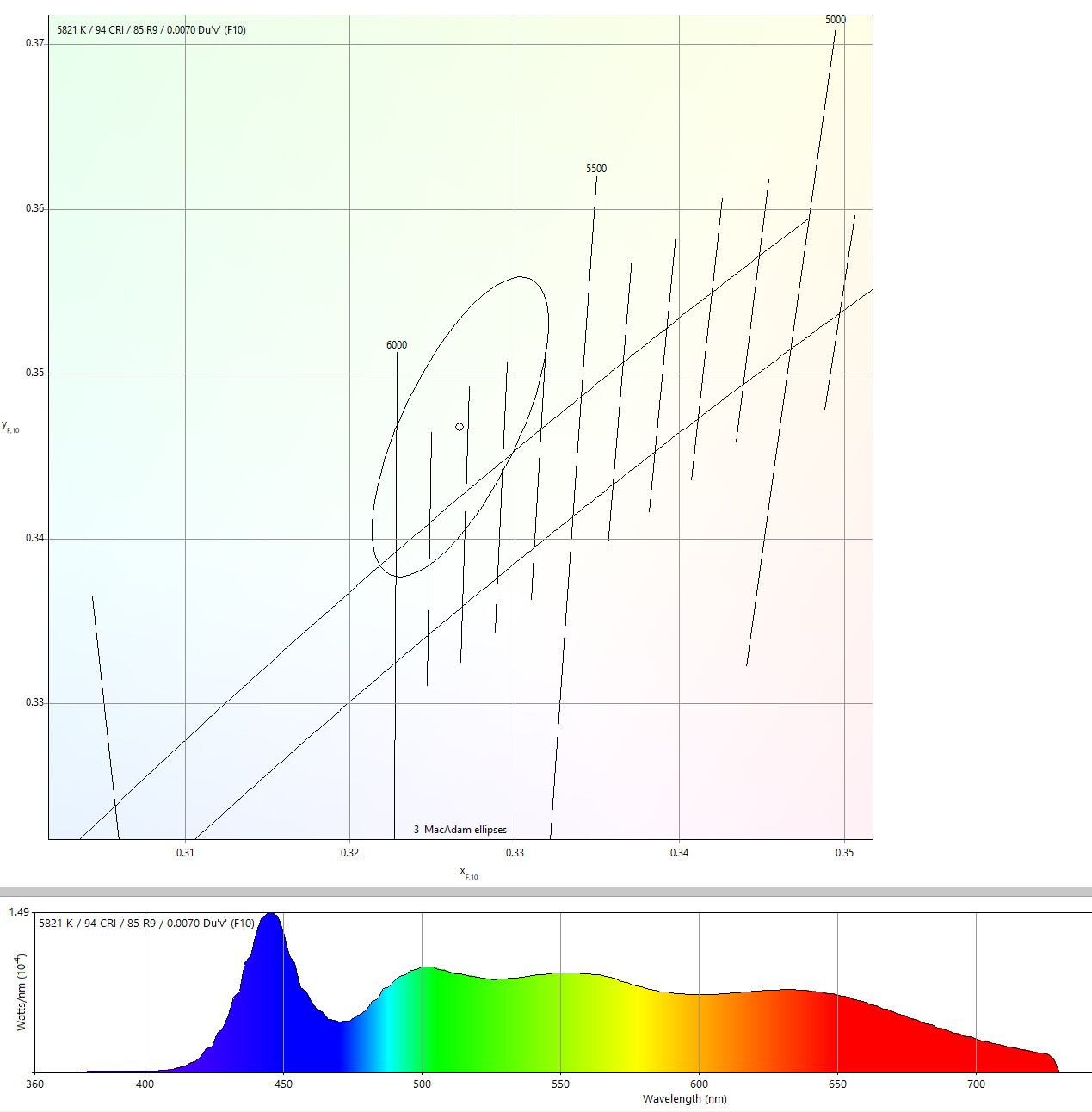
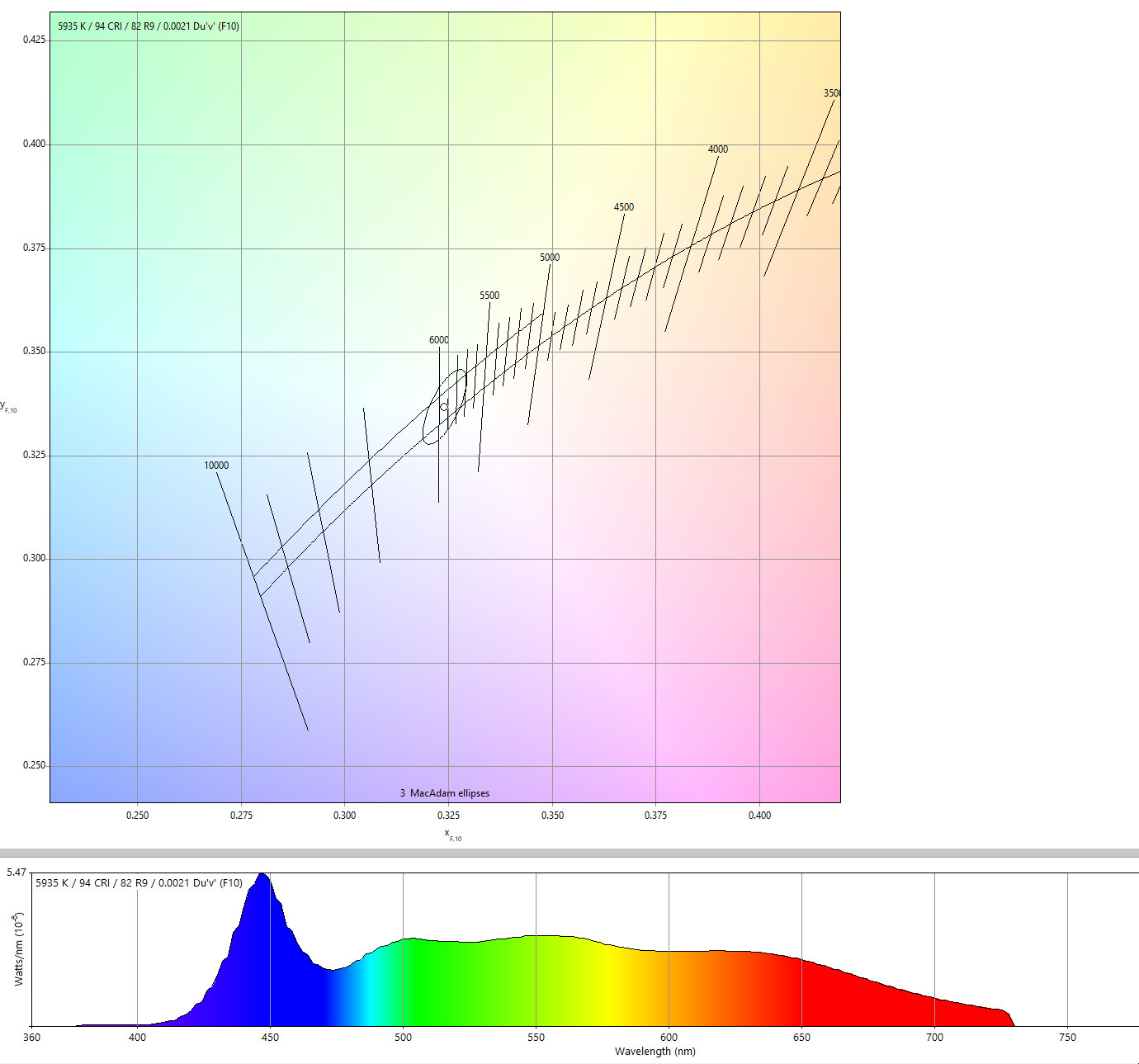
These LEDs are from same reel/batch as mine. I got around 7000 K ((in TIR 6800 K or so) - they are also visibly cooler than my Nichia 519A 5700 K I have. I cannot imagine that they have such big different tints/color groups on the same reel. Also I don’t have this spike in around 500 nm and 560 nm. The spectrum for my Moonleds 6000 K is more or less the same as D65.
Also my duv is much lower at around 0.0025, which I can also see with naked eye since I have some comparison from Luminus and Cree… duv of 0.007 is really high and would be unpleasantly green (it is even outside of ANSI).
Looks like your spectral data is not calibrated according to reflectivity of coating inside integrating sphere. (Using integrating sphere is necessary nonetheless, because for good comparison in general you have to measure all the light coming out from the emitters.)
But even here: the duv overall is much lower. (The value of duv -0.001 at lowest setting does not really make sense, likely ‘Opple-things’ are involved here, the readings are not really consistent.)
The CCT is lower, but unfortunately you don’t have spectral data (CRI 100 is also way too optimistic )
Another thing that is weird that in wolfgirls readings the duv is lower at beginning, rises to get it’s maximum point at level 3/5 for beginning decreasing again. I never saw such behavior in LED testing and I can also not confirm such behavior for my LEDs. Only explanation for this could be some sort of special PWM frequency or duty cycle which changes the tint slightly. (I saw this on a Ledlenser F1 light, but the tint went from clear white to slightly rosy)
Interesting would be an Opple reading of bare LEDs (without optics) in a diffused environment (integrating sphere or similar). But in this case calibrating the measurements is important to get the reflectivity right.
It’s strange what’s going on with the cyan gap in your sample: small at low current, much larger at mid to high current, but smaller at max output again. I have no idea what’s causing this.
The similar non-monotone trend in duv is a bit less surprising, I’ve seen emitters that get greener with high current (219C) and ones that get pinker with high current (519A), and from what I’ve seen the SST20 is also not monotone. My hypothesis is that the spectral behavior at low current is what’s intended; at higher currents perhaps the yellow-green phosphor is more effective than red phosphor, so the beam shifts greener. At very high currents all phosphor is overloaded and lets the blue light through, resulting in a blue-dominated beam with lower duv again. It is clear from the spectrogram that at high currents the deep-red emission is much less compared to lower current. This is why I personally dislike overdriving very high CRI emitters.
The comparison with the Acebeam also makes clear that violet-pumped emitters are still much superior in CRI, with nonzero violet and no cyan gap at all. This makes me less interested in the moonleds (and blue-pumped ones in general) and really hope violet-pumped emitters can be scaled up to common footprints and with better power handling.

 )
)




 )
)