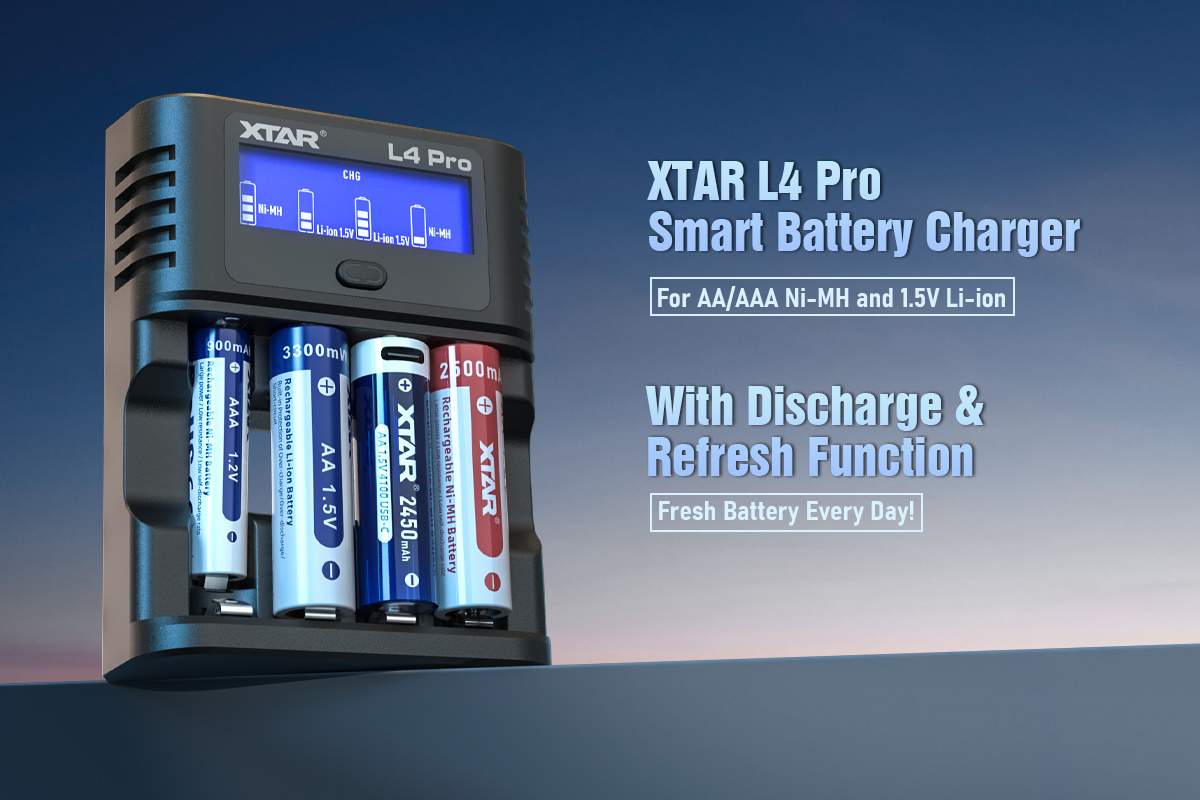
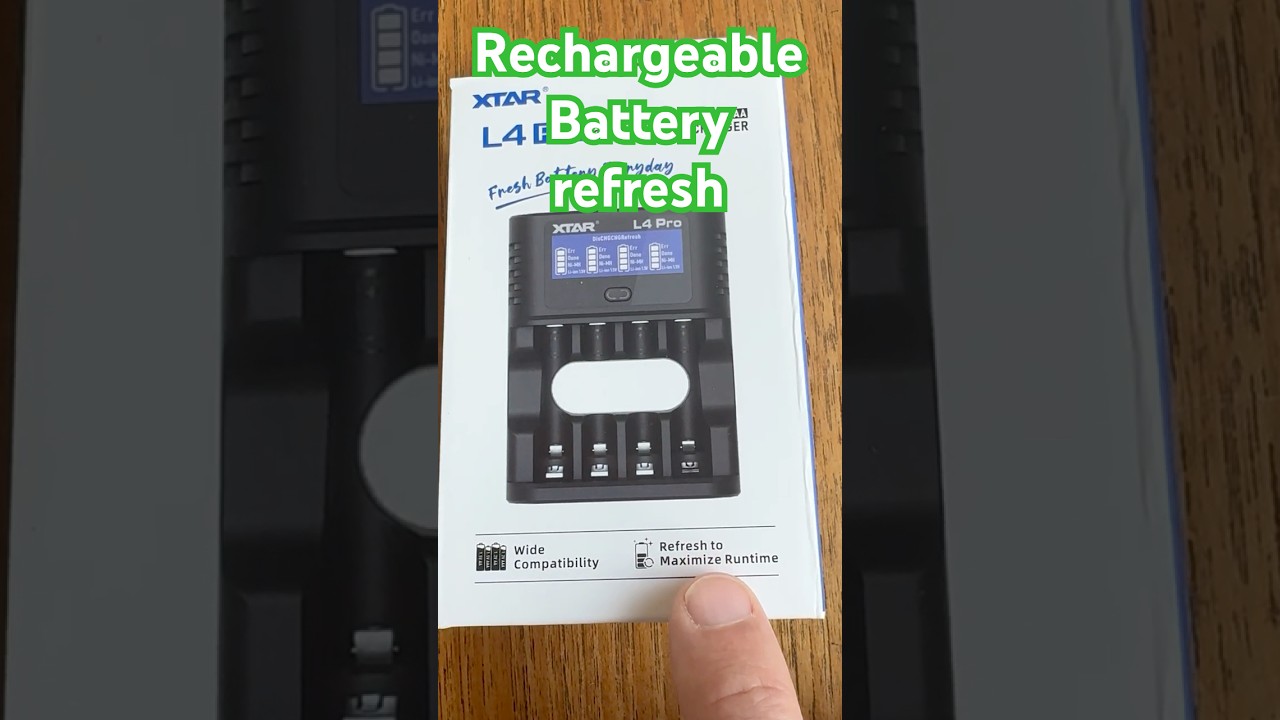
So glad we released a new charger L4 Pro, which is a smart four-slot charger for AA/AAA NiMH and 1.5V Li-ion batteries. With multi-stage refresh, precision charging, and micro-current activation, it eliminates overheating, incomplete charging, short battery life, and aging issues. Smart recognition and an HD display make operation intuitive - perfect for home and professional users.
Especially, for the 1.2V Ni-MH AA/AAA batteries, we adopt xtar Unique CVSA tech enables lower temperature, ensures stable and fast charging, extending battery lifespan. And the Refresh function can also boost your old flashlight NiMH batteries back to their maximum possible capacity.
My dislike of Xtar started with their charger first identifying NiMh cells as Li-ion cells and then trying to charge them that way. It got worse when they told me there wasn’t anything wrong with the charger I had.
But to be fair to them I was able to use their charger to charge the Eneloops when I first got it, but that only lasted for a couple of months.
Thanks frederikboving for testing the xtar L4 Pro Refresh function. “In this video below, I showed what the refresh function on the XTAR L4 Pro does to two LADDA 750 mAh batteries. It regains lost capacity bringing the two batteries from 709mAh / 717mAh to 750mAh/751mAh - a truly impressive result. I use the larger charger named XTAR VX4 to measure the capacity before and after the refresh.”
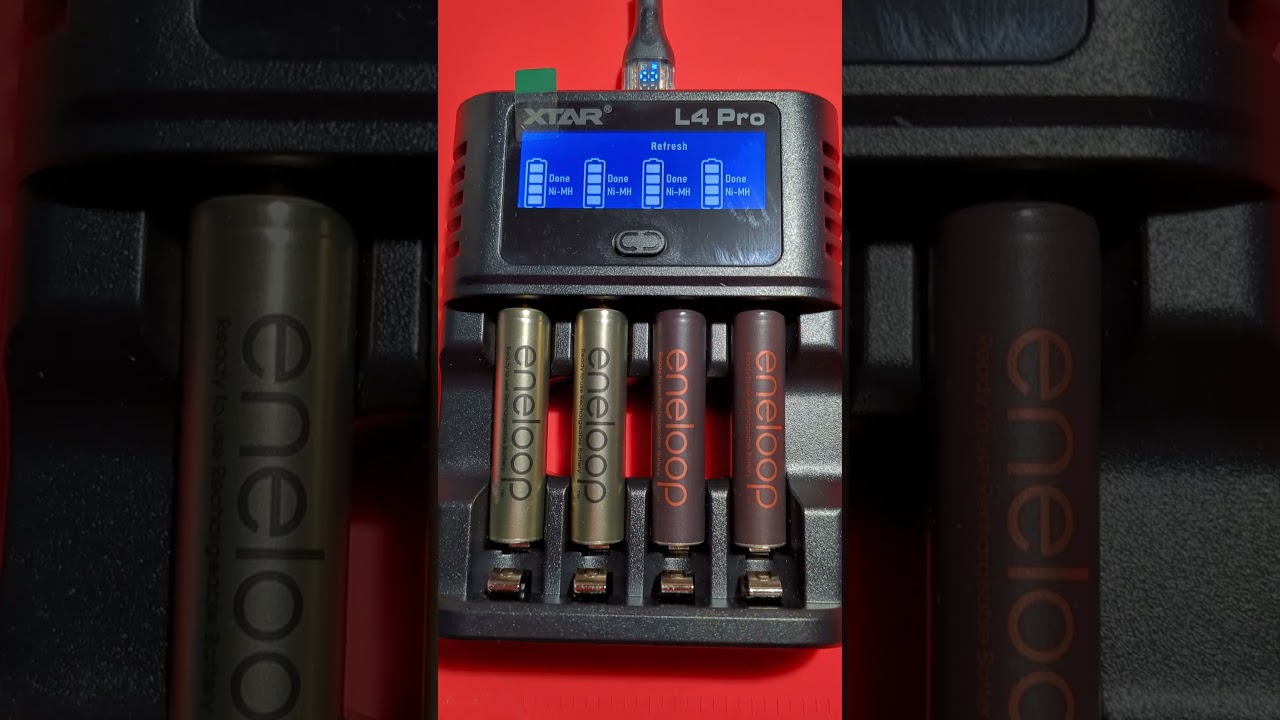
Tim also used the Refresh Mode on the new XTAR L4 Pro battery charger for some old eneloop AAA Ni-MH cells and the capacity improved.
For charging Ni-MH batteries, XTAR adopts the unique CVSA tech to enable lower body temperature of Ni-MH battery, ensure stable and fast charging, extending battery lifespan. There is the L4 Pro charger testing by Dr. lui_gough. He charges a nearly-empty Sanyo Eneloop (1st Generation) cell under the watchful eye of a Thermal Master P3 USB-C thermal camera.
“In the animation, we can see just how the charger was the warmest thing in the region, only until the final part of the charge where the cell reached a high below 29 degrees Celsius, in a room measuring about 24 degrees Celsius. This is pretty cool compared to some older Ni-MH chargers which can absolutely cook the cells, roasting them up to 50 degrees Celsius or so, which is good news for longevity. It’s also pretty complete with charging, taking about 3.5 hours which, at 500mA, would mean 1750mAh delivered which is quite close to the full 2000mAh capacity. But being a cell over a decade old and not being completely flat to begin with, this result suggests it got a full charge. It’s also noted that leaving the cell on the charger after completion where some trickling or charging restarts could happen, this did not seem to create any thermally noticeable increases in cell temperature. As a result, I can confirm that this charger treats Ni-MH quite well.
It is rather friendly and gentle on Ni-MH cells, as it uses XTAR’s CVSA technology, but also features additional discharge and refresh modes to get the most out of them.”
With all due respect to Dr. Lui Gough, It would have been much better if he did a discharge test with that battery to see how much it was actually holding after the charge, plus a comparison by doing a standard “-dV” or “3dV” charge (and then a discharge) on another charger like the SkyRC MC3000 or the Gyrfalcon S8000.
The way it is, it’s hard to justify his conclusions (“3.5 hours which, at 500mA, would mean 1750mAh” → perhaps not as the charging current can vary, specially at the end of the charge), ditto “quite close to the full 2000mAh capacity. But being a cell over a decade old and not being completely flat to begin with” – these two statements end up turning his testing into something much less precise and exact than we have come to expect from him.