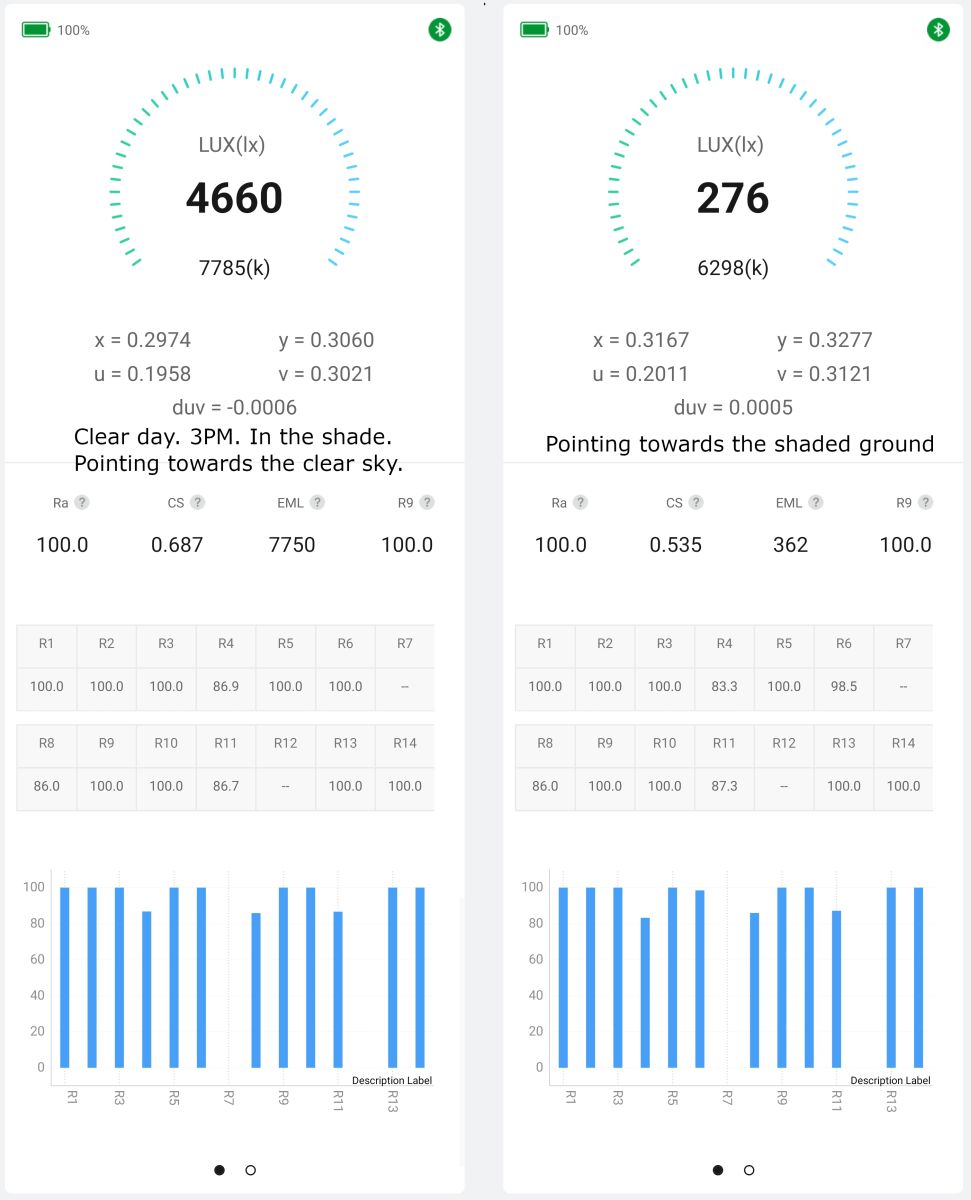
FWIW, wrt Duv in these low cost devices, for me, a reasonably good match between 2 devices is about 10-15 points, and a great match is about 0-10 points.
For example -0.0020 versus -0.0030, a 10 point difference, is a good match between the 2 devices being compared. 0.0020 to 0.0035 is a 15 point difference, still ok, but starting to get out of range. Just IMvHO and YMMV.
I try to determine a trend for my Opple LM3 versus typical known numbers for any LED. My LM3 has been doing a decent job: for example big negative numbers for Nichia 219 4500k, and positive number for LED’s with green tint. LM4 has failed, seemingly/mostly with high CCT low CRI lights.
agree, on the 4 Low CRI lights, LM4 reports about 0.0040 lower DUV, and is unable to measure R9.
On high CRI lights the LM4 mostly reads R9 about 5 points higher than the Xrite. But the most glaring discrepancy is for the LM4 reporting R9 20 points higher than the Xrite.
Here are my measurements with 6 different LEDs… Most are high CRI.
LM3 = Light Master 3
LM4 = Light Master 4
Spectro = Asensetek Lighting Passport Standard Pro
I measured the lights inside a homemade integrating sphere. I noticed that this gets the most stable measurements, instead of pointing a light directly at the sensor.
I did 1 measurement per device, and sometimes 2, if I wasn’t sure that I held it straight enough.
Solarforce L2i Nichia 119A warm
CCT
DUV
CRI Ra
R9
LM3
2696
0.0004
85.7
LM4
2686
0.0001
87.3
27.6
Spectro
2695
0.0001
89
59
Convoy S2+ Nichia 219B 4500K
CCT
DUV
CRI Ra
R9
LM3
4237
0.0020
93.9
LM4
4173
0.0038
92.9
93.6
Spectro
4177
0.0015
94
88
Emisar D1 (FC40 5000-5500K)
CCT
DUV
CRI Ra
R9
LM3
5041
-0.0003
97.6
-
LM4
4957
0.0021
94.5
77.5
Spectro
4972
-0.0005
95
71
Convoy S2+ Nichia 519A 5700K
CCT
DUV
CRI Ra
R9
LM3
5091
0.0058
97.6
LM4
4997
0.0080
93.1
100
Spectro
4976
0.0052
92
85
Vosteed Rook (CREE XPL)
CCT
DUV
CRI Ra
R9
LM3
5206
0.0060
68.4
LM4
5270
0.0036
63.3
51.3
Spectro
5401
0.0077
71
-11
Olight Baton S2R (cool white)
CCT
DUV
CRI Ra
R9
LM3
5410
0.0092
63.9
LM4
5550
0.0075
62
37
Spectro
5622
0.0118
67
-28
There is no real conclusion to get from this. Just that sometimes the LM3 is closer to the Spectrometer, and sometimes the LM4.
The R9 in cool white, seems to be difficult for the LM4 .
fwiw, in every example of DUV, the LM3 is closer to the Spectrometer, than the LM4.
For High CRI LEDs, the LM4 reads DUV between 0.0018 to 0.0028 too High, and the LM3 is closer to the Spectro.
otoh, on the Low CRI LEDs the LM4 reads DUV between 0.0041 and 0.0043 too LOW, and again the LM3 is closer to the Spectro.
The R9 in cool white, seems to be difficult for the LM4
agree, the LM4 is very inaccurate for R9, when testing Low CRI. The LM4 is also very inaccurate for DUV, when testing Low CRI.
In all 6 tests of DUV, the LM3 is more accurate than the LM4.
otoh, the LM4 calculates the DUV automatically, which is very convenient, if only it was as accurate as the LM3. For the LM3 I have to go to the waveform site to calculate the DUV from XY coordinates, which takes extra effort.
I was hoping Opple would give us duv calculation and maybe a higher resolution CIE diagram in an update for the LM3, but with the LM4 using a different app now, that chance seems pretty low.
@xseven I wouldn’t even think of that.
Or are you going to do product photography in a stable environment, with the same lighting conditions all the time?
Not swapping lenses?
I would recommend shooting RAW, and do the rest in post processing.
Making series of measurements with ML4 and colormunki I see that only LM4 value can be trusted is CCT (for LED ).
However CCT measurements is not very strict in both ML3/4 so Duv can’t be trusted. Duv=0.001 is equivalent of 50К for 3000K. Difference between LM4 and colormunki CCT sometimes is more than 100K. Thus Duv could only show if light is very green or very rose.
Ra and Ri from LM4 is a mess.
Ra by definition is mean R1-R8 . I cant find any LM4 measurements where it is true. Thus calculations(application work) of Ra or Ri (or both) are wrong. Bigest difference between ML4 and colormunki that exists in almost every measurement is in R7, R9, R12. But for almost all Ri can be found a source with |Ri(lm4)-Ri(xrite)|>15.
I asked Opple on AE about wrong Ra calculations but still no answer .
For photos … Sure!
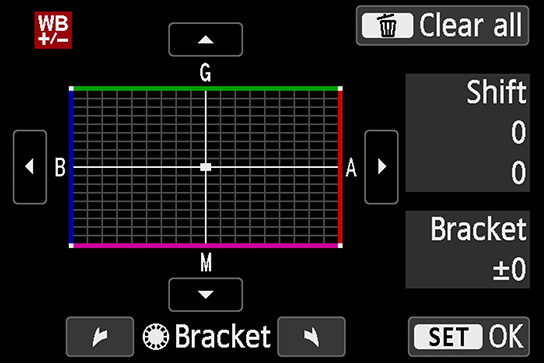
But for video … sometimes in mixed light situation the camera is not very accurate in Auto WB … so I was thinking I could get some help from the LM4
Hi guys! I’m kinda new here. Also I’m a ligting designer based in Brazil, so sorry for the rusty english.
I’ve been thinking about buying the LM4 for daily light measurements, so I was wondering if anyone here have tested it with “normal” lighting, even though the forum is focused on flahslights, etc. I don’t know if thar error could appear only on super high lux levels, as I’ve seen been tested here.
My LM3 got here today (because it was cheap, so why not) so if I get some time this weekend I’ll try and take some comparison shots with both. Still have the last stack of beamshots I did that I haven’t got round to sorting or testing (my life the last week or two has just been constant thisisfine.gif…), but I think my technique was a bit flawed on those so probably just going to give it another go if I find the time.