Hi there! I’m new here and I just trying to figure out that LM3 or LM4 could measure lightsources (TV and lamps) in my home for flickering and poor CRI. I’ve tried to read the full topic but it’s not clear whats the status of updates or fixes. Is it worth buying LM4 or not?
Do you actually still prefer LM3 over LM4?
Thanks
LM4 is WIP, future uncertain. LM3 seems to give better results across light sources.
It’s nice of you to join us, 3ftomi!

Thanks for your advice and your fast response! So this time LM3 is the solid choice, despite LM4 can be better in color measurement (theoretically just by chip type) but perhaps doesn’t leads anywhere? That sensor type vs IR cross radiation problem and assuming data that certain problem, maybe even doesn’t fixable? For me the most important part is flicker testing for TVs and light sources. As I presume both LM can do this job adequately (for the price tag, at least at hobbyist level) “only” color quality related measurements doesn’t reliable on LM4?
Then I try to buy an LM3. Thanks again!
@raccoon Thanks Pal! You are so kind! Best regards to you and Mila!
Bought the opple V3 from EU, will test the promised 45Khz flicker tester range when I get it.
as7341 has two more VIS channels but this doesn’t necessarily lead to better precision, at least for now.
I think LM3 has its limitations, but currently it’s good in many aspects. LM4’s shortcomings has to be fixed by spectral reconstruction seemingly.
2 Thanks
guys, I’ve basically solved spectra reconstruction issue. considering how to update now, code written in C++, thinking about how to be used by Android and iOS.
sorry for the late, after all the LM4 was launched last year around this time. have to learn something about colorimetry by myself, really difficult for me.
11 Thanks
the so called golden device is out of my access, so I took my LM4 as golden device, but you guys’s LM4 at hand are calibrated by the real golden device, and the coefficients are stored on each LM4’s non volatile flash area, so I must find workaround ways. and the spectra actually can be approximately reconstructed, the R values are then calculated using the spectrum, and the results are better than ai method. and most importantly, no need to distinguish between light sources, for example opple Leds and flashlights.
anyway, hopefully this project is not slashed, after all it doesn’t bring much revenue.
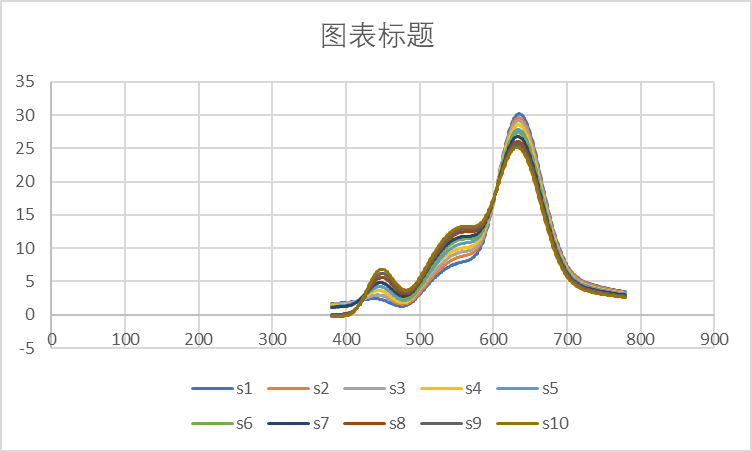
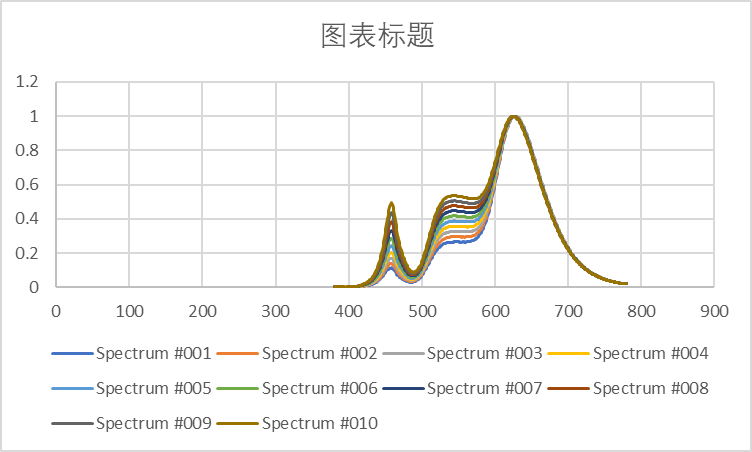
above is the 10 spectra reconstructed, and below is the spectra I measured using IS.
I measured 103 spectra, and the graphs contain 10 spectra, basically from 1800K to 2700K, I think this extreme range you guys basically will not encounter. for average spectra, perhaps it behaves better.
please don’t attack me personally for the late:-)
11 Thanks
I think the reconstructed spectra’s trend basically correspond to the measured spectra. for the blue part( around 450nm), the performance is not very good. because the chip’s first channel’s peak response lies in around 415nm, it will struggle to capture this part of spectrum, because most of LED product are excited around 450nm, so this would lead to large SNR(signal noise ratio). this is my guess.
2 Thanks
Will there be any way to update the stored values on the LM4 or will a new batch be made with the corrected values once you’re done?
Or will all the corrections be done in the app?
I have an LM3 and am somewhat considering an LM4
2 Thanks
Great news! Thank you Steve for all the time and effort you are putting in this.
I think I’m going to get a LM4 as soon as we get confirmation that everything is working properly, I hope it can at least match the performance of LM3, because where I live it’s hard to find LM3 and I would prefer to buy LM4.
3 Thanks
Looking forward to how this turns out! Would love to have an LM4 but have been waiting to see where this went.
Steve, you’re a star!
the so called golden sample is at another colleague’s possession, and at that time I can not use the golden sample. the first and perfect solution is obviously that I take the golden sample and measure some data at ams’s shanghai office, and recalculate. the second solution is I take my own LM4 as golden sample and future produced LM4 would start to behave normally even perfectly, but you guys’s already purchased LM4 would become useless, because the coefficients stored on the non volatile flash can’t get modified, we actually have a dedicated device to calibrate the LM in factory, you guys have no access to the calibration device. the third solution is the original golden device still be kept, but my own LM4 is aligned to golden sample by multiplied with an array of coefficients, this seems to be the compromise way but workable perhaps with a slight bigger error, maybe 1 percent, I can not guarantee however.
but this coming update doesn’t contain IR shielding as mentioned by the Ukrainian guy in above posts and auto gain(in extreme low lux environment, maybe would enable LM4 to measure as low as 1lux. and extend the lux to maybe 100,000 lux, we currently can achieve 50, 000lux ).
3 Thanks
Thanks for stopping by, SBT41!

LM3 is workable because there are some lucky ingredients(but I think LM3 team maybe realized this). and I think LM3’s methods has its shortcoming, 1. light sources are restricted to only CFL and LED in terms of Ra calculation, 2.in extreme conditions, I don’t think it can perform as good as my new method.
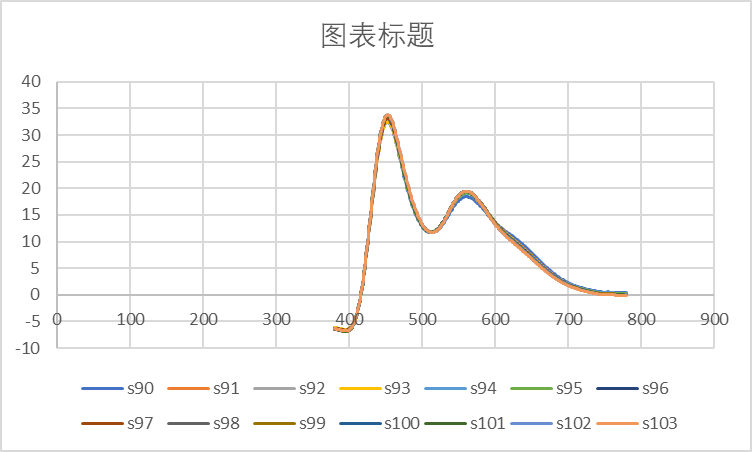
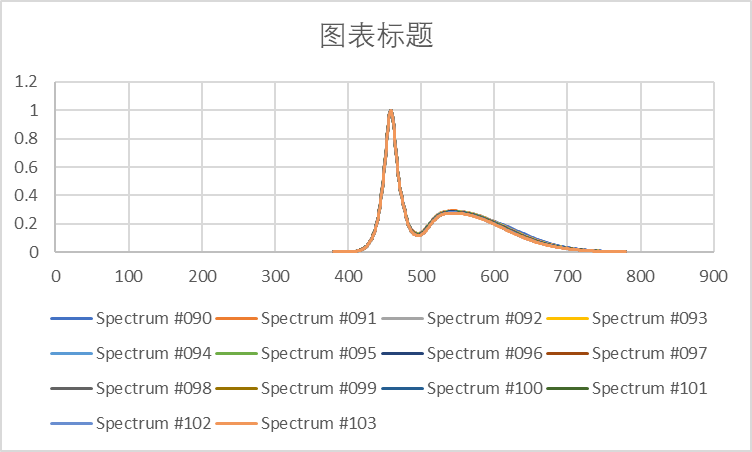
above is the reconstructed spectra, and below is the measured spectra by using an IS. and those spectra lie in the range of around 11, 000K and 14, 000K which you guys definitely will not encounter
I take 2 extreme scenarios, you can compare those spectra reconstructed with the measured ones. if those spectra are fed to color rendering index software, most R value are very close. I’d like the distribution of the 8 VIS filters to be more rational or perhaps more than 8 channels would be better.
my method is the orthodox way of computing:-)
LM3 happens to behave normally, hah. but at that time, considering all the resources they have, I think LM3’s method is still worth appreciation.
5 Thanks
I’d personally prefer to release a perfect product instead of pushing for updates continuously. but seems that’s not the way market works nowadays:-)
by the way, spectra reconstruction is the recommended and official way in their documentation, however the mentioned method is outdated and not workable as I posted long ago. and ams Shanghai staff told me they don’t know because ams headquarter in Austria kept it as a secret.
5 Thanks
Thank you Steve for your hard work.
Once there’s confirmation of new LM4s working properly I will have to be getting one 
2 Thanks
Hello, since it is a known fact that Radex Lupin old version without diffuser working fine, and new one isn’t for display/monitor testing.
device photos below:
What about OPPLE for display/monitor testing? Anyone tested diffuser removal from OPPLE device?

