MEASUREMENTS!
Finally got around to doing a performance measurement 
But first, because of the non-uniform surface luminance of the LEP light engine, the searchlight had to be tuned to focus at 100m (where the luxmeter will be) rather than at infinity.
Although the exposed phosphor in the LEP is 1mm in diameter, the non-uniform luminance results in only the centermost area having the claimed 1000cd/mm2, and this fades as you move further from the center.
If, for example, only the inner 0.1mm diameter area hits 1000cd/mm2, this area at 100m would have expanded to 100mm (10cm) which means that the spot projected from the outer edges of the reflector would only reach 5cm towards the center of the beam.
And clearly, 5cm in from the edge of a 200mm reflector, on either side, leaves a 10cm gap between them where it is not the high intensity die area being projected.
You can see in my collimation guide here how the light needs to be focused inwards to ensure all light hits the luxmeter if measuring a light with very small divergence.
Therefore, to ensure the true candela was being measured of the light, I adjusted the focus the same way I have for other lights, using a custom made calibration template.
This template was made in Adobe Illustrator specifically for this light, and designed to print on an 8.5x11 sheet of paper, which is what I have at home. This template below is for focusing at infinity, as the circles are centered exactly at the 18 points.
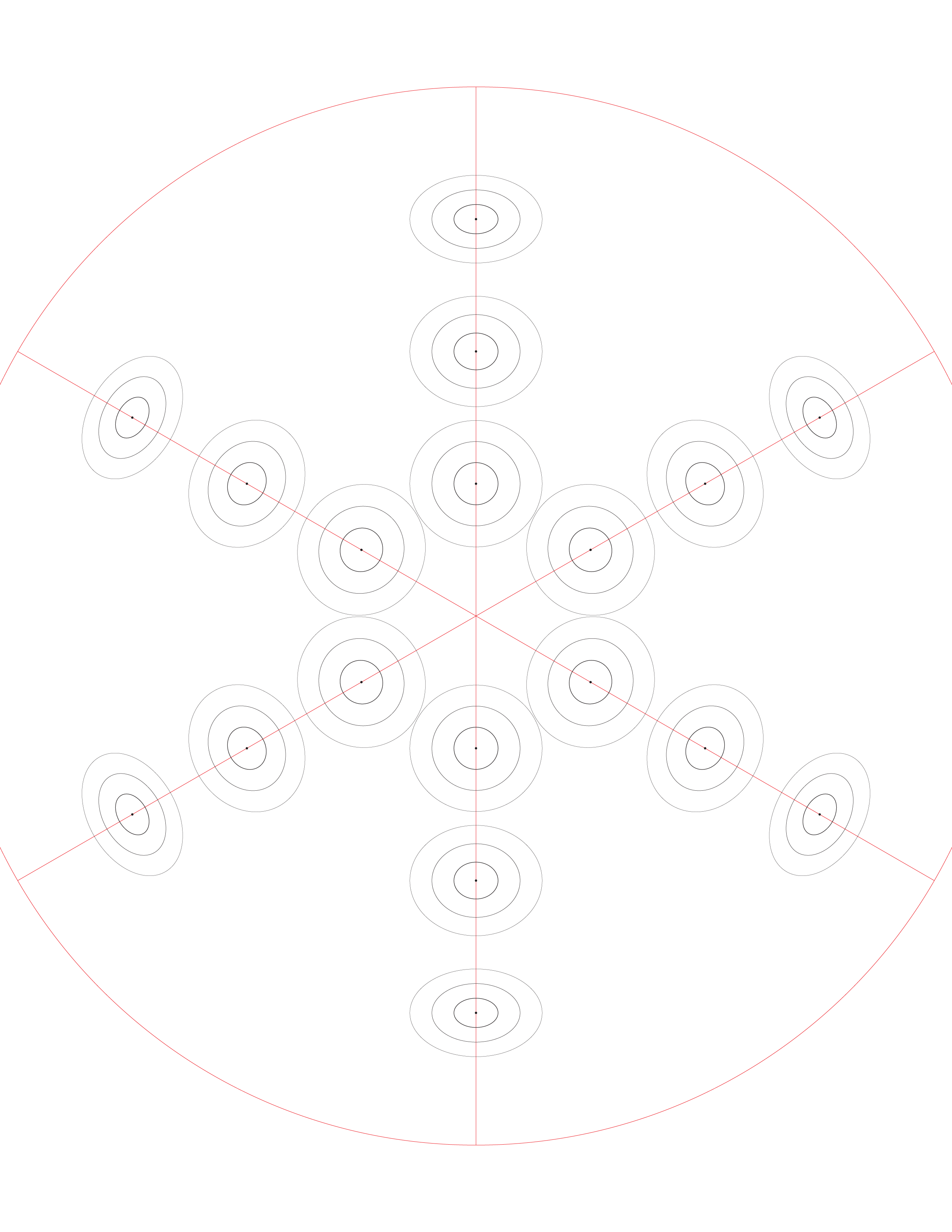
The template is designed to be printed twice. One piece has holes poked through at the locations of the dots, and the second piece is placed a few meters distance away as the target.
This is the second template I made:
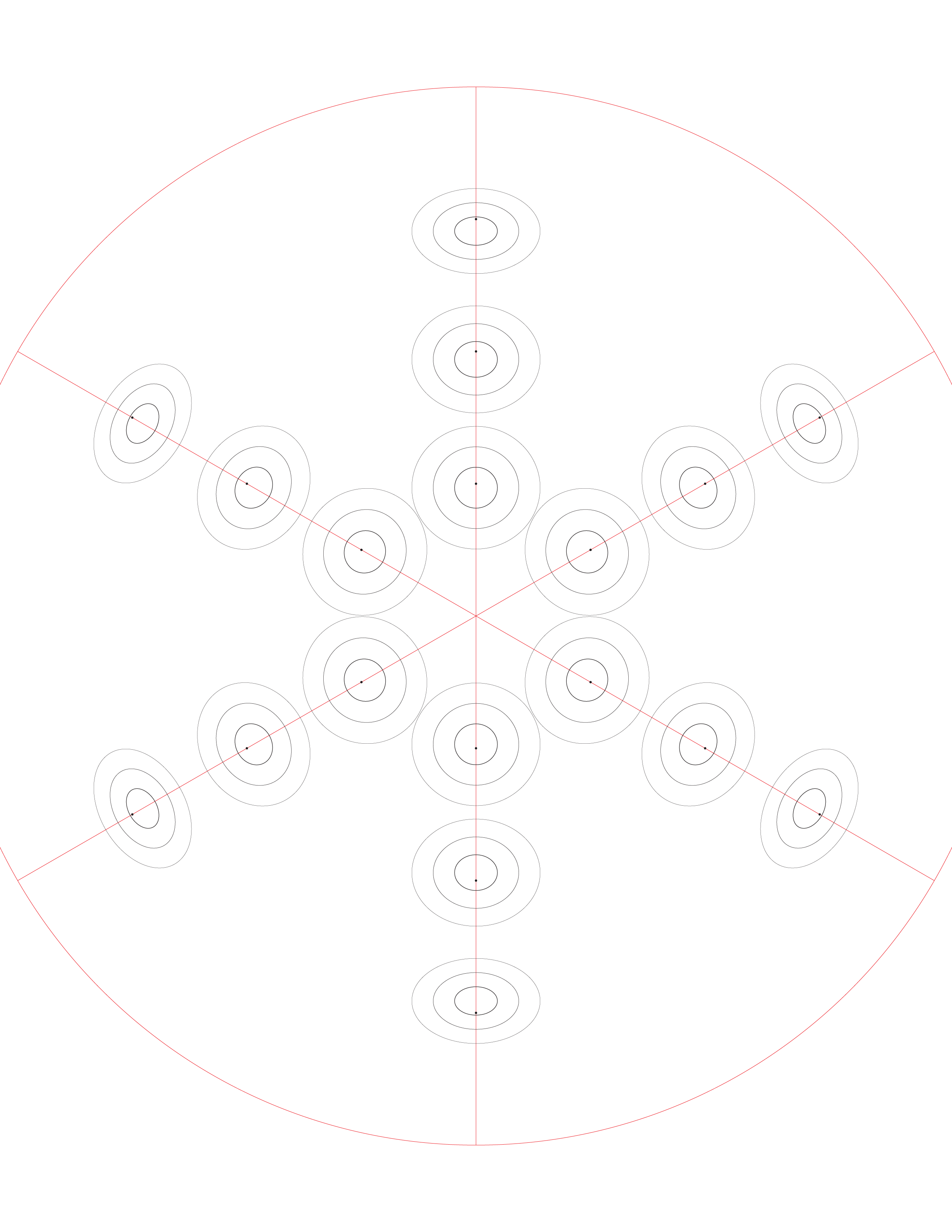
You can see I shifted the circles inward by 3%, because I wanted to calibrate the focus at 3m, for being fully overlapping (at the center) at 100m.
The points should not move, only the targets which are the circles.
Then I took one piece of paper and poked 0.5mm holes in all 18 spots, and stuck it on the searchlight.
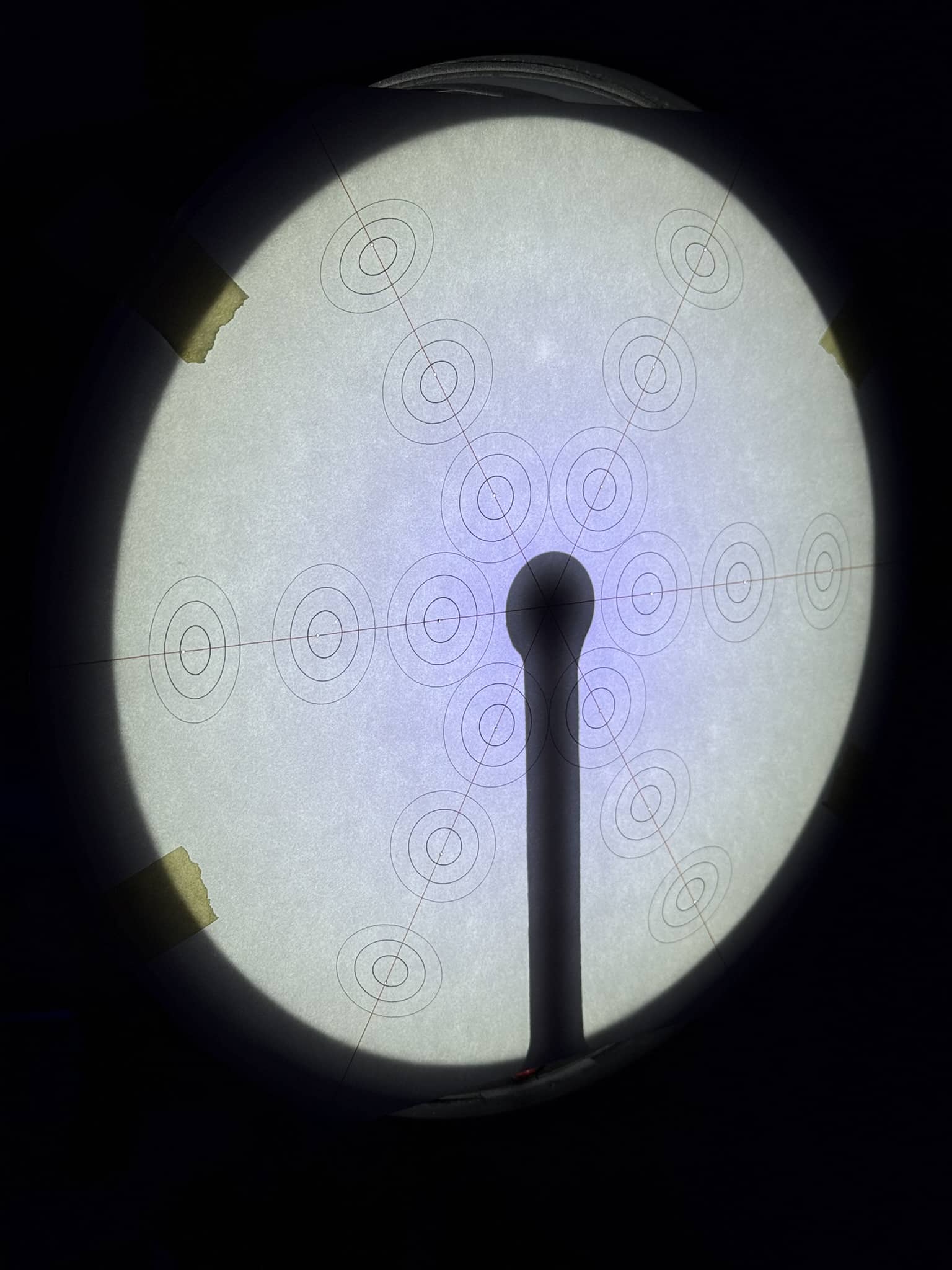
Three meters away, I stuck the second template to a wall and aligned the projected die images as best I could to the slightly offset circles.
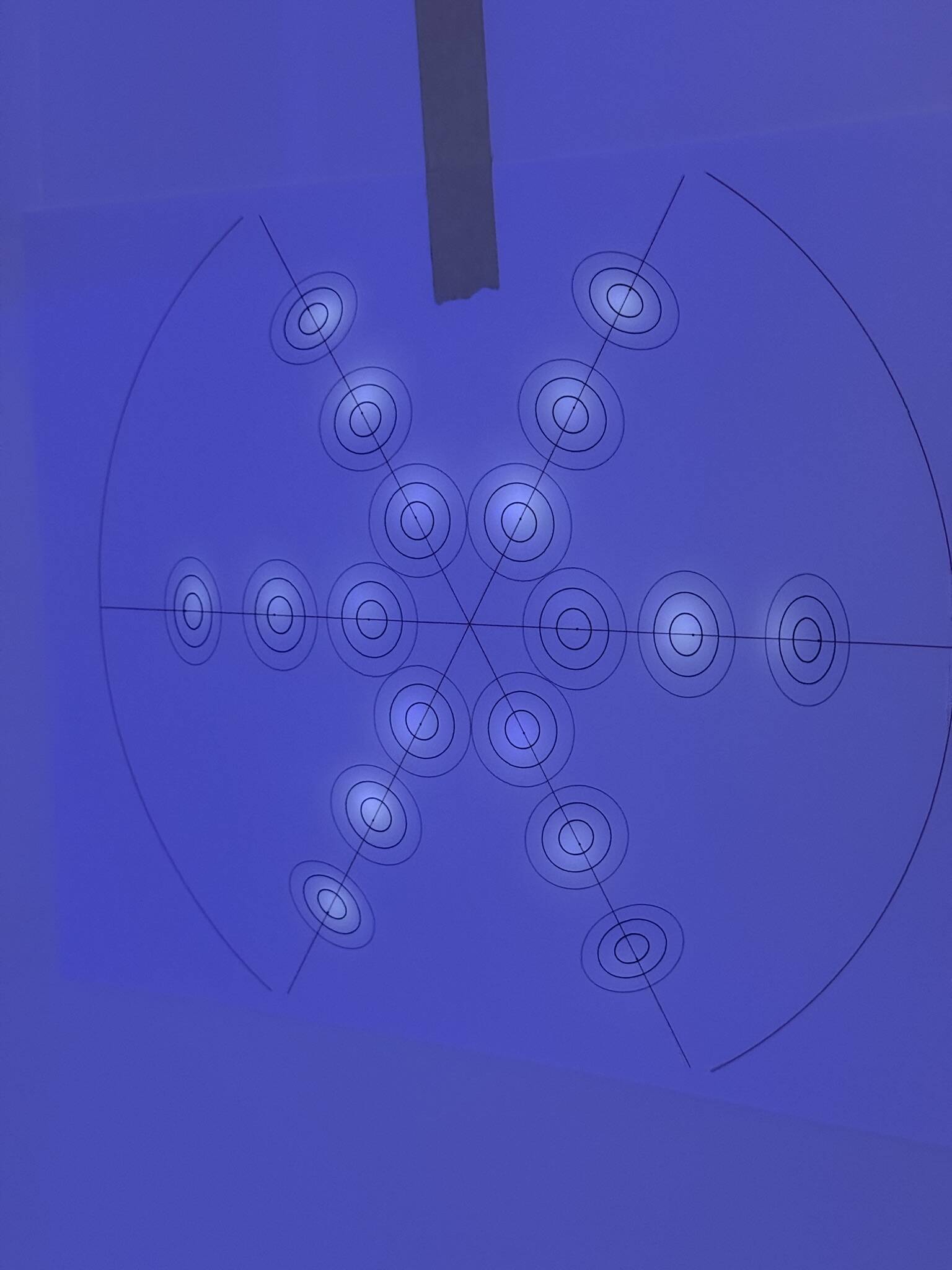
It took a while to get right, but after this I was certain that the beam was converging by 1% per meter, and therefore should be fully focused at a single point at 100m.
Next was the actual measurement. I performed this in a long underground garage with the 100m distance measured by a UNI-T LM100EX laser distance meter (+/-2mm accuracy)
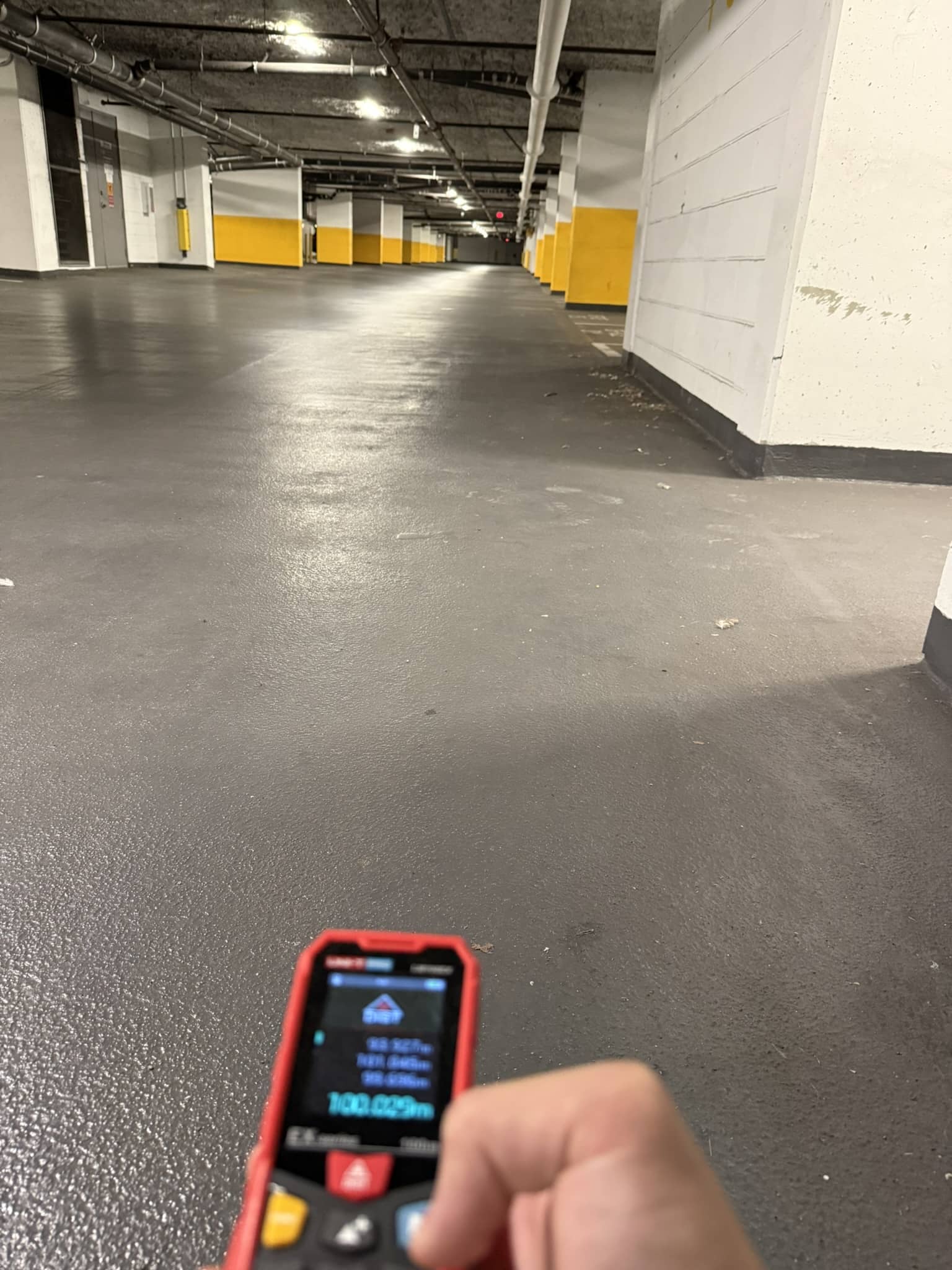
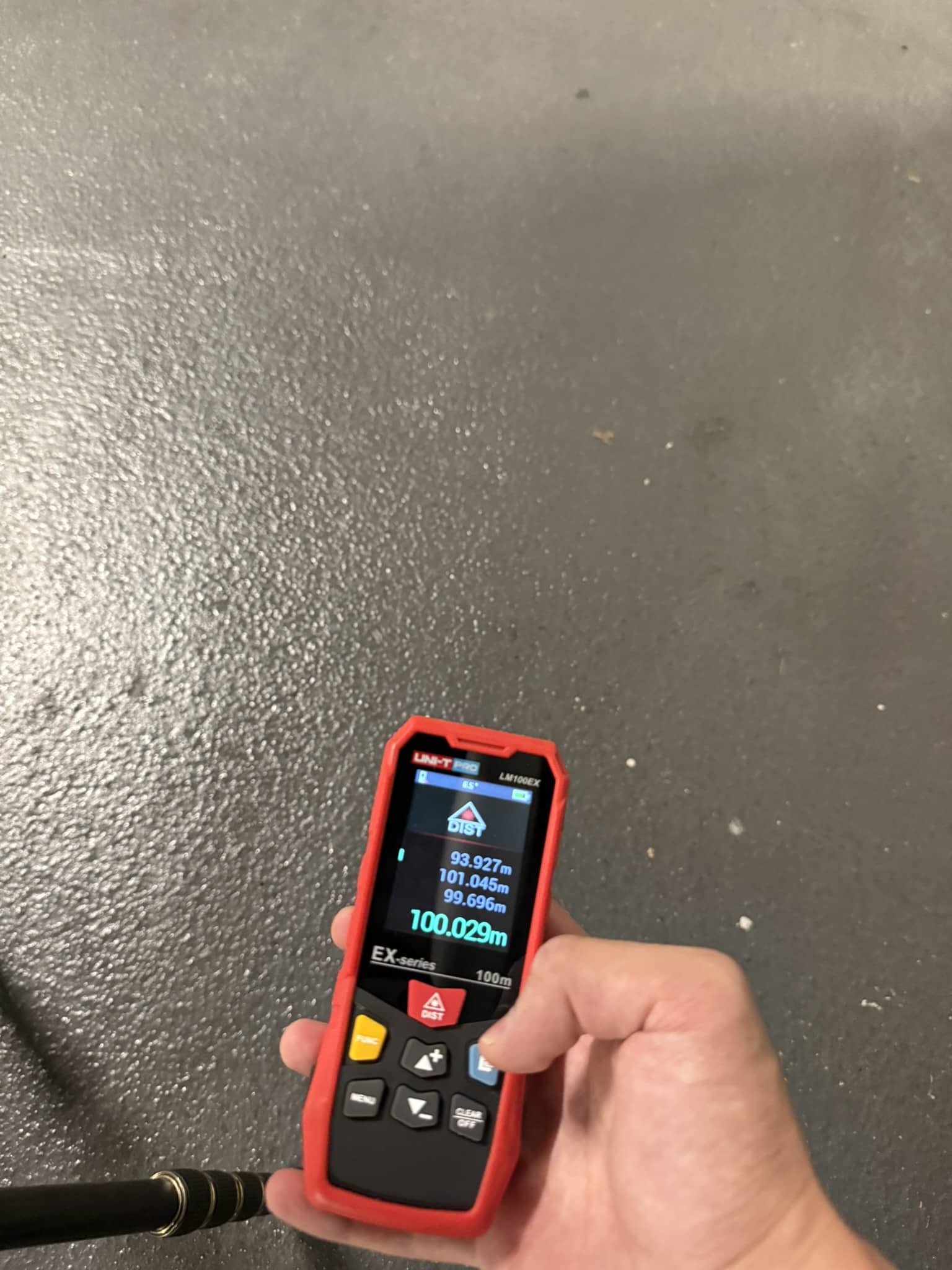
I then went to the end of the garage and took an ambient light only reading with my janky triple luxmeter target board.
This board has all my luxmeters taped to it with their measurement heads placed together as close as possible.
The three luxmeters are the TASI 632A, TASI TA8132, and Dr. Meter LX1330B.
From what I have heard, the 632A is the closest to professional grade Class A luxmeters.
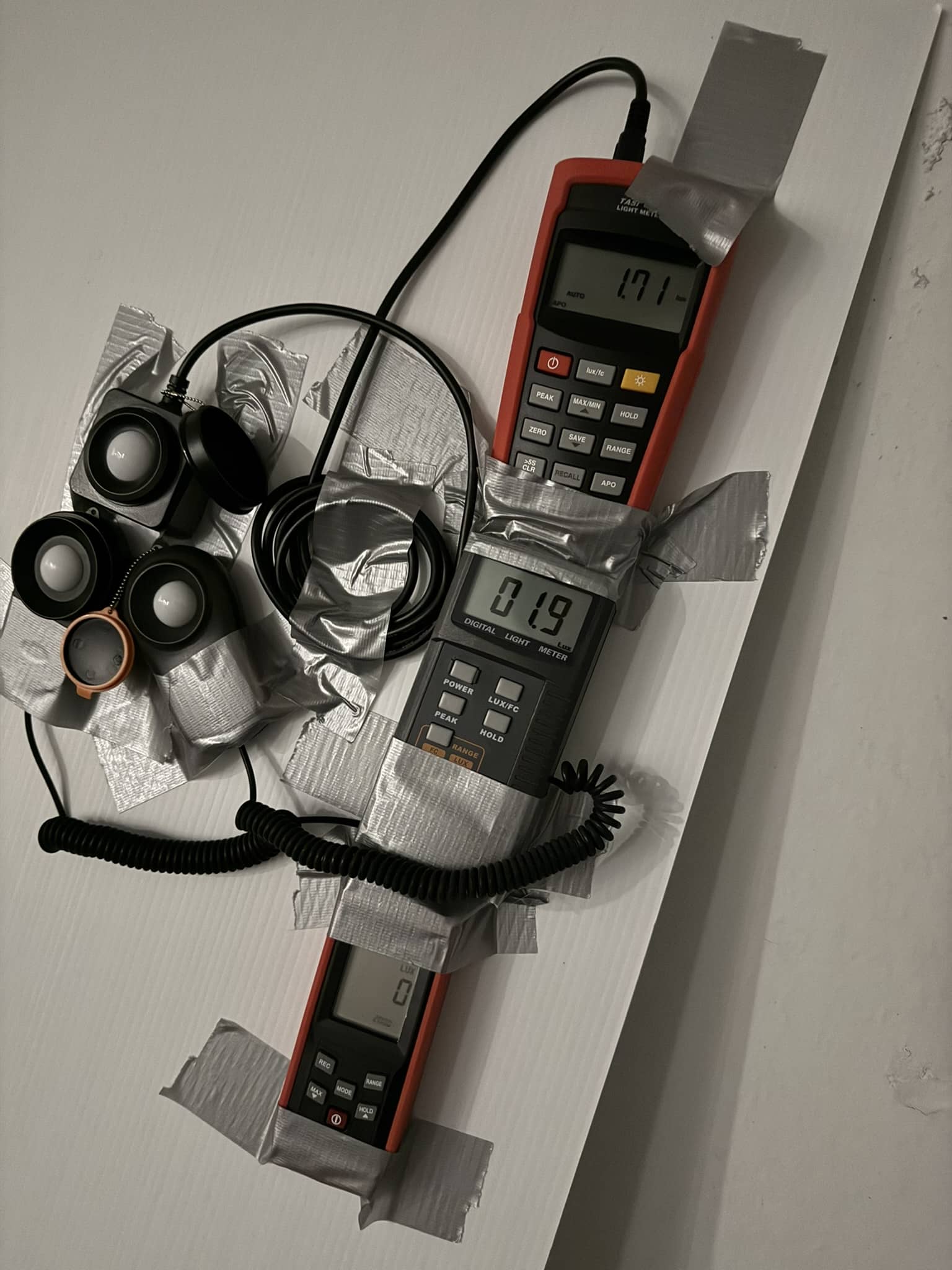
Ambient light was below 2 lux, essentially insignificant.
At turn on I got a very high 2700 and 2850 lux from the bottom two meters, while the top meter (632A) was farther out of the hotspot and was reading lower. It appears I had aimed the searchlight a bit too low and I also couldn’t move the board down more because it was already resting on the floor. So after taking this picture I decided to rotate the board 90 degrees and just hold it up myself in the hotspot.
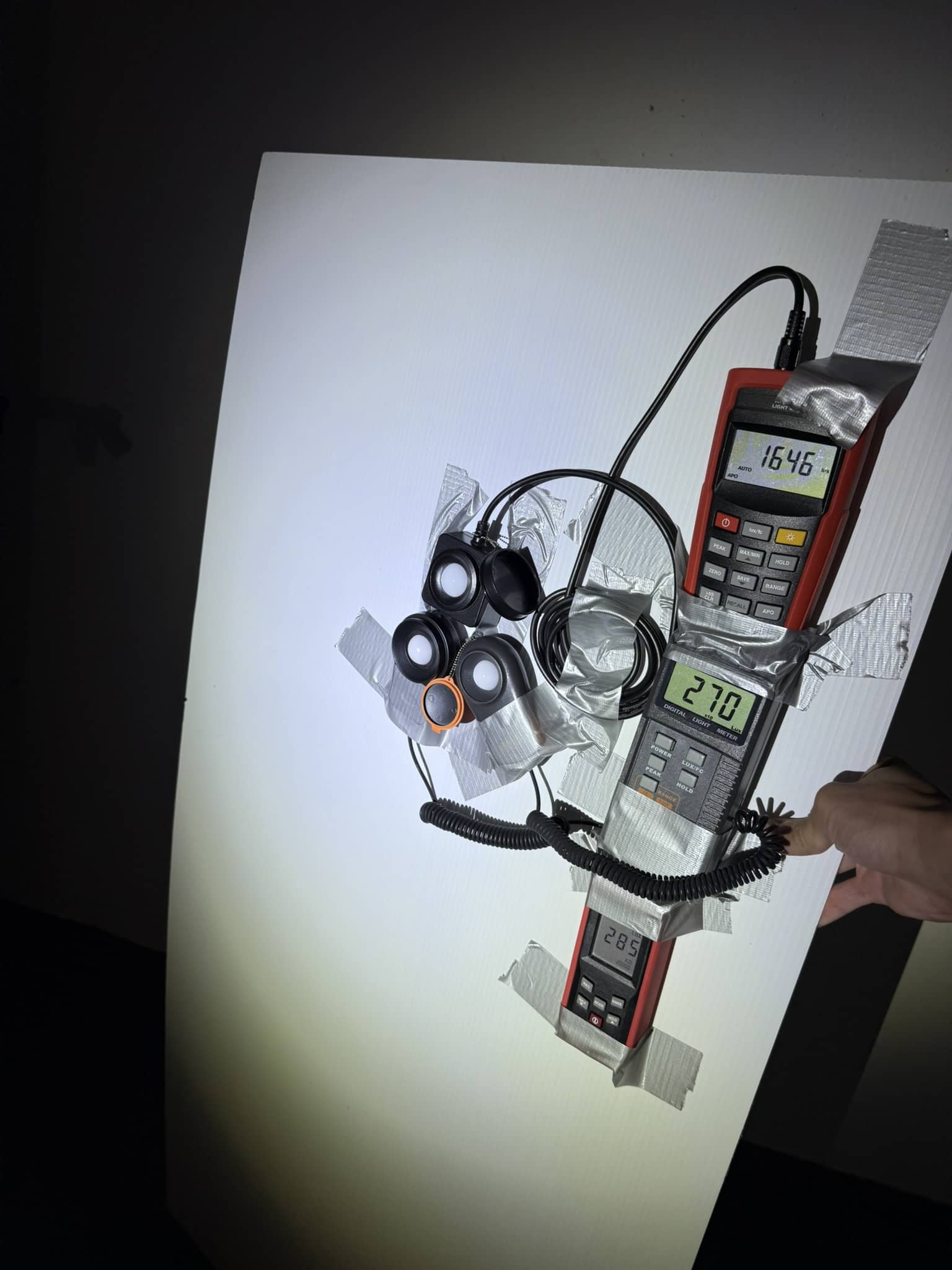
With the board rotated I could now put all three meters in the center of the hotspot. This was the reading a minute or two into the light being on, which explains the slightly lower readings from the bottom two meters compared to the previous image.
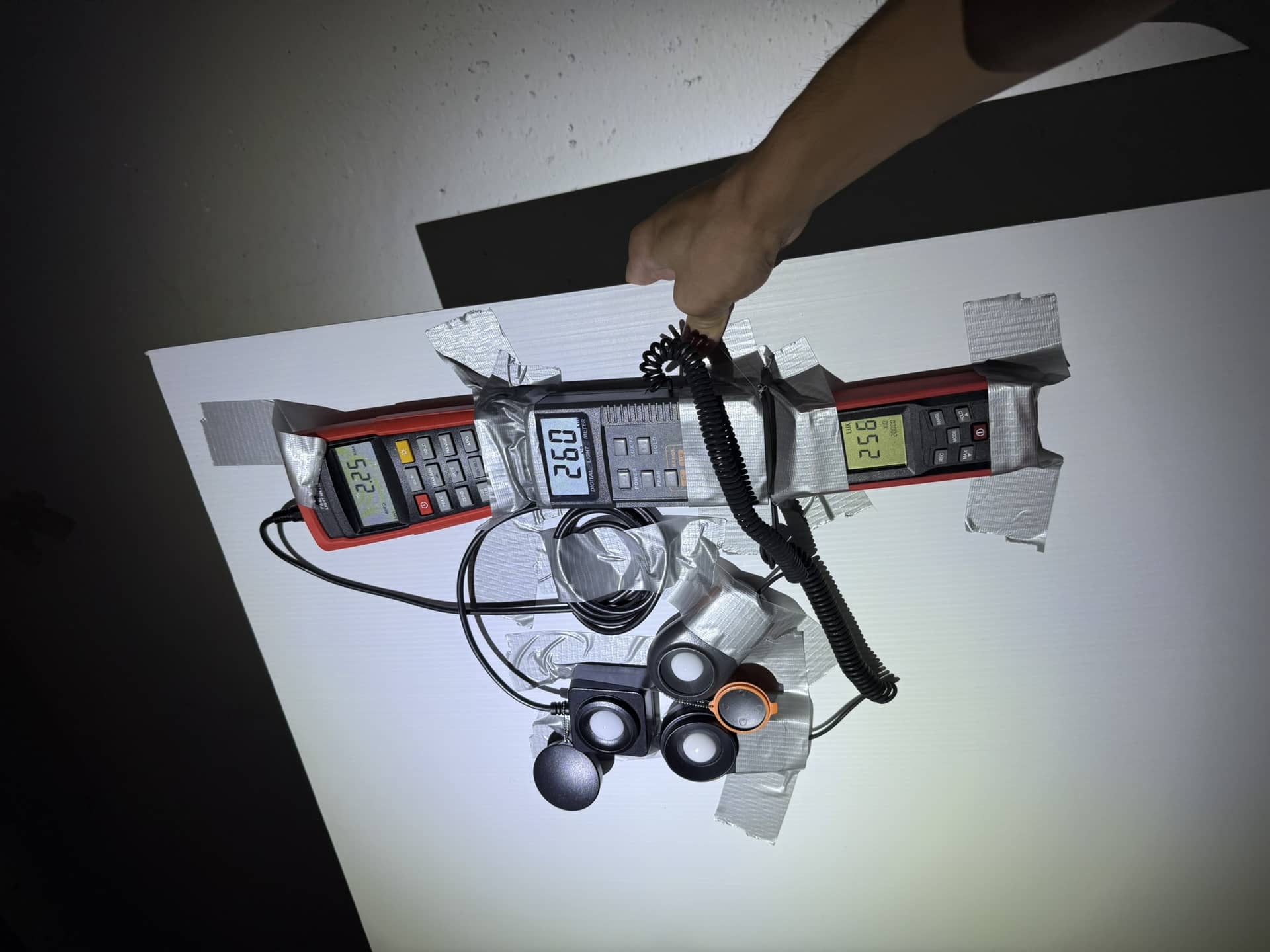
That is 2250 lux from the TA632A, 2600 lux from the LX1330B, and 2560 lux from the TA8132.
Because this measurement was taken at 100m, we can calculate this back to 1m by multiplying the lux by the distance squared, so 100^2.
That results in:
22 500 000cd
26 000 000cd
25 600 000cd
This is very much in line with the expected 25Mcd from my theoretical calculations, and a great success in my opinion 
Thanks for following the project everyone! Stay tuned for the next ones coming!