1100 lumens of white light, a green laser, a red or UV LED, and a magnetic ring to switch between them. Let’s see how the compact Acebeam K1 EDC flashlight performs in its new red version and what to expect from it.
Stated Specifications

- Model Name: Acebeam K1
- Maximum Brightness and Beam Range: 1000 lumens, 223m
- Brightness Levels: 9-200-1100 lumens
- Battery: 14500 Li-Ion
- White Light LED: CREE XP-LR 6500K
- Body Material: Aluminum Alloy
- Size and Weight: 110 x 25.5 x 26 mm, 77.4 g \ 4.3" x 1" x 0.8", 2.7oz
- Other: White Light, Red or UV Light, Laser
 ACEBEAM K1 at: ACEBEAM WEBSITE | ALIEXPRESS |
Packaging and Design
A small, neat orange-gray cardboard box with a transparent front panel. Remarkably, the packaging is completely sealed, and you need to tear off a die-cut strip to access its contents.


After tearing off this strip and opening the box lid, we see a plastic tray containing the flashlight, a manual, and a separate black box containing accessories. This is a good decision, as usually everything included in the kit except the flashlight and the battery inside falls out of the tray when you take it out. In our case, this box contains^
- lanyard
- short USB-C to USB-C charging cable
- bag with spare O-rings


The manual is short, as UI of Acebeam K1 is straightforward. Well, it’s almost straightforward, because access to the strobe is simple, yet unexpected.

A lanyard is usually a very inexpensive addition to the kit, something I don’t pay much attention to, but I’ll digress this time. I prefer thick, rounded lanyards, but I can’t help but note that Acebeam may include a simple, flat lanyard, but it’s a good one. The brand name is immaculately printed, the plastic is excellent, and the lanyard width limiter adjusts. It seems like a small detail, but it’s pleasing to both the eye and the hand.

Tail button and head with three LED types make Acebeam K1 definitely larger than some flashlights powered by a 14500\AA battery, it comes close to compact 18650-powered flashlights. Still, Acebeam K1 is a compact flashlight overall and certainly fits within EDC dimensions. While a side button instead of tail one would make the flashlight a centimeter shorter, the magnetic ring for selecting the light type makes the tail switch the only available control method.
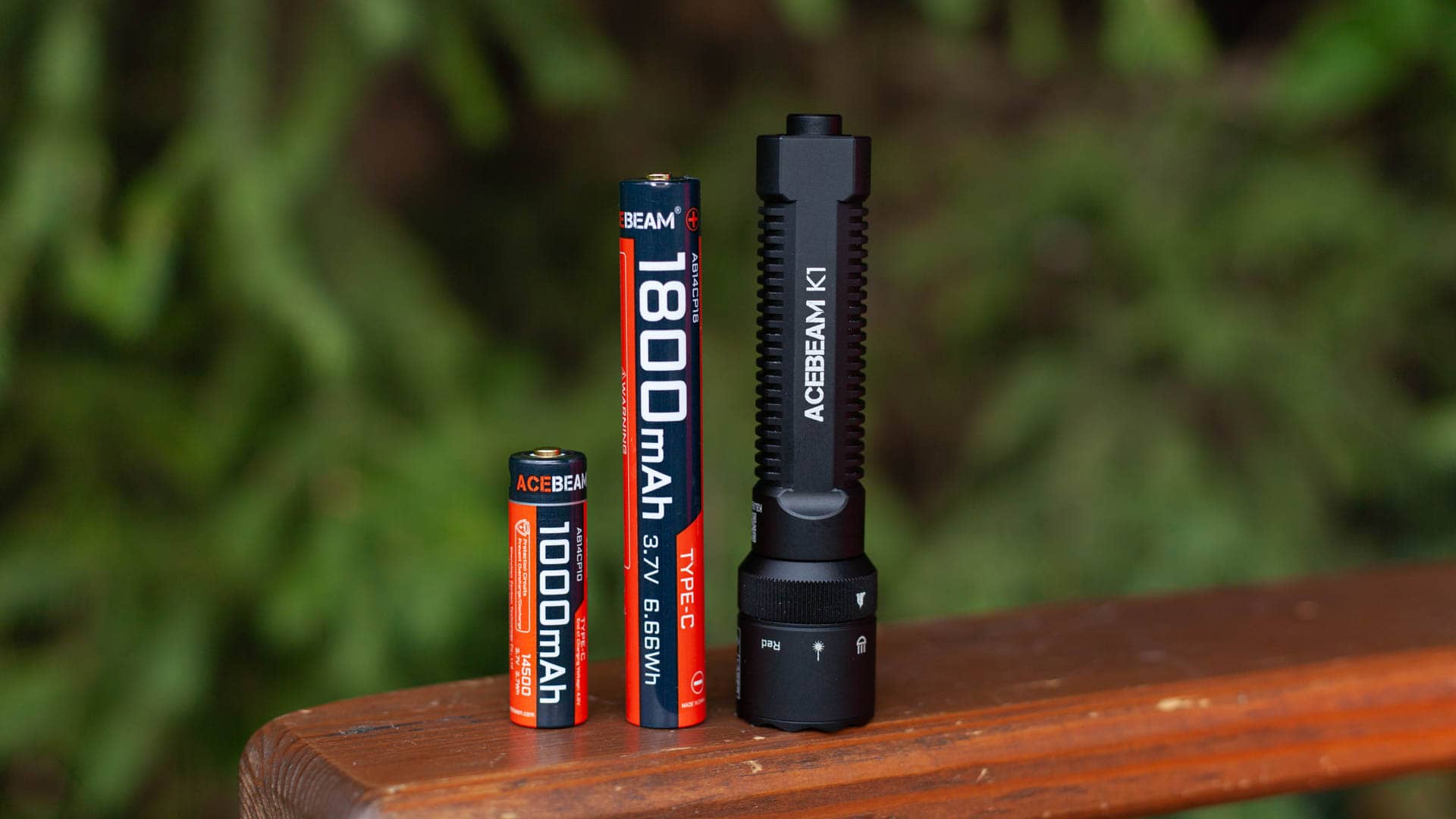
Acebeam is a major manufacturer that has always had a superb design for it`s flashlights, and I consider K1 no exception. Despite the lack of any fancy details, flashlight is immediately recognizable brand model, not sort of cheap model from nearby tool store. I like designers’ decision to cut off two opposite sides of a cylindrical body and make them flat, placing the model name and clip on them.
I received the classic, austere black anodized version, but for those who prefer a more cheerful color, there are green and blue versions. I’m glad it’s matte anodized; I always thought the glossy finish was cheaper and more boring.


As I`ve mentioned above, one of the resulting surfaces features a large model name, and the other has a single-sided clip held in place with two screws, which can be removed if desired. The knurling on the other two rounded sides is deep. The machining is impeccable.


The grip (both forward and reverse) is quite comfortable and secure. The flashlight fits comfortably in your hand.


The tail of the flashlight features a classic open spring, while the head features a contact pad with mechanical protection against the use of flat-head batteries. Well, one spring in tailcap is enough for such sort of flashlights.


The Acebeam K1 features a classic control system with a power tail button. It’s flat and metal, with concentric ridges. It’s unlikely that anyone will actually need to stand the flashlight upside down, but K1 can tailstand if necessary. However, the button isn’t wide enough to provide a secure base.
The button stroke is soft, and the click is noticeable.


Now it’s time for the fun part. Flashlights powered by 14500 batteries aren’t as common as those powered by 18650 or 21700 batteries, but they’re far from uncommon. When releasing such a flashlight, it makes sense to give it something special, either in appearance or functionality. And in the case of the Acebeam K1, that means three different LEDs in a single head. Yes, we’ve seen something similar in other flashlights , but those are much larger flashlights. And I haven’t seen anything like this among the 14500 models.
As you might have already predict, switching between light modes is accomplished by turning the magnetic ring under the head. It’s all very self-explanatory: simply align the marking with the desired position, and the light switches.


The head unit consists of a small, smooth reflector with a long-throw CREE XP-LR white light, a very small unknown reflector for the red LED, and a holer for laser output. All of this is covered with coated glass with an anti-reflective coating.


The last thing worth mentioning is the battery. The flashlight doesn’t have a built-in charging port (which is expected for the 14500 model), but the battery can be charged directly via the built-in charging port. The charging indicator is very simple: the red light turns green. A full charge takes two hours.


UI
Full-pressing the tail button turns the flashlight on at the last brightness setting. After turning it on, you have three seconds to press the tail button fully to select one of three brightness levels for White LED and two Red\UV.
Strobe: quickly rotate the magnetic ring from the white light to the laser position and back.
Important! You have four seconds after turning it on to change the brightness. After this, pressing the button twice more (OFF-ON) will recall the last brightness level stored in the mode memory.
HOW ACEBEAM K1 ILLUMINATES
Runtime
As a reminder, the brightness levels are: 9-200-1100 (650 lumens after thermal cutoff).
Brightness stabilization is excellent, and the flashlight lasts a fairly long time at good brightness levels. Those 150 minutes at MID mode of 200 lumens are more than enough for a casual walk. And half an hour at 650 lumens after thermal cutoff from Turbo is quite a high level, which you’d expect from a full-size flashlight with an 18650 or 21700 battery. It’s worth noting that the line at the very bottom of the graph for MID mode is apparently the LOW level of 9 lumens, and when the battery switches to this level, it can’t handle MID-HIGH, and the flashlight switches to this mode. As Low mode lasts a very long time, I’ve only included part of it here; otherwise, the section on the MID level would be very narrow.

But I have some questions about the distribution of brightness modes. 9 lumens is a good and useful brightness when it comes to working at extremely close range, like searching on a shelf or illuminating a keyhole. I was surprised to see that next level is 200 lumens. The brightness that, for many compact flashlights powered by 14500\AA batteries, could actually be considered as HIGH mode. An intermediate level of 80-90 lumens between 9 and 200 lumens would definitely be appropriate. And some brightness level, say, 450 lumens, could be set even above 200 lumens. Judging by the graph above, the flashlight could easily handle them. Acebeam TAC2AA, reviewed a couple of days ago, has an example of perfect mode spacing

Light Samples
Cree XP-LR is a real long throw LED, so you get what you expect to get in case of lof thrower - classic cold white light with CRI ~70. Not that cold, btw, around 6000K which is certainly OK. If you are unfamiliar to it, just remember popular Luminus SFT-25R. That is almost the same.
As for the light distribution, it’s unique. The purely long-throw CREE XP-LR, in our case with a shallow smooth reflector, produces a very small and very bright long-throw center. The side illumination is quite bright, though not enough for tasks like soldering, where diffused light is obviously needed. Well, you wouldn’t solder with a handheld flashlight anyway.
I believe that with this light distribution, the Acebeam K1 is more of a walking/walking light, a compact light source with enough brightness and throw to reach much further than you’d expect from a flashlight with an AA-sized battery.
The light examples are for the included battery; when using AA batteries, the maximum brightness should be lower.
White Light


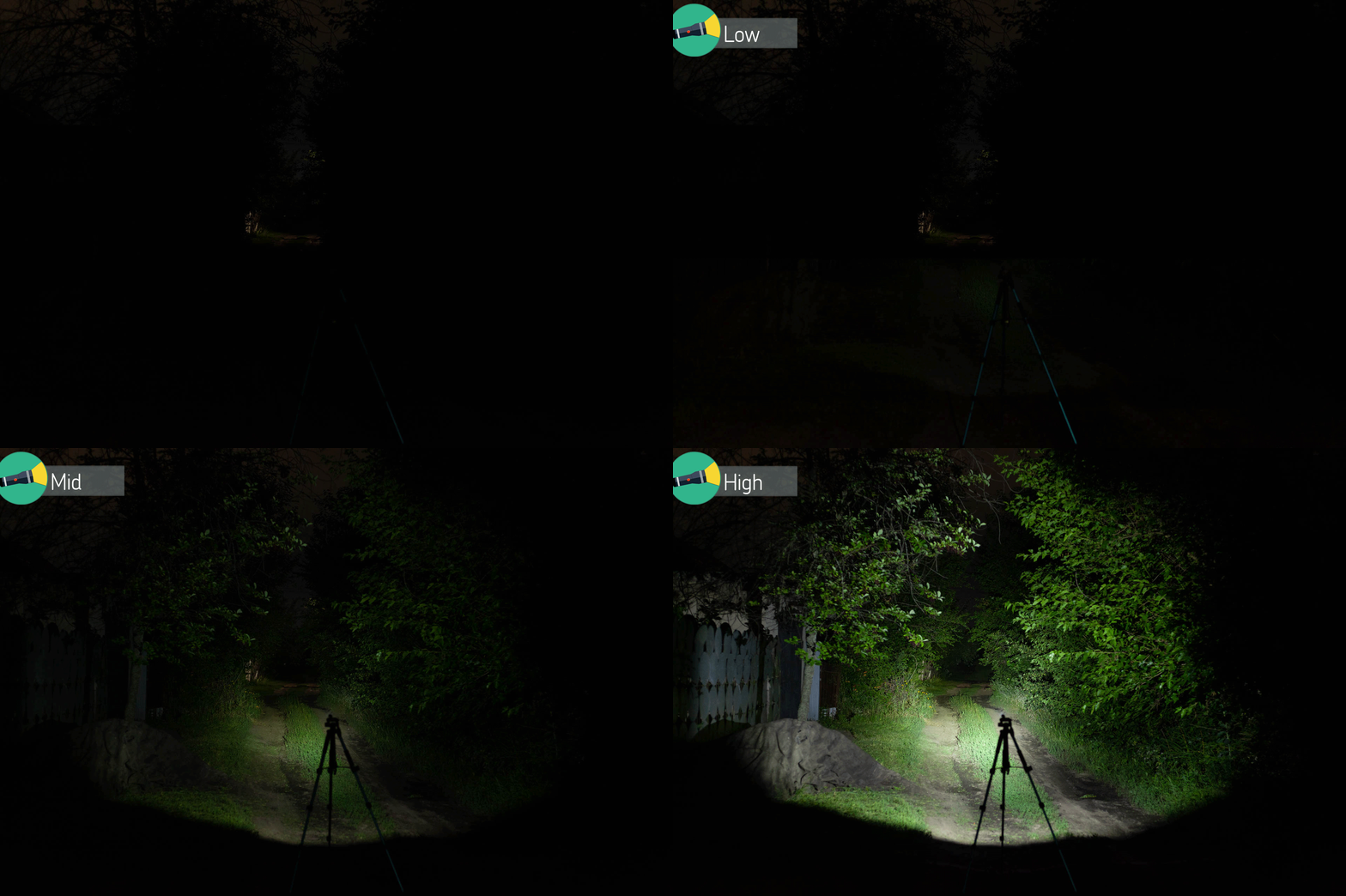

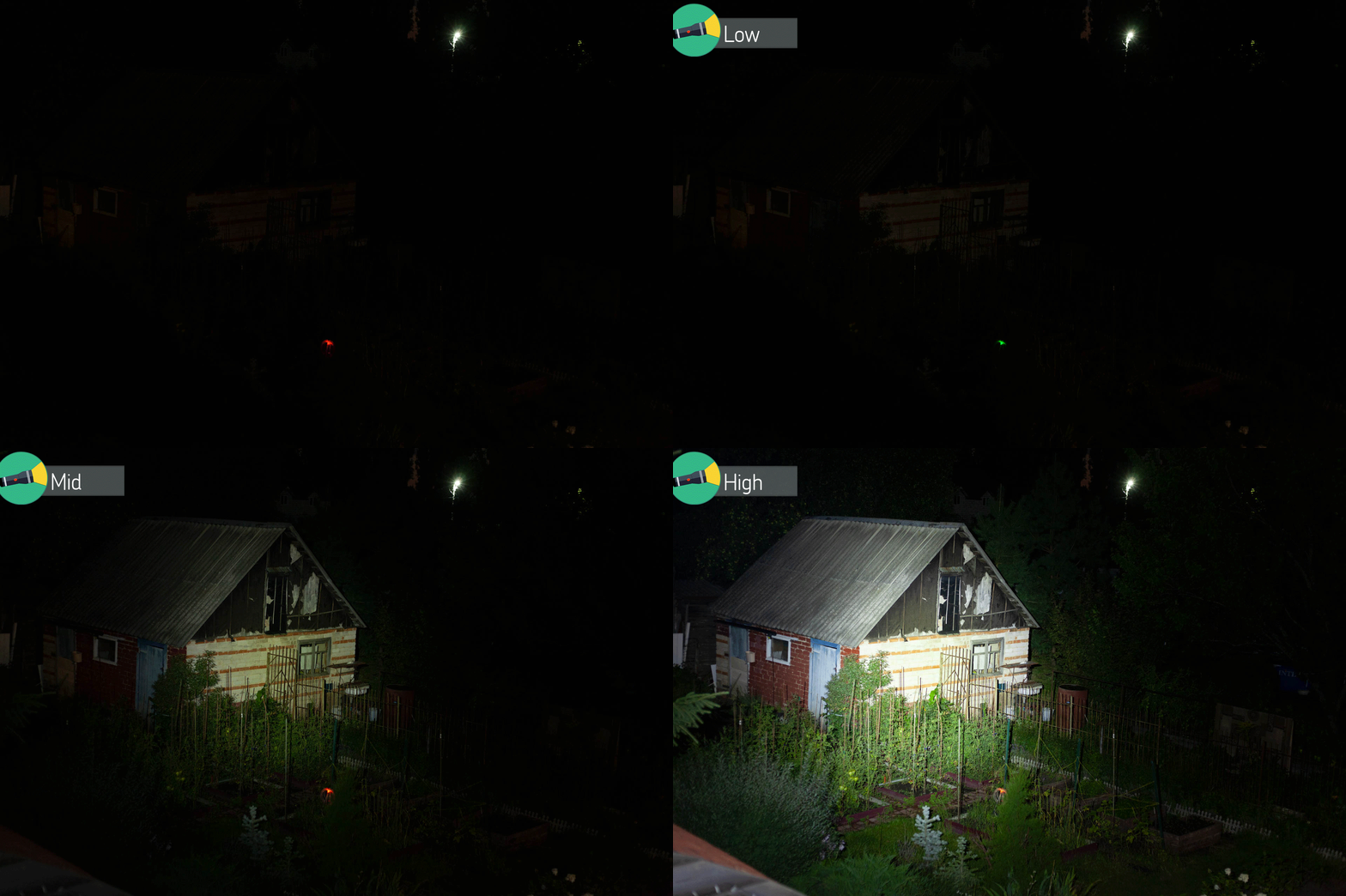

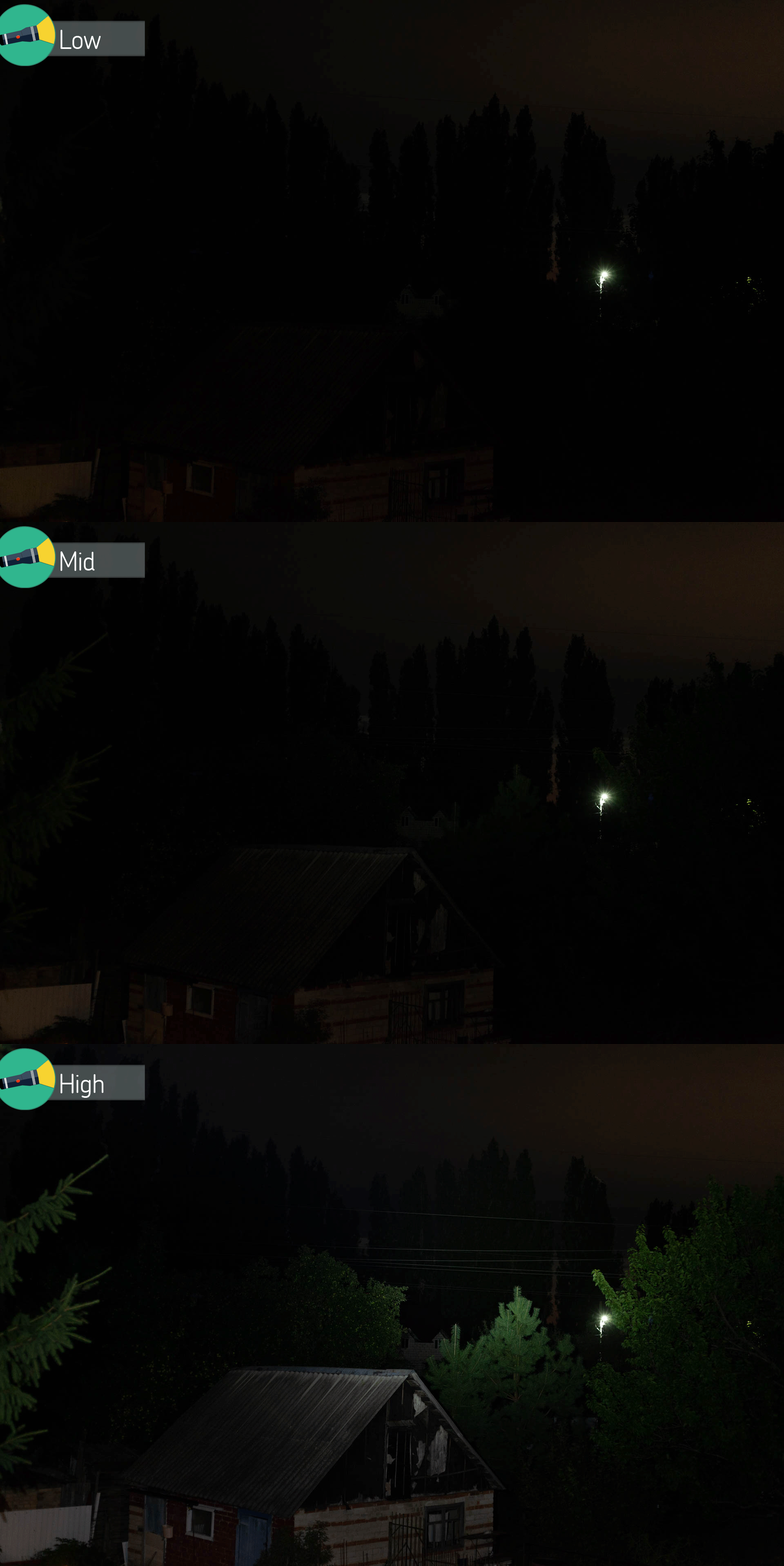
I have no questions about the range. A brightness of 200 lumens is usually quite sufficient for a walk, and the specific nature of the LED means it also has decent long-range illumination. You can illuminate a path 15 meters ahead, then move your hand slightly and inspect something 50 meters away. And at maximum brightness, you can see objects 170-200 meters away.
The poplars are exactly 100 meters ahead.
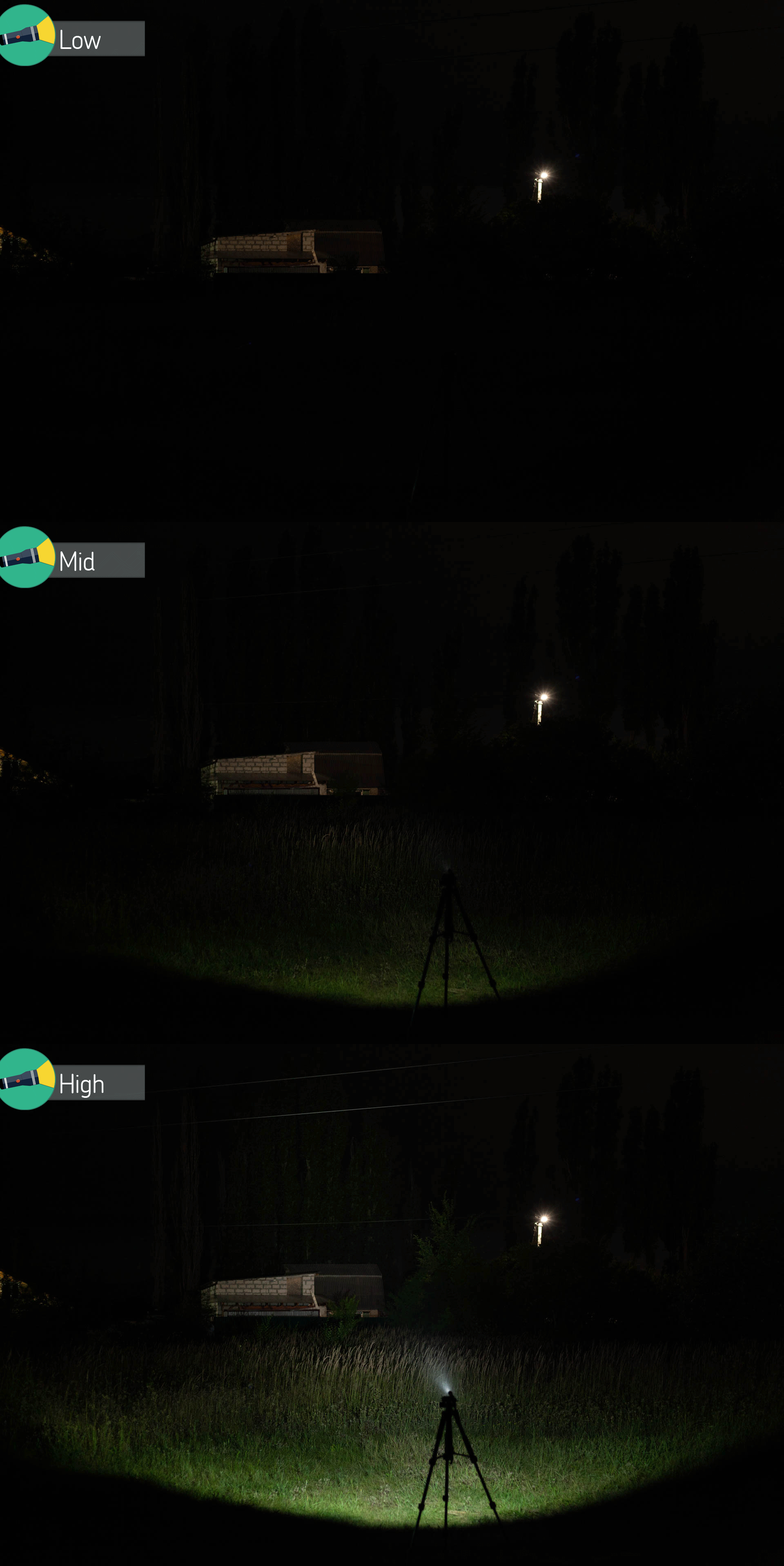

And about 170 meters to them. As expected, true long-range illumination is only possible at maximum brightness.

Red Light
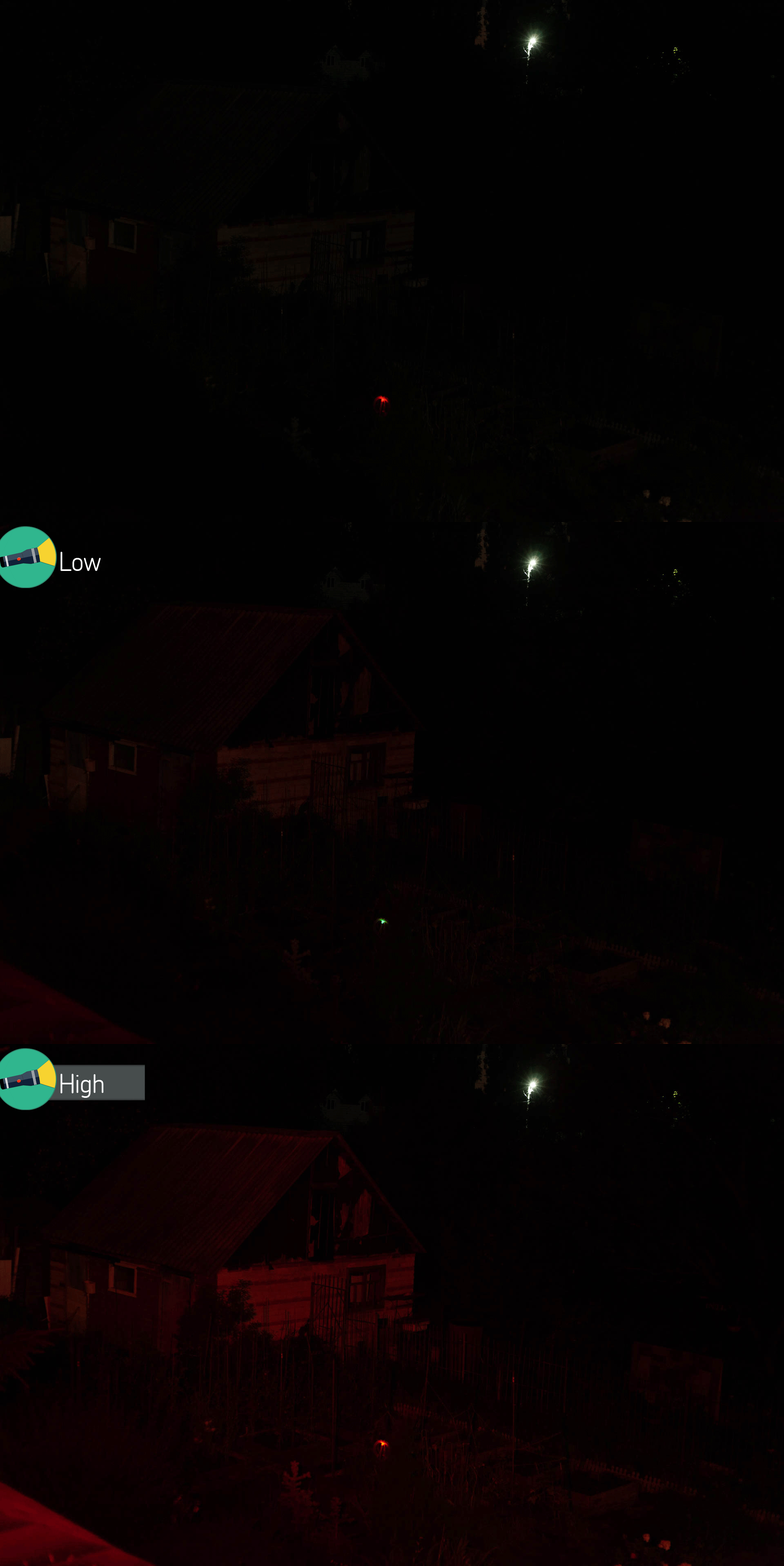
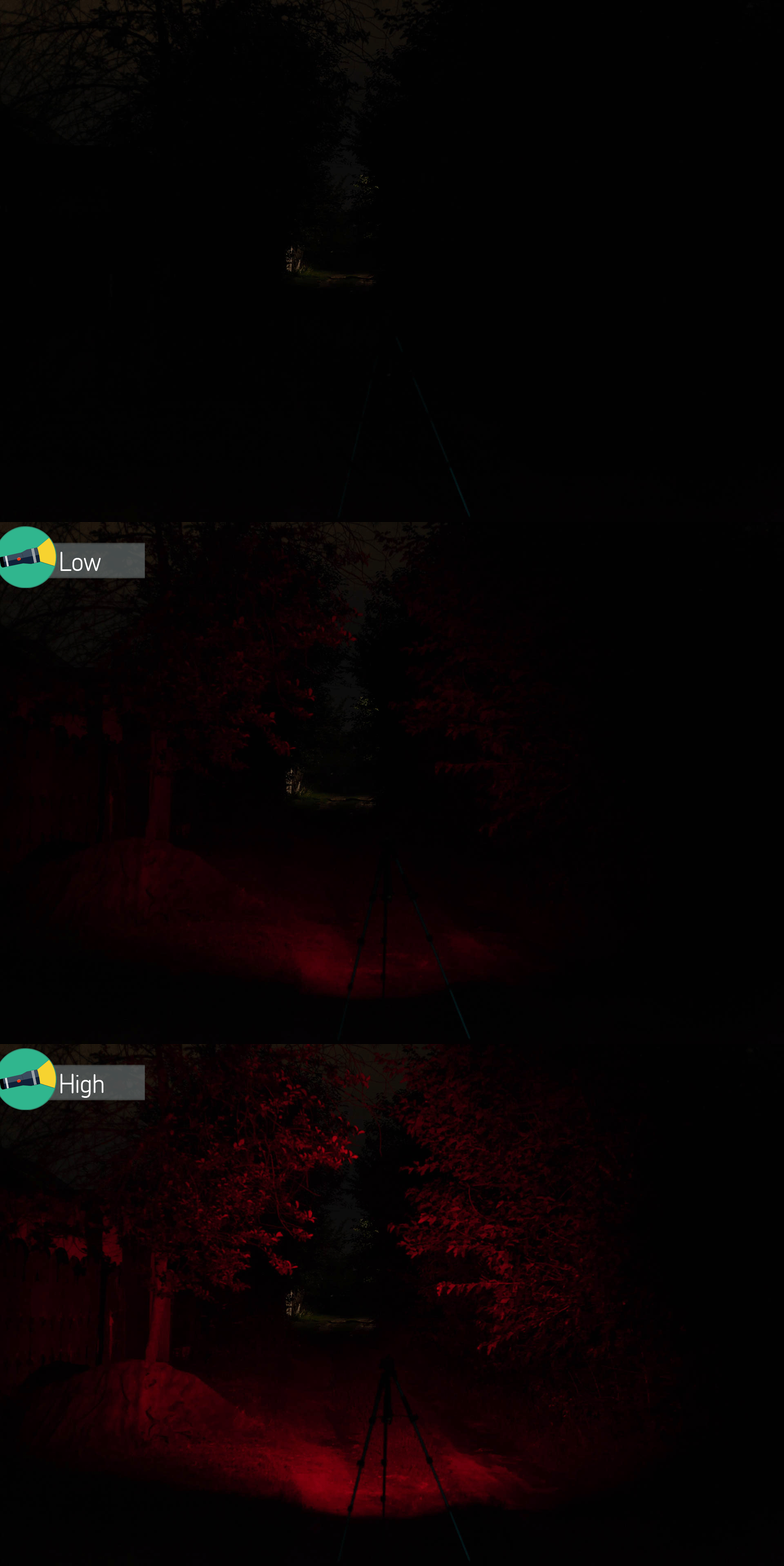
As for the red light, it’s very, very bright. There’s also a not-so-bright option, if needed; there are two levels to choose from. It’s a useful addition for times when you need to preserve night vision or simply avoid attracting attention from people or insects attracted to the light.
HIGH mode of red light is really bright on photo, but it is less bright in reality. looks like sensor of camera collects more red light comparing to human eye.




Laser
I’ve never felt the need for a laser, but K1 has one, and that’s great - the more functionality, the better. The laser can function not only as a pointer or a cat toy, but also as an ultra-long-range beam, which, at a distance of a couple hundred meters, spreads far enough to illuminate something. Not really spread , though, that is laser…
Important! I got the green laser version, but I`ve seen comments to orders at Ali, where people mentioned they got blue laser.
OVERALL
Due to their size, compact flashlights powered by a 14500 battery almost always have only one primary white light. Acebeam tried to add versatility to the flashlight while maintaining its compactness as much as possible, and they created an EDC combo for those who need minimal size and maximum light options: classic white and red (or UV) light plus a laser. A complete set for fundamentally different lighting needs.
K1 seems to be more suitable for those, who prefer long-throw light and the longer runtime at distances, that would require usual more floody EDC to switch to a higher brightness level, resulting in shorter runtime. Conversely, if floodlighting is more important to you, you shouldn’t expect it from the K1 (I’m not including experiments with sanding the glass or applying tape).
Important! As a reminder, I got the red version, but there’s also a basic version with a UV LED with the correct wavelength of 365 nm. There are two power levels, with the highest being 1000 mW.
That is good 365nm UV, which will reveal a lot of things that you would`t like to see, when you turn flashlight on in kitchen or toilette. Choosing red or UV is a personal choice. I think UV is more useful for everyday use - it can be used to detect fluid leaks or verify the authenticity of money or documents. Red, on the other hand, is more useful outdoors.
By the way, if you buy at Ali, store linked above only offers the UV version. If you need the red version, please leave a comment to order when place it.
Pros
- Appearance
- Light versatility (several different light sources, UV or red light to choose from)
- Brightness stabilization
- High maximum brightness
- Ability to maintain high brightness for its size
- Excellent throw
- Supports standard AA batteries
Cons
I would like to see 1-2 additional intermediate modes