The EDC series from Nitecore was significantly expanded last year. The newest addition is the EDC07 – a flashlight with some differences compared to other models in the series.
The character of the flashlight is less tactical, with simple and classic operation. It could even be seen as a link to the smaller keychain models.
You can find the German version of this review on my website: SammysHP Blog › Nitecore EDC07
The flashlight was provided by the manufacturer for this review. Thank you very much!
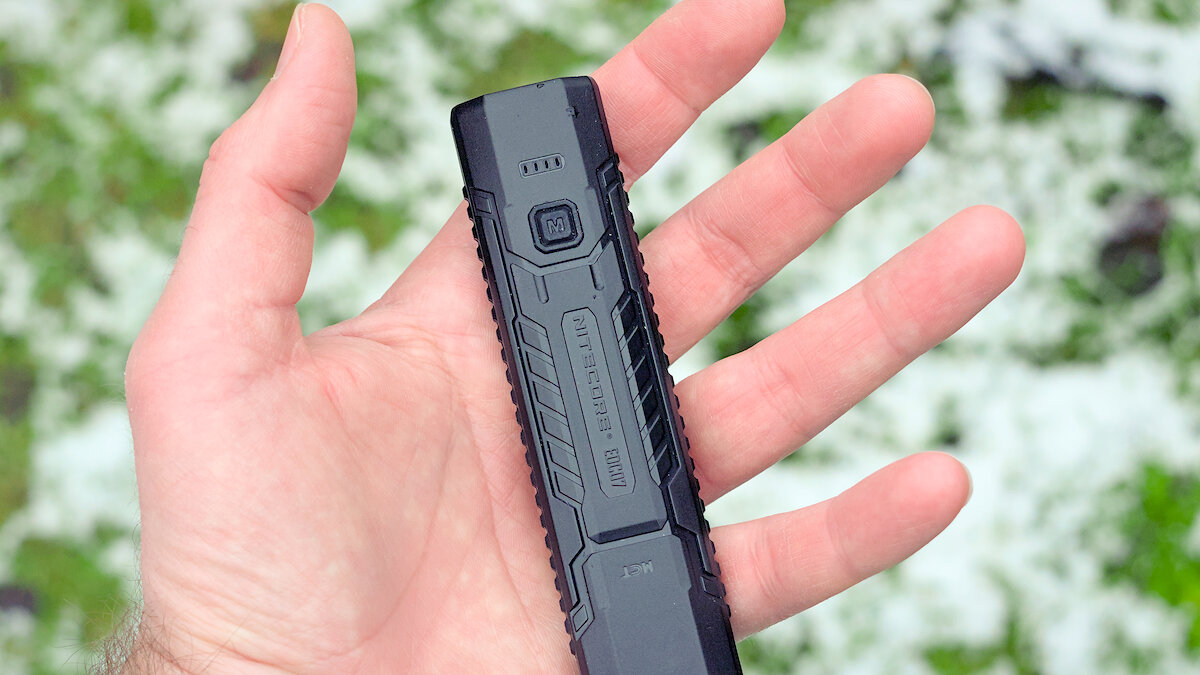
Overview
For this review I received a pre-production sample that came without packaging or a printed manual. However, the user manual as a PDF was already available in ten languages (EN, ES, DE, FR, RU, UA, IT, EL, PL, ZH) and it clearly explains all functions. The flashlight is so intuitive to operate that you hardly need the manual at all. Included in the package are a USB-C charging cable and a lanyard.
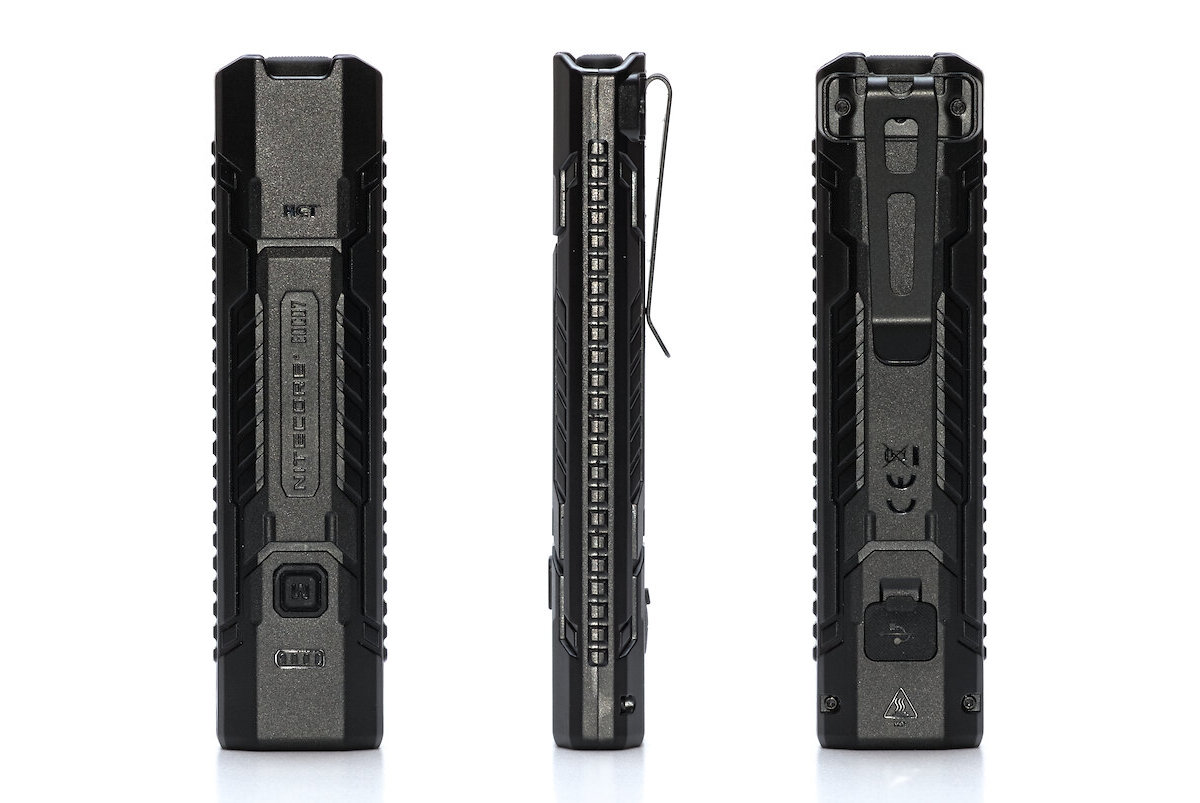
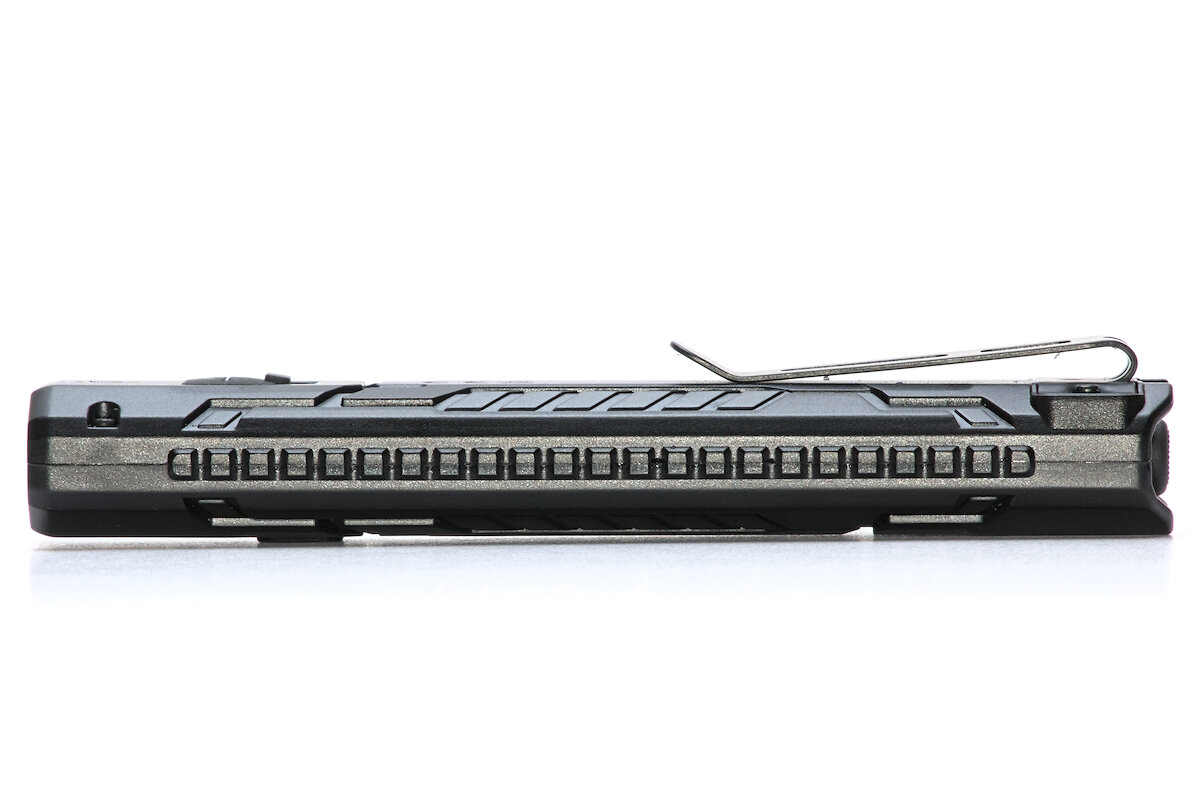
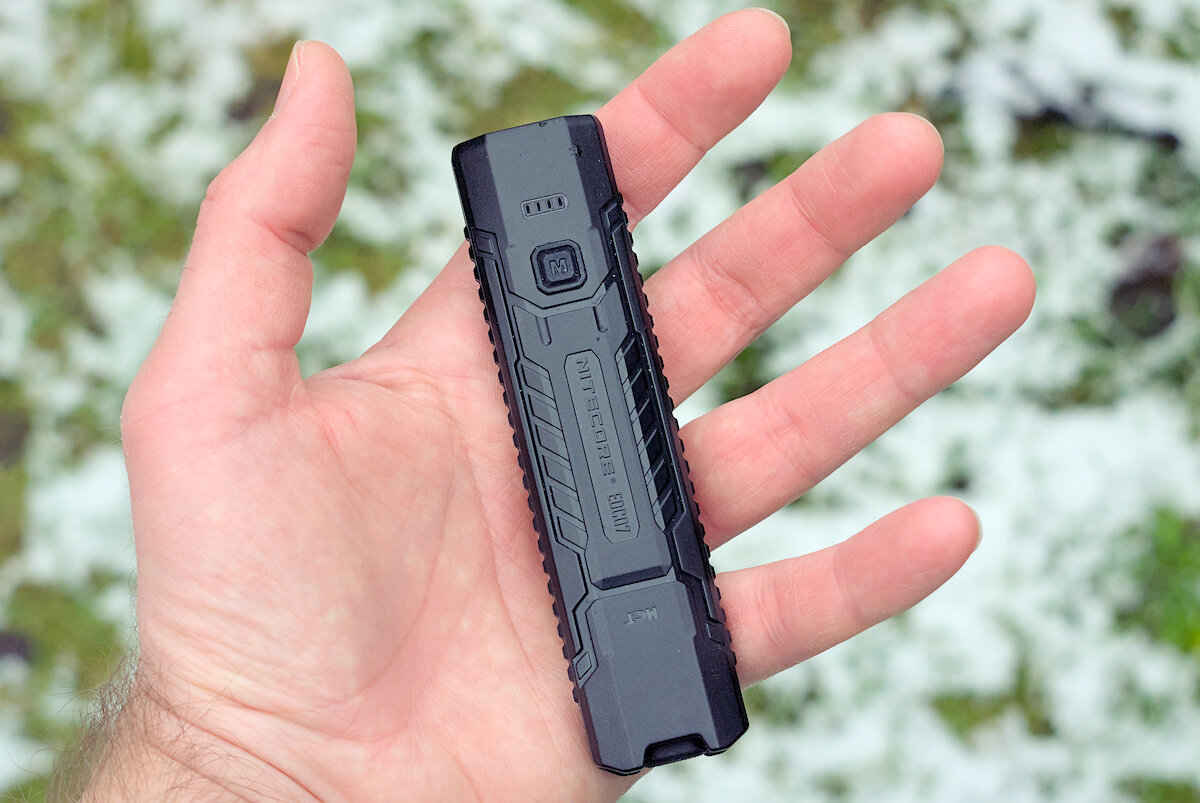
With its long, flat body, the EDC07 is barely noticeable in your pocket. This gives it an advantage over round models with the same battery capacity. Many design elements will feel familiar if you already know the EDC series, such as the herringbone pattern or the serrations along the sides.
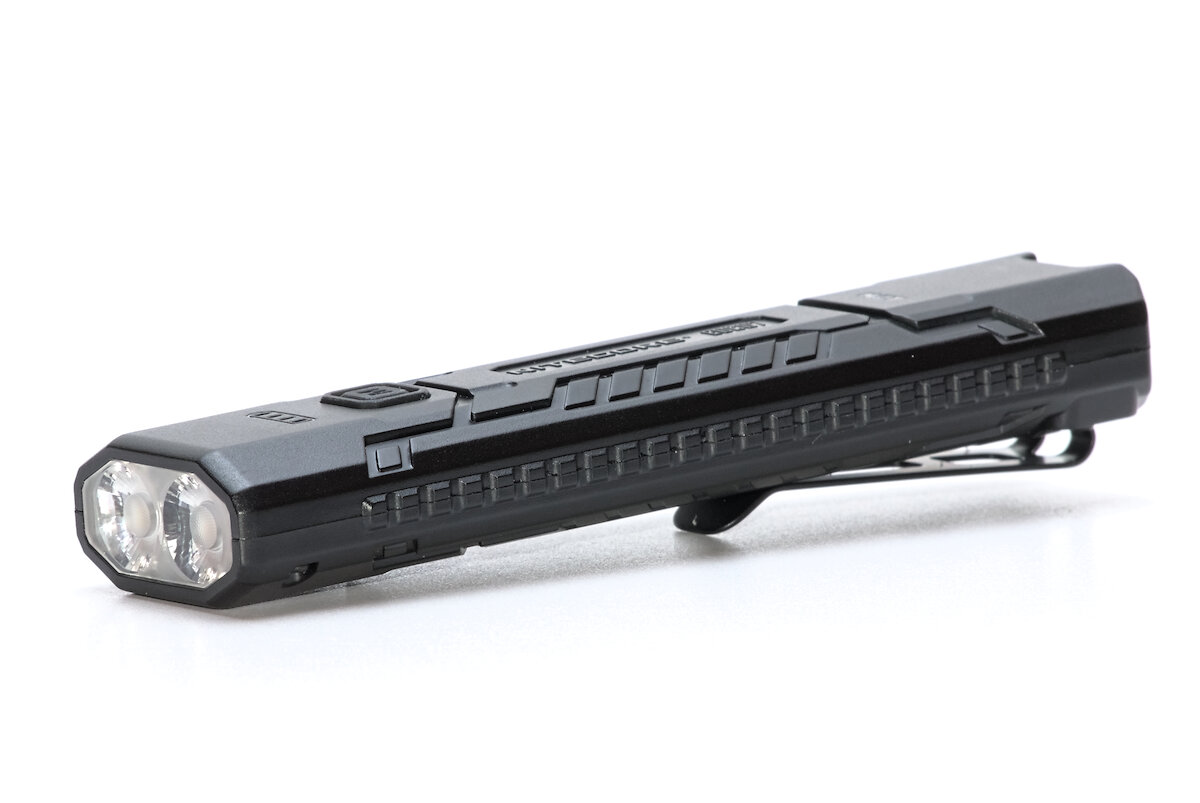
Even though the design bears a certain resemblance to other flashlights in the EDC series, there is one major difference: the body is made entirely of plastic. While earlier models also featured plastic components, most of their construction consisted of powder-coated steel. I hadn’t expected a plastic body, so I was initially a bit surprised and skeptical. However, the material also has its advantages: at just 70 g, the flashlight is very lightweight and the body does not heat up as quickly during operation.
Length: 120 mm
Width: 30 mm
Thickness: 16 mm
Weight: 70 g
At 120 mm, the EDC07 is actually longer than I initially expected. In terms of function and performance, it is most comparable to the Nitecore EDC09. Both use two MCT LEDs with adjustable color temperature and offer similar brightness levels. The shorter EDC09 fits a bit better in my pocket.
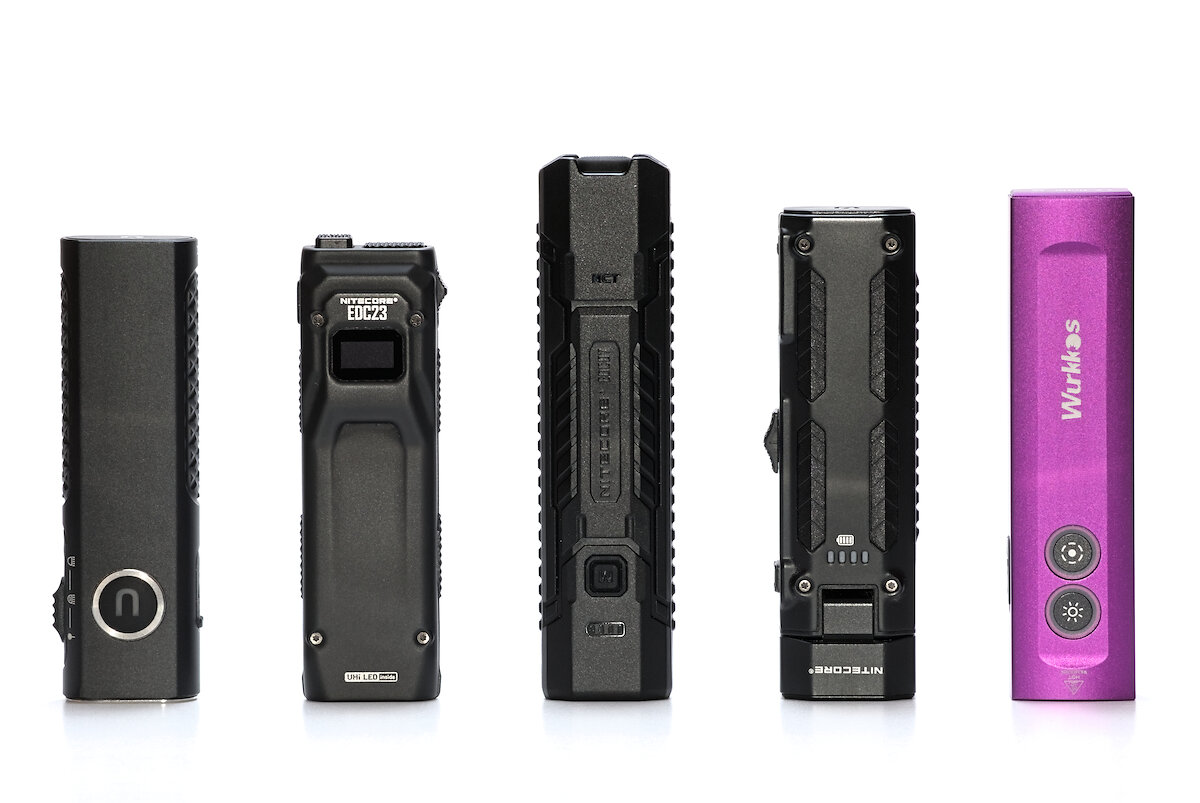
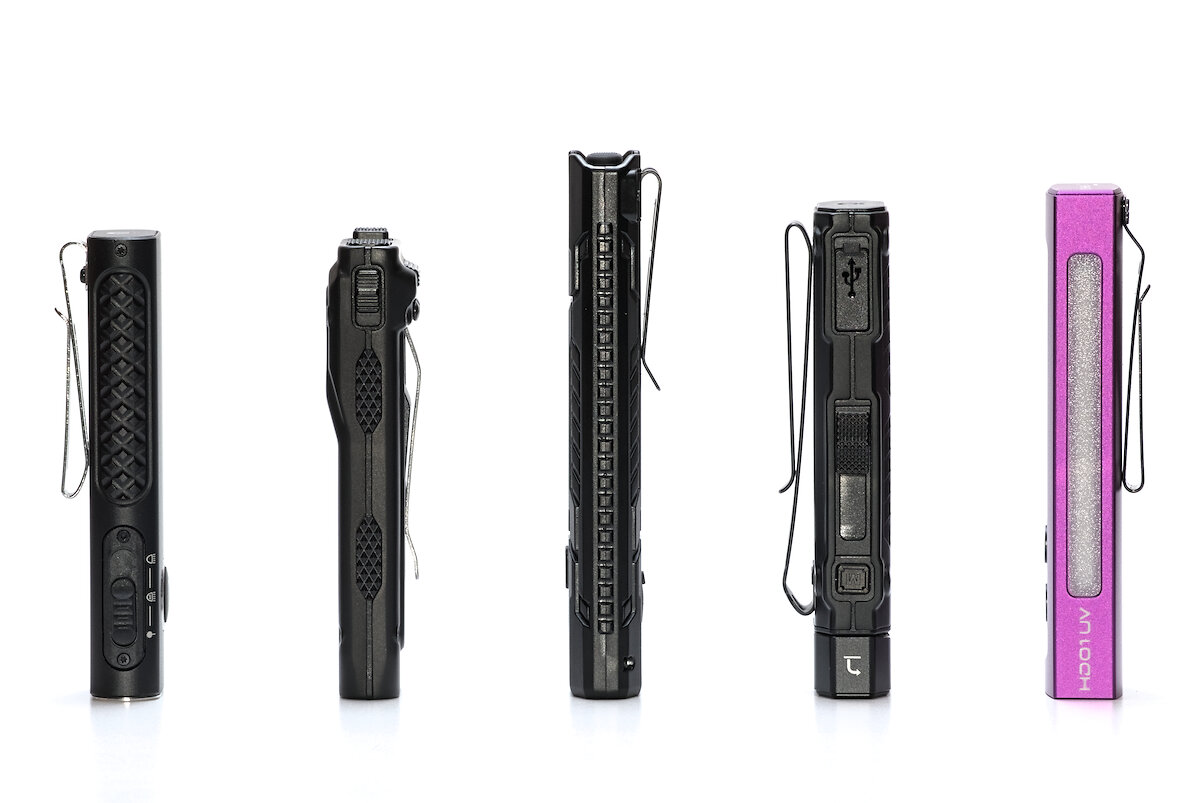
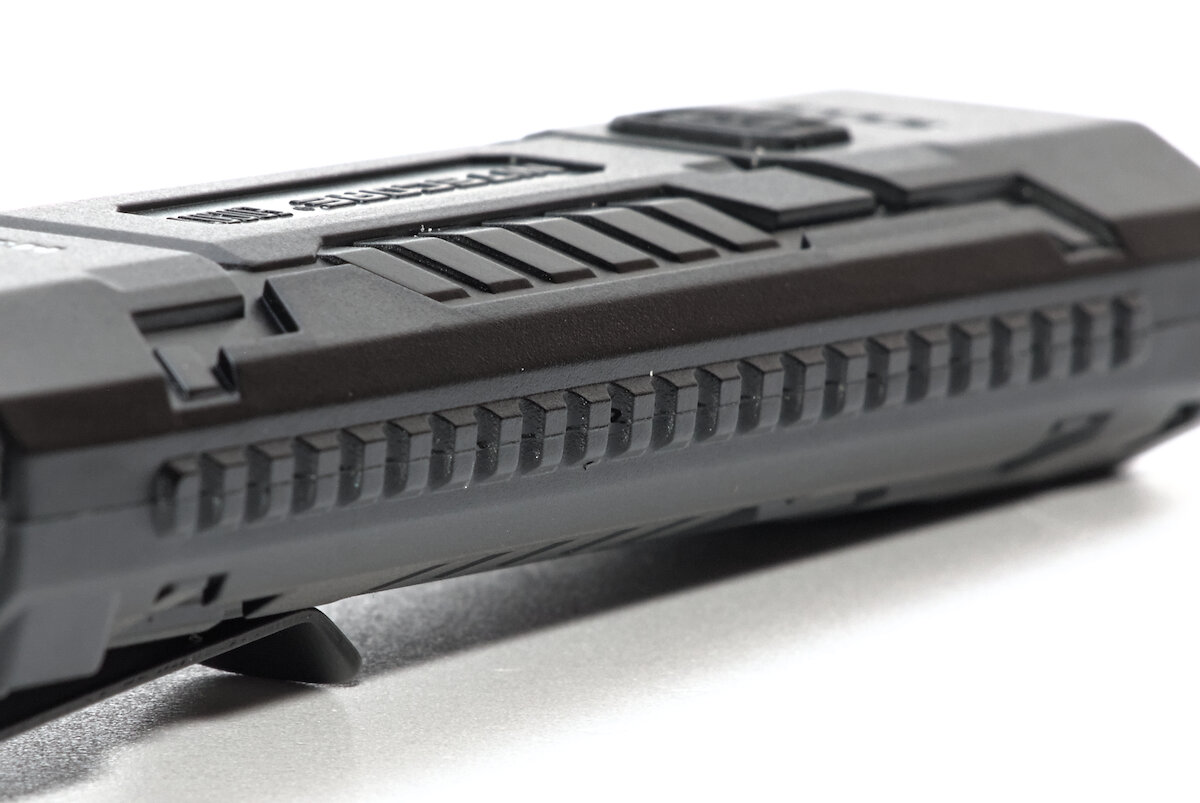
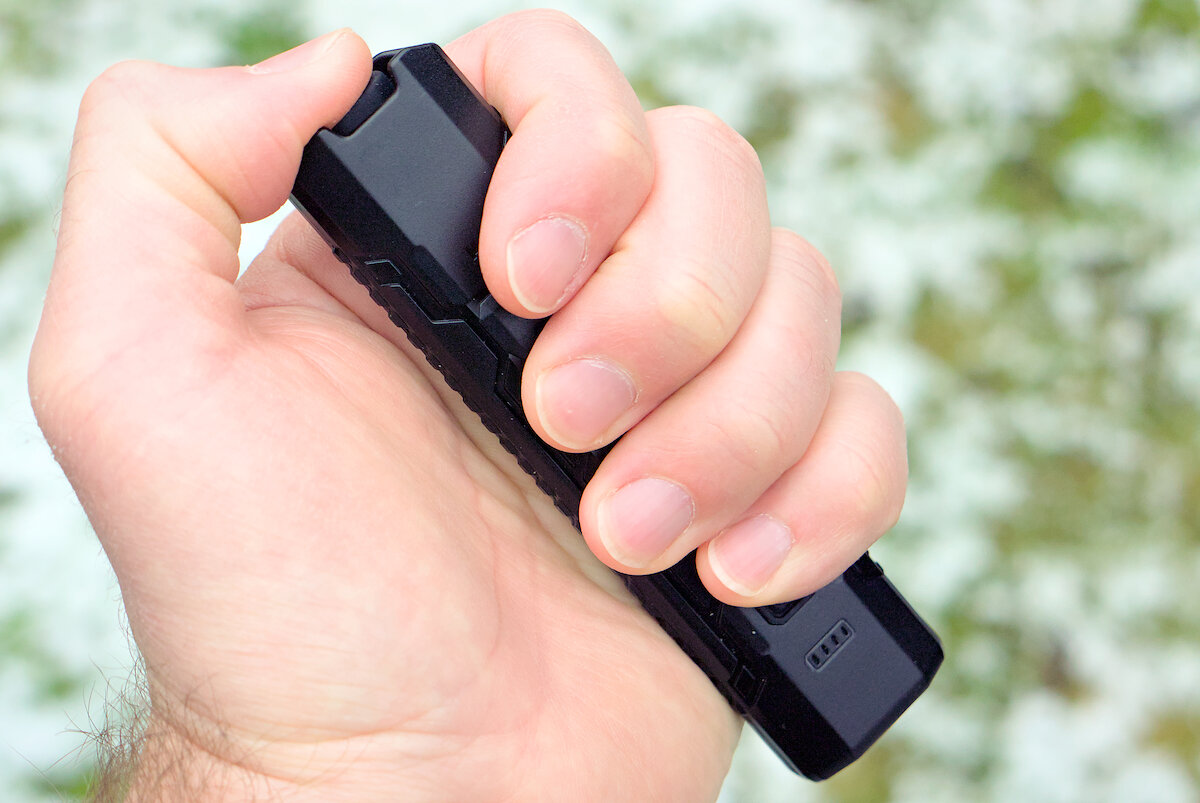
The coarse serrations along the sides provide excellent grip, even in wet conditions. Otherwise, despite its matte finish, the plastic feels relatively smooth. Speaking of feel: I have to admit that a metal body definitely feels more premium. Of course, that has no impact on the flashlight’s functionality.
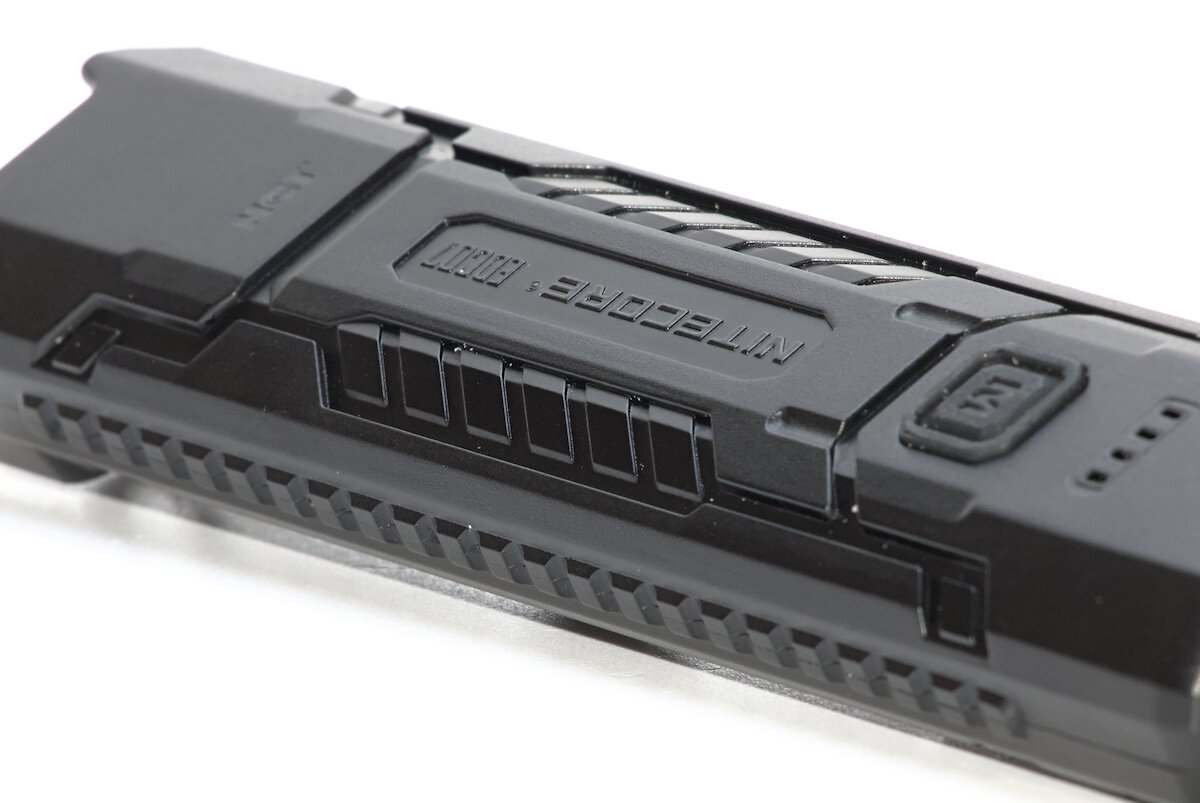
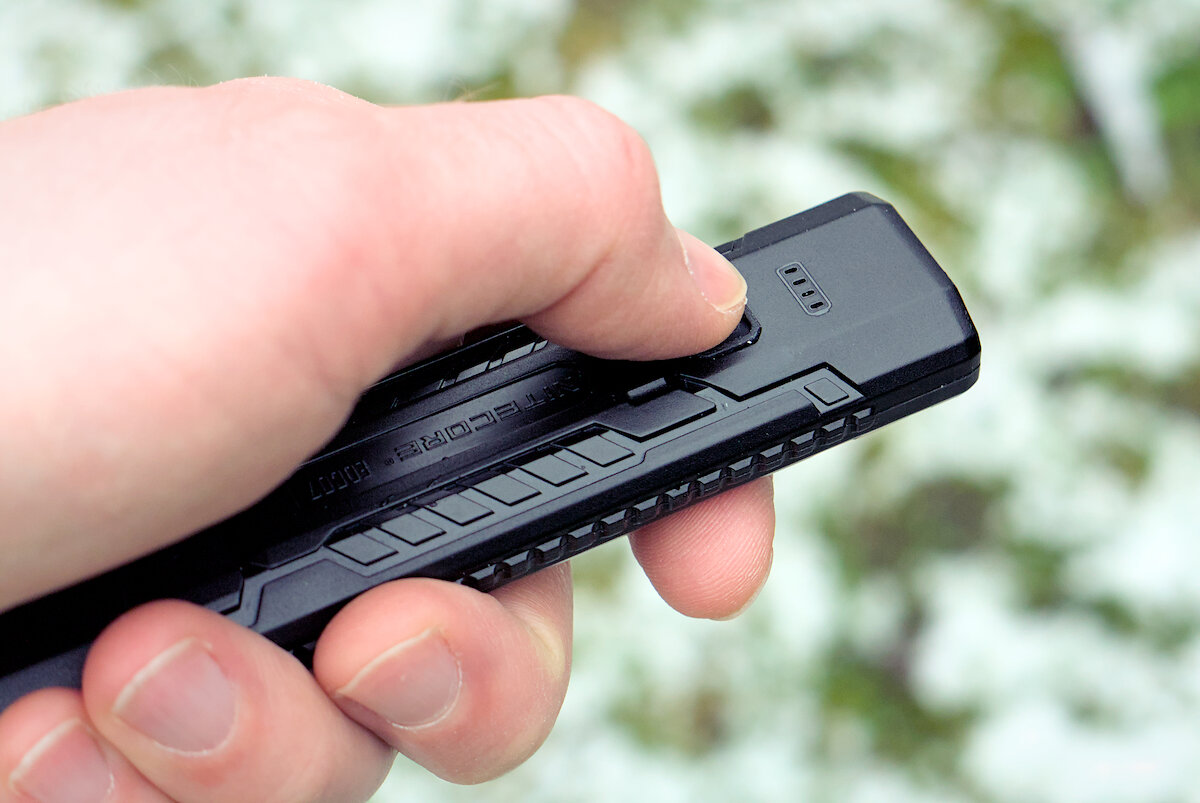
The design elements on the front also enhance the flashlight’s grip slightly, but primarily give it a bit more character.
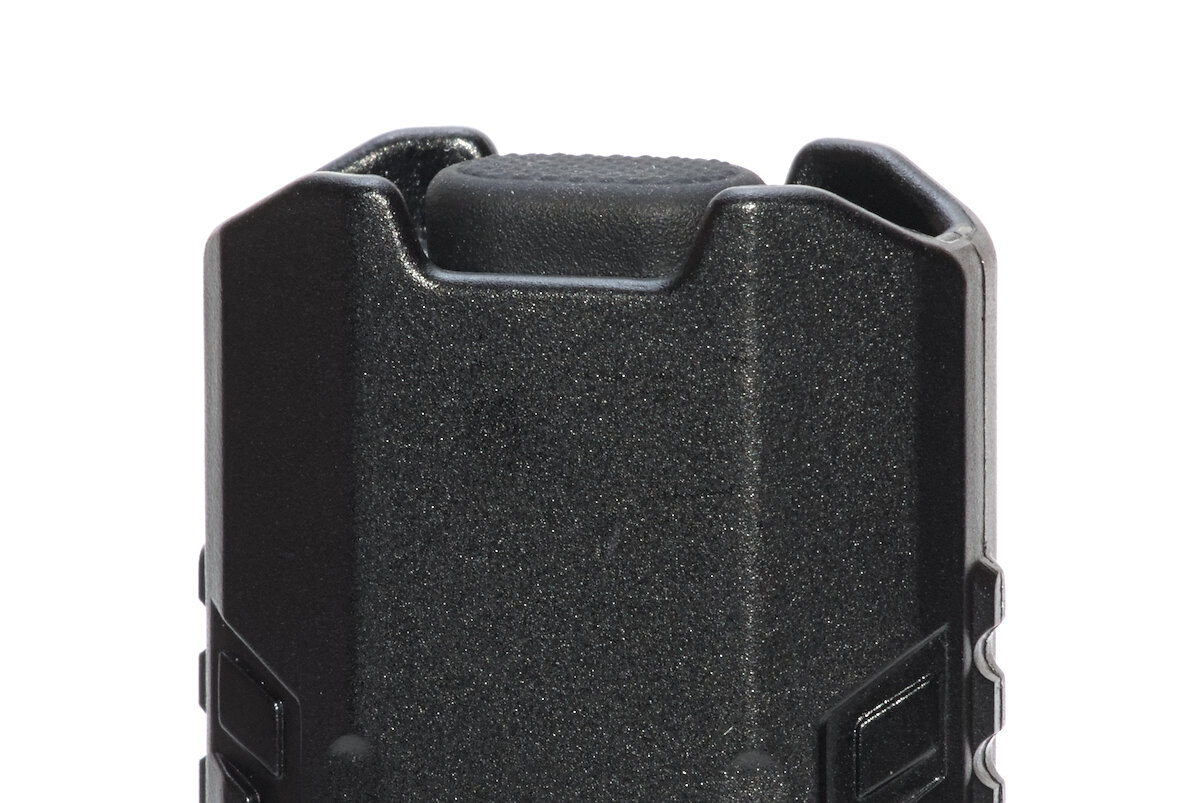
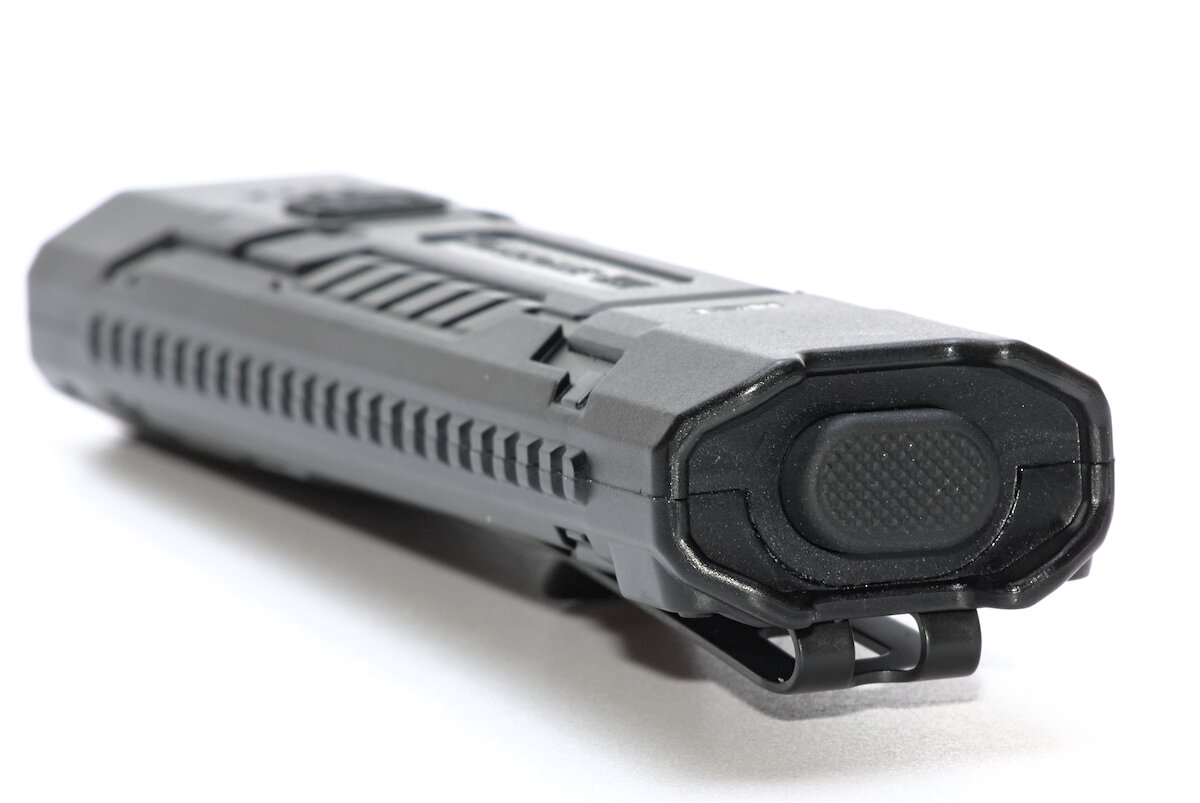
The tail switch is surrounded by a raised rim that makes accidental activation more difficult and allows the flashlight to tail-stand. This barely affects ease of operation.
A metal clip secures the flashlight in your pocket and allows for quick access. It is positioned far toward the rear, so the light doesn’t stick out of the pocket. The clip is simple and functional, without a bulky two-way design that, in most cases, isn’t really needed anyway. The only drawback is that the opening protrudes a bit too much – I personally prefer a Z-shaped design here.
The clip can also be used to attach a lanyard to the flashlight. The manual explains a way to thread the cord through the holes.
On the back of the flashlight, there is a USB-C port for charging the built-in battery. A silicone cover protects it from water and dirt.
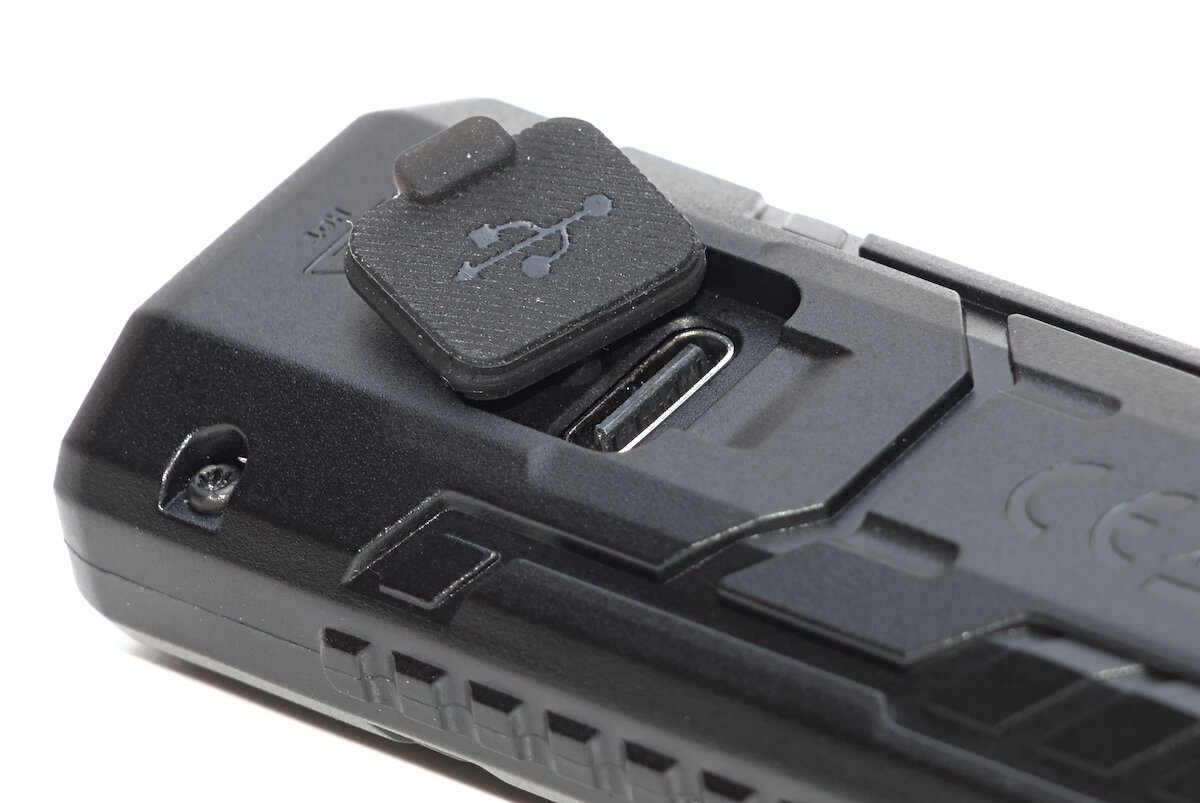
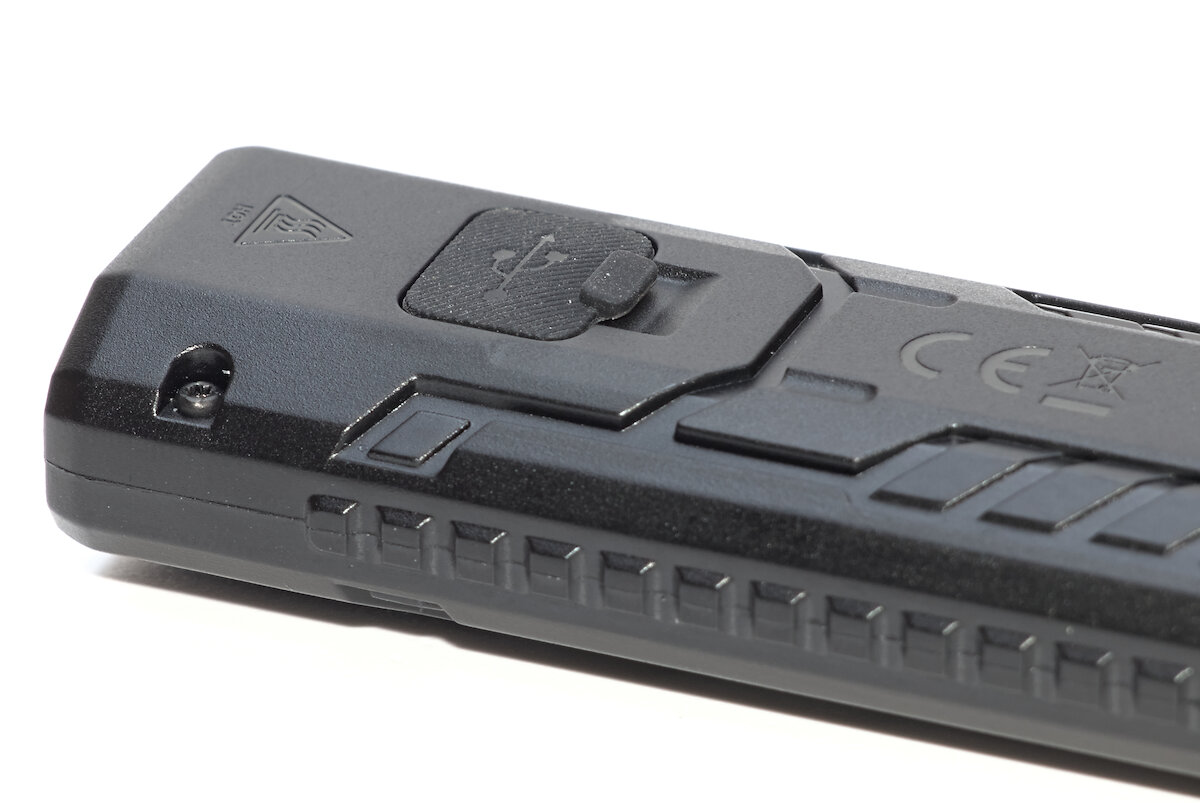
Unfortunately they didn’t use a two-component cover with a rigid outer plastic shell, like the ones found on other models in the EDC series. The grippy silicone cover protrudes slightly and can open by itself when the flashlight is pulled out of the pocket.
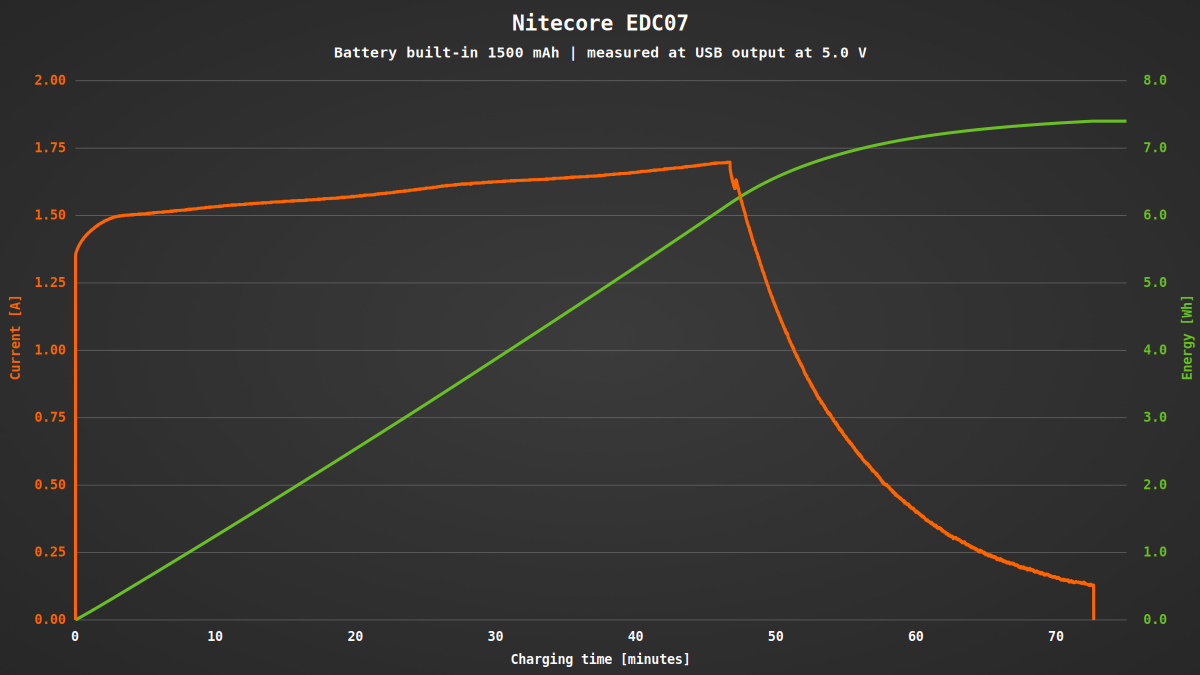
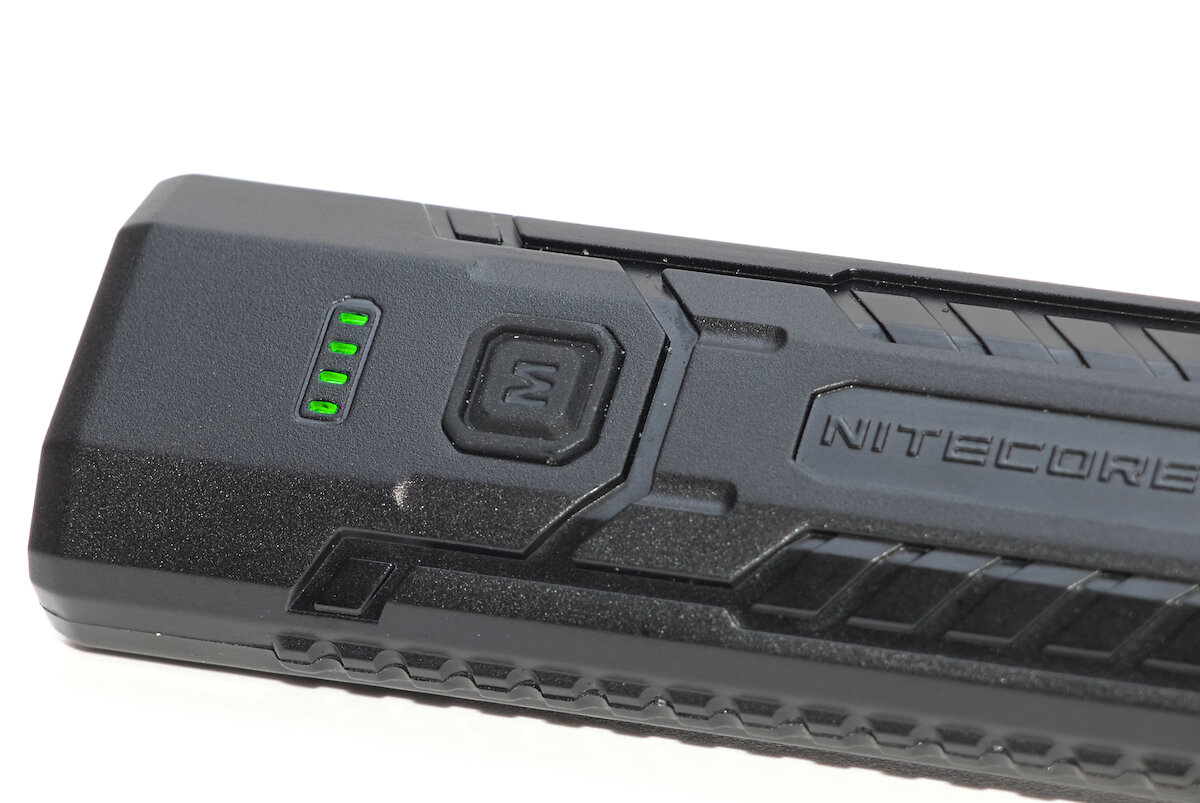
With a charging current of up to 1.75 A, the 1500 mAh battery is fully charged in just over an hour. The progress can be monitored at any time via the four green status LEDs on the front. The flashlight can be used normally while charging.
According to the manufacturer, the EDC07 meets the IP67 protection rating. This means it is “protected against temporary submersion”, which should generally be sufficient for an EDC flashlight. It is also said to withstand drops from up to two meters.
User interface
The EDC07 is turned on and off via a mechanical tail switch. It’s a so-called “forward clicky”, meaning it allows momentary operation when the switch isn’t fully pressed. This makes it possible, for example, to send light signals by blinking.
The switch is placed in a classic way behind a silicone cap. Fully pressing it requires a relatively high force of about 1600 cN, which is accompanied by a loud click.
Another button with a silicone cover is located at the front of the flashlight and is used for changing modes. This one also requires a fairly firm press of 1150 cN.
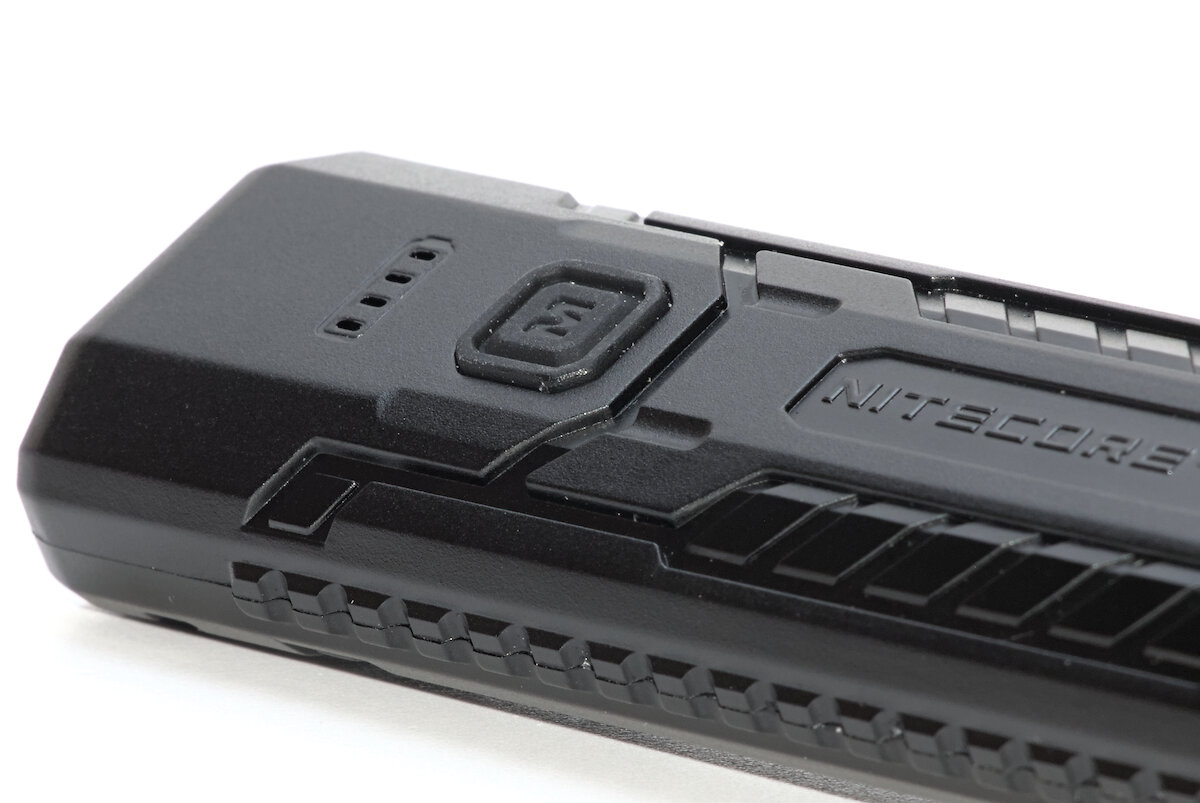
When the flashlight is on, a short press of the side button changes the brightness through the levels Low, Mid, High and Turbo. Holding the button allows you to adjust the color temperature between cool, neutral and warm. The selected brightness and color temperature are retained even after the flashlight is turned off.
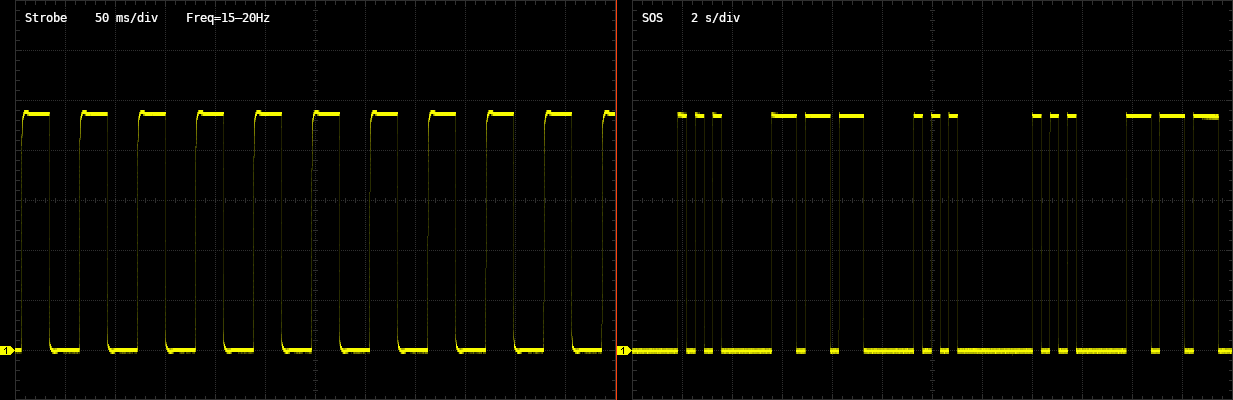
Holding the side button while turning on the flashlight activates the Ultralow mode. If the button is held further, after two seconds the light switches to the strobe mode with a variable frequency of about 15 to 20 Hz. After another two seconds, an SOS mode follows (more like “S‑O‑S‑S‑O‑S”). Both blinking modes are remembered when the flashlight is turned off, but otherwise, they can only be accessed via this rather cumbersome procedure. There is also no direct access to Turbo mode. A short press of the side button returns to the constant-on mode again.
There is no electronic or mechanical lockout. However, since the tail switch requires considerable force, the flashlight is fairly well protected against accidental activation.
After turning on the flashlight, four LEDs on the front briefly indicate the approximate battery level for three seconds.
| Indicator | Battery level |
|---|---|
| ☼☼☼☼ | 75% – 100% |
| ☼☼☼ | 50% – 75% |
| ☼☼ | 25% – 50% |
| ☼ | 10% – 25% |
| ☼ blinking | < 10% |
The combination of a mechanical tail switch and an electronic side button is common on many flashlights and is intuitive to understand. In practice, however, I sometimes find the frequent switching between the two buttons a bit inconvenient.
I much prefer the system on the Nitecore EDC09, which features a sliding switch for adjusting the brightness and a button right next to it for changing the color temperature.
Illumination
The two LEDs are a development by Nitecore called “MCT UHE”, which likely stands for “Multiple Color Temperature with Ultra High Efficiency”. These LEDs feature two warm white and two cool white dies arranged diagonally, which can be controlled separately. This allows you to adjust the color temperature in three steps, from cool white (6500 K, CRI 73) to neutral white (4500 K, CRI 83) and warm white (3000 K, CRI 97).
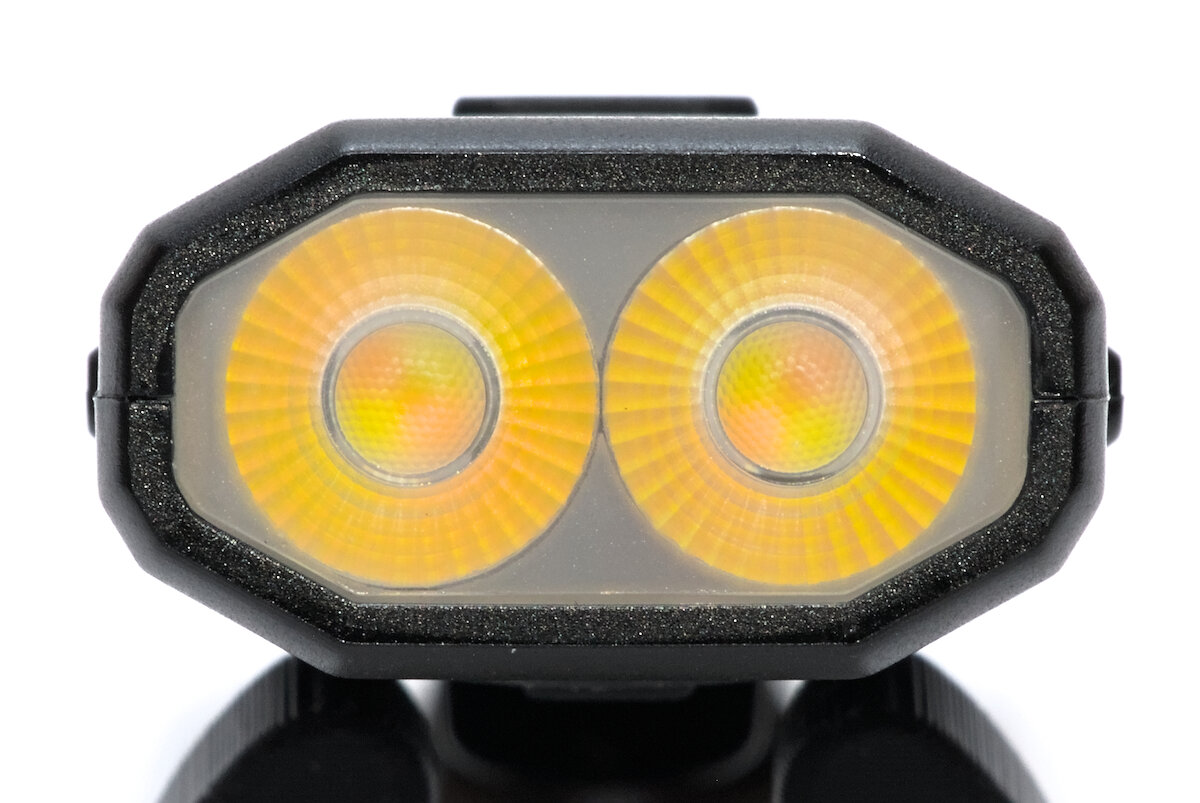
A TIR optic with small facets mixes the individual dies together to create a uniform light beam. The optic is not protected by a glass lens, so it doesn’t have an anti-reflective coating. However, it is more resistant to breaking compared to glass and small scratches shouldn’t have any noticeable impact on the light.
The beam pattern is slightly floody, with a wide spot that gently fades towards the edges. The flashlight provides a pleasantly even illumination without artifacts or color gradients. The tint looks neutral, perhaps even a bit rosy, but definitely not green.
Compared to the very similar EDC09, as the result of a slightly smaller TIR optic, the beam appears a little more floody. The maximum brightness of the EDC07 is also slightly lower. In practice, however, these differences are barely noticeable.
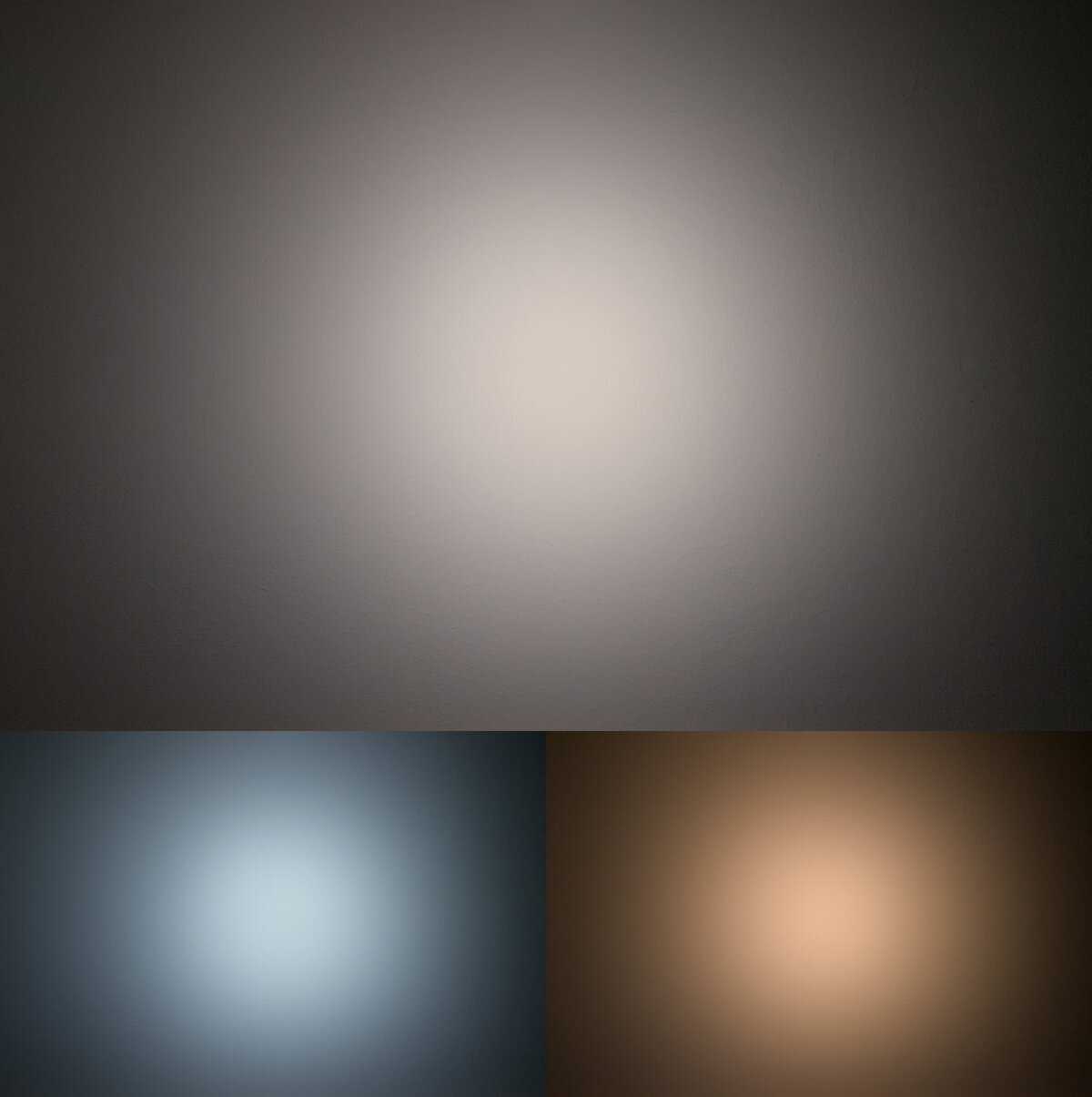
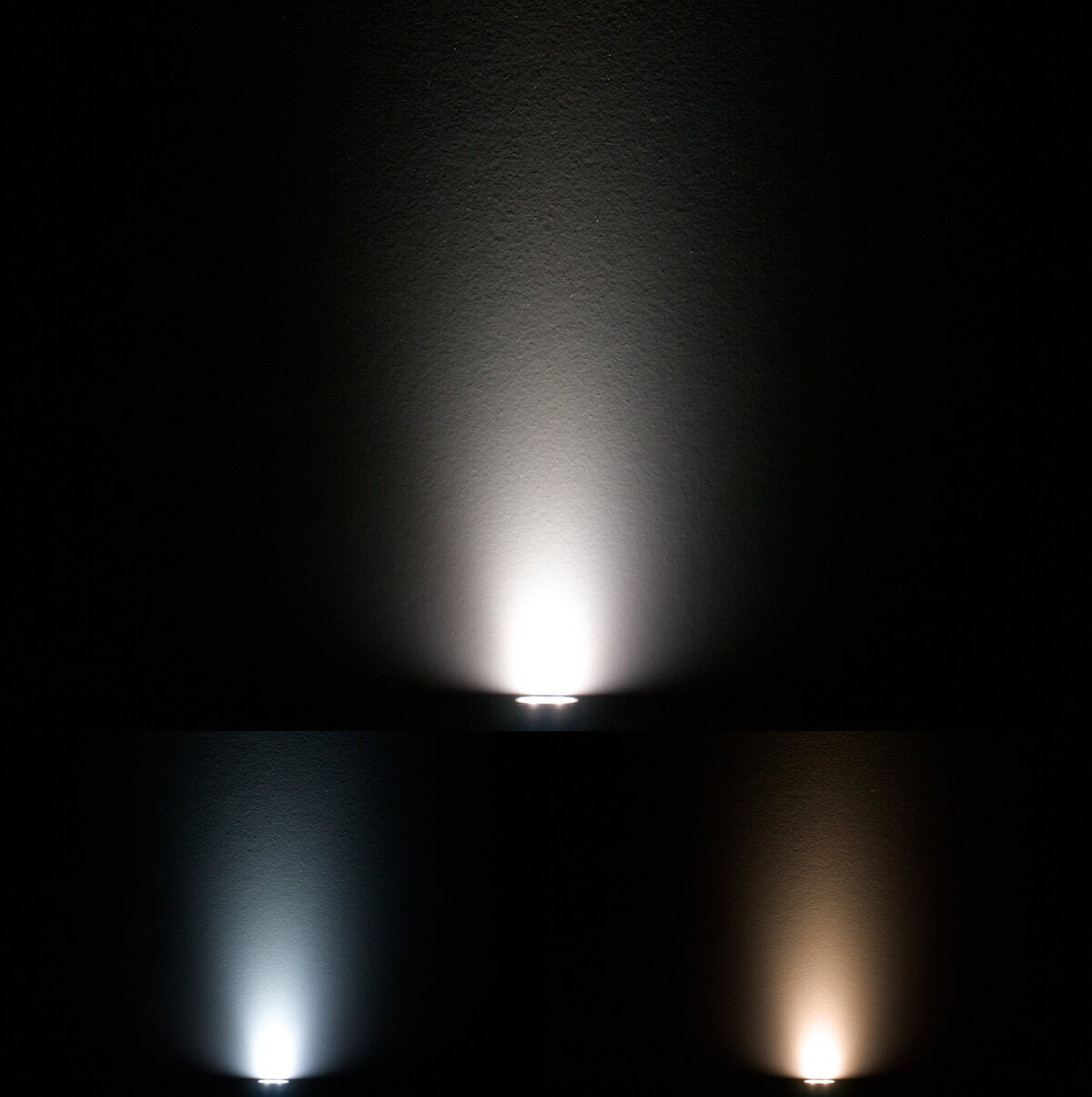
Compared to flashlights with separate LEDs to change the color temperature, the MCT LEDs have the advantage that the colors are positioned closer together. This allows for better mixing of the light, eliminating any distracting color shadows.
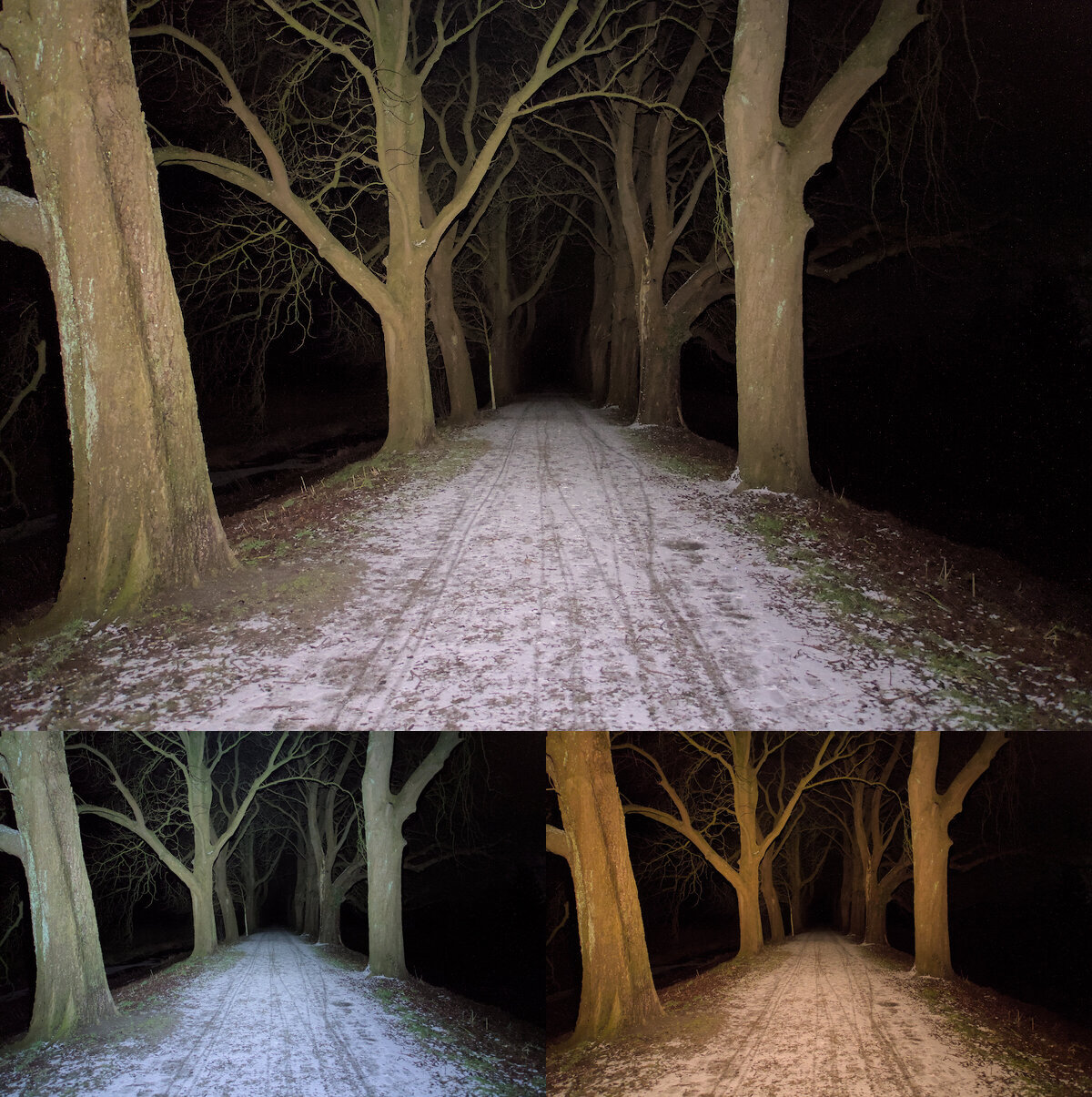
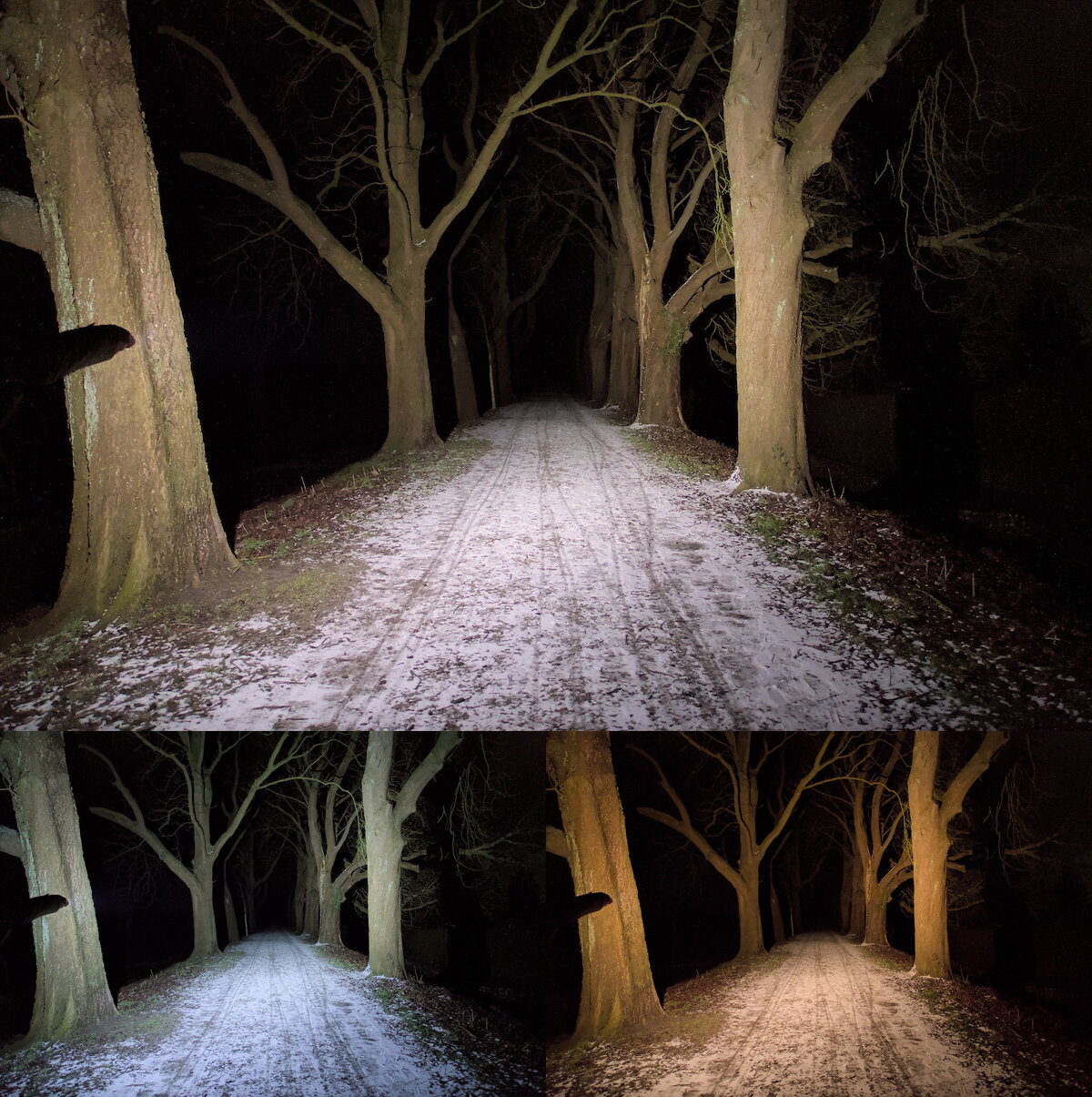
With its wide beam, the EDC07 is especially suited for short to medium distances – such as reading, illuminating cabinets or lighting the way.
Driver and runtime
Nitecore describes the driver as a “highly efficient constant current circuit”, without providing much detail. Brightness and range are different depending on the selected color temperature, while the runtime remains the same. In the table, the values for cool, neutral and warm settings are listed below each other.
| Mode | Brightness¹ | Runtime¹ | Intensity¹ (Throw²) |
|---|---|---|---|
| Turbo | 1500 lm 1300 lm 1000 lm |
2:15 h | 4410 cd (132 m) 3930 cd (125 m) 3184 cd (112 m) |
| High | 300 lm 260 lm 220 lm |
2:45 h | 898 cd (60 m) 789 cd (56 m) 624 cd (50 m) |
| Mid | 80 lm 65 lm 55 lm |
11 h | 229 cd (30 m) 196 cd (28 m) 156 cd (25 m) |
| Low | 15 lm 13 lm 11 lm |
52 h | 44 cd (13 m) 36 cd (12 m) 30 cd (11 m) |
| Ultralow | 1 lm | 360 h | 2 cd (3 m) |
cool / neutral / warm
¹ According to manufacturer ² ANSI FL1
Brightness remains nearly constant at all levels except Turbo for almost the entire runtime. It only steps down in several increments shortly before the end.
The levels differ slightly from those of the EDC09, making a direct comparison difficult. Despite the EDC07’s larger battery, runtimes are fairly similar. The extra capacity only provides slightly higher brightness at each level.
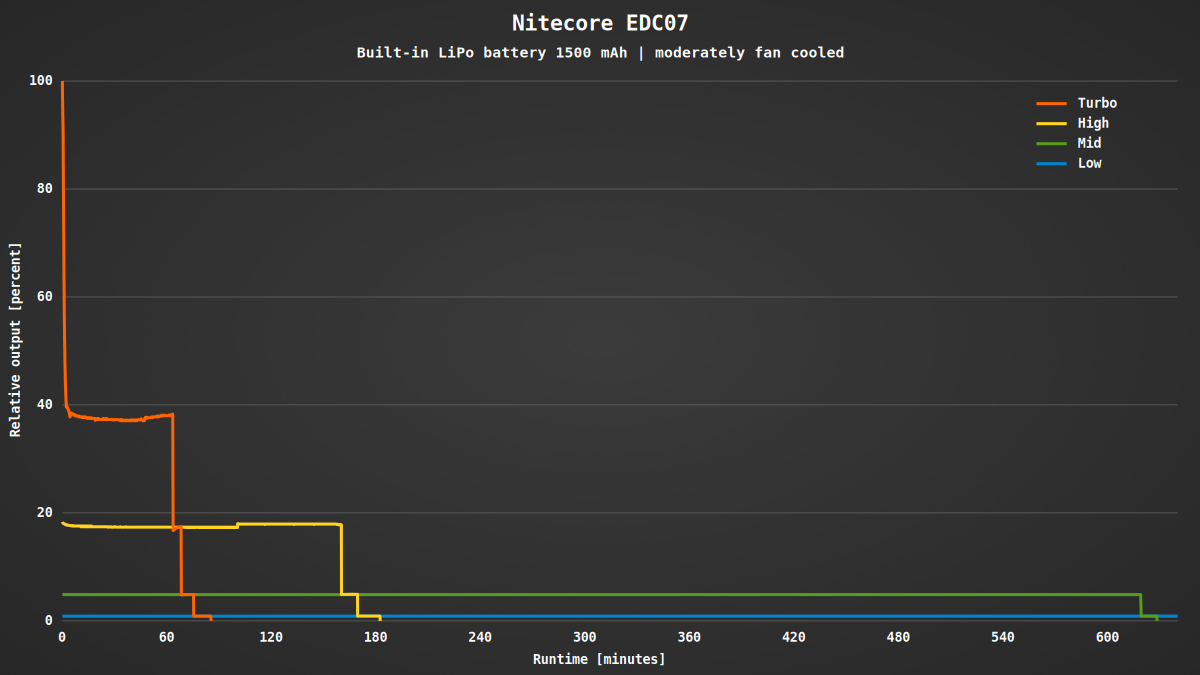
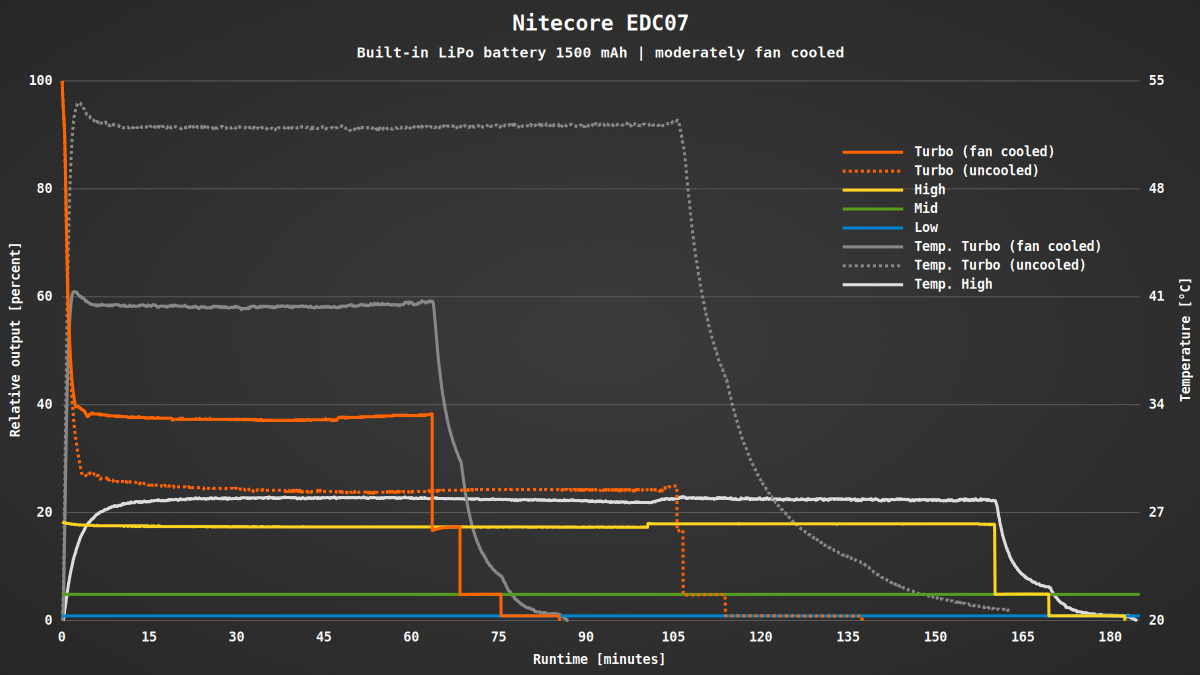
In Turbo mode, the brightness gradually decreases after about half a minute, depending on cooling. The change is not abrupt but occurs gradually over several minutes.
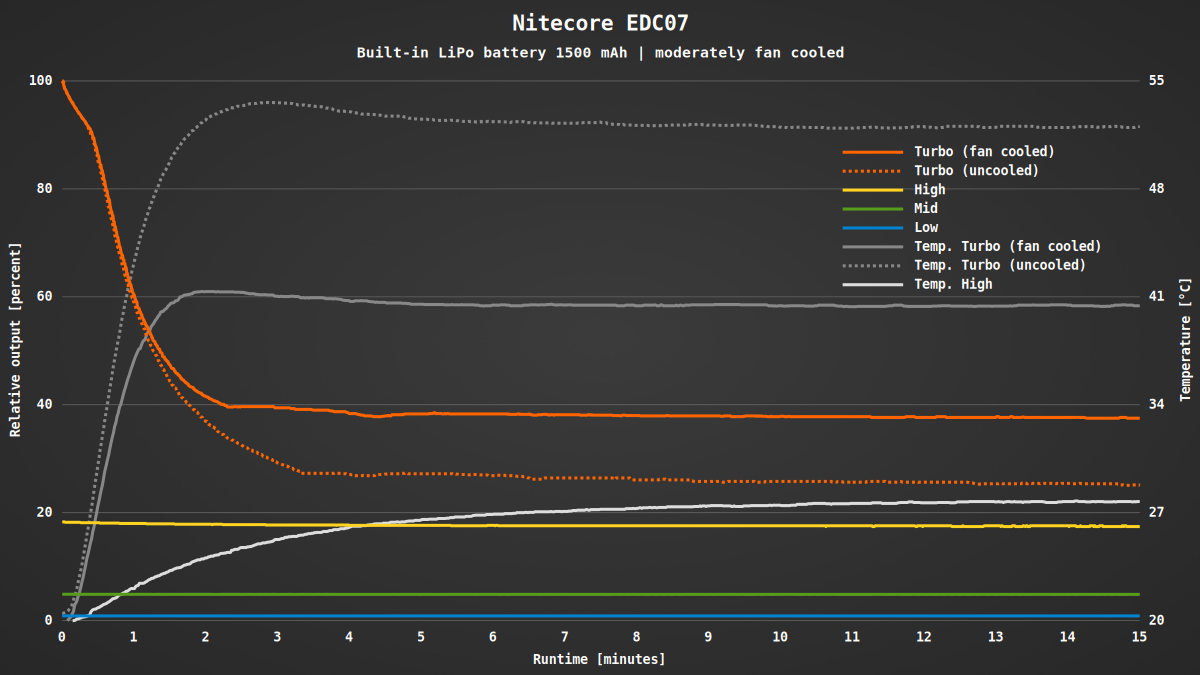
In terms of heat dissipation, the plastic body is inferior to a metal one. Using a thermal camera gives a limited view of the inside: the front appears to contain a large metal plate that acts as a heat spreader. While the flashlight does get warm during use, it can always be held comfortably without the risk of burns.
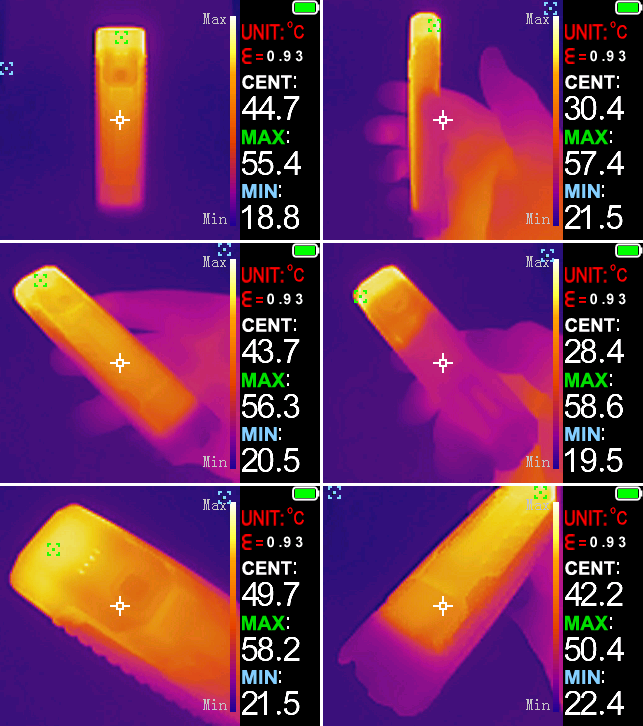
Thermal images with Zoyi ZT-R02
All levels are regulated by the driver without PWM. The flashlight shuts off when the battery is empty to prevent deep discharge. Because the battery is built-in, measuring current draw or cutoff voltage was not possible.
Conclusion
The Nitecore EDC07 offers a few interesting surprises: two MCT LEDs with adjustable color temperature produce a pleasant, slightly floody beam. The classic tail-switch operation is easy to understand. Thanks to the plastic body, the flashlight is remarkably light at just 70 g. However, with the plastic feel, it takes some time before you will appreciate the build quality. The strobe mode is well hidden, severely limiting its practical use.
As an alternative, the Nitecore EDC09 is worth considering. It also uses MCT LEDs and delivers an almost identical beam. With a sliding switch for brightness adjustment, it is slightly more convenient to operate and an articulated head makes it more versatile in use.