Specifications
Model Name: Nitecore EDC15
Body Material: Stainless steel
LEDs: 1x UHI-25 white LED and 1x UV LED
Battery: Built-in 1050mAh Li-ion
Charging: USB-C
Brightness & Throw: 1–50–400–1200 lumens; 208m (10,886 cd). UV 220-650-1350mW
Dimensions & Weight: 111 x 28 x 21 mm, 85g \ 4,37 “x 1,10” x 0,63", 3oz
Other: IPX7 rating, 2m impact resistance
 Nitecore EDC15 at official website
Packaging and Appearance
A yellow and black thin cardboard box. The design is modest, yet holding the package makes it clear you are dealing with a quality brand-name product. Instead of the usual “brightness and runtime” chart on the back, there is is a schematic illustration of the flashlight.
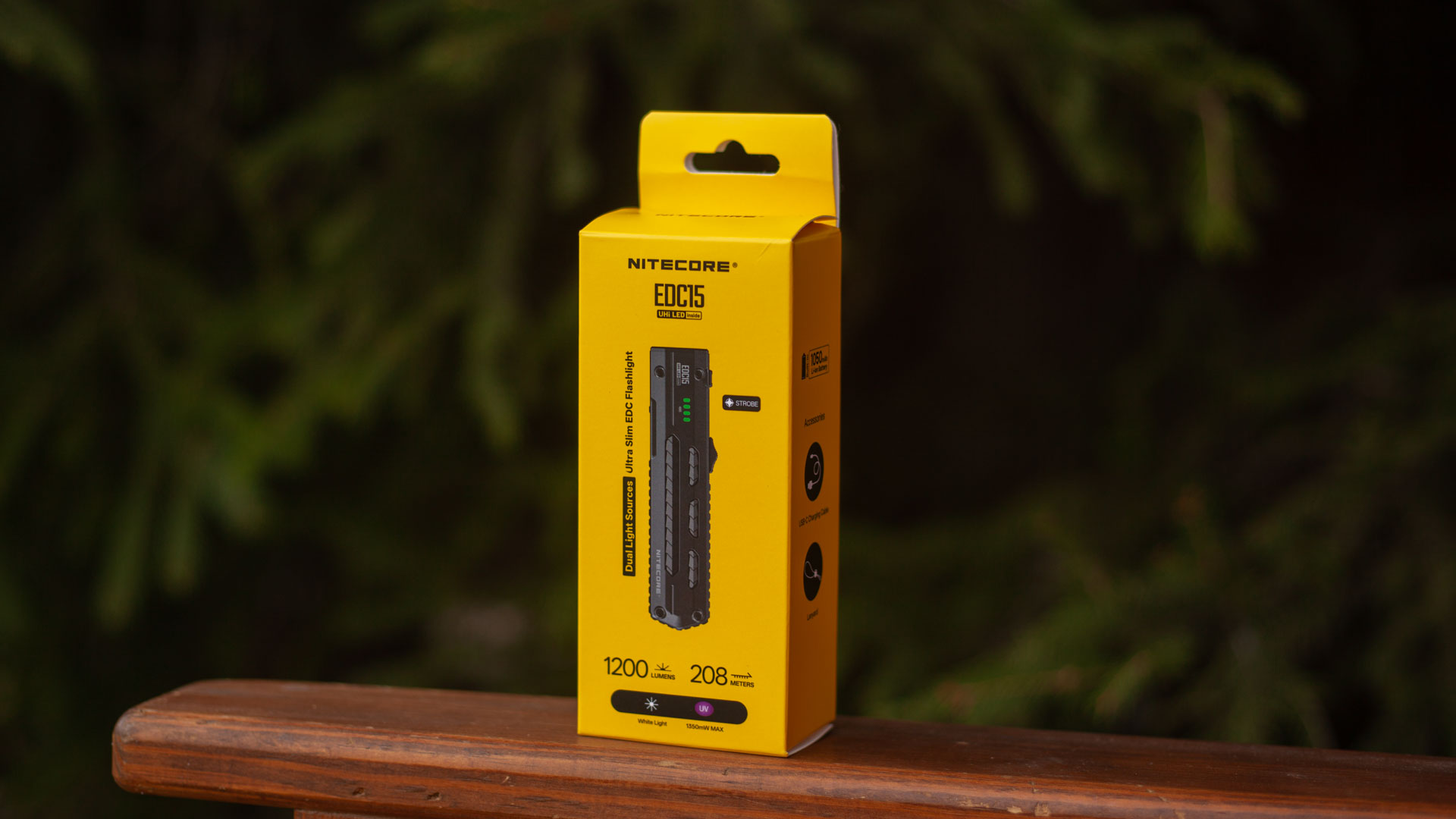
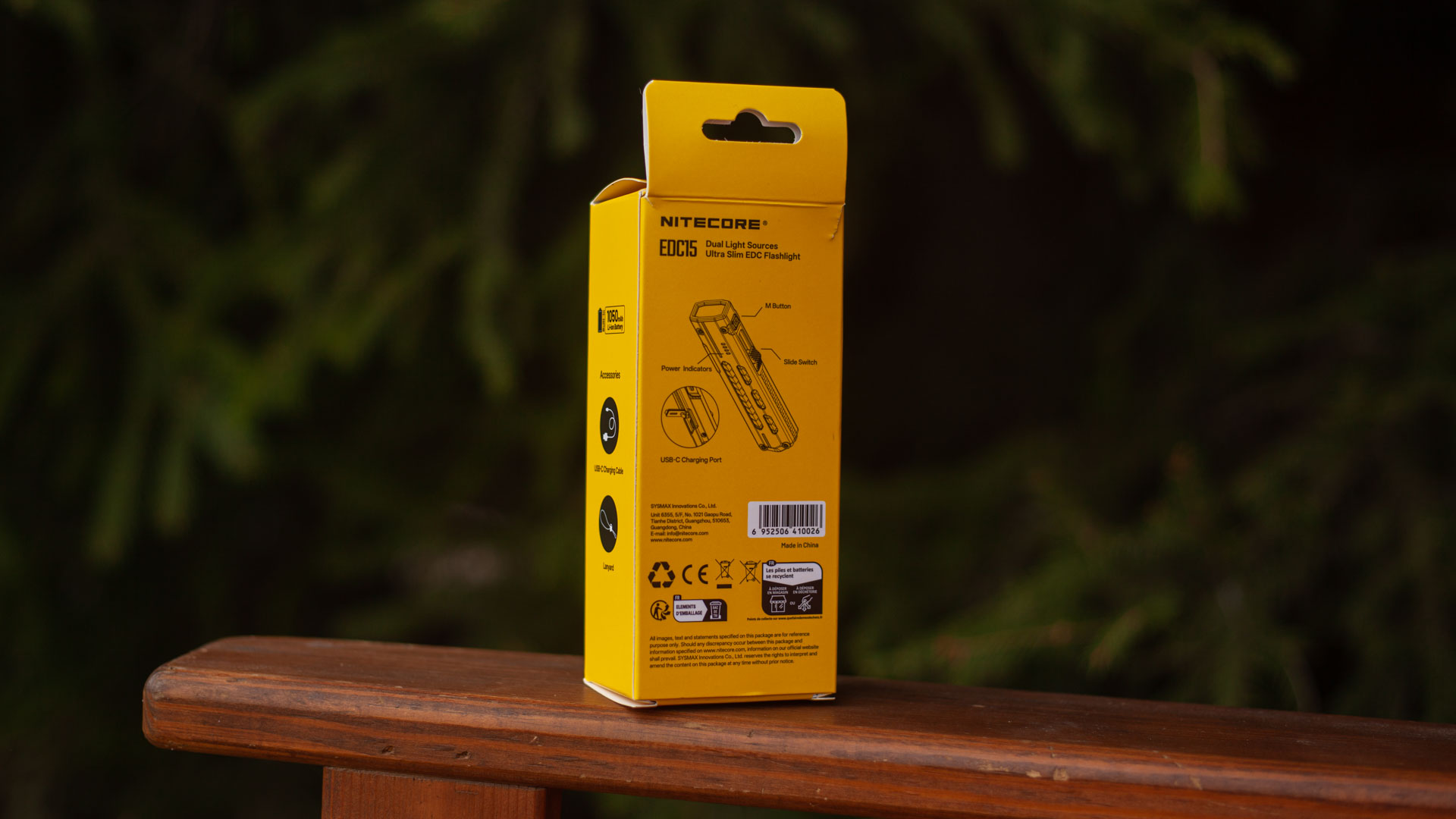
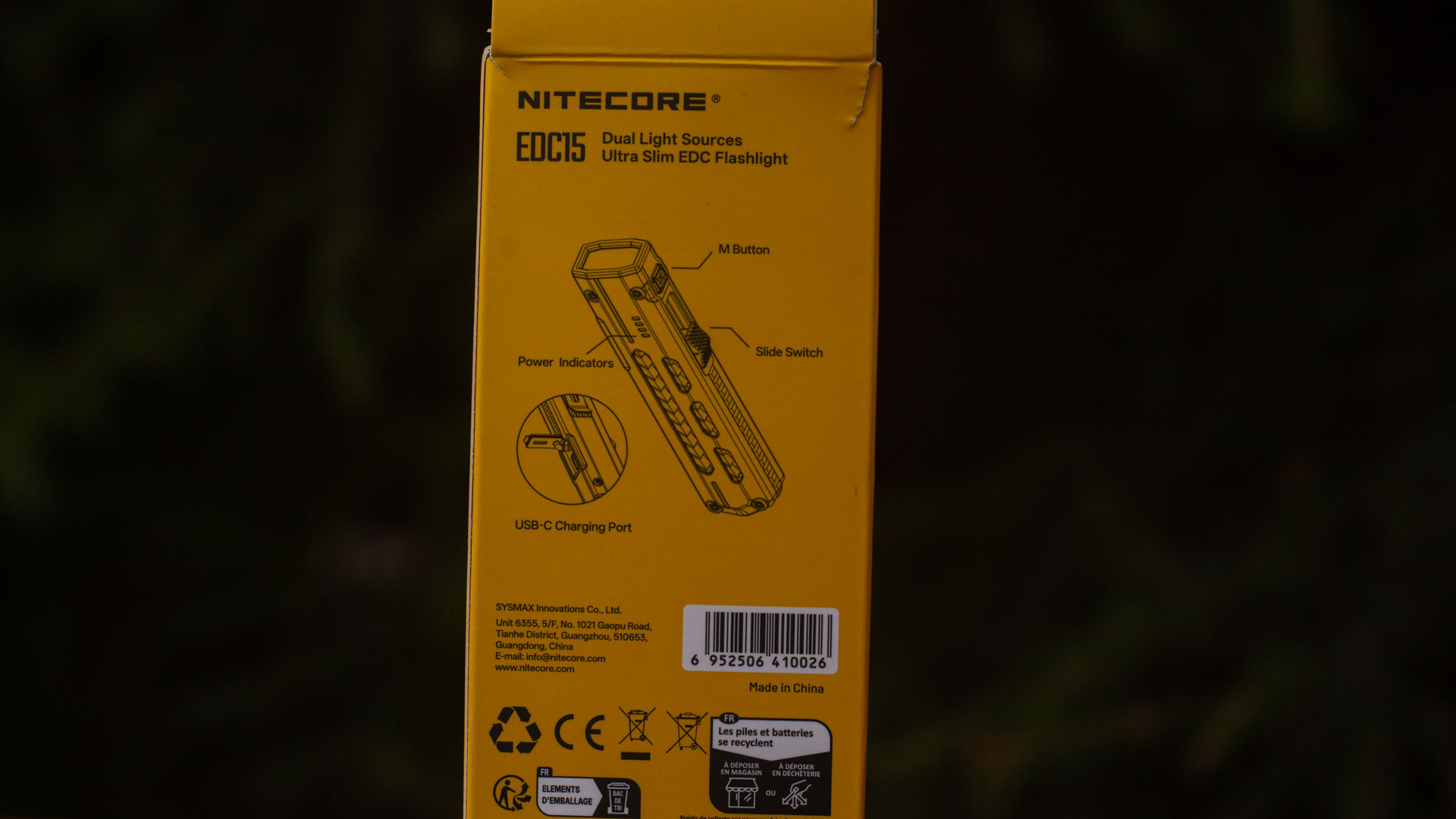
The package contents are modest as well, though I’m not sure what else could be added.
flashlight
USB-C charging cable
user manual
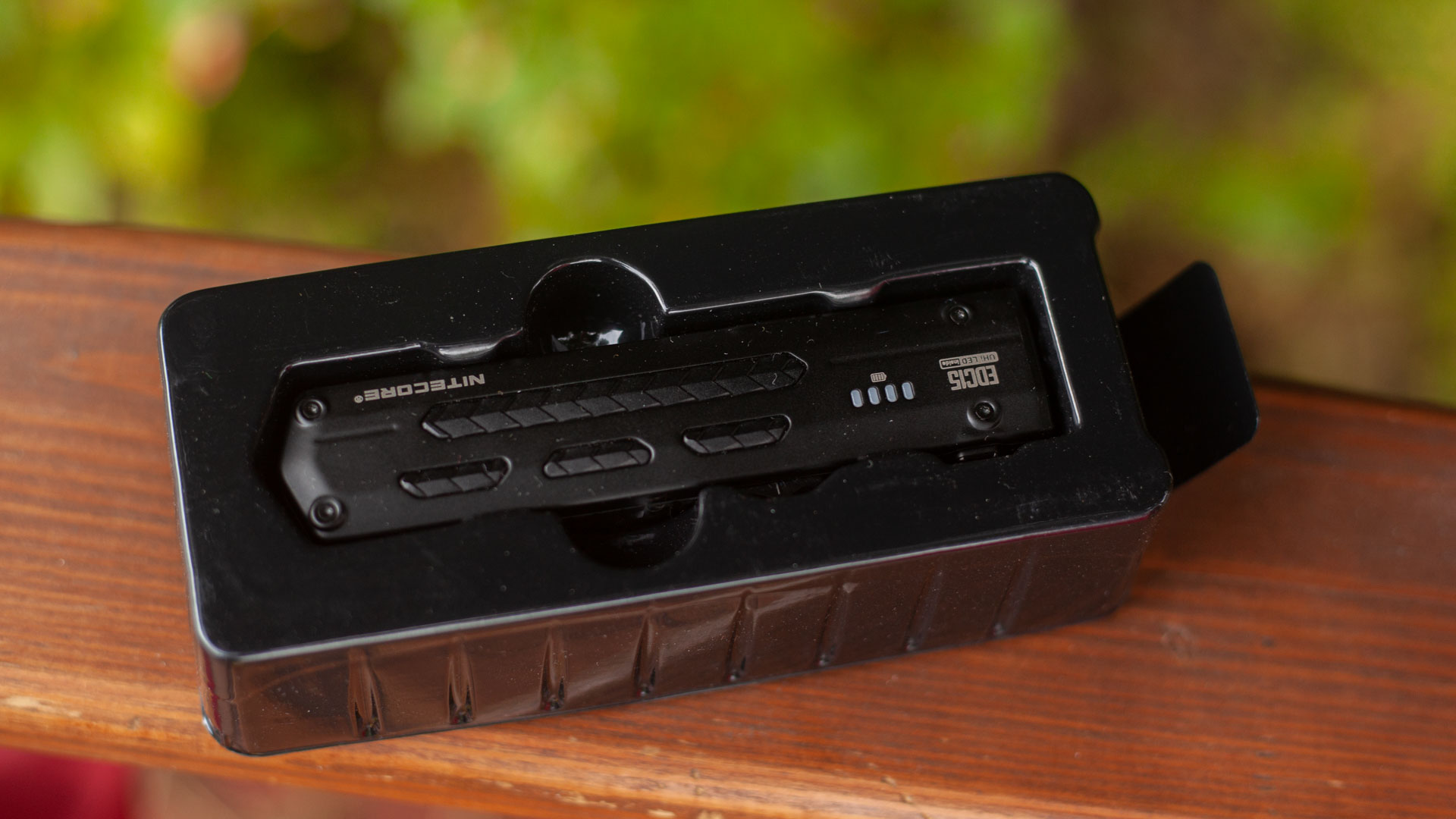
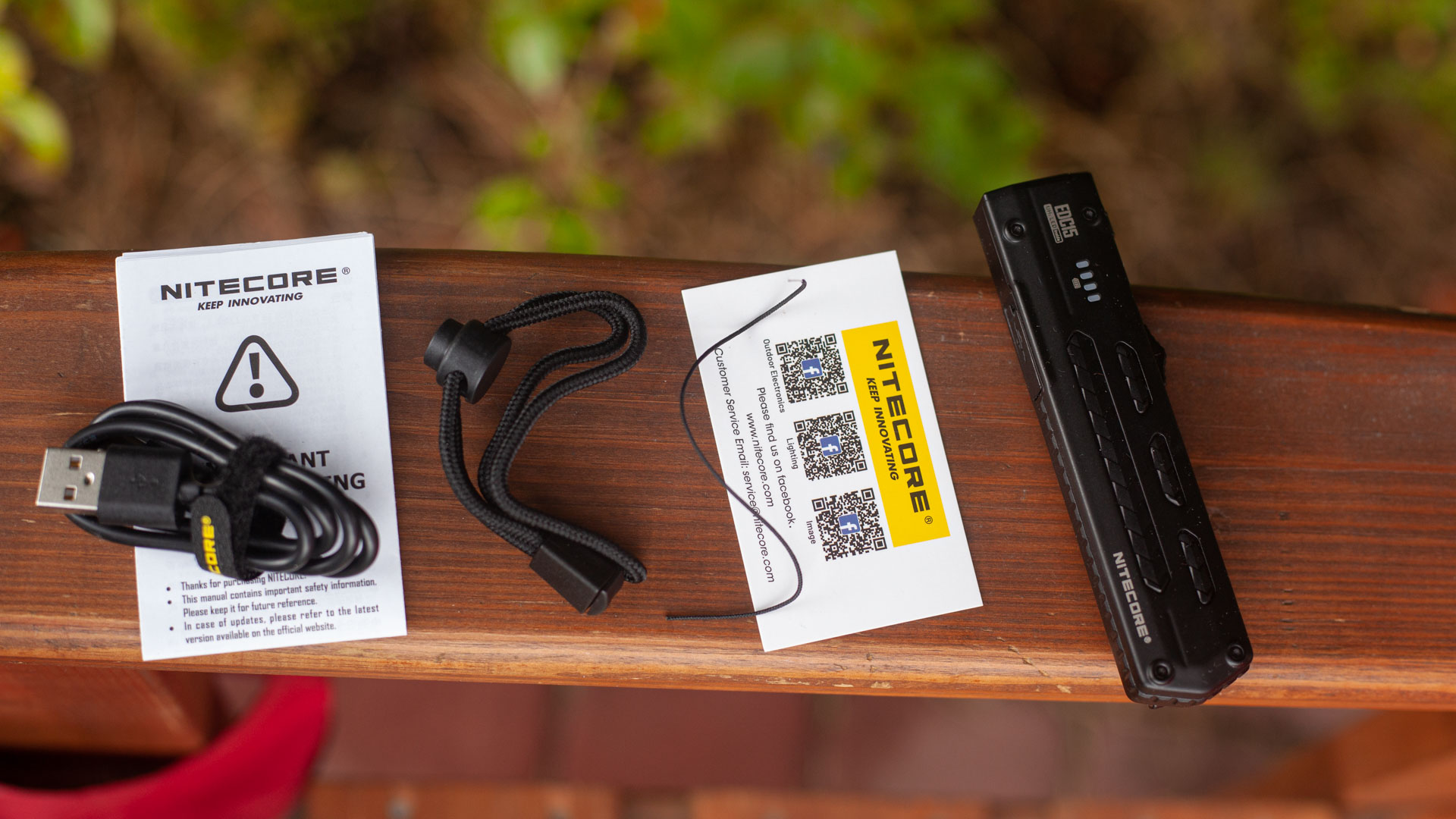
What is an EDC flashlight? As the name implies, it is an item for “everyday carry.” So. it should be compact. And Nitecore EDC15 is compact. 11cm or 4,37 " long, is just little bit longer then finger.
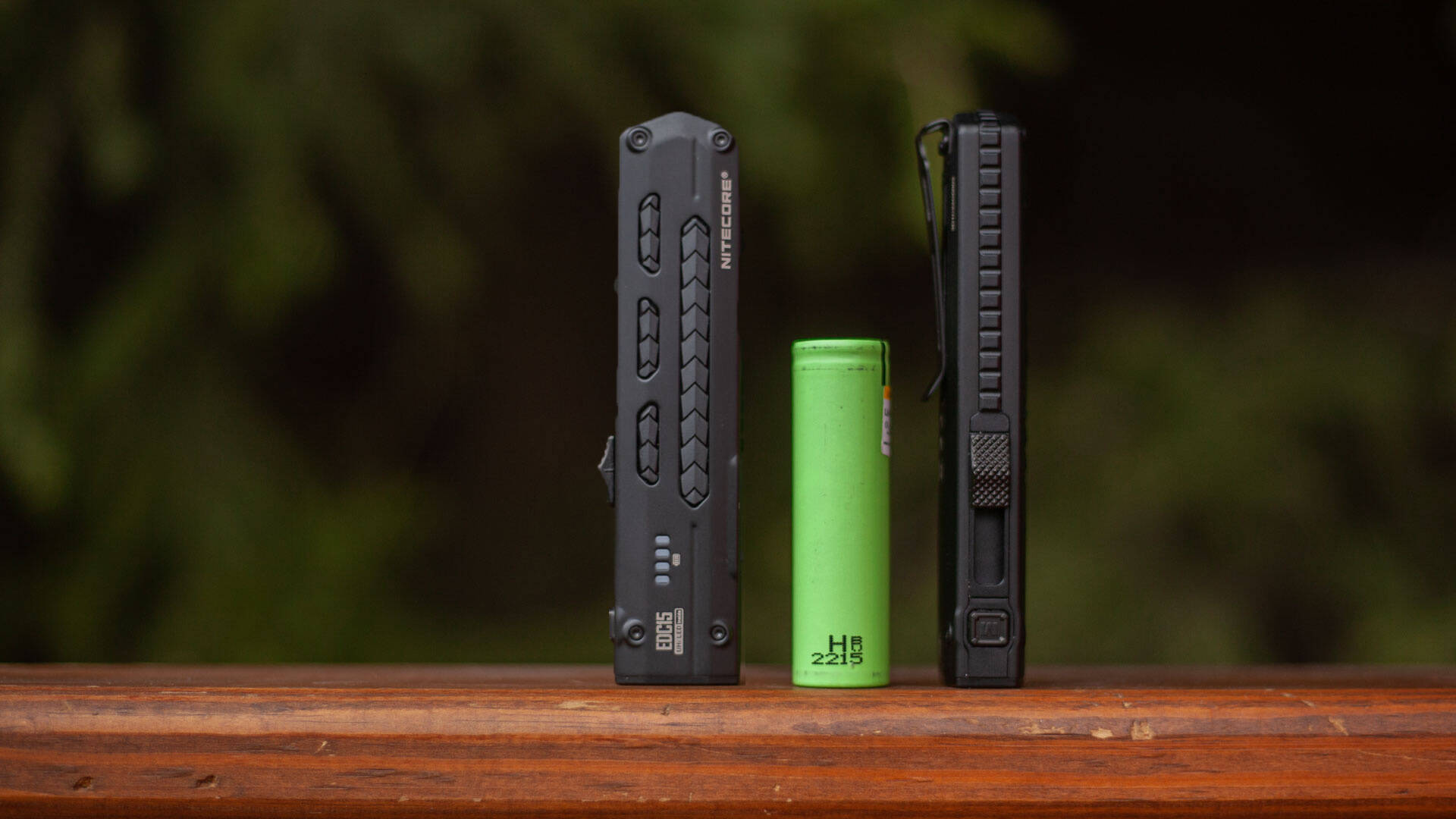
EDC flashlight also must be convenient to carry. And if you carry a flashlight in your pocket, you’d likely agree that a flat body is definitely more comfortable than a round one. That is precisely the design of the flat models in Nitecore’s EDC lineup.
New Nitecore EDC15 is no exception. This is a relatively small, flat, black metal bar with “carbon-fiber style” inserts on the front. Notably, the specifications list stainless steel for the body rather than the expected aluminum alloy!
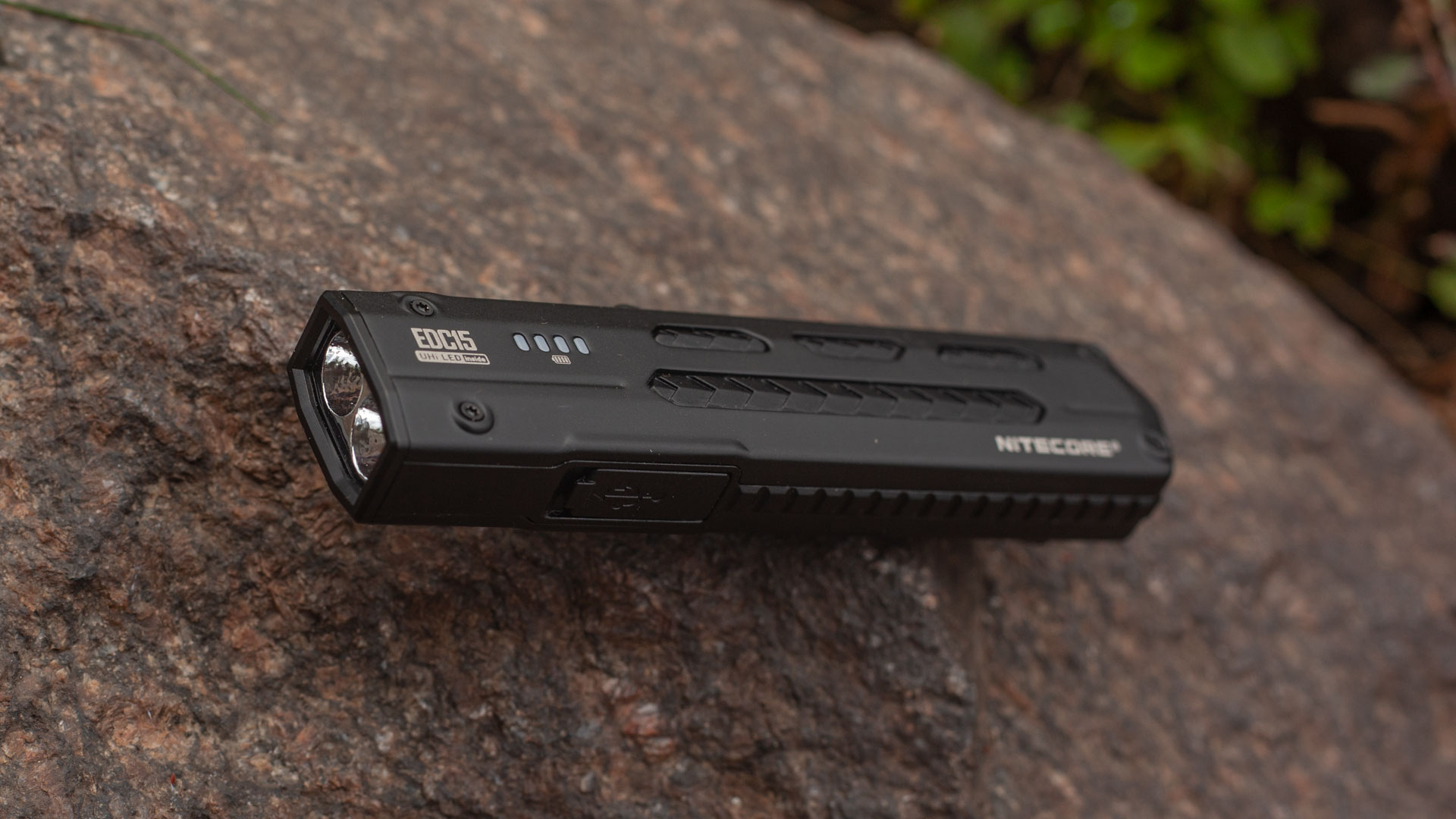
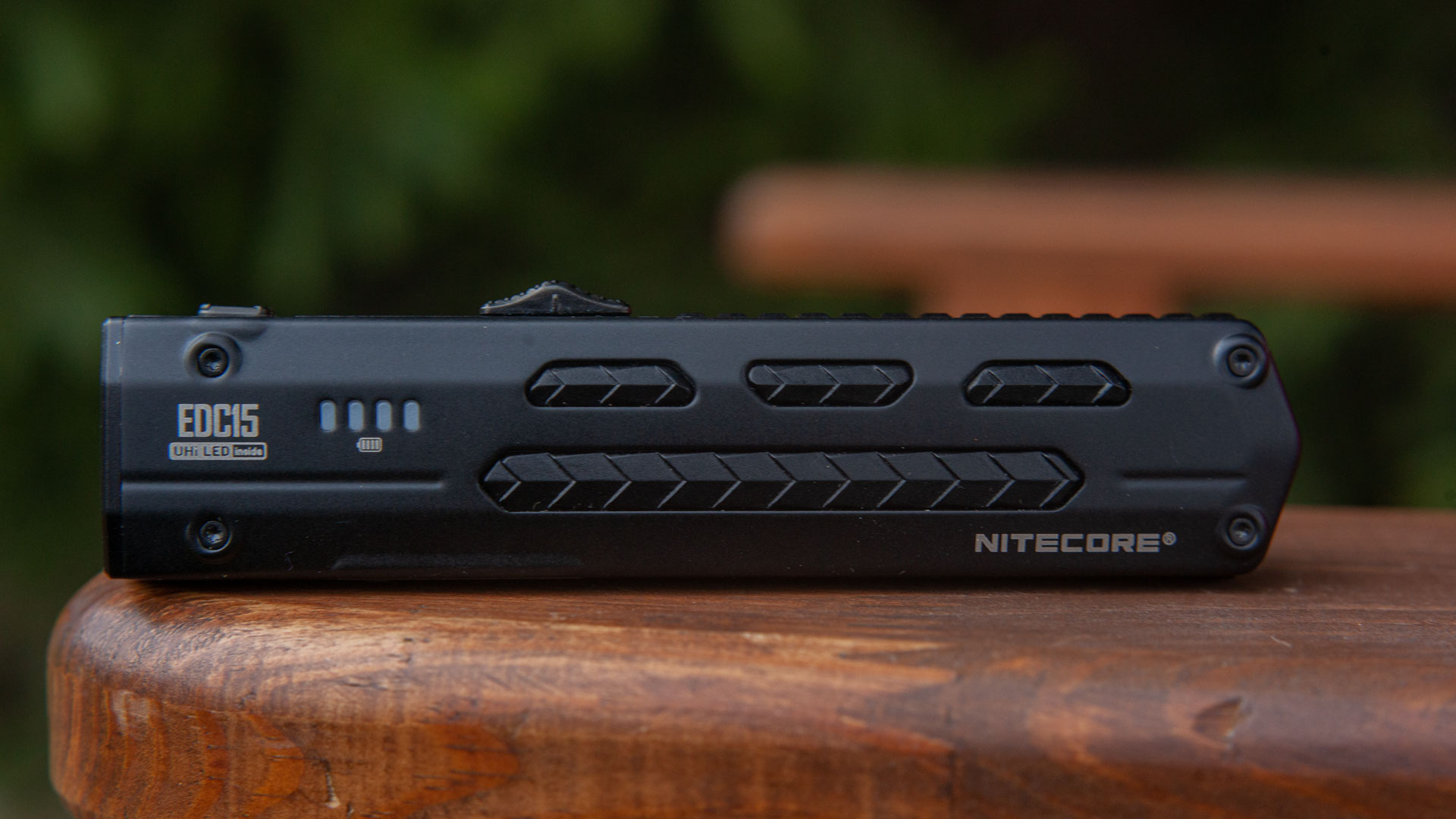
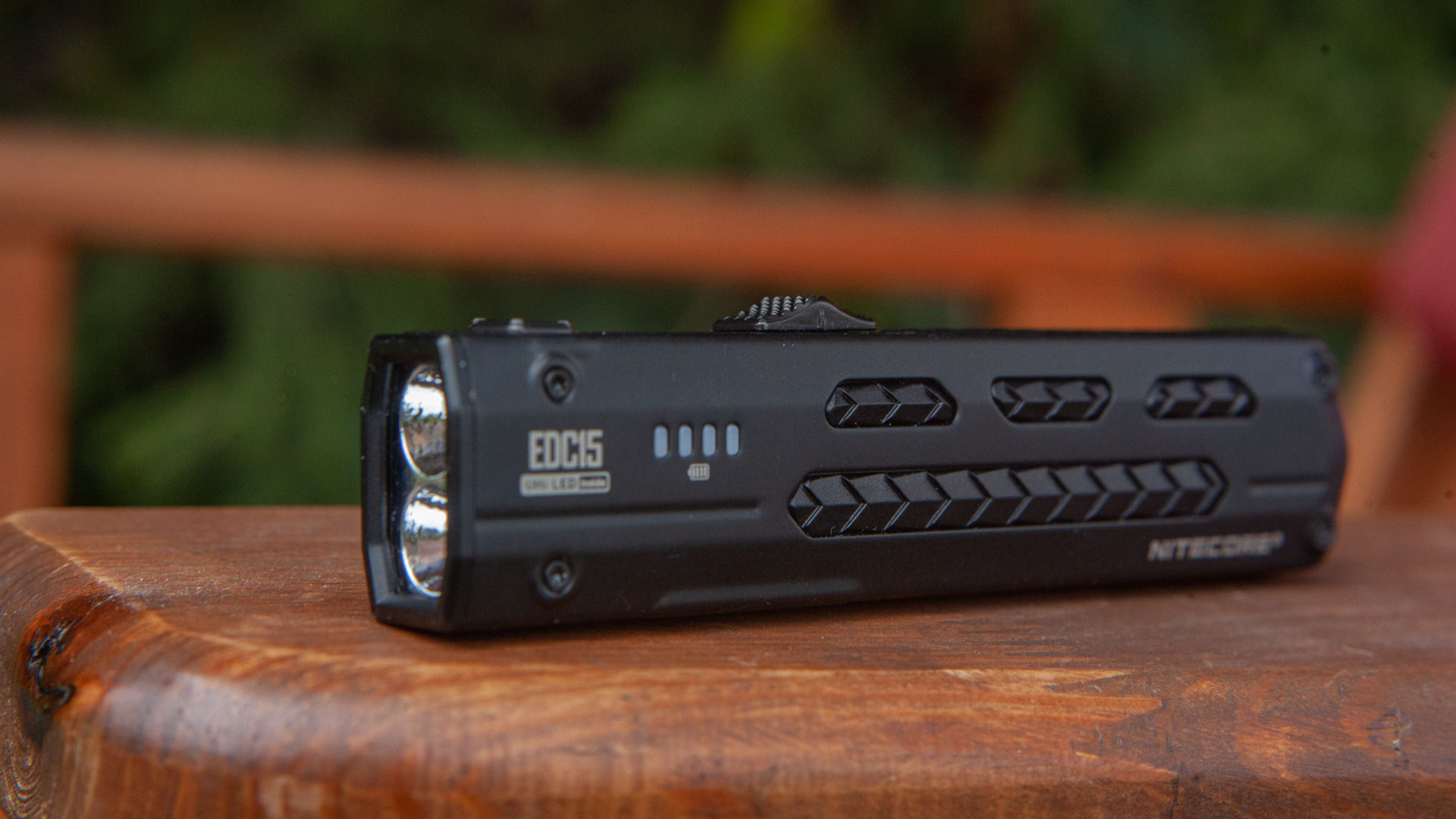
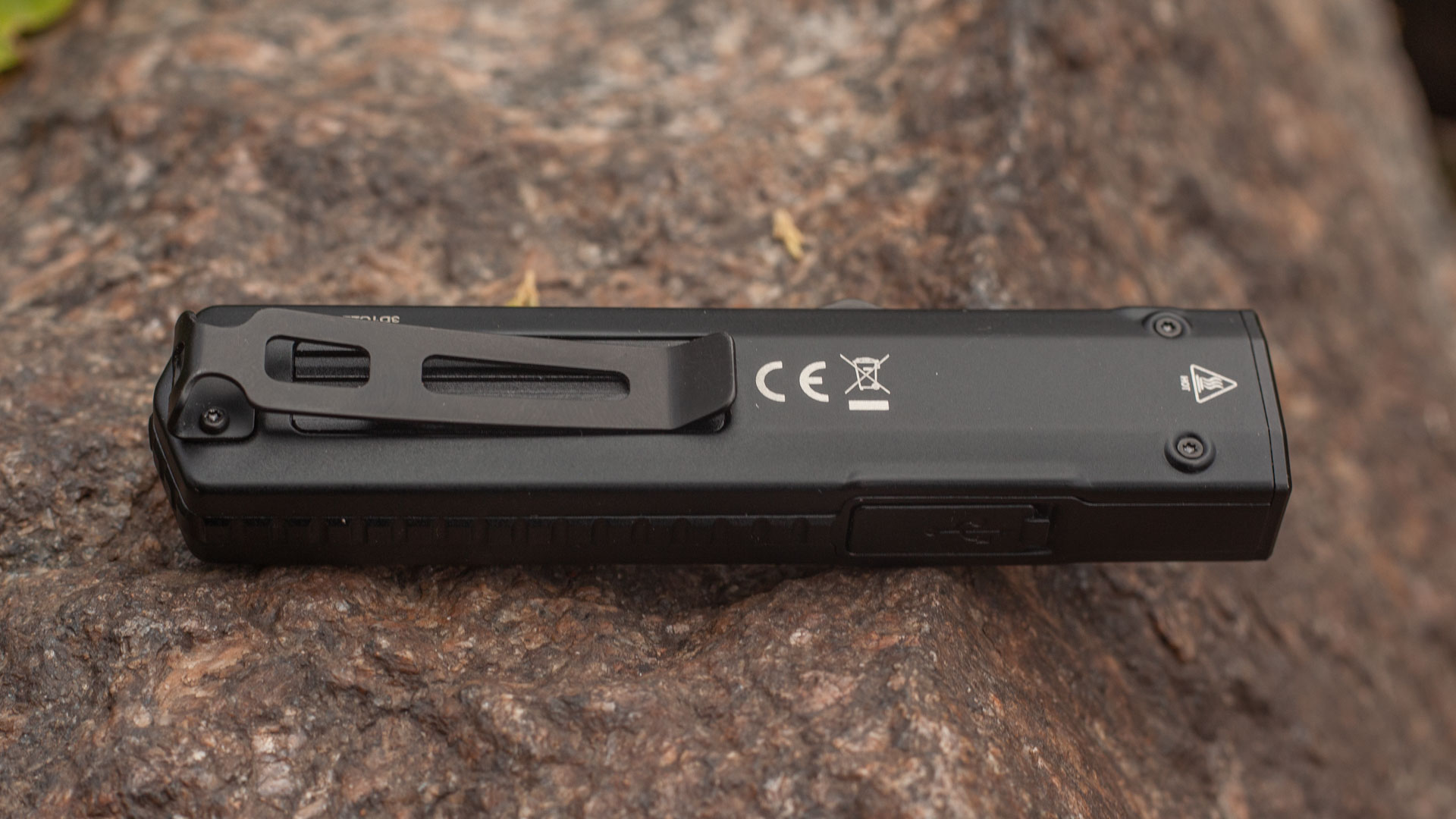
The clip on the back is positioned as close to the edge as possible, allowing the flashlight to sit deep within a pocket. There are no sharp edges or corners; in my experience, the flashlight shouldn’t wear through or tear pocket fabric. Overall, it looks and feels great in the hand.
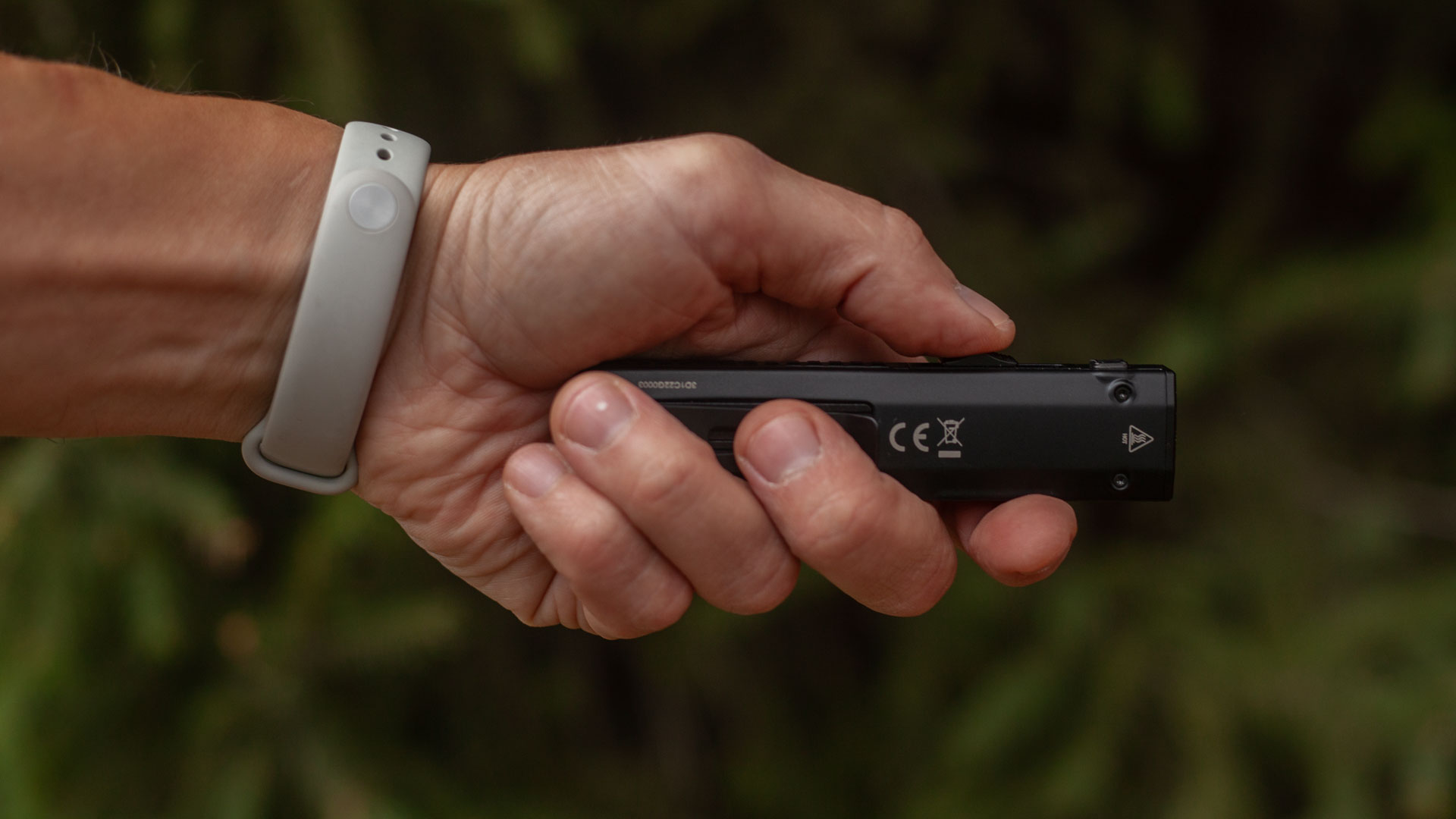
Speaking of feel, the flashlight fits exceptionally well in the hand. The grip is secure; your fingers wrap around the curved section of the clip, preventing the flashlight from slipping in your palm. A ribbed pattern of large rectangles along the body also enhances grip stability.
I have to mention that all this textured detailing gives the flashlight the feel of a fidget toy. True, it lacks useless moving parts - like spinners or clickers. Yeah, the slider moves, but it does serve a functional purpose. Yet, Nitecore EDC15 is simply pleasing to the touch; I often found myself absentmindedly running my fingers over the various grooves and textures on its body and also moving slider here and there.
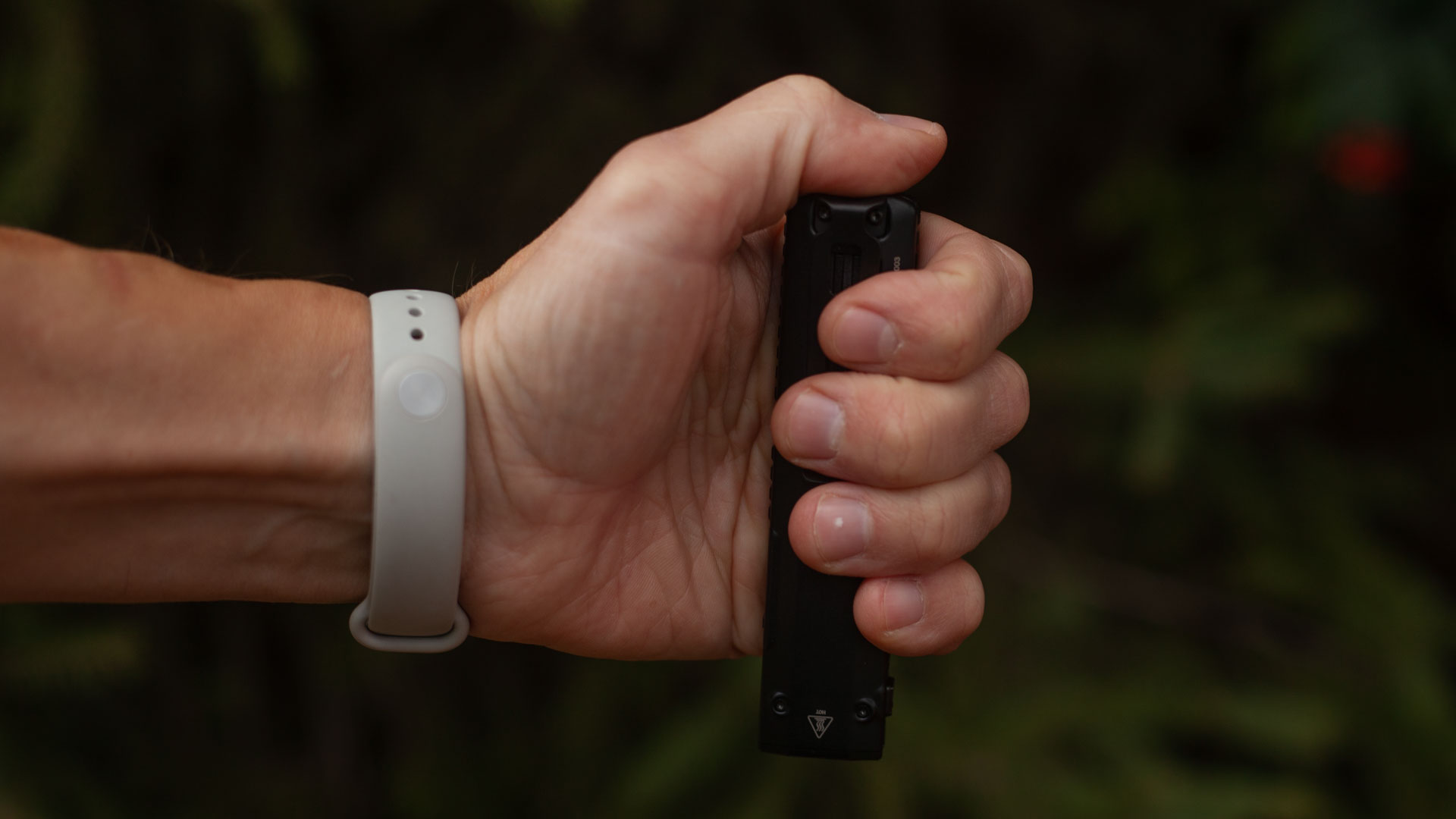
The tail end of the flashlight tapers to a point. If it were slightly more pointed, it would lend the EDC15 a touch of trendy “tactical” flair, and one could even speak of a glass-breaking capability.

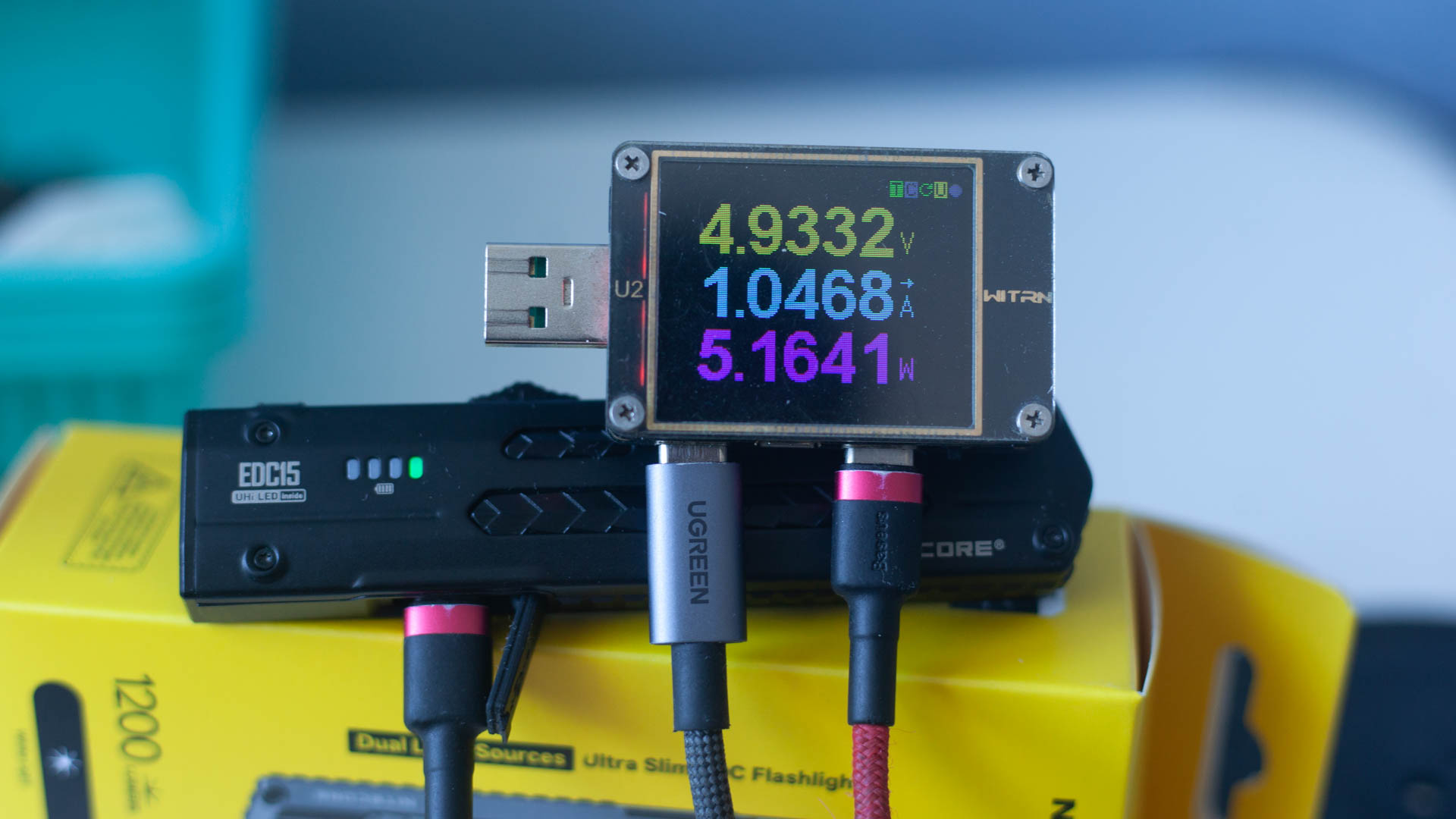
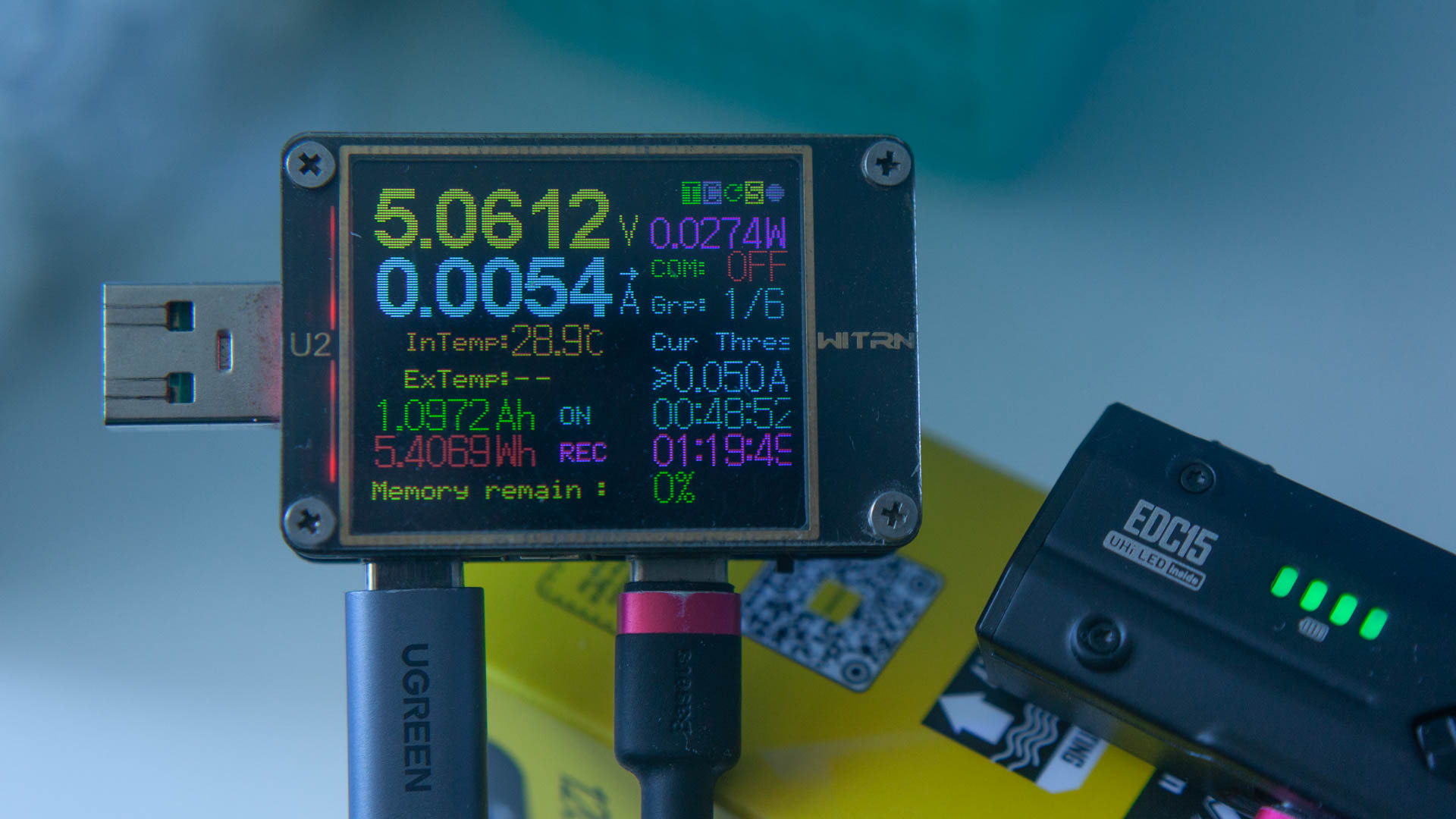
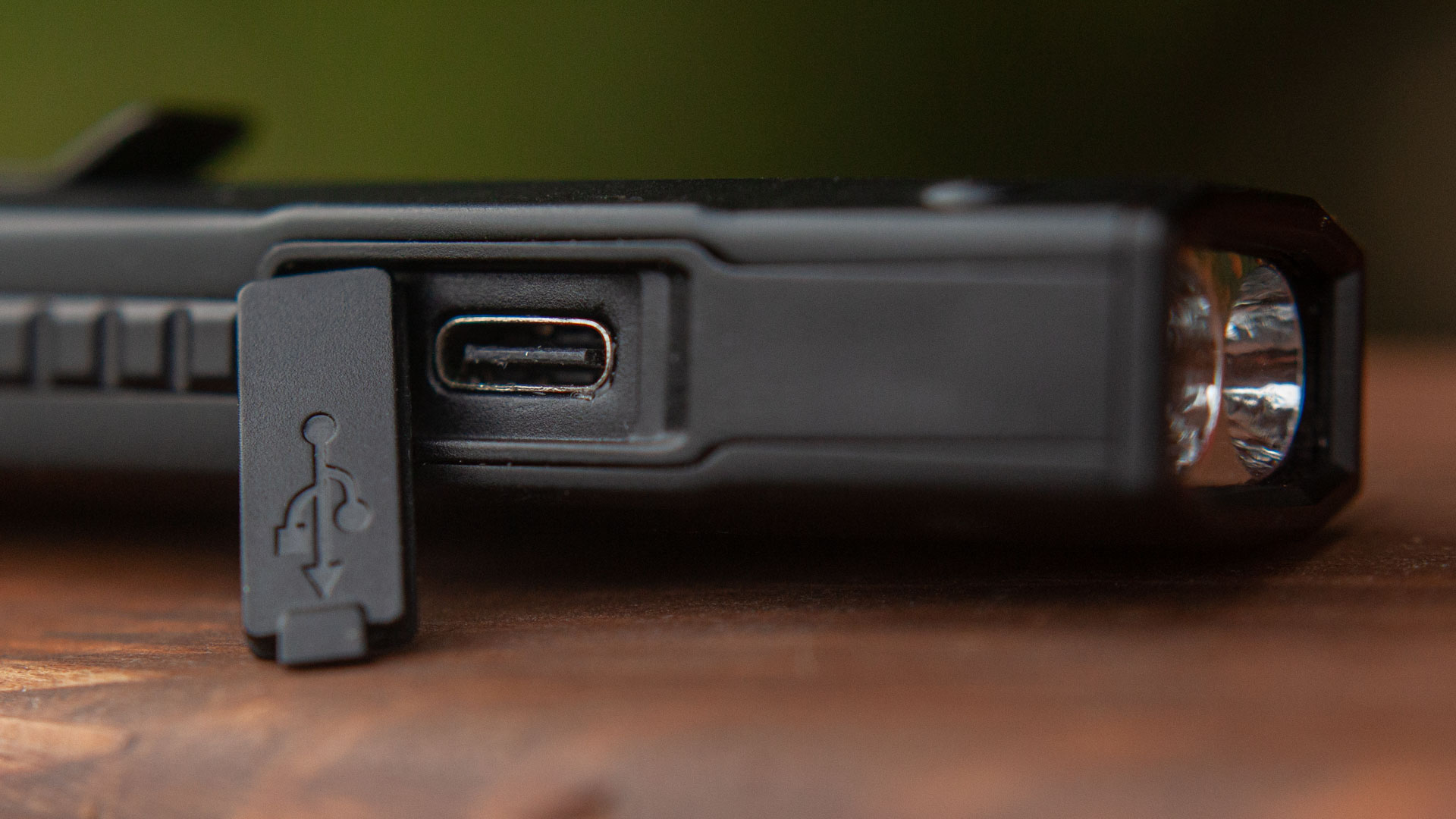
The side USB-C port is covered by a snug plastic flap. Notably, the flap snaps shut on its own, as if spring-loaded. The charge level can be gauged via four small indicator LED windows located on the flashlight’s head. Full charge taked little bit more then 1 hour.
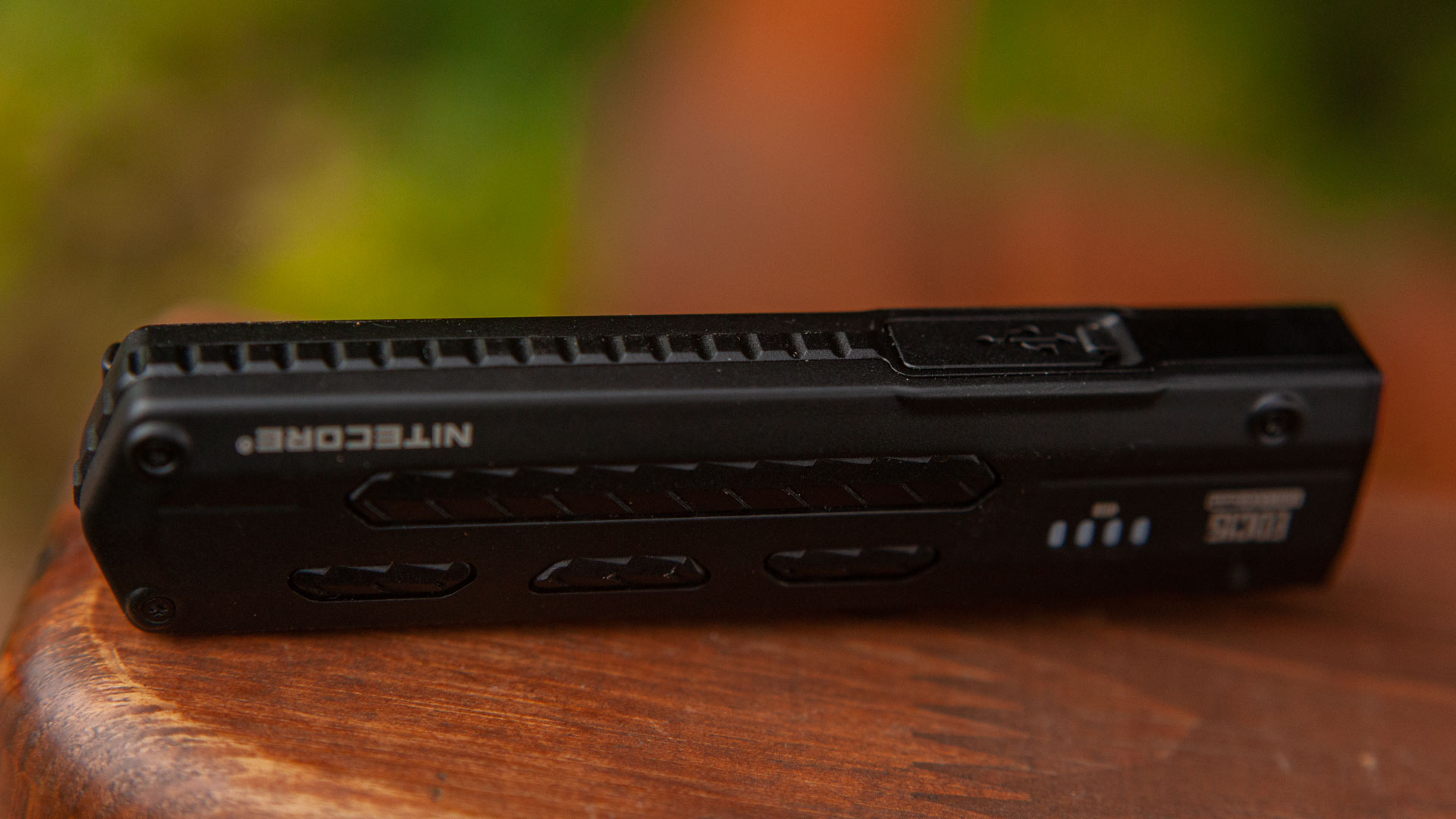
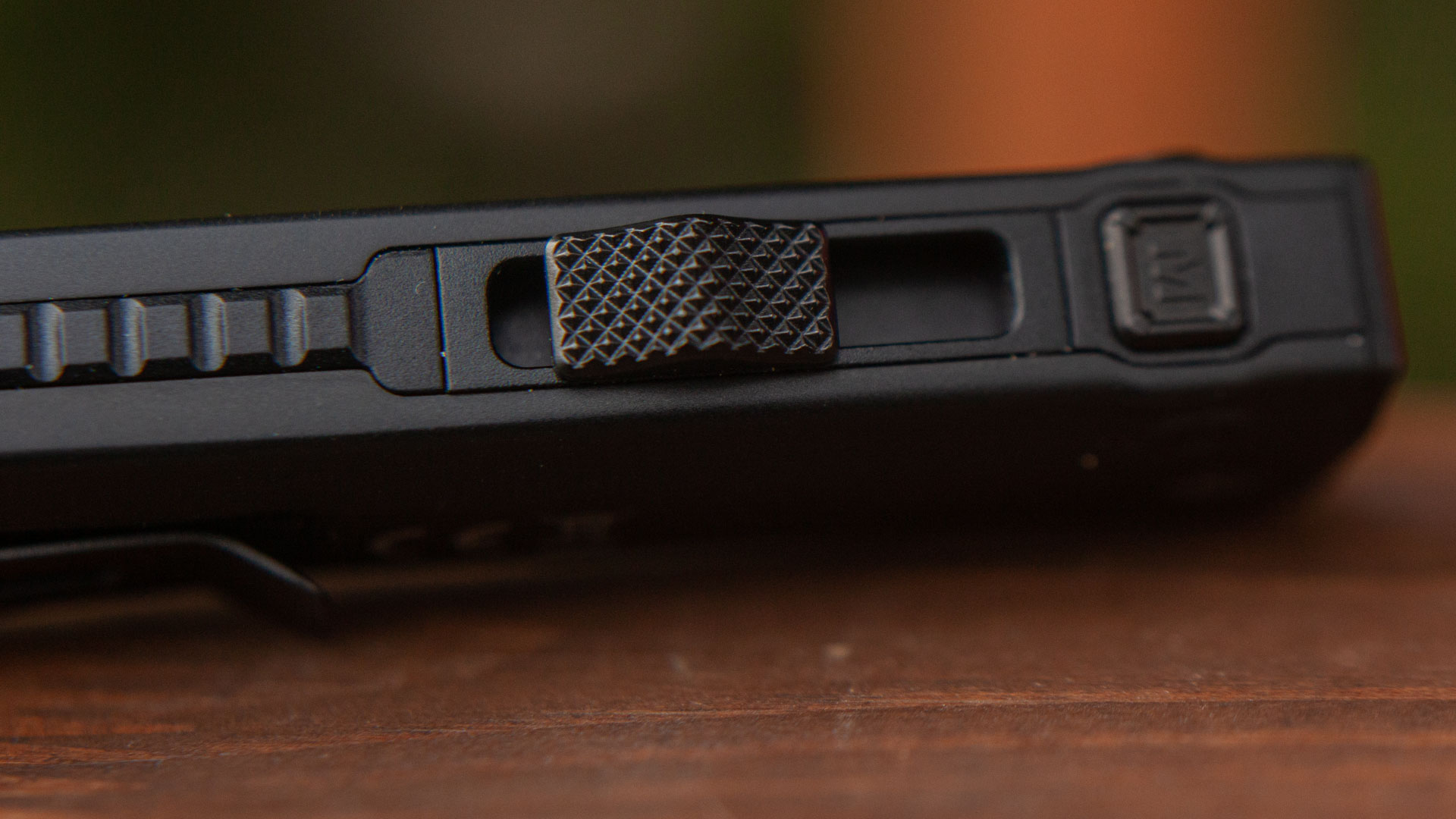
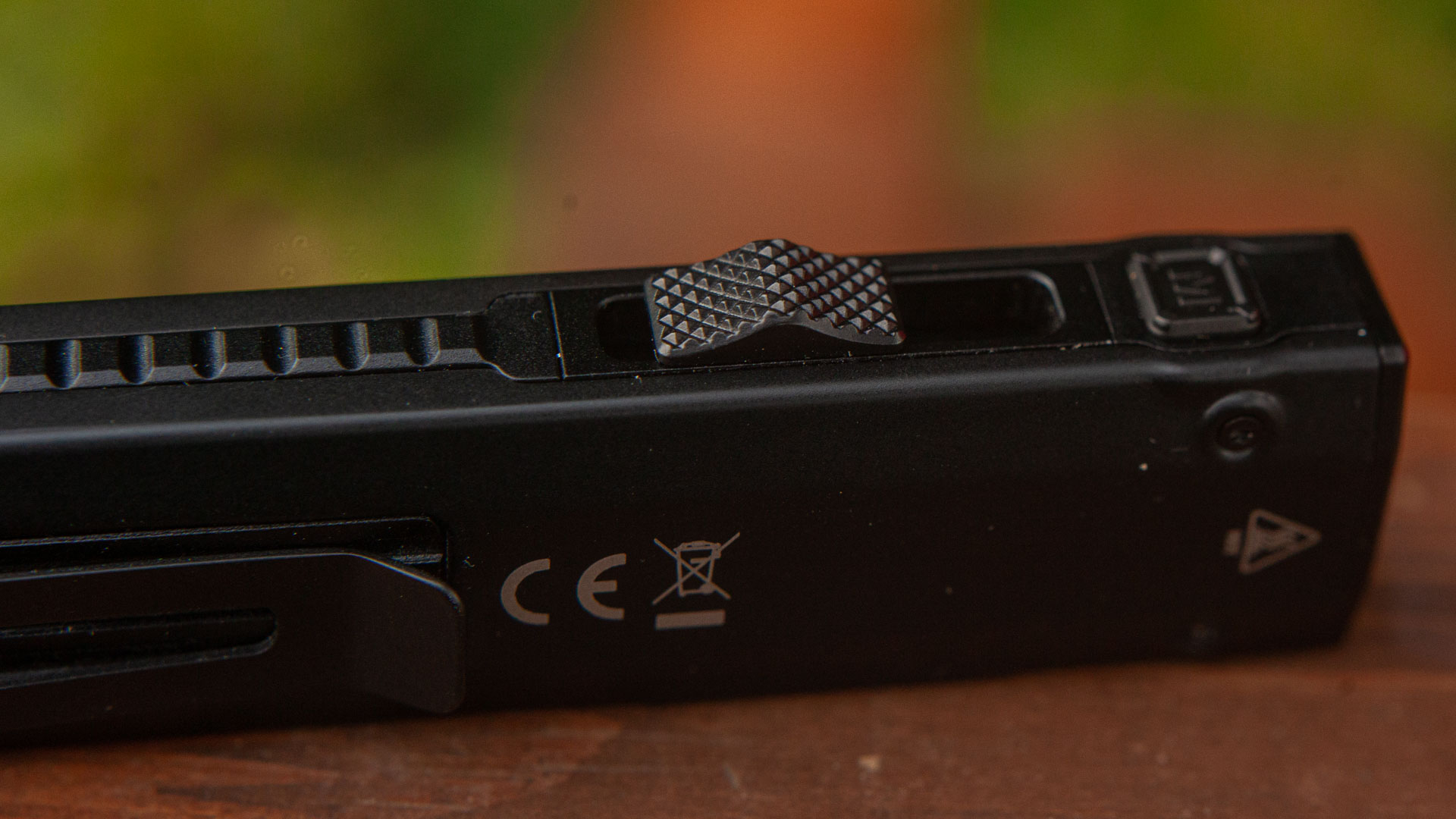
You’ll find the UV mode button and a slider that controls the white light on the side opposite from the charging port. The slider moves smoothly and with a satisfying click. If the flashlight had a lockout mode, you could easily use this slider as a fidget toy, again, it’s incredibly tempting to slide it back and forth. BTW, after disassembling flashlight, it turned out that button is not a mechanical, but magnetic. I assume there is Hall sensor inside. That is better for waterpoof and lifespan.
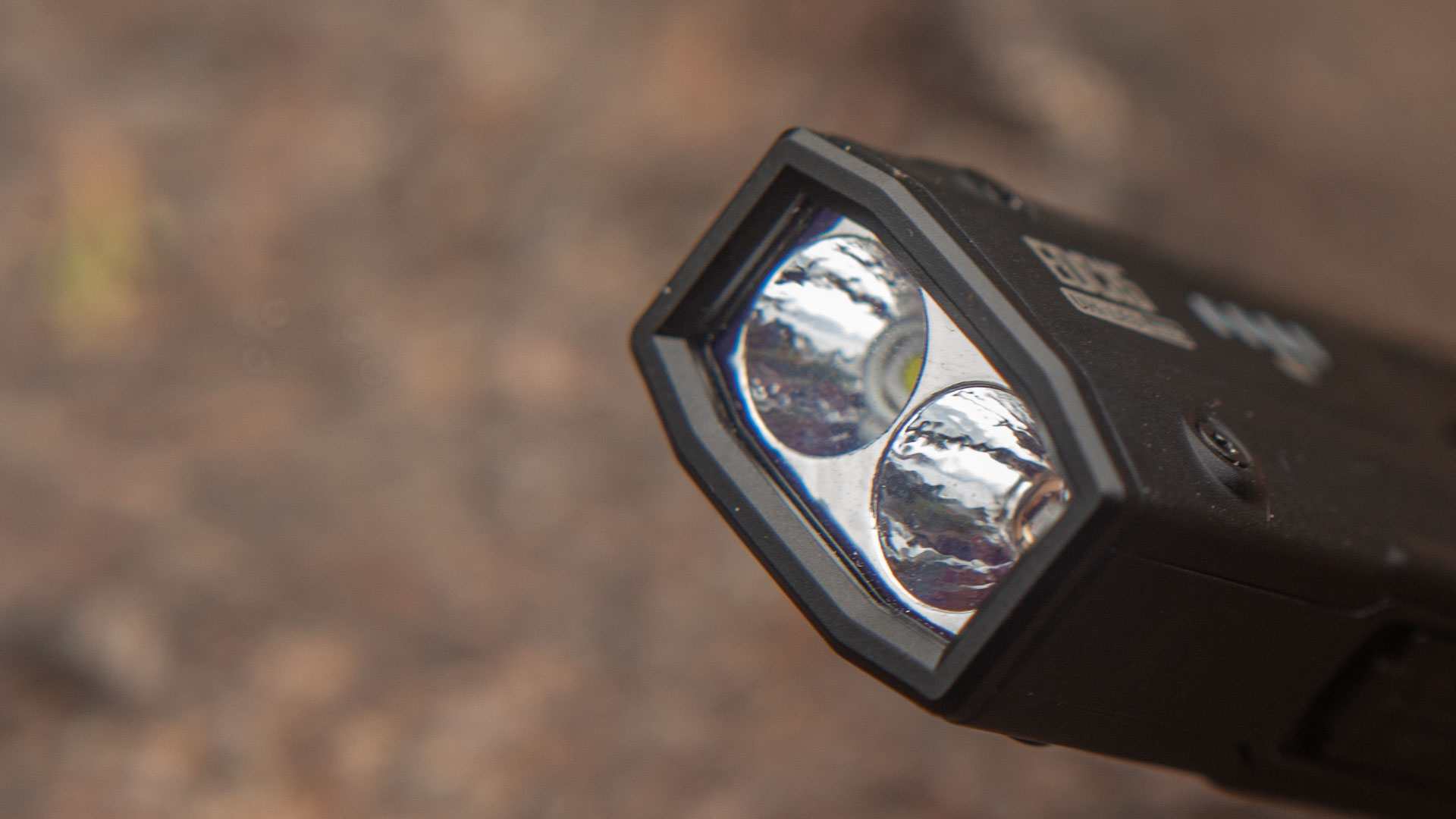
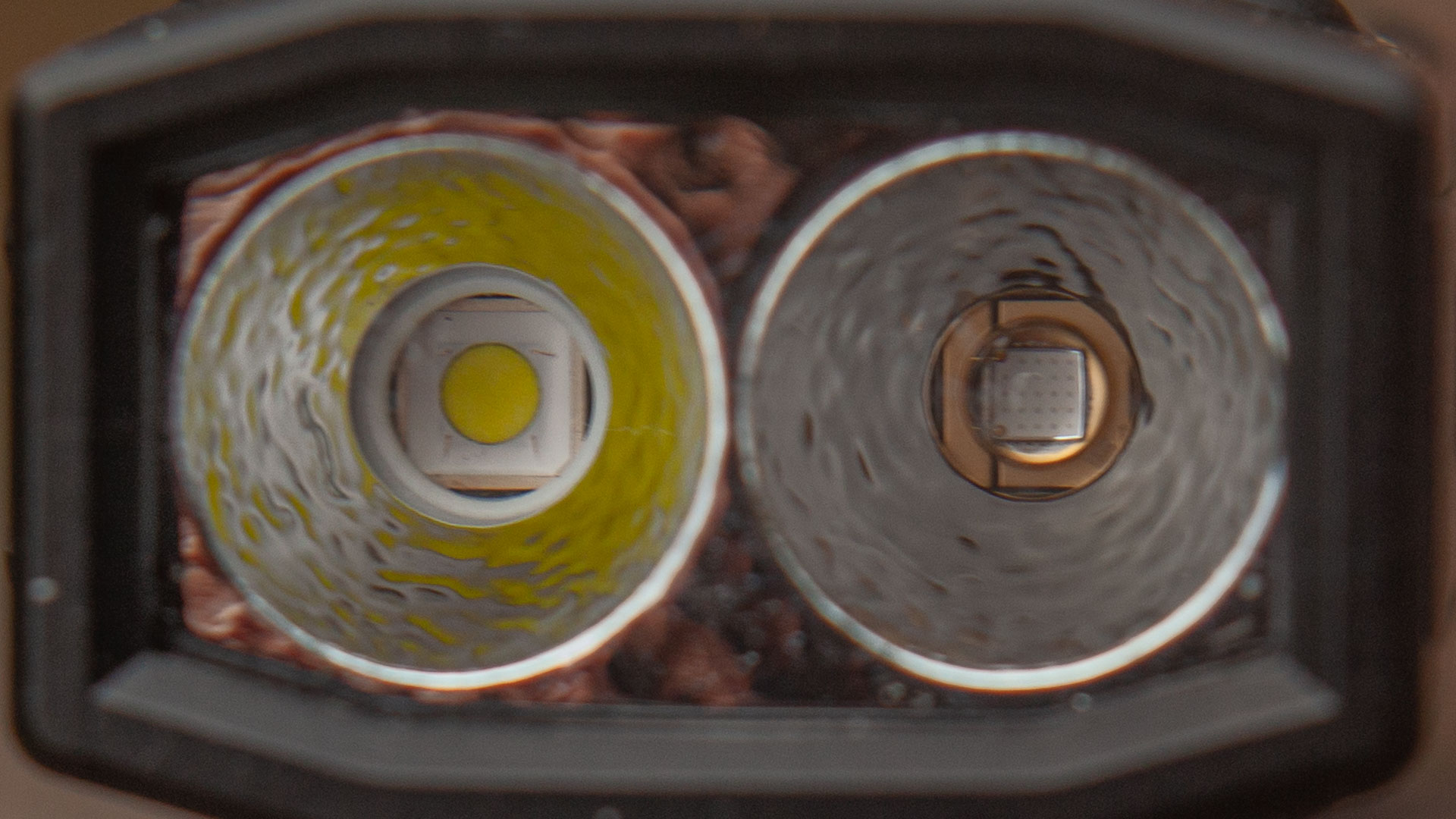
While Nitecore experimented with the design and controls (successfully, in my opinion), they opted for a classic approach regarding the optics. Instead of the expected TIR lens, it features two small textured reflectors: one for UV and one for white light. These reflectors are protected by a glass lens with an anti-reflective coating.
The primary light source is Nitecore’s proprietary UHI-25 LED, which bears a striking resemblance to the currently popular Luminus SFT25R - a tiny yet long-range emitter. The specific model of the UV LED has not been disclosed.
To wrap things up, let’s take a look at the flashlight’s internals; accessing them requires nothing more than unscrewing the corner screws. Incidentally, this means that if you decide to replace the battery after some years of use, it`s should be far easier, than in case of models featuring sealed or glued housings.
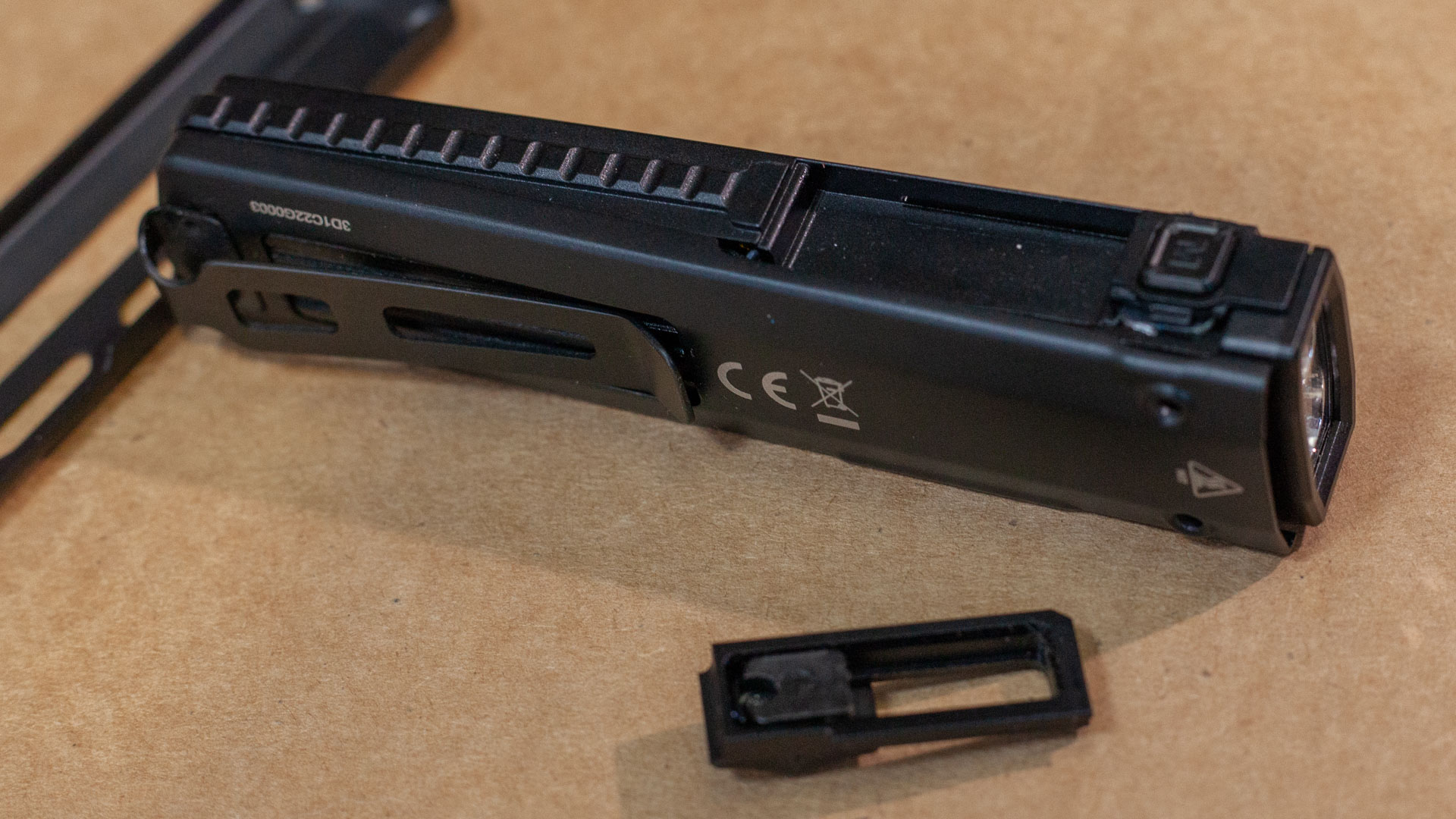
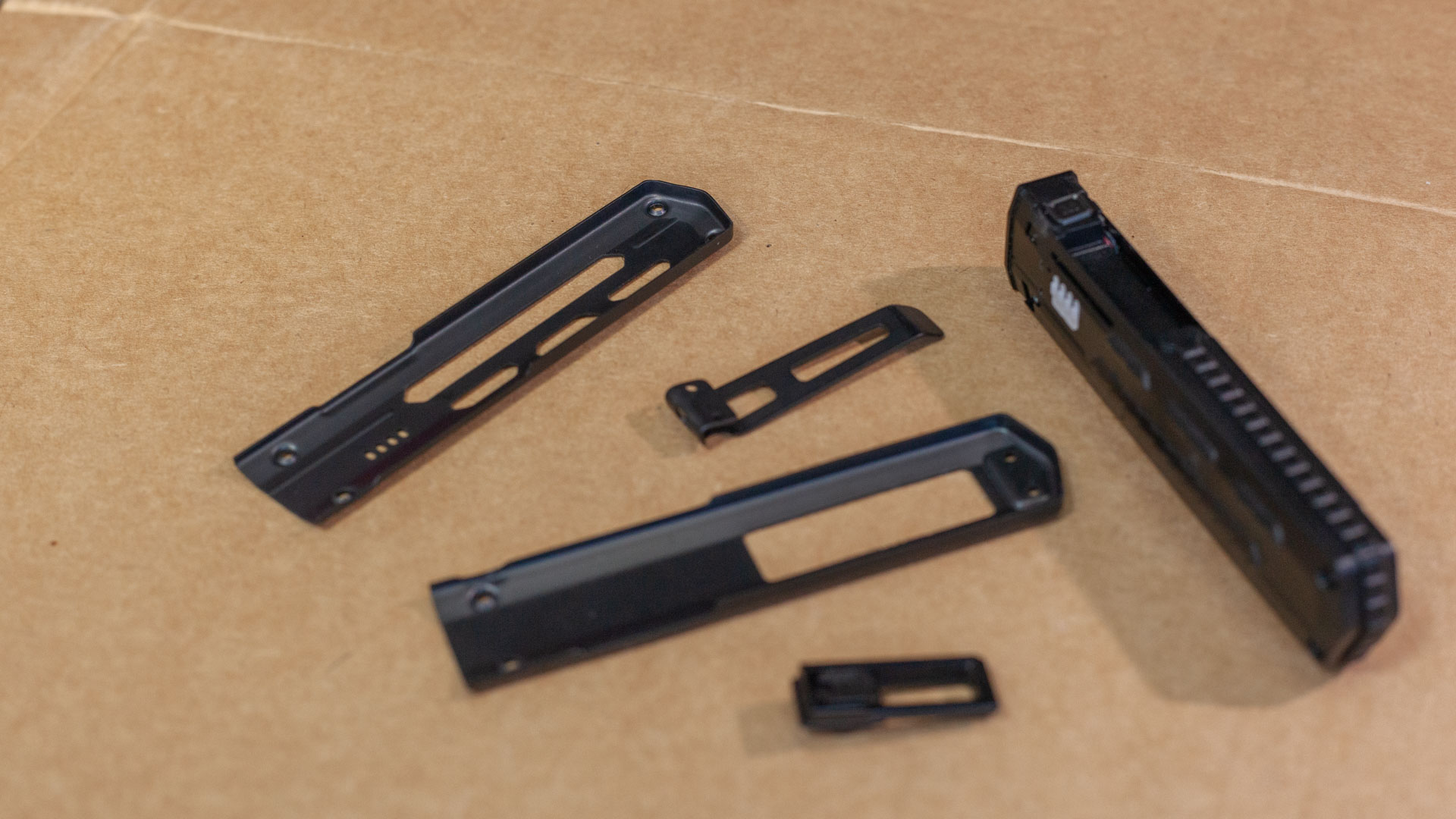
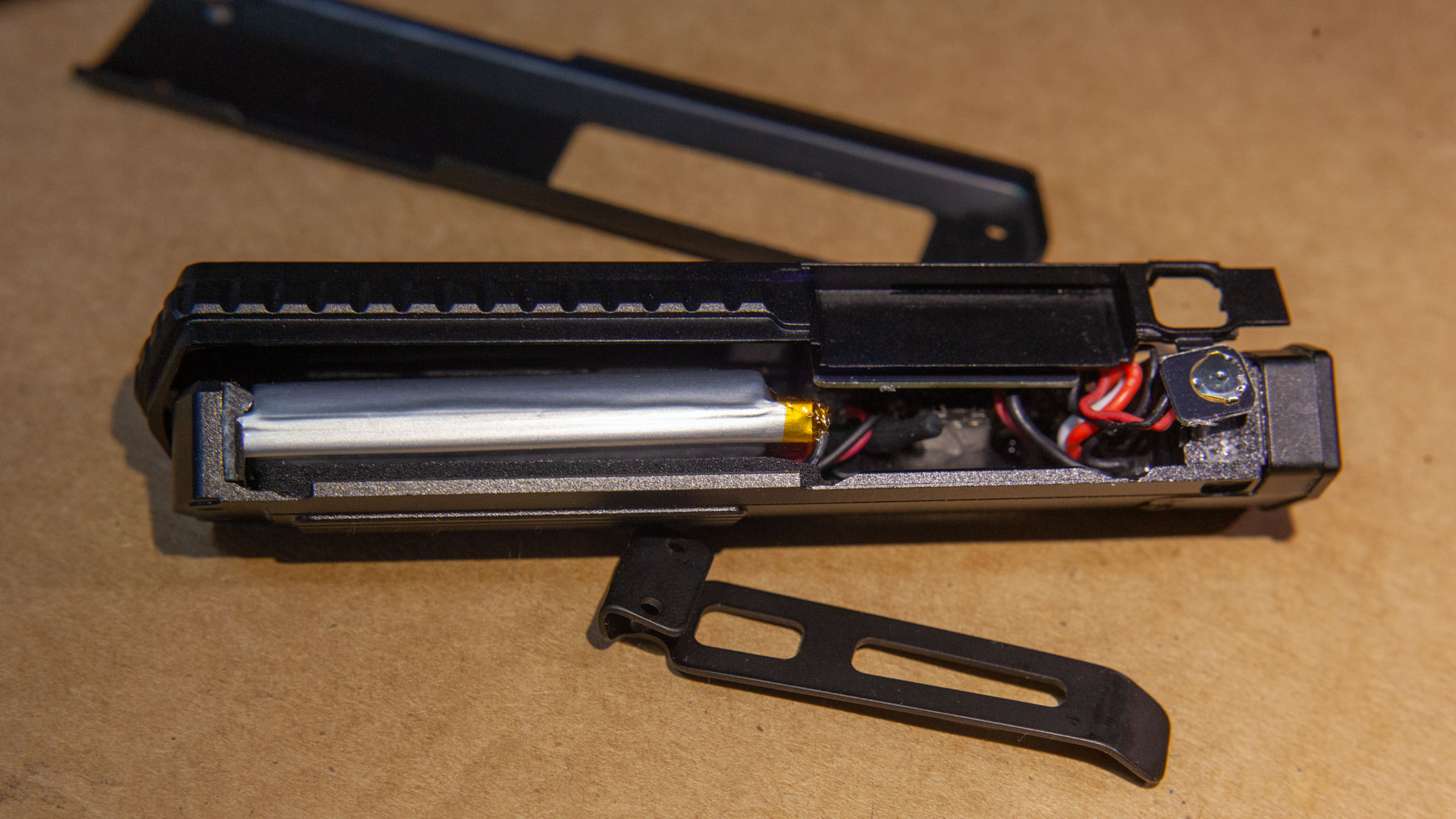
UI
There are absolutely nothing complicated here. In this regard, Nitecore EDC15 shouldn’t raise any questions even if you give it to a user, who is completely unfamiliar with modern flashlights.
-
UV light: press and hold the button from OFF mode. Release it, and the light turns off.
Button click in ON mode change 3 levels of power. -
White light: slide the switch out of the OFF position to choose rom 3 levels of brightness. It’s an incredibly simple method, yet it allows for instant access to either low brightness (the first switch position) or maximum brightness. It takes just a fraction of a second to slide the switch all the way to the farthest position.
In addition to the first position (LOW mode), the flashlight also features moonlight mode. To access it, press and hold the UV light button while moving the switch to the first position (LOW) - this is certainly easy to do. Also, keep in mind that looking at UV at night could affect the production of melatonin, the sleep hormone. It is better to cover the LEDs with your finger to prevent the UV light from shining into your eyes.
STROBE mode - button hold from ON
Of course, this may be not a problem for someone. But when I have to get up in the middle of the night, I try to protect my eyes from bright light so I can fall back asleep more quickly. I use the firefly/moonlight mode constantly, so instant access to it (and present of this mode at all, of course) is extremely important to me. I’m glad the Nitecore EDC15 has it.
HIW Nitecore EDC15 ILLUMINATES
Cool white light, typical of the mass-market EDC segment, with an expected minor increase of greenish tint at lower brightness levels.
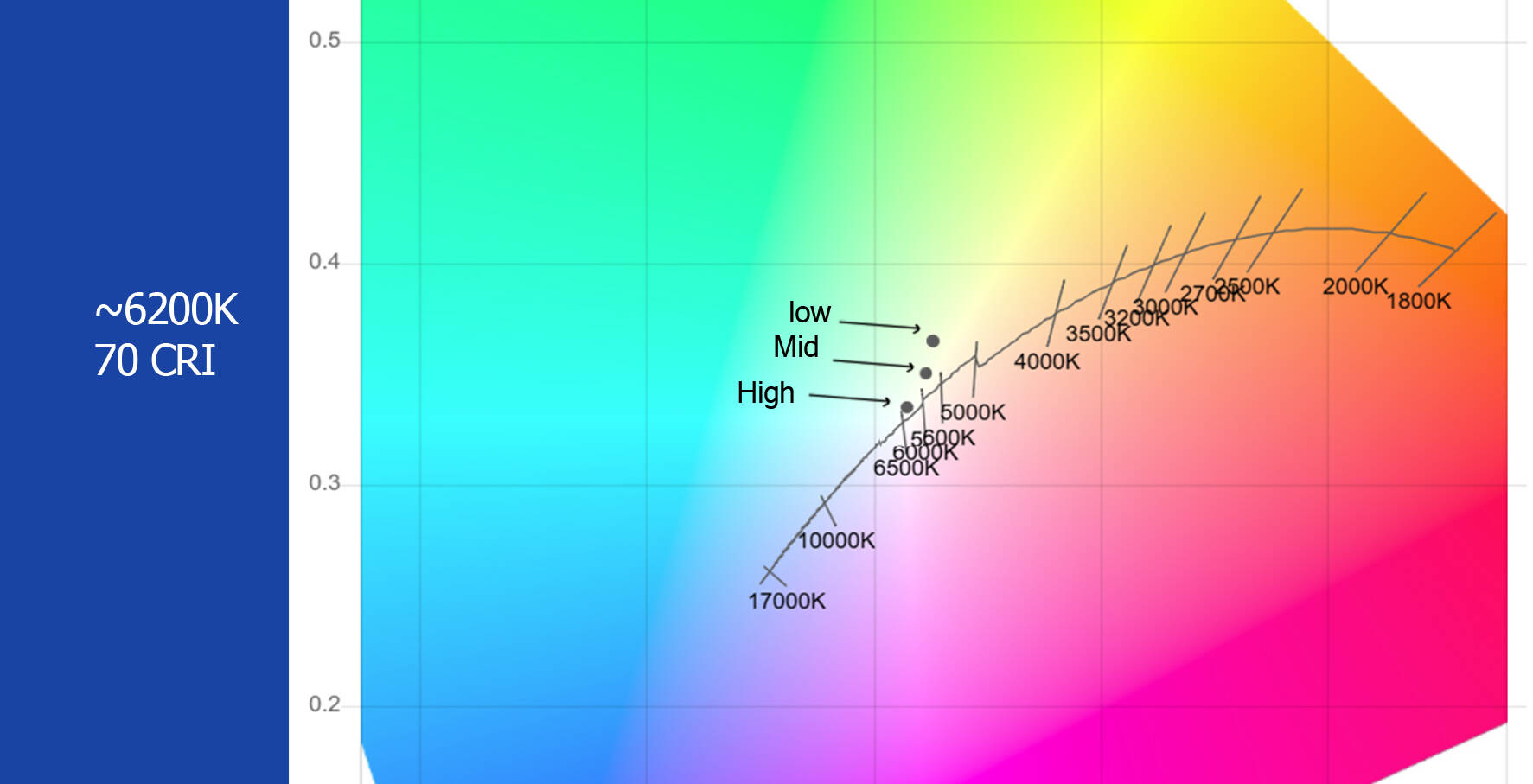
I am mostly satisfied with the modes spacing. I say “mostly” because it would have been nice to include an additional mode between Low (50 lumens) and Mid (400 lumens). Regarding another gap - the one between the Mid mode and the 1400 lumen High mode, it is clear that 400 lumens Mid is the maximum brightness the Nitecore EDC15 can sustain. Consequently, an any intermediate levels like 800–900 lumens would become nothing but just another “turbo” mode with stepdown to the same 400 lumens MID. So that is OK for me not to have them.
BTW, it is odd that the mode acting as Turbo is labeled “High”.
To some, a constant 400 lumens might seem underwhelming compared to modern full-sized models powered by 21700 batteries, which easily sustain 1000–1100 lumens. However, one must keep in mind the vast difference in size and the amount of metal in the body of such flashlights available to dissipate excess heat. 400 lumens is quite sufficient level for EDC needs. Brightness, which is typical, for example, of a flashlight running on a 14500 battery.
And i bet that most of you guy clearly remember ( i do!) times when 18650 EDC flashlight has turbo of 1000 lumens and maximum brightness (not even stabilized in those times) around the same 400 lumens.
It is worth noting that if you activate the Mid mode directly, the line of stabilization on my chart is slightly concave. However, when the flashlight drops to this level after the thermal cutoff triggers in High mode, the curve is perfectly flat. Ive imitated real use, when you turn on highest mode when flashlight body is already warm. So ive turned High mode several times and i`m certainly impressed by runtime in this mode. Flashlight sustains ~1400 lumens pretty well. I suppose that if you use EDC15 in winter, there are chances you can use High mode on even longer, turning it on and one several times in raw.
Overall. Runtime and stabilization look cool.

The shape of the body influences the beam profile; the beam somewhat resembles a pentagon at close range. Personally, I find this completely unimportant. As I`ve mentioned, it is only visible at very close range.
The combination of a long-range LED and a small textured reflector is unusual, but it yields a very practical beam. It is not a wide-angle floodlight, there is a distinct contrast between the hotspot and the sidelight. However, the hotspot is wide enough to be comfortable even at a distance of just a couple of meters, making it suitable for general illumination while walking. Well, light of EDC15 reminds me of full size EDC flashlight with SST40 and OP reflector.
That concentration of light in hotspot provides impressive throw for a flashlight of this size and optics. I usually subtract a third from the advertised throw distance to get what I call “useful throw”. That is the distance at which the beam actually provides enough light to see things clearly.
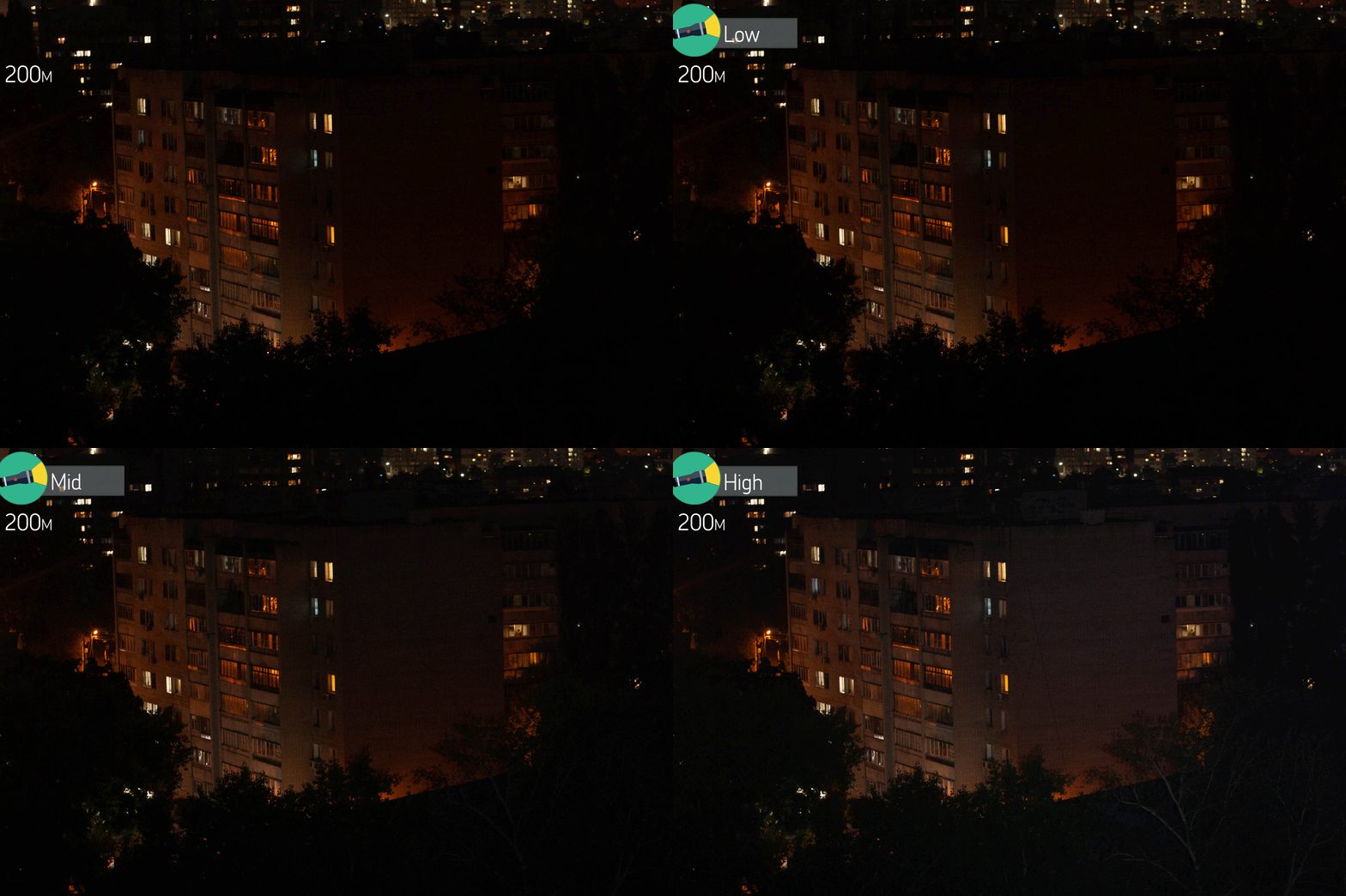
Nitecore EDC15 has an advertised range of 208 meters, and frankly, I had no reason to expect to see a truly usable light at that distance! Just look at the photo below; the wall is exactly 200 meters away. Judging by how brightly the wall is illuminated, there is every reason to expect even betterthrow. The photo clearly shows that Nitecore EDC15 can handle that 200-meter distance even in medium mode! Sure, the brightness is much lower, but the beam is definitely visible.
This means that during a walk, you can easily spot where your dog has dashed off, sweep the beam across a nearby hill or the upper floors of an apartment building out of curiosity, or shine it down from the top of high building to illuminate cars parked below and see what’s going on.
Now, take a look at the beam in action.
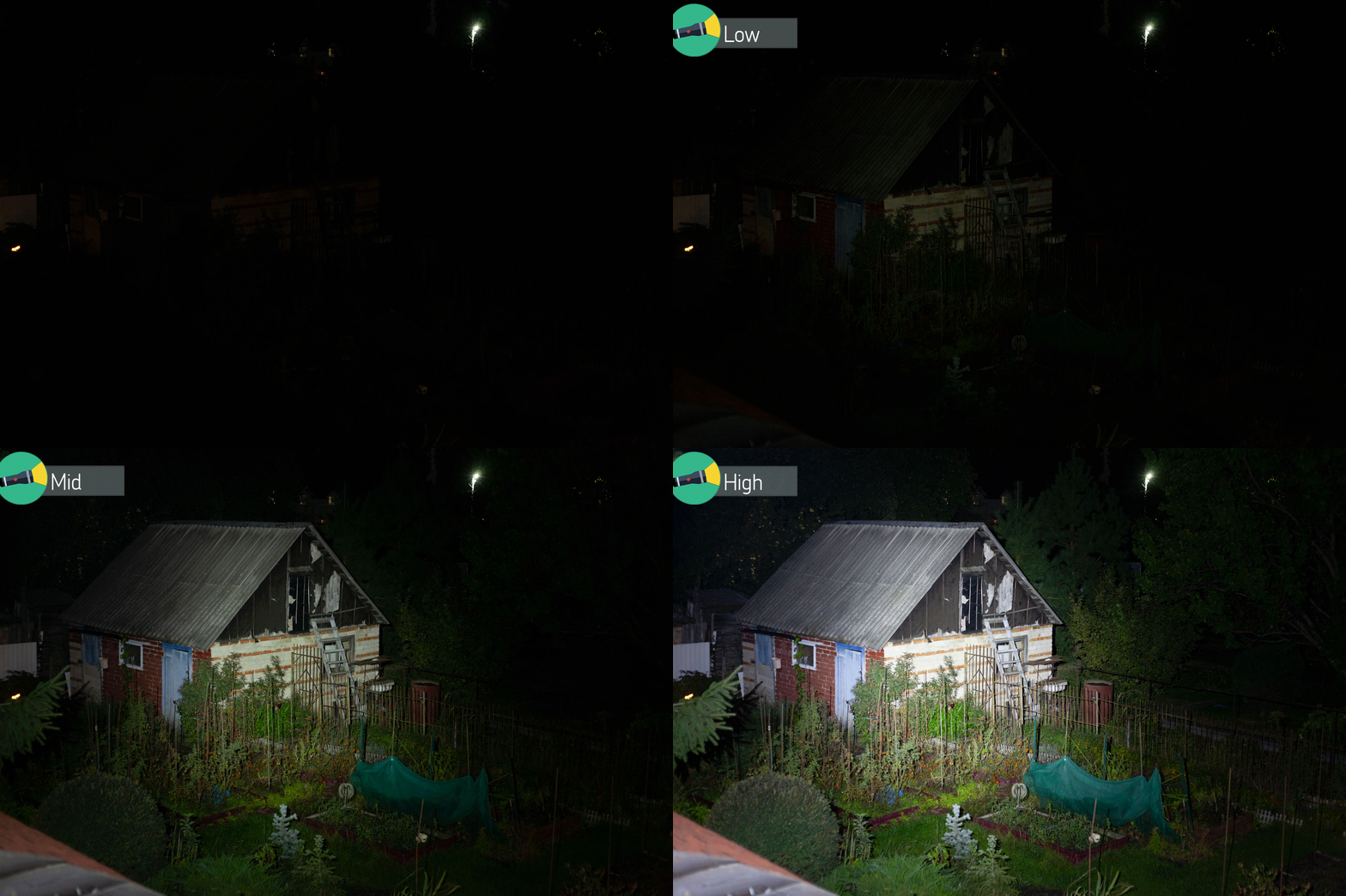
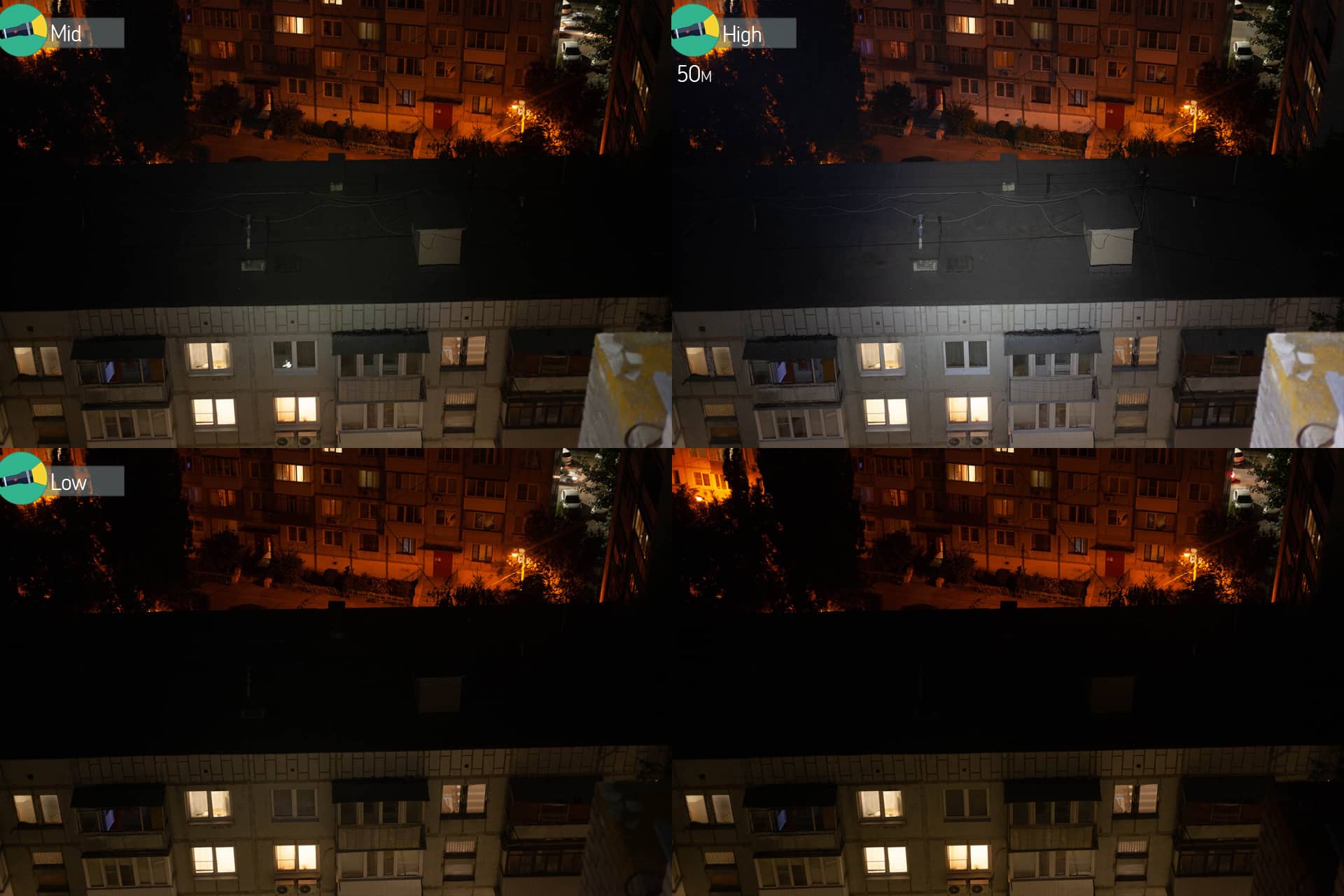
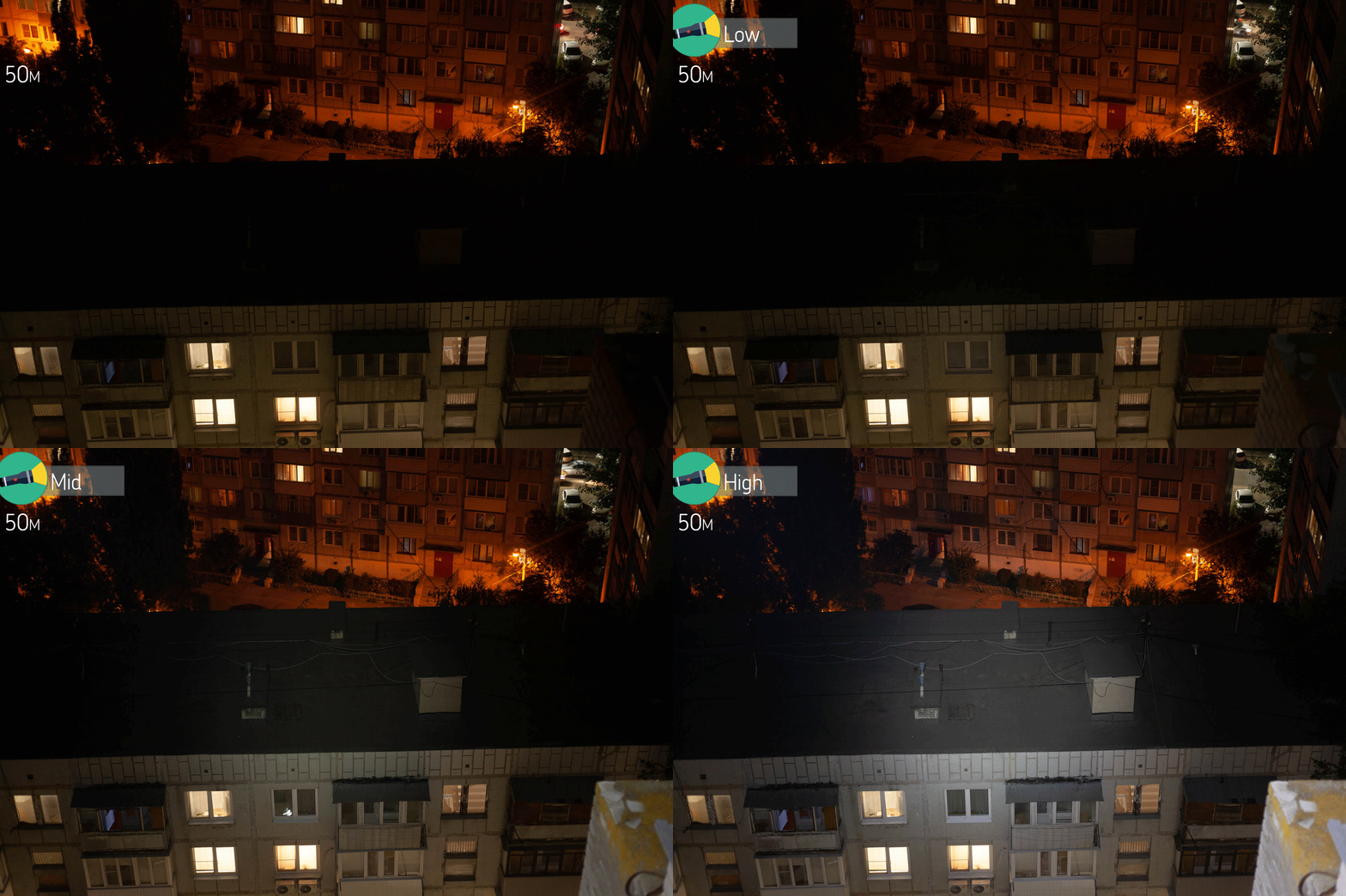
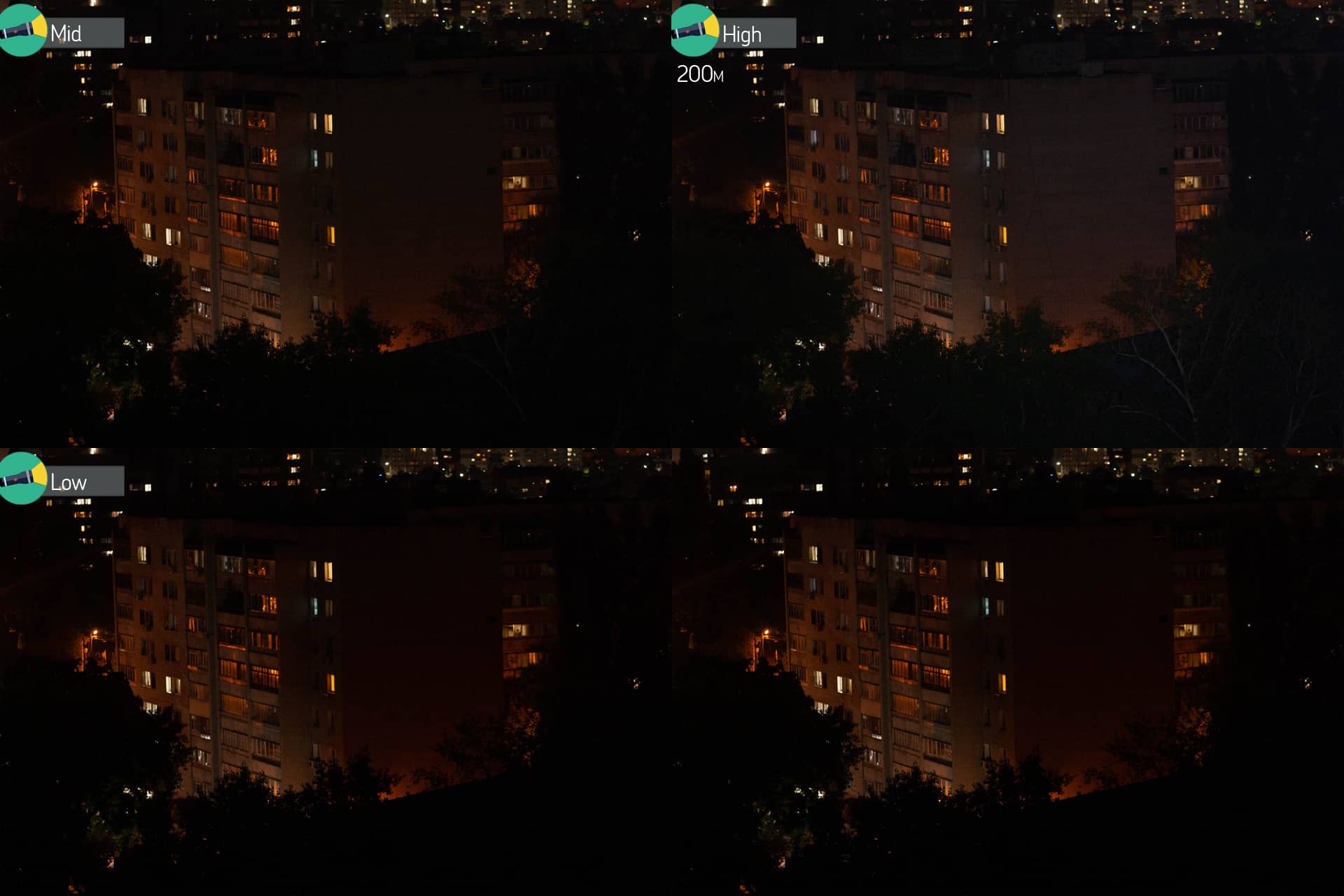
As for the UV LED, everything is as it should be. The only potential pitfall would have been installing a useless 395nm LED, but that’s not the case here as Nitecore EDC15 uses a 365nm LED, the correct wavelength, which illuminates exactly what it should: stains, fluid leaks, and security markings on banknotes and documents. I believe that in an urban setting, UV light is definitely more useful than red light.
Ah, 3 levels of UV power is also better then you might expect. even 1 level would be OK.

OVERALL
I think Nitecore has created a decent EDC flashlight. EDC15 retains the flat, metal-bar form factor typical of their popular EDC series, but introduces an incredibly convenient slider control. Perfect for elders or people unfamiliar with modern flashlights. Reading manual and memorizing button combinations (lockout, moonlight mode, turbo, etc.) can often be a barrier to enjoying a good light for them even when it is not an Anduril UI! I bet you understand what i mean -) The slider of EDC is intuitive and easy to use, yet it still provides quick access to the minimum brightness mode, crucial feature when turning the light on in the middle of the night, to strove and to highest brightness.
Nitecore EDC15 offers more than enough brightness and throw (especially throw) for everyday tasks, as well as solid runtime (for its size). Its one-hour runtime at 400 lumens is plenty for an evening walk around with dog IMO..
PROS
-
design and in-hand feel
-
comfortable grip and deep pocket carry
-
relatively compact size
-
extremely simple yet versatile controls, allowing you to instantly access either the 1-lumen mode or the full 1400-lumen output.
-
excellent throw
-
mid range light well-suited for walking
-
brightness stabilization
-
UV light with 3 levels of power
CONS
-
i would like to see an intermediate mode between 50 and 400 lumens
-
no lockout feature. thought i`m not sure how it can be done here. anyway, again, slider moves not loose. you have to pressure it a little bit.