Disclaimer: Sofirn provided this flashlight to me free of charge. This had no influence on the review.
All measurements were done with hobby-grade equipment, inaccuracies and deviations are therefore possible.
Introduction
2x18650, hinged head, and a somewhat interesting design - I couldn’t say no to a review. Up until now, I’ve been rather skeptical of such lights, as the head is usually quite small, meaning the sustained output falls below what appeals to me. The ST2 promised more in that regard. I was excited, yet still skeptical, to see how the flashlight would perform.
Specifications by Sofirn
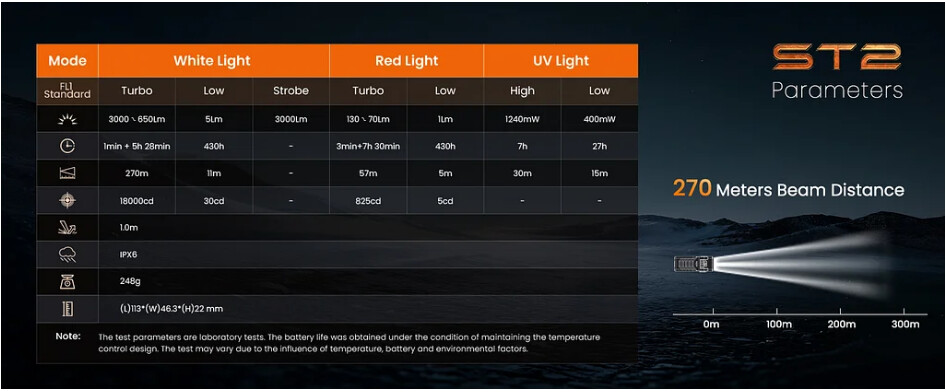
You can find the flashlight and all information at Sofirn: https://www.sofirnlight.com/products/sofirn-st2-3000lm-3-in-1-rotatable-flashlight?spm=..index.shoplazza%3A%2F%2Fapps%2Fpublic%2Fblocks%2Fproducts_grid%2F56125487021326335_1.1
Package Contents and Impressions
The flashlight is delivered in a typical white Sofirn box, resting inside a plastic tray protected by a plastic bag.
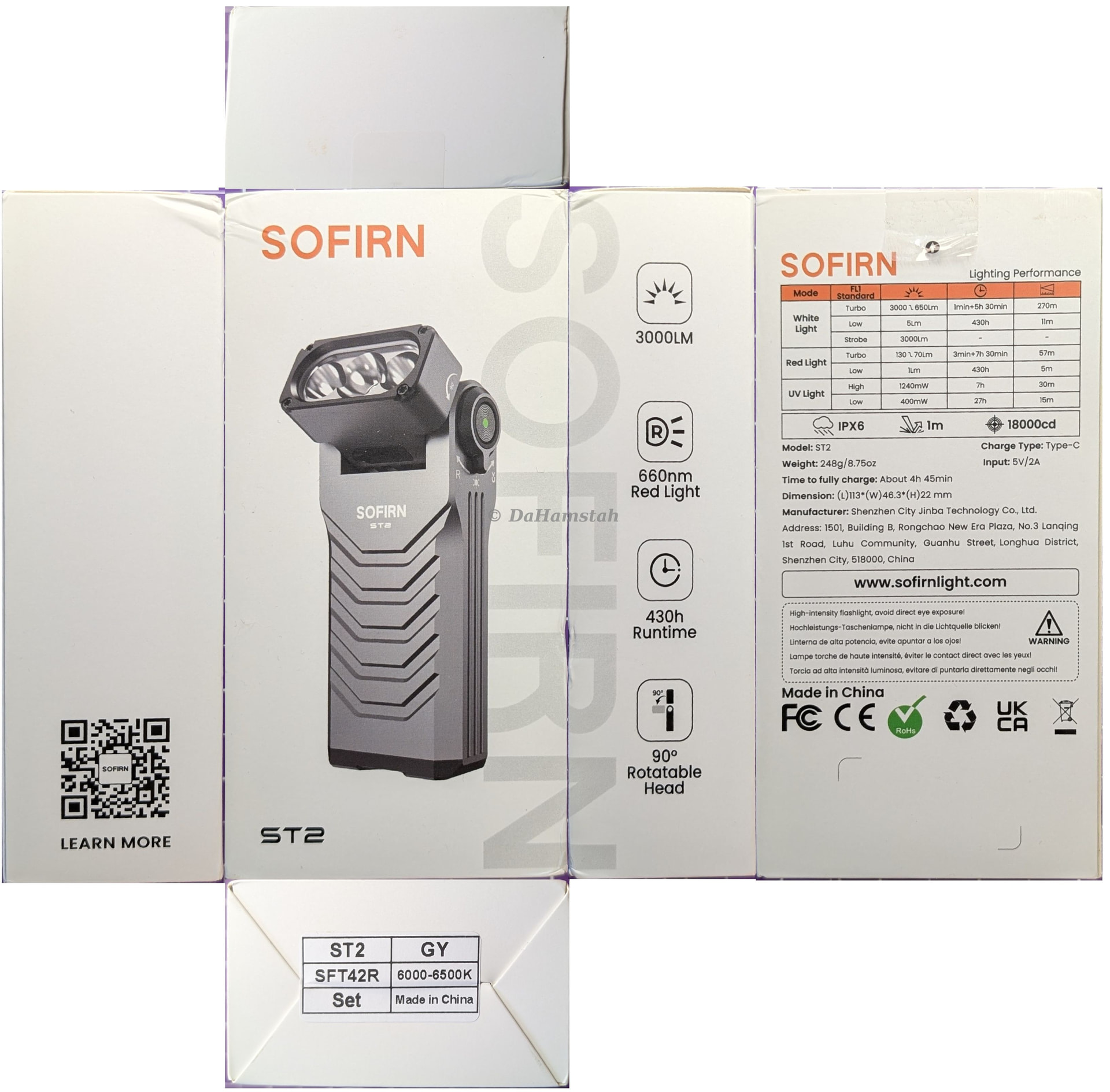
Also included are manual and a short USB-C-to-C cable.
The first impression of the light is very good. It feels heavy and solid, there are no sharp edges, and the clearance between the screwed parts is uniform.
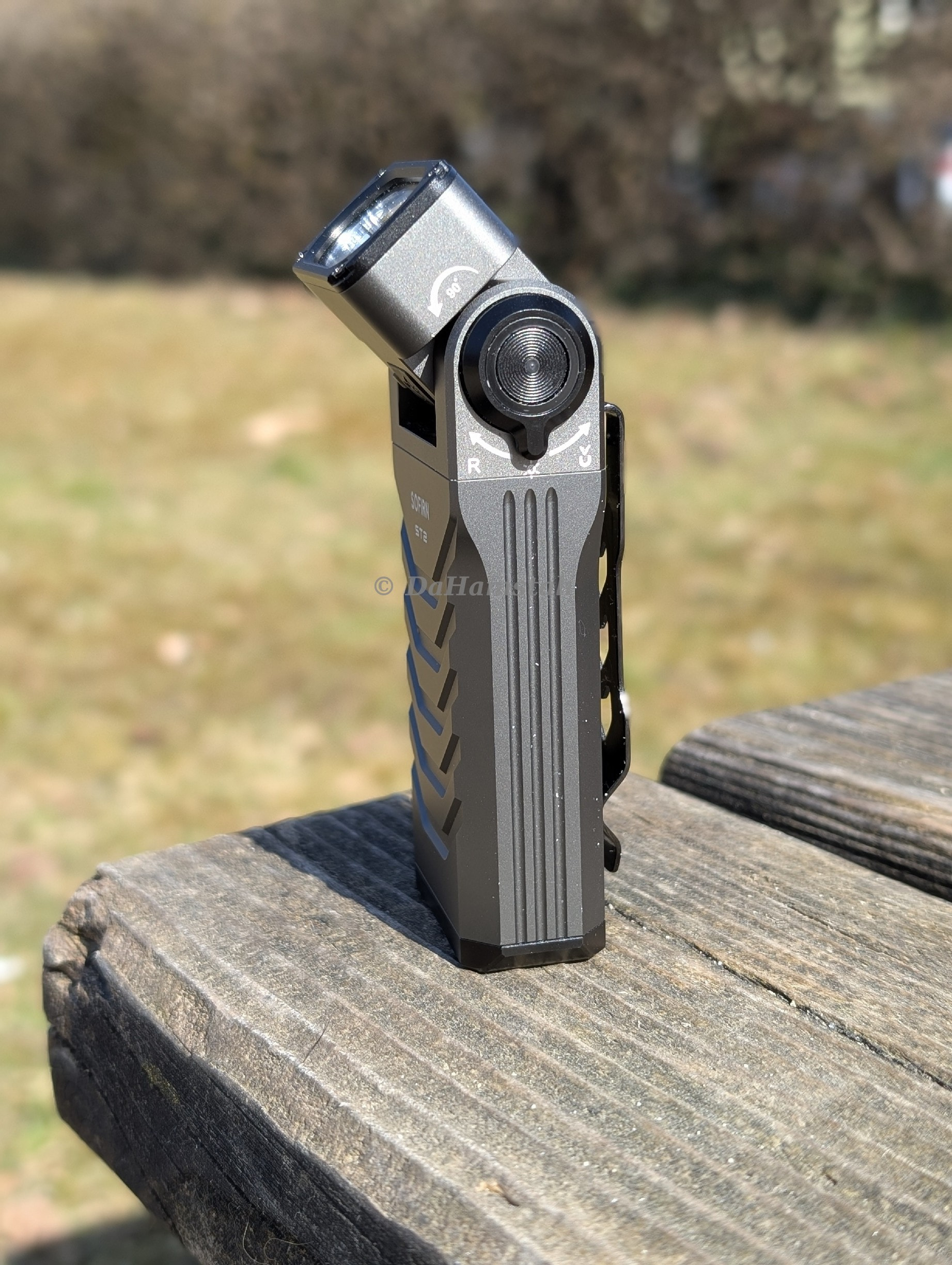
The anodization is flawless, and to me, the combination of gray and black is very appealing. There is only relatively subtle lettering, which confused me at one point: the UV position of the switch is labeled “VU”
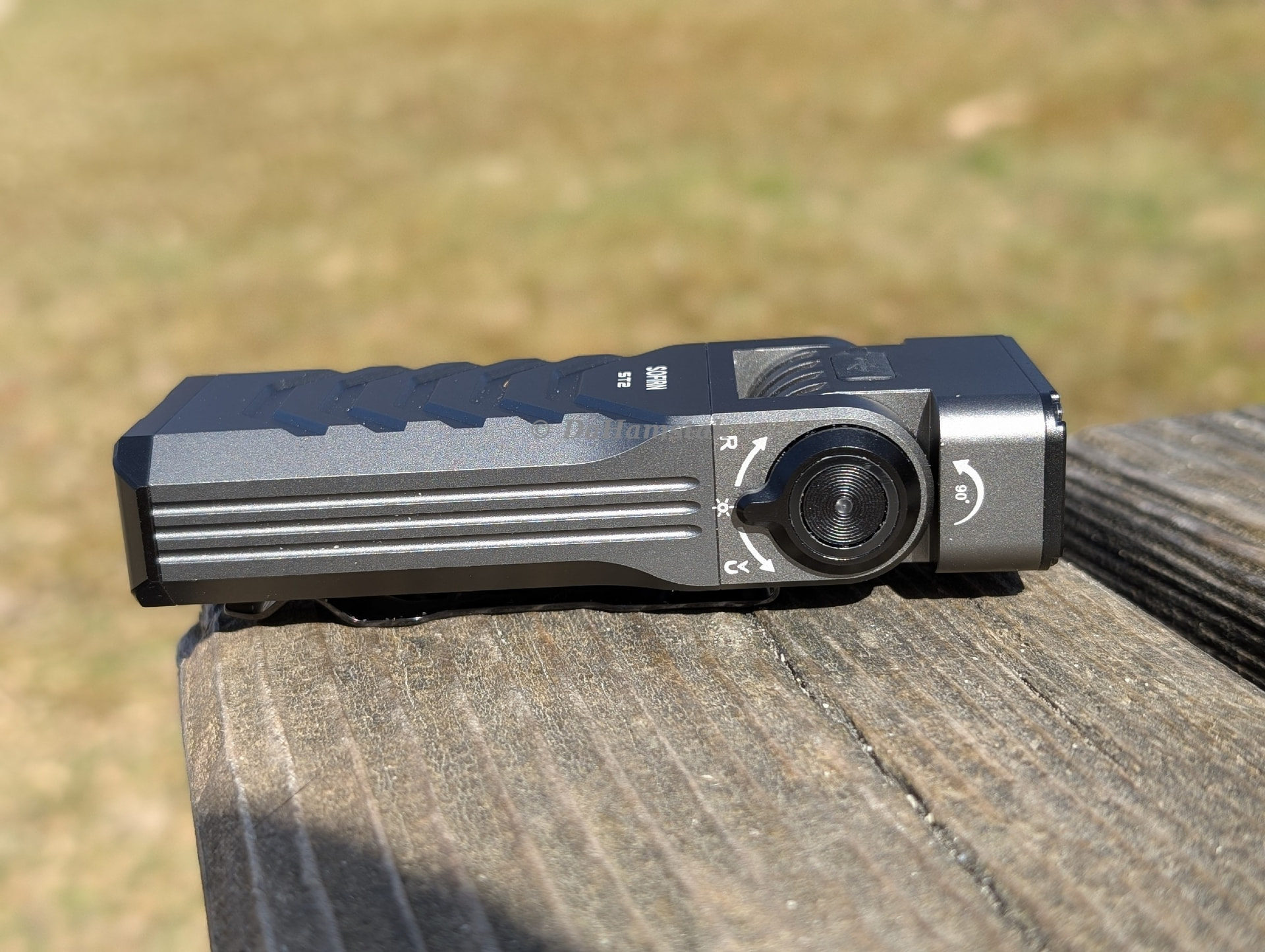
Aside from that, the lettering is fine.
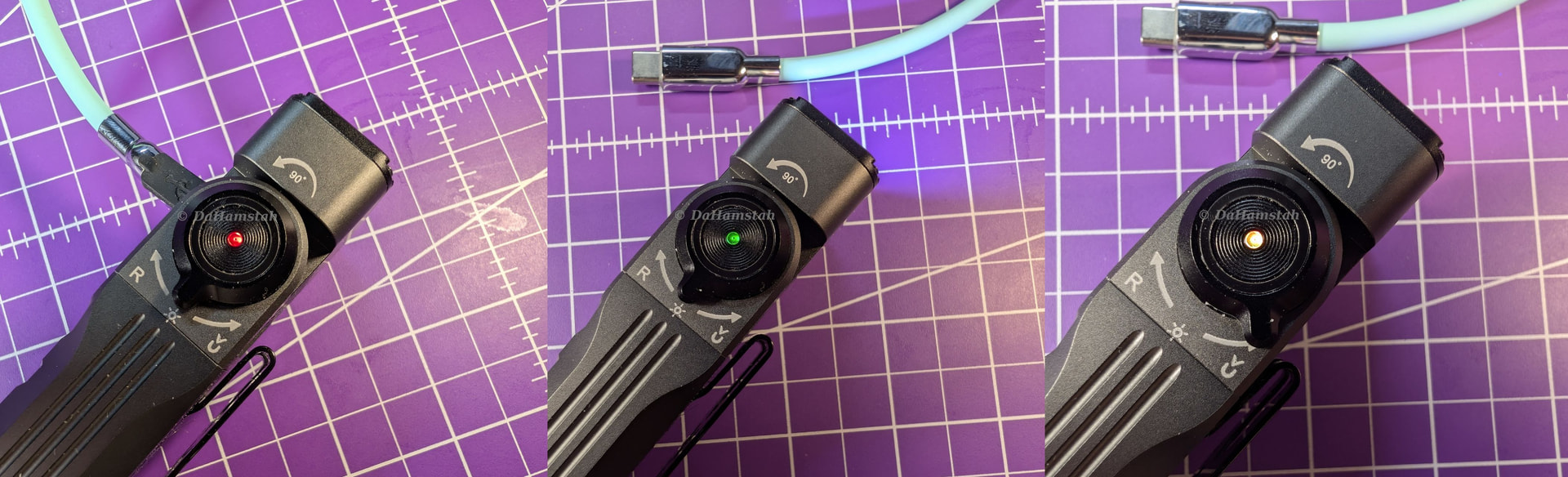
The selector ring snaps cleanly into its 3 positions and remains operable with gloves, provided they aren’t too thick. The push button has a good pressure point and sits flush with the selector ring. Here too: gloves are a yes, but not too thick. An integrated battery and charging indicator is also included:
- 100-75%: Green
- 75-50%: Flashing green
- 50-25%: Red
- 25-1%: Flashing red
- UV turned on: Orange
The USB-C charging port is also located in the head under a rubber cover. The cutout is a bit too tight for larger plugs, but the majority of my cables fit. The light can be used while charging, though not at full brightness.
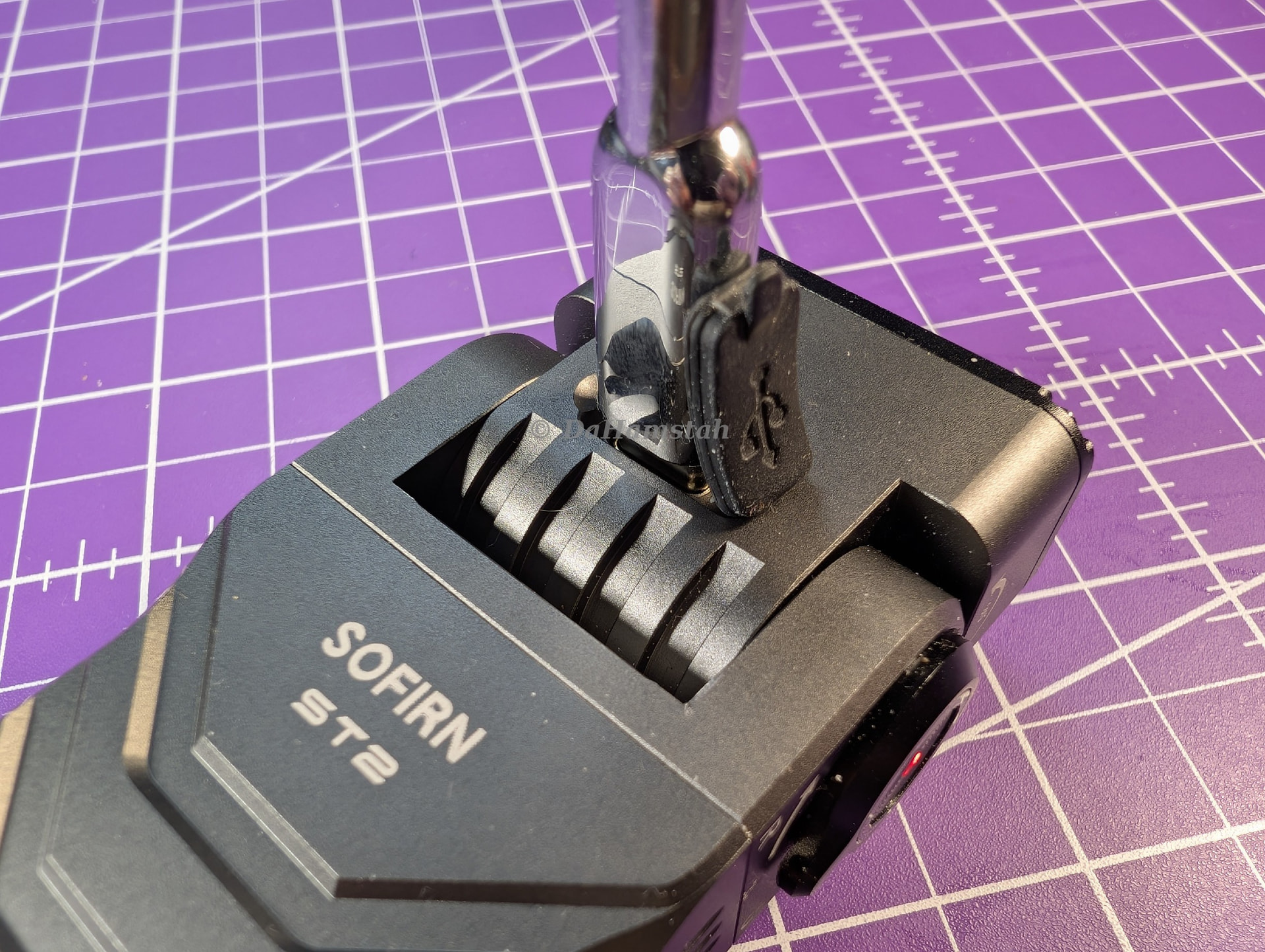
The batteries are not directly removable, you would have to unscrew the tail cap to do so. Underneath, however, are removable, standard, unprotected flat-top 18650s.
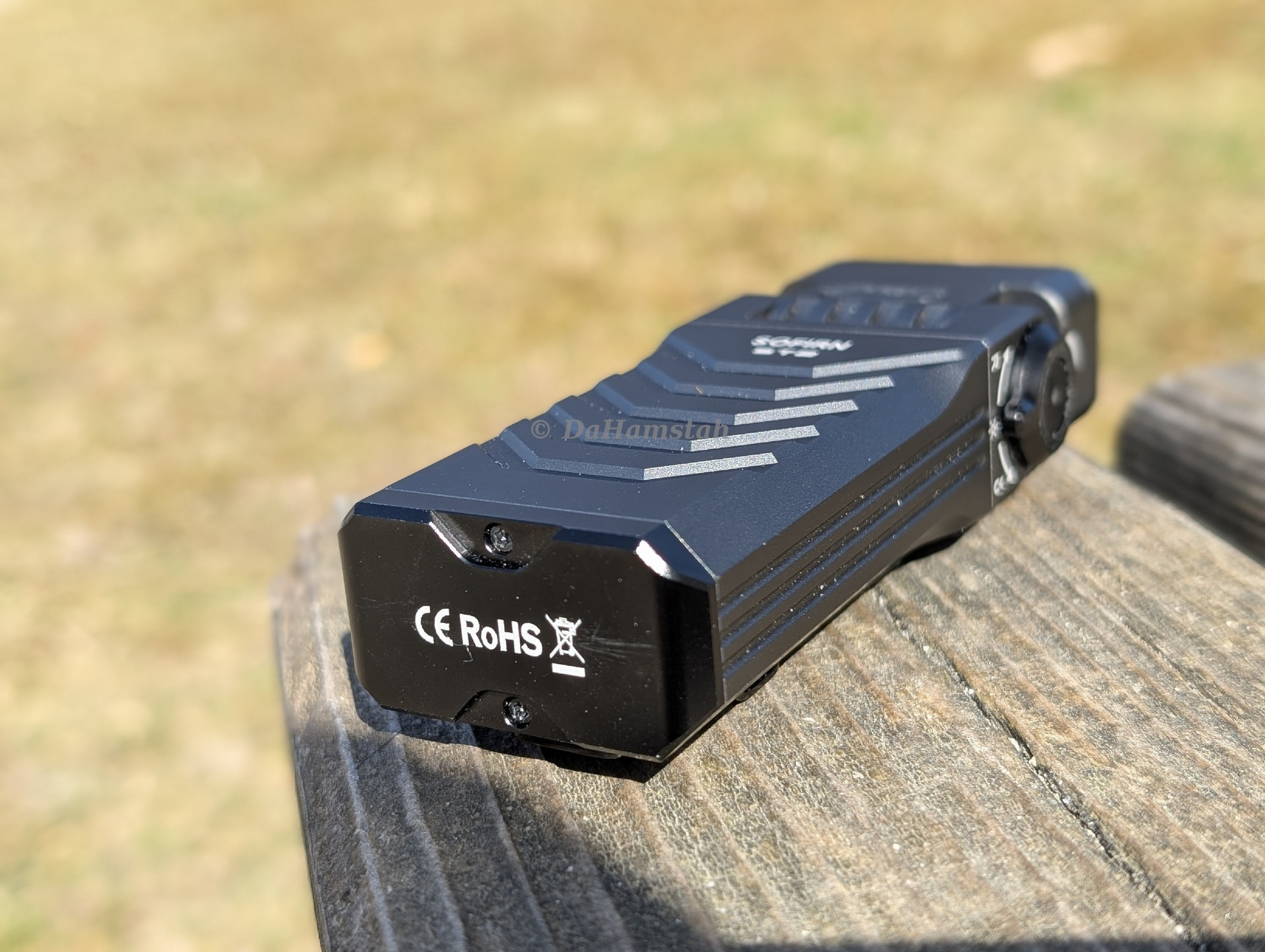
Now for the special ability of the lamp: the head can be tilted by up to 90°. This works perfectly with a good amount of resistance. The light emits a soft click every 15° without truly locking into place. The mechanism feels very robust and seems as though it could easily survive a fall or two.
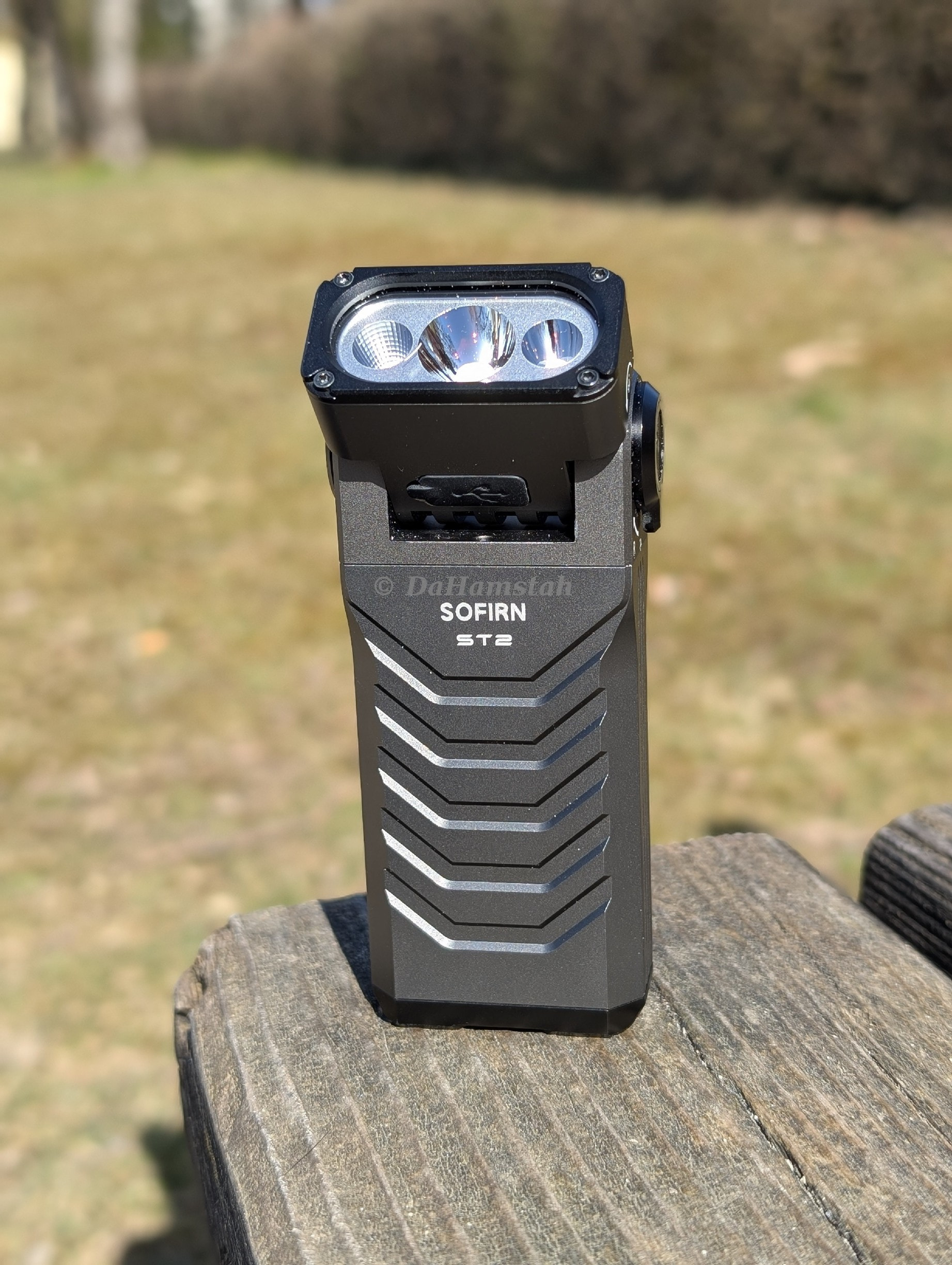
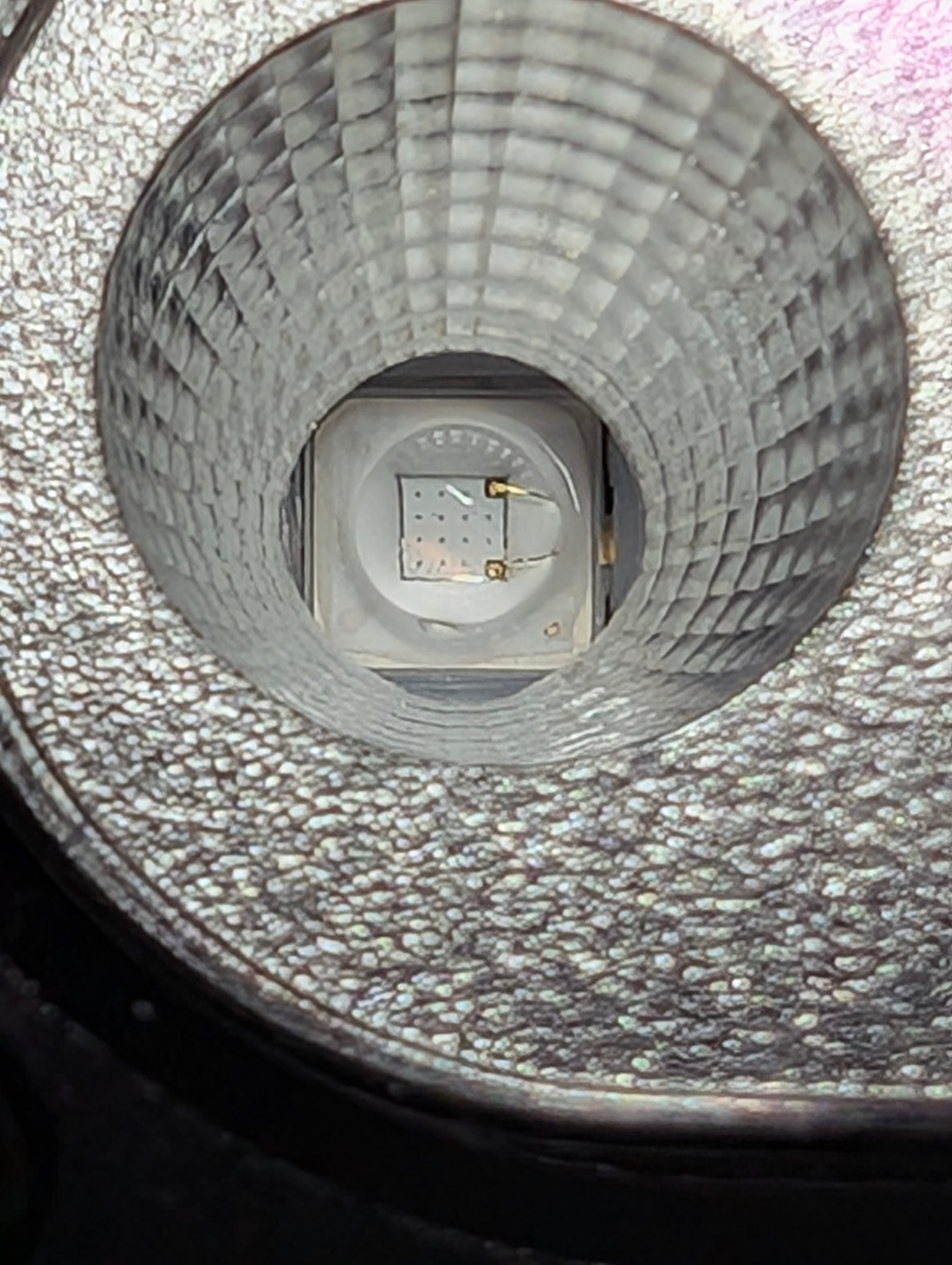
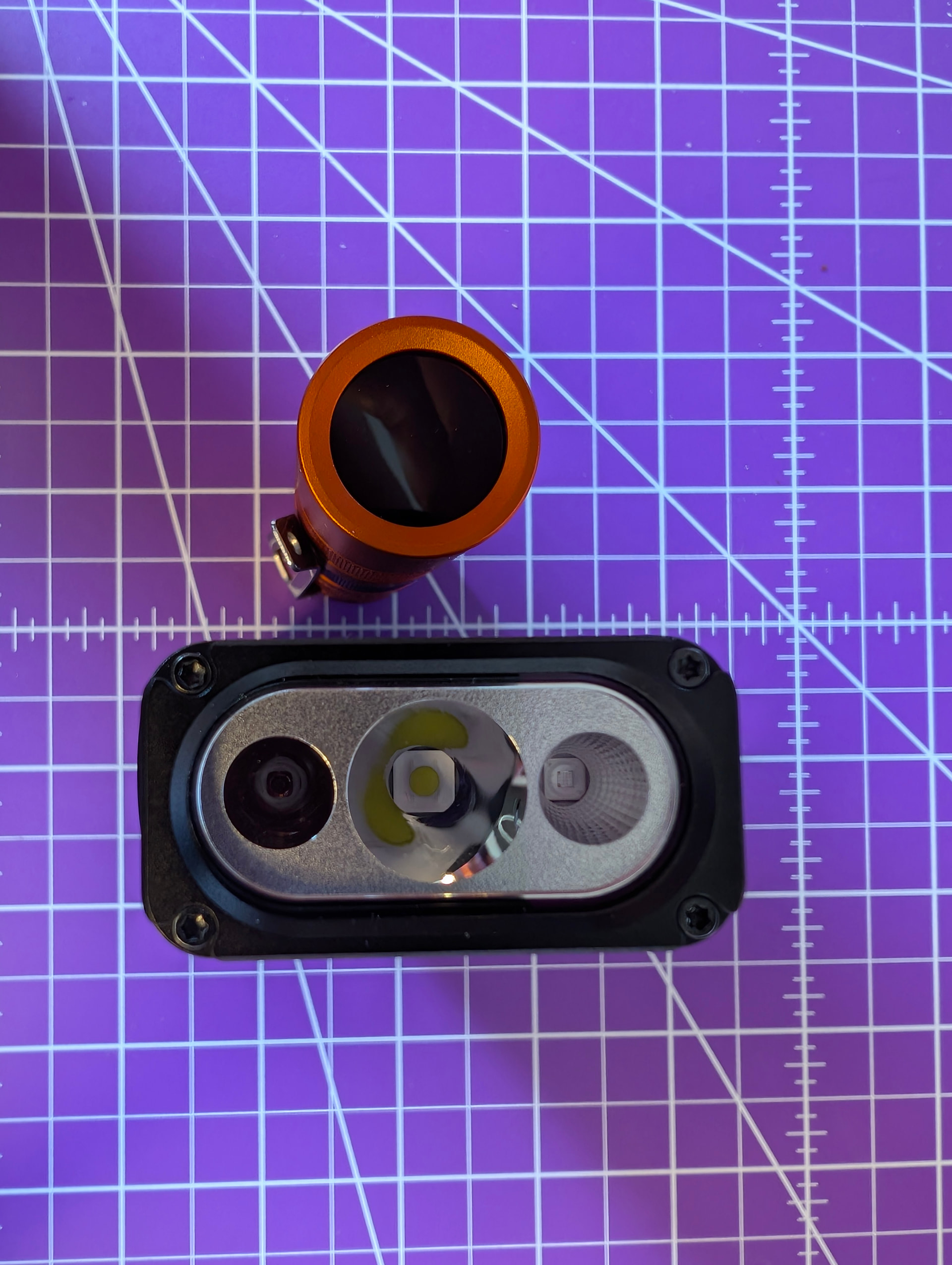
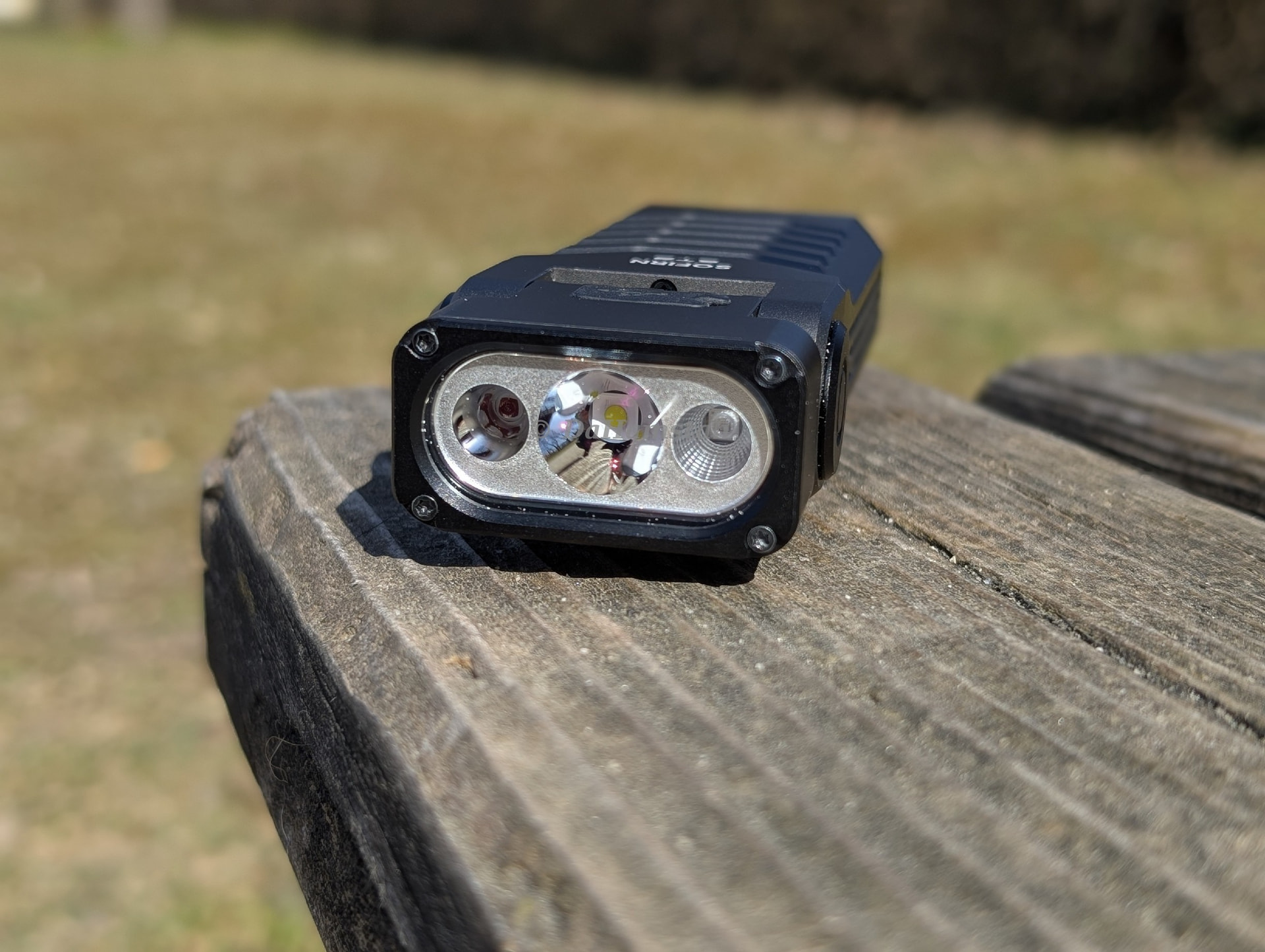
Looking at the emitting end of the light, you see 3 light sources: a 365nm UV LED, an SFT-42R, and a red LED. All sit in small reflectors, only the one housing the UV LED is textured. The glass has a reddish-purple coating and sits behind a nicely screwed-on bezel, which is likely made of aluminum.
Size
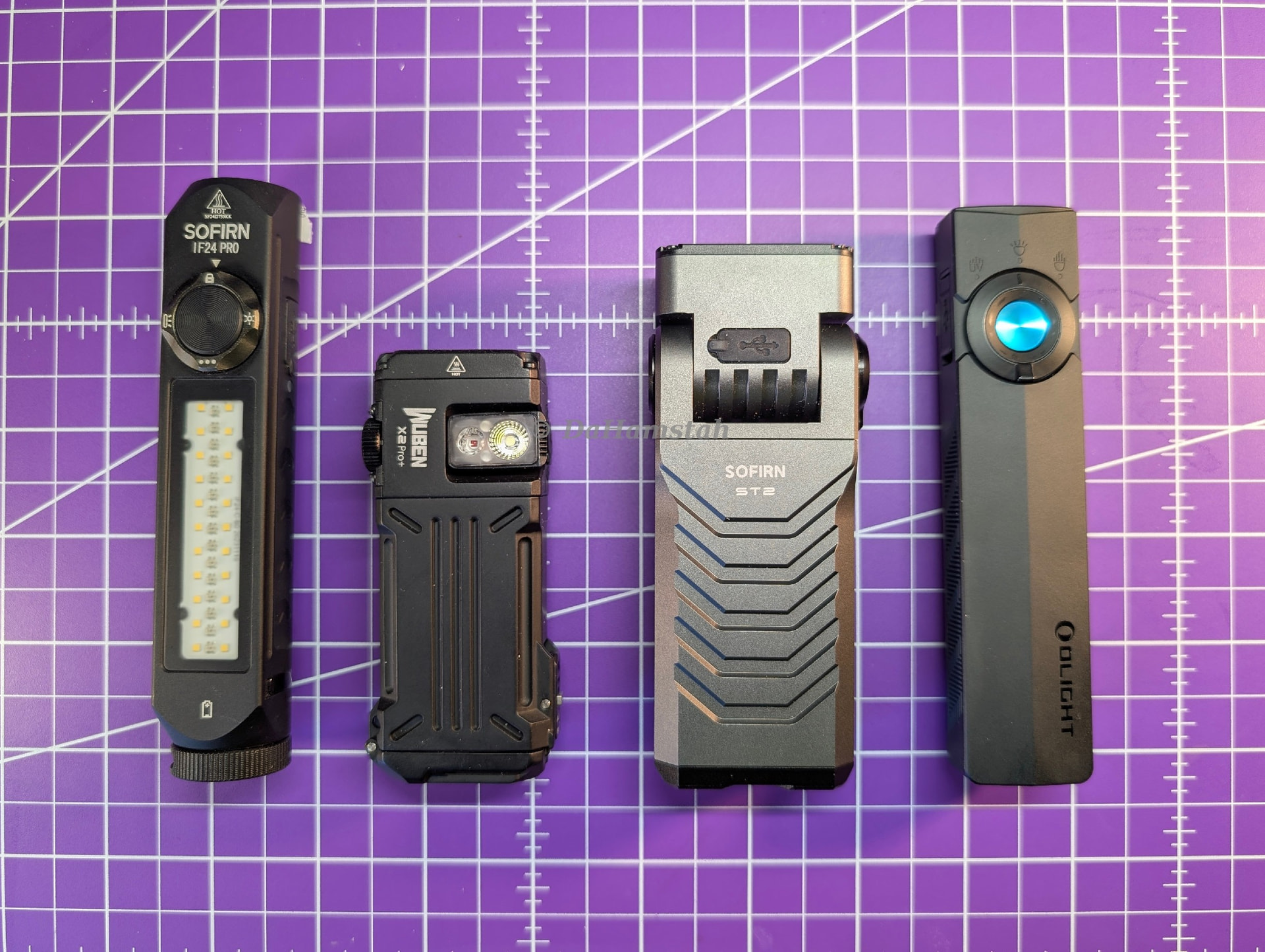
Sofirn IF24 Pro, Wuben X2 Pro+, Sofirn ST2, Olight Arkpro
My scales showed 244g, my calipers measured 113 x 42 mm (46.5 mm at the switch) x 22 mm (27.5 mm with clip).
Carrying and Mounting Options
- Lanyard: According to the package insert, a simple lanyard is included. Either it was missing or I overlooked it. However, since it could only be attached to the clip anyway, it wasn’t of much interest to me.
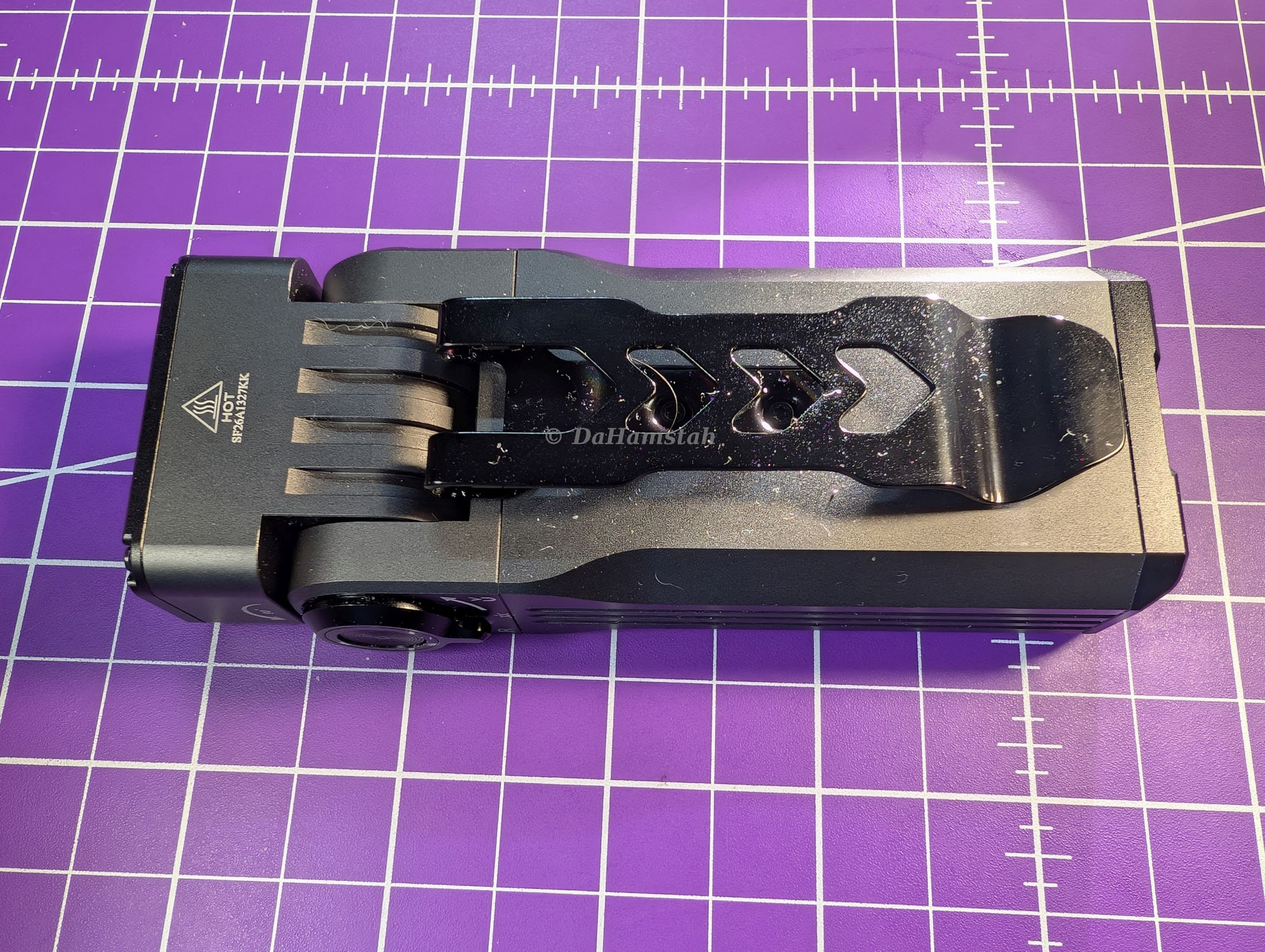
- Clip: The clip is wide, very well screwed on, offers space for thick fabrics, and has a good opening. Additionally, the tension is sufficiently high. All in all, a very good clip. If I may express a wish to Sofirn: I would have liked it the other way around, or at least the option to flip it. Then you could clip the light to your chest (backpack strap, etc.) and let it shine down at your feet.
-
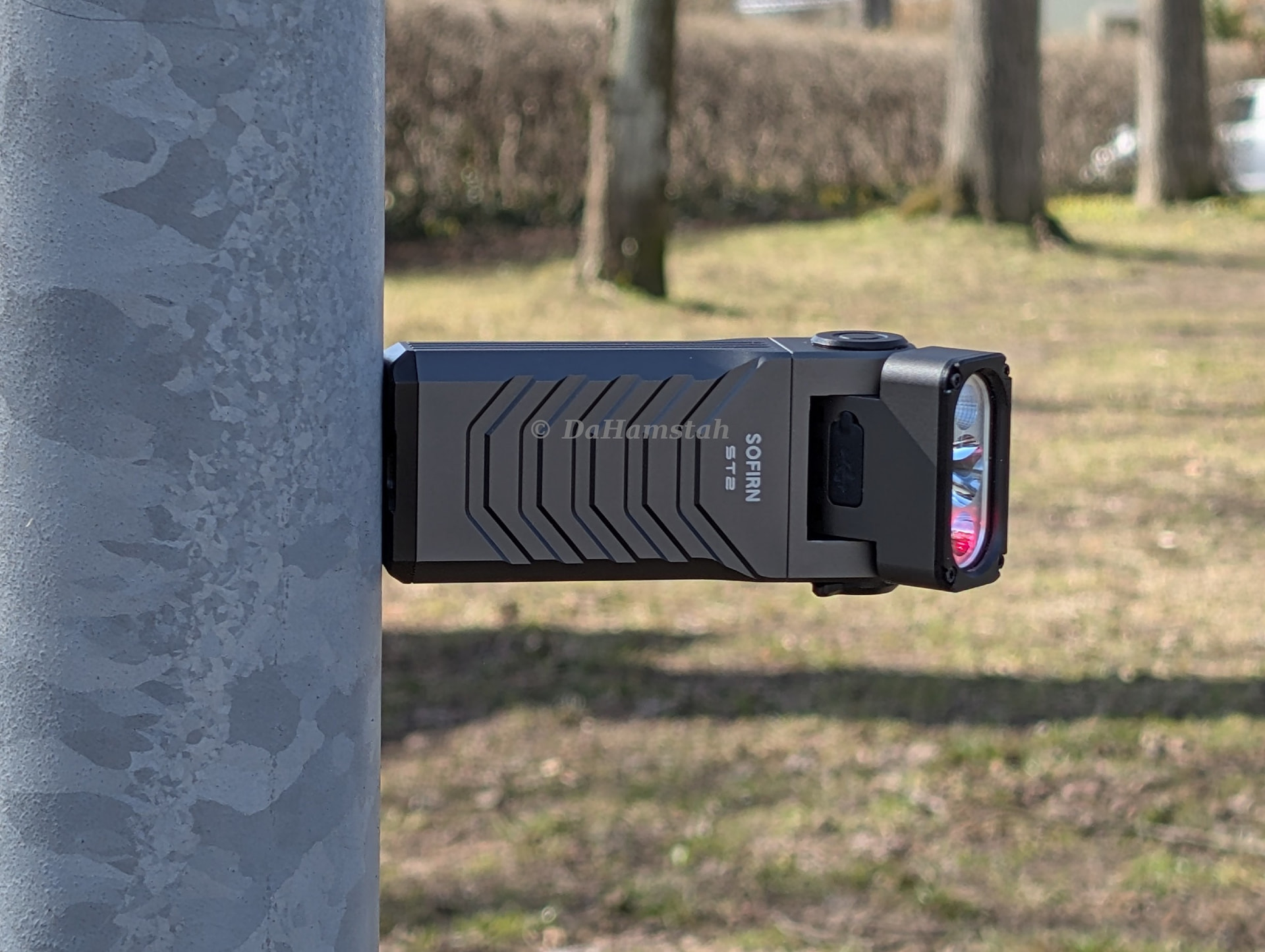
Magnet: There is a magnet in the tail. It is decently strong, the light doesn’t fall off on its own. However, it tends to slide on very smooth surfaces due to its weight.
-
Pocket (Jacket): The light is a bit large and heavy for a trouser pocket, but it works well enough. In a jacket pocket, the light feels right at home and is relatively inconspicuous despite the weight.
UI (Operation)
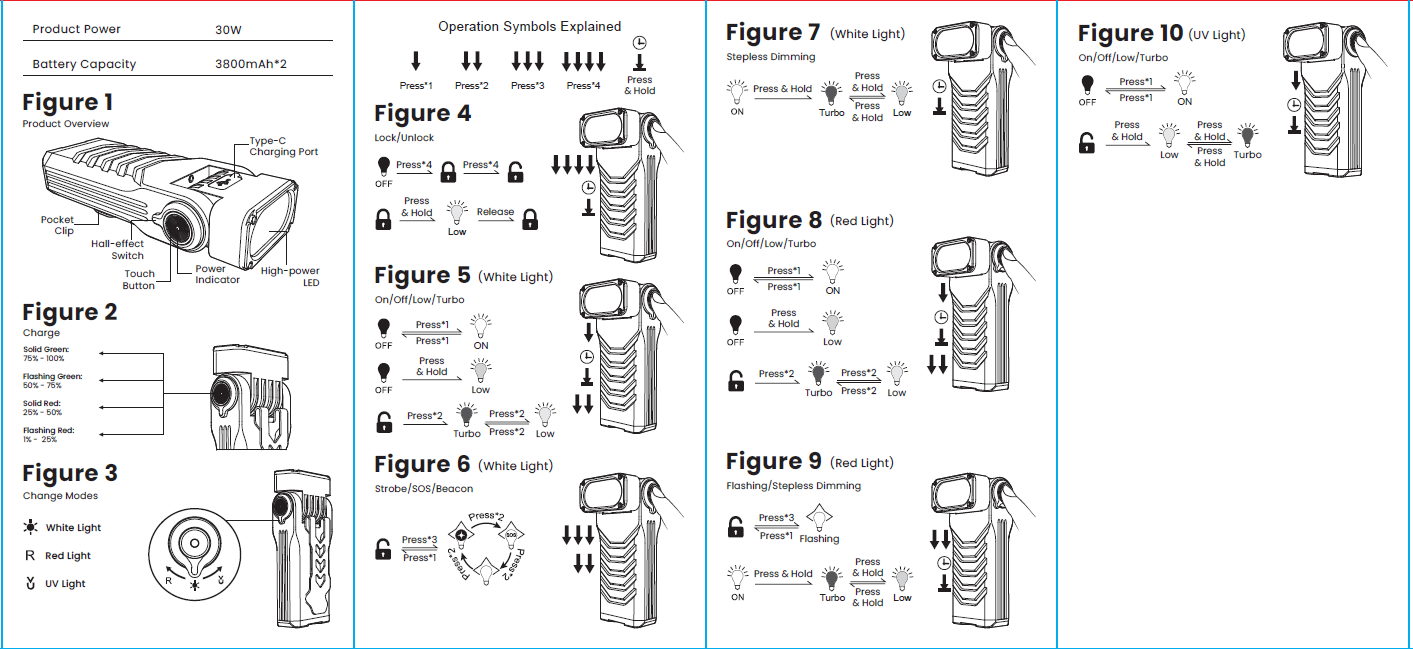
The UI is intuitive and simple. There is one special feature: the ramping covers the full range of brightness. Turbo is therefore included in the ramping, and the light remembers it if you have ramped to max.
The rotary switch selects between Red, White, and UV.
Red:
- Click for on/off, the last brightness level is memorized. (Unless you activated Turbo via double-click while the light was on, then it returns to the previous level)
- Hold from off for the lowest brightness, hold from on for ramping.
- Double-click for maximum brightness.
- Triple-click for Beacon.
- Quadruple-click from off to lock or unlock the light.
- Hold while locked provides the lowest white light level as momentary light.
White:
- Click for on/off, the last brightness level is memorized. (Unless you activated Turbo via double-click while the light was on, then it returns to the previous level)
- Hold from off for the lowest brightness, hold from on for ramping.
- Double-click for maximum brightness.
- Triple-click for Strobe.
- Quadruple-click from off to lock or unlock the light.
- Hold while locked provides the lowest white light level as momentary light.
UV:
- Click for on/off, the last brightness level is memorized.
- Hold from on switches between two brightness levels.
- Quadruple-click from off to lock or unlock the light.
- Hold while locked provides the lowest white light level as momentary light.
Beam Profile and Measurements
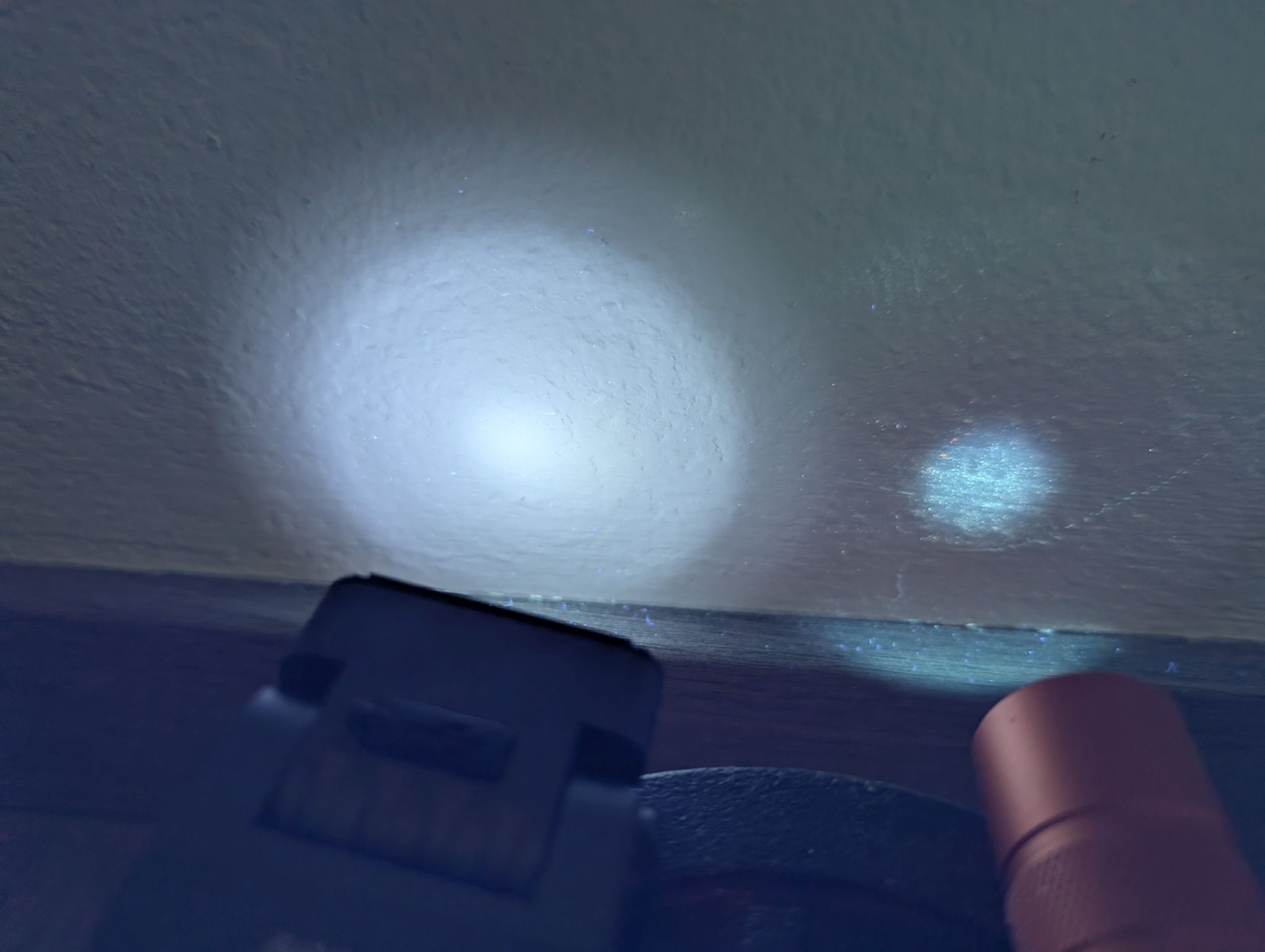
Let’s start with the UV light: On the wall, there is slight spot visible, but overall it is mostly floody. There is no filter, but also no more visible light than what my Olight Arkpro emits, which does have a filter. Both are also 365nm, and despite the missing filter, both perform equally well when highlighting objects in UV light. The SR23 from Sofirn offers more range for UV light, but the spot is relatively small in comparison.
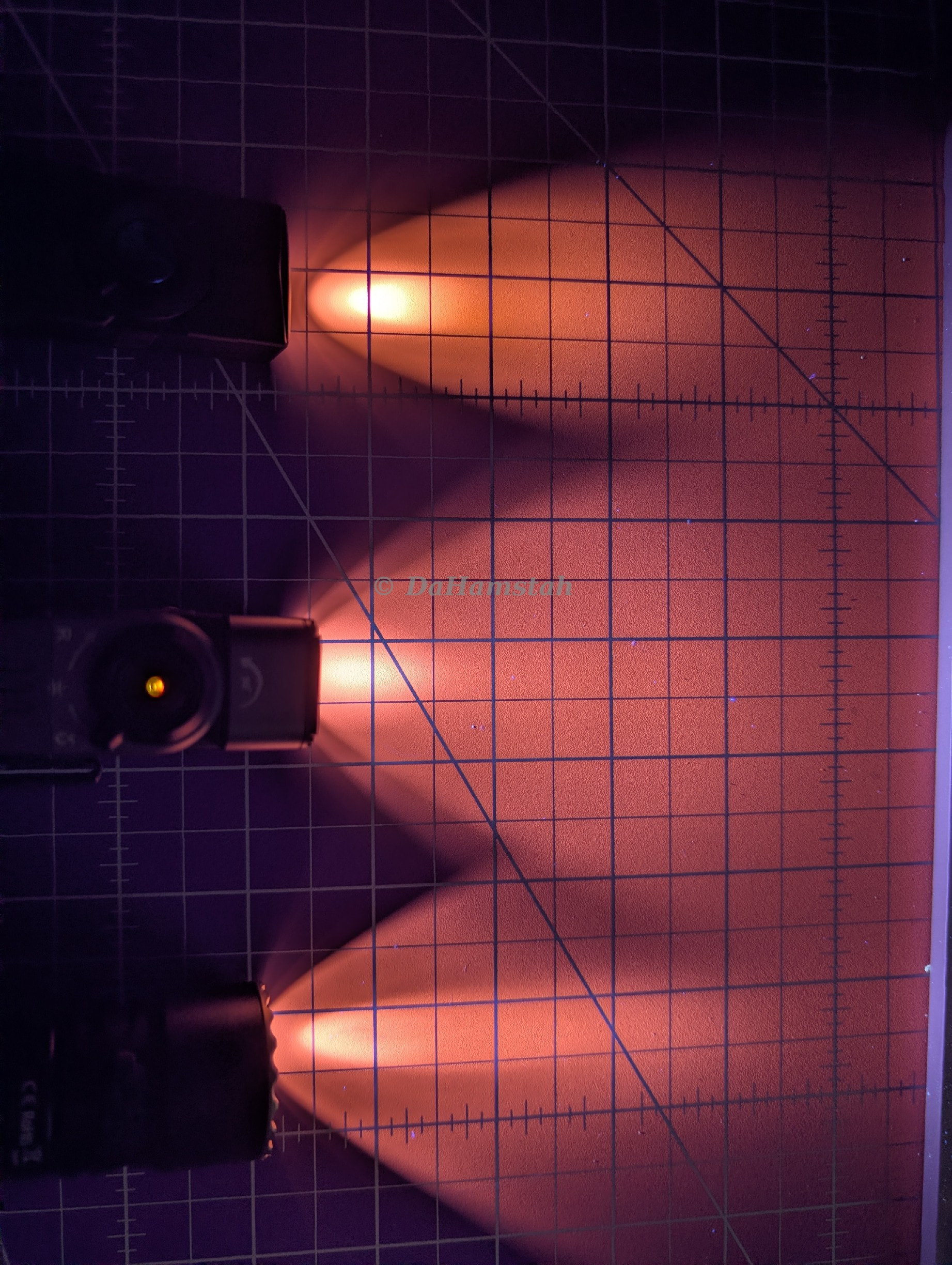
top to bottom: Olight Arkpro, Sofirn ST2, Sofirn SR23
The red light is not the cleanest beam on a white wall, but even on the ground directly in front of your feet, this is not noticeable (the extra circle at the edge of the spot is a reflection).
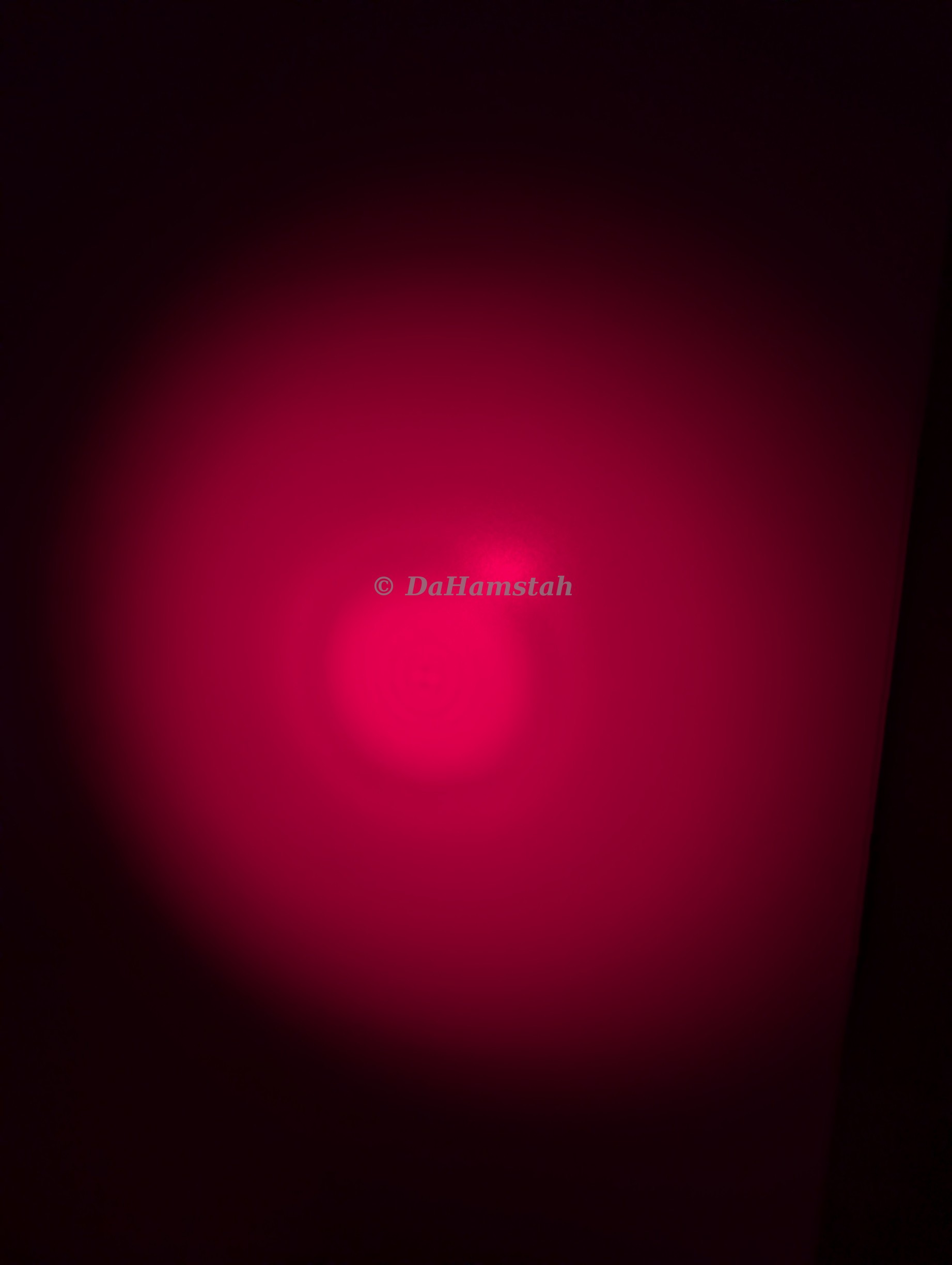
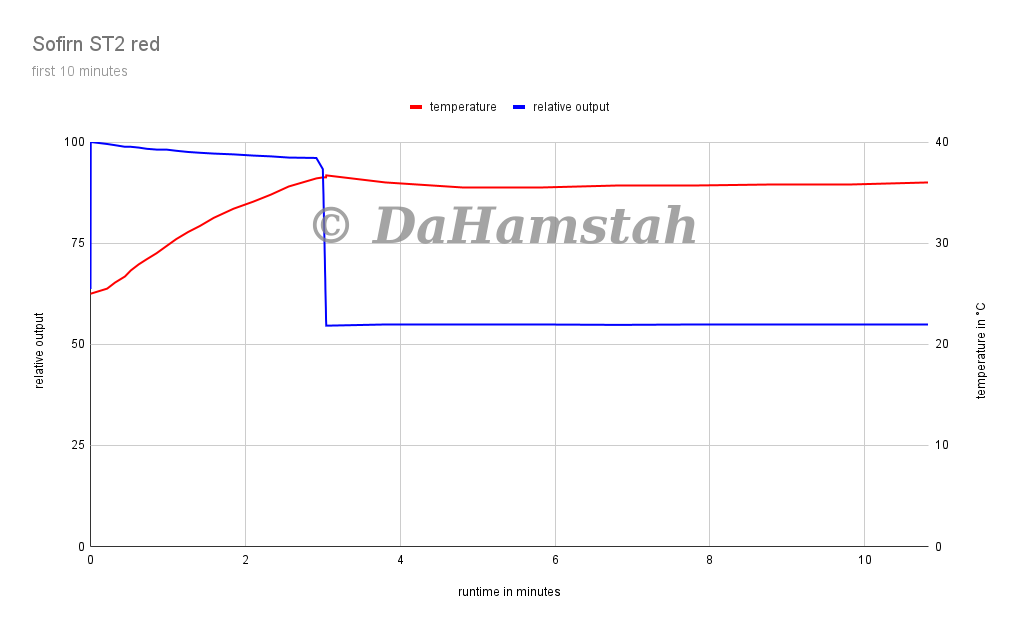
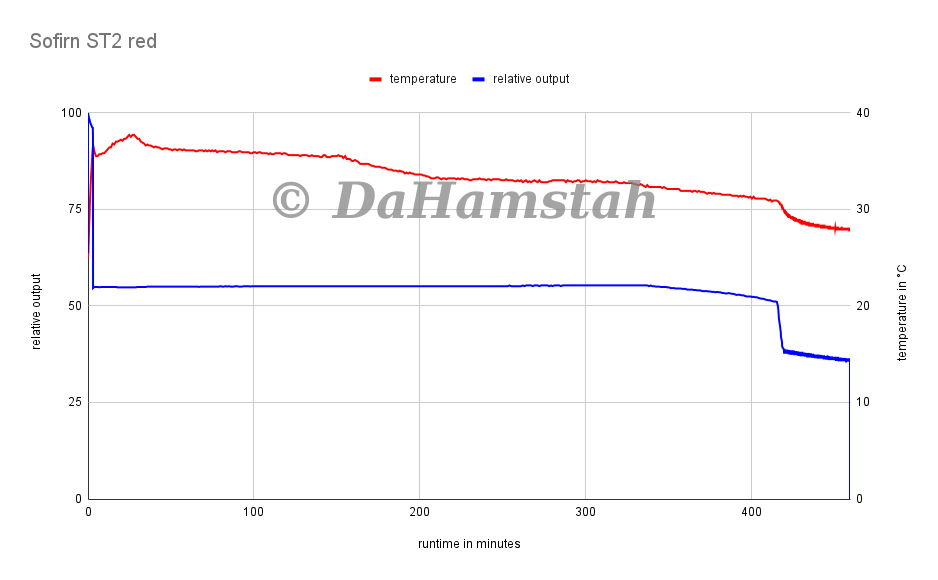
However, it is extremely bright. I have no way of measuring the output of red light, but I can offer a runtime diagram. The regulation looks good. For comparison: the already very good red of the ST10 is still just below the red of the ST2 after the stepdown.
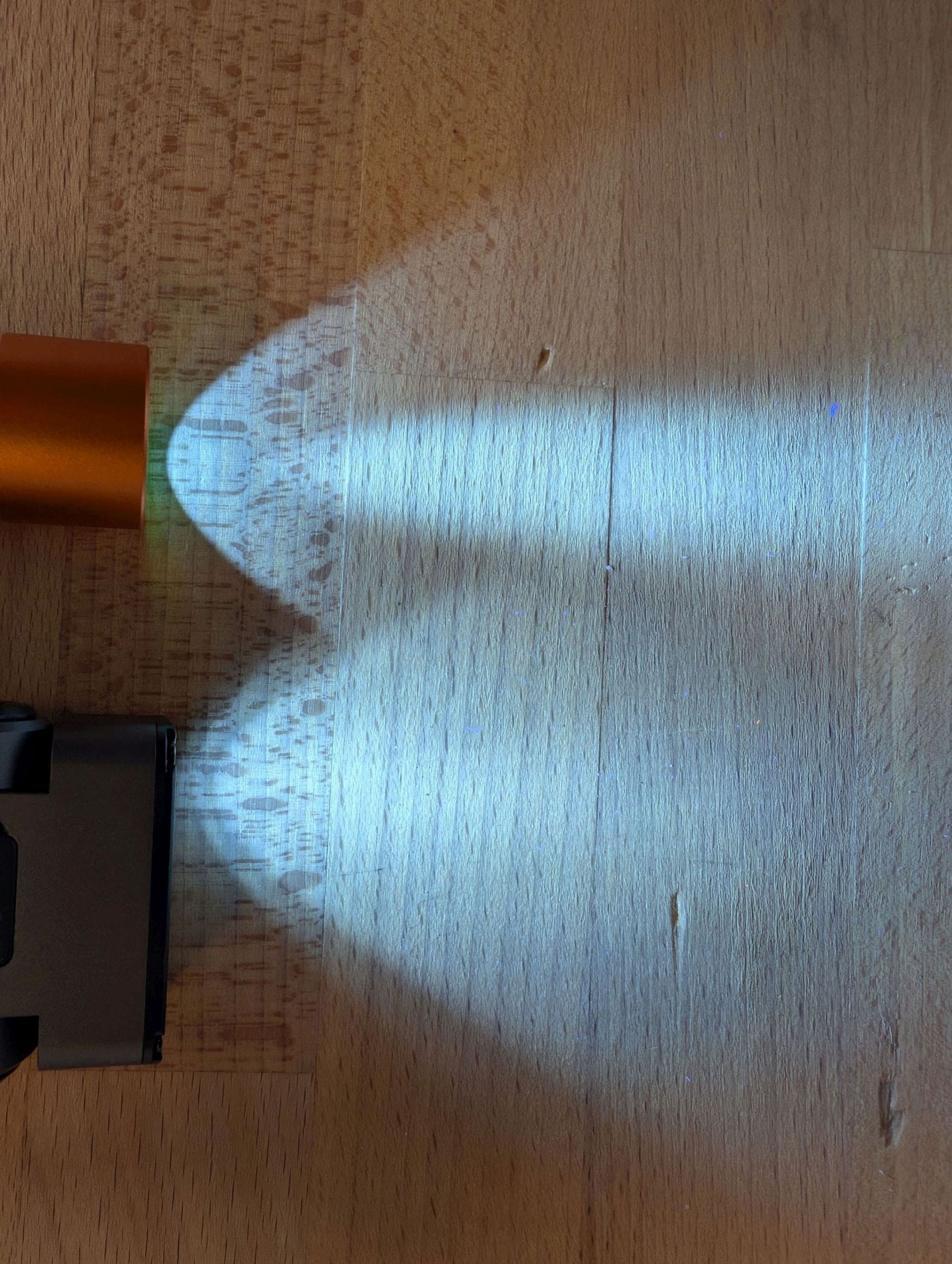
How about the white light? SFT-42R, small but smooth reflector. This results in a large spot clearly separated from the spill. This spot is slightly warmer and greener in the center than at the edges, as is often the case with round SFT LEDs. There are no artifacts in the beam, though it is slightly cut off at the edges. However, I only noticed this after some time of use, so it isn’t distracting.
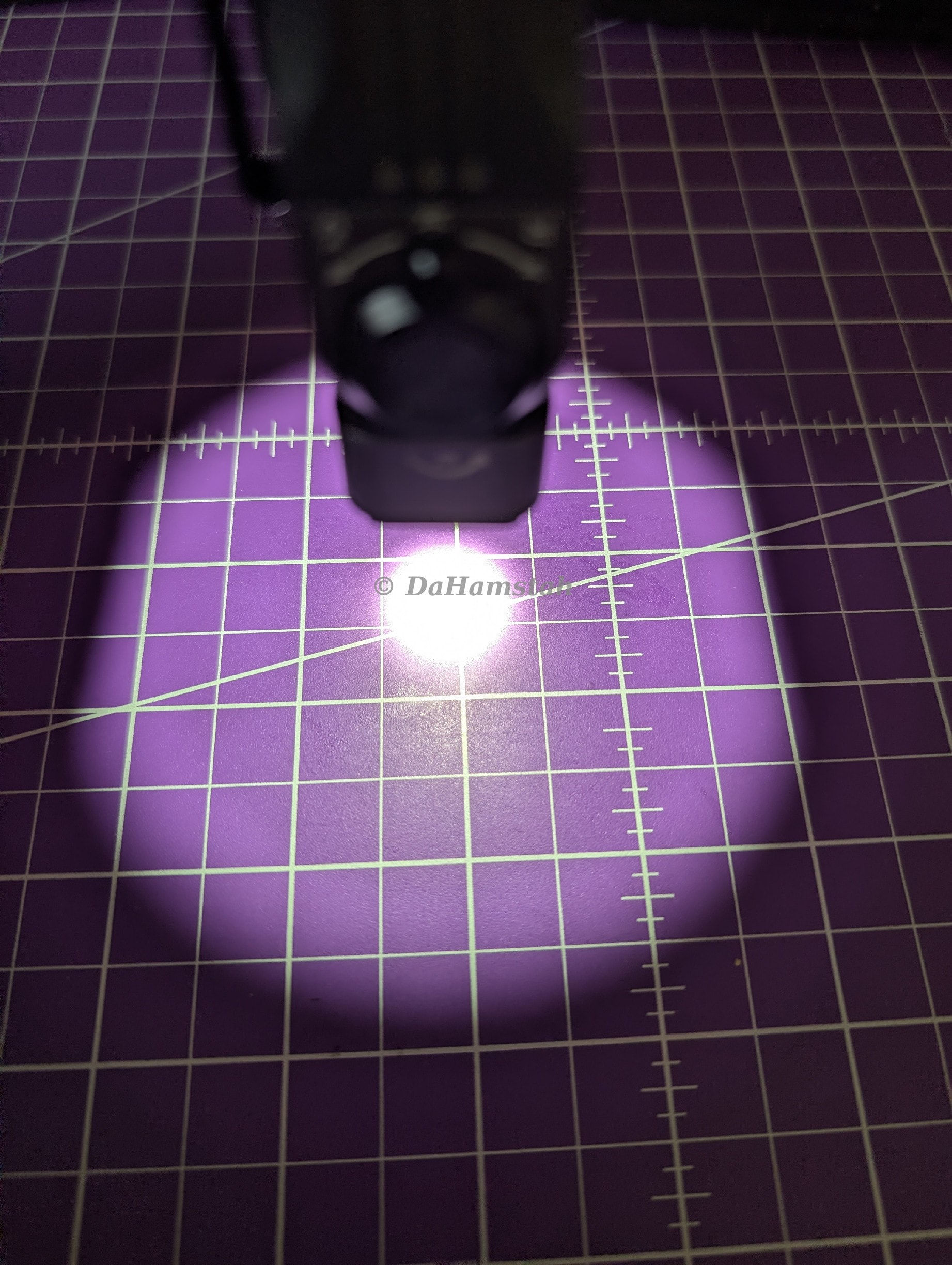
Overall, I found the beam pattern very useful. Perhaps a bit too spot-heavy as a pure work light, but otherwise very much to my taste.
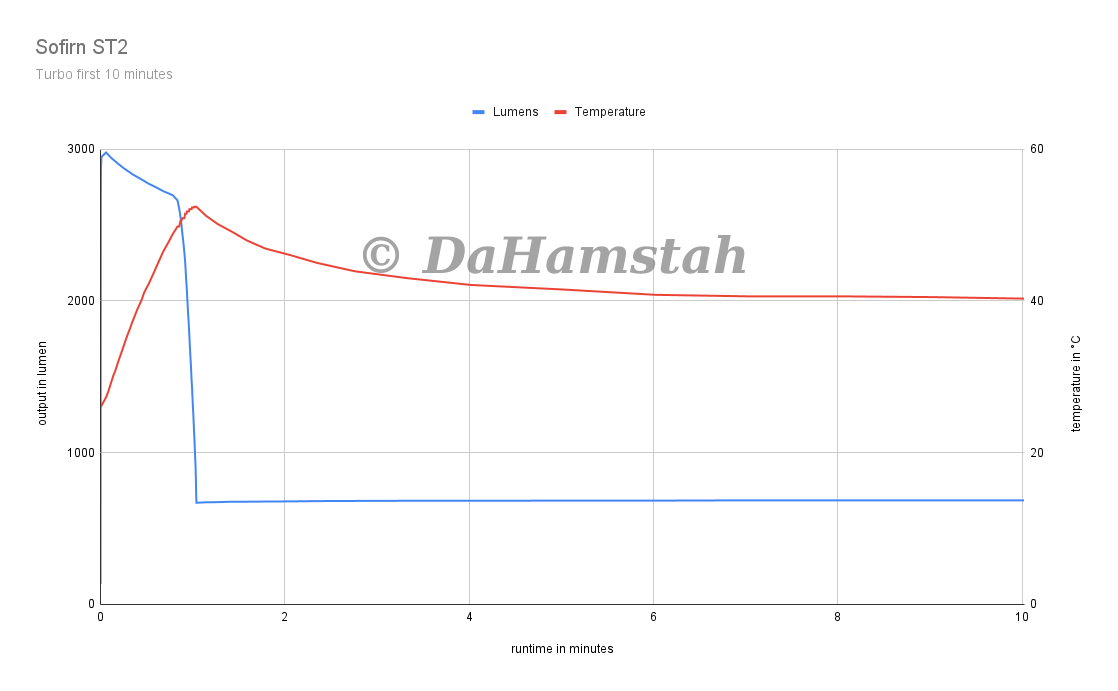
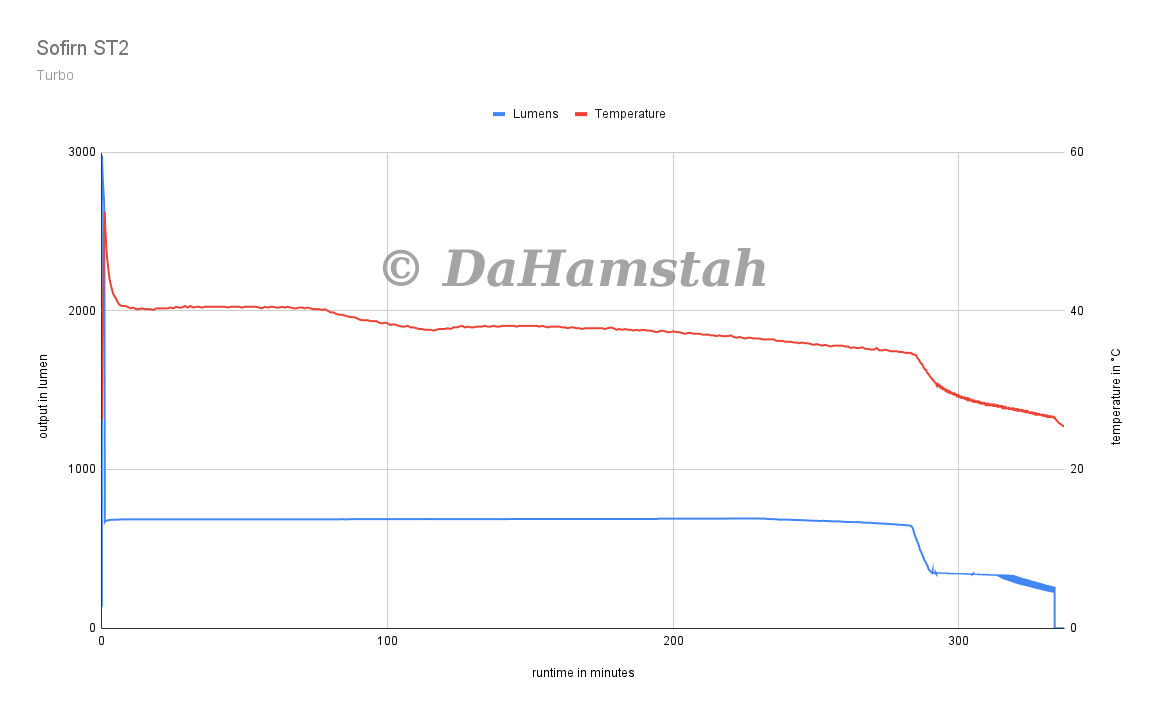
Sofirn advertised the performance quite heavily, so how does it look? Really good—Sofirn delivered! 3000 lumens at the start, ANSI FL1 measured 2800 by my count, which is well within the margin of measurement error. The sustained output is specified as 650 lumens for 5 hours and 28 minutes. My light sits at 690 lumens, starts to drop very slowly after 240 minutes, hits 650 lumens at 280 minutes, 350 lumens at 290 minutes, and then runs until it shuts off at minute 333 with still 250 lumens. The runtime of 5.5 hours is achieved—with slightly less power at the end, but I won’t complain about that because my sample provides more power at the beginning.
The two included 18650 batteries are labeled at 3800mAh, but I did not cross-check this as I did not disassemble the lamp.
- CCT ranges from 5700K on low to 6050K on turbo.
- CRI is around 68 across the entire range.
- DUV is 0.005 in the center of the spot regardless of brightness, and 0.001 at the edge of the spot and in the spill.
- Flicker is in the green zone on Turbo.
Interestingly, I cannot get a consistent flicker measurement on Low. Consecutive measurements are sometimes deep in the green, sometimes in the yellow, and sometimes in the red. Whether this is an issue with the Lightmaster or the lamp - i really don’t know!
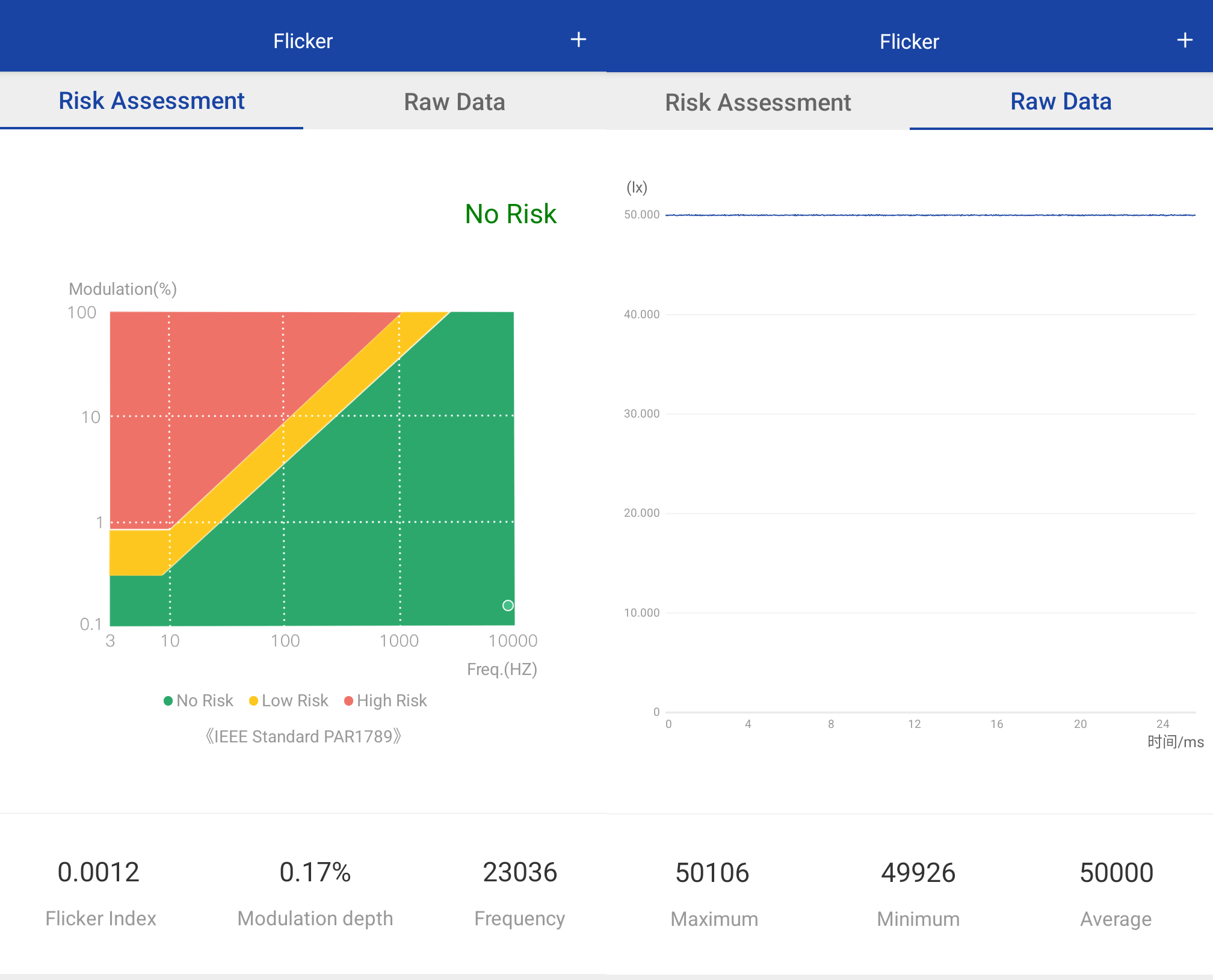
PWM can be detected in the lower levels with a camera if you shine the light through a fan. With the naked eye or by waving it in front of a camera, it was not noticeable.
Summary
I’ll try to start with the few negative points I could find: the red light isnot the most beautiful on a white wall and the switch isn’t optimally operable with gloves. While the batteries cannot be easily swapped in the field, two 3800mAh batteries are included and can be replaced at any time via two screws. For me, this fits the concept, it’s suitable for the masses and yet still appropriate for the enthusiast who is worried about long-term use.
And what about the positives? The ST2 feels robust, well-suited for a life as a work or adventure light. Good output, good performance, usable beam pattern. All this with a relatively small surface area for cooling, as only the head of the light gets warm. Truly good UV light, truly good red light. The swivel head is an absolute highlight and works flawlessly.
I can imagine this light being really great for vanlifers or others who spend a lot of time on the road, as well as for workshop use. I can also see it being good for geocachers - all in all, a great all-rounder.