The Vastlite Minima Bow that I reviewed last summer is one of the smallest LEP flashlights on the market. Despite its compact size, its tightly focused beam achieves a throw you would hardly expect from such a small light.
Now the Vastlite Minima Bow LED has been released, but despite its similar name, it shares only a few similarities with its sister model.
You can find the German version of this review on my website: SammysHP Blog › Vastlite Minima Bow LED
The flashlight was provided by the manufacturer for this review. Thank you very much!
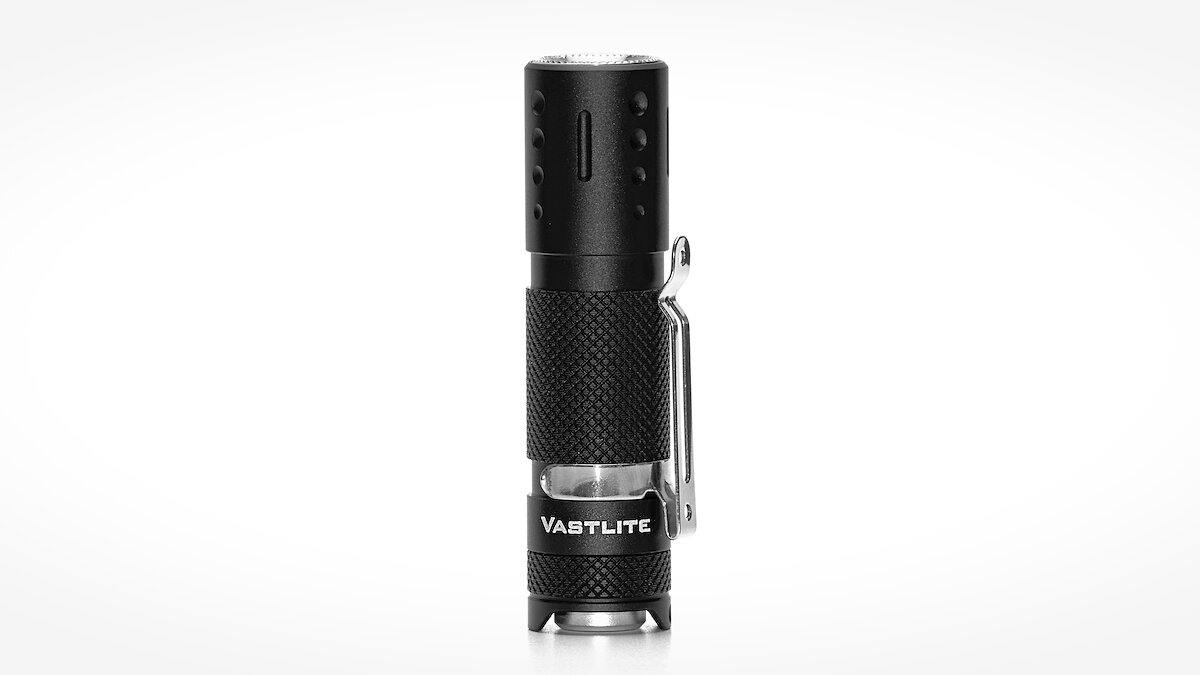
| Minima Bow (LEP) | Minima Bow LED | |
|---|---|---|
| Battery type | 16340 | 16340 |
| Length | 71 mm | 79 mm |
| Diameter | 20 mm | 20 mm |
| Weight (with battery) |
54 g | 47 g |
| Controls | Twisty | Tail switch |
| Levels | 2 | 4 |
| Strobe modes | 1 | 3 |
| Light source | LEP | LED |
| Brightness | 280 lm | 800 lm |
| Throw | 750 m | 135 m |
Overview
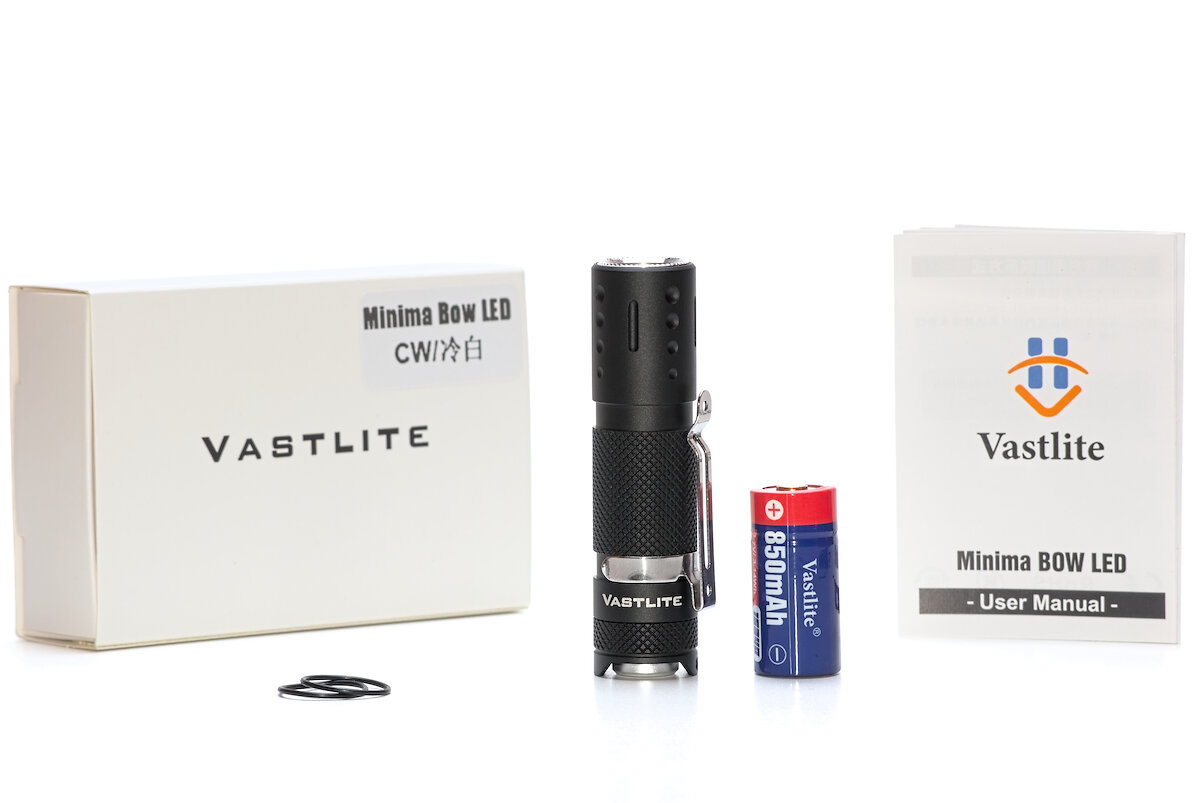
The flashlight comes in a small cardboard box with a foam insert and the following accessories:
- 16340 Li-ion battery (850 mAh, with USB-C charging port, 3.74 V at arrival)
- Clip (already attached)
- 2x replacement o-ring
- Manual (EN, CN)
The manual is brief and to the point: a small table listing the technical specifications, three sentences about operation and a few words regarding the warranty and contact information.
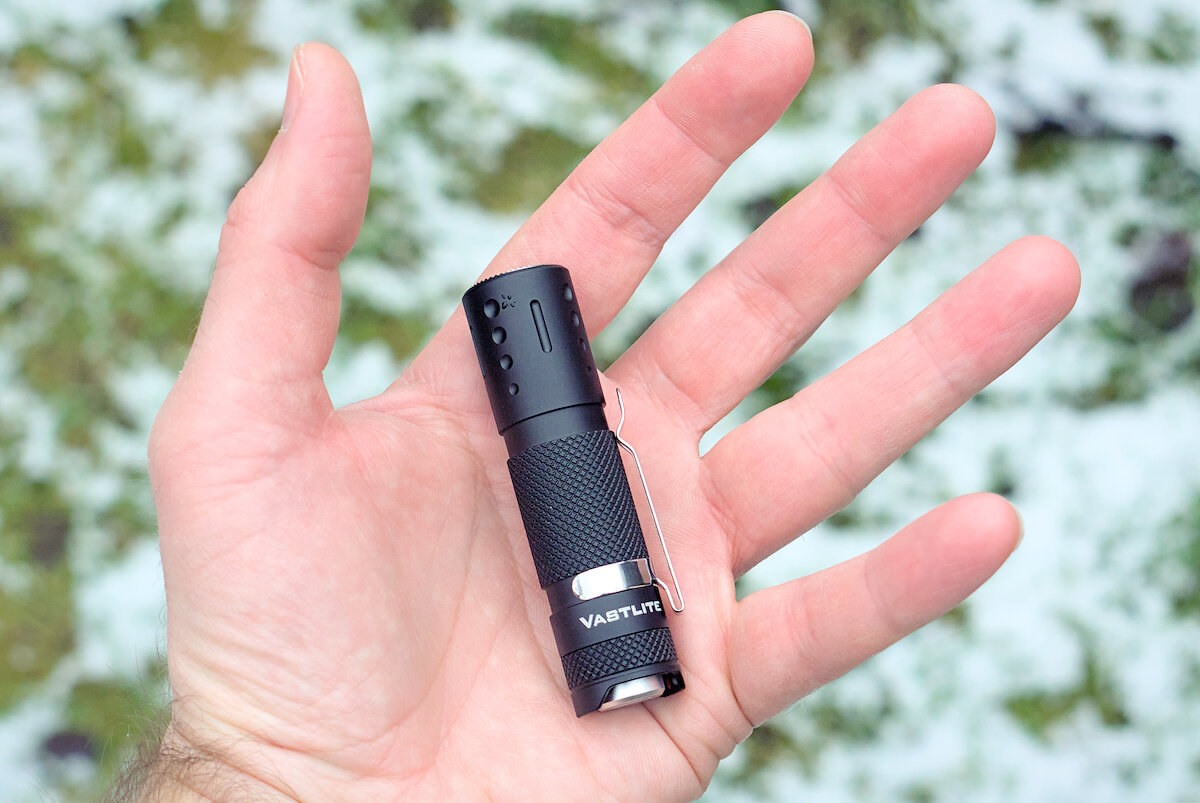
Because of the similarity in name alone, I will repeatedly compare the Minima Bow LED with the previously released LEP version throughout this review. At 79 mm in length, the LED version is a full 8 mm longer, which means a difference of about 10%. In return, however, the LED version is slightly lighter at 47 g.
Length: 79 mm
Diameter: 20 mm
Weight (without battery): 29 g
Weight (16340 battery): 18 g
Weight (total): 47 g
Of course, there are significantly smaller lights that use a 16340 battery. The Minima models could almost be compared to 14500/AA lights. With a slightly larger diameter, a version supporting 18350 batteries would also be an option.
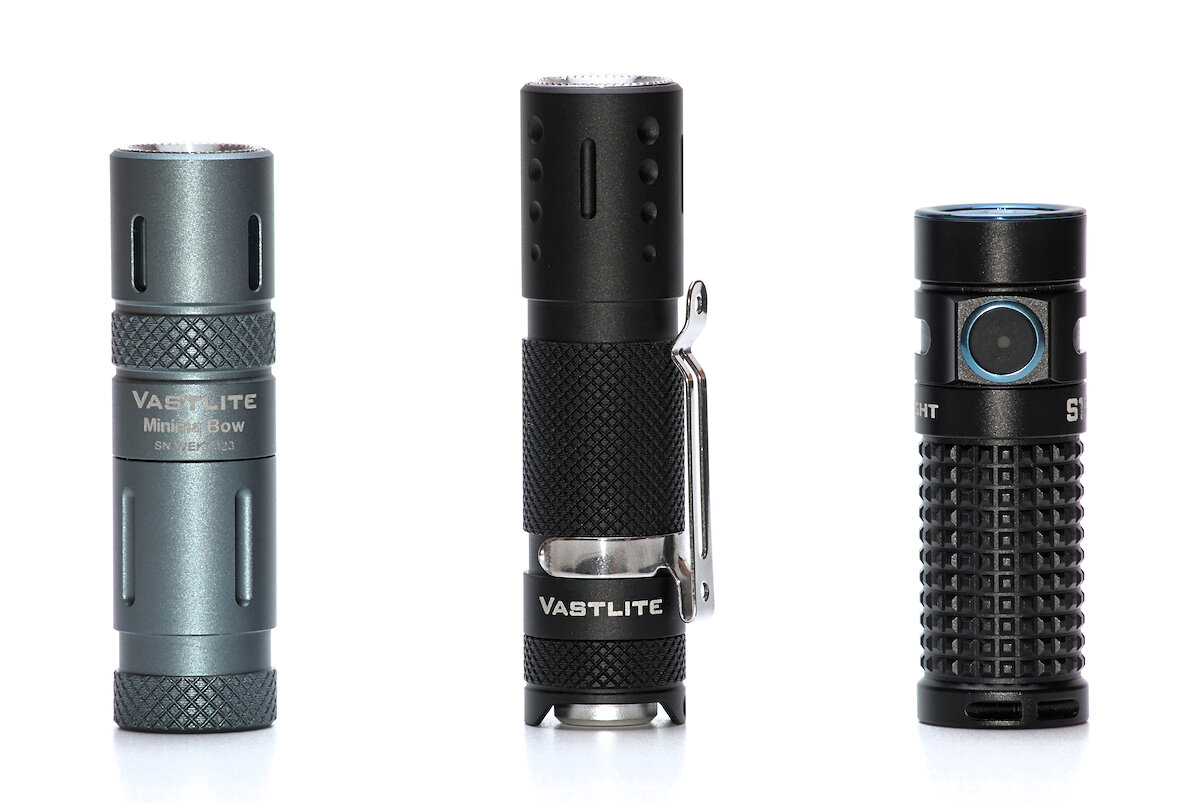
Vastlite Minima Bow | Vastlite Minima Bow LED | Olight S1R Baton II
Both versions use the same bezel with fine knurling to secure the optic. On the new LED version, the slots on the head are no longer deep enough to hold glow sticks and therefore serve only a decorative purpose.
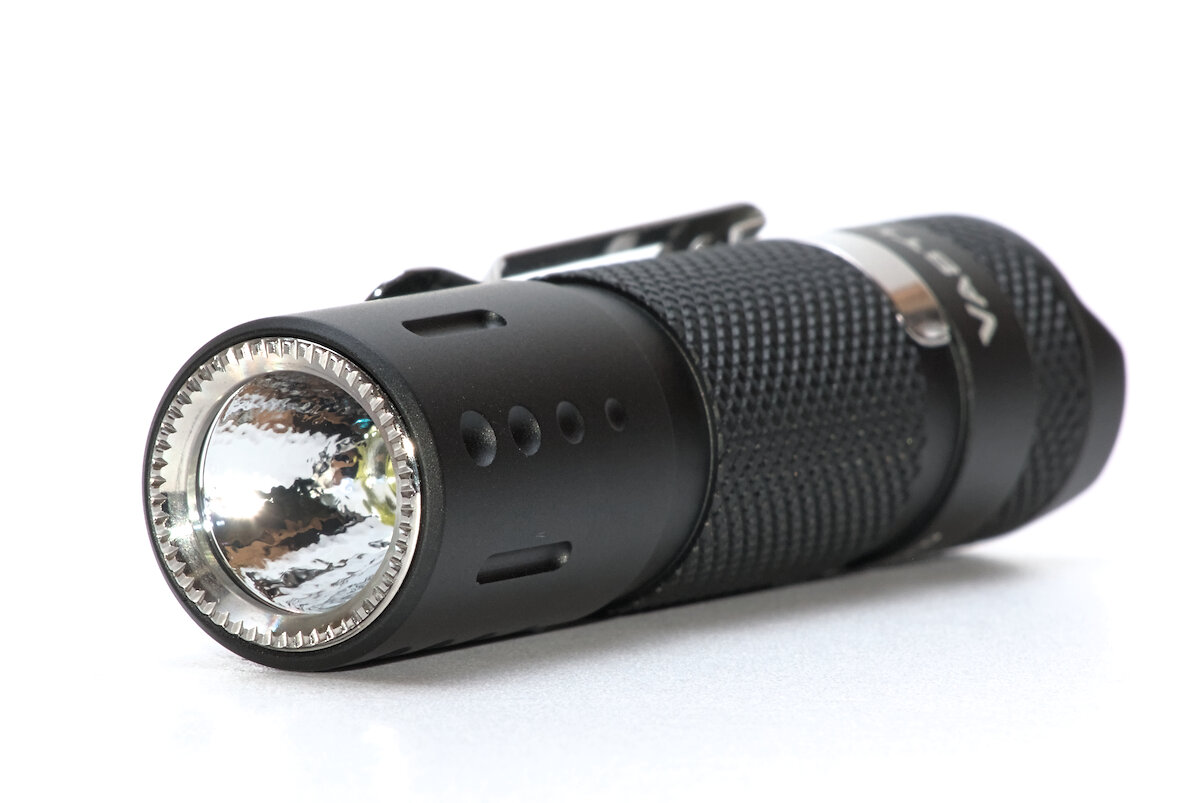
Viewed from the side, there aren’t many similarities between the two models — only the clip has remained the same. The mounting groove on the light is also not wide enough, causing the clip to get stuck there and making it removable only with force. Otherwise, the clip serves its purpose.
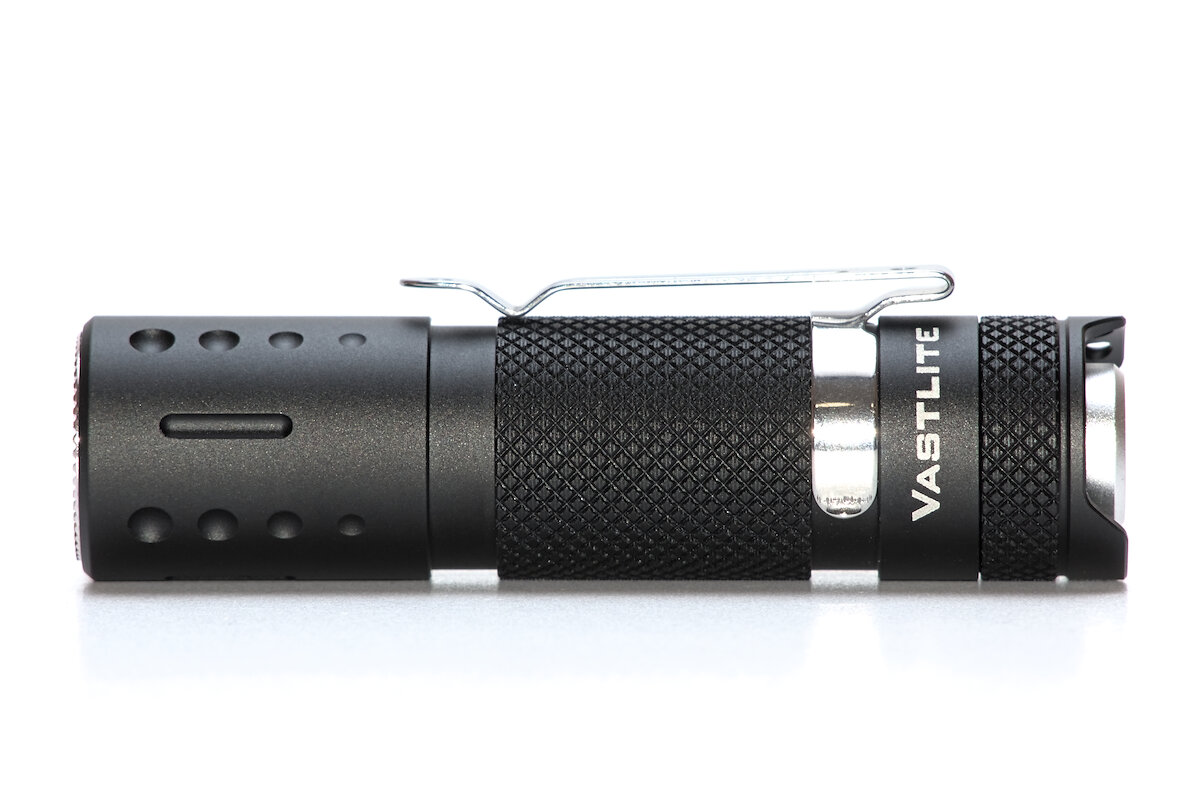
While the LEP version was operated by twisting the head (“twisty”), the new LED version features a mechanical tail switch. Here, there is a 7 × 1.5 mm slot designed to hold an optionally available glow stick.
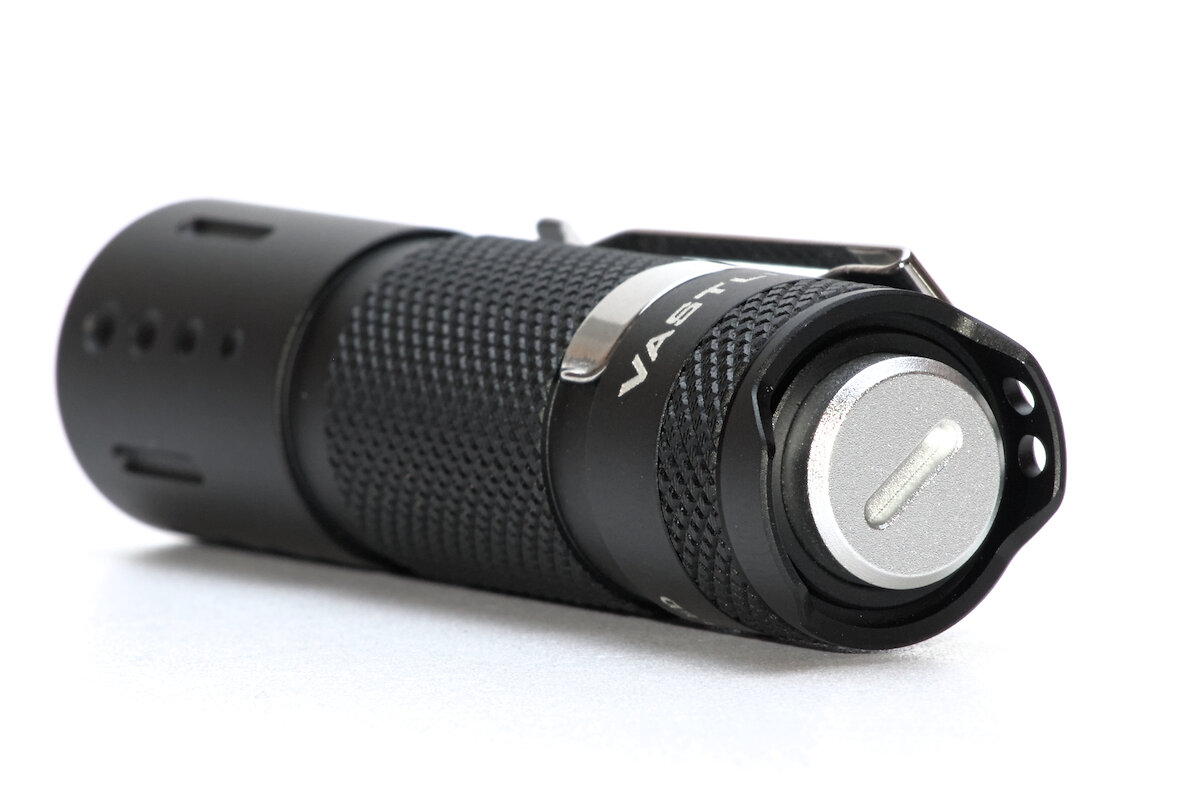
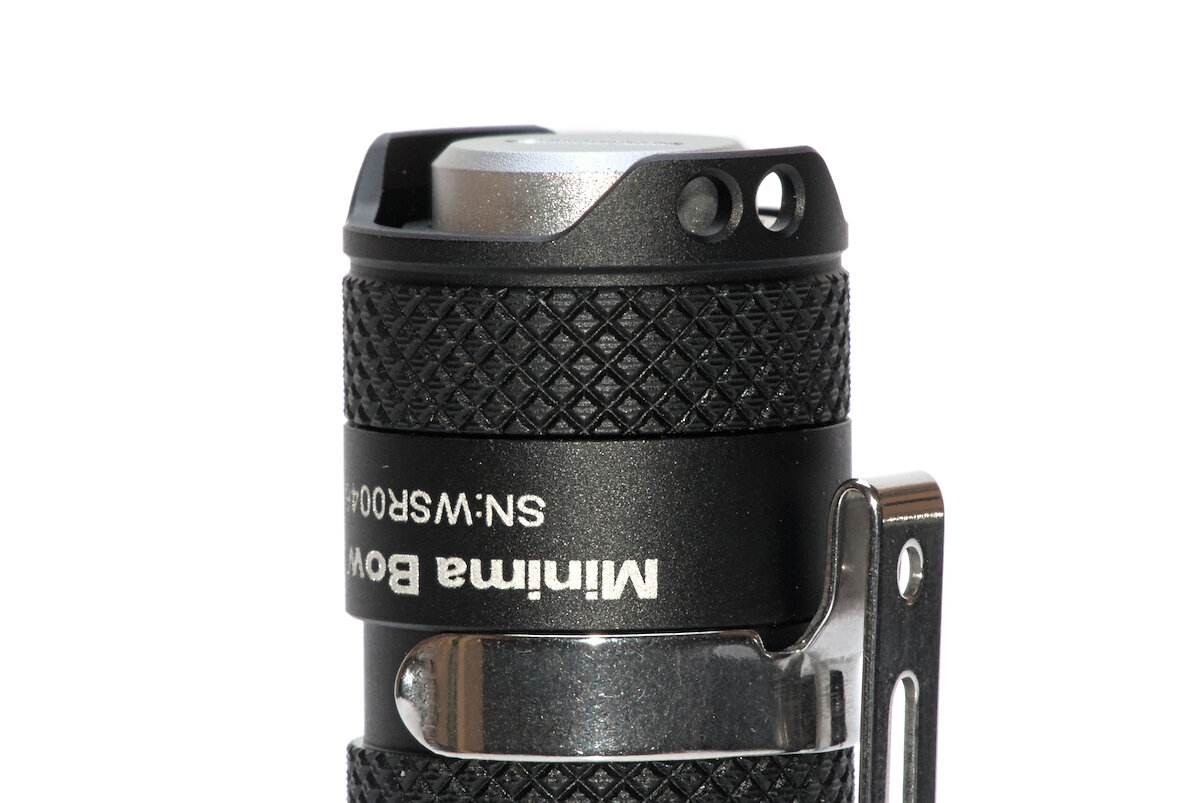
Two raised wings around the switch allow the light to tail stand while also protecting the button against accidental activation. There are also two holes for attaching a lanyard.
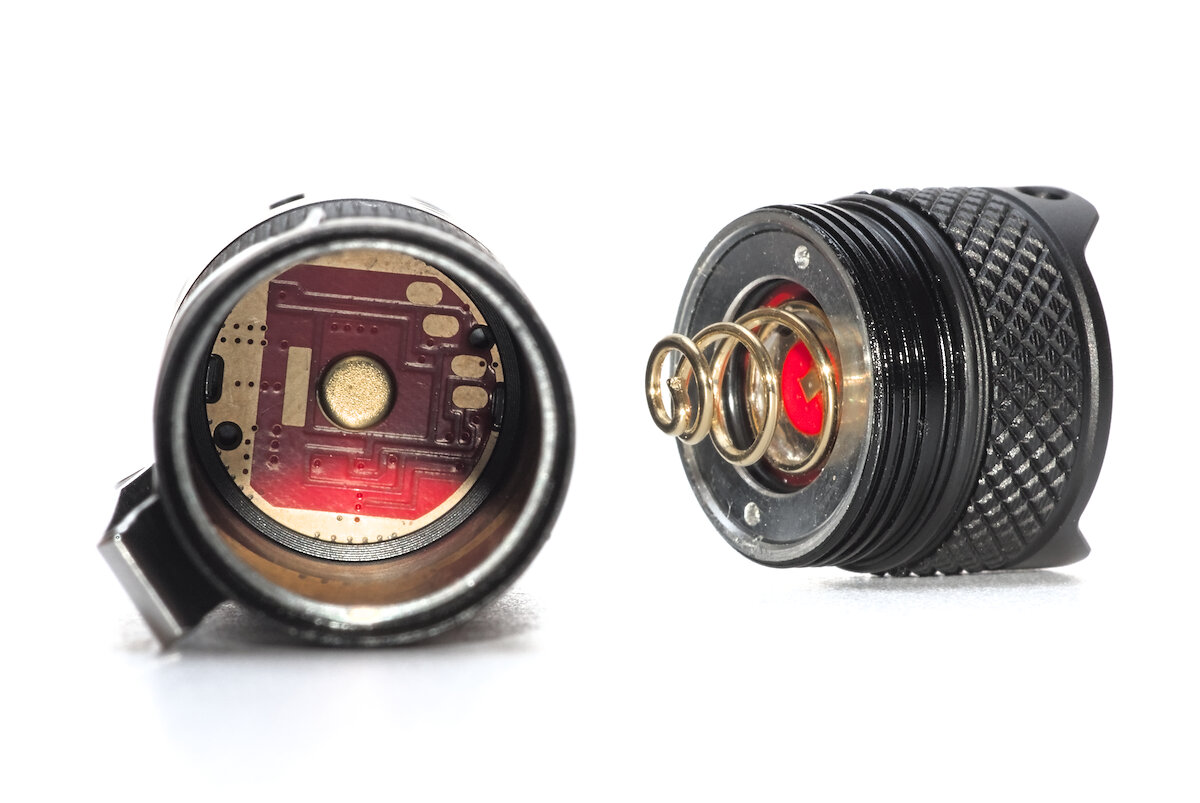
I had actually hoped to use the battery tube with the tail switch for the LEP version. Unfortunately, the construction is fundamentally different: on the LEP version, the battery tube is a single piece and the head can be unscrewed. On the LED version, the battery tube is permanently attached to the head and the tailcap is the part that can be removed.
The tailcap contains a spring and on the driver side there is a flat metal contact. In addition to 16340 Li-ion batteries, CR123A batteries are also supported.
The build quality is good, although the silver bezel is rather sharp-edged. According to the manufacturer, the Minima Bow LED has an IP68 rating, providing protection against continuous submersion in water up to one meter deep. It is also said to withstand drops from up to one meter in height (humorously referred to as “anti-fall”).
Vastlite 16340 850 mAh
I had already reviewed the included battery in more detail during the test of the LEP version. It is a 16340-size Li-ion battery with a rated capacity of 850 mAh and an integrated USB-C charging port. It measures 35.9 mm in length – slightly longer than a “bare” 16340 cell – with a weight of 18 g.
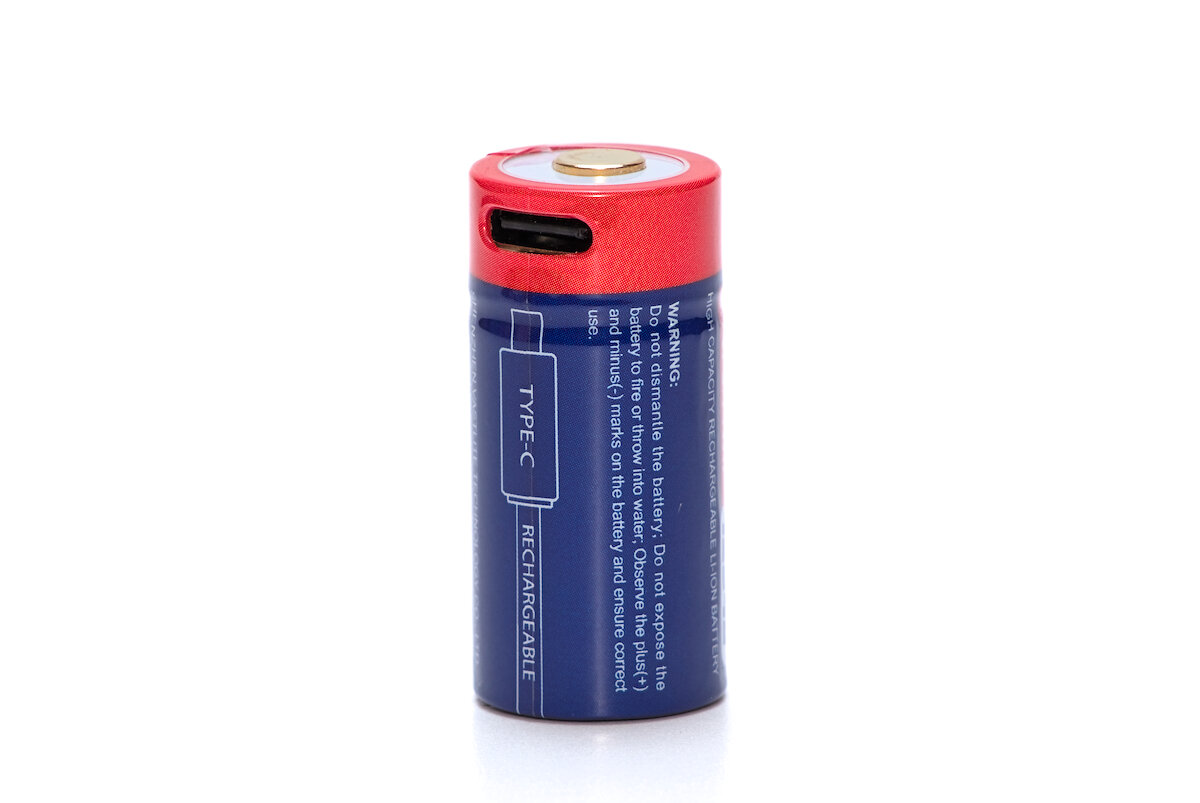
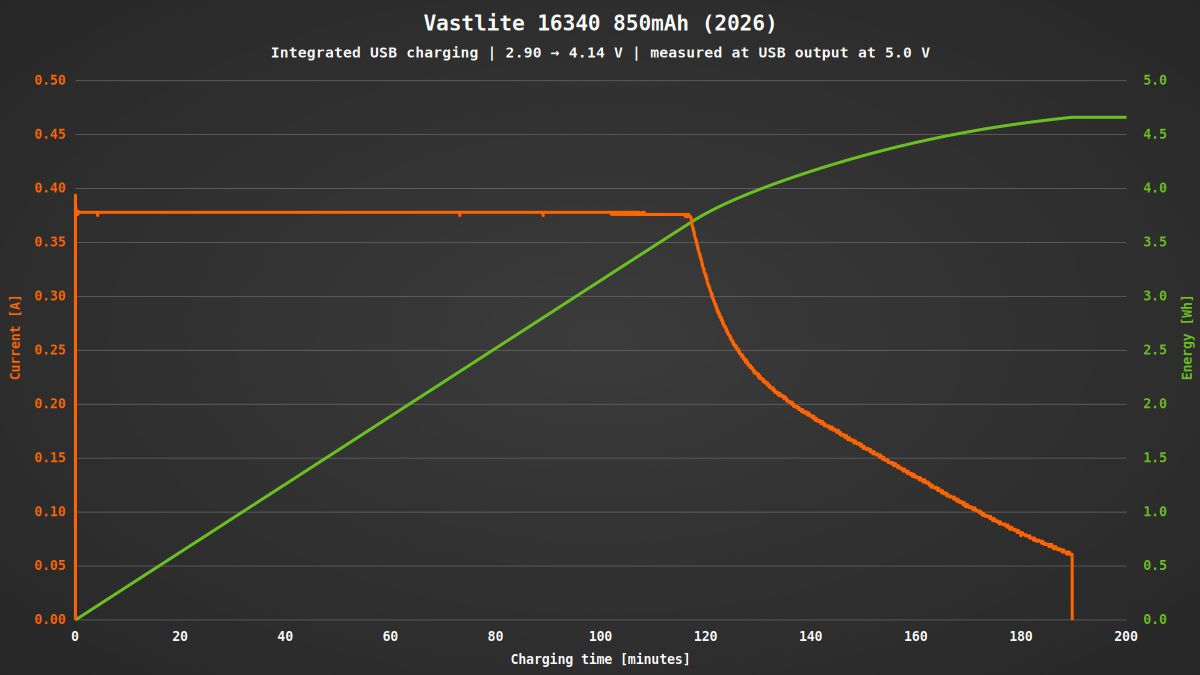
During charging, a red LED next to the positive terminal lights up. For this particular sample, the charging process took about 190 minutes – roughly half an hour longer than the previous one.
User interface
The earlier LEP version was controlled by loosening and tightening the head. The new LED version uses a tail switch, which is slightly easier to operate with one hand – but it also makes the flashlight longer.
It is made of silver-anodized aluminum. If it isn’t pressed exactly in the center, it tilts slightly to the side and lightly scratches against the body. Actuating it requires a force of about 1050 cN.
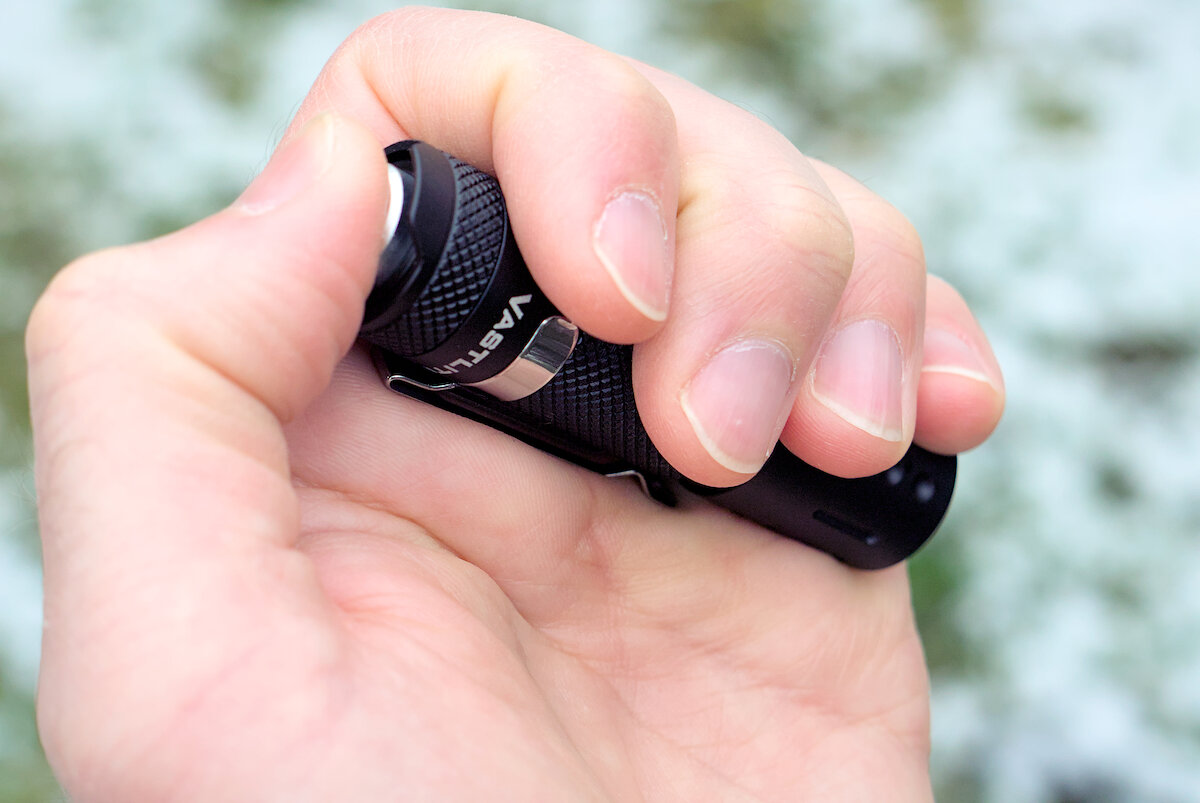
The switch is a so-called “forward clicky”, meaning it allows momentary operation when it isn’t fully pressed. A single tap with the light off cycles through the brightness levels: Low, Medium, High and Turbo. The light must be off for at least two seconds to prevent the brightness level from changing. Direct access to the lowest or highest brightness is not possible. The last used brightness is remembered when the light is turned off.
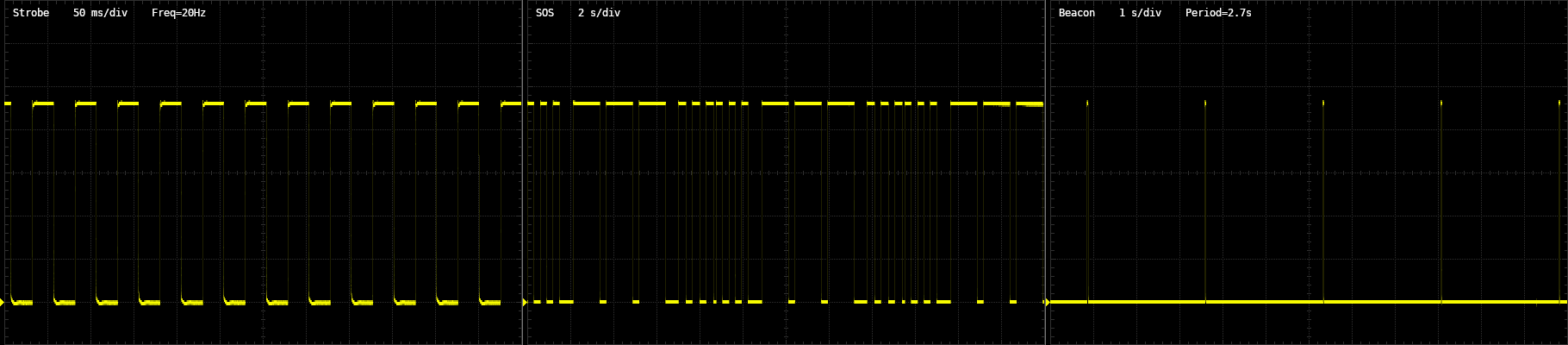
If the light is briefly turned off and back on while on the lowest level, a fast strobe at 20 Hz is activated. Each additional quick off-and-on cycles through “SOS” (without pauses between repetitions) and a nice beacon mode. Unfortunately, the last-used mode isn’t saved. In practice, the strobe is a bit too cumbersome to access to be truly useful. If you adjust the brightness too quickly, it’s also easy to accidentally end up in strobe mode.
Loosening the tailcap slightly allows the light to be locked to prevent accidental activation. There is no battery level indicator. However, when the battery is low, the light flashes a few times briefly upon switching on.
Illumination
The LED is simply described as a “High Quality LED” – the manufacturer provides no further details. It is a cool-white LED with a dome and no visible divisions in the phosphor layer.
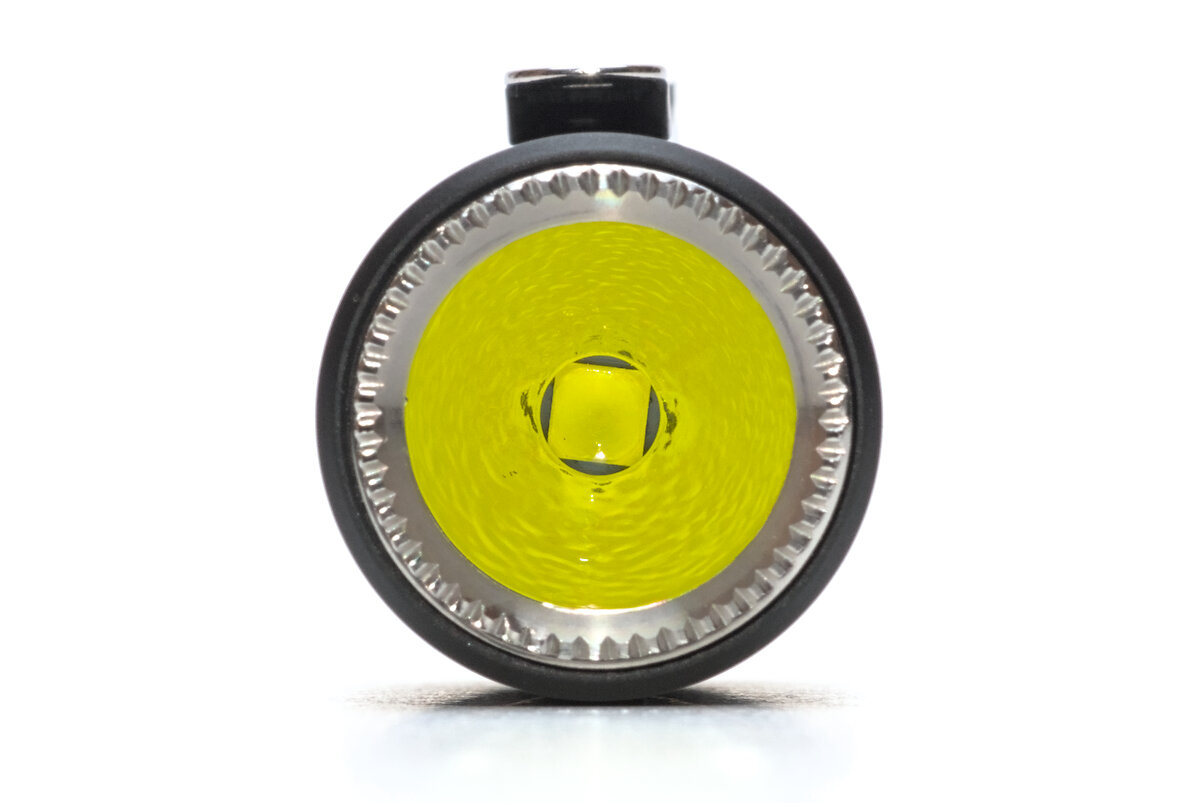
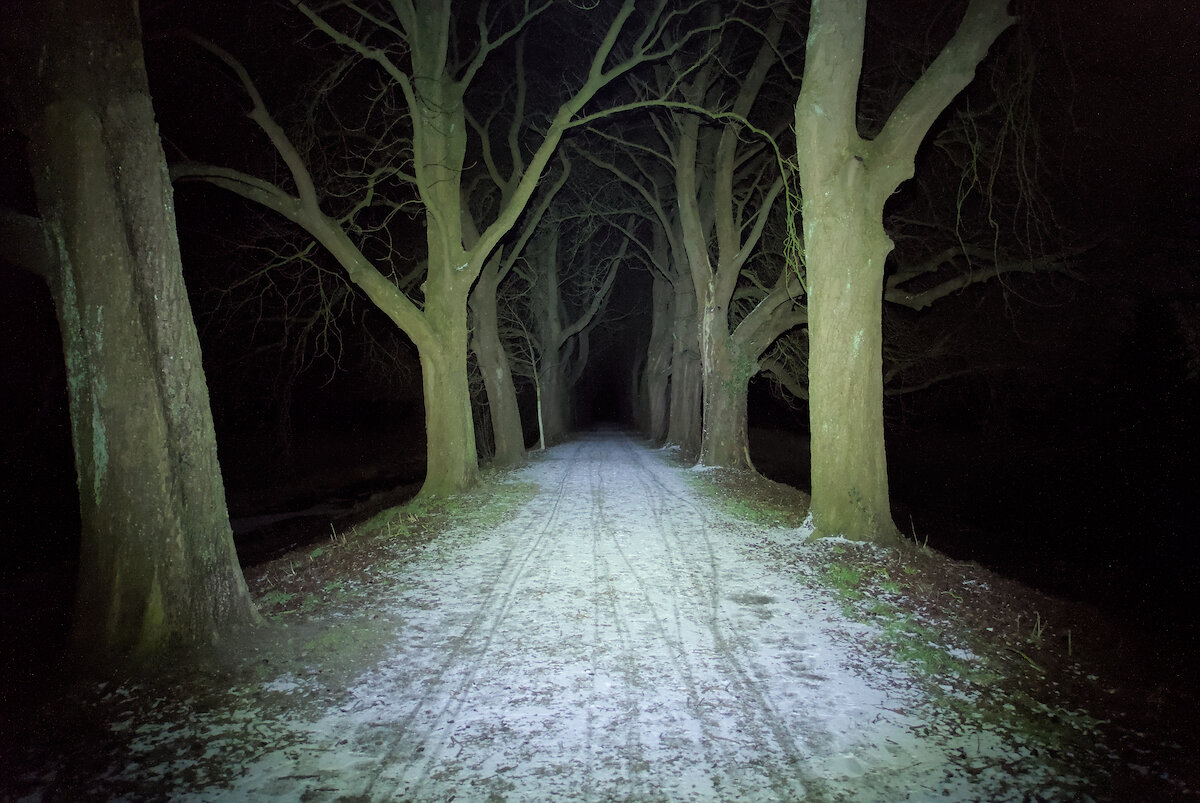
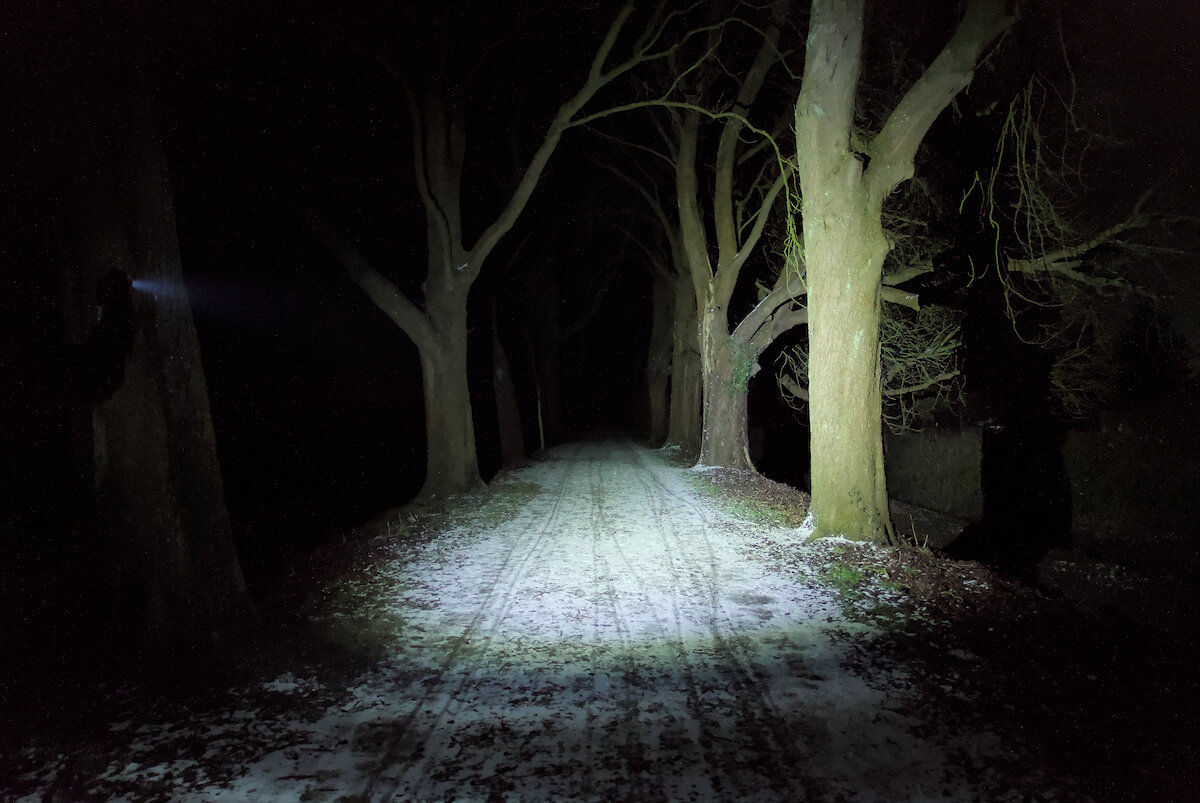
The beam is shaped by a textured (“orange peel”) reflector, which is protected by glass with a bluish anti-reflective coating. The beam shows a wide corona around the spot with a noticeably yellow-green tint.
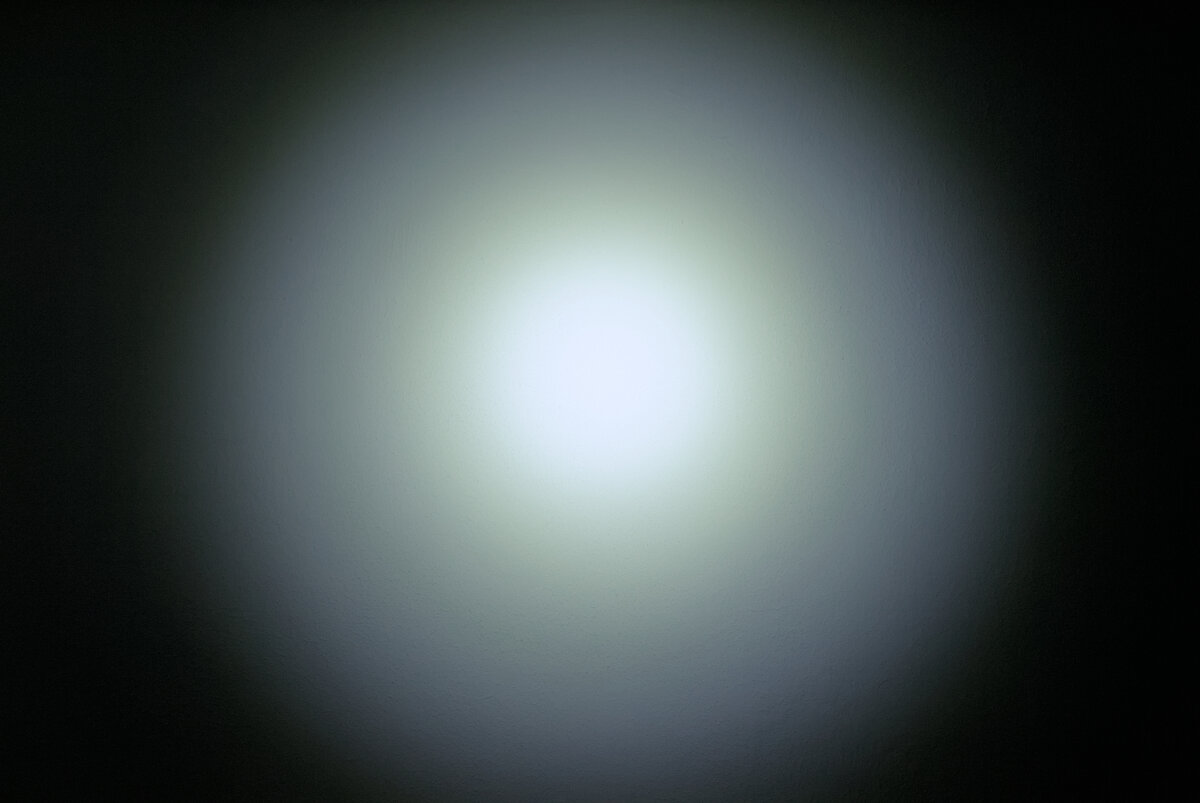
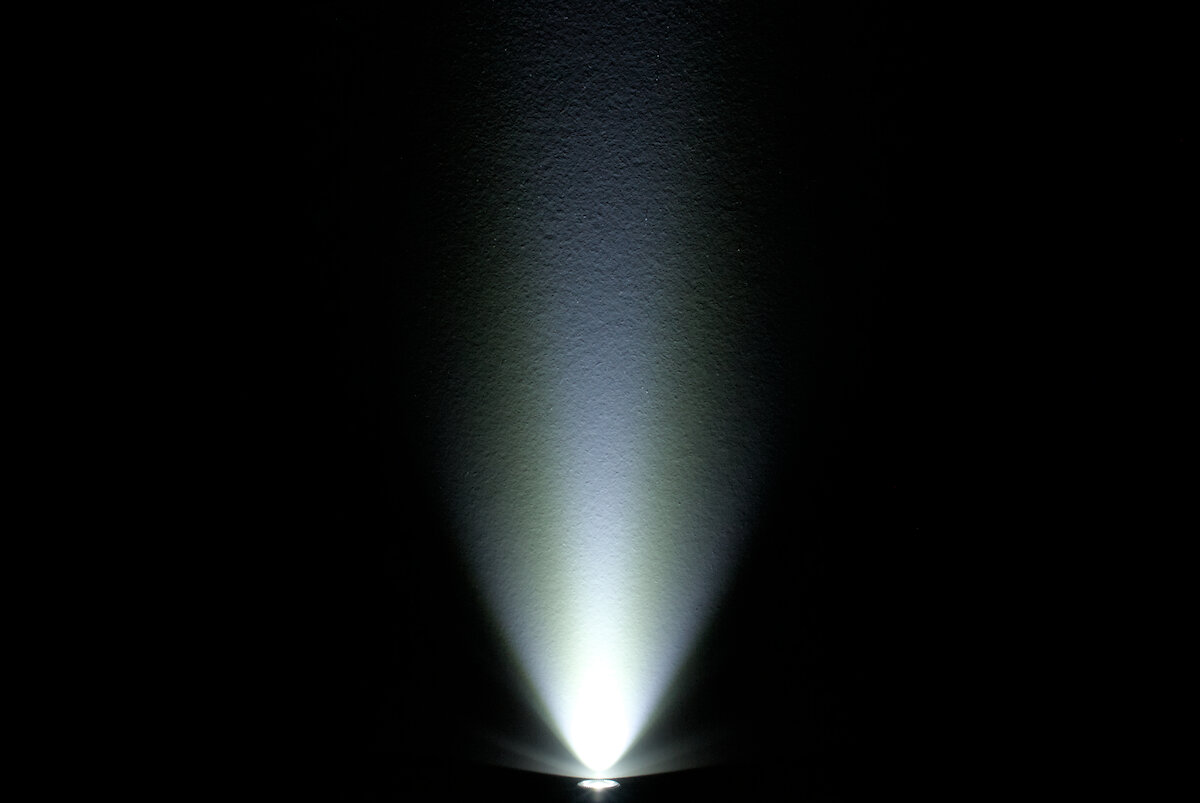
The light distribution is well suited for an EDC flashlight and versatile in use. Thanks to the wide spot and bright spill, the light works well at close range. It can’t achieve long distances, but that’s to be expected from a flashlight of this size.
Driver and runtime
By default, the Minima Bow LED is powered by a 16340 Li-ion battery. The brightness levels could be better spaced. At 45 lm, the lowest level is far too bright for an EDC light – 1 lm is often sufficient in complete darkness.
| Mode | Brightness¹ | Runtime¹ | Intensity¹ (Throw²) | Current³ |
|---|---|---|---|---|
| Turbo | 800 / 450 lm | 3 + 35 min | 4560 cd (135 m) | 2.10 A |
| High | 480 lm | 0:45 h | 0.96 A | |
| Med | 200 lm | 3:50 h | 0.33 A | |
| Low | 45 lm | 11 h | 0.09 A |
16340 Li-ion
¹ According to manufacturer ² ANSI FL1 ³ Measured
According to the manual, CR123A batteries can also be used. However, this results in lower brightness and shorter runtime. It’s also unclear how the lower voltage of these batteries interacts with the flashlight’s low-voltage protection.
| Mode | Brightness¹ | Runtime¹ |
|---|---|---|
| Turbo | 230 lm | 1:20 h |
| High | 160 lm | 1:40 h |
| Med | 80 lm | 3:20 h |
| Low | 15 lm | 13 h |
CR123A
¹ According to manufacturer
The following measurements were all done with the included 16340 battery. All runtimes correspond fairly closely to the manufacturer’s specifications. I particularly like the mostly consistent brightness maintained until the end of the runtime.
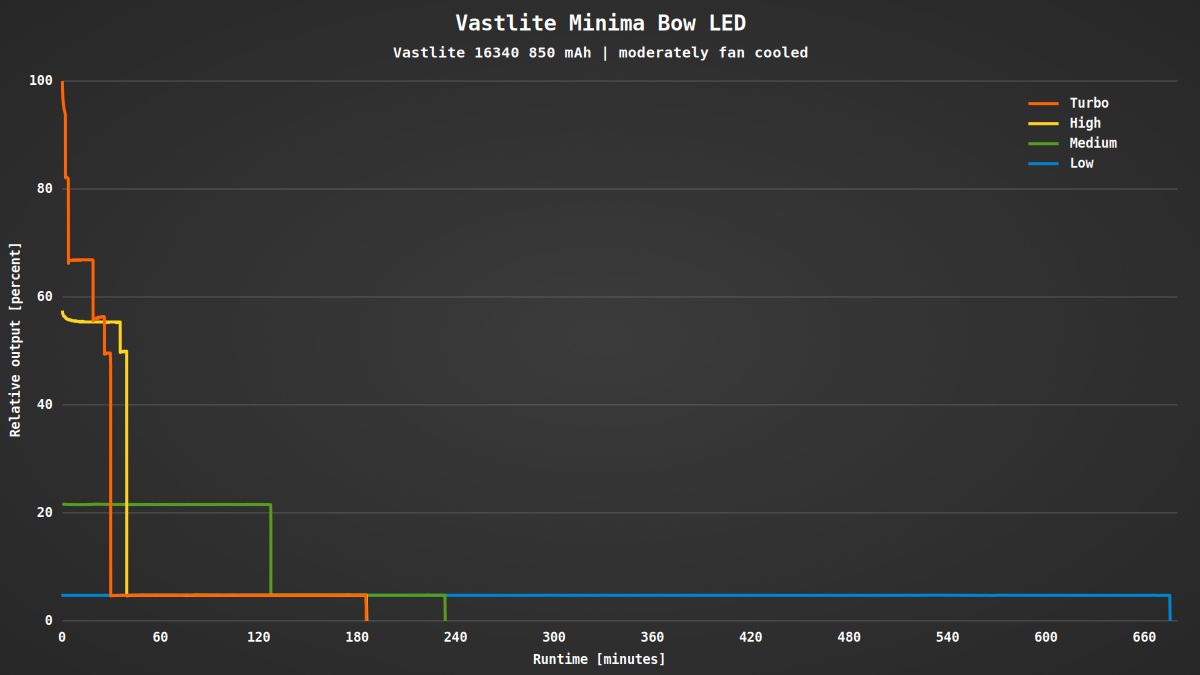
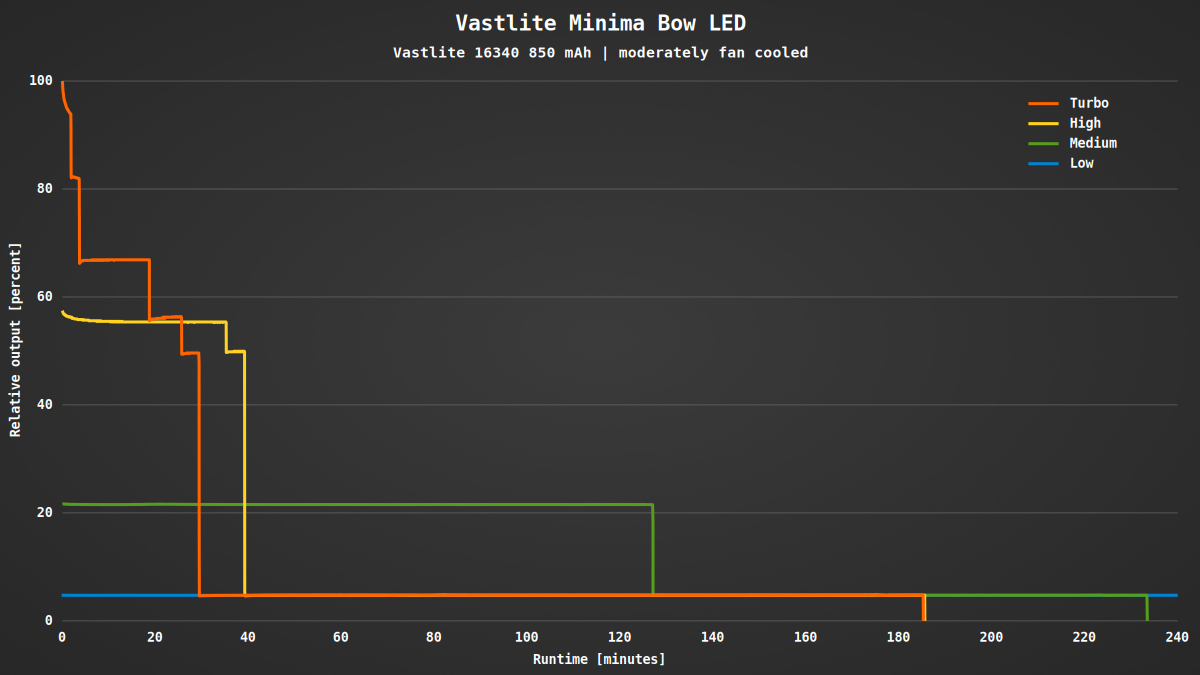
In Turbo mode, the brightness is maintained for just under two minutes before stepping down several times. The temperature reaches a moderate 36 °C.
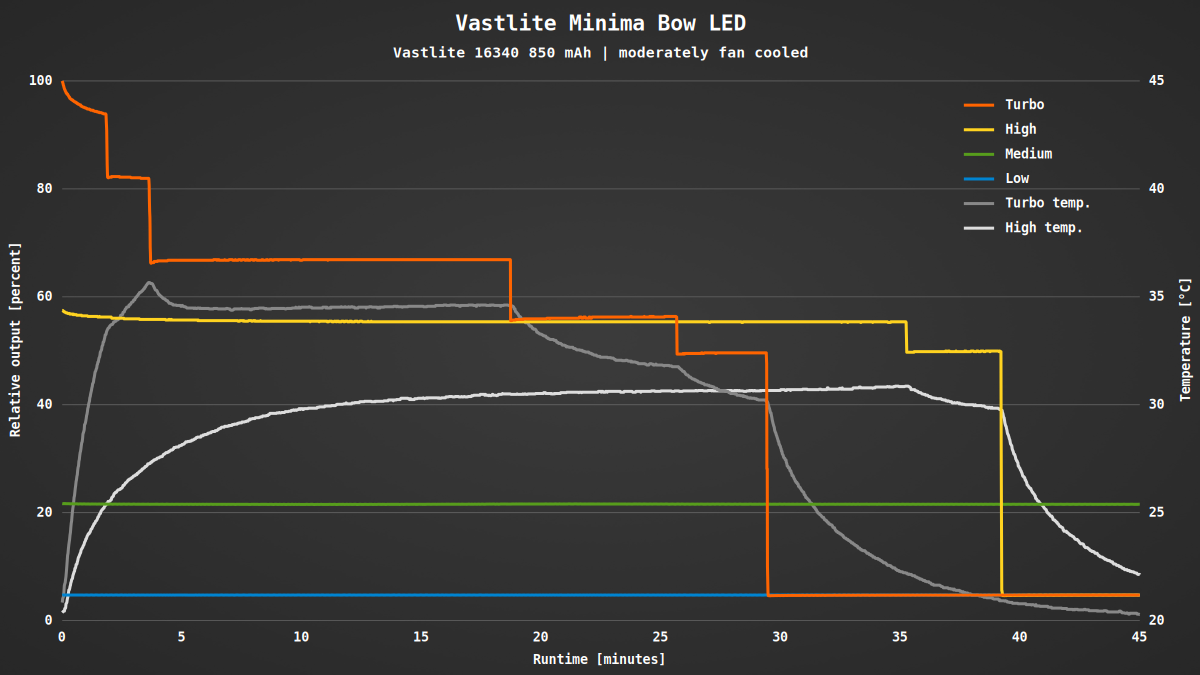
All brightness levels are regulated without PWM. Using an oscilloscope, a minimal ripple can be measured in the two lower levels, but it is imperceptible to the naked eye.

When the battery voltage drops to around 3.25 V, the LED flashes a few times briefly. At approximately 2.75 V, the light automatically shuts off to protect the battery from deep discharge.
Conclusion
Apart from the similarity in name, the Vastlite Minima Bow LED has little in common with the earlier Minima Bow featuring a laser light source. In fact, it is a completely new model with conventional LED technology.
The cool-white light shows a pronounced corona around the spot with a yellow-green tint. Operation via the mechanical tail switch is mostly intuitive – if it weren’t for the rather unnecessary blinking modes, which can be easily activated unintentionally.
With a different LED, the Vastlite Minima Bow LED could have been an attractive EDC flashlight: slightly warmer, without the ugly corona, with better color rendering and perhaps a small TIR optic instead of the reflector.