With the HD02 Mini, Wurkkos is launching a more compact version of the versatile HD02. Despite its name, the HD02 Mini is more than just a shrunken HD02.
Spot, flood and red light as well as a foldable wing light are just some of the interesting features. With a replaceable 14500 battery, support for NiMH batteries, USB-C charging and numerous mounting options, the HD02 is an extremely versatile EDC flashlight.
You can find the German version of this review on my website:
The flashlight was provided by the manufacturer for this review. Thank you very much!
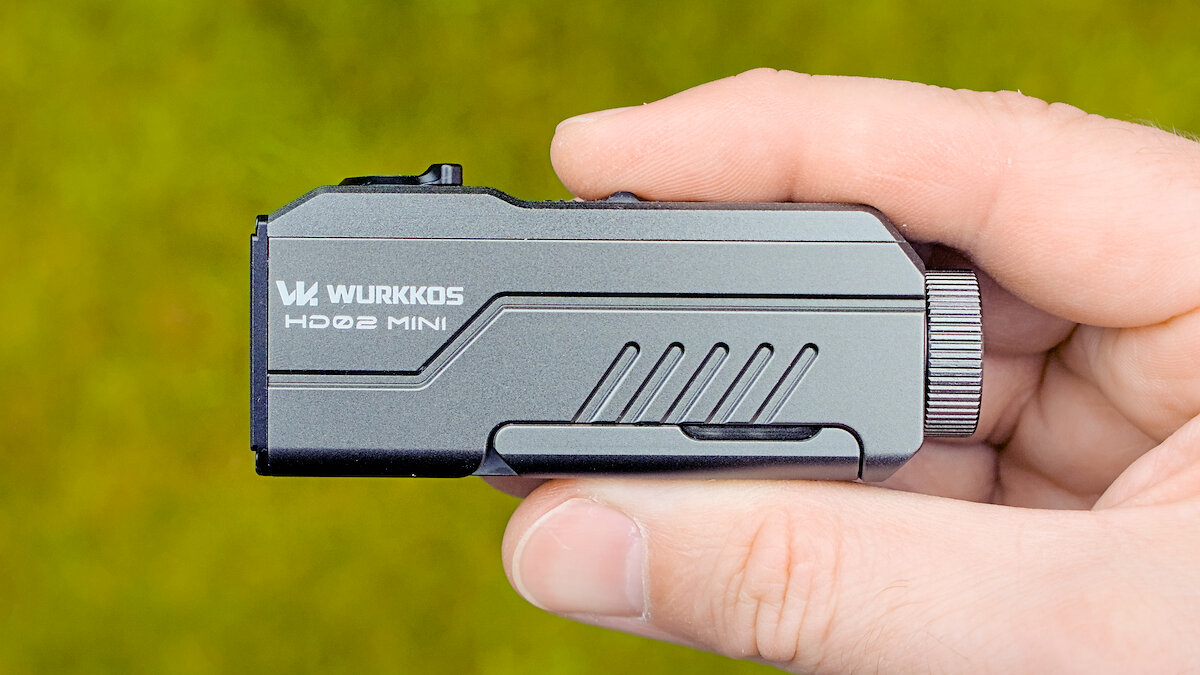
Overview
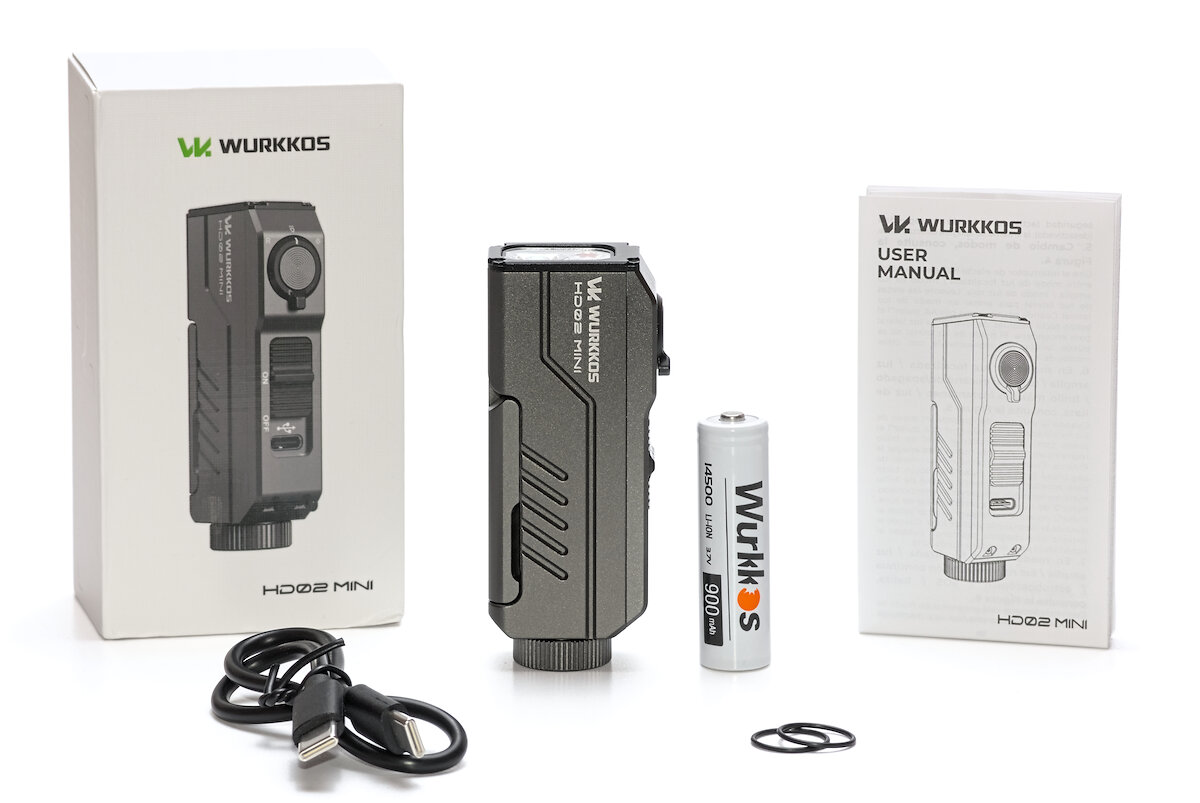
The flashlight comes in retail packaging with a vacuum-formed insert. The accessories are located on the back of the insert.
- Wurkkos 14500 Li-ion battery (900 mAh, unprotected, button-top, 4.04 V at arrival)
- USB-C charging cable
- 2x replacement O-ring
- Manual (EN, CN, RU, DE, FR, ES, IT, JP, PT)
The manual consists of a 45 × 27 cm sheet of paper printed on both sides. In addition to the text, the user interface is also explained using pictograms. However, some of these are somewhat confusing.
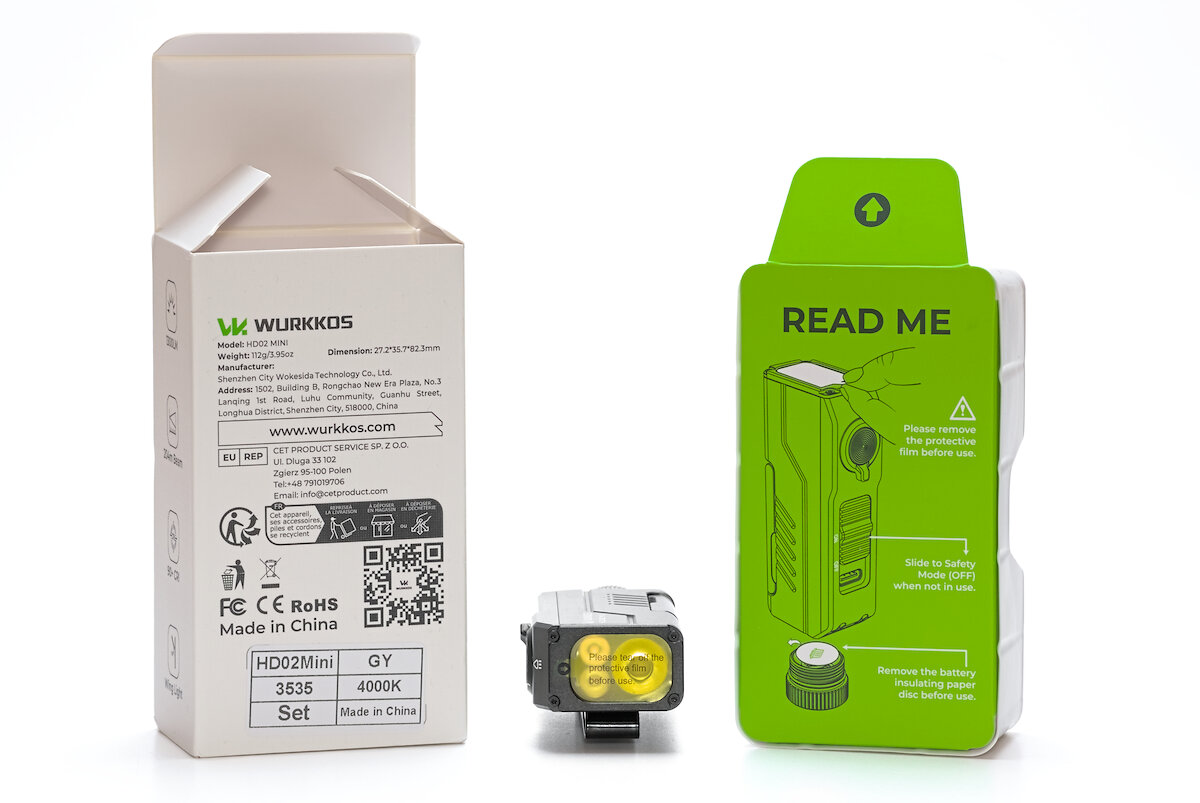
Important steps for initial setup are clearly highlighted when opening the box: before first use, both the battery transport protection and the protective film on the lens must be removed. The latter is also clearly noted on the protective film itself.
The HD02 Mini’s body is made of aluminum and is available in gray, orange and blue. The bezel is black anodized on all variants.
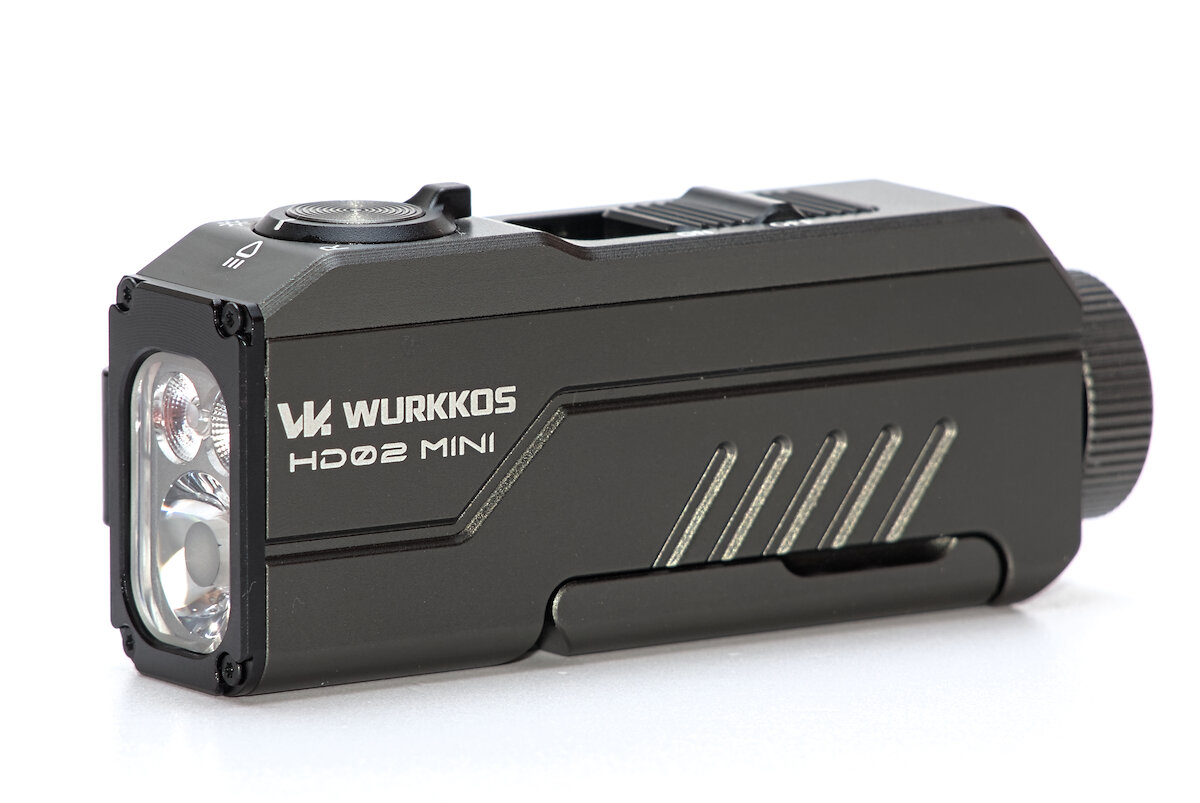
Although the flashlight is powered by a cylindrical battery, it has a rectangular shape. This allows its numerous functions to be contained in a compact body without sacrificing the benefits of a replaceable battery.
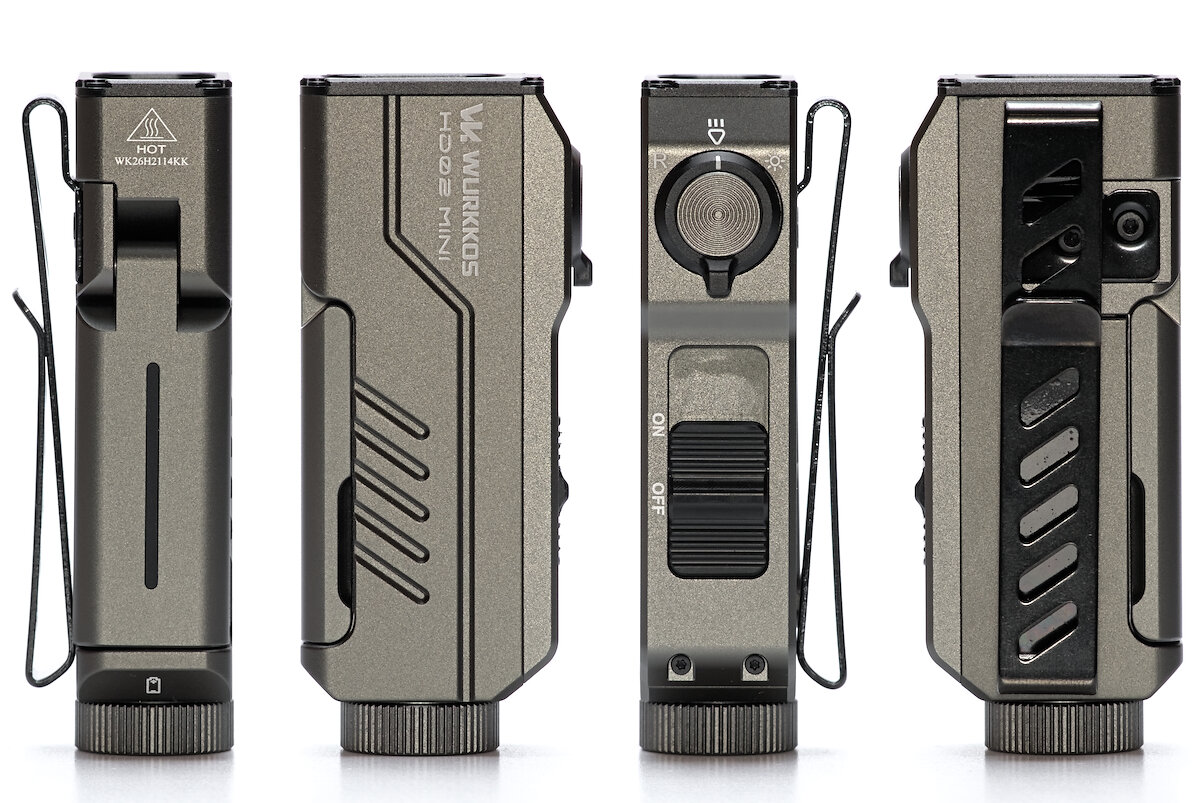
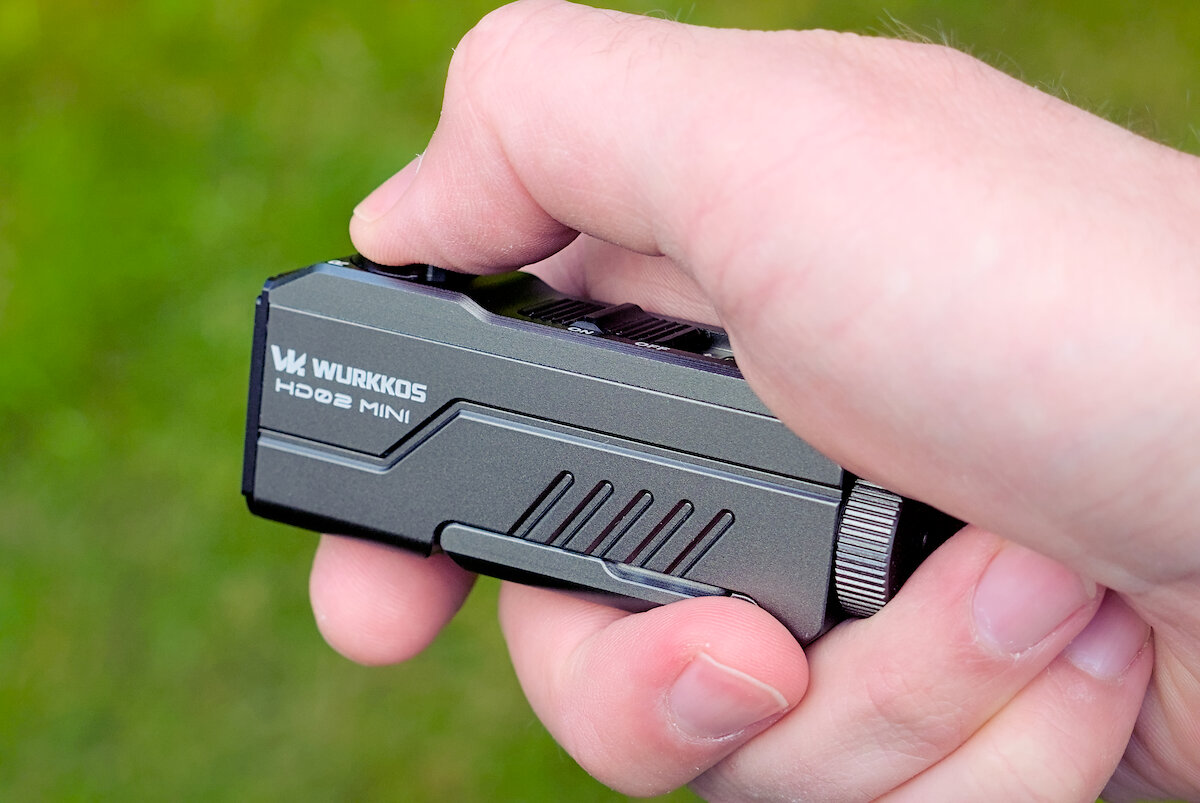
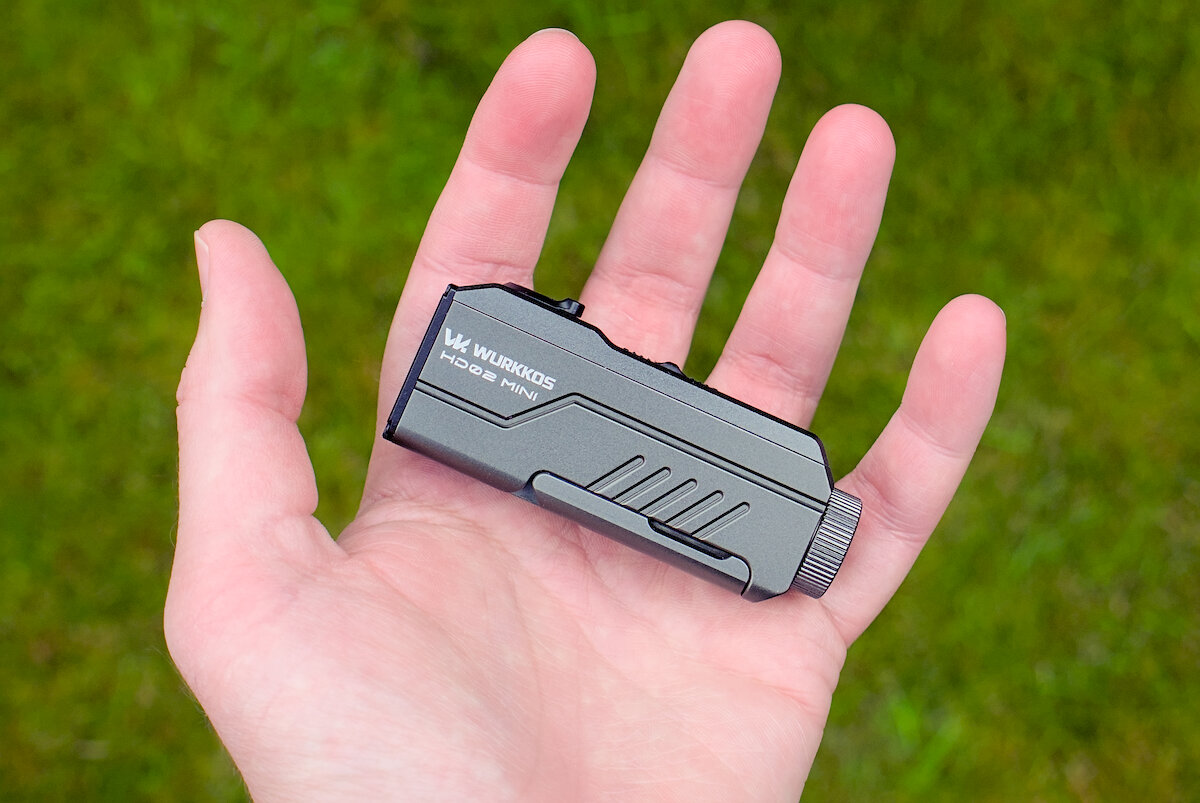
The “Mini” suffix is well deserved: with its compact dimensions of 82 × 34 × 19 mm, the HD02 Mini is exceptionally small and slips easily into your pocket. Its weight of around 100 g is barely noticeable either.
Length: 82.3 mm
Width: 34.3 mm
Thickness (without/with clip): 19.1 / 27.0 mm
Weight (without battery): 91.3 g
Weight (14500 battery): 19.7 g
Weight (NiMH battery): 26.0 g
Weight (total): 111.0 / 117.3 g
Although the name suggests that the HD02 Mini is simply a smaller version of the HD02, it has a character of its own. With its single wing, it also reminds me more of a scaled-down HD05 (which, unfortunately, I didn’t have available for comparison).
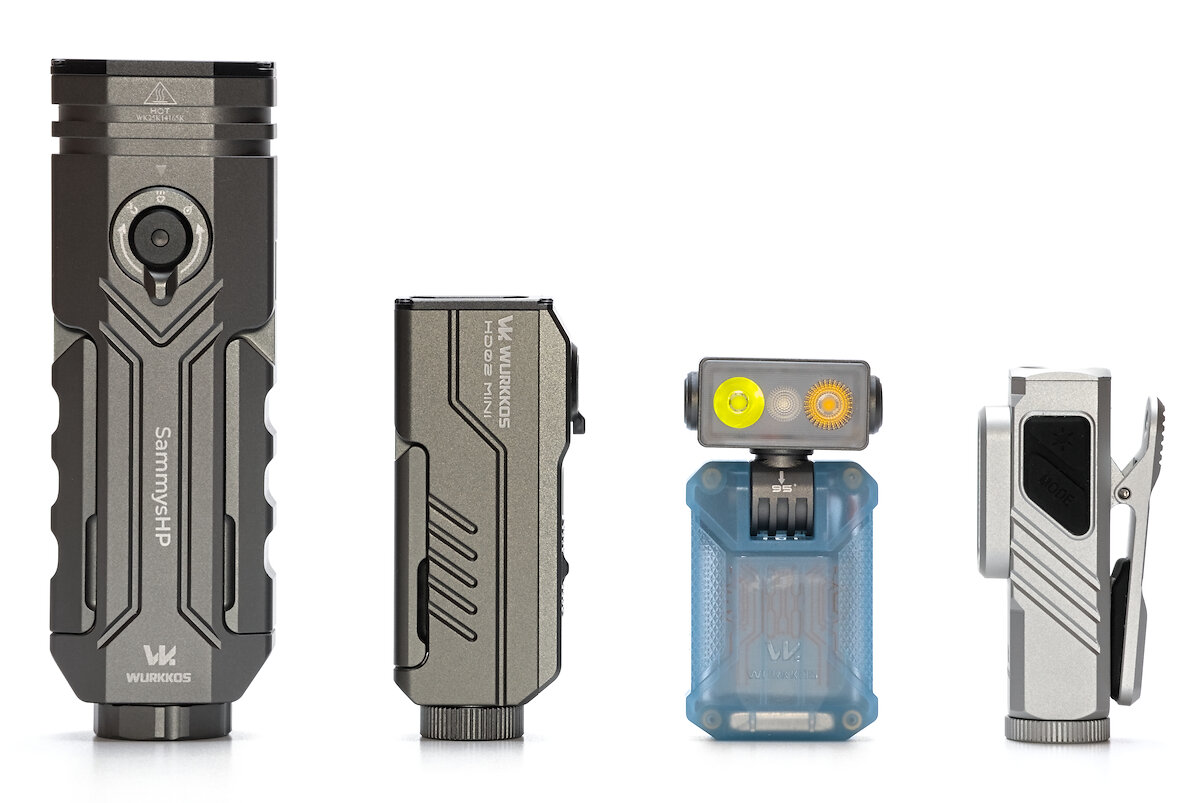
Wurkkos HD02 | Wurkkos HD02 Mini | Wurkkos HD04 | Sofirn ST10
A wing for the floodlight can be folded out from the side by up to 135°. This allows the beam direction to be adjusted flexibly to suit the situation. The hinge operates smoothly and appears to be sealed and dampened by O-rings.
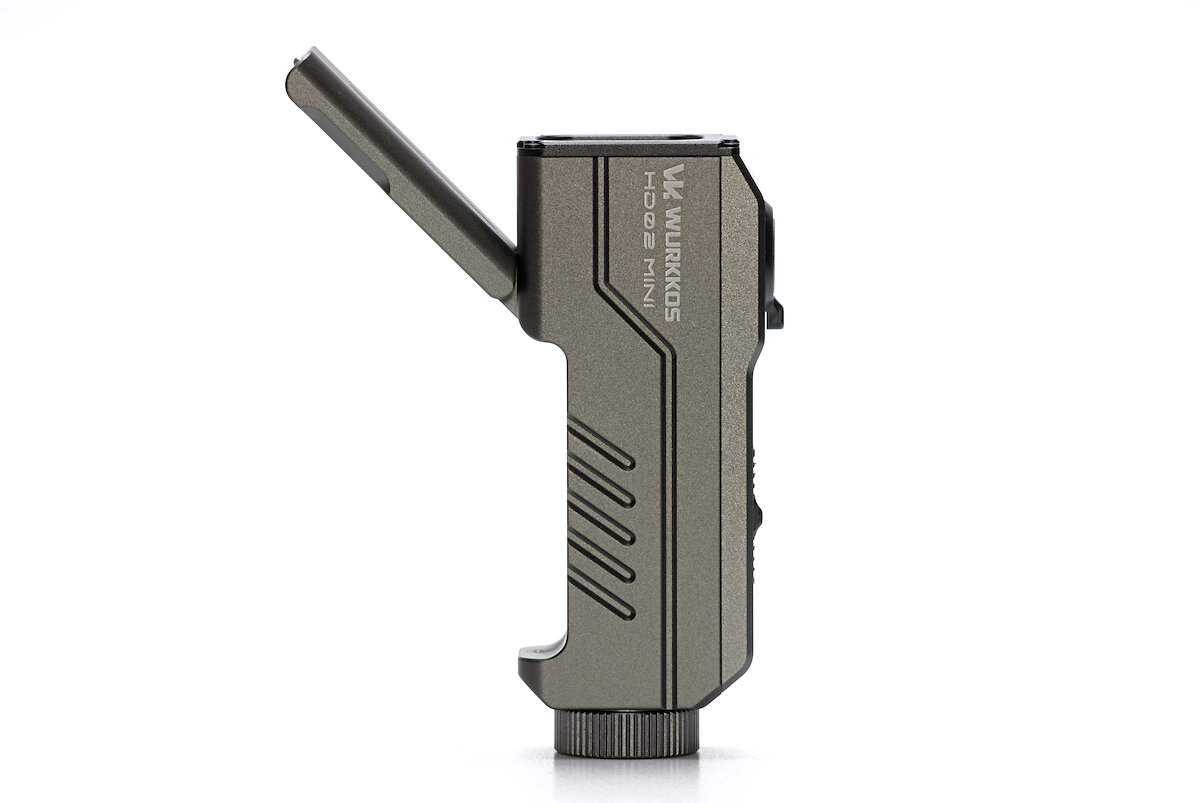
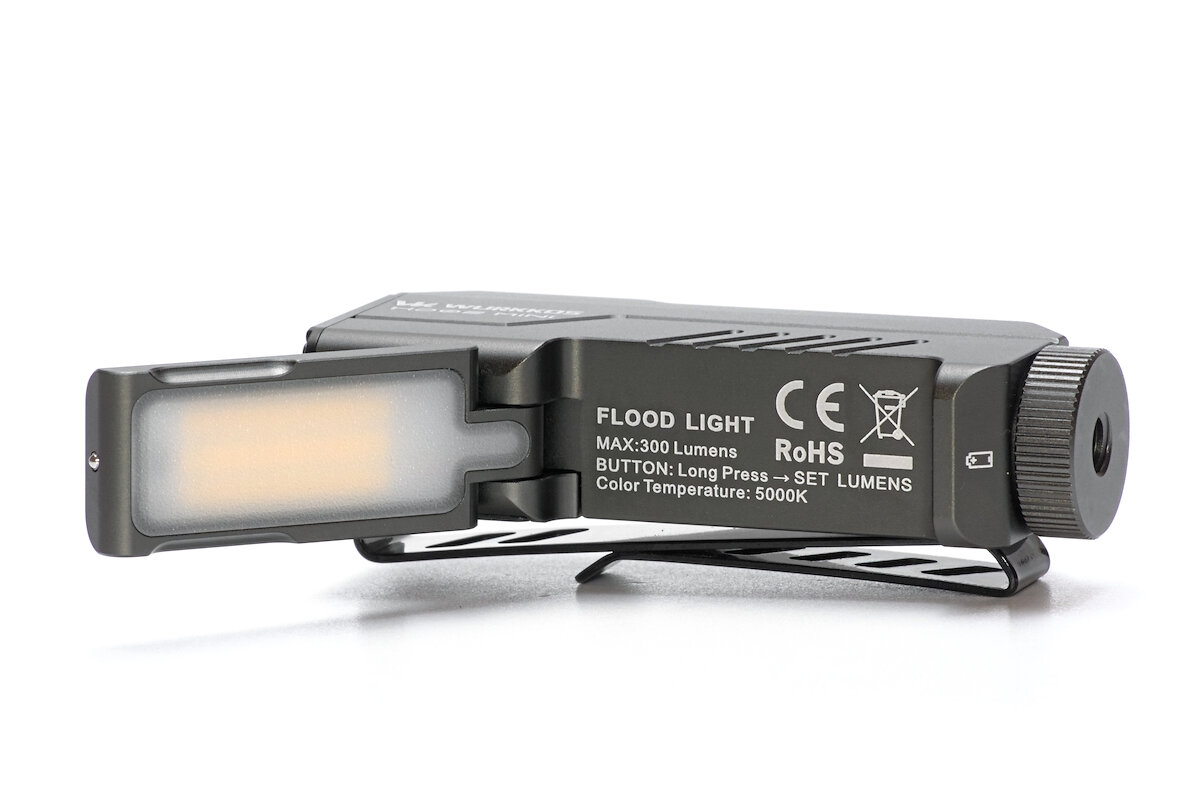
A small ball detent secures the wing in the closed position. However, it can still rattle slightly when subjected to impacts. A quick guide to operating the floodlight can be found behind the wing. Unusual but practical.
When the side light is used at high brightness, the adhesive holding the white plastic diffuser in place can come loose due to the high temperature and expanding air. The same problem has also occurred with the HD02 and HD02 Pro.
On the back is a two-way clip that extends almost to the end of the flashlight in both directions. This allows the flashlight to be carried deep in a pocket without sticking out too far. The clip can also be used to attach the flashlight to a baseball cap, turning it into an improvised headlamp.
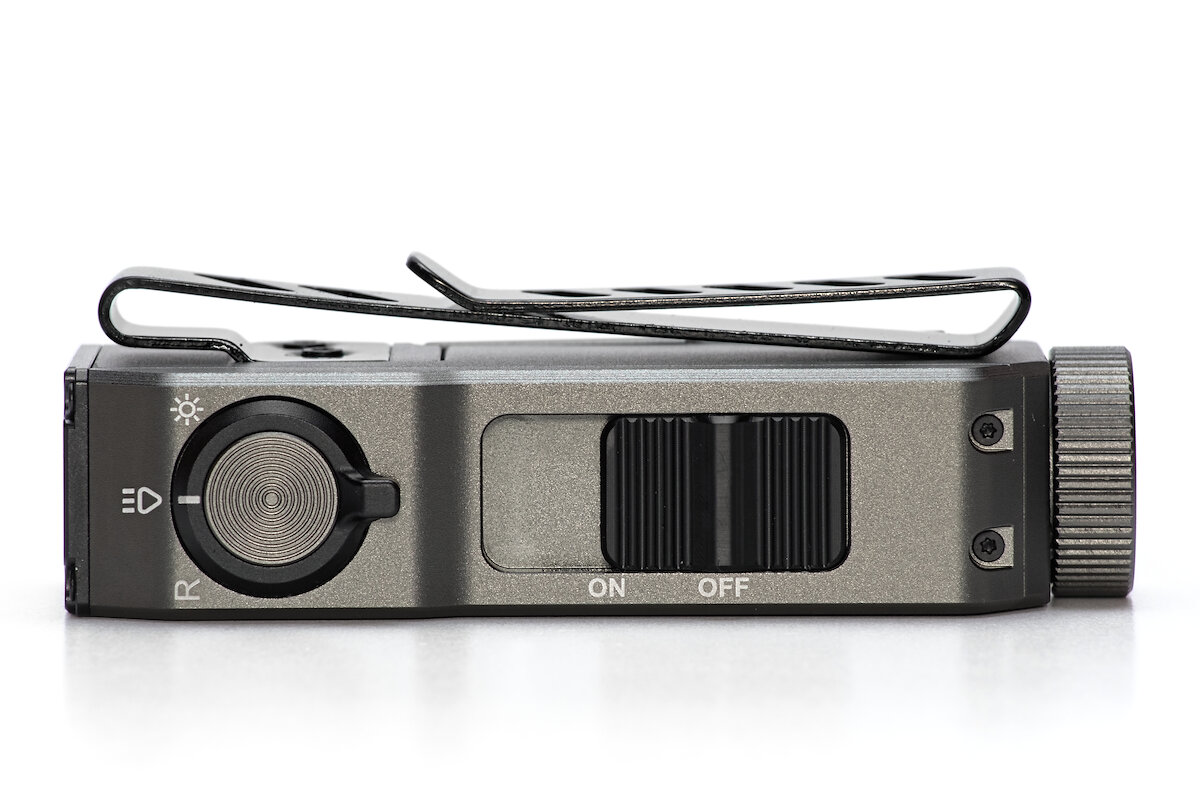
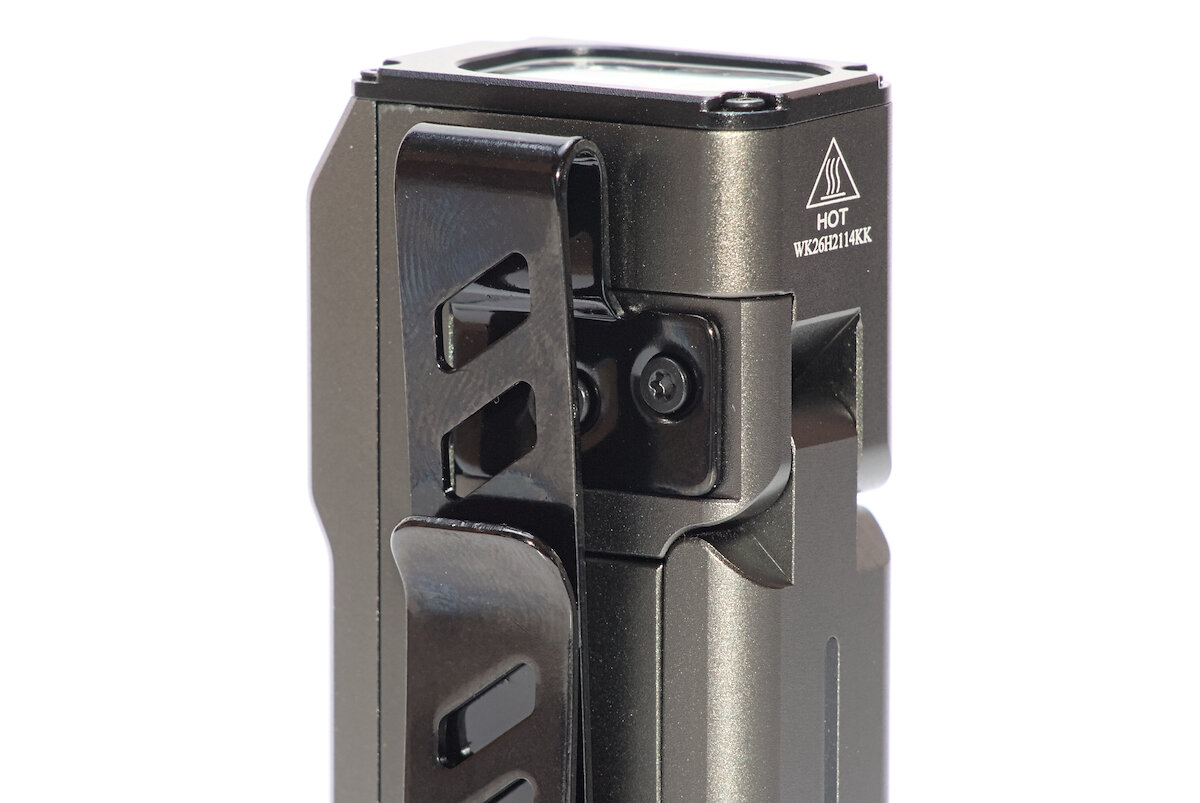
The clip is secured with two T6 screws, which also hold part of the body together.
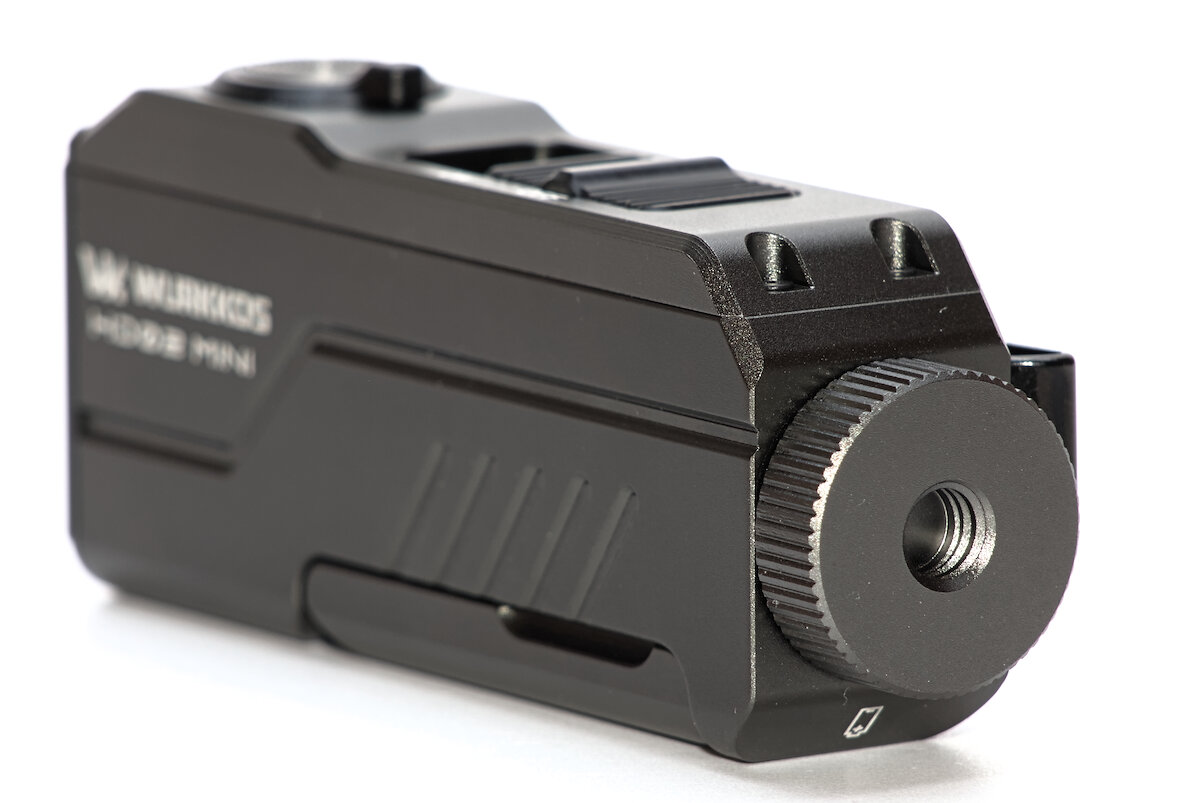
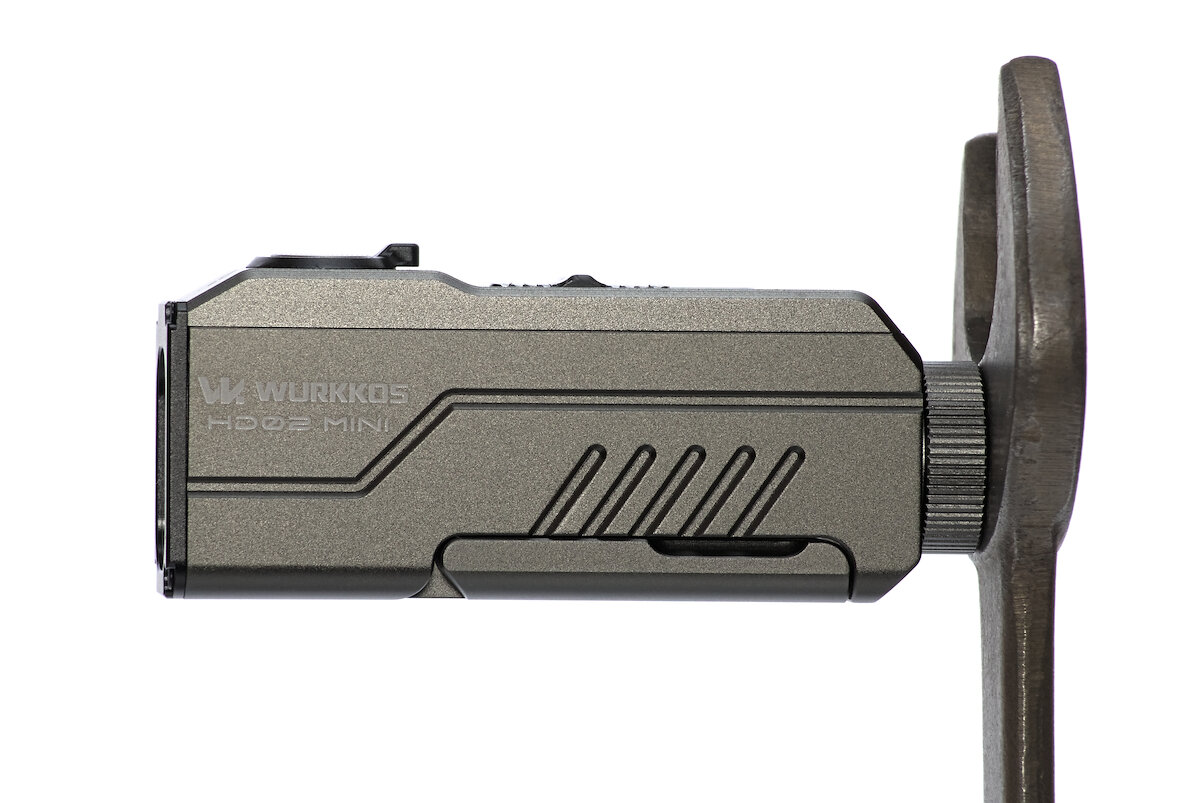
The round tailcap features a 1/4" UNC tripod thread, providing numerous mounting options. For example, the HD02 Mini can be mounted elevated on a small tripod to better illuminate a table as a work light.
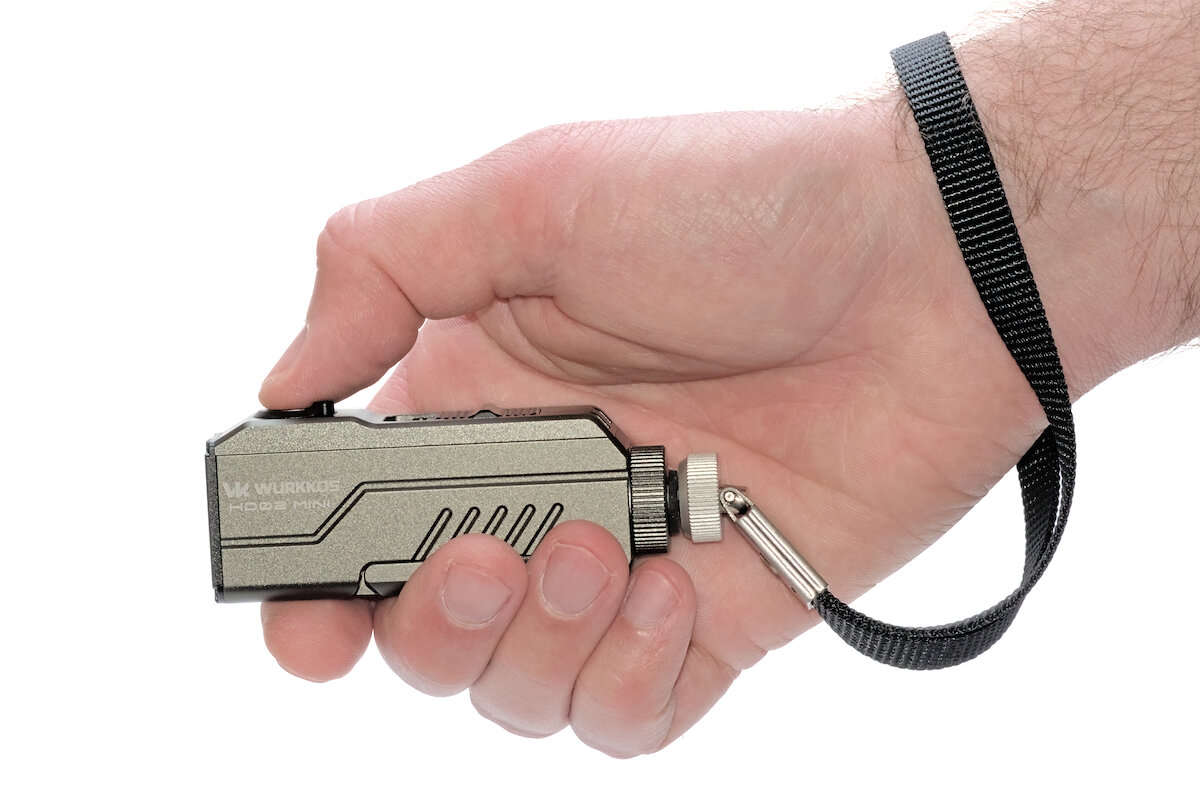
The flashlight does not have a dedicated hole for attaching a lanyard. Instead, the lanyard can be attached to one of the holes in the clip. Alternatively, a lanyard with a screw mount can be used, such as those available as camera accessories.
The tailcap also contains a strong magnet. This allows the flashlight to be securely attached to magnetic surfaces in any orientation.

A USB-C port on the side allows the battery to be charged directly in the flashlight. A sliding cover keeps out coarse dirt and also serves as a lockout to prevent the flashlight from being switched on accidentally. The port is internally sealed to protect against water ingress.
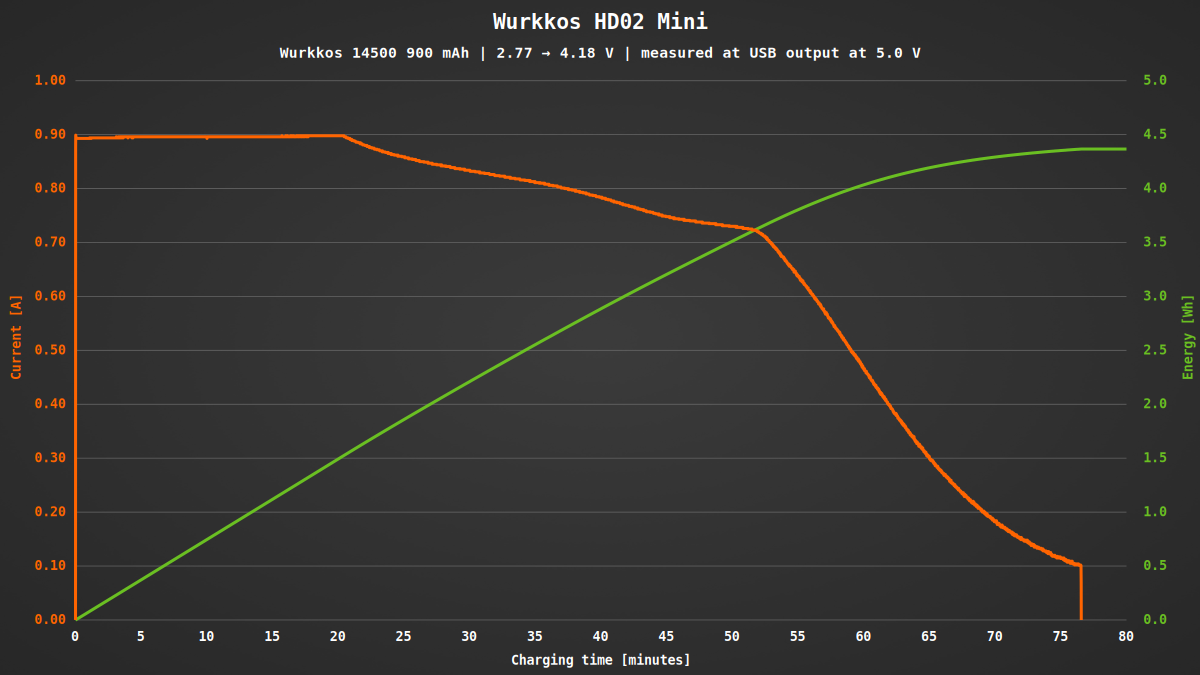
The battery is charged at 5 V with up to 900 mA, which is relatively high for a 14500 battery. As a result, the flashlight is fully charged and ready for use again after around 75 minutes. Charging progress is shown by an eleven-segment bargraph, whose color changes from red to orange to green depending on the charge level.
The flashlight can be used normally while charging. It can also be operated directly via the USB cable without a battery. In this case, however, only a medium brightness level is available in all channels.
The HD02 Mini can be powered not only by 14500 Li-ion batteries but also by NiMH batteries (or, if necessary, alkaline batteries) in AA size. The brightness is significantly lower in this case, but it gives you more flexibility in your choice of power source. However, NiMH batteries cannot be charged directly in the flashlight. If the USB cable is connected anyway, the status indicator lights up orange as a reminder.
Unlike most other flashlights, the tailcap has an external thread and screws into the “battery tube”. Contact with the battery is made via a strong spring.
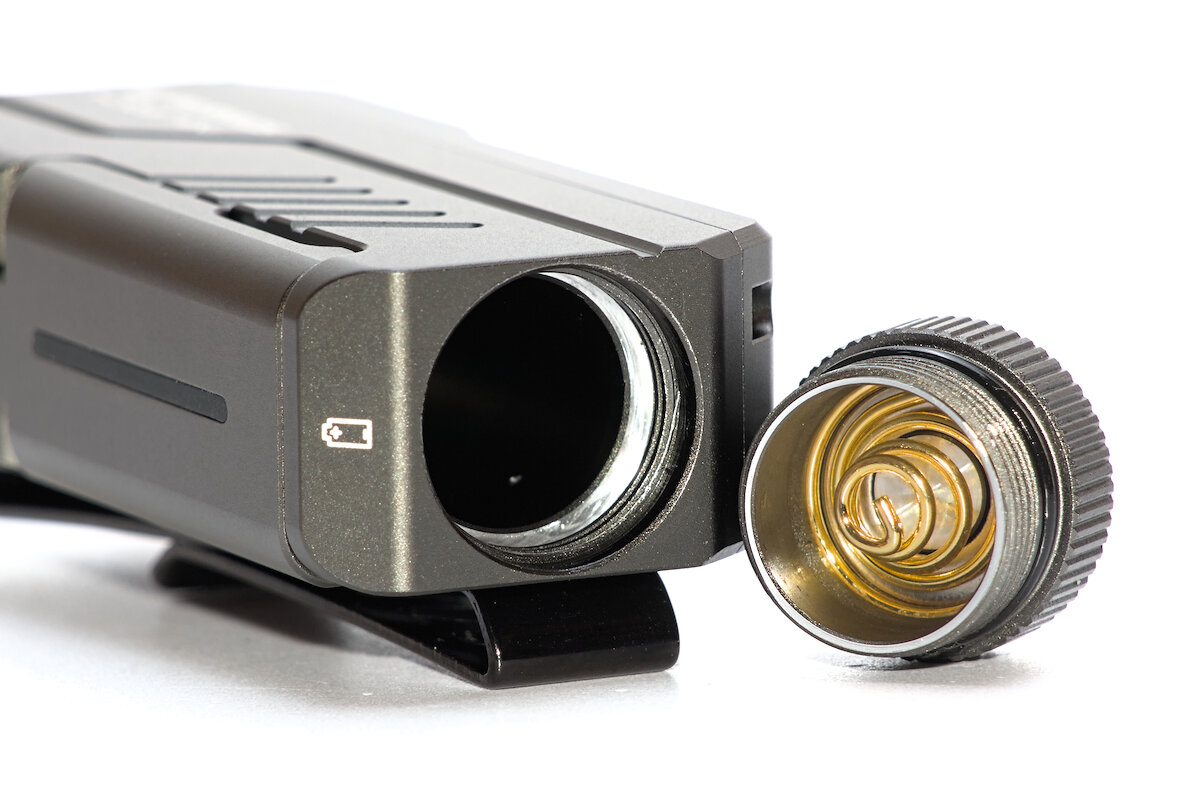
The positive terminal is a flat contact and features a mechanical reverse-polarity protection. As a result, only batteries with a raised positive terminal can be used.
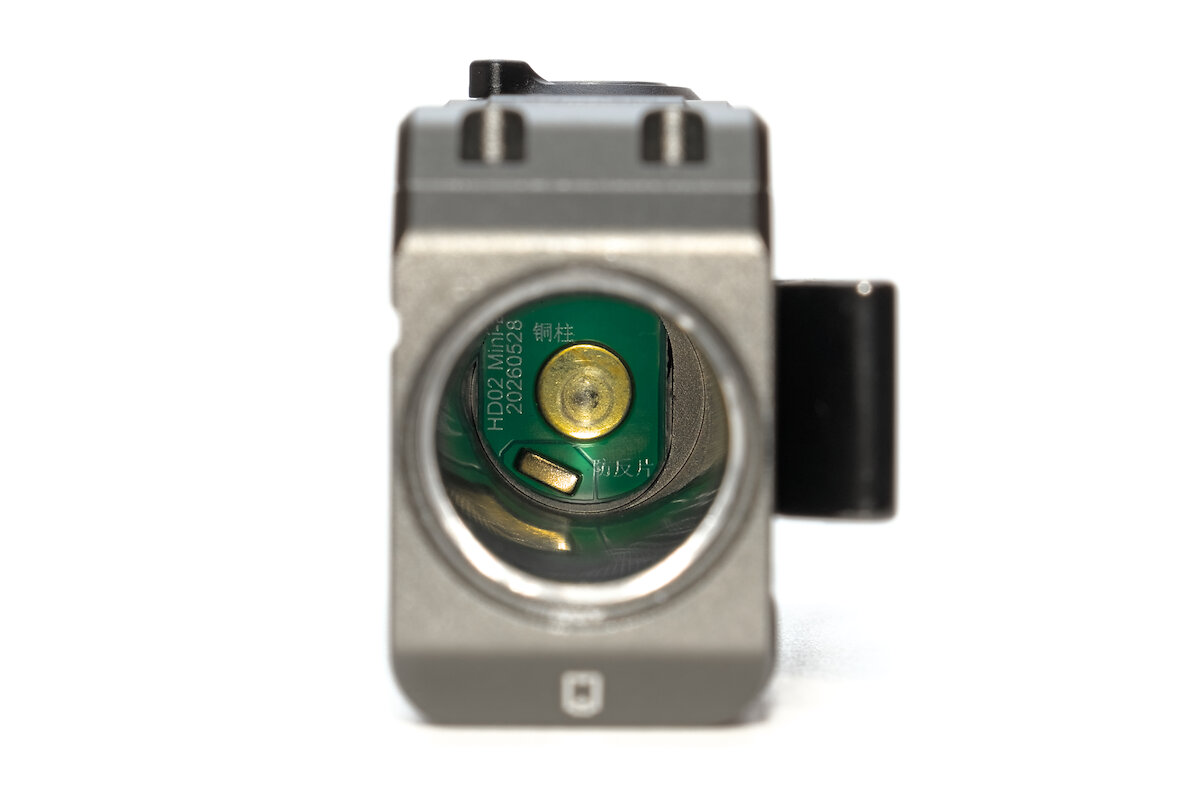
According to the manufacturer, the HD02 Mini has an IPX6 rating. This means it is “protected against powerful water jets”, which in practice usually means “can also be used in the rain”. So it’s best not to submerge the flashlight in water. It is also designed to withstand drops from heights of up to 1.5 meters.
User interface
The HD02 Mini is primarily operated using a button located on the side near the front of the flashlight. It is used to turn the flashlight on and off or change the brightness. Activating the button requires a force of around 900 cN and is accompanied by a distinct click.
The channel is selected using a rotary switch. It has settings for floodlight, spotlight and red light. Thanks to the small lever, the selected position can easily be identified without looking. The switch has enough resistance to prevent accidental changes but is still easy to operate. It uses Hall sensors, so a strong magnet can temporarily interfere with its operation.
In addition, the previously mentioned sliding switch provides a lockout to prevent the flashlight from being switched on accidentally.
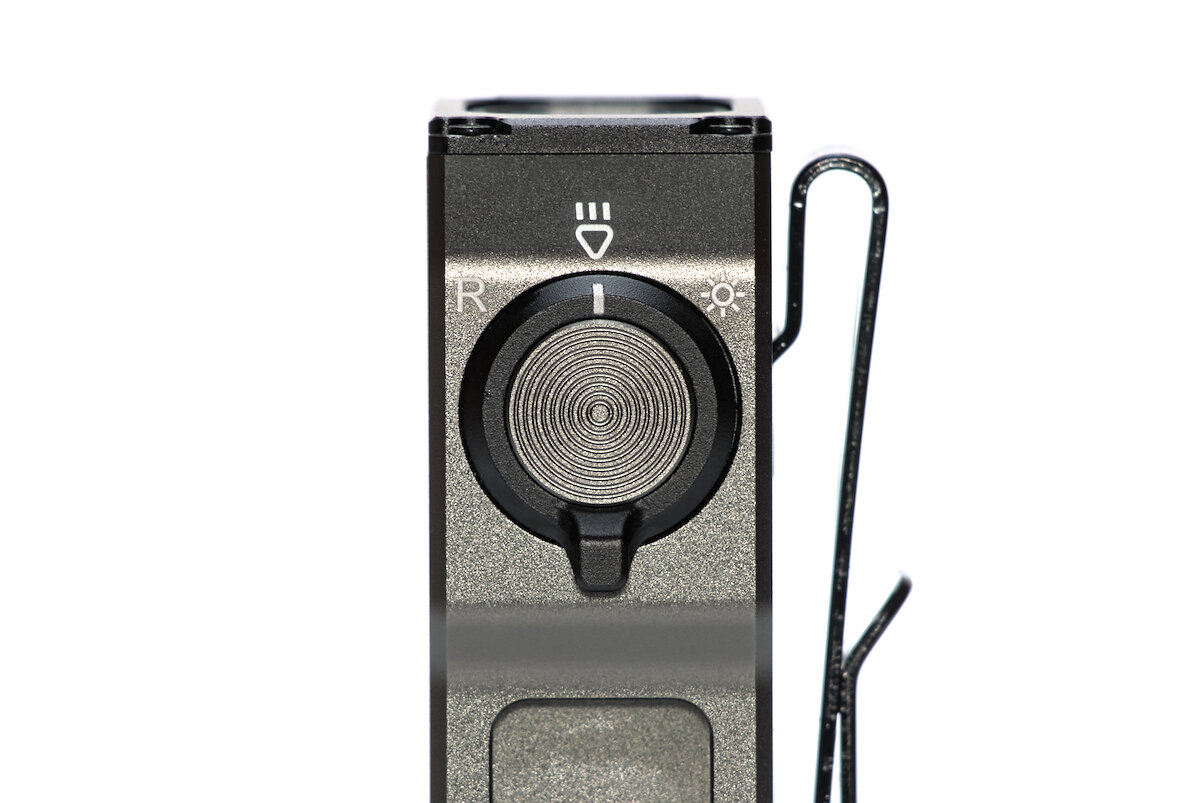
All channels are controlled in the same way. A short press of the button turns the flashlight on or off and holding the button adjusts the brightness in a smooth way. The HD02 Mini does not have fixed brightness levels.
| State | Action | Function |
|---|---|---|
| Off | 1 click | Turn on in previously used brightness |
| Off | 2 clicks | Turn on in maximum brightness |
| Off | 3 clicks | Turn on in Strobe |
| Off | Hold | Turn on in minimum brightness (Moonlight) |
| On | 1 click | Turn off |
| On | 2 clicks | Maximum brightness |
| On | 3 clicks | Strobe |
| On | Hold | Change brightness smoothly |
| Strobe | 1 click | Previous brightness or turn off |
| Strobe | 2 clicks | Change blinking mode: Strobe → SOS → Beacon |
| Lockout | Click | Two flashes of spotlight |
| Lockout | Hold | Momentary of selected channel at low brightness |
When switching between channels, the currently selected brightness is retained. Even after turning the flashlight off and back on, it starts at the last brightness level used. Holding the button down while the flashlight is off activates Moonlight mode. This is slightly dimmer than the lowest level of the normal ramping.
The side light automatically turns on when the wing is unfolded (provided a Li-ion battery is used!), but always at a medium brightness level. The brightness can then be adjusted smoothly using the button. To turn it off, simply close the wing or press the button. However, I noticed a minor bug during testing: if the brightness of the side light has been changed, folding the wing back in does not turn the flashlight off but instead switches to the front light.
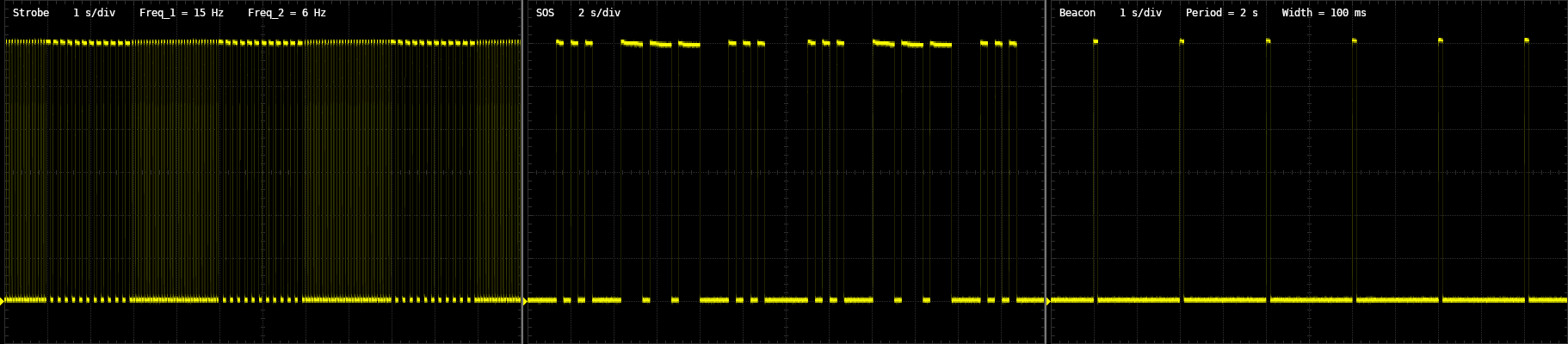
In Strobe mode, the frequency alternates between 6 and 15 Hz every two seconds to increase the disorienting effect. As is often the case, the SOS signal does not conform to the standard (“SOS” without a pause). In Beacon mode, the flashlight emits one brief flash every two seconds.
After the flashlight is turned on, the battery level is displayed on a bargraph for five seconds. The color of the indicator changes accordingly from green to orange to red. When the battery voltage reaches a critical level, the last LEDs continuously flash red while the flashlight is on. The indicator only works when using a Li-ion battery. With NiMH batteries, it simply flashes orange twice.
However, the indicator can be misleading: under load, the battery voltage drops significantly, which can result in a lower charge level being displayed than is actually the case. This value is then retained even after the battery voltage recovers. The indicator is only reset by briefly loosening the tailcap or connecting the charging cable.
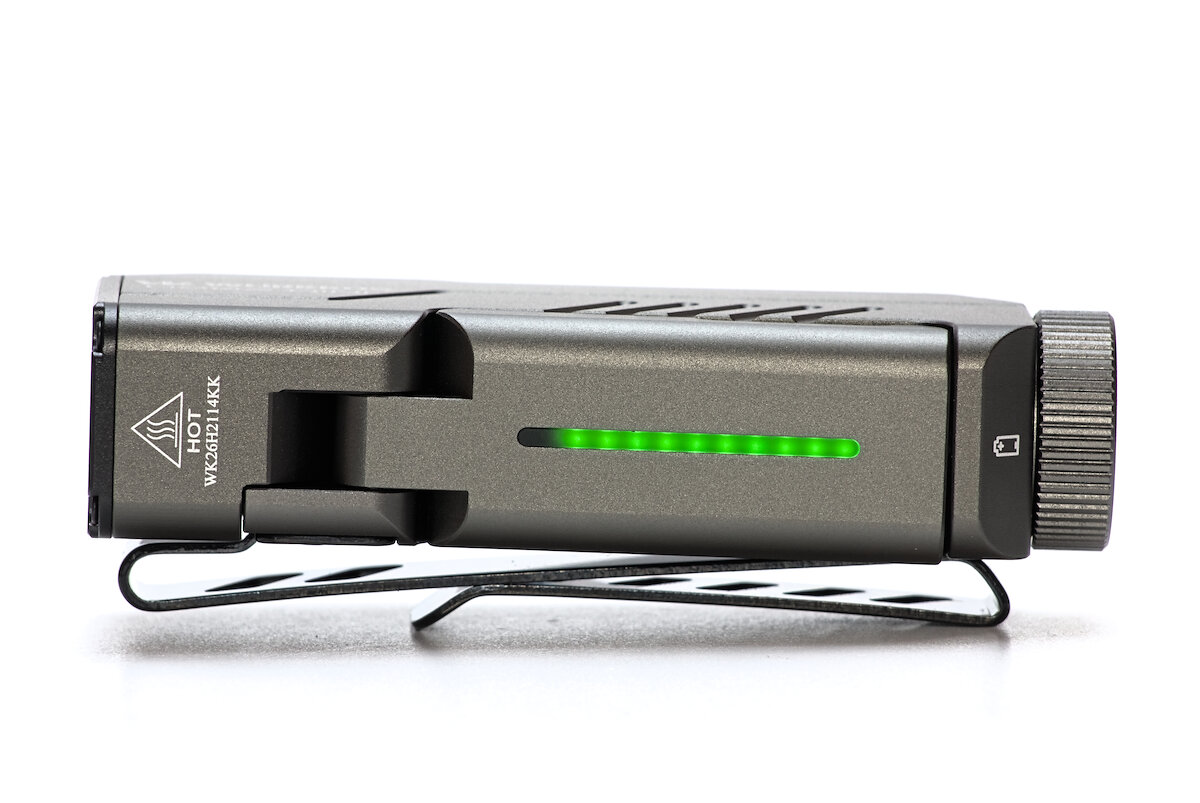
It’s a bit disappointing that the LEDs of the bargraph can’t be used as an additional channel. After all, there are eleven RGB LEDs installed there that would be excellent for use as effect lighting.
Despite its compact dimensions, the HD02 Mini feels comfortable in the hand. The button is positioned exactly where it should be under the thumb and can easily be found even in the dark. The position of the rotary switch can also be easily identified by touch. The only minor issue is that the sliding switch for the lockout is a bit too easy to move.
Illumination
Neither the manual nor the packaging specifies which LEDs are used. The website only provides information on the color temperature. It was only after contacting the manufacturer that I received further details about the LEDs used:
- Spot: LatticePower HM 6000 K
- Flood: LatticePower HF 4000 K
- Red: LatticePower HFL 620 nm
- Wing: 5000 K, CRI 90 (36× 3014)
The front LEDs are located together behind a TIR optic specially developed for this model. No additional glass lens has been used to protect the optic. While this makes the surface more susceptible to scratches, the plastic is more resistant to impacts and is less likely to break than glass. There is no anti-reflective coating.
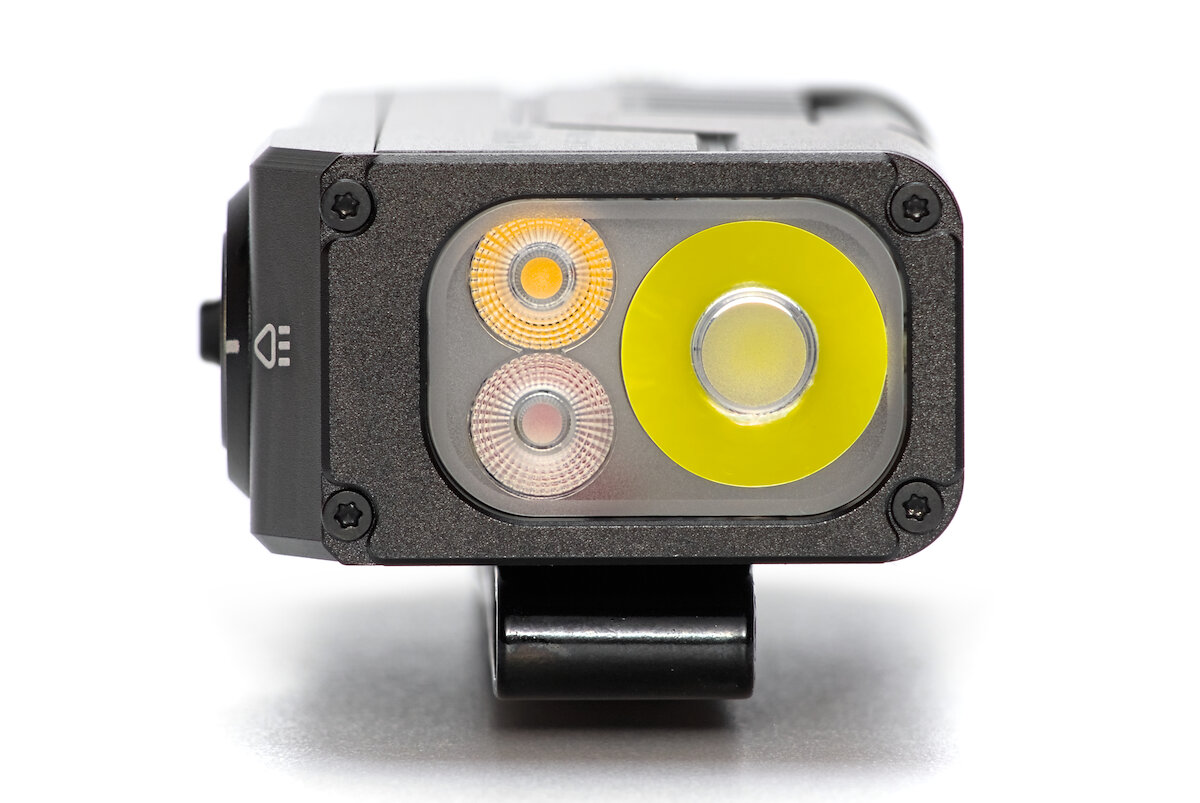



Although the spotlight and floodlight don’t quite match in color, they both excel at their respective tasks: the spotlight produces a tight, high-intensity beam that transitions into a faint spill (with a few rings). The floodlight lives up to its name, producing a soft, slightly center-weighted wall of light. The side light is even more floody, making it perfect for evenly illuminating areas at close range.


The differences become particularly apparent outdoors. Here, the small flashlight achieves an impressive throw distance with the spotlight. In general, however, it is better suited for short to medium distances.
Deep red light has the advantage of interfering less with the eyes’ dark adaptation than white light. This is because the rods responsible for vision in low-light conditions are significantly less sensitive to long-wavelength red light. The cones responsible for color vision, on the other hand, can still detect red light, so at a low light intensity, the eye’s adaptation to darkness is less disrupted.
However, with the LED used here, which has a wavelength of 620 nm, this advantage is somewhat reduced. At this wavelength, the rods are already stimulated enough to impair dark adaptation. On the other hand, it can be used at a very low brightness level.
![[Flood]](https://www.sammyshp.de/betablog/uploads/20260911_Wurkkos_HD02_Mini_P1090517_a.jpg)
![[Spot]](https://www.sammyshp.de/betablog/uploads/20260911_Wurkkos_HD02_Mini_P1090518_a.jpg)
![[Red]](https://www.sammyshp.de/betablog/uploads/20260911_Wurkkos_HD02_Mini_P1090519_a.jpg)
![[Flood]](https://www.sammyshp.de/betablog/uploads/20260911_Wurkkos_HD02_Mini_P1090529_a.jpg)
![[Spot]](https://www.sammyshp.de/betablog/uploads/20260911_Wurkkos_HD02_Mini_P1090530_a.jpg)
![[Red]](https://www.sammyshp.de/betablog/uploads/20260911_Wurkkos_HD02_Mini_P1090531_a.jpg)
![[Wing]](https://www.sammyshp.de/betablog/uploads/20260911_Wurkkos_HD02_Mini_P1090532_a.jpg)
![[Flood]](https://www.sammyshp.de/betablog/uploads/20260911_Wurkkos_HD02_Mini_P1090503_a.jpg)
![[Spot]](https://www.sammyshp.de/betablog/uploads/20260911_Wurkkos_HD02_Mini_P1090504_a.jpg)
![[Red]](https://www.sammyshp.de/betablog/uploads/20260911_Wurkkos_HD02_Mini_P1090505_a.jpg)
![[Wing]](https://www.sammyshp.de/betablog/uploads/20260911_Wurkkos_HD02_Mini_P1090506_a.jpg)
![[Flood]](https://www.sammyshp.de/betablog/uploads/20260911_Wurkkos_HD02_Mini_P1090481_a.jpg)
![[Spot]](https://www.sammyshp.de/betablog/uploads/20260911_Wurkkos_HD02_Mini_P1090482_a.jpg)
![[Red]](https://www.sammyshp.de/betablog/uploads/20260911_Wurkkos_HD02_Mini_P1090483_a.jpg)
![[Flood]](https://www.sammyshp.de/betablog/uploads/20260911_Wurkkos_HD02_Mini_P1090493_a.jpg)
![[Spot]](https://www.sammyshp.de/betablog/uploads/20260911_Wurkkos_HD02_Mini_P1090494_a.jpg)
![[Red]](https://www.sammyshp.de/betablog/uploads/20260911_Wurkkos_HD02_Mini_P1090495_a.jpg)
![[Wing]](https://www.sammyshp.de/betablog/uploads/20260911_Wurkkos_HD02_Mini_P1090496_a.jpg)
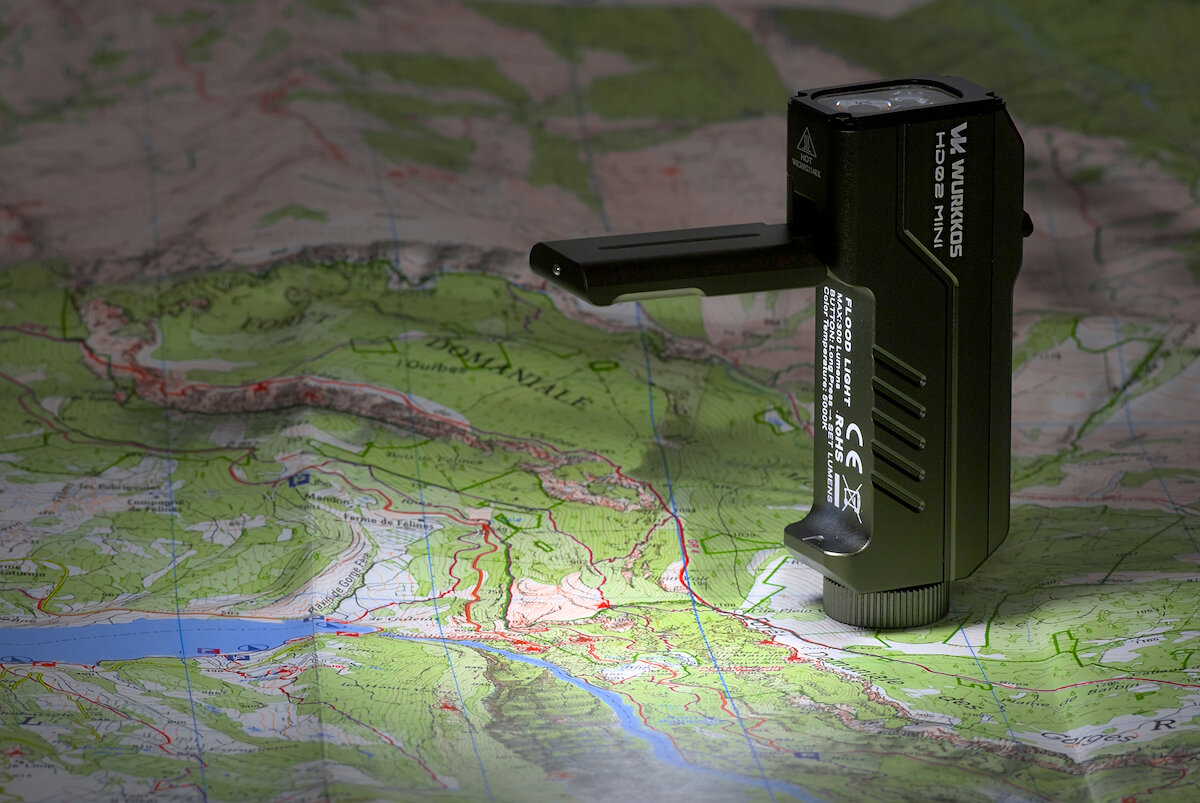
With its foldable side light, the HD02 Mini becomes a small work light. With a CRI of 90, the light offers decent color rendering. Combined with a small tripod, it can also easily illuminate an entire table.
Driver and runtime
The manufacturer provides no further information on the type of driver used. At least when operating with NiMH batteries, a boost converter must be used to achieve the required voltage. The figures for intensity and beam distance were taken from the manufacturer’s website, as they are not provided in the manual or on the packaging.
| Mode | Brightness¹ | Runtime¹ | Intensity¹ (Throw²) |
|---|---|---|---|
| Spot » Max | 1300 / 510 / 170 lm | 2 min + 32 min + 24 min | 10375 cd (204 m) |
| Spot » Min | 15 lm | 17:17 h | 125 cd (22 m) |
| Spot » Moonlight | 0.5 lm | 60:22 h | 2.8 cd (3 m) |
| Flood » Max | 400 / 220 lm | 30 min + 35 min | 585 cd (48 m) |
| Flood » Min | 18 lm | 17:06 h | 40 cd (13 m) |
| Flood » Moonlight | 0.5 lm | 60:22 h | 0.3 cd (1 m) |
| Red » Max | 50 lm | 3:28 h | 204 cd (29 m) |
| Red » Min | 6 lm | 21:51 h | 21 cd (9 m) |
| Red » Moonlight | 0.5 lm | 42:22 h | 0.8 cd (2 m) |
| Wing » Max | 320 / 210 lm | 3 min + 1:28 h | 172 cd (26 m) |
| Wing » Min | 12 lm | 17:26 h | 5.8 cd (5 m) |
Li-ion battery
¹ According to manufacturer ² ANSI FL1
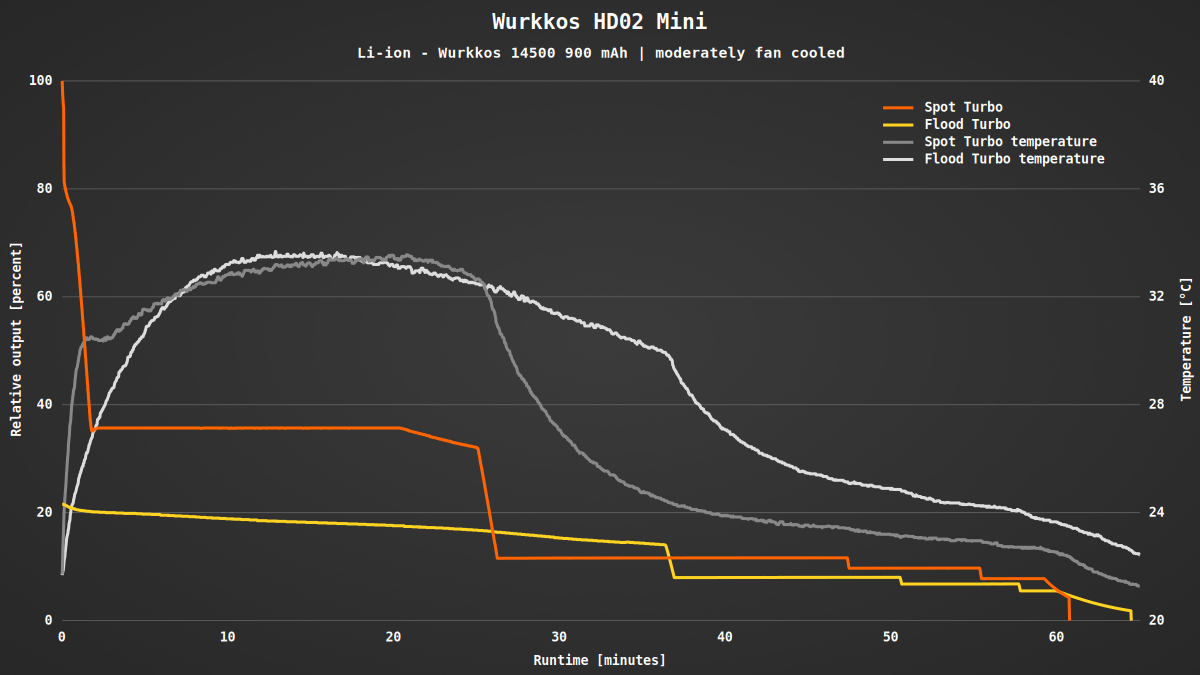
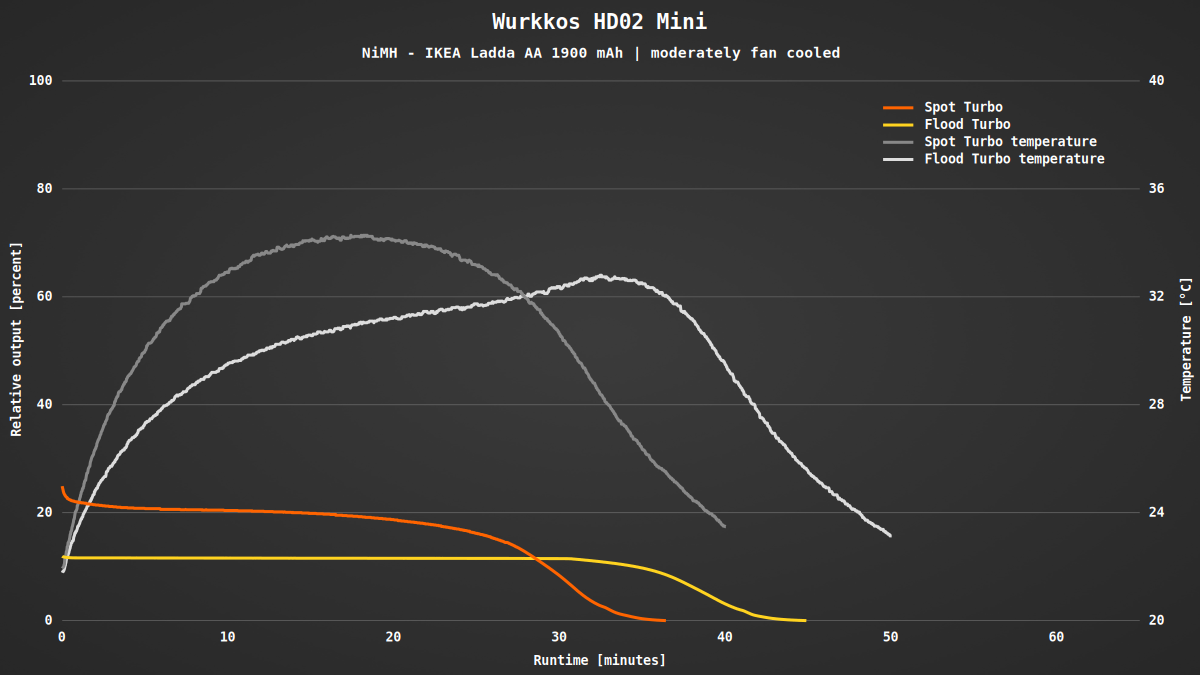
Since there are no fixed brightness levels, I only measured the runtime at maximum brightness. During operation, there are several small step-downs. With the floodlight, a gradual decline in brightness can be observed from the beginning. This could indicate the use of a linear regulator.
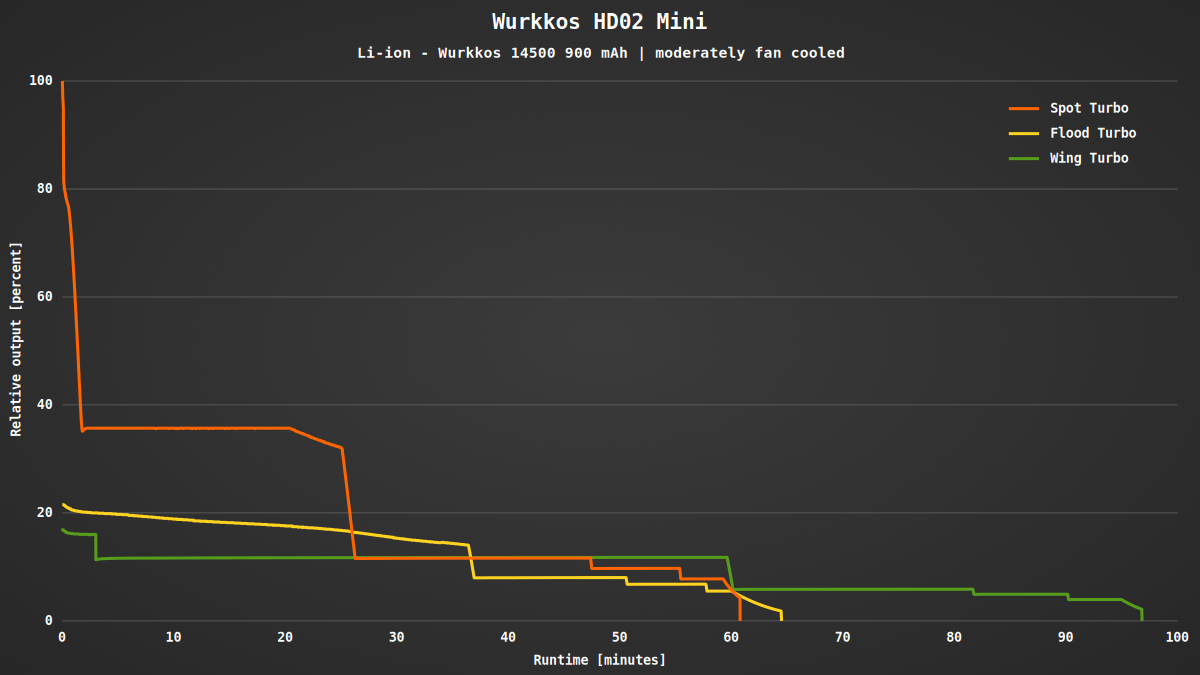
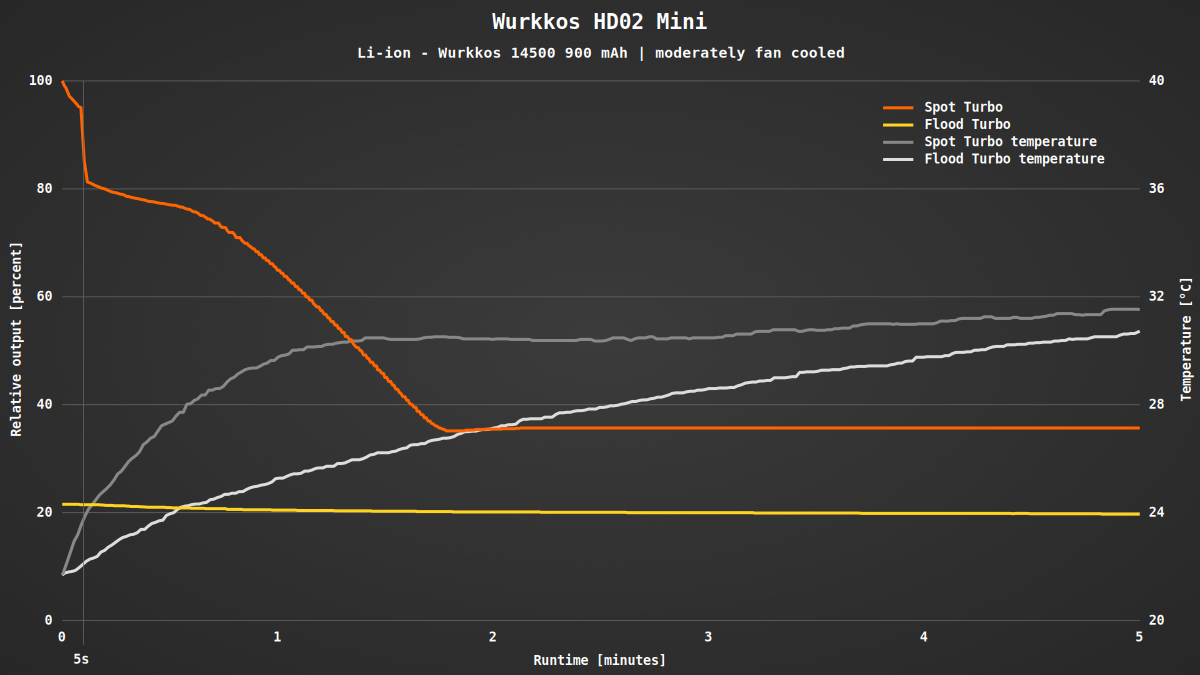
With the spotlight, brightness in Turbo mode is reduced by almost 20% after only five seconds. This appears to happen regardless of temperature, which reaches only slightly above 30 °C even after extended operation.
As expected, using NiMH batteries results in significantly lower runtime and brightness. This is due to the lower capacity and lower performance of NiMH batteries (around 2.3 Wh for Eneloop) compared with Li-ion batteries (3.3 Wh for the model included with the flashlight).
| Mode | Brightness¹ | Runtime¹ | Intensity¹ (Throw²) |
|---|---|---|---|
| Spot » Max | 350 lm | 27 min | 2033 cd (83 m) |
| Spot » Min | 16 lm | 7:32 h | 135 cd (23 m) |
| Spot » Moonlight | 0.5 lm | 32:15 h | 2.5 cd (3 m) |
| Flood » Max | 240 lm | 29 min | 367 cd (38 m) |
| Flood » Min | 20 lm | 5:54 h | 41 cd (13 m) |
| Flood » Moonlight | 0.5 lm | 31:15 h | 0.3 cd (1 m) |
| Red » Max | 50 lm | 45 min | 207 cd (29 m) |
| Red » Min | 6 lm | 11:11 h | 22 cd (9 m) |
| Red » Moonlight | 0.5 lm | 27:46 h | 0.7 cd (2 m) |
| Wing » Max | 240 lm | 27 min | 136 cd (23 m) |
| Wing » Min | 12 lm | 7:18 h | 6.3 cd (5 m) |
NiMH battery
¹ According to manufacturer ² ANSI FL1
The brightness curve of the Turbo mode resembles the voltage curve of a NiMH battery. With the floodlight and side light, on the other hand, the brightness remains relatively constant for a longer period.
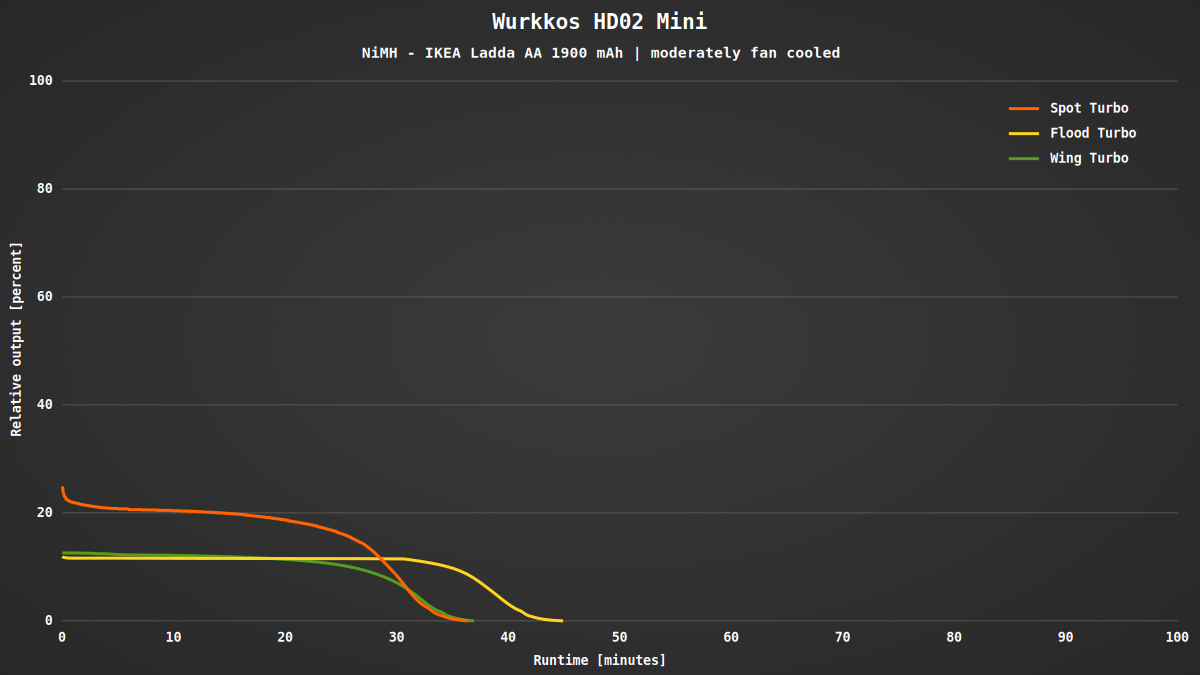
The temperature is at a similar level to that observed when operating with a Li-ion battery, even though lower brightness is achieved. This could indicate some inefficiency in the boost converter.
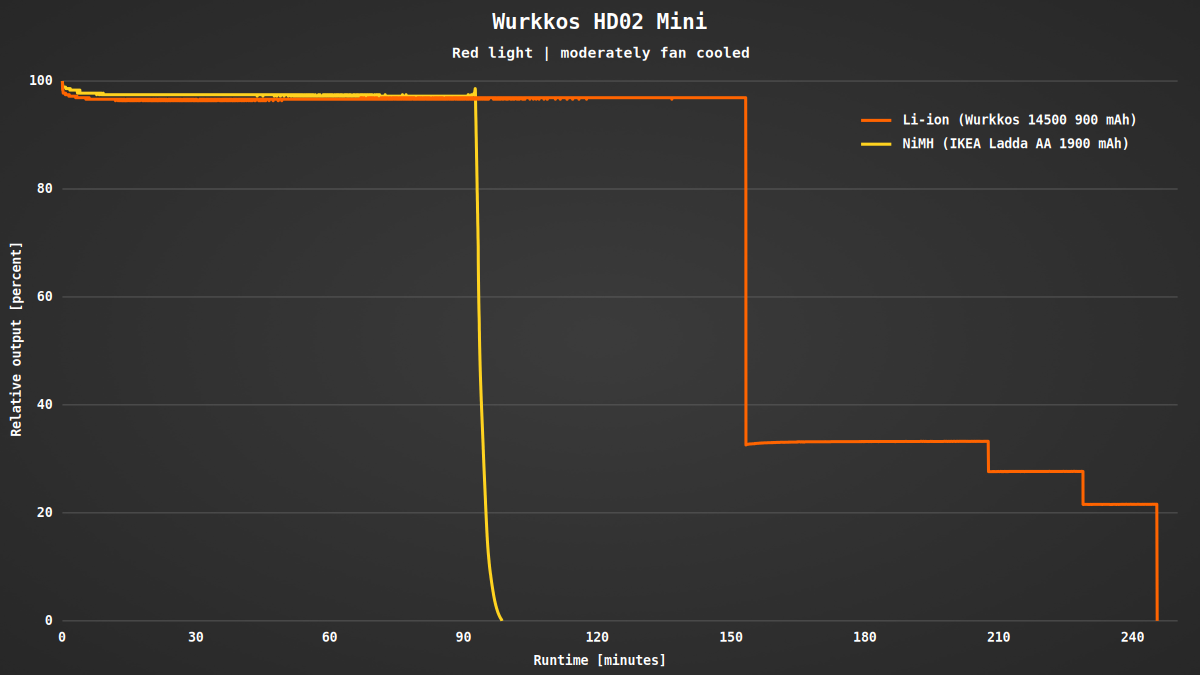
The red light is an exception: here, the brightness is identical for both battery types. The only difference is the runtime.
The thermal imaging camera provides a look at the flashlight’s heat distribution when operating with a Li-ion battery without additional cooling. The temperature of the wing is particularly interesting, as it could not be measured during the runtime test. Temperatures of up to 50 °C are reached there.
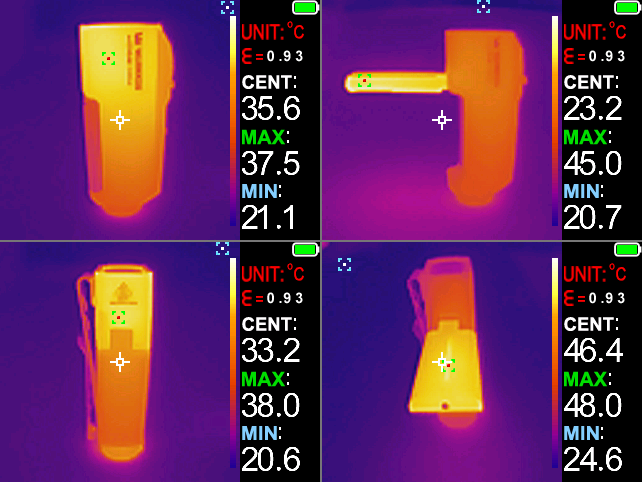
Thermal images with Zoyi ZT-R02
When operating with a Li-ion battery, the floodlight, red light and side light show clean regulation without PWM or ripple. The spotlight is different. Here, three distinct regulation ranges can be identified depending on the selected brightness: in the lower brightness range, no modulation can be measured. From medium brightness up to the highest regular level, PWM with a frequency of 48 kHz is used (slightly distorted in the diagram due to the sensor’s response time). Between the highest regular level and Turbo mode, there is another range in which PWM is also used.
With a NiMH battery, slight ripple can be measured at medium brightness, but it is negligible in practice. The speed of the brightness adjustment is also different: while a full ramp with a Li-ion battery takes around three to four seconds, it takes only about one second with a NiMH battery.
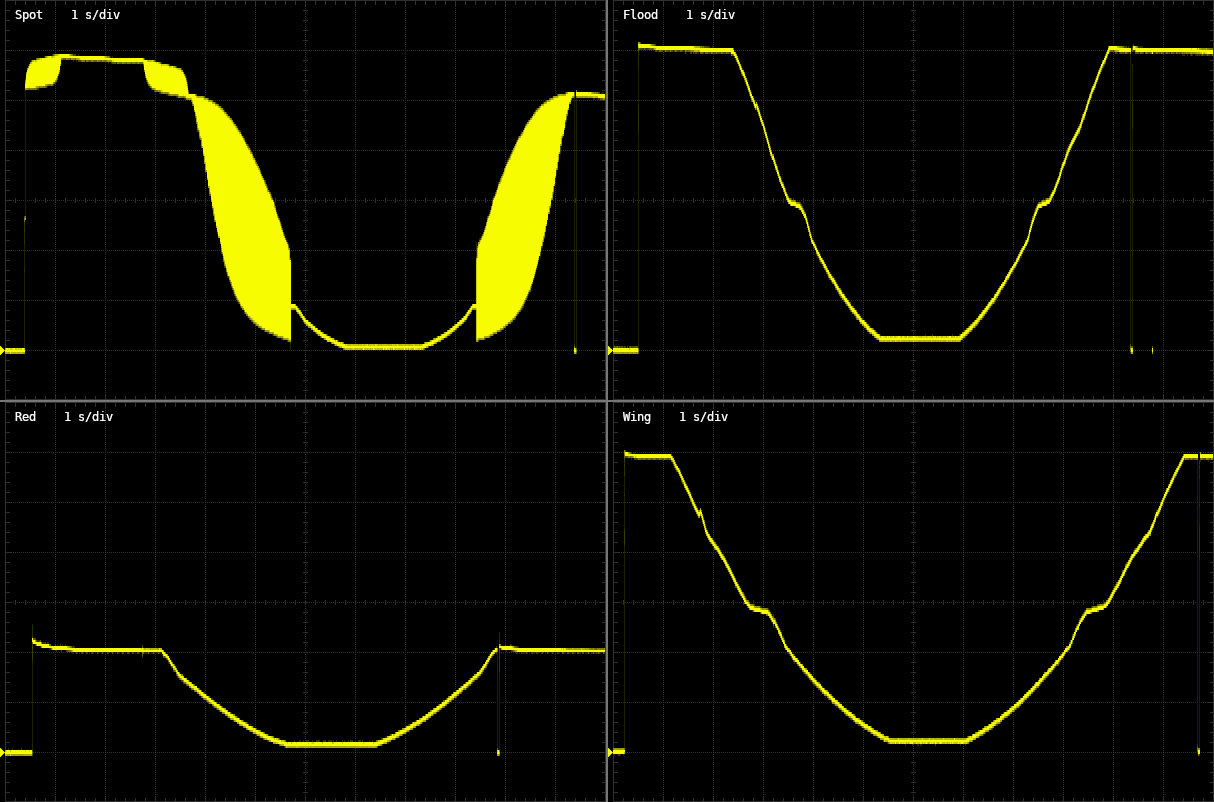
Ramping with Li-ion battery
If the flashlight is operated with white light in Turbo mode, switched off and then turned on in red light mode after five seconds, it briefly shines significantly brighter than in regular Turbo mode. It takes about two seconds for the driver to deliver a stable current.
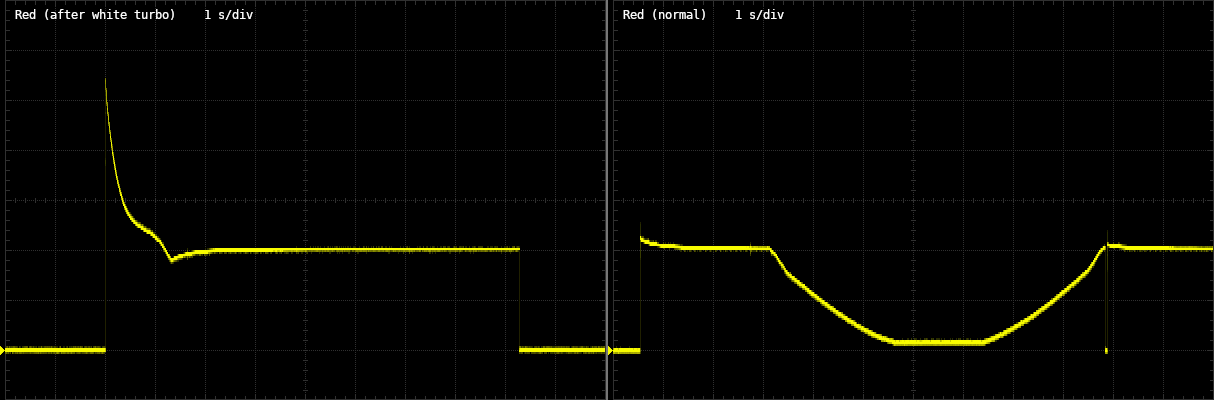
Due to the poor accessibility of the contacts, it was not possible to measure the current directly. Likewise, the cutoff voltage protecting the battery from over-discharge could not be determined. At the end of the runtime tests, however, the battery voltage after automatic shutoff was between 2.8 and 3.0 V for Li-ion batteries and 1.0 V for NiMH batteries.
Conclusion
For those who find the Wurkkos HD02 too large and heavy as an EDC flashlight, the Wurkkos HD02 Mini is a suitable alternative. Despite its significantly more compact dimensions, it doesn’t skimp on features: in addition to the powerful spotlight, there is a warm-white floodlight and a red light. The foldable wing for use as a small lantern is also included. Details such as the rotary switch, the long two-way clip and the magnetic tailcap with tripod thread complete the package.
With so many features, minor firmware bugs aren’t entirely surprising. However, I do consider it problematic that the adhesive holding the diffuser on the wing can come loose at high brightness. A 660 nm red light would also have been nice.
Overall, I still consider the Wurkkos HD02 Mini a successful EDC flashlight. With its wide range of features, it proves to be a practical companion for everyday use.