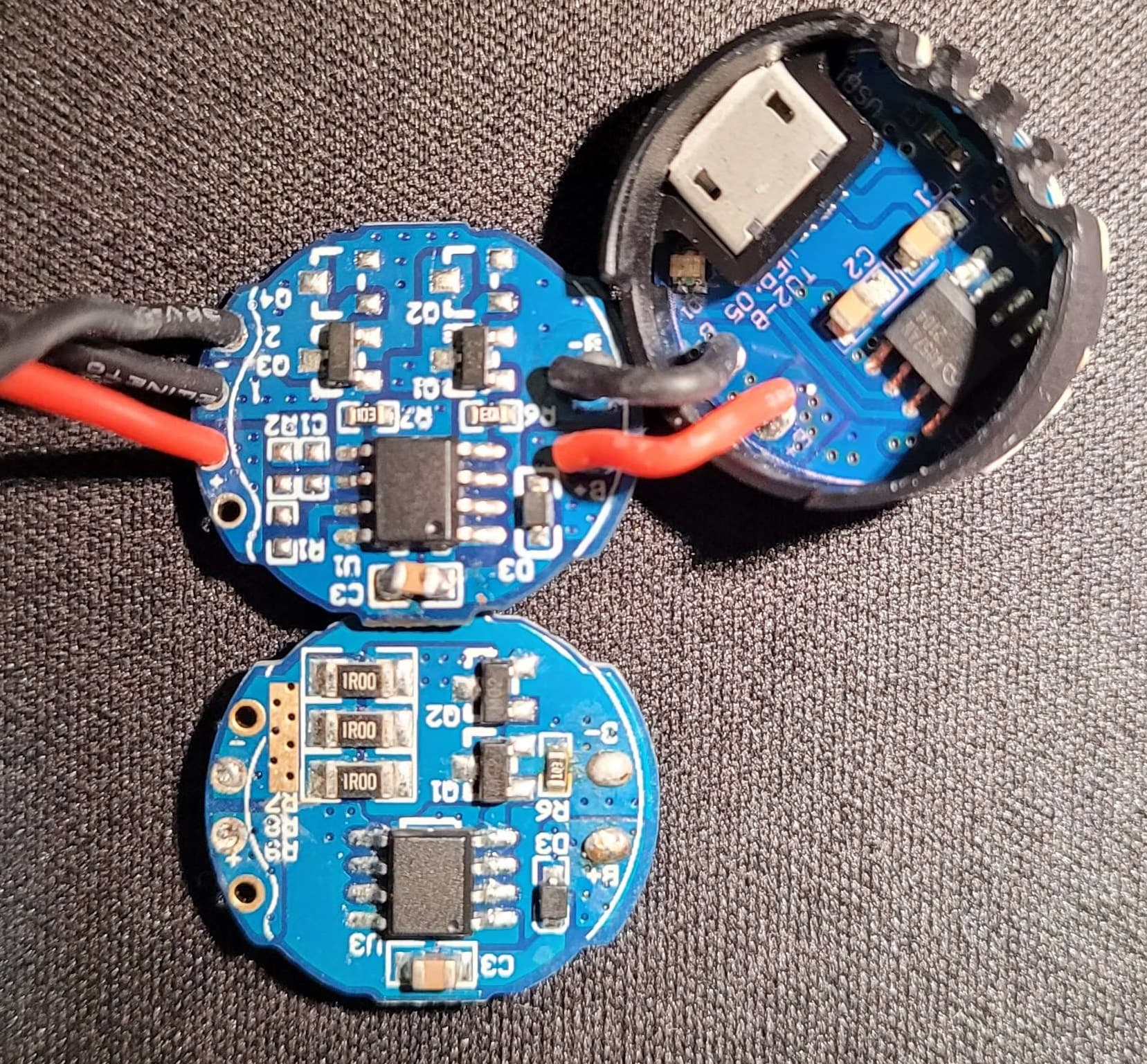
The reason I opened this up is it was getting hot while it was off so I was looking for a short. If there are any other possible reasons I’m all ears.
For context I do not have technical knowledge about electronics but have itchy fingers. I have a D25LR and a D10. The D25LR seems to have a shorted capacitor. I looked at the PCBs of both lights and the capacitor seems similar enough and in the same place for me to think it could just be a simple swap.
Is there a better approach for this or a way to test the capacitors value/capacity? I only have a soldering iron and a DMM if that matters. How high is the risk of this malfunctioning while it’s on my head?
Top D25LR, suspected shorted capacitor is C3 at the bottom
Bottom D10
Besides type and form-factor, you need to also match the capacitance; it should be written on the part itself, but from the pic I can’t see it; perhaps asking the flashlight manufacturer?
If you can’t obtain it from them, then perhaps an approximate value would serve; I know there are rules-of-thumb for choosing a capacitor’s value depending on the circuit, but my more specific knowledge is long out of date and was never flashlight-specific to begin with, but perhaps one of the electronics wizards here (@thefreeman, @gchart and possibly others) could help you.
Did you check the short with your dmm in resistance mode ?
If it’s indeed shorted then replace it with a 1uF >=6.3V 0805 x7r/x5r MLCC. Or you can take it from the other board if you do ’t need it.
C3 is for MCU +IN. Its about 1uf. Replace it with any same size cap from similar low voltage application broken device. Anyway it should work without it
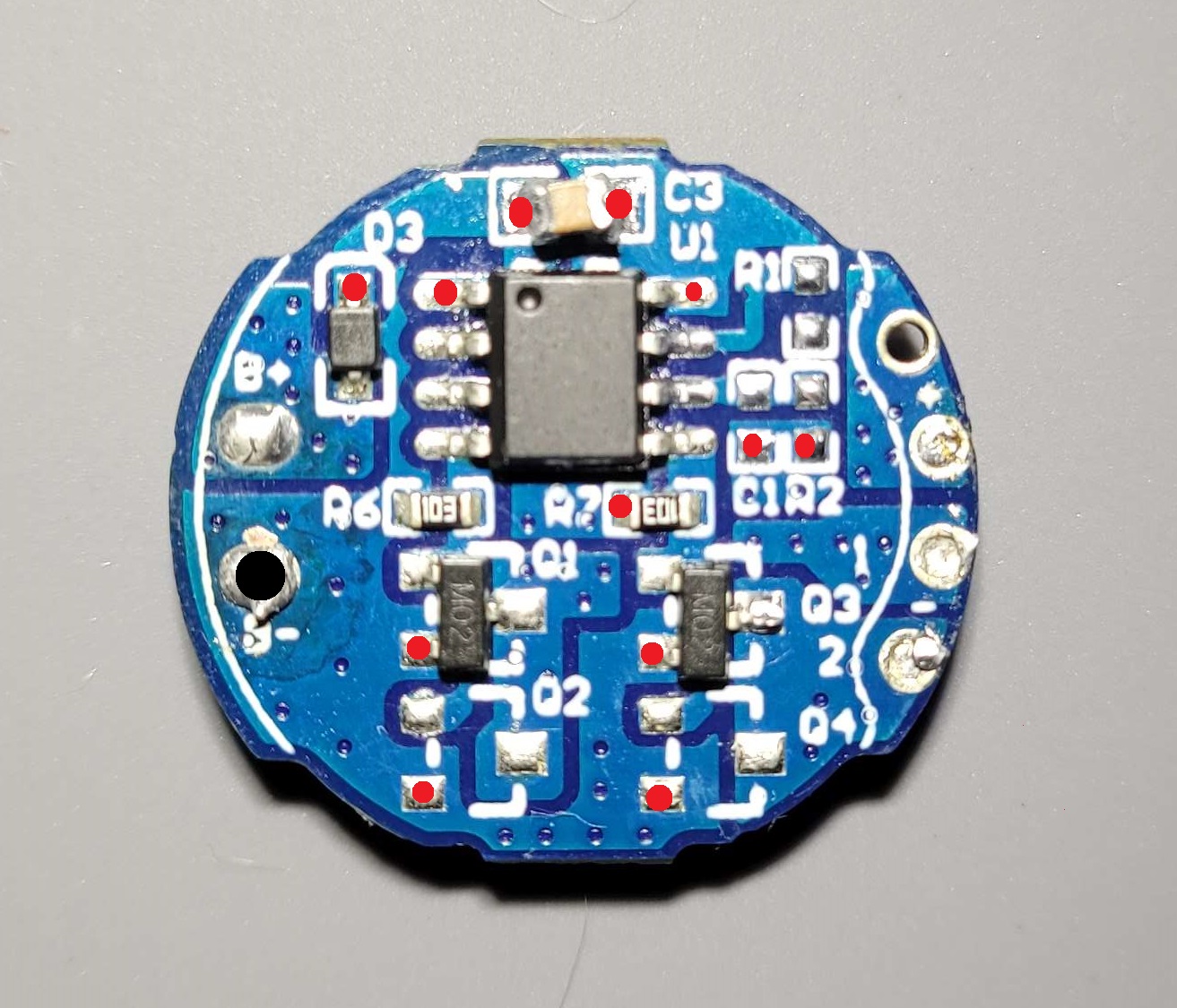
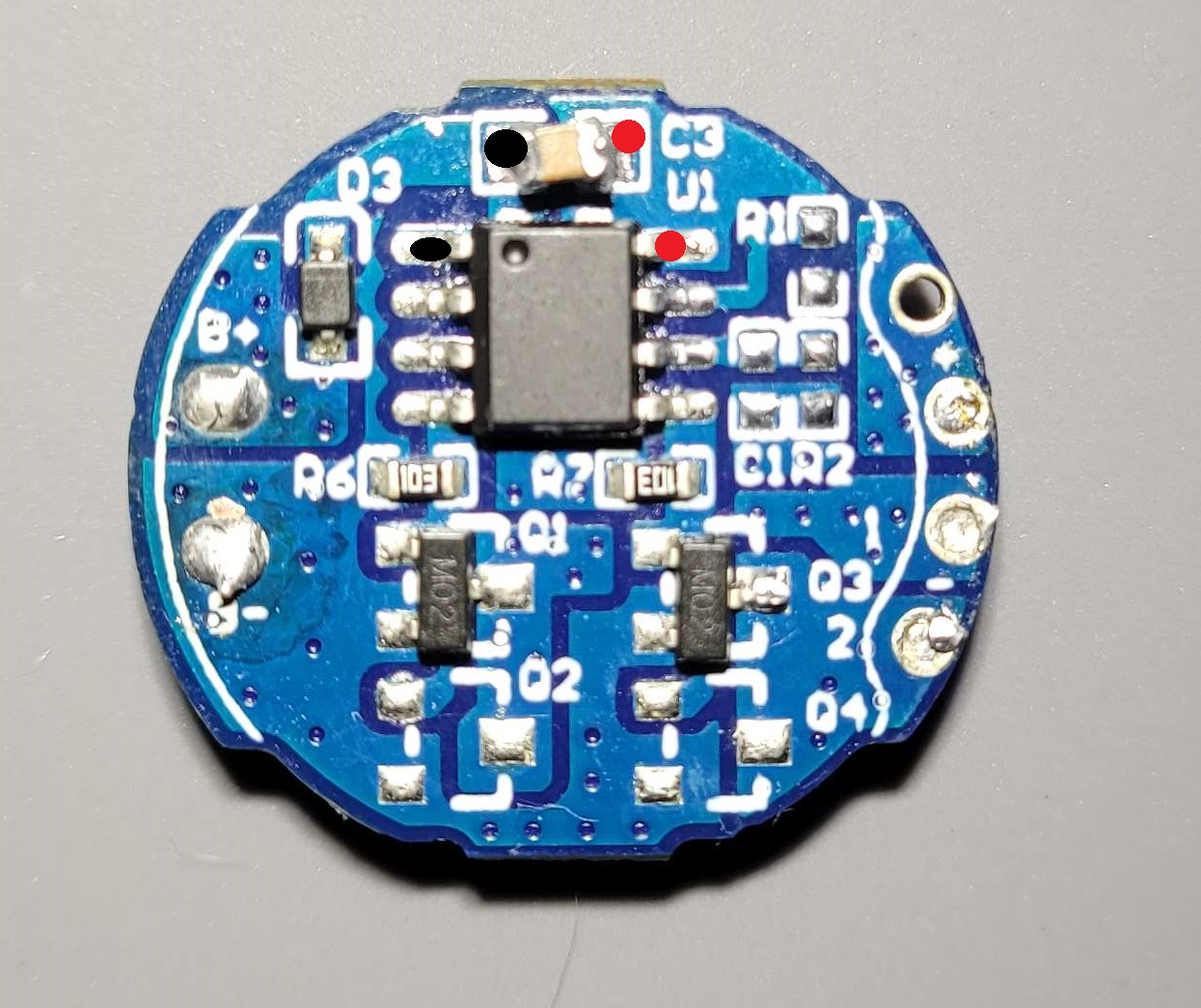
I tried to remove the capacitor and it seems to be fine after all. The pads on the other hand are shorted for some reason. I guess I need to look elsewhere. Any tips are greatly appreciated. All I can think of right now is throwing this in the oven for a reflow.
IME it’s problematic(*) to test components soldered to a circuit as the rest of the circuit interferes with the measurements, as already happened when you first tested C3. I know it’s a PITA, but it’s better to desolder D3 and then test it.
(*) unless you do it at specific test points put there for that purpose by the manufacturer and with the expected test values (generally voltages) indicated.
EDIT: @thefreeman posted while I was editing this; in the general case my advice holds, but re: flashlights you better listen to him.
I removed stock d10-25 drivers and replaced with custom ones, I still have few oem drivers left laying around, if you are in USA I can mail you some. thou i’m not sure how to tell them apart, d10 from d25.
Thanks for the offer but unfortunately not in USA. The D10 driver I have above is also working and does not encounter the short. I might actually just swap it and turn it to a somewhat d25s light just so it is functioning. Sad about losing the 2 channel though.
Do I need to remove the resistors on the LED PCB to turn the other LED white? Guess I need to bridge those if I removed them right?