The UV acrylic glue that I have (Kafuter) cures well and fast, but the surface often remains tacky even after long curing. I was told it is the oxygen that outcompetes radicals forming.
Apparently it’s quite common and DIY solutions range from changing glue, changing UV light, covering it with plastic wrap and than curing, water on top, washing the uncured part with solvents, and even curing in argon/nitrogen.
Could anyone comment on this from experience and make a suggestion?
I think it’s kind of the nature of this type of glue…even silicone caulking can dry tacky or grippy, it’s one of the reasons I’m planning to use it to add anti-roll nubbins to my flashlights, similar to the original suefeuer Nitro G2’s. I imagine that a very thin layer of runny optical grade varnish, maybe something similar to thin epoxy or nail polish (not that, but similar) would probably coat the surface with the hard layer that you might like. I get what you’re looking for, as the stock domes on the 519 are actually quite hard and crumbly brittle. MAYBE similar to silica gel, it needs to dry out and have more “moisture” wicked out of it?
Just so as to be clear, the issue is occurring when you’re using an adhesive as a coating/varnish?
I’ve used the generic “UV Resin” for the binder and/or top coat of strontium aluminate glow in the dark powder, and I’ve never had an issue with curing.
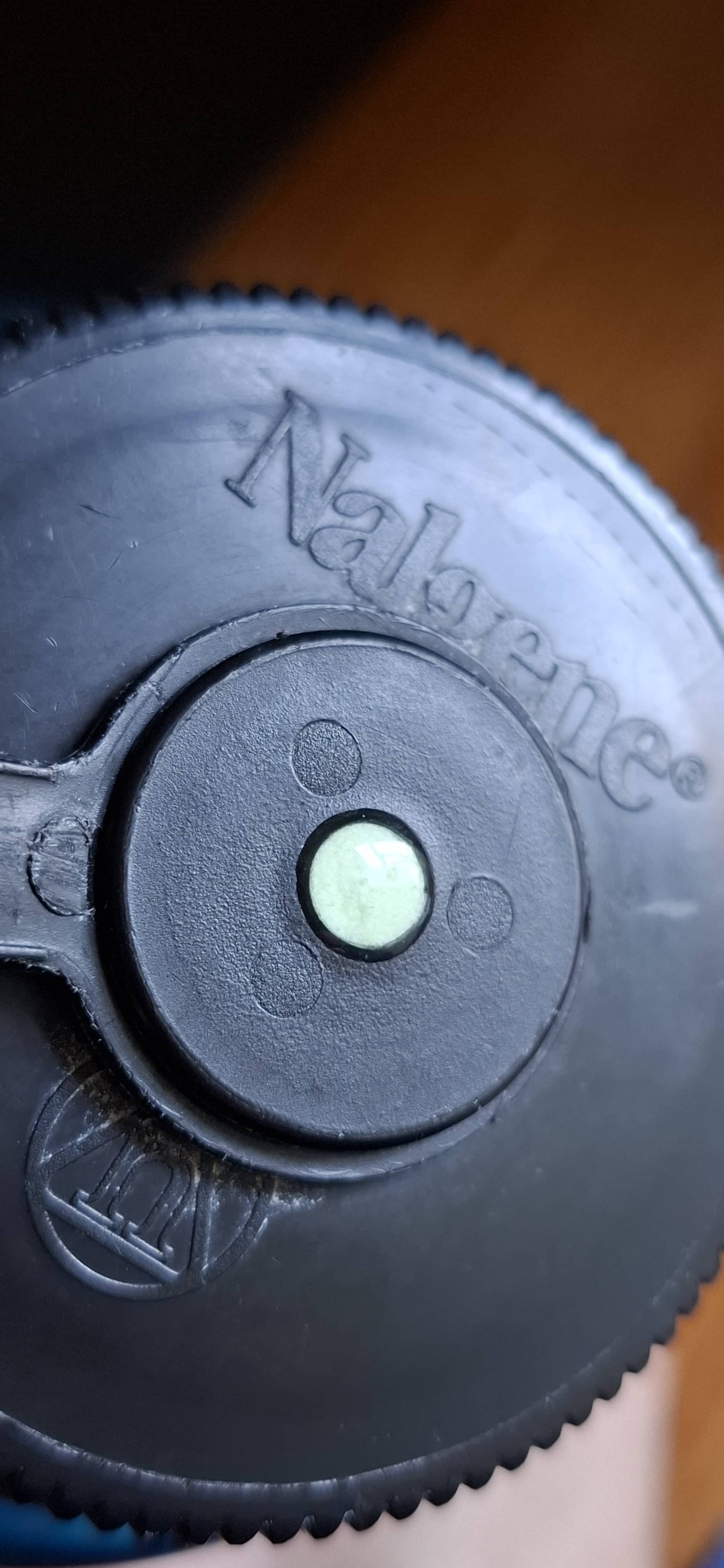
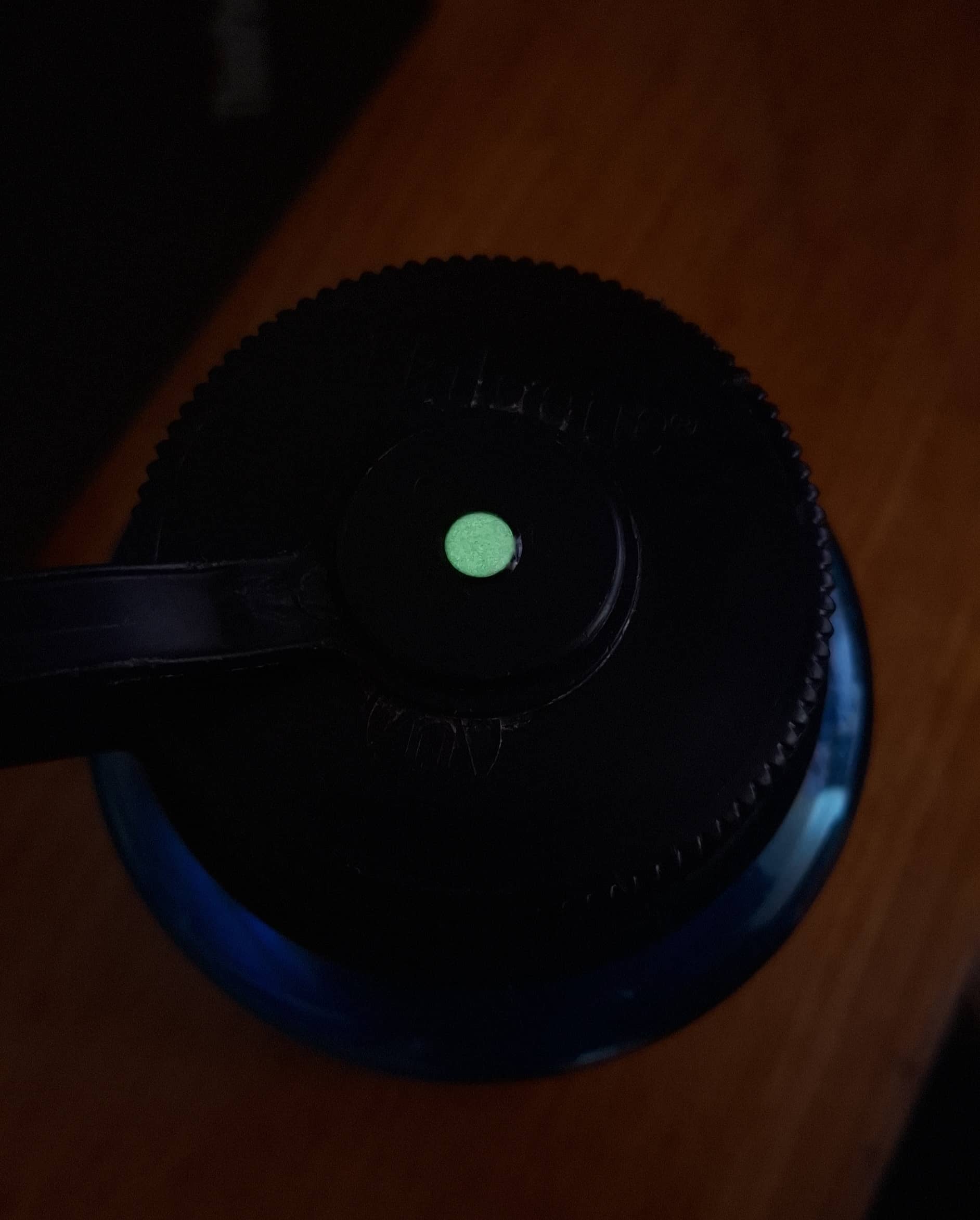
Example to hand, I filled the hole on the top of my Nalgene water bottle with GITD and overcoated in the above type of UV resin about 6+ years ago, still going strong, really helps to find it at night.
Kind of yes - or more often to make a joint stronger, it’s ‘welding’ on the outside of the joint. The joints are fine, it’s just the surface that remain sticky for a long time - more of an esthetics issue.
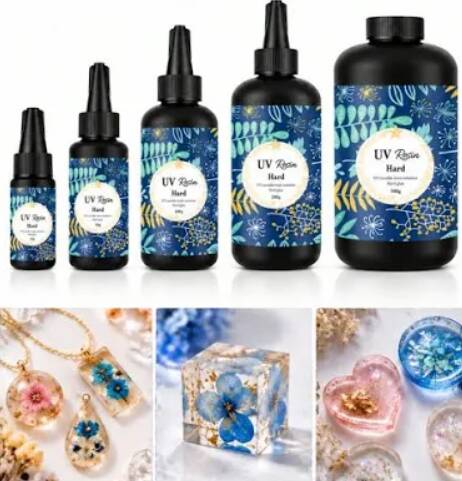
I’ve seen those resins bottles you pictured, but went for Kafuter. I’ll get one of these this week and see if there is a difference.
How do you cure yours? I use Sofirn SF16: 365 mm, almost 1 W, which has a filter. It may be that it’s underpowered or lacks some wavelengths, but it’s not the penetration that’s an issue - it’s the surface stickiness,
p.s. Do you mix the GITD powder with resin or pack it and overcoat it? Have you found the powder that lasts long enough?
Ah I see. Not sure what sort of structural strength the resin I’m using has, perhaps it isn’t suitable as an adhesive, it’s held up well on lights and the nalgene marker though.
Honestly it’s been so long that I’ve forgotten exactly how I did it, absolutely no magic, probably my 8+ year old convoy S2(+?) with some sort of 365nm nichia LED. I’ve also had success blasting this resin with the convoy then leaving in the sun for a few hours to make sure it’s properly set.
Combination, I’ll often use 2 part epoxy nowadays but find the powder settles out a bit while the resin is curing. I know @RichH has had success making GITD beads using silicone moulds and UV lights with UV reactive resin.
For the Nalgene, it would have been clear acrylic binder or UV resin mixed with some green GITD powder, followed by a domed blob on top a few days later once it’s fully cured/set.
To my eyes, the glow is visible all night if it’s been exposed to outdoors daylight, no special charging required. If you’re in the market for “the best” GITD materials, I highly recommend www.technoglowproducts.com.
For maximum performance, go with green or aqua colours in the larger particle sizes (minimum 50μm), however, the larger the particle size the less uniform the glow will be.
Depending on what surface you’re applying the glow to, it’s worth using some sort of white primer paint to 1) help adhesion and 2) help reflect the glow in the dark.
I generally prefer aqua or blue nowadays as I feel like it has slightly lower initial brightness than green but fractionally better glow endurance, in addition, the aqua and blue are both “unusual” GITD glow colours so I feel they look nicer than the nerdy old fashioned GITD green.
Yes, good to flag that these are not food safe chemicals.
I generally abide by the rule that nothing from Amazon, Temu, generic eBay, AliExpress etc is food safe, I’m guilty of using an Aliexpress titanium spork while camping occasionally though!
Using any kind of resin nowadays, I’ll have a pair of nitryl gloves on, and none of these hobby bits are carried out in the kitchen.
That being said, I’d rank vehicle exhaust fumes on my bike ride more hazardous to my health than the tiny nipple of mystery Chinese resin on the outside of a water bottle that I’m drinking from.
Only had that problem with the low viscosity UV resin I have, and it wipes off with alcohol.
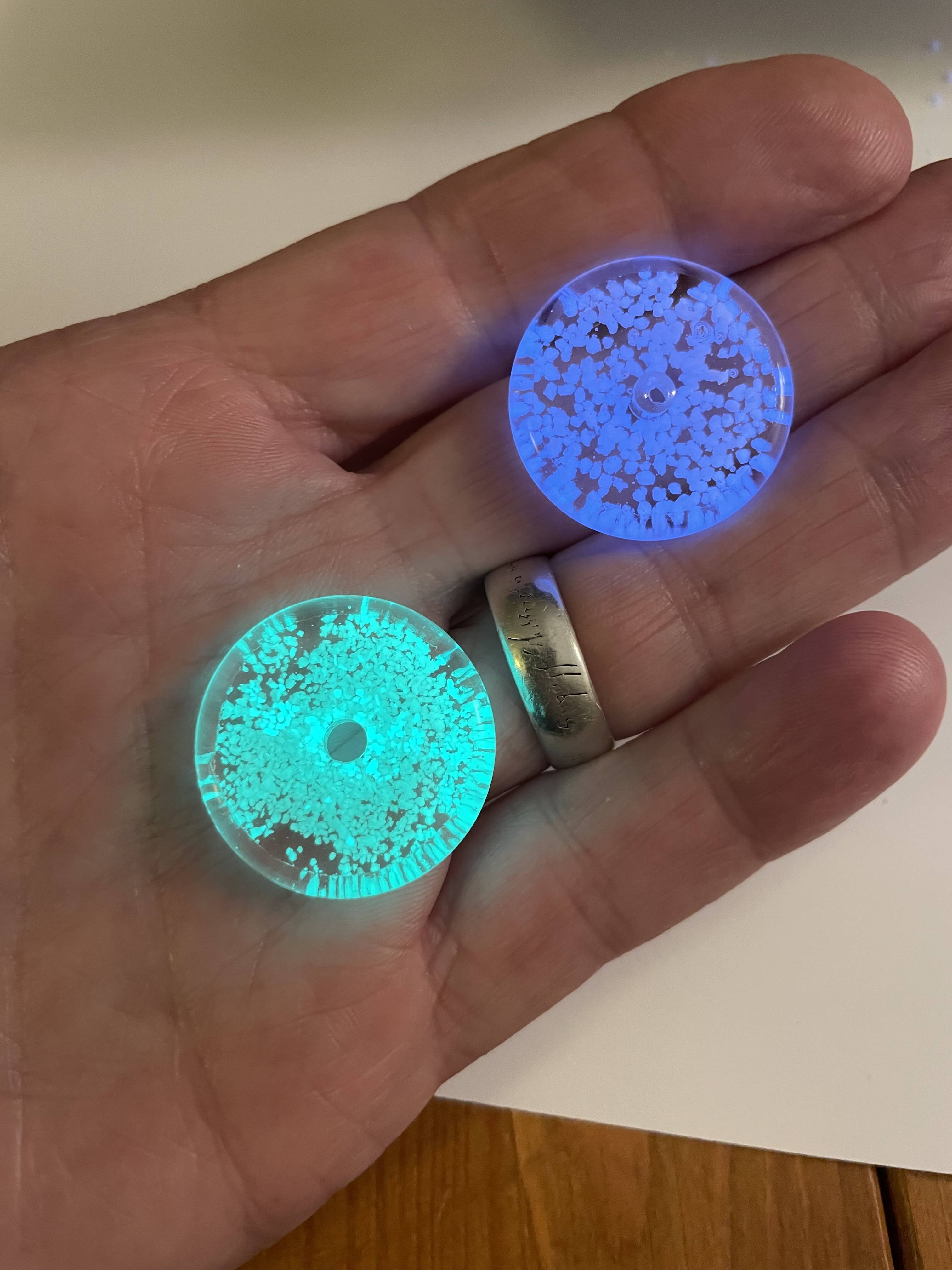
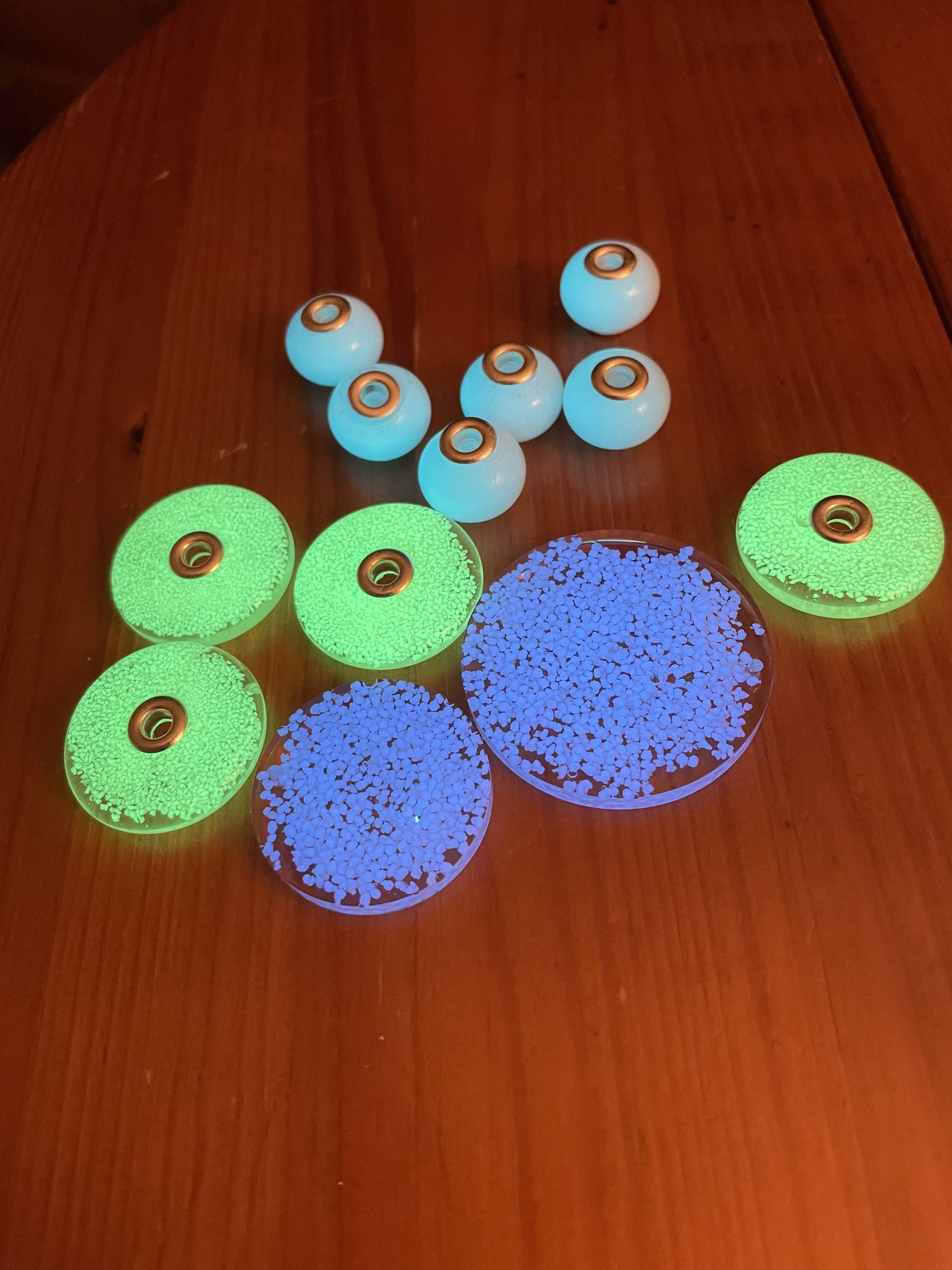
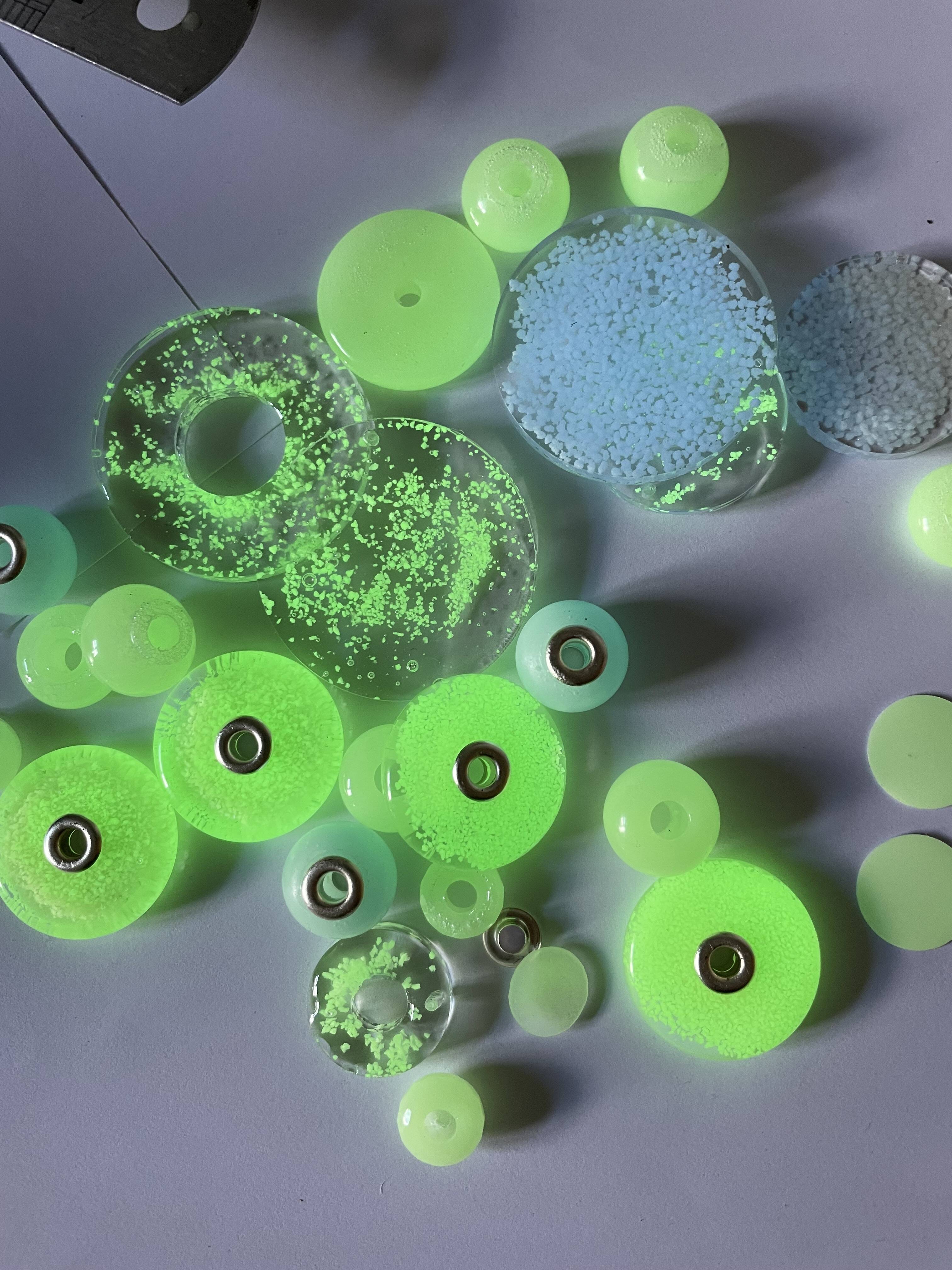
Here are a few beads made with high viscosity resin, the larger particles sink fast which is a problem. I bought the low viscosity to layer it and produce different effects like stripes but haven’t got round to it yet. The powder or granules ideally need to be mixed in, the finer powder just caps over without getting wet, I think the glow sand might work if it was layered and then lo-viscosity poured on. For mixes I use a syringe and then I can fill the bead molds easily as well as turning it to keep it mixed.
I play around with generic UV resin and think I also get what OP is talking about: the main body of the resin cures with no issue, but there’s always a thin surface layer of sticky substance. I suspect this is a chemical byproduct of the curing process–during curing I can see a bit of smoke that indicates byproduct generation, since the solid cured resin is clearly non-volatile.
My solution is to first vigorously rub oil over the surface to bind to or dissolve the tacky substance; then I wash it all off with soap.
I just used whatever oil I had at the moment, usually canola or coconut, I don’t think it matters very much. After rubbing+washing with soap, the surface is dry, smooth, and glossy like glass.
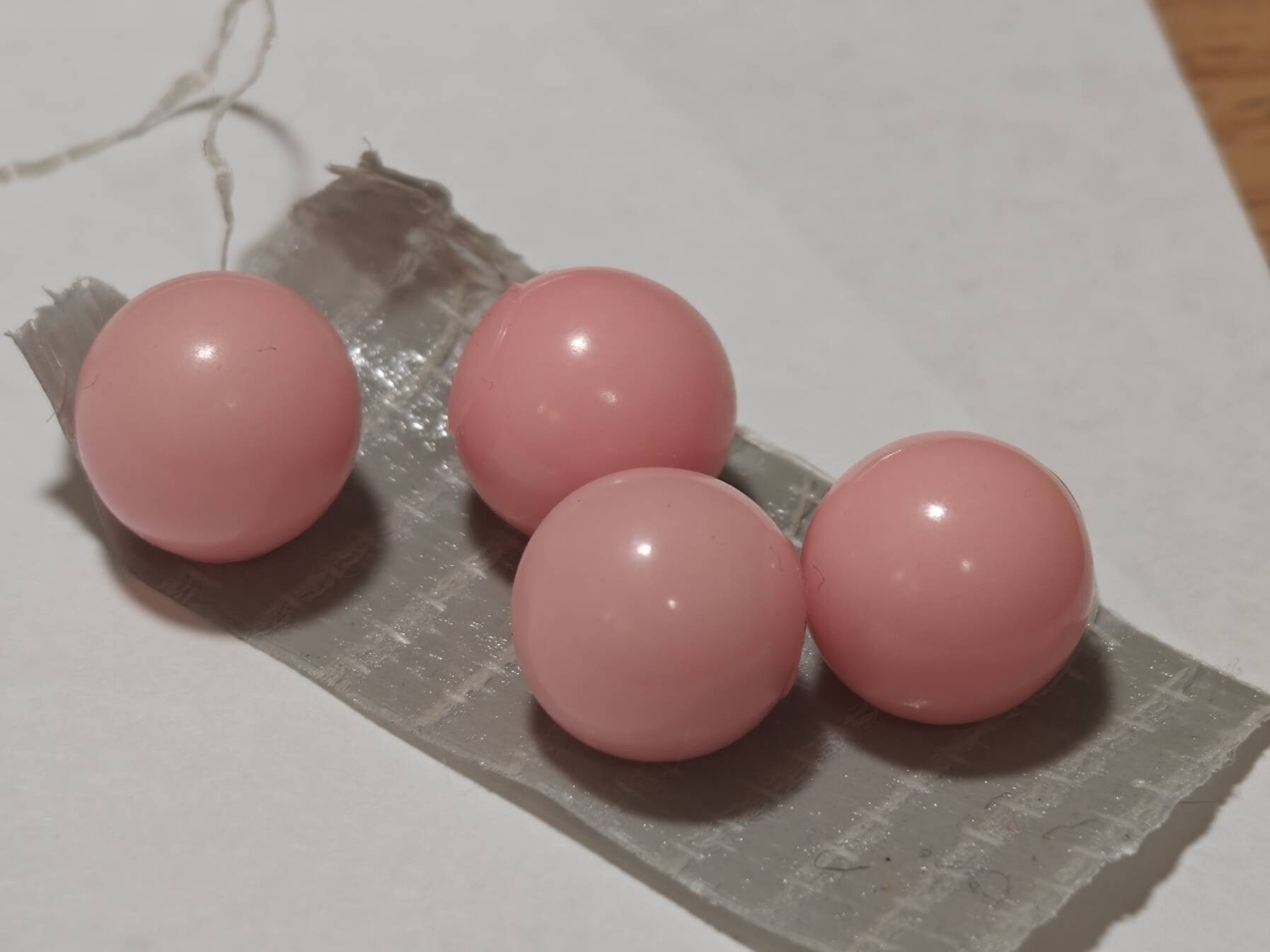
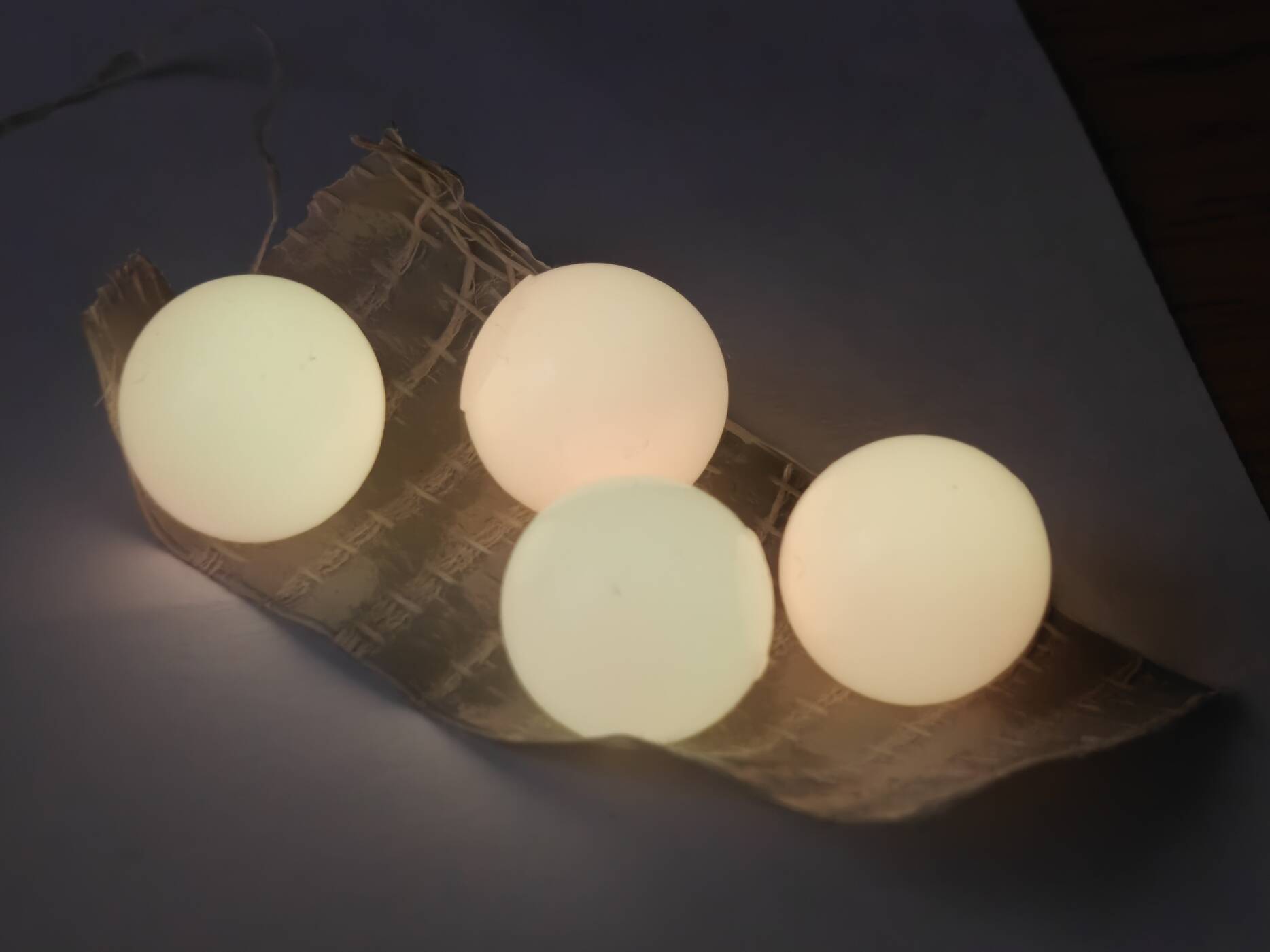
Here’re a bunch of spheres I made with UV resin and the cleaning process. I designed a mixture of GITD pigment and fluorescent dye that glows neutral white, with much better brightness+longevity+color than commercial white GITD powder. Unfortunately, the inside of the spheres was not well-cured (as UV light only penetrates ~2mm of resin), so the powder settled unevenly.
FWIW, I’ve left some sample “beads” of kafuter on a paper on my desk.. They seem to dry up pretty firmly, and set well when I kept my humidity in that particular room down to 40% (dehumidifiers running full blast and dumped 3x a day ) On one bead in particular, i cleaned it off with some high% isoprop, and it didn’t appear to make too much difference besides making it ever slightly less grippy, no apparent change to transparency.
I’m going to let them air out for a bit longer, and see if they get any firmer or more “brittle”.
Just an idea I’m going to try: since I’m convinced that the oxygen is the culprit, maybe curing the resin then coating it with oil (I tried water without much success), and then curing it some more would do the trick?
Any way to create an airtight seal and cure the object alongside some silica gel while drawing a mild vacuum? (orbeez and those bb splatter ammo would work)
Good grief, those are nice! I tend to go for practicality over aesthetics but I really must commend you on your innovation.
I’d be happy to be proven wrong but I can’t help but feel like this will result in a worse surface finish with the oil contaminating the surface of the resin.
You almost need more of the chemical that results in polymerisation, like how cyanoacrylate activator works?
Perhaps, if you’ve got somewhere to try it, accelerate the cure by gently heating the material?
Thank you! It’s a random idea I had after realizing that GITD powder, while usually used as a phosphor (that absorbs blue + UV and emits the specified color), can also be used to pump a “secondary” phosphor, in this case fluorescent pink dye. A green+aqua+blue mixture covers the top end of the spectrum, while excitation of the pink dye produces broad-spectrum red that covers the lower end of the spectrum.
The issue with this formulation is that the glow color depends on thickness: a thin layer glows only green/cyan, while thick layers glow too pink. For this reason, a sphere is the only possible shape that glows a consistent color; unfortunately, it is also the most difficult shape to cure due to thickness.
It probably depends on the specific resin used, but my generic resin cures in a strongly exothermic process, enough that the surface is untouchable by the bare hand, so in my case additional heating would likely have made no difference.
I got the second type of UV resin. The first one is semi-softy kind of a glue, the second is hard casting resin. Cured both in the sun. Only the first one is tacky at the surface, so probably plasticizers are involved. But submerging it in water and curing some more takes care of the problem.
 ) On one bead in particular, i cleaned it off with some high% isoprop, and it didn’t appear to make too much difference besides making it ever slightly less grippy, no apparent change to transparency.