I was asked a while back to do a review on the Zanflare F4 4 headed beasty and I kinda dropped the ball on it. I got a good start measuring output and such and then ran into some issues personally and never got back on it. Sorry about that.
So I’m gonna get this started on this with an introduction and will come back and flesh it out as I can.
Gearbest’s pics…
And a quick one of my own…
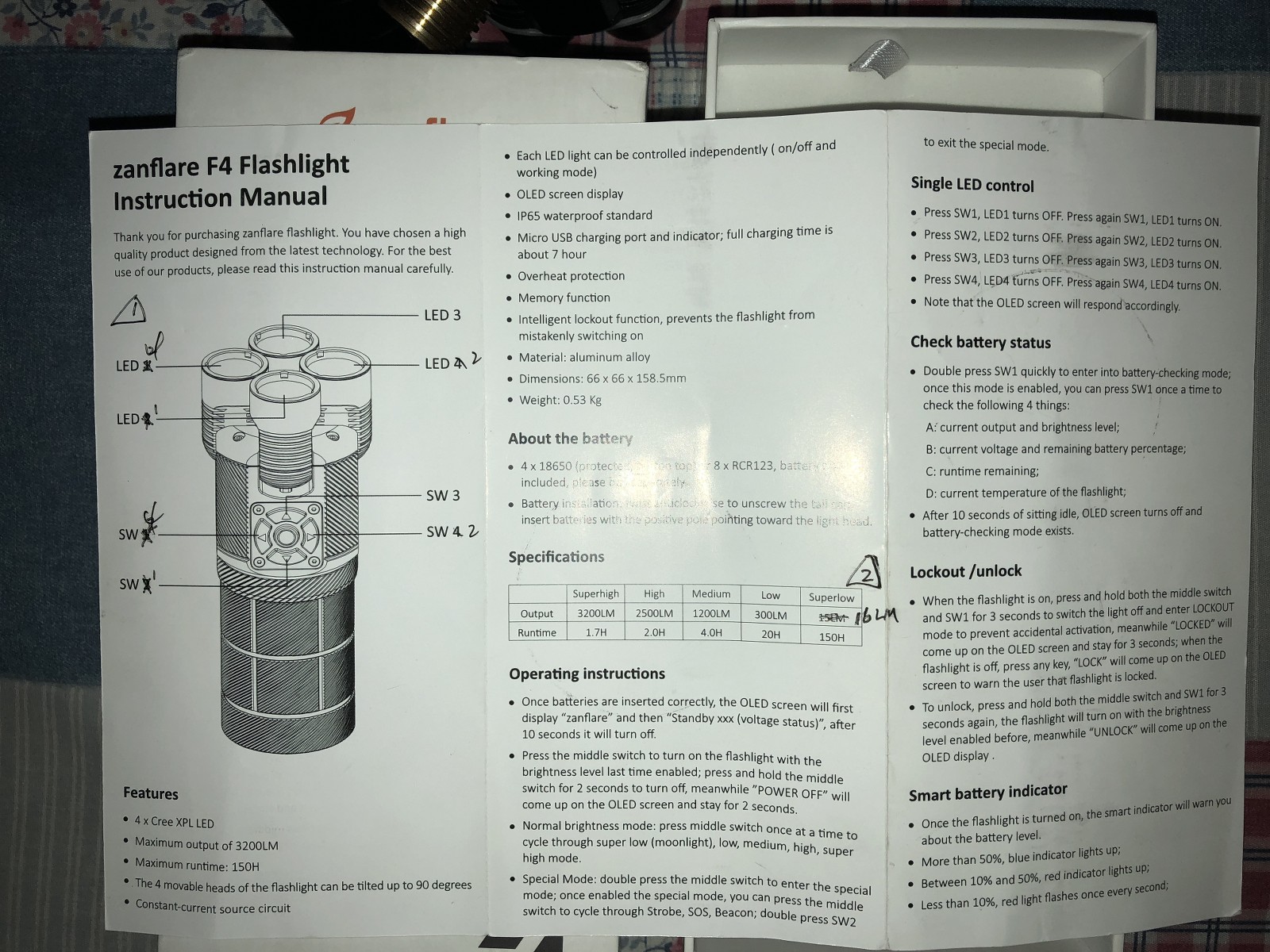
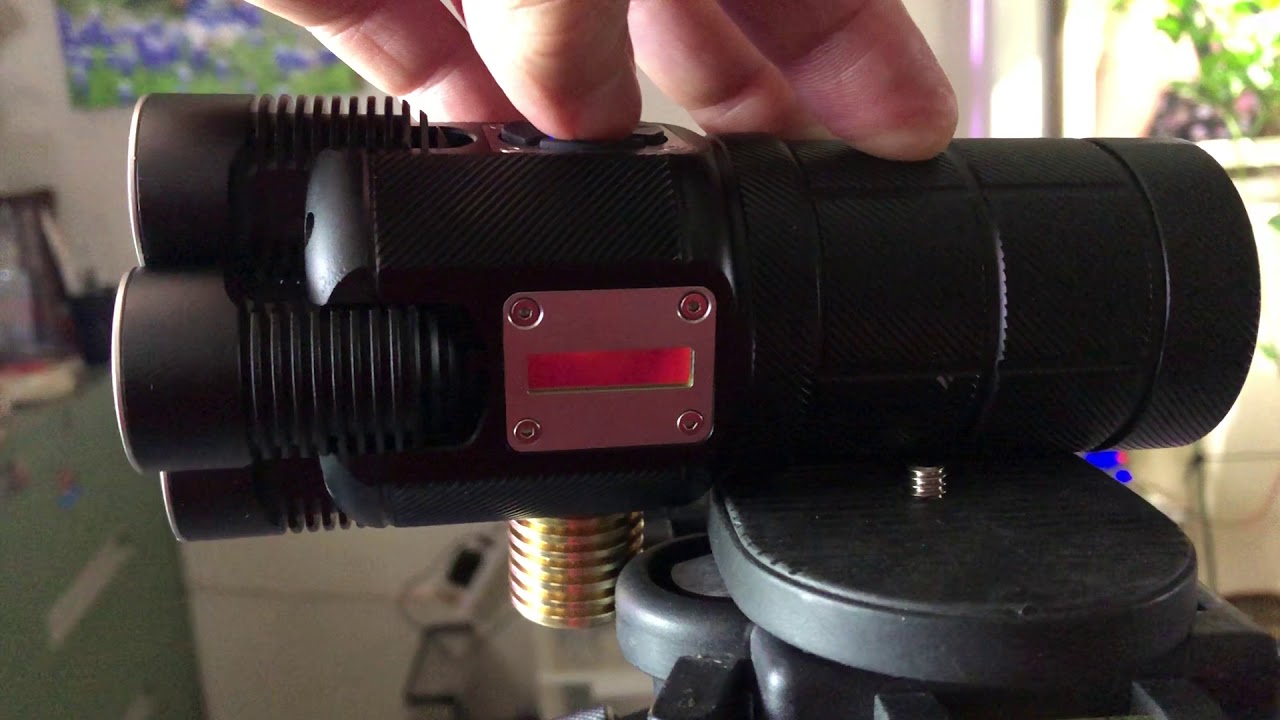
This is a very interesting light from Zanflare, with 4 heads in a similar fashion to the Black Shadow Terminator but each head can rotate down to a 90º angle independtly, and each head can be turned on/off! The electronics are elaborate in this light with an Oled window showing which of the LED’s are operational, what level of 5 is being used, how many lumens, how much time is left at that output, the current battery level (4 parallel 18650’s) and even the temperature. Built in charging through a micro USB port as well.
I took output readings in all the variations and it is very flexible, I got from 20 lumens to 3560.4 lumens , that’s from one emitter at level one to all 4 at level 5… here’s a quick breakdown of these 20 levels as seen on Sony VTC6 cells….
I can see where this might be an excellent light for an outdoorsman, camping or hiking, with the ability to direct light to either side and in front of you while walking while also keeping one head aimed further out for a preview of what’s coming. Also in strobe or beacon modes the heads can be flared out to the sides for a 360º coverage to indicate where one is if in trouble.
I will get some better pictures and some beam shots as soon as I can, will be back to flesh this out some more… This is a very complex light and I intend to try to represent all it does, please bear with me!
Wanted to say this light uses 4 Cree XP-L HD emitters (domed) that are nearly pure white in tint, I don’t have the specs on what was used in this but the choice was an excellent one.
Due to the style of the driver battery contact, button top cells are needed or at the very least solder blobs, this is because of the Q8 style contact board.
So, you turn it on with the center button. Each of the 4 arrows controls the on/off selectability of the independent heads. The display shows which of the 4 were turned off (or on) Press the center switch and hold briefly to turn off. Press the center switch AND the lower arrow simultaneously and hold to lock out. Lock out status will display briefly in the window. If you attempt to turn it on when it’s locked out, the display will light and indicate Lockout.
When off, a double click on the center switch enters strobe, a click moves through SOS and beacon modes. The selectability of the heads is active when in the blinky modes so one through four can be selected for brightness levels.
Opposite the switch panel there is a tripod mount, which should come in quite handy. Very cleverly machined into the lip of the tail section are two oblong slots for a lanyard to attach. I suppose an enterprising individual could use these slots to suspend the light from a fishing swivel and have quite a light show in a large tent…
Edit: A look at the OLED screen showing values when operating the light…
I know, Right? My 10 year old got ahold of it and immediately spread the heads, pointed it down, and brought the “mother ship” in for a landing while slowly rotating it. Had to laugh!
Very cool. Did they mention a MSRP? I could find many uses for a light like that at a campsite or working on a piece of equipment in low light. Also, with all 4 heads fired up on level 5. What is the beam like. Is it Q8’ish?
I found it pretty odd, at first, but I can see after using it a while that it could well have it’s uses and become indispensable. Don’t think there’s anything else like it out there.
The only thing I can think that would be a useful add on would be a rare earth magnet. To use under the hood of a car, r any other place you might want to hang up a light. Yes I know 3000+ LM is a bit over kill for under the hood, but I am thinking run time would be nice and long at lower levels.
Well, it would have to be a very large magnet to hold this thing up. Even a strong Neodymium magnet would need to be fairly large for a tail-cap magnet. Then you’d have the opposite problem - how to get it down. The magnet would be strong enough to give you some real trouble when trying to remove it from any ferrous metal surface.