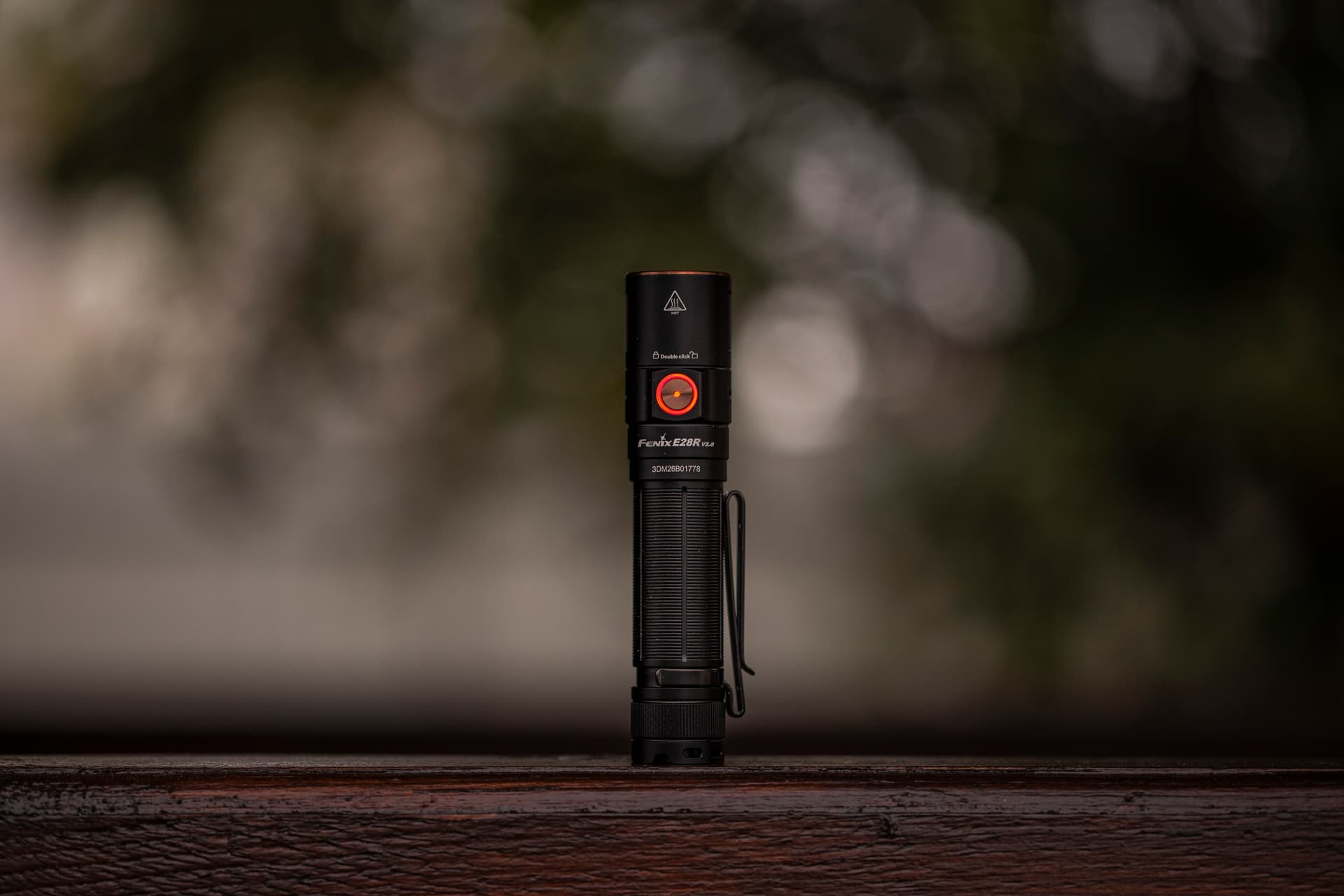
I have a Fenix E28R, not the greatest UI but I like that it has the HIGH mode where the stable lumens are, ~600lumens.
what you see first is what you get, no surprise drop to half the output in the middle of the forest
it’s easier to estimate how long the battery will last even if used in bursts
On the other hand, the Fenix PD35R is the worst example (So is my Nitecore MH12PRO), having the HIGH output set at twice the output the flashlight can handle (measured in lumens) is confusing for the buyer, i consider it a dirty marketing strategy because we do know that the TURBO is there for a brief period but we expect the other modes, including HIGH mode to be more or less stable.
And to make it even worse, the MEDIUM mode is ~half the stable output. So the highest stable output mode that the flashlight can handle is around 350 lumens for a flashlight that is marketed as 3000.
I’ve also seen big YT channels getting confused by this issue, or just ignore it. For example Nightwalker channel said that the Nitecore EX7 runs 2h less than similar Nitecores at the same ~1500 lumens. Because they didn’t even consider the output drop… the EX7 only drops to 1000 lumens while the others drop to under 700lumens, so of course they last longer. You can expect even more confusion for the common customer who is not deep into flashlights.
So what you want is a regulated buck or boost driver. Linear based drivers will drop as the battery voltage does while buck will hold output until battery drops below the voltage threshold needed for the buck to stay in regulation. Boost is better imo, it will keep its output the same until the battery is empty but the range of LEDs in the 6v range isn’t as plentiful as the 3V ones.
This issue is precisely what has always bothered me, ever since we moved past XML2 U2 and outputs could not longer be sustained. I’ll always go for a buck driver because of this.
Because marketing. Outside of the enthusiast sphere lumens sell, and if Brand A advertises 800 lumens on high and Brand B advertises 600 lumens there are a lot of people who won’t look any further and will buy Brand A. Same reason so many lights from the likes of Nitecore and Olight have cold white emitters with low CRI and green tint.
Not to mention most people outside of the enthusiast sphere don’t know 600 lumens from a hole in the ground, so as long as the decrease in output isn’t sudden they’ll probably never notice.
hi, sorry maybe I wasn’t clear enough there. I am talking about that 2 to 10 minutes initial drop, because of the heat, you know these are pocketable flashlights without much room to get rid of the heat so they drop to a safe output, ~600 in many cases. I was not talking about the drop that happens slowly over time because of the voltage going down.
Also, I was not talking about the turbo mode, but the modes lower than turbo that are still above what the flashlight can handle instead of being on spot.
Oh man, I think nobody understood what I was trying to say
Let the turbo be turbo, unsustainable mode that can be used for a few seconds or a couple of minutes max, it’s perfect like this and I love it. But the modes called “high” should be where the flashlight would drop because of the heat, no above, this would make “high” a “turbo2” or "lower turbo"mode.
I know we can get and Anduril light and find that perfect sustainable output by ourselves and configure it to have the plateau there. I’m strictly talking about the marketing of the brands like Fenix, Olight, Nitecore.
That’s about where I quit buying flashlights when I was a bike commuter. 1,000 lumens was the description of most lights regardless of their output but most lights didn’t have a big drop in output until the batteries got low. They did have some problems with heat, but just being outside in the cold or riding solved that issue.
This has been a complaint for a while, it’s also related to ANSI runtimes being poor indicator of actual performance as manufacturers can use “creatively” timed reductions in output to massively extend the runtime without having to advertise the actual lower output.
It’s only from runtime charts the truth is revealed.
Timed stepdowns are arguably the worst of all as you’ll have decreased performance regardless of ambient temperatures.
I’m not sure if or how you’d simulate heat removed by conduction of the users hand, but otherwise “sustainable output at 20C” would be a nice parameter to compare lights.
And this is just one reason why those who understand this look for a highly customizable/configurable UI like Anduril 2.
You can set the ceiling to whatever in the range of the output, you can set thermal throttling, calibrate the voltage, etc. In my opinion, if a light exceeds 110F in “sustained” testing, it’s too warm to be “sustainable”.
Also in my opinion, ANSI should revise their sustained standards to have the 10% qualifier not only apply to the brightness, but only if the light sustains 90% of the brightness for 90% of the runtime. If the last 10% of runtime is in 10% brightness a.k.a. limp mode, then that would be OK.
For example, if ANSI is until 10% brightness, and turbo is rated to 100 minutes, then turbo exclusively:
Lumens>90% for at least 90 minutes, and anything 90%>x>10% for the remaining 10 minutes. Of course some may argue for differing percentages, but you get the gist.
A lot of the lights cannot sustain high or medium mode either.
They may start at 500 lumens and the manufacturer says that the light can do that for 4 hours yet, just 30 to 45 minutes later, the light is almost half the brightness.
So 500 for 45 me nutes , followed by 250 for 3 hours.
Thankfully, there’s at least a few that are honest like armytek, skilhunt, and for the most part zebralight
I’ve learned a lot in the last 8 years or so, as far as the intricate details of modern-day flashlights, and now I literally do not buy any flashlight that does not have a constant current driver in it
Labelling high mode (or whatever) as a sustainable mode doesn’t make sense in thermally regulated flashlights anymore.
The sustainable brightness will vary A LOT with ambient temperature. Hot summer night? Don’t expect miracles from your tiny high powered lights. -20°C in northern Norway? Turbo away all night long …