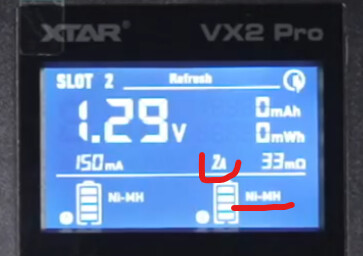
Xtar reached out to me and asked if I could look this charger over, give them my thoughts and say a few things about it, good or bad.
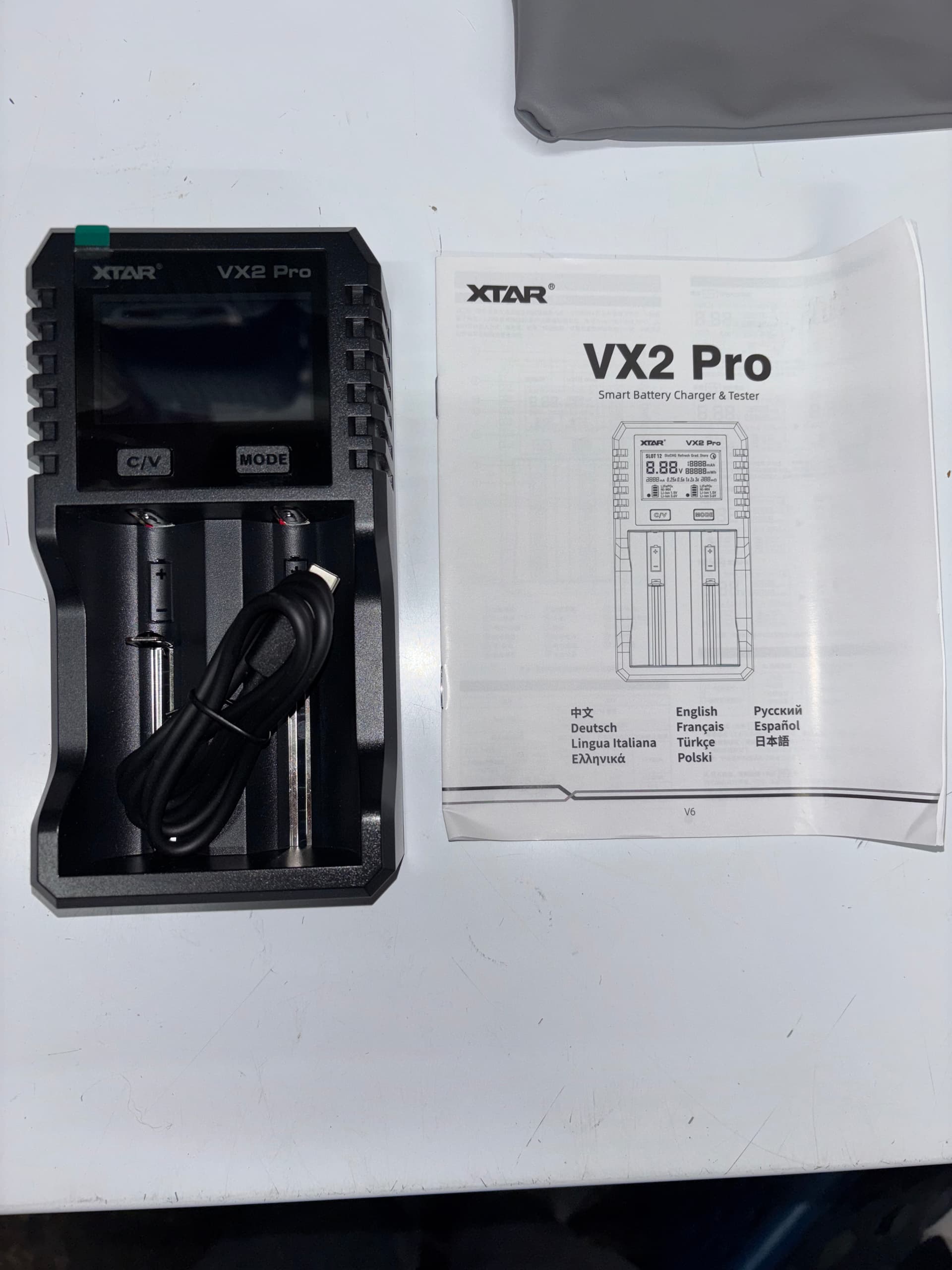
First it came well packaged and included a 20w usb-c block with a C to C cable. The cable is about 18” long and feels of good quality.
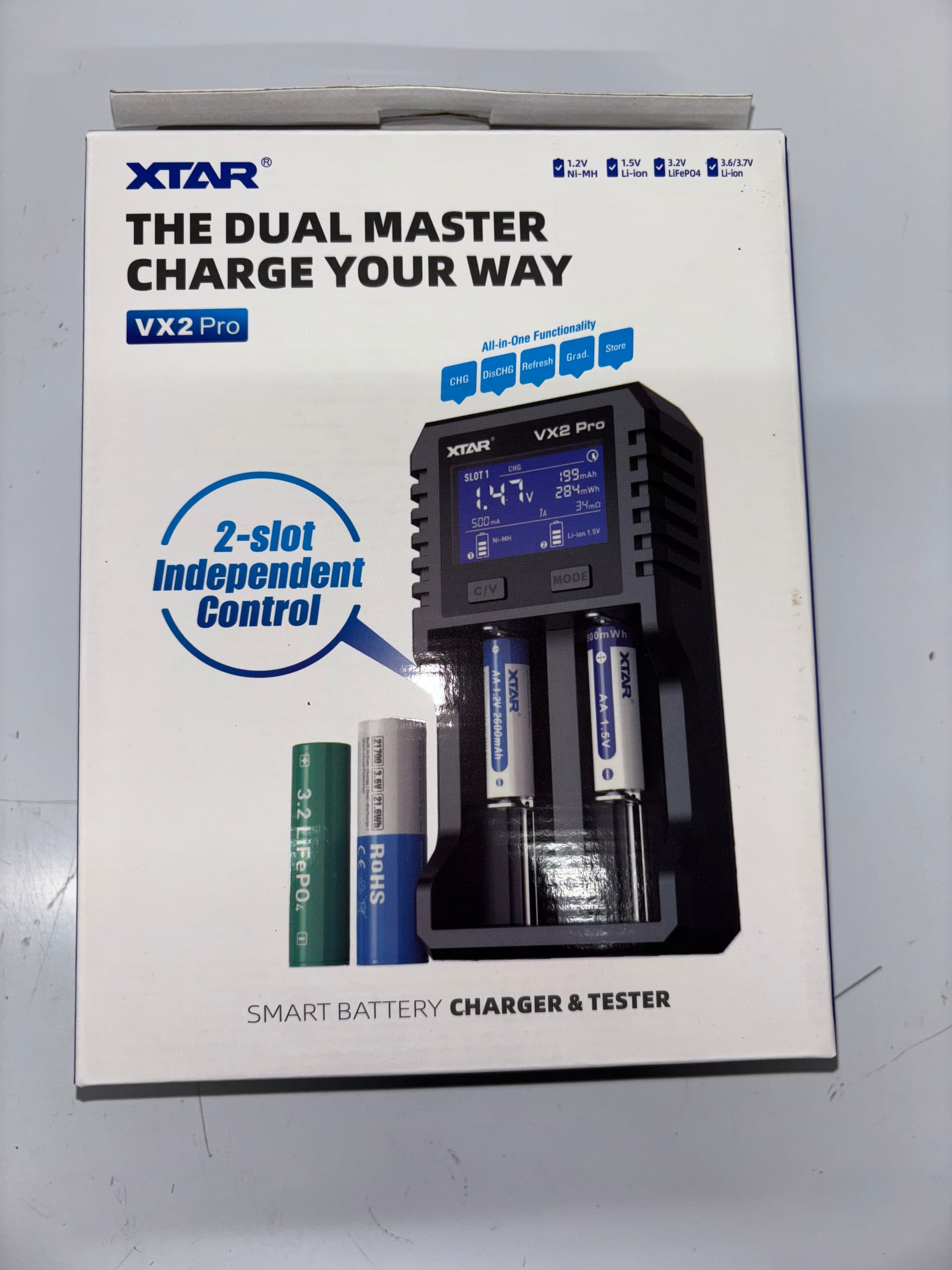
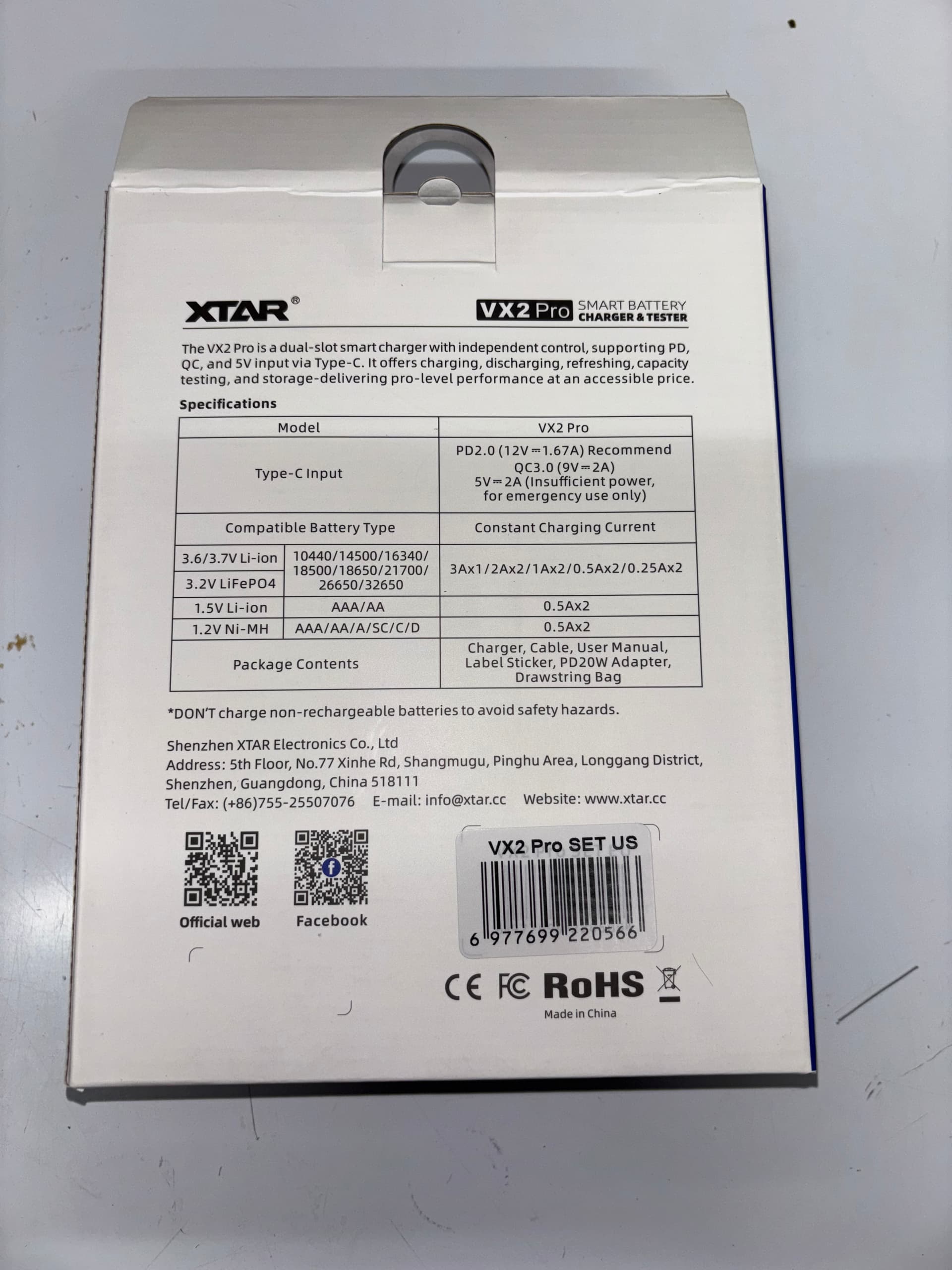
It was also in this nice drawstring soft bag for storage or travel I guess. Includes full manual in quite a few languages shown in the picture, which details how the charger functions.
It will charge all the common cell chemistries including Lithium ion, LFP/Lifepo4, Nimh, 1.5v regulated lithium ion. From AAA to D size, there’s a lot of room
Max charging for lithium ion and LFP is 3A, for a single slot. 2A for both slots. Also 1A, 0.5A, and .25A, so all the rates are covered for cells small and large. Both Nimh and regulated lithium cells are fixed at 0.5A.
So on to functionality, theres are some things I really like about this charger, especially the storage mode. But starting, there are fine main functions this charger does; charging, discharging, refreshing, grading, and storage.
- Charging. This is pretty self explanatory.
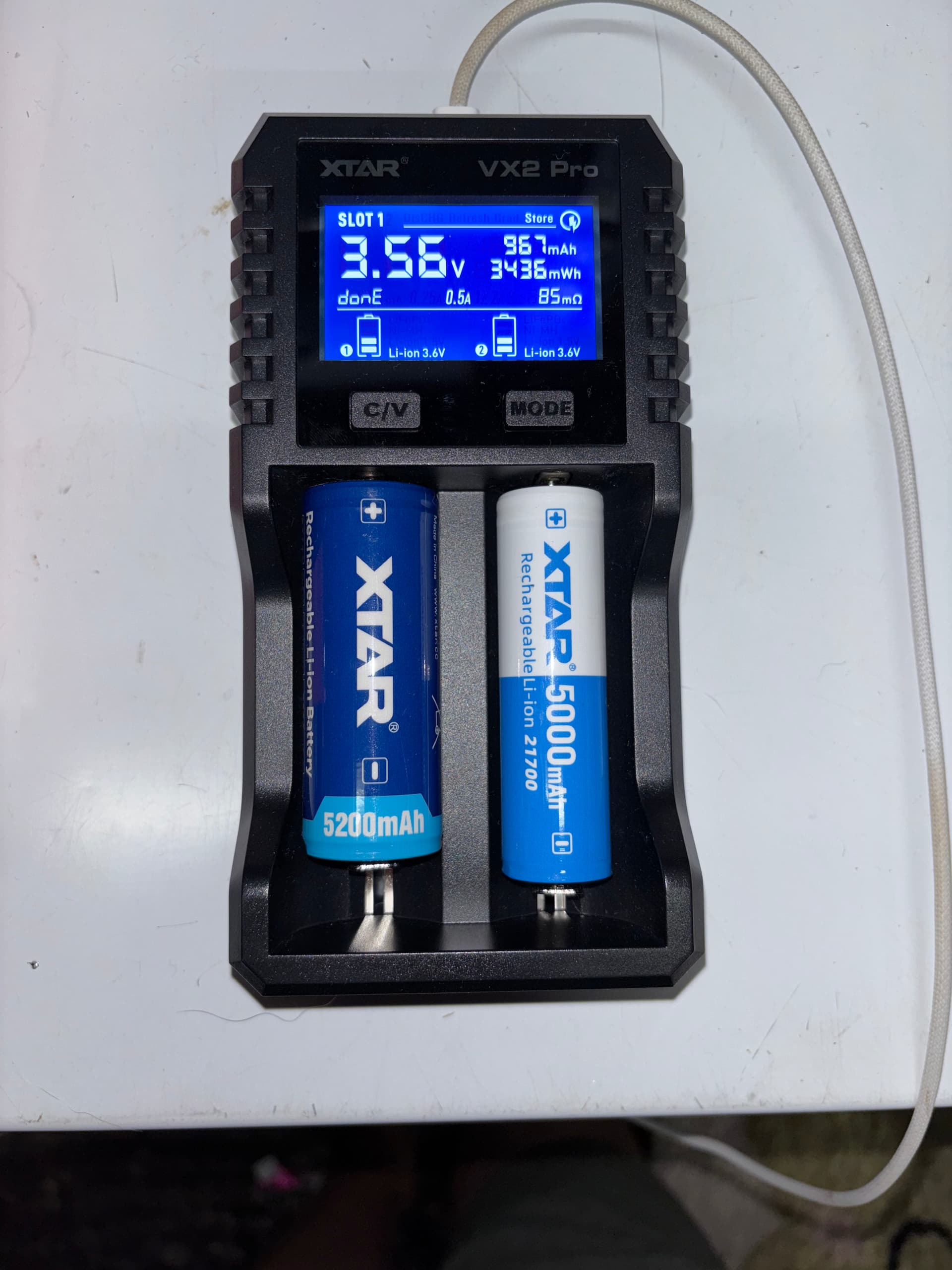
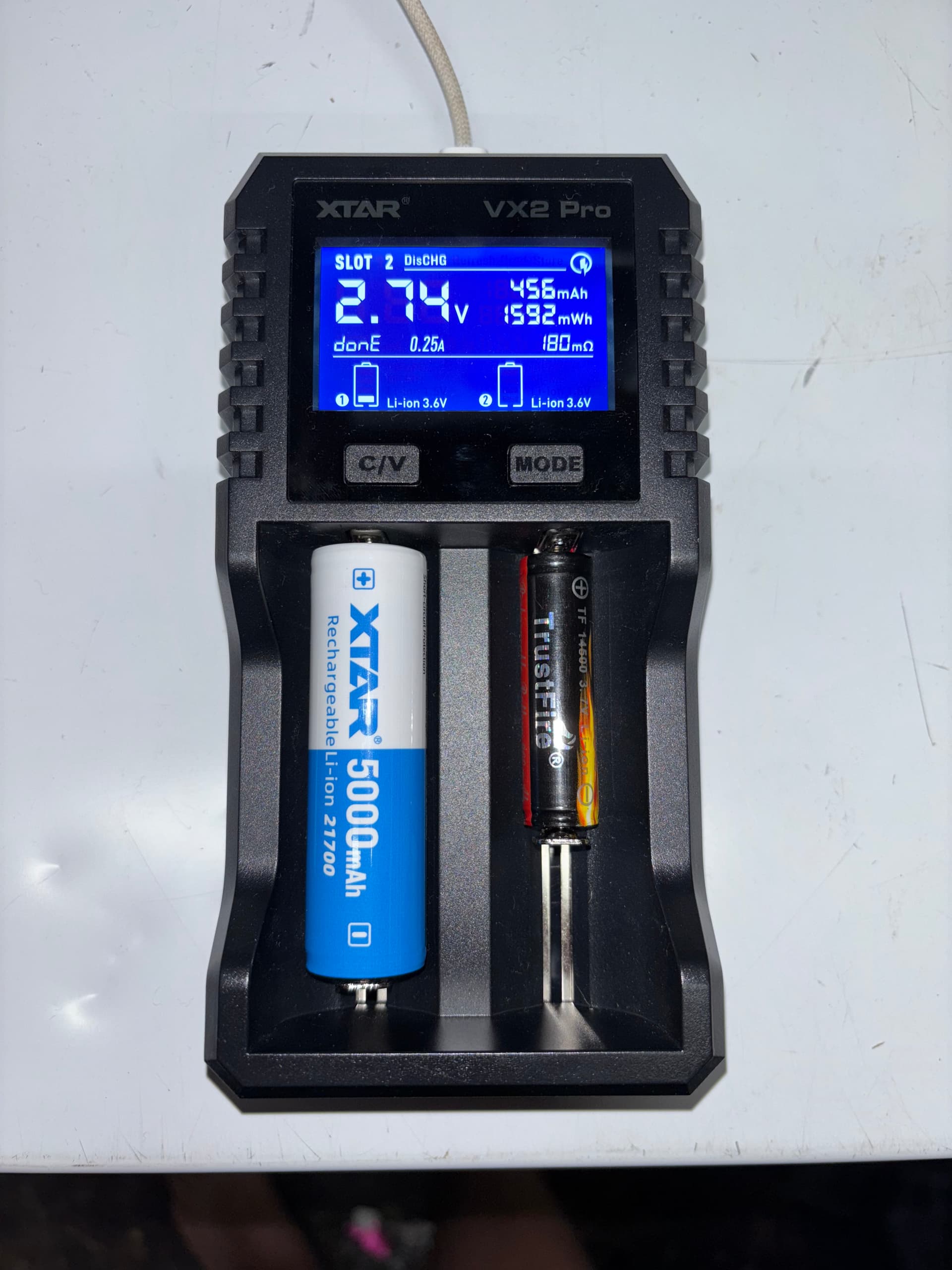
- Discharging. Will discharge the cell at 300ma until cutoff (2.75V). I guess if you need to knock a cell down to a certain voltage this would be handy without having to do a full cycle. This will show how many Mah and Wah were discharged from the battery.
- Refresh. This is for Nimh cells. I’ve never found a use for a setting like this, Nimh don’t need to do this as they don’t develop memory. But if you want to run a few full cycles on your Nimh cells, this’ll do it. It’ll keep cycling them until it feels it’s done enough.
- Grading. This is what Xtar calls capacity testing. It’ll fully charge the cell at whatever you have the charging current set at, fully discharge it at 300ma, then fully charge again and record and display the total mah and wah discharged from their cell. This is obviously a handy function to test your cells. Whether to check if the manufacturer is telling the truth, or to check to see if your cells have degraded over time.
- Storage. This is a new one I have not seen in non-hobby grade cradle chargers, and it’s nice to see. Whether is really matters all that much to you, cells stored at a medium level of charge do face less long-term damage than fully charged. There’s a lot of ways you could go about this. Pull your cells when they hit a storage charge while charging. Use a device for a while to drain your cell about halfway, ect. But this is so much easier. Put cell in either slot. Select storage. The charger will either charge the cell up to 3.6v at your selected charging current, or will discharge to 3.6v at 300ma. Doesn’t matter what level of charge your cell is at, walk away and when you come back the cell is at 3.6v. Which is a pretty good overall level to store at. Maybe not the best for some older chemistry cells which were almost dead at 3.6v, but who’s still running 2200mah 18650s anymore?
About the buttons. Each button on the charges has two functions depending on whether you click or press.
C/V button: First click “wakes up” the unit and the screen brightens up. Click the button to cycle through charging current. Long press the button to switch between lithium ion and LFP. Nimh and 1.5v lithium ions will charge in either mode as they’re automatically detected.
Mode Button: Same first click wakes up the unit. A click switches between slots. A long press cycles through the different modes. Charge, discharge, ect.
Things I like:
- Sturdy and seems well made.
- New functions like storage and discharge mode
- Auto-detection of chemistry, though this has been a function of Xtar chargers for a while.
- Completely independent slots. This is the big one for me. My previous examples of Xtar charges have a single function for all slots. Including charging current. So it’s difficult to mix and match cells, like one 14500 and one 21700. Either the 14500 is going to charge way too fast, or the 21700 is going to go very slow. This charger allows any combination of cell chemistry, current, and mode.(one slot can charge and the other could be in storage mode, ect.) The exception being you can’t charge a lithium ion and LFP cell at the same time, but any other combo works including Nimh and 1.5v cells.
- Just about any size fits, though small cells like AAA and AA can be a little finicky to get good connection with.
Things I don’t like:
- Not really sure what to put here. This is a good fully functional charger and I’m a fan. I guess If I had to find fault, I wish it was a four bank charger. But that’s not really a con to the unit and that’s not what it’s supposed to be.
- I’d like to see chargers with higher discharge rates, but this would require a fan and large heat sink I’m sure. Just 300ma isn’t a lot, especially for a 6000 mah cell.