Yeah, select their usage carefully. 1.5V cells are electrically noisy. I got a clock/thermometer that starts up and keeps time, but the buttons stop working, so can’t set the time or date. Low current means the converter just blurps out pulses to keep the output cap charged, but that voltage is really spiky.
Remote controls, perfect. They work until they don’t, then I just recharge them, temporarily swapping cells until cooked.
1.5V flashlights, who cares about spikes as long as the light stays working. Eerie when the light just turns off with zero notice, though. And that goes for constant-current drivers which hold the same output regardless of the input voltage.
Same questions to ask with NiMH cells, too, the intended use-case. My weather station remotes always show low-batt but work for over a year. Don’t think I tried them with 1.5V Li cells, but I’d rather not have its output mangled by electrical noise.
Anything that takes a pair of cells, I’d rather use a LFP cell with dummy cell.
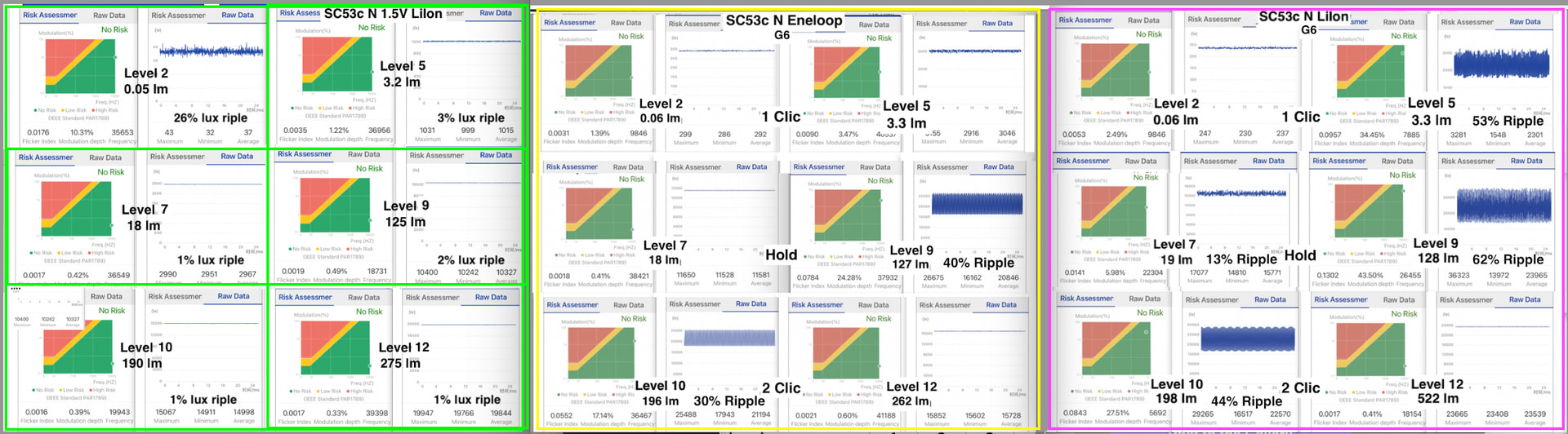
(the green boxes on left are w 1.5V LiIon, middle yellow box w Eneloop, right red box w 14500)
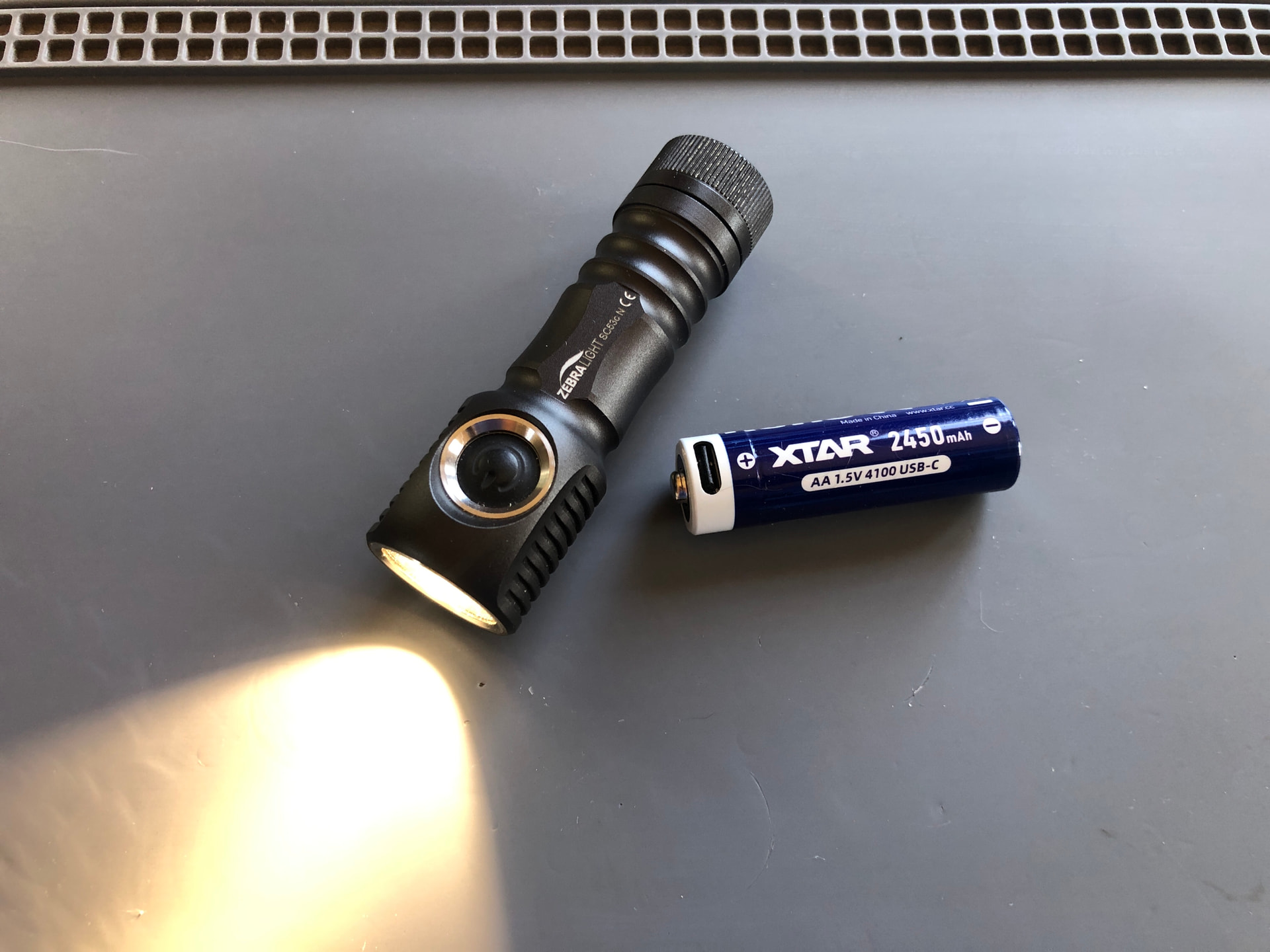
Based on these tests, I am a Big Fan of 1.5V LiIon for my AA Zebra. I like using the AA 1.5V LiIon in my AA Zebra, better than Eneloop and LiIon, because of the lower Riple. The 1.5V LiIon also weighs 6.2g less than white Eneloop, and I like the convenience of USB charging.
Caveats:
My AA Zebra will run on H1= 300 lm without tripping protection, but be aware that the Zebra will exceed its 50C thermal ceiling, if using H1 longer than 5 minutes. There is no overheating problem at lower levels.
Disclosure:
I received the Xtar batteries as a review sample.