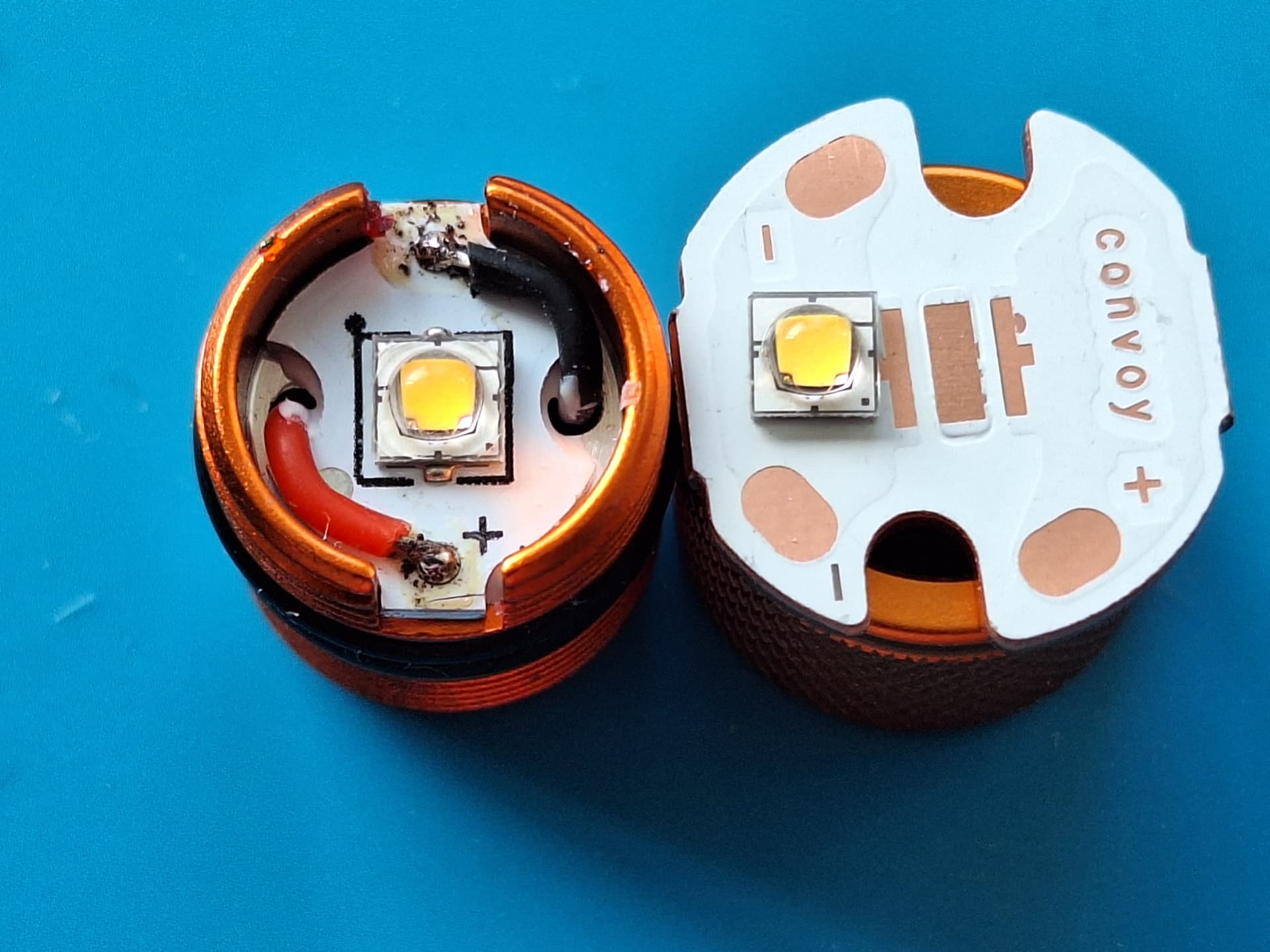
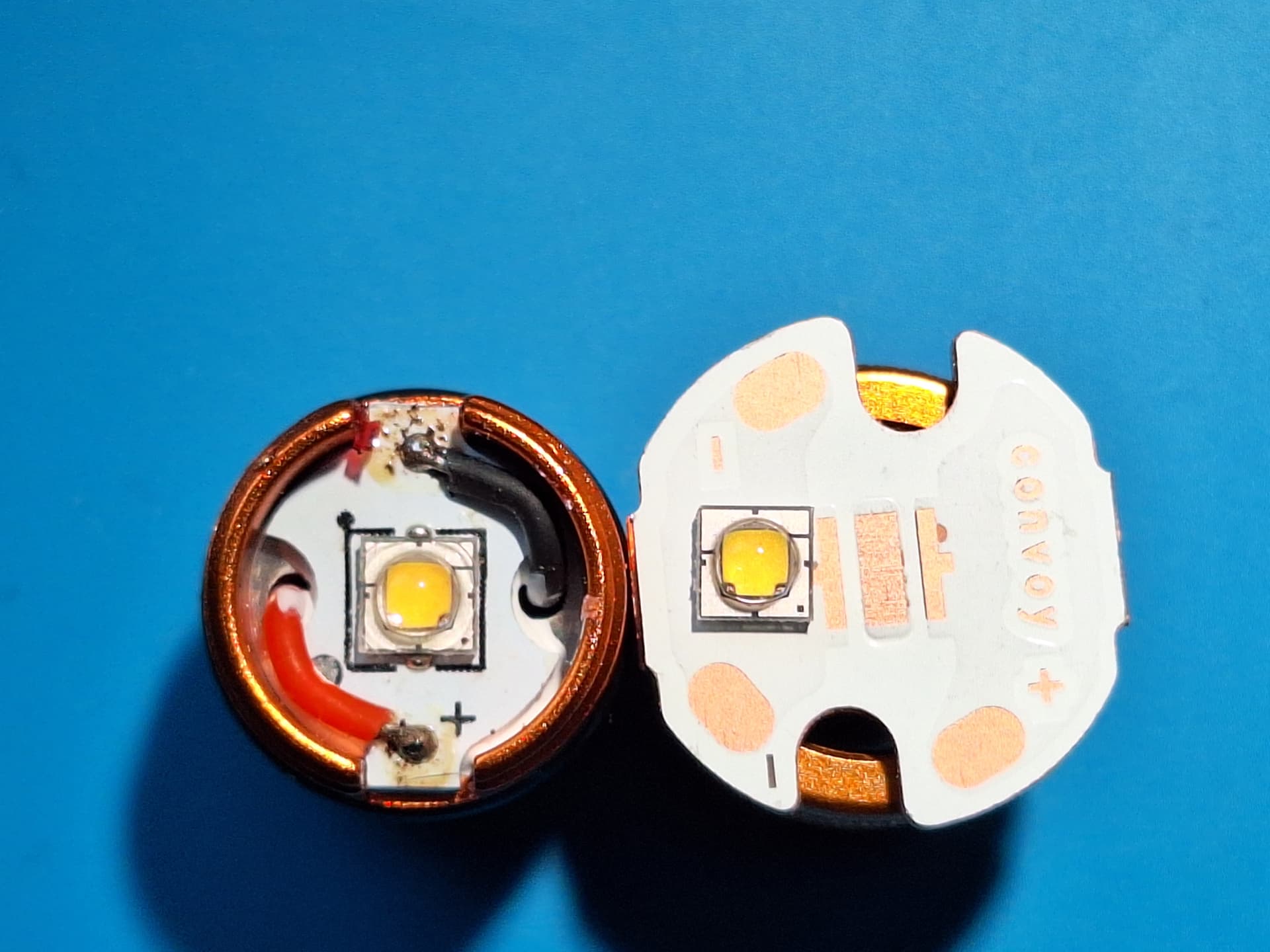
Luminus 4000K phosphor upgrade

I’ve noticed that the latest Luminus 95CRI offerings appear to have particularly good color rendition, even the green bins, and assumed that the cause is a slightly more filled-in cyan region. I looked up an old test by Maukka, which did not indicate anything extraordinary in the spectrum, which contradicts the current datasheet showing a noticeably-reduced cyan dip.

I looked up a 2019 copy of the SST20 datasheet via Wayback Machine and compared it to the current version (dated 2023), and sure enough, the 4000K spectrum looks markedly different.
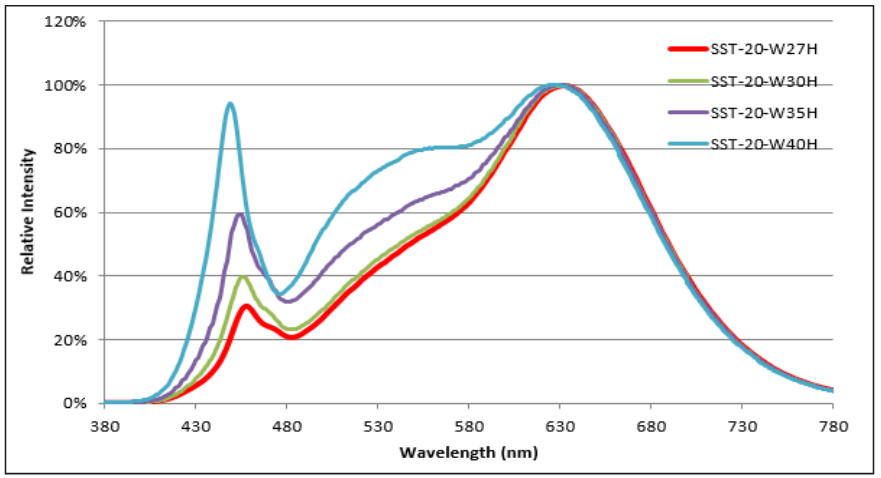
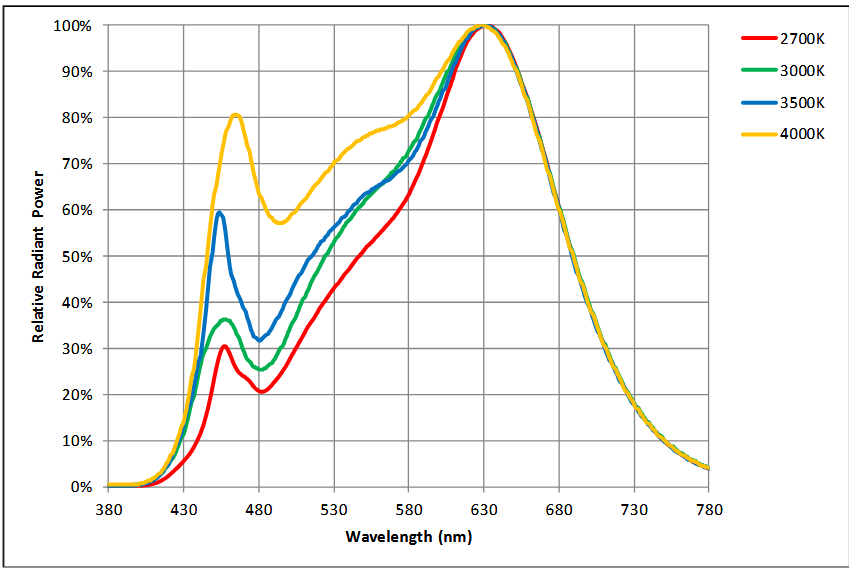
If anyone happens to own a post-2023 sample of SST20 4000K and a photometric device capable of producing a spectrogram, it would be interesting to see how it performs CRI-wise.

Visually the color rendering appears superior to 519A 4000K–without a blue cast I notice from all R9050/80 Nichias–despite a slightly greener tint. This may be the highest-CRI 4000K emitter on the market without venturing into violet-pumped territory.

I’ve just ordered a few (Simon, presumably FB4) to put into a S2+ triple with the 10507 optic, the rosiest of the triple optics, to compare it against a 3000K halogen bulb and a 3000K SFT40, by far the best halogen imitator I’ve ever seen.

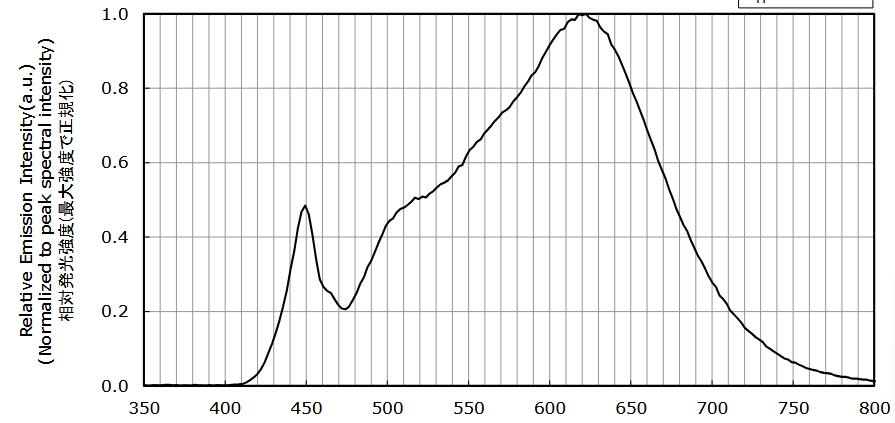
Bonus: a spectrum of 3000K B35AM, exhibiting a much deeper cyan dip compared to SST20/SFT40 3000K.
4 Thanks

I do not have a photometric device but i will say the SST-20’s that i got from Simon in 4000k are amazing. I daily it in my S21E

2 Thanks

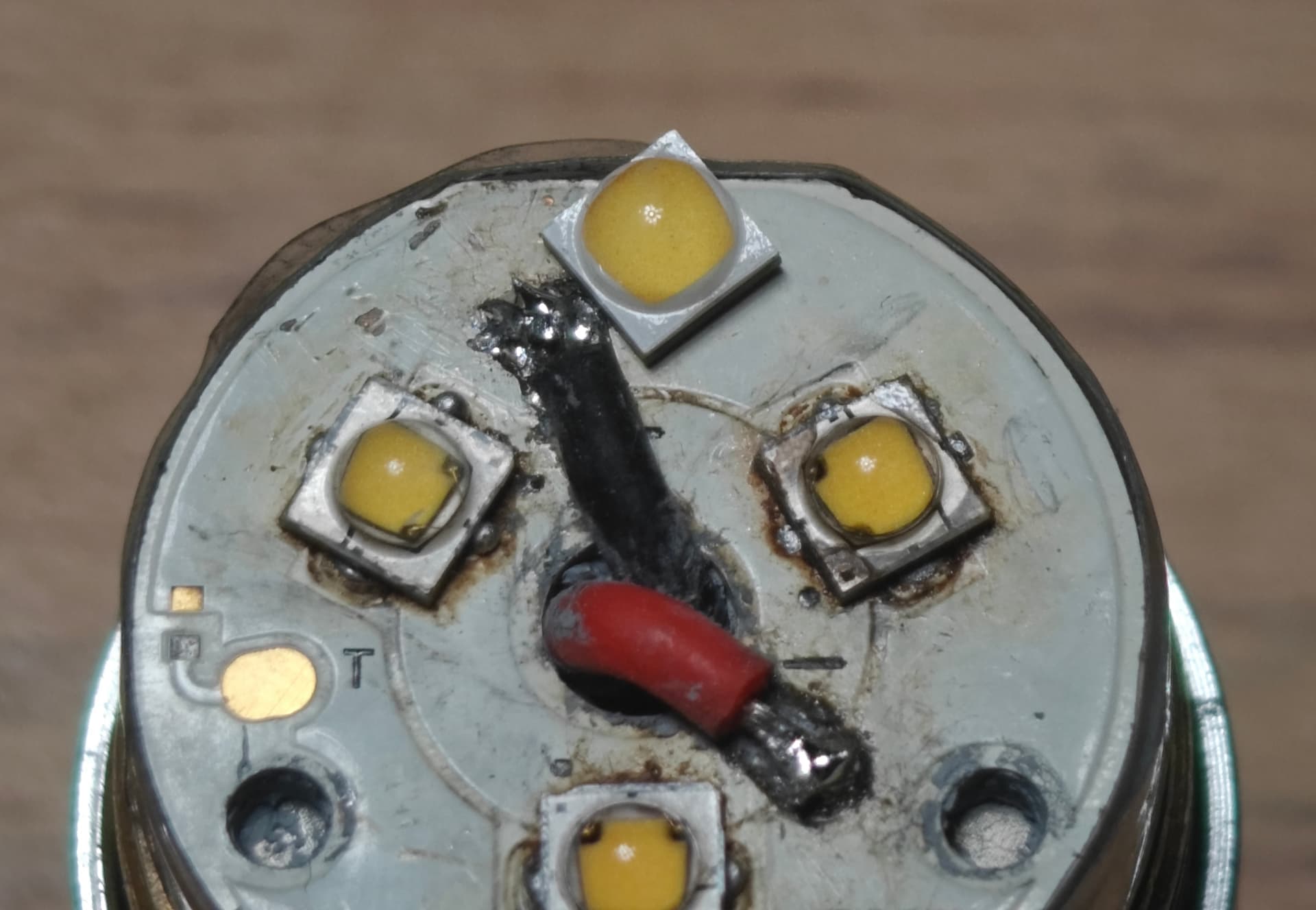
Happened to find a pre-covid sample of SST20 4000K to compare against a 2025 sample, both from Simon. There are 3 major visible differences:

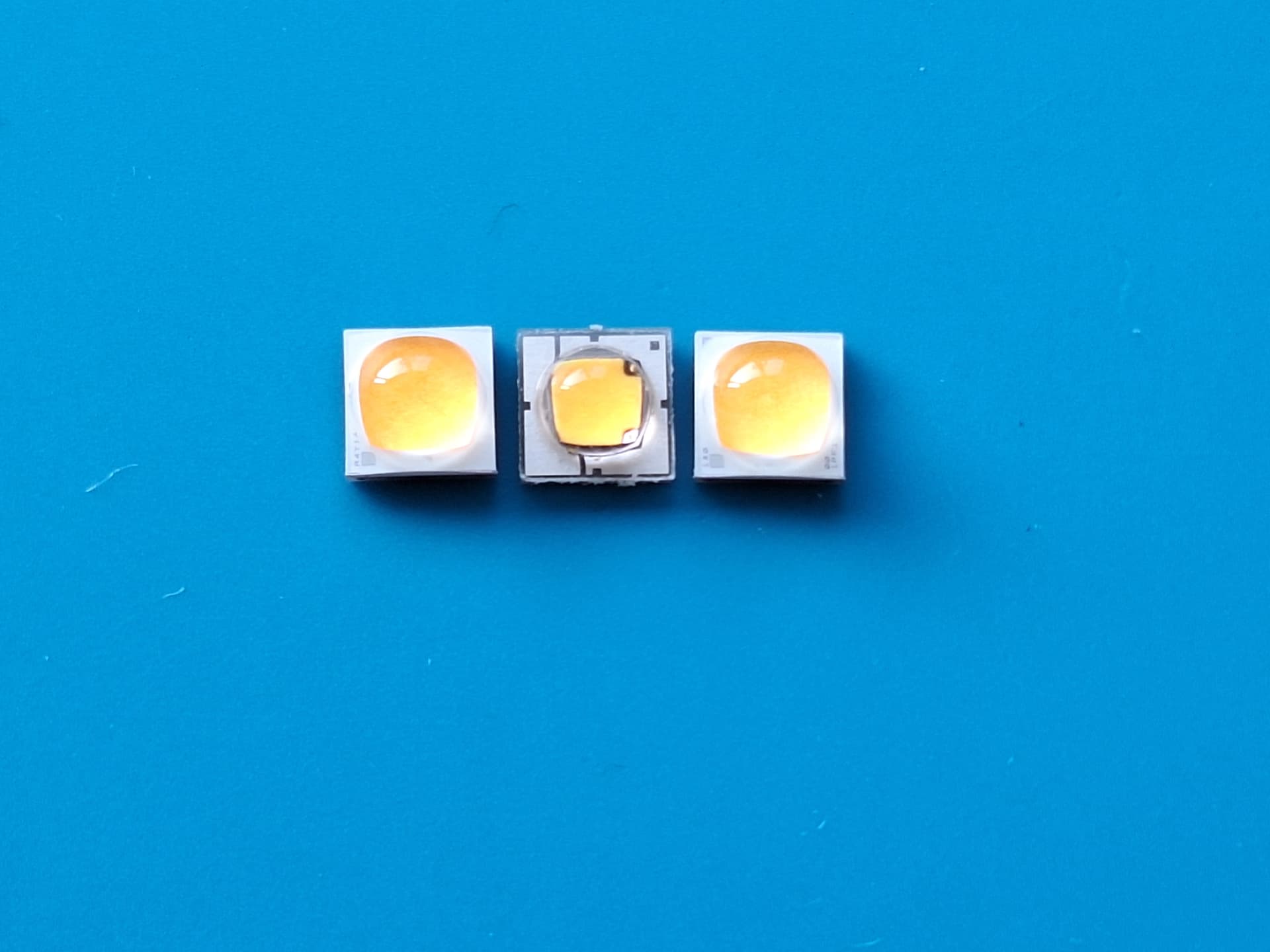
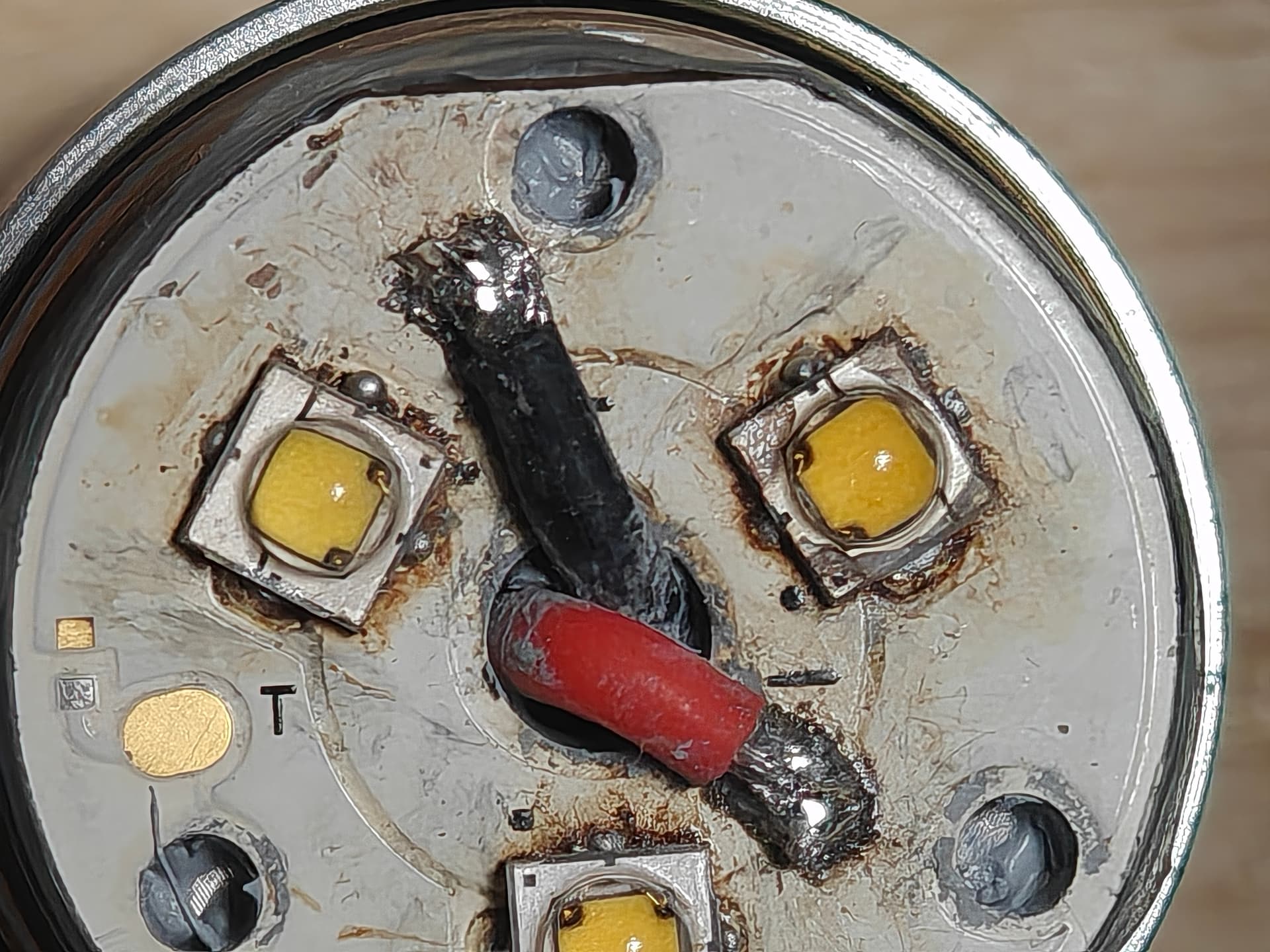
  • The new phosphor (upper left) is much lighter-colored than the old phosphor (upper right), see photo below. In fact, even the new 3000K (cut off at the bottom of the photo) has a slightly lighter phosphor than the old 4000K.

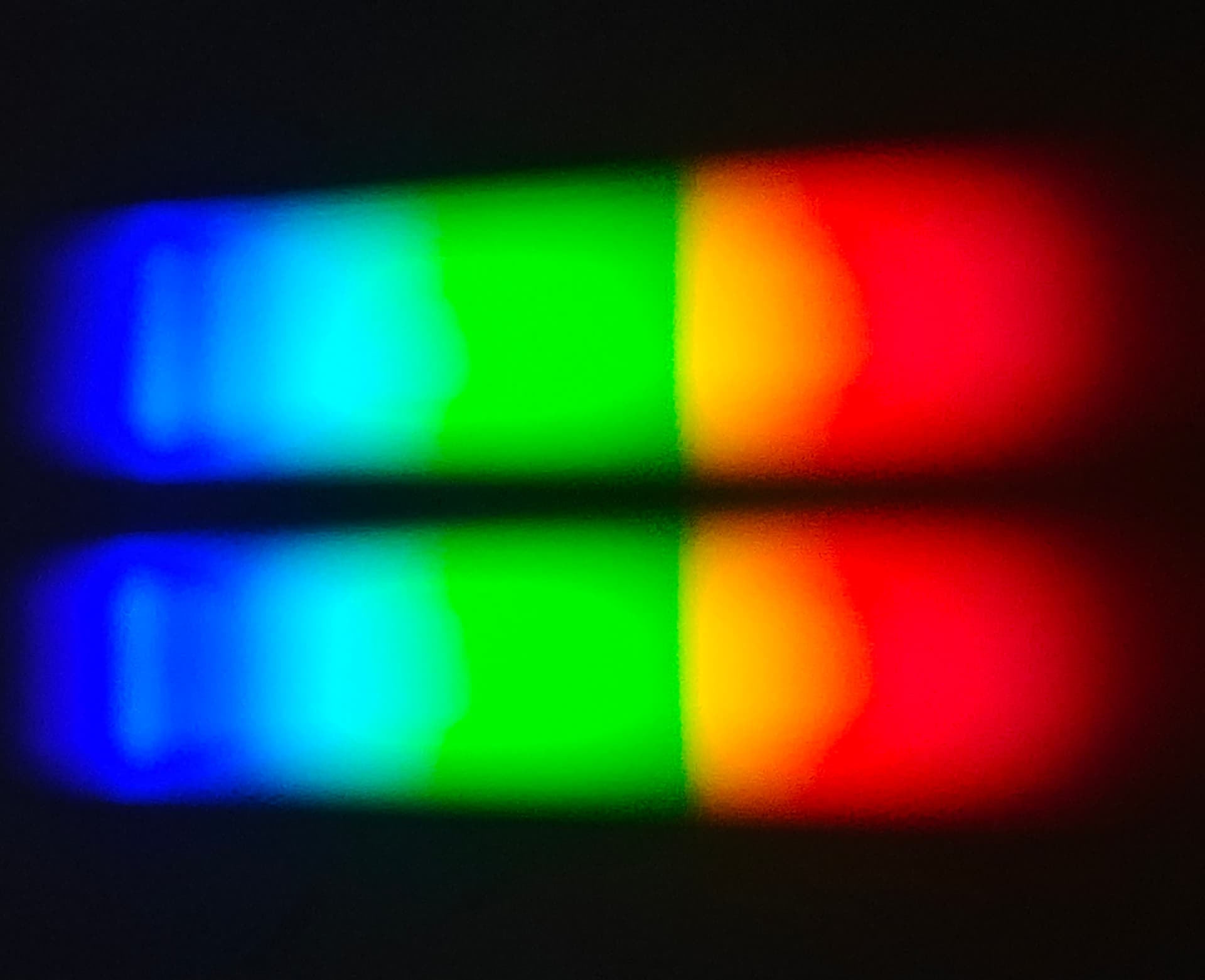
  • Compare a photo of the two through a spectroscope:


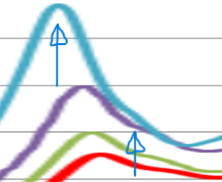
    The old SST20 (upper) has a very visible “double bar” in the blue region, while this artifact is much less pronounced in the new version (lower). This is consistent with the datasheet spectrum of the old 4000K:

The first blue bar is clearly from the blue pump. The second feature is a slight bump in the spectrum, which is perceived as a secondary distinct blue bar due to (1) sharp rise of the luminosity function and (2) Mach bands effect. The difference is more visible than the photo suggests.

  • Power handling is worse for the new emitters. The old emitter stays relatively constant in tint from 0A to 1.6A; the new ones, both 3000K and 4000K, turn visibly rosy at 700ish mA and extremely rosy (blue-saturated) at 1.6A.
1 Thank

Unfortunately I don’t have new Luminus SST-20 4000 K so I can’t compare spectra.

But it seems plausible what you wrote @QReciprocity42

But my spectrometer has relatively low resolution so I don’t know if phosphor analysis is possible.

2 Thanks

I thought I might have 2 in 4000K that I could send to @koef3 , but after some searching when I ordered them, I’m absolutely not sure if they’re the “updated version”.

I’ve ordered a couple from Wurkkos, which they list(ed) in the description as being 4000K 95CRI. (See description on this page: Original XHP50.2 XHP70.2 XHP70.3 SFT40 SST20 SST40 LH351D NICHIA 519A LED )

After some searching I found out that I ordered them on the 17th of February, 2024, so probably produced in 2023, but given that I don’t have a clue how long it already was on stock at Wurkkos, it could be produced before the ‘revision’.

When looking at the color of the phosphor, which is obviously difficult to compare via a non-calibrated digital screen, it appears that they are more on the darker yellow side (so older stock), than to the lighter yellow of the newer one, shown in your photo @QReciprocity42.

1 Thank

Exciting that you still have potentially older stock! It is plausible that they have a surplus of older LEDs, since (1) Convoy sells them way cheaper and (2) the 519A made them essentially obsolete.

Maybe one way to tell the version is to take a photo of the emitter next to a known emitter with only one version, say 519A 5000K. I will do the same with mine, and let’s see how they compare. If we can confirm the version, perhaps it’s worth sending a new version sample to @koef3–if my janky DVD spectroscope can tell a difference, their device can certainly offer much more info.

On a tangential remark, I wonder if there’s a way to tell between SST20 and SST20 V2–I could not find any visual differences in the datasheet photos. It’s also strange that the new flip-chip SST20F-W-AL is rated at 1.5A rather than the 2A of the original SST20, despite a larger LES and better construction. Maybe the new phosphor mixture is more prone to saturation at high power density?

Reading this thread made me purchase SST-20 from Kaidomain that claims to have the FD2 bin.
But I can’t help with a spectrum.

1 Thank

I’m interested to hear your impressions of the Kaidomain SST20! We could probably figure out your version by a comparison photo with a known bare emitter, say against a 519A 5000K.

That will probably be in a month or so.

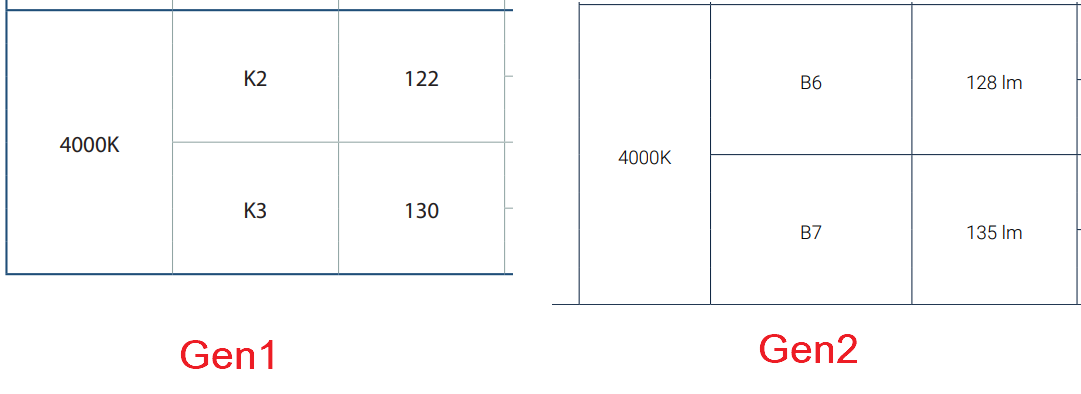
If by version you mean Gen1 vs Gen2 then my samples should be Gen1. I’ve been reading SST20’s datasheets now and discovered that Luminus uses different flux bin codes for Gen1 and Gen2.
Kaidomain’s K2 bin belongs to first generation. Also Kaidomain has separate item for SST20 Gen2, but offers only 6500K option.

1 Thank

Damn, I didn’t know KD shipping is this slow.

Sorry I should have clarified: by “version” I meant the phosphor mixture: the gen. 1 SST20s have changed their phosphor mixture. But I am also curious whether there is a real difference between gen. 1 and gen. 2, since visually they appear identical (according to datasheet photos), and the slightly higher flux is nothing to write home about.

1 Thank

I took some quick pictures with my phone, so they are far from perfect photos, but should be good enough to get a rough comparison. I used a 519A 4000K (from Convoy) and a 519A 5000K (from Wurkkos), both bought a while back now. 4000K on the left, 5000K on the right, SST-20 in the middle. Taken with only daylight/natural light from outside:

I also have a 4000K 95CRI in a flashlight, which I know for sure is ‘first gen’; the SST-20 in my Sofirn C01S, bought back in 2021. First photo is with daylight, for the second photo I used a Wurkkos TS26S (4x 519A 5000K), as a (extra) different light source, to maybe observe a difference in the phosphor:


Most surprising were actually the differences in markings of the 519A’s, which I hadn’t noticed before. :grin:

1 Thank

Do those emitters have different alighnments of anode/cathode relative to front face markings? Once I had such experience while reflowing a led and was checking footprint over and over again trying to understand if I’m not losing my mind :).

I think that was the case with 3000K and 3500K 519As, both bought from Simon.

2 Thanks

I haven’t checked actually and as far as I can remember, I haven’t used the 5000K LED’s from the strip (from a reel) for a build yet, so haven’t had issues/experience with them.

I’ve already stored the LED’s again now, but I was thinking about doing better/more detailed photos from both 519A’s with my video microscope (when I have enough time again), so when I will (eventually) do that, I will try to remember to check if the orientation of the anode/cathode is different between the 2. :smile:

2 Thanks

Thank you very much for the comparisons! There definitely is a difference between the two SST20’s you’ve got. The new SST20 seems slightly lighter-colored than the 5000K 519A, which is also what I observe. Photo taken under a 4000K desk lamp, which seems to differentiate the phosphor colors better than a 5700K SunLike.

1 Thank

3xSST20 4000K arrived today. They have just kicked out the 3x519A 3500K in my EDC, more later.

1 Thank

These emitters from Simon are slightly warmer and much more neutral than the FB4 bin from years ago: under a TIR and strong diffusion, they appear dead neutral next to a halogen lamp, which is consistent with the FD2 bin rather than the listed FB4. It begins to get slightly rosy above 1A per emitter.

The color rendering is absolutely top class, visibly better than 519A and almost indistinguishable from violet-pumped SunLike 4000K. A view through spectroscope also shows a slightly but noticeably smoother blue-cyan region, with a less pronounced blue line and cyan dip. Output is on par with 519A, due to higher transmission efficiency from the smaller LES. Red is imperceptibly worse than 519A (but still much better than R9050): I only discovered it by looking at them very carefully through a ZWB2 filter.

My previous complaint about worse power handling does not seem to occur with these samples, I would attribute it to bad luck or, more probably, bad reflow technique.

If you value absolute neutrality/accuracy and smoothness/completeness of spectrum over a rosy tint, the SST20 4000K is better than any blue-pumped Nichia emitter, including 519A/B35AM.

It is worth noting that I ordered 4 samples, and one of them is significantly dimmer than others on moonlight, likely due to higher Vf, so for those making triples/quads, always order a few spares. I don’t know if @koef3 would be interested in my spare sample, due to (1) being reflowed by me, which should probably be considered a form of light damage, and (2) the atypically high Vf. Spectral characteristics, however, should be unaltered at low currents.

EDIT: there is still a visible difference from SunLike 4000K if compared carefully side-by-side. It’s about the same difference between SST20 vs SunLike, and 519A vs SST20. The SST20 4000K (SFT40 3000K) is currently the lowest-CRI emitter that appears perfect to my eye without a better spectrum to compare side-by-side. In comparison, the 519A looks unnaturally blue even when viewed on its own.

6 Thanks

I’m really tempted to order a sst20 400K Emisar D4/K now. I’ve got one with 519A’s and the color rendering/accuracy is good but not stellar as in line with your observations.

1 Thank

Do we know which batch of SST20 4000k Hank has? That would be a tempting light!

I’ve got my order yesterday. Month long delivery expectation was based on back then one and only purchase from Kaidomain, and I’m glad the second and the third orders took 19 and 13 days to arrive respectively.

I’ve installed SST-20 in my Sofirn IF25A 4000K. While the tint is definitely less green than with Sofirn’s SST20s, it’s still nowhere near rosy. At low levels the light is still yellow-green and only at turbo I can call it neutral. The tint is not uncomfortable and absolutely usable (if you aren’t a rosiness-fanatic) but one would expect more from FD2 bin, which is supposed to be below BBL (at 350 mA already).

Of course this is very subjective. And I don’t have any equipment to quantify what I see. I consider Wurkkos FC11C 519A 4000K as an ethalone of neutrality. Simon’s 519As are a bit rosier, LH351B in my Skilhunt E3A is a bit greener. And those SST-20s from Kaidomain (at low-mid levels) are similar to LH351B.
As for color rendition - I think SST-20 render reds better than 519A.

Then I applied Z2 filter from @Boaz and now I like the tint: neutral at low levels and very pleasant creamy at turbo.
I will still be choosing 519A where I can, but in case of Sofirn IF25A I’m afraid Nichias can burn.

1 Thank

I can think of 2 potential reasons to this:

(1) Choice of optic. I achieved the neutral tint through a Carclo 10507–the best triple optic at angular tint blending–plus frosted window film to completely eliminate tint shift, resulting in an almost-perfectly averaged spectrum. Without diffusion, all optics exhibit various amounts of tint shift, and most optics are worse than a 10507, with the result being a pink spill and very green hotspot. The contrast really makes the green stand out.

(2) 4000K is at an awkward spot where even neutral looks green. At higher/lower CCT, green is often hidden by warmth or coolness. When I wake up in the morning and look at the light, it does appear yellow-green, but when I put it next to a halogen lamp, it is indeed neutral.

That is a very interesting observation, even though there is objectively a bit less red in the spectrum. I’ve found that a blue cast and cyan dip both hinder red perception, and 519A has both. A violet-pumped SunLike makes reds look much more vivid than 519A, even though there is not more red in the spectrum.

Cyan is a particularly interesting wavelength: it’s simultaneously blue (adding which shifts the duv down) and green (adding which shifts duv up), so it enriches the spectrum without changing tint, while providing contrast to make red stand out.

Given the similarity of our experiences, it would appear that we have more or less the same bin, and it is likely FD2: in the early days when SST20 were all the rage, there are many accounts of FD2 being slightly green on the low end. An FB4, on the other hand, is green all the way until overdriven.

Intl-outdoor currently lists the 4000K SST20 as FB4 bin, which will be very green. Also be aware that true neutrality may naturally look green to the eye, but that is something fixable by a minus-green filter if you wish. But so far I have no regrets about the swap: the light may not make things look pleasant via oversaturation, but it is the most natural and objectively accurate I’ve ever seen from any high power blue-pumped LED.

If one wants to replicate what I have (updated SST20 in my exact bin), the easiest would probably be ordering them from Convoy (Simon sells them hella cheap at less than $1 a pop) and swapping them into lights, preferably one with a TIR.

1 Thank