16 posts were split to a new topic: Noctigon KR1AA initial impressions
Mine came USPS.
2 Thanks
Just wanted to ask, for the 2h from off, is the below correct?
Default, if ANY turbo is ENABLED, then 2h from off = momentary turbo
Custom, if ALL turbo is DISABLED, then 2h from off = momentary ceiling
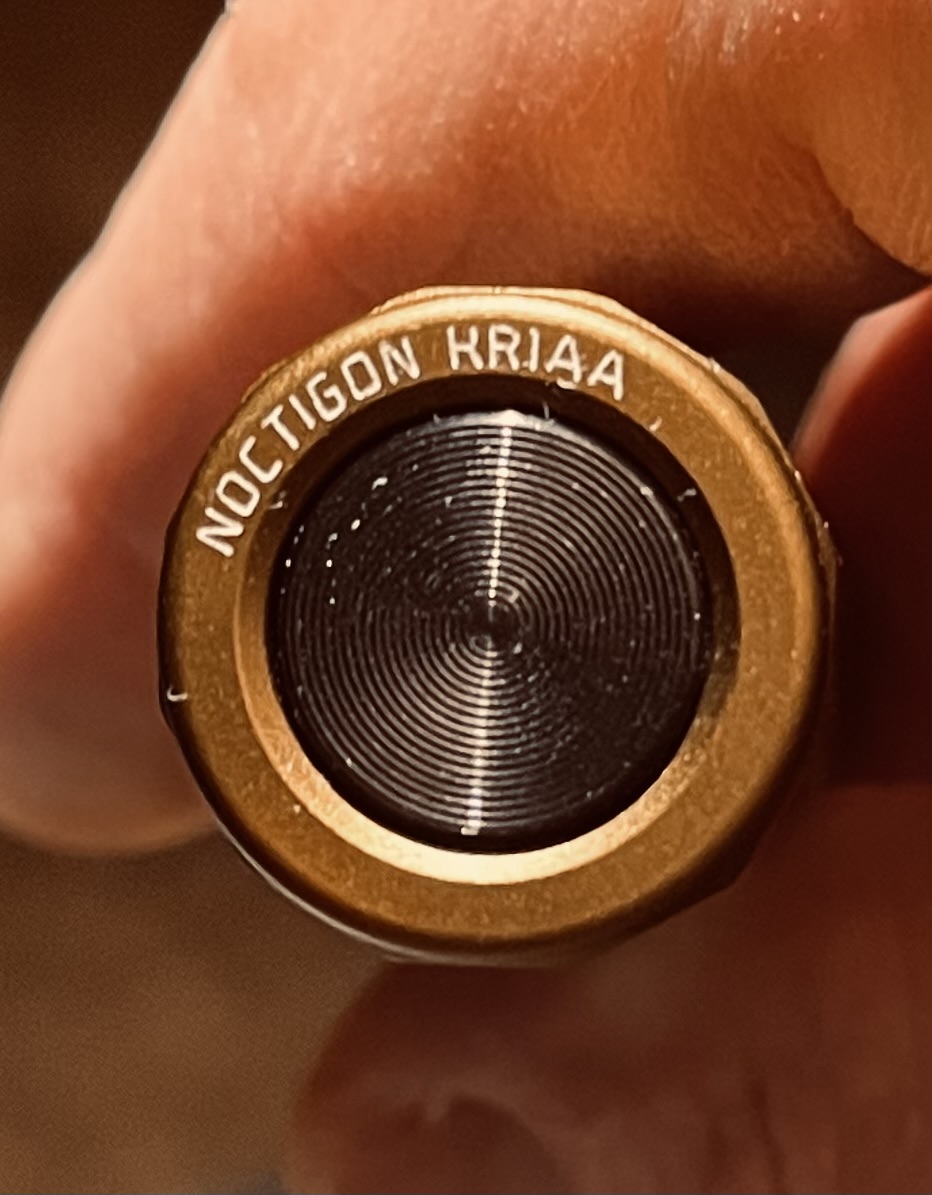
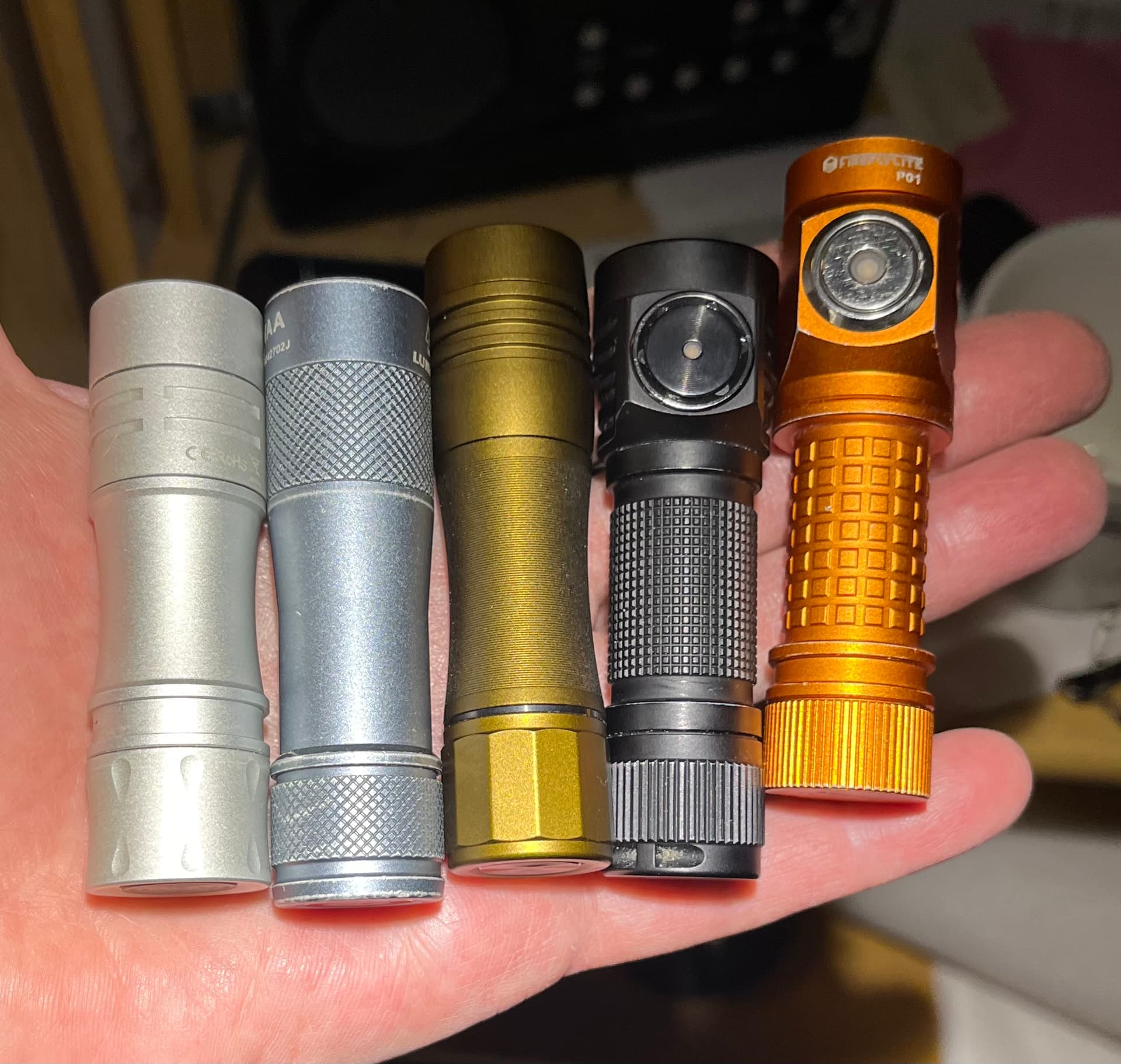

If Hank is willing to add another driver to his already extensive product range (which would be a great addition for LED options in single-emitter lights it opens up), a 3V buck driver that seems like it should be suitable for the KR1AA already been demonstrated:
As well as a cascaded boost buck, which could support AA and 14500 and is nearly as efficient as the D3AA driver, although more complex:
On a slightly different topic, many of the benefits of the latest generation of community-developed drivers also could be available for his dual-channel lights:
3 Thanks
Thank you, I thought I’d read something about a driver that would be suitable but my memory’s too unreliable for me to have gone into more detail.
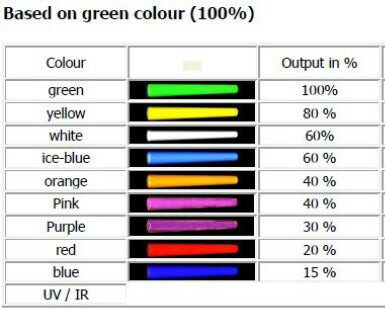
Only a personal opinion, but I find only the 2 brightest colours on the scale, green and sky blue, are of any use as locators if it’s just a 6mm x 1.5mm tube emitting light.
4 Thanks
I’ve had several tritium vials in various sizes and shapes and colors, and while some of the bigger ones can be bright enough to be pretty neat, the smaller ones are typically only visible in the darkest, most ideal conditions. There’s just not enough radioactive material inside to charge up a meaningful glow.
That’s part of why I switched to aux LEDs. Even the really dim ones are much brighter than tritium, and they don’t really get noticeably dimmer within a human lifespan. Plus, they can be turned off, and change color, and be used for firmware features.
For a tail-switch light like the KR1AA, instead of putting tritium in the button, I’d generally just store it with the bezel pointing up. It’s much more effective as a locator, and makes it easy to see when the battery is getting low.
17 Thanks
I agree with ToyKeeper. Aux mode in Anduril even on dim mode is brighter than most trits.
I much prefer aux leds for all the reasons ToyKeeper mentioned. They’re just a better technology.
Aux LEDS have the following advantages to trits:
- Much cheaper
- Much brighter
- Indirect glow is sufficient to find the light with dark adapted eyes. So long as my eyes are dark-adapted, low aux is enough to light up the surface my light is laying on even if the bezel is pointed away from me.
- Compare that to trits which pretty much have to be directly in my field of view with dark adapated eyes for me to see them. They’re too dim for indirect glow to be meaningful unless you have a lot of trits or exceptionally bright ones.
- Don’t noticeably degrade over the flashlight’s lifespan
- More controllable - depending on what type and how installed, they can change brightness or color. They can even be set to flash in pattern or change to show battery voltage.
- Not radioactive
- More durable - no risk of a key or other object accidentally wedging into a trit slot and smashing a trit.
5 Thanks
I agree with all of that, but the downside is that they use precious power that may better be used for the main purpose of a flashlight… being able to see in the dark.
So there is a trade off… That and most lights don’t allow me to adjust the low level to where I would like it to be.
As I have found out, this trit is low enough… will last something over 20 years, and uses no cell power. So there is that. Though I do wish it was just a bit brighter.
Just a counterpoint.
4 Thanks
Also it’s nice to be able to color match tail illumination with the head…it would also be cool to mill out slots for fiber optics/acrylic leads to put the aux lights to illuminate along the outside of the light, pseudo trits. Probably rough up the exposed portion for better scattering, etc…
Although it’s probably easier just to mill channels along the light/head to drop the LEDS into…
I think the more interesting aspect is tritium vials take minimal space and don’t need any wiring, so there’s quite a bit of flexibility in where they can be placed. I’ve seen some very cool aesthetics achieved with trits that I’m skeptical will ever be possible with aux LED’s.
As for aux LED power drain, with a suitably chosen low level, an 18650 can run aux LED’s for several years. The scenario where this would be an issue is for lights that don’t get used frequently, so the standby drain has time to consume a non-trivial amount of battery capacity, and are not practical to charge frequently, but does need as much capacity as possible when the light is used. With standby use cases, it is usually reasonable to turn off the aux LED’s or even lock out the light via the tailcap. But if you do want some light when not in use for a long time, for example as a locating aid, your point is certainly true.
And of course, it’s a bigger concern with smaller batteries. I think the D3AA on a NiMH is one of the more acute cases due to relying on the boost circuit to power the aux. Depending on the color aux is set to, it could drain an Eneloop in a little over a month even on low, and days on high.
4 Thanks
Is there somewhere we can set the aux to maybe a few hairs above trit level? And what’s the lowest achievable standby current for the aux? From what I’ve read about Zebralights, some of their models on mode 2 can last quite a while on an AAA cell…an AA cell has roughly triple the capacity, and a 14500 has essentially double that…
Aux brightness is controlled by resistors. Replace the resistor on the aux board with a higher value one, the current is reduced and the brightness goes down. It can theoretically be reduced to the point of being even dimmer than a tritium vial by using a very high value resistor.
The minimum standby current is whatever it draws with the aux off, or perhaps a very slight step up from that.
My understanding is Zebralight is able to achieve some of the best firefly mode runtimes because the microcontroller they chose is among the most efficient there is, but that it’s not suitable for Anduril. I want to say it was either thefreeman or Loneoceans who I read that explanation from, but I don’t have a link handy.
4 Thanks
Would you happen to know if this is an easy thing to do, and if so, what value of resistor would go there to reduce the brightness by say, 1/20th?
It requires soldering surface mount resistors that are very small, so they require a steady hand, and I would not say it’s for anyone new to soldering.
I don’t know exactly what resistors the aux LED’s on various lights might come with, but supposing one had a 1000 ohm resistor, you’d want a 20,000 ohm one…unless I’m thinking wrong about how forward voltages and resistance interact in a simple circuit, because I should be in bed.
3 Thanks
I hate ingesting alkoe hall, but it’s the only thing I’ve found so far that steadies my hands.
This sounds right…i dunno either lol
True. But they still last anywhere from a month to a decade per charge, depending on the battery type and how bright the low aux is. On most of my lights, low aux runtime is in the range of 1 to 5 years per charge, so the power use is so small it doesn’t really impact the main purpose of the flashlight. Additionally it can function as a much more efficient moon mode, meaning I don’t even have to turn the light “on” for middle-of-the-night bathroom trips and such. And on the nightstand, ceiling-bounced, it provides just enough light to kiss my partner goodnight, and to see what I’m doing when I roll over.
It’s important to note that you’ll need different resistors for the red, green, and blue channels. They have different forward voltages, so they need different resistors in order to balance the colors. Balancing them is not an easy task.
Typically, the minimum standby current on Anduril lights is about 20 uA or 30 uA with aux LEDs off. That’s the amount used by the attiny when it has “BOD” (brownout detection) enabled. When using a 900 mAh 14500 cell, that works out to about 3.4 years of standby time per charge.
With low aux, the standby current depends on the manufacturer’s choice of resistors on the aux board. On my original D4K-boost with DEL’s boost driver, I measured 85 uA with low aux lit up. On a 900 mAh cell, that would mean about 1.2 years of standby time… or with the 21700 5000 mAh cell I used, it was about 6.7 years. I found this to be just about perfect.
On Hank’s newer lights with drivers from thefreeman or loneoceans, the aux LED board seems to make “low” a bit higher. I measured about 200 to 300 uA, which means about 4 to 6 months on a 14500 cell or 2 to 3 years with a 21700 cell. I think this is too much power, and the standby time should be longer… but it’s still at least as good as ZebraLight, or better (they list 3 to 5 months on an AA-sized cell, or 9 months with a 21700). So we’re already getting aux “moon” to run several times longer than some ZebraLights, while also doubling as a battery level indicator.
… and I know of a way to do a true long-lasting moon or firefly mode using the main LEDs, with Anduril. It just hasn’t been done yet*. The main LEDs could be hooked up the same way as the aux LEDs, to allow them to light up passively while the MCU is in standby mode. That would mean moon-mode runtimes of over a year on a 14500 cell, or 5+ years on a 21700 cell.
* Yet… on purpose. I have a light which implemented this feature by accident, by allowing some current to leak through in “off” mode. The main LED lights up at a “low aux” brightness, using just 100 uA, for a “permanent moon” which barely uses any power. A circuit designer would need only do this on purpose, and let the MCU control it like how the aux LEDs work… and then we’d have an ultra-long-runtime moon mode.
10 Thanks