There are many flashlights that fit comfortably in your pocket to be easily accessible at all times. But what if you need both hands free, but still want to orient the light into the right direction?
The new Nitecore EDC09 is not only very compact, but also offers a high flexibility with its adjustable head, magnet and dual-way clip.
You can find the German version of this review on my website: SammysHP Blog › Nitecore EDC09
The flashlight was provided by the manufacturer for this review. Thank you very much!
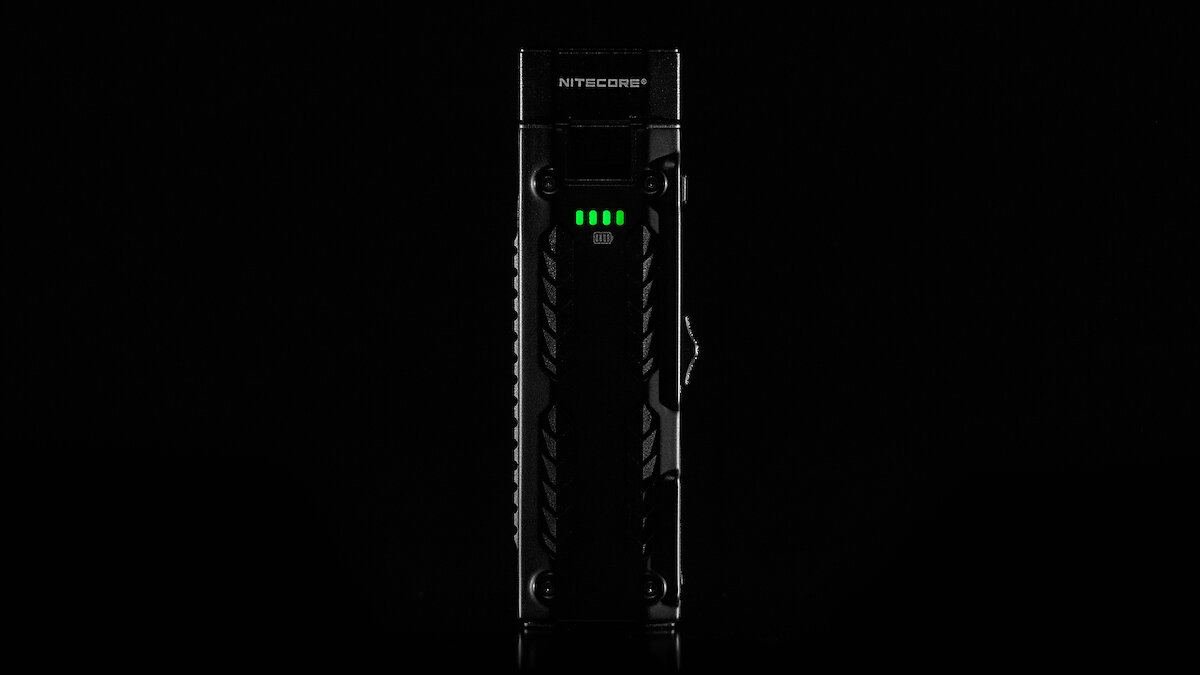
Overview
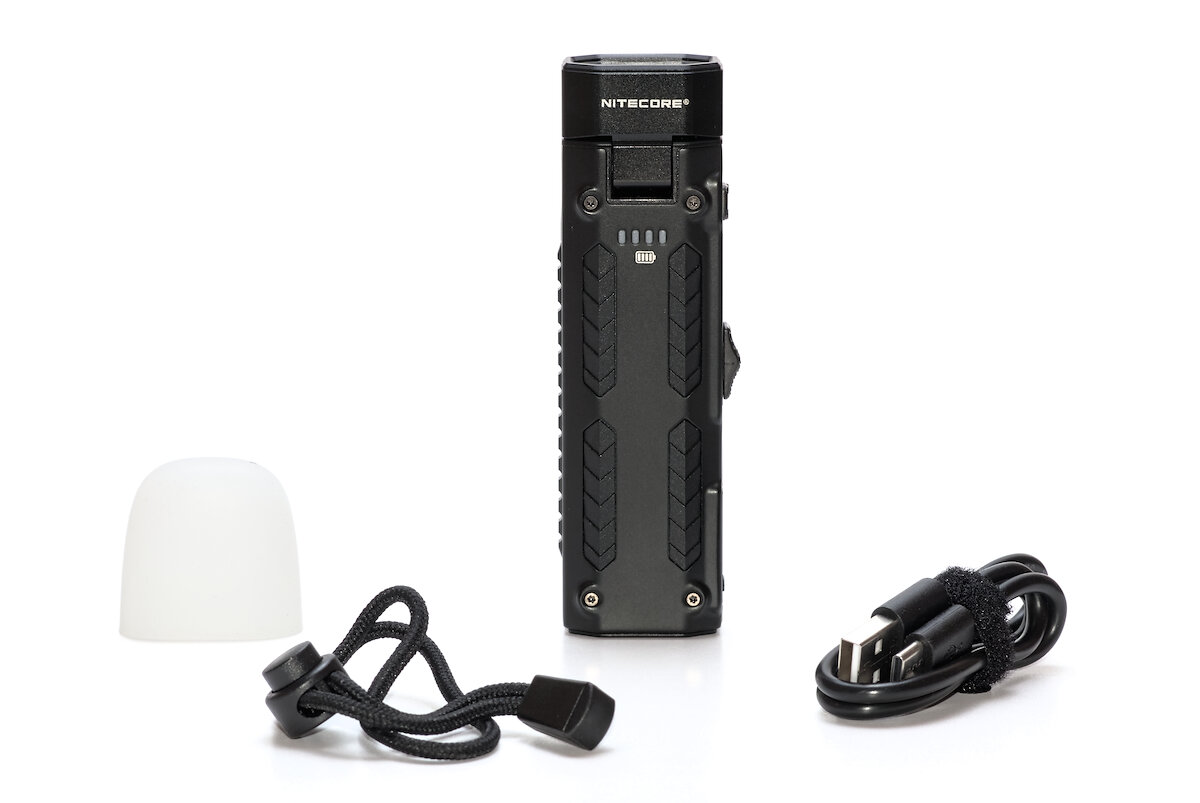
For this review I received a pre-production sample that came without packaging or a printed manual, but with these accessories:
- Lanyard
- Diffuser
- USB-C charging cable
A clip was already attached and the battery is permanently installed. The user manual is available in nine languages (EN, DE, FR, RU, JA, UK, IT, PL, CN) and explains all functions in an easy-to-understand way. However, the flashlight is so intuitive to use that you hardly need the manual at all.
The almost symmetrical design with an octagonal body looks simple at first, but has a unique character from small interruptions in the symmetry and small details.
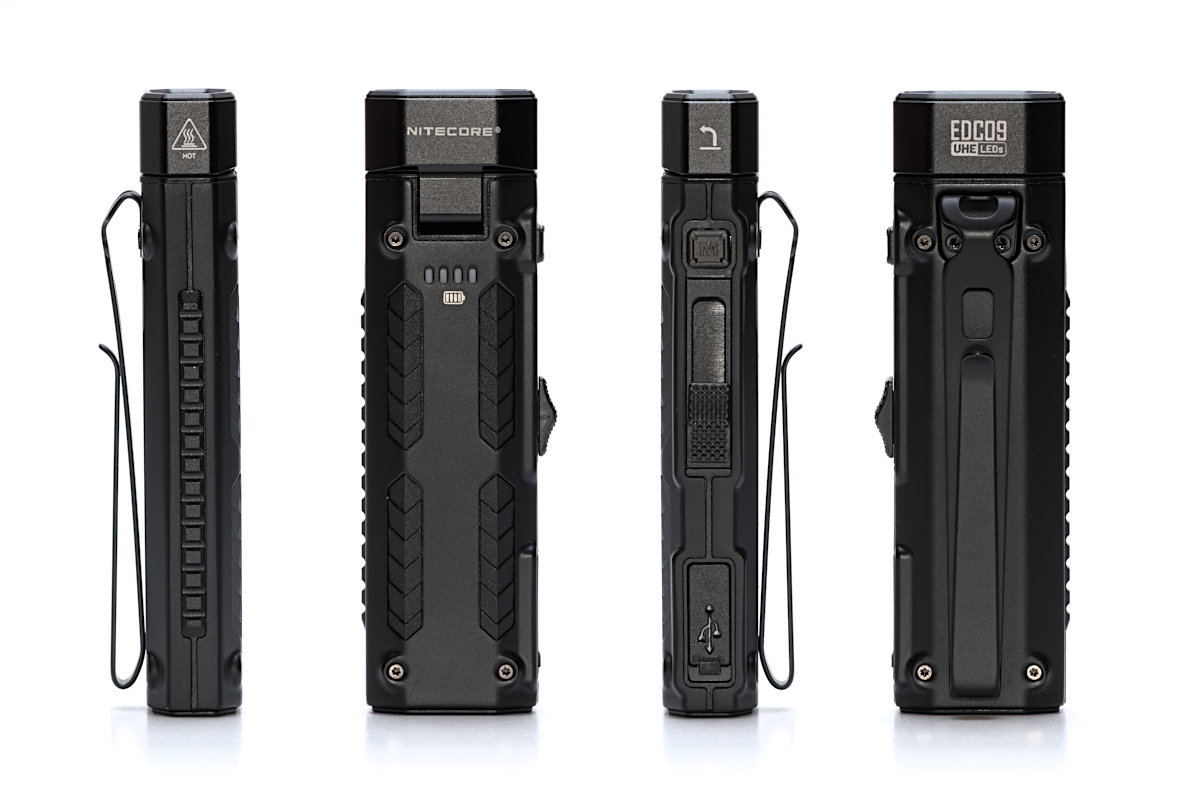
As the name suggests, the EDC09 is an “Every Day Carry” flashlight: a companion for everyday life that you can carry with you at all times. With dimensions of 108 × 30 × 17 mm, the flashlight disappears discreetly into your pocket without being noticeable. The maximum width is 34 mm due to the switch and grip strip and including the clip it has a total thickness of 24 mm.
Length: 108 mm
Width: 30 – 34 mm
Thickness: 17 – 24 mm
Weight: 114 g
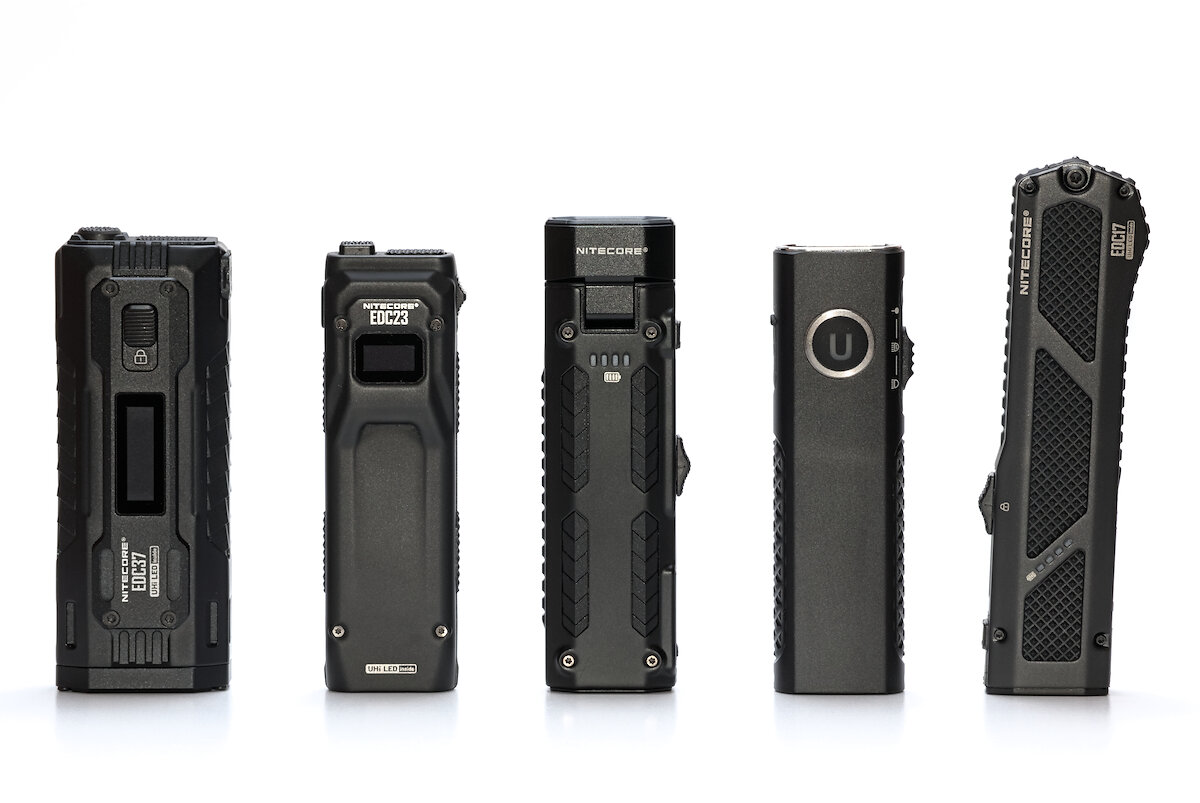
Nitecore EDC37 | Nitecore EDC23 | Nitecore EDC09 | UltraFire S3 | Nitecore EDC17
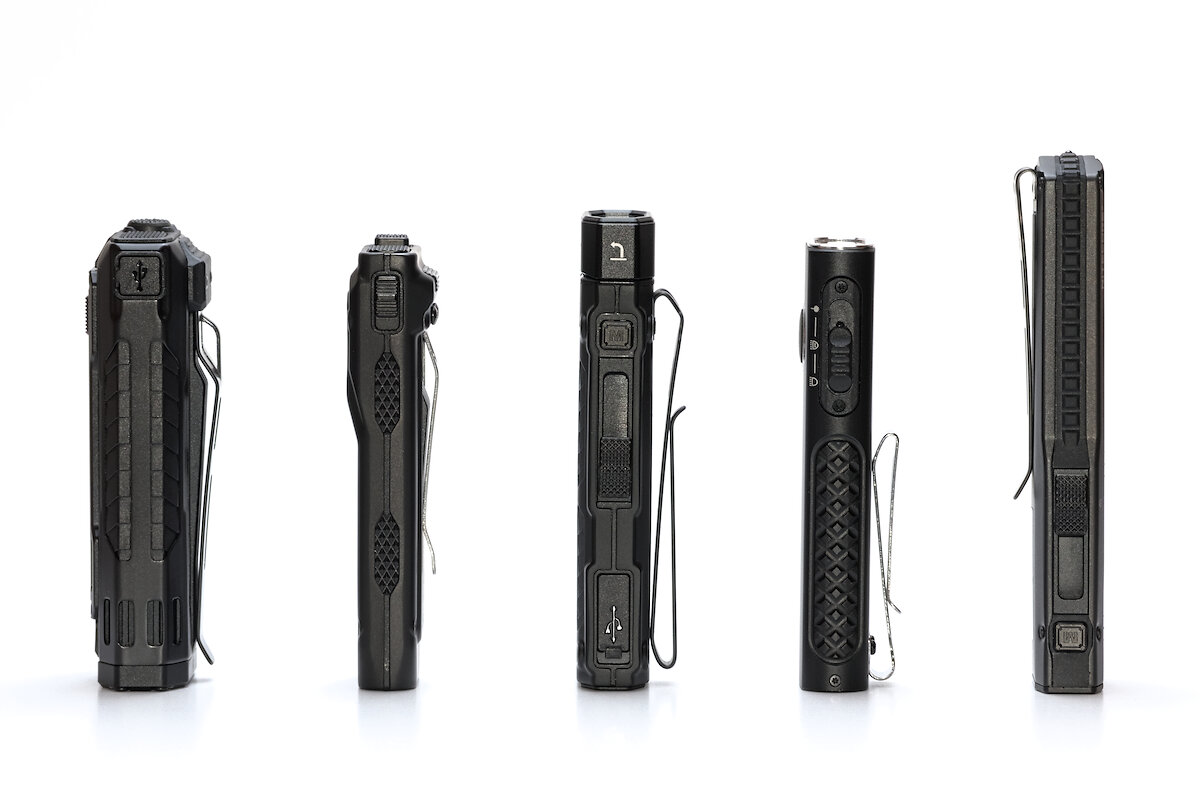
Nitecore EDC37 | Nitecore EDC23 | Nitecore EDC09 | UltraFire S3 | Nitecore EDC17
Grip surfaces featuring the scale pattern already known from the EDC29 and EDC37, along with a grip strip with coarse jimping on the left side, ensure a perfect grip even in wet conditions. These parts are made of plastic, while the rest of the body is stainless steel with a black PVD coating.
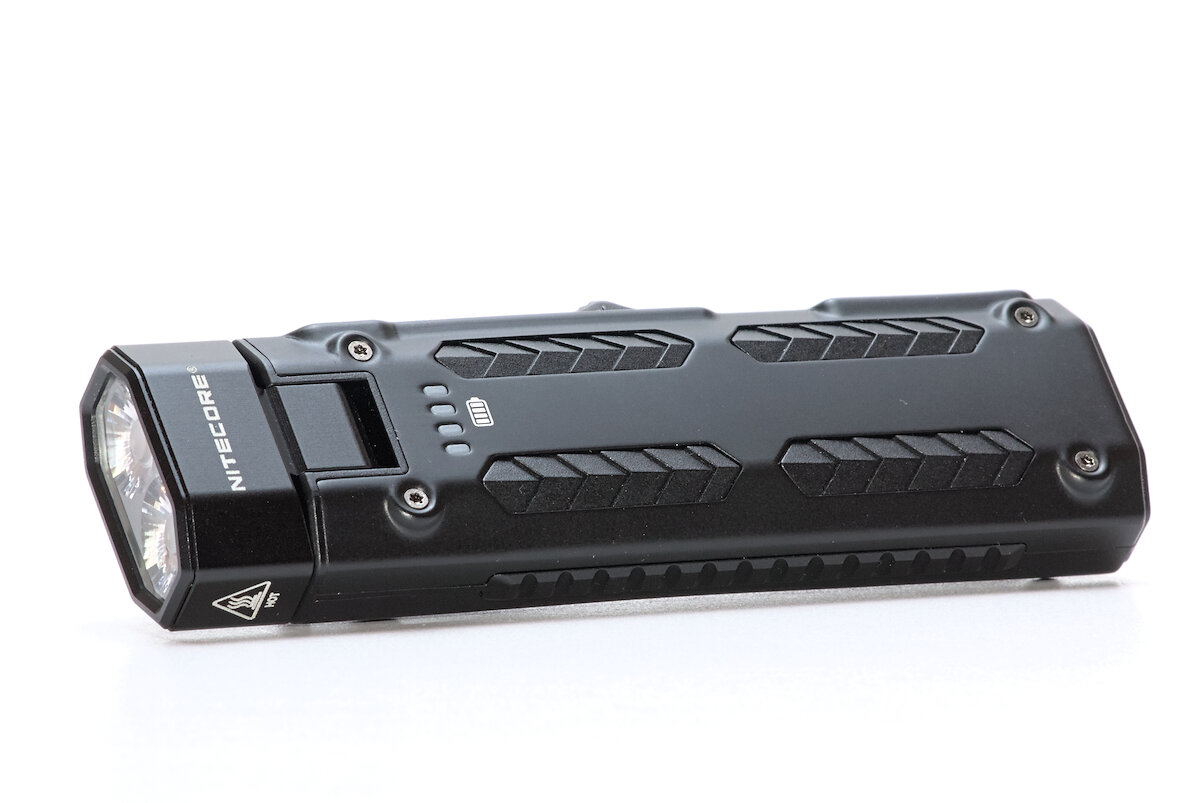
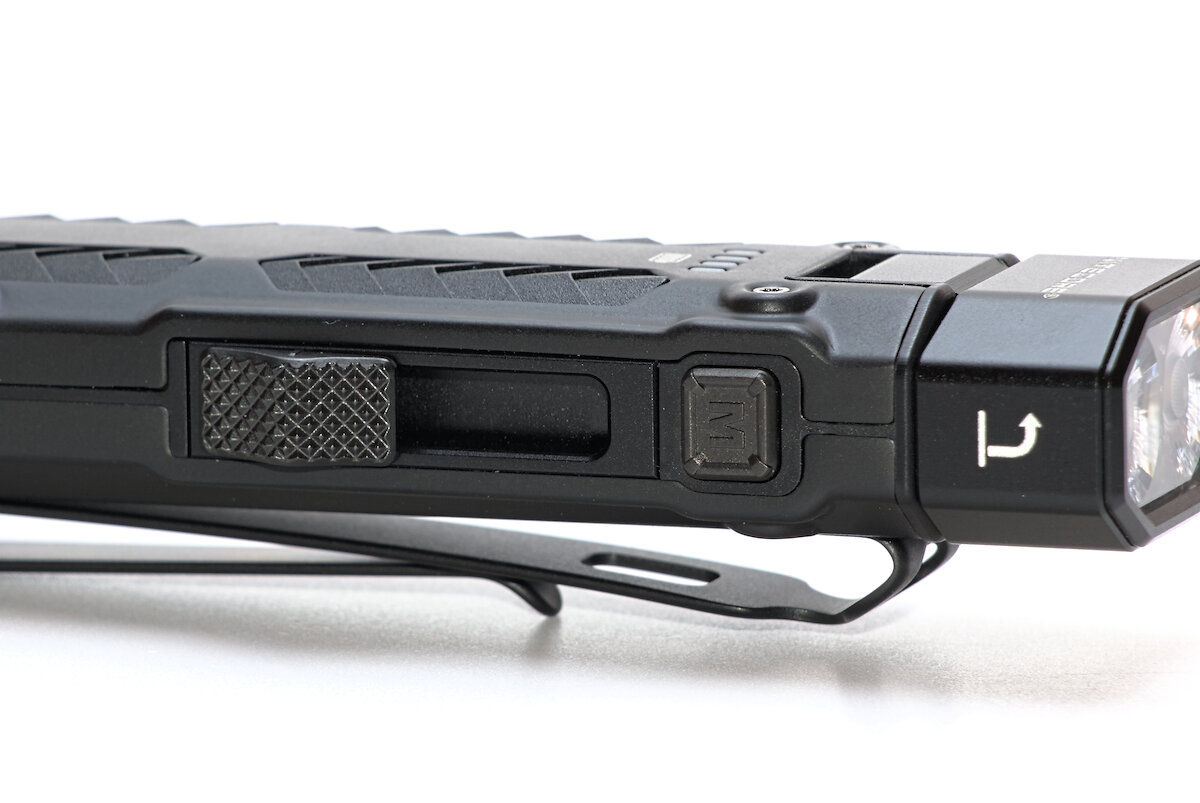
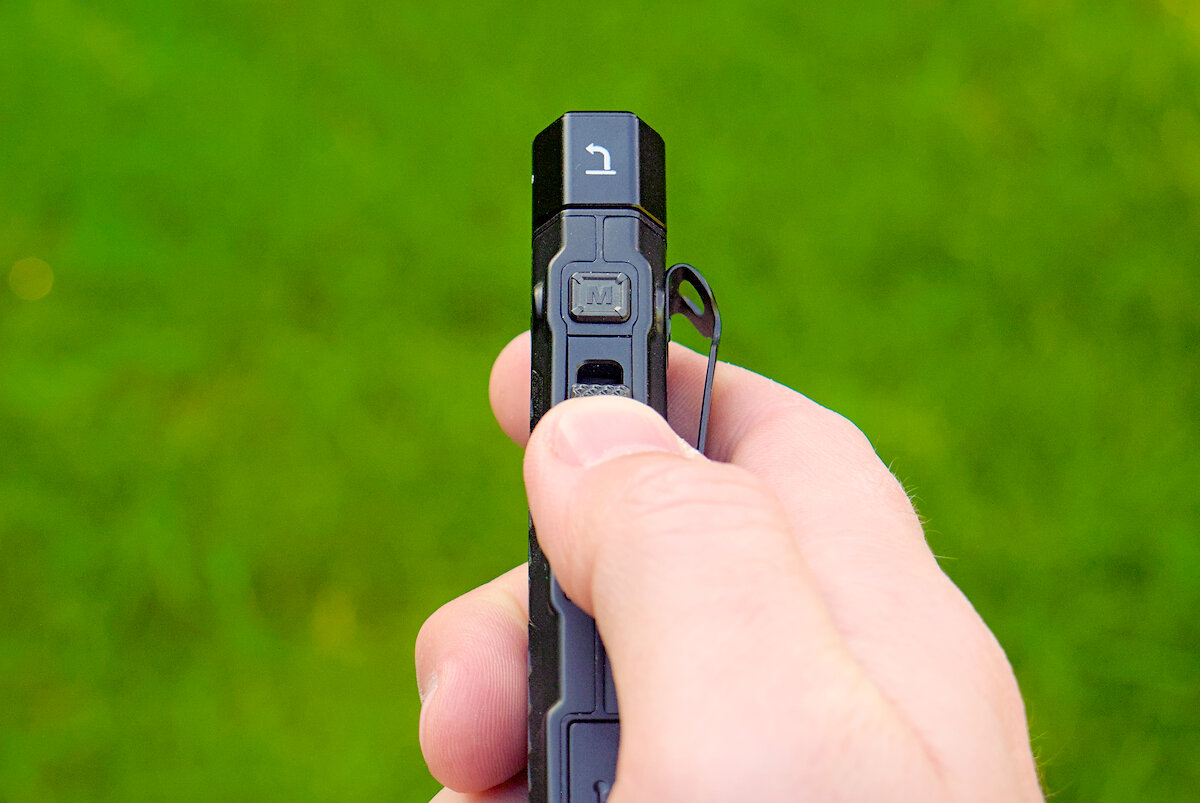
On the right side are a sliding switch and a button, identical in design to those used on the recently released Nitecore EDC17.
A highlight of the EDC09 is the adjustable head, which can be tilted smoothly up to 102°. This allows the light to always be directed in the right direction, even when the flashlight is not being held in hand.
On my sample, the mechanism is a bit stiff in certain positions, but it gives a robust impression and doesn’t wobble. It would have been nice to have a detent or lock in the straight position so that the head doesn’t easily move while carrying it in the pocket.

A dual-way clip on the back side enhances the flexibility of the tilting head, as the flashlight can simply be flipped around once it reaches the end stop. For example, the flashlight can be attached to a belt or backpack strap and the head tilted forward to light the way.
The clip extends almost to the end of the flashlight, allowing the flashlight to fully disappear into your pocket. However, relative to the otherwise quite flat design, it adds a noticeable 7 mm of thickness and also prevents the flashlight from lying flat on its back.
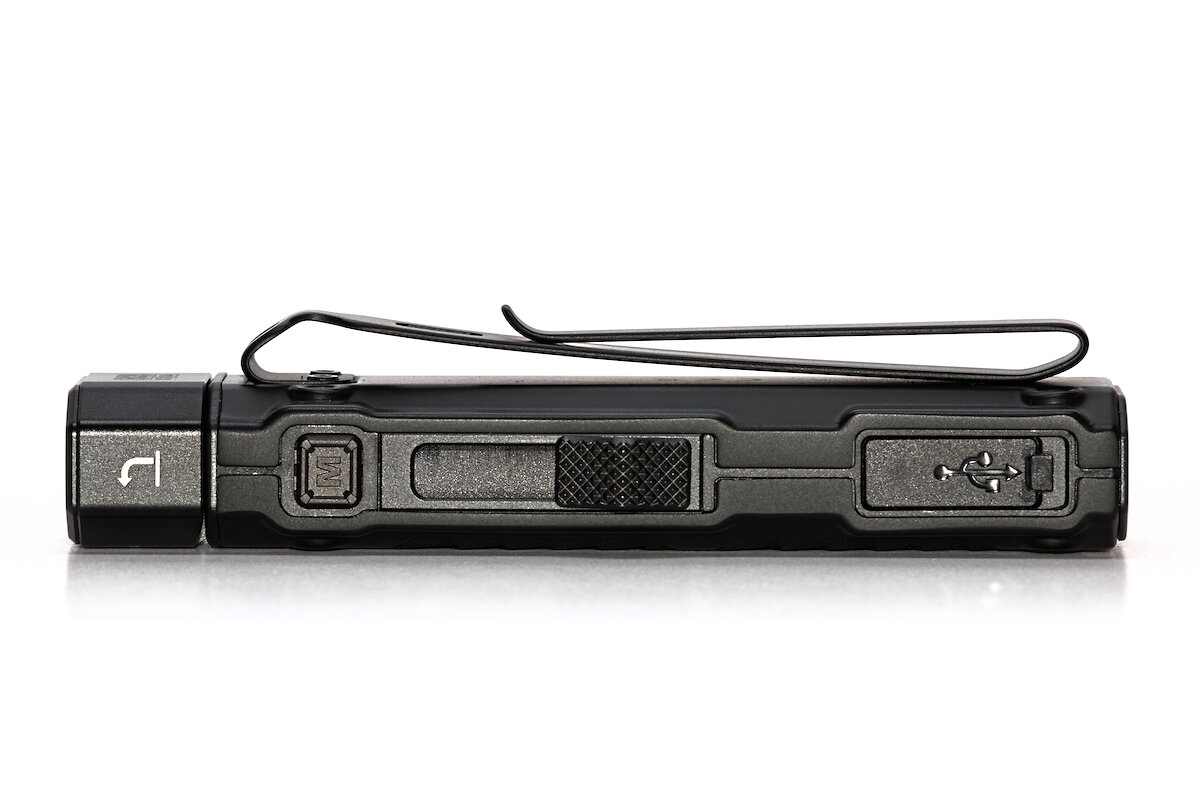
The clip is attached with two T6 screws, making it easy to remove if needed. It also features a hole where a lanyard can be attached.
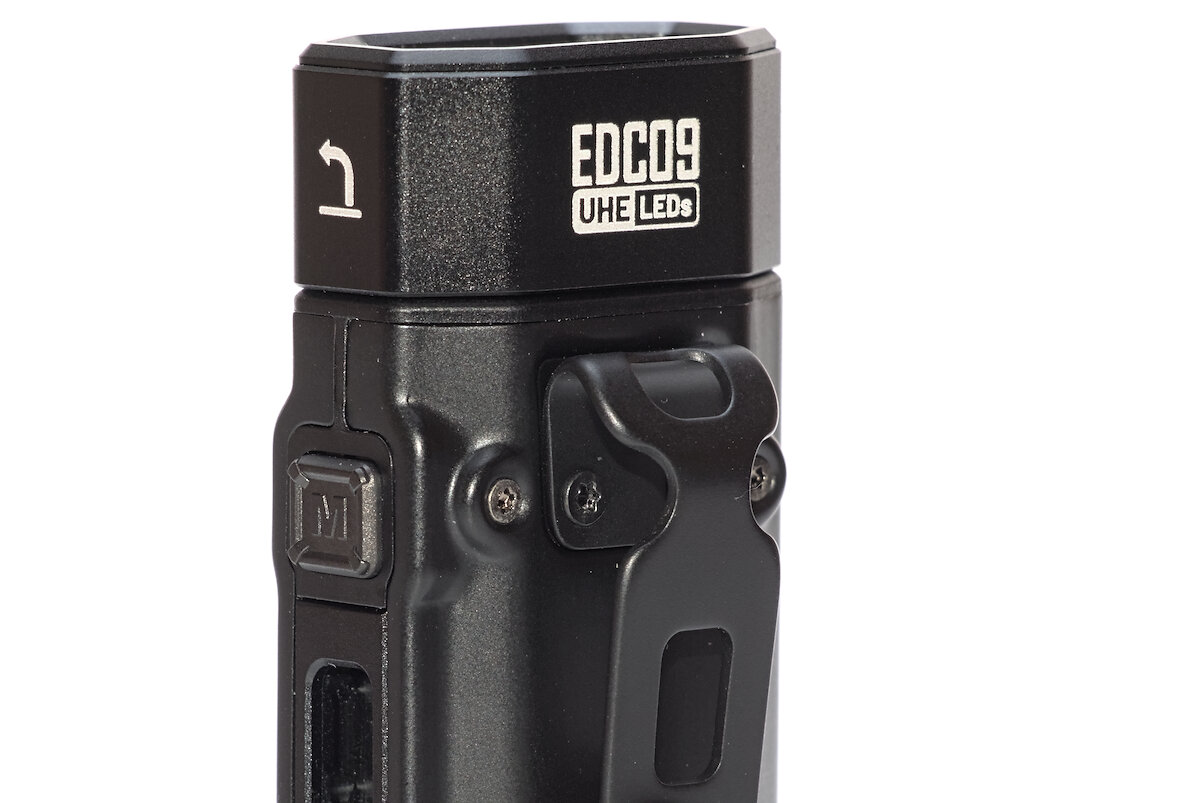
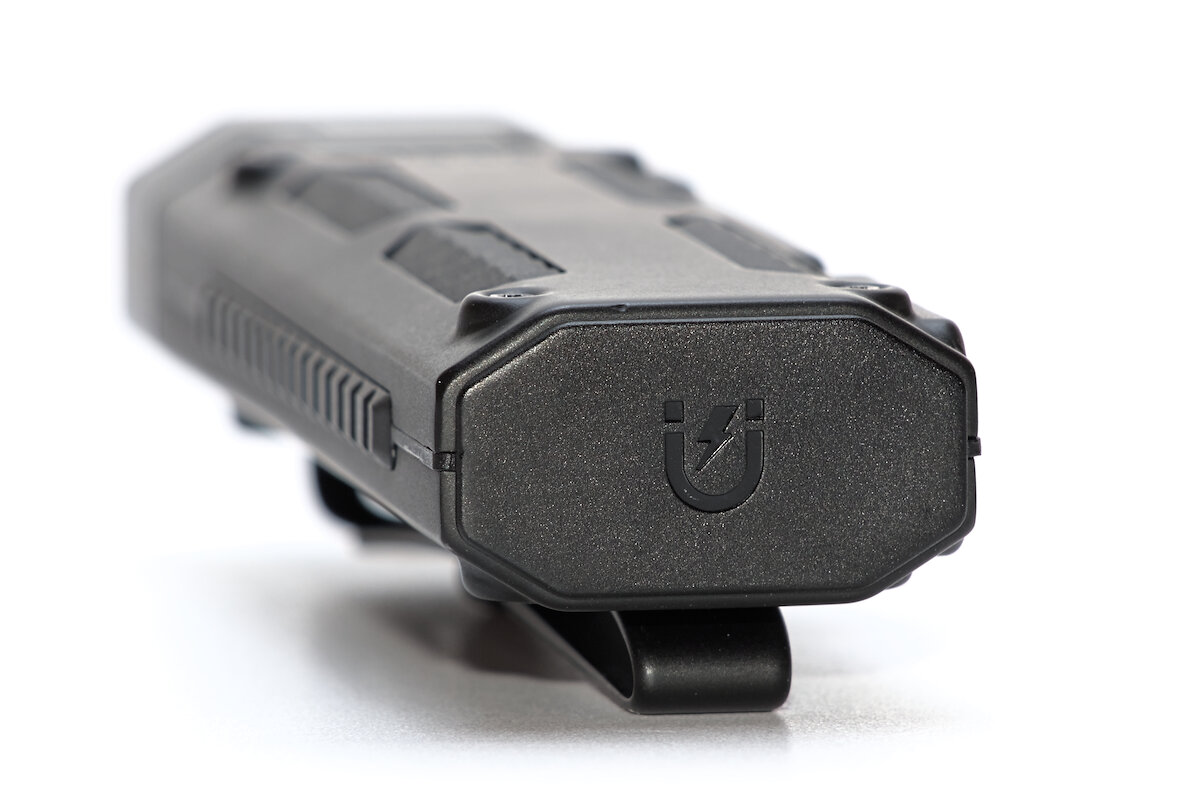
A strong magnet allows the EDC09 to be attached to magnetic surfaces. The end of the flashlight is made of plastic, which helps protect surfaces from scratches.
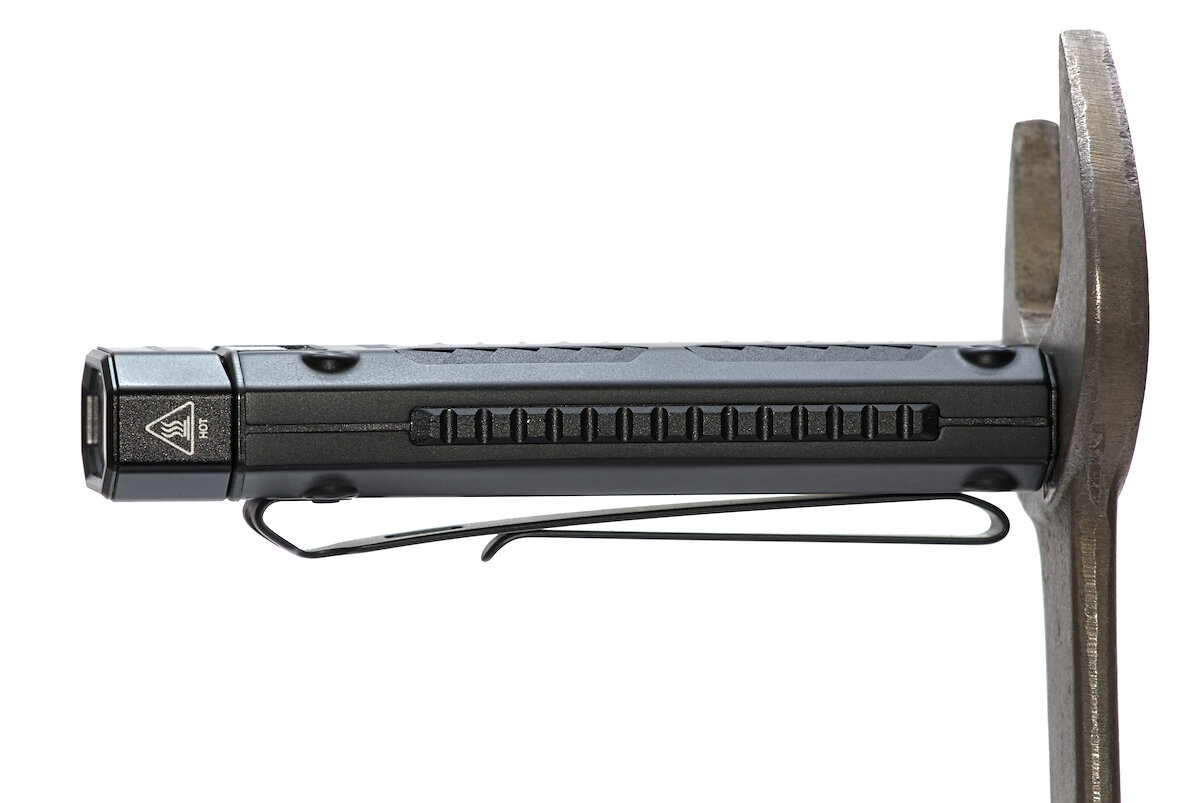
The magnet is a perfect combination with the adjustable head, as a magnetic surface isn’t always available in the desired orientation. This makes the EDC09 ideal for work on cars, machinery or other equipment.
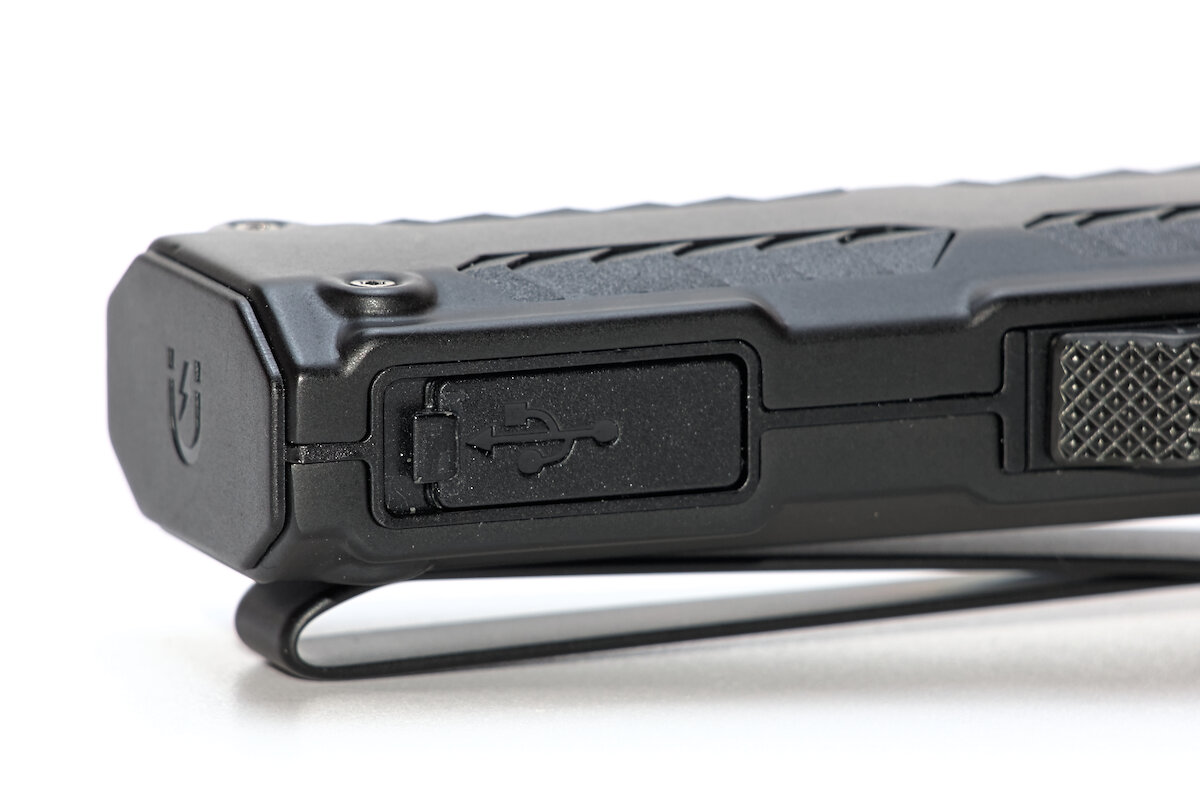
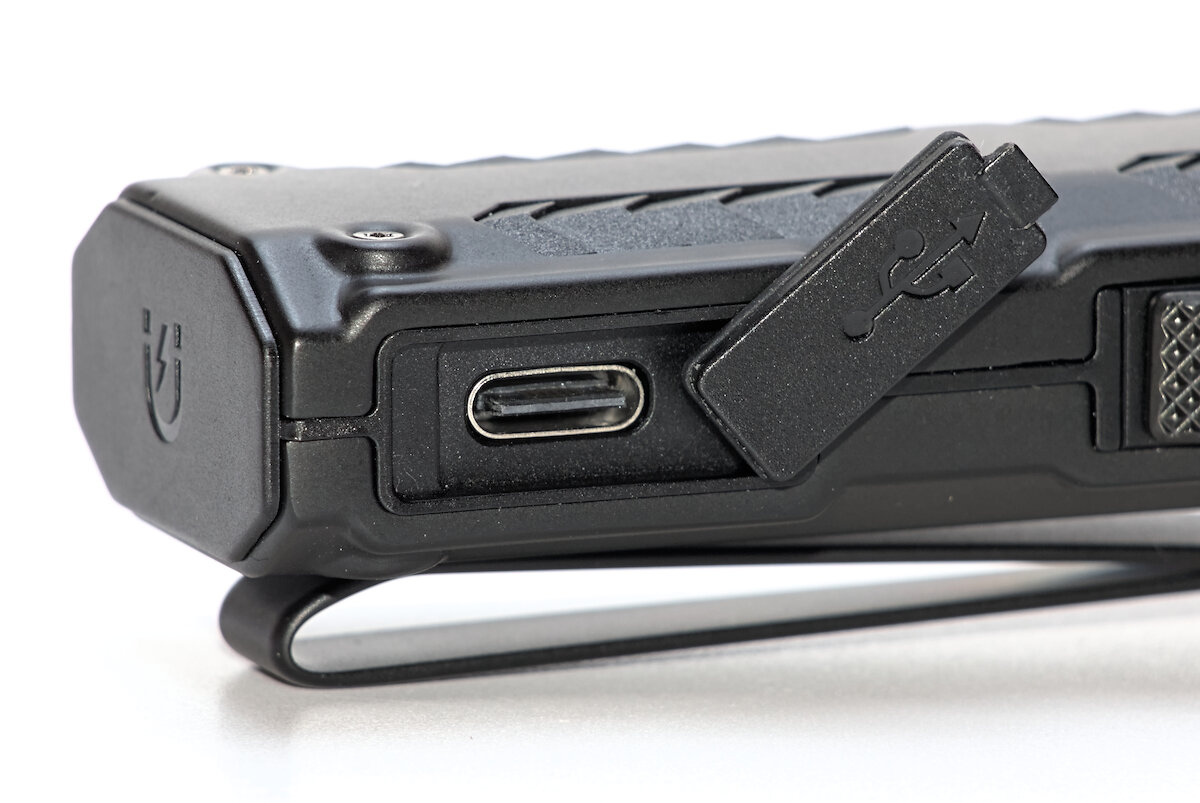
The flashlight is charged via a USB-C port, which is protected by a cover against dirt and water. The outer part of the cover is made of rigid plastic, while the inner half is silicone. This provides a good seal while still allowing the cover to open and close easily.
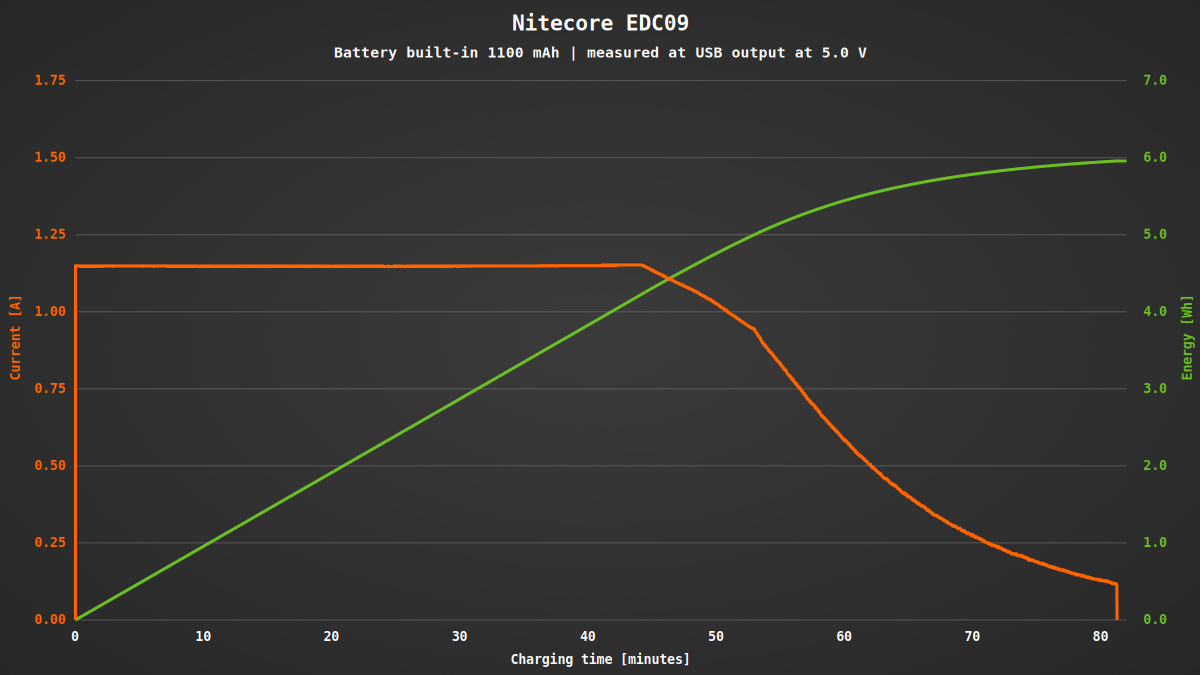
The built-in 1100 mAh battery is fully charged in about 80 minutes. No special power supply is needed, as the current barely reaches 1.2 A. The flashlight can be used normally while charging.
According to the manufacturer, the EDC09 is water-resistant with an IPX6 rating. This means it can handle rain or a brief rinse under running water, but it’s better not to submerge it completely. It is also designed to withstand drops from up to two meters in height.
The adjustable head could be a potential weak point. I’ve been carrying the EDC09 in my pocket every day for almost two months now, and so far, I haven’t encountered any issues. While a bit of dust does accumulate in the joint, it can easily be blown off or wiped away.
Overall, the build quality feels great and gives a robust impression. The built-in battery does affect the flashlight’s lifespan, but it’s hard to avoid in this shape. However, thanks to the screwed body, there’s at least a small hope that the battery can be replaced with some effort.
User interface
A side-mounted sliding switch allows for intuitive operation of the flashlight. It clicks nicely into four precise positions. Further toward the front is a button that lets you adjust the color temperature. Both buttons are made of plastic but feel high-quality.
The sliding switch works by using Hall sensors to detect the position of a magnet built into the switch, making it waterproof and durable. The system is to a large extend resistant to external magnetic fields: a strong magnet may temporarily prevent brightness adjustments, but it won’t change the brightness or turn the flashlight on or off.
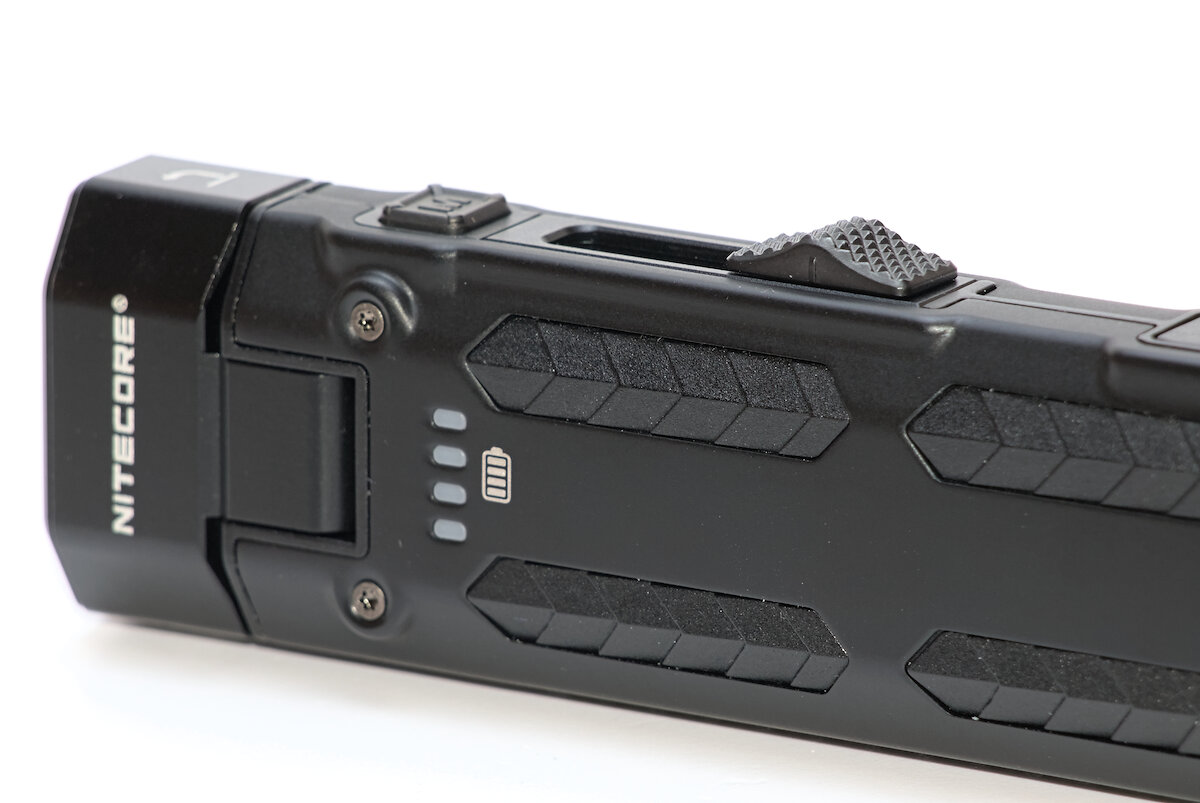
The sliding switch turns the flashlight on and adjusts the brightness in three levels – Low, Mid and High. If you hold the button while turning the flashlight on, you get access to the Ultralow mode. When the flashlight is on, a short press of the button allows you to adjust the color temperature between cool, neutral and warm. The selected color temperature remains saved even after the flashlight is turned off.
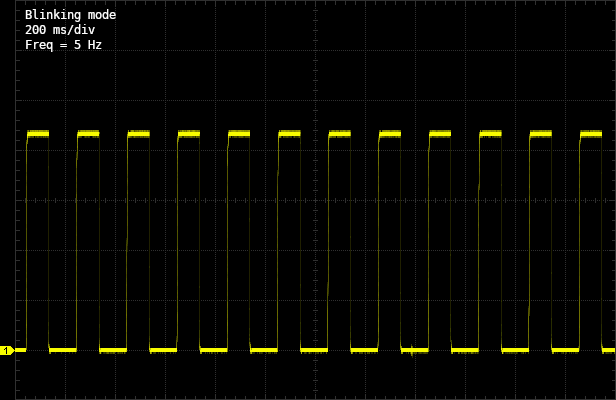
There is no real strobe (thankfully), but there is a kind of signal mode in the form of fast blinking at 5 Hz. It’s activated by holding down the button while the flashlight is on.
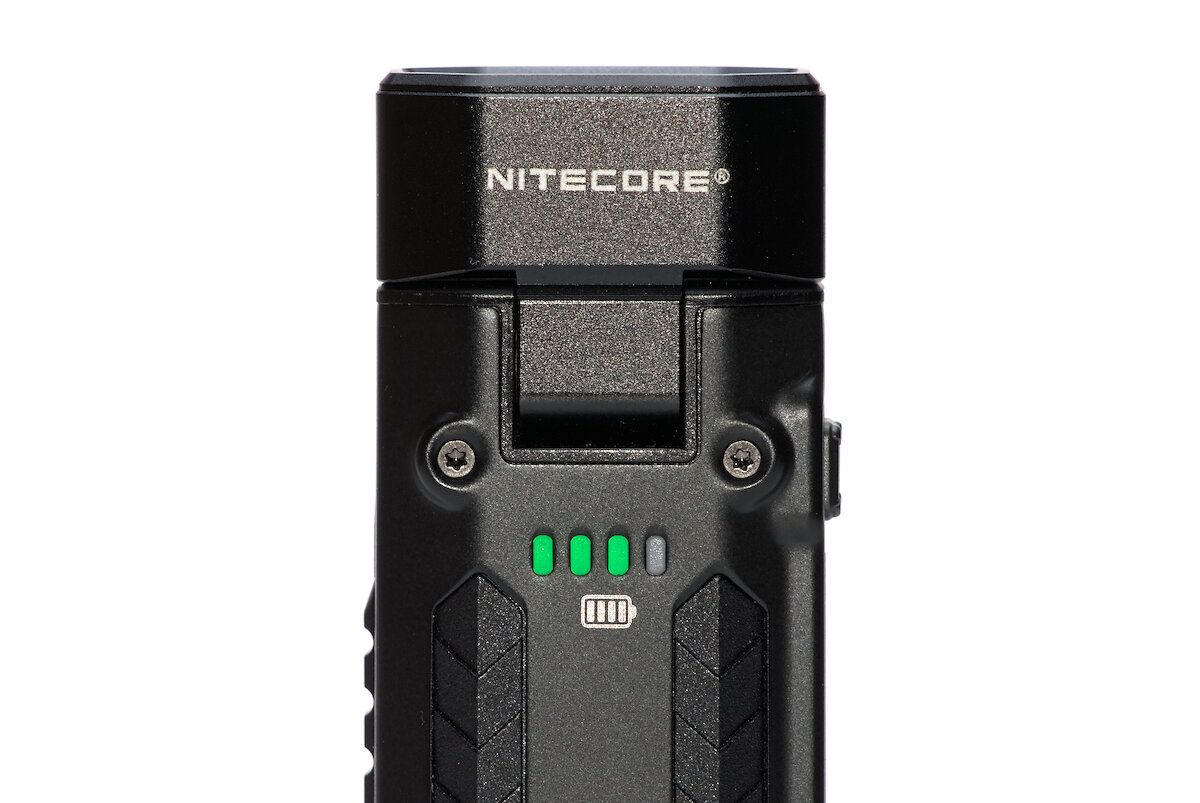
After turning the flashlight on – or with a short press of the button – four LEDs on the front indicate the approximate battery level for four seconds.
| Indicator | Battery level |
|---|---|
| ☼☼☼☼ | 75% – 100% |
| ☼☼☼ | 50% – 75% |
| ☼☼ | 25% – 50% |
| ☼ | 10% – 25% |
| ☼ blinking | < 10% |
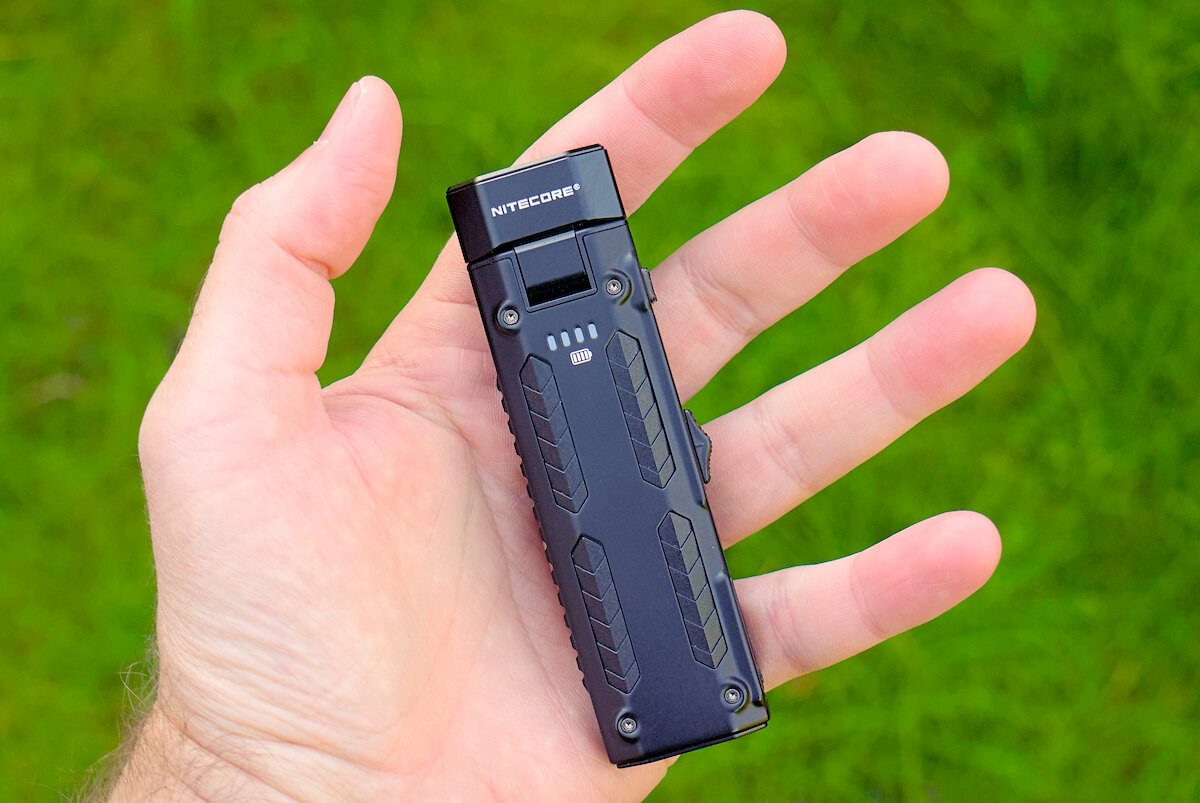
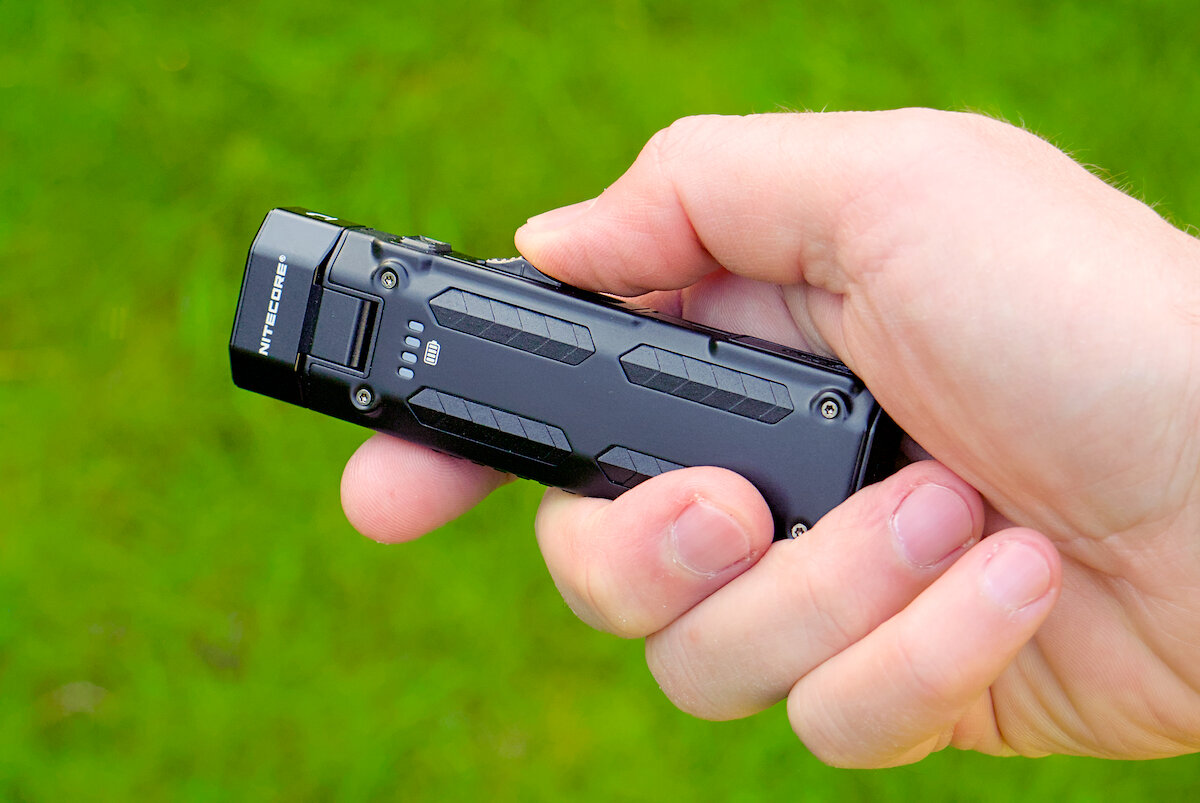
The handling is awesome: The flashlight fits comfortably in the hand and the sliding switch makes it incredibly easy to operate – it doesn’t get much more intuitive than this.
Unlike many other flashlights, the EDC09 has no separate lockout. The sliding switch handles this function and, in my experience, is just as effective as the “Rapid Lock” sliding switch found on other EDC-series lights. So far, the flashlight has never turned on accidentally.
Illumination
The two LEDs are a development by Nitecore called “MCT UHE”, which likely stands for “Multiple Color Temperature with Ultra High Efficiency”. These LEDs feature two warm white and two cool white dies arranged diagonally, which can be controlled separately. This allows you to adjust the color temperature in three steps, from cool white (6500 K, CRI 73) to neutral white (4500 K, CRI 83) and warm white (3000 K, CRI 97).
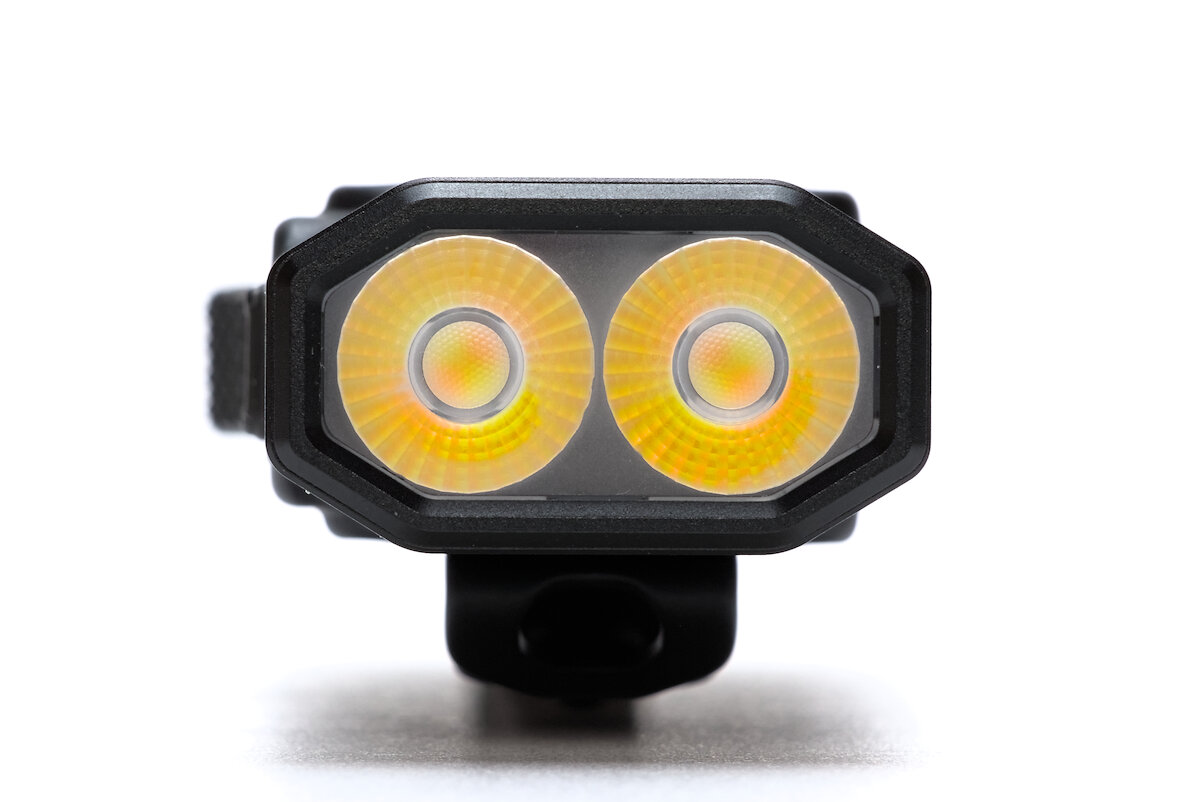
A TIR optic with small facets mixes the individual dies together to create a uniform light beam. The optic is not protected by a glass lens, so it doesn’t have an anti-reflective coating. However, it is more resistant to breaking compared to glass and small scratches shouldn’t have any noticeable impact on the light.
The beam pattern is slightly floody, with a wide spot that gently fades towards the edges. The flashlight provides a pleasantly even illumination without artifacts or color gradients. The tint looks neutral, perhaps even a bit rosy, but definitely not green.
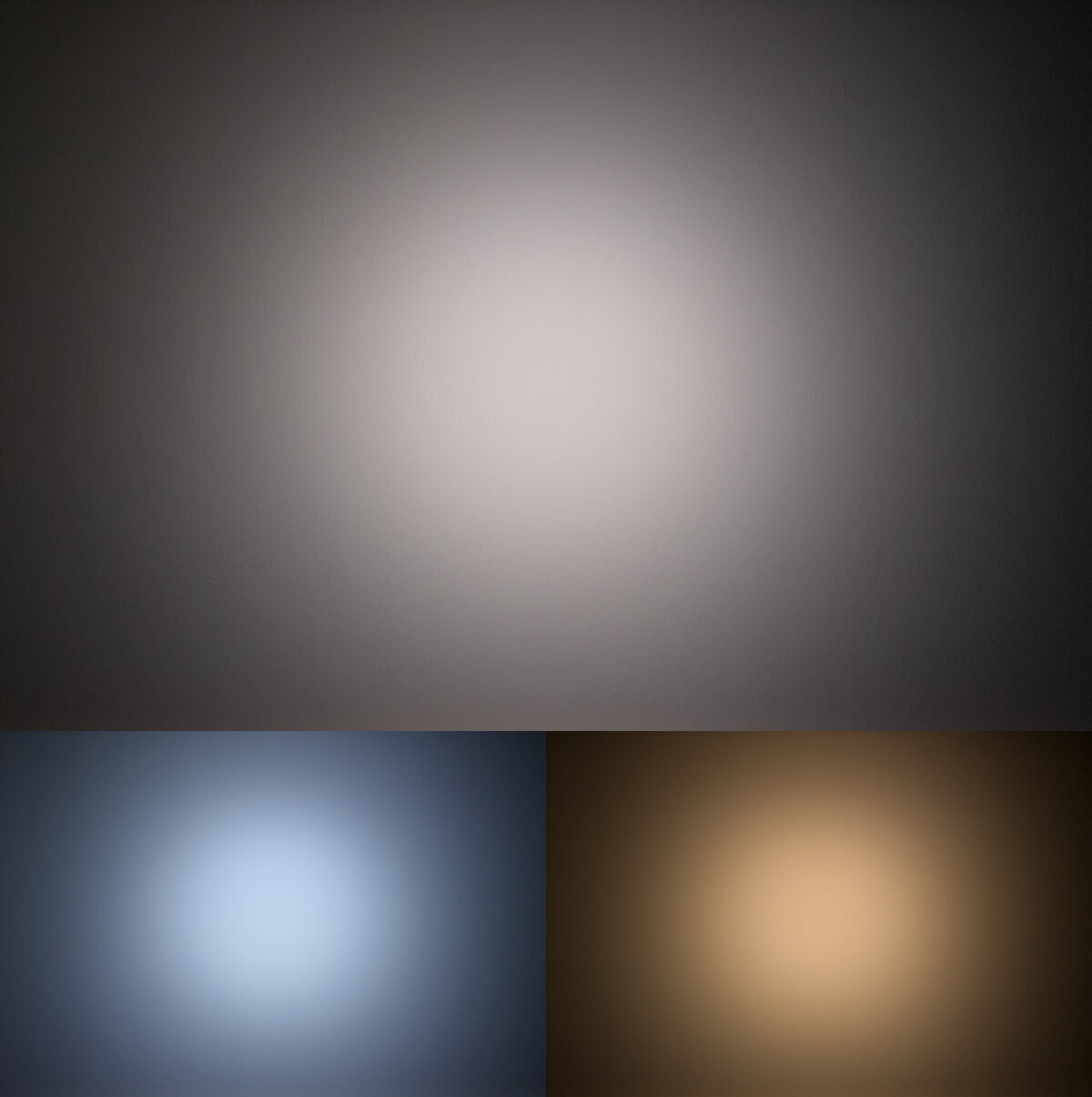
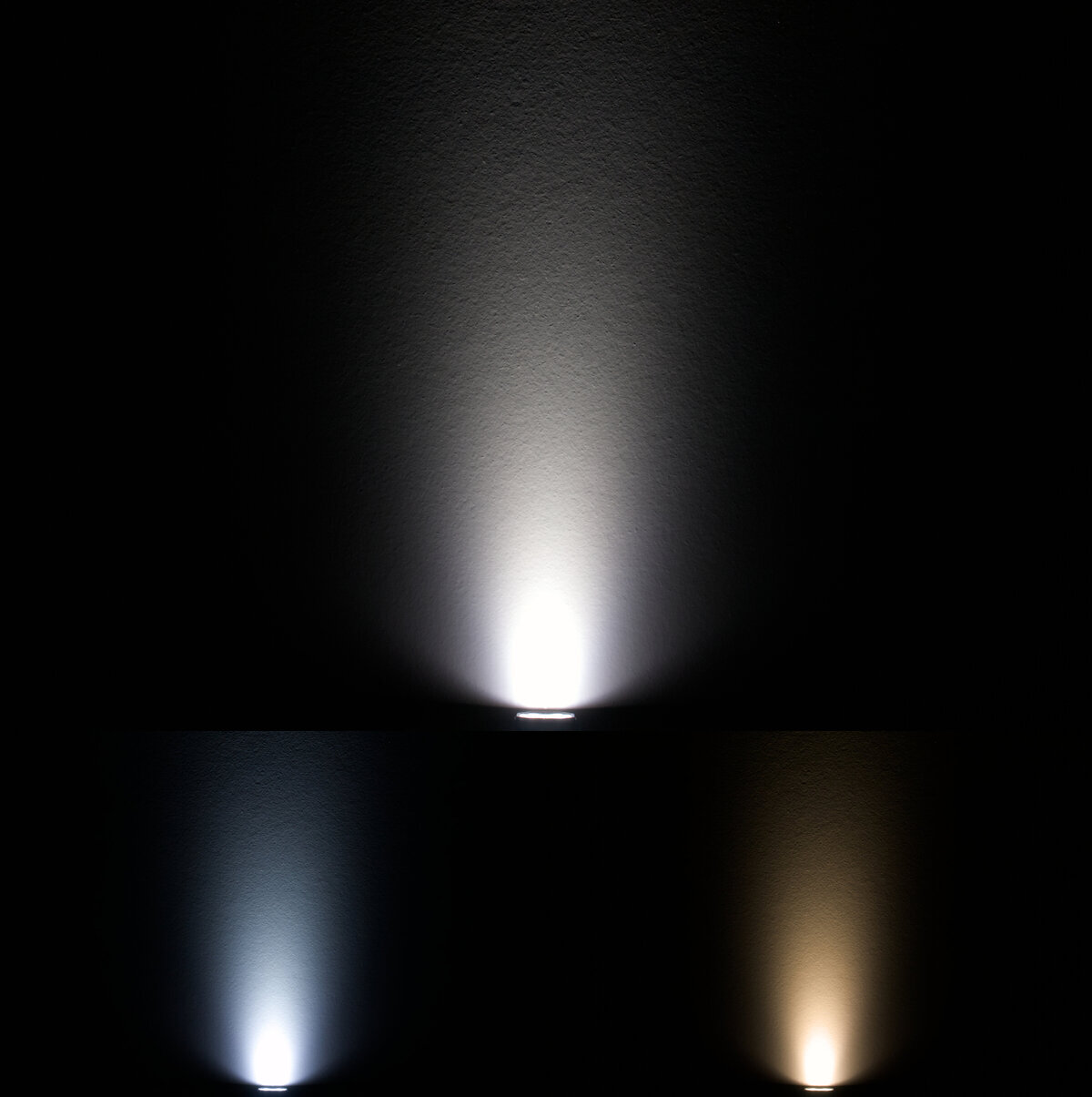
Compared to flashlights with separate LEDs to change the color temperature, the MCT LEDs have the advantage that the colors are positioned closer together. This allows for better mixing of the light, eliminating any distracting color shadows.
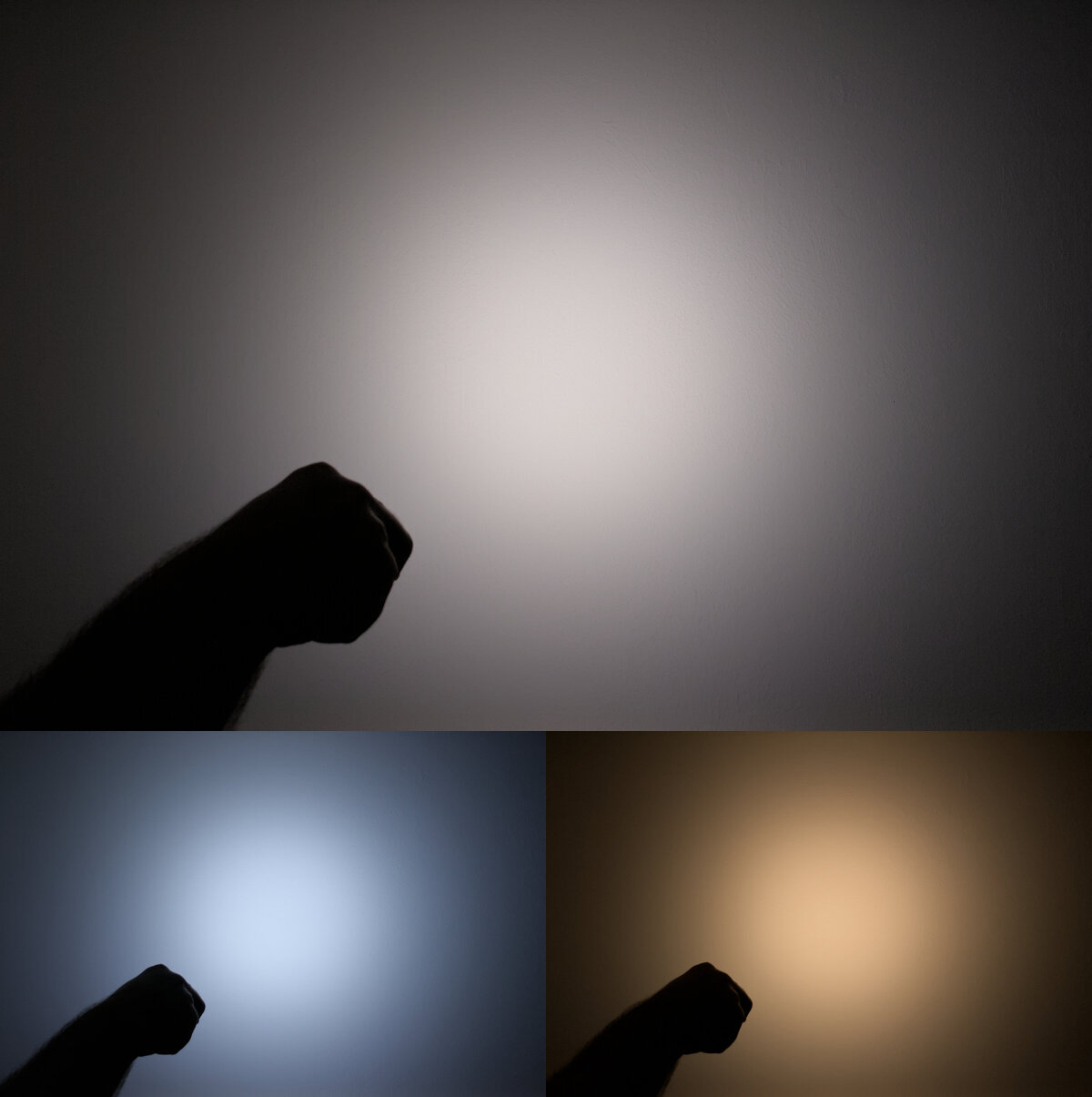
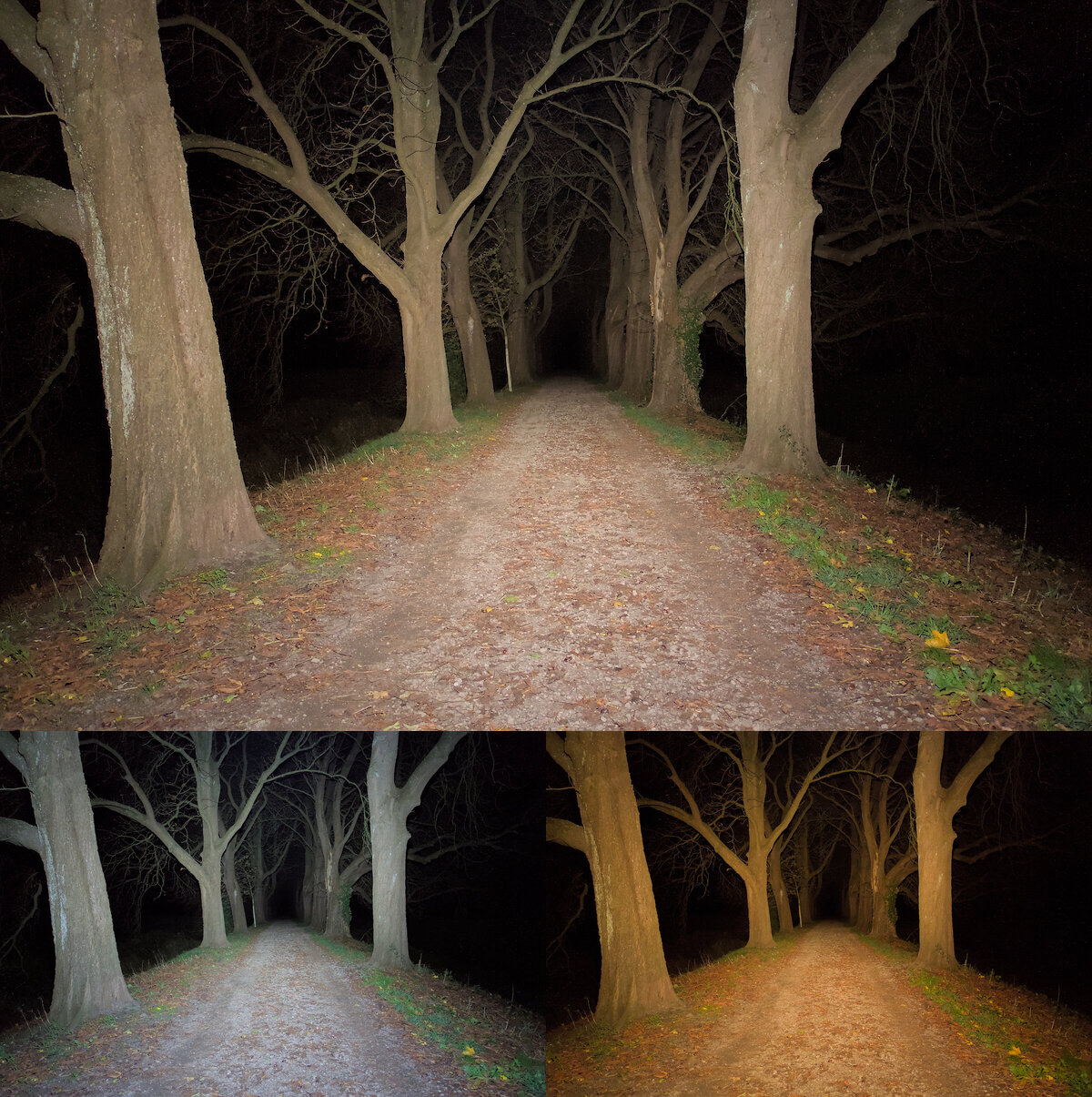
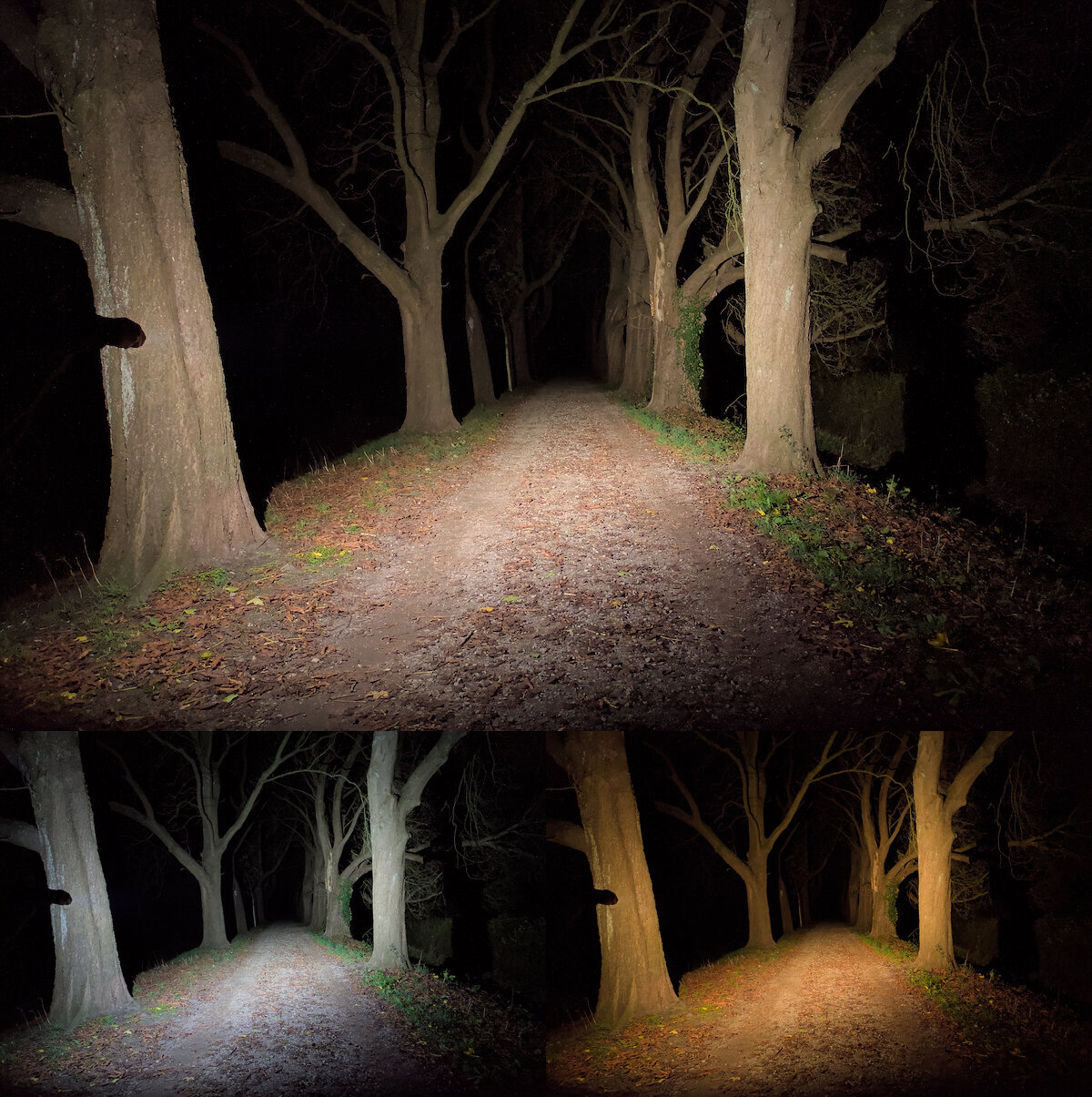
With its wide beam, the EDC09 is especially suited for short to medium distances – such as reading, illuminating electrical cabinets or lighting the way.
The flashlight comes with a white silicone diffuser. It simply slides over the head, turning the EDC09 into a small lantern with 360° illumination. A tiny hole on the side allows for releasing the pressure, making it easier to attach the diffuser.
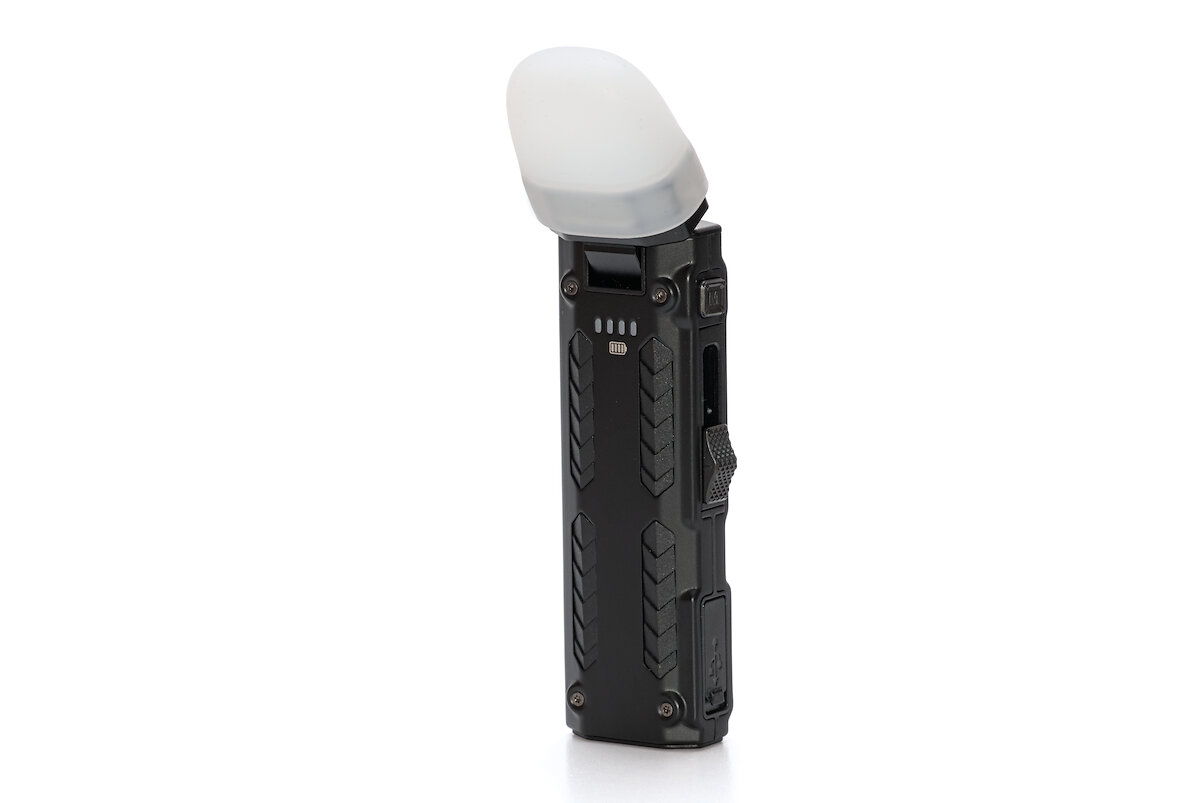
Especially in the warm white setting, the EDC09 provides a pleasantly cozy light. Combined with the magnet, the two-way clip and of course the adjustable head, it offers a wide range of versatile applications.
Driver and runtime
Nitecore describes the driver as a “highly efficient constant current circuit”, without providing much detail. Brightness and range are different depending on the selected color temperature, while the runtime remains the same. In the table, the values for cool, neutral and warm settings are listed below each other.
| Mode | Brightness¹ | Runtime¹ | Intensity¹ (Throw²) |
|---|---|---|---|
| High | 1600 lm 1450 lm 1050 lm |
2:15 h | 5899 cd (153 m) 5474 cd (147 m) 3955 cd (125 m) |
| Mid | 200 lm 180 lm 150 lm |
2:45 h | 819 cd (57 m) 699 cd (52 m) 529 cd (46 m) |
| Low | 50 lm 40 lm 32 lm |
13 h | 170 cd (26 m) 137 cd (23 m) 112 cd (21 m) |
| Ultralow | 1 lm | 250 h | 5 cd (4 m) 5 cd (4 m) 4 cd (3 m) |
cool / neutral / warm
¹ According to manufacturer ² ANSI FL1
The brightness is maintained nearly constant for almost all levels throughout the entire runtime. This allows the battery to be used efficiently until the very end.
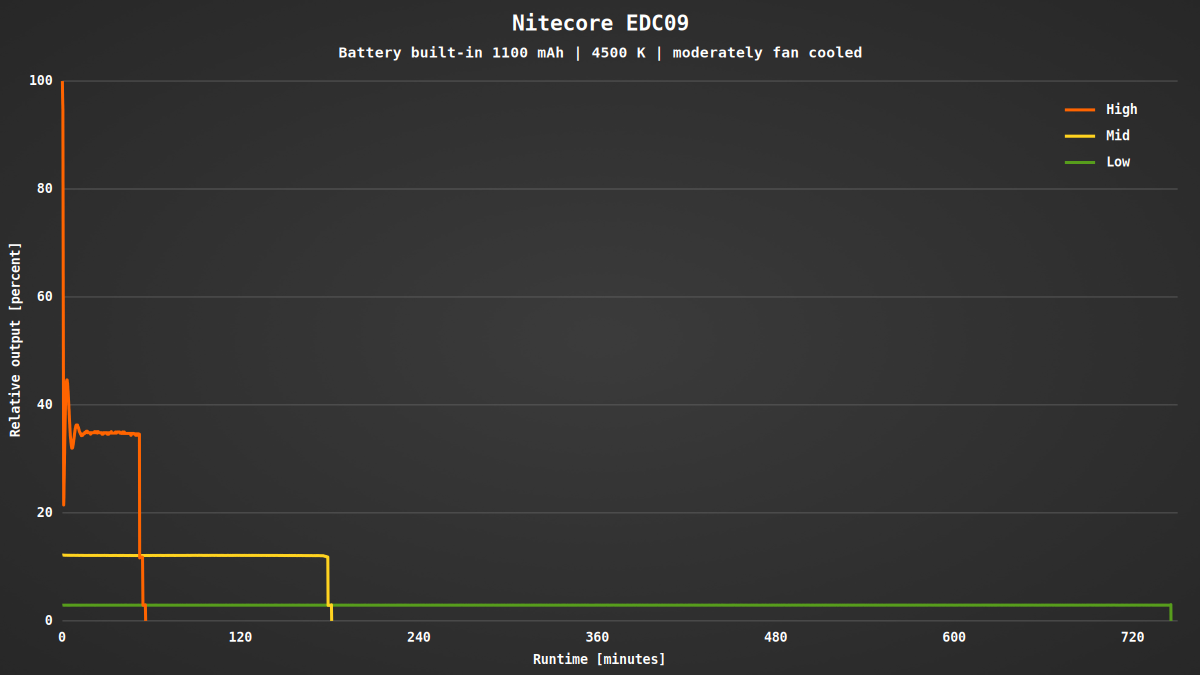
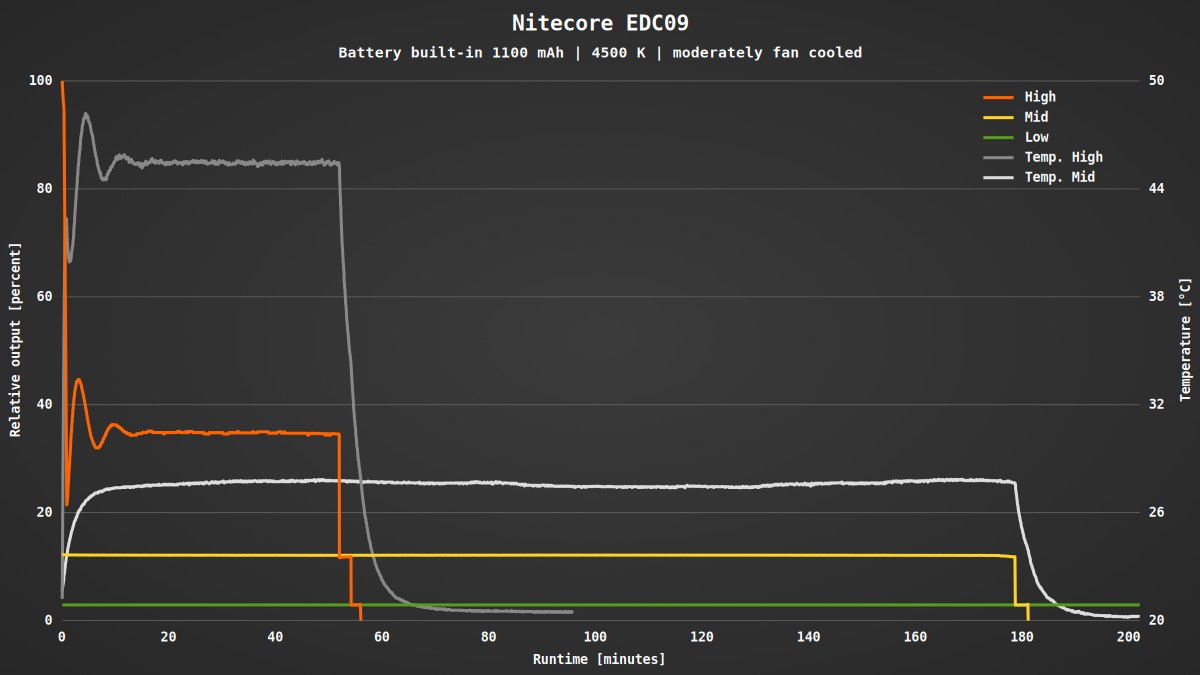
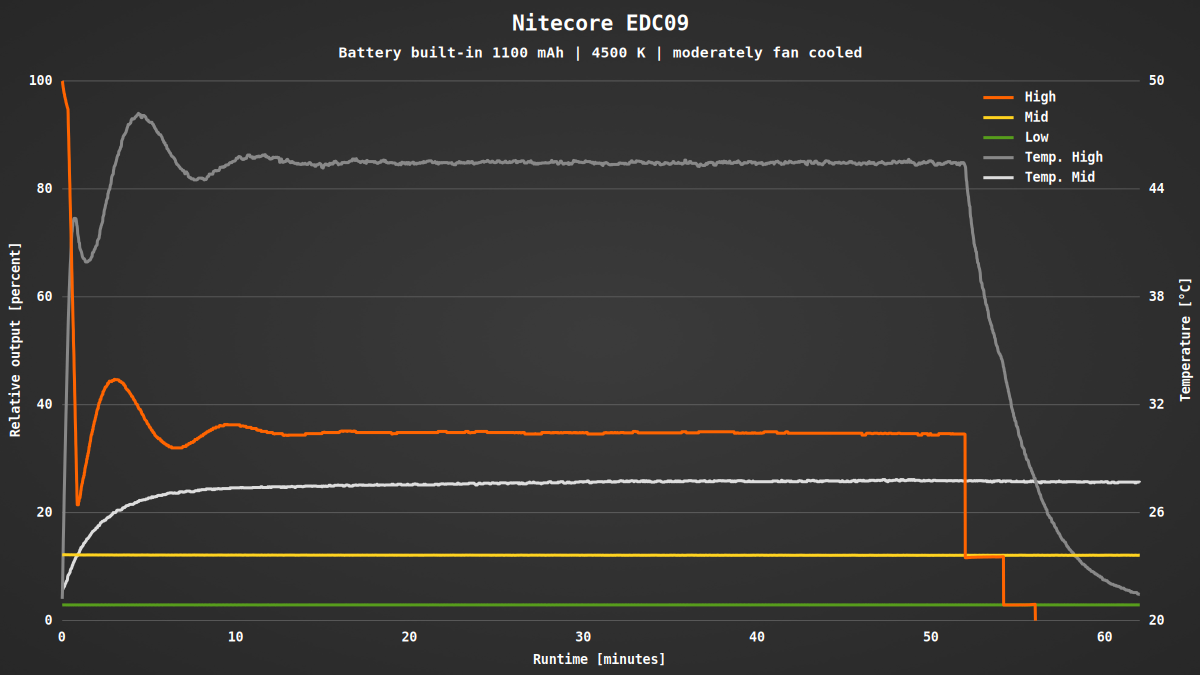
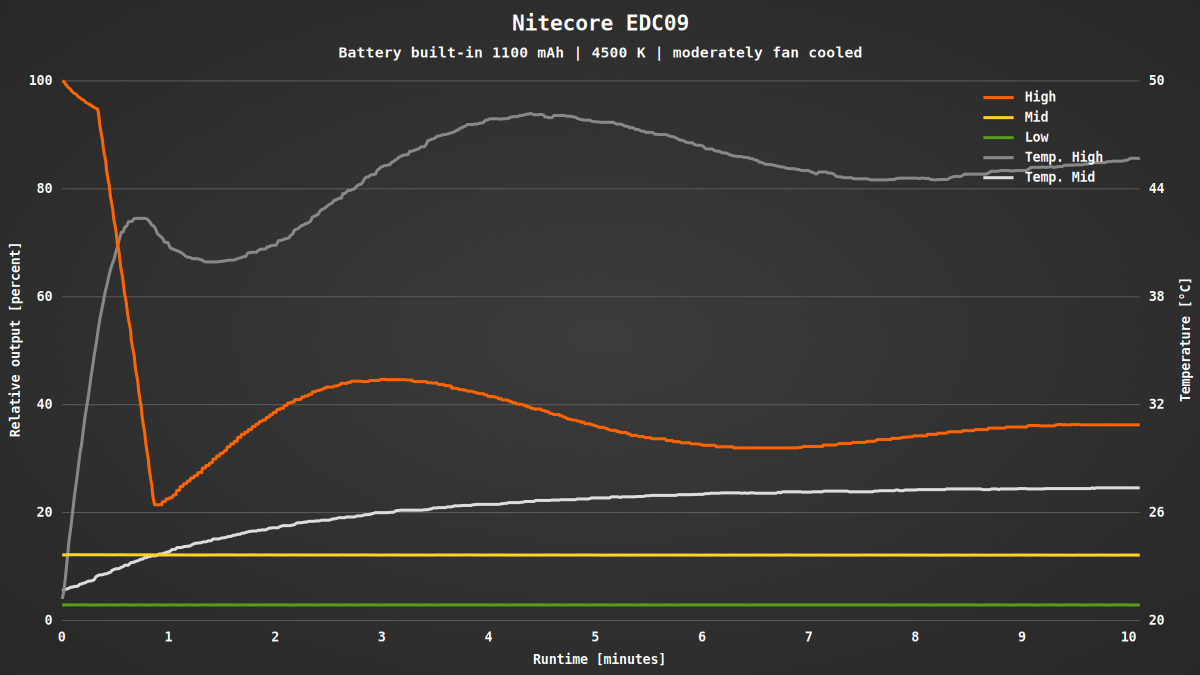
At the highest setting, the output is reduced after about 20 seconds. With slight cooling, the head reaches a temperature of around 45°C. Afterward, the brightness oscillates slowly for several minutes — a behavior I’ve observed in a similar way with the EDC23. I can’t say for certain whether this is a form of thermal regulation or a response of the regulator to the heat.
The thermal image clearly shows the disadvantages of the adjustable head when it comes to heat management. The joint prevents much of the heat from transferring from the head to the rest of the flashlight. On one hand, this makes the flashlight more comfortable to hold, but on the other hand, the small mass and surface area of the head cause the flashlight to heat up more quickly.
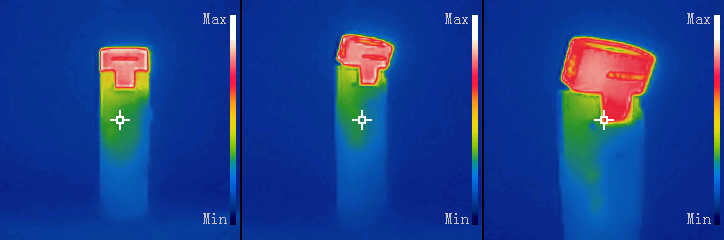
Thermal image with Zoyi ZT-R02
All levels are regulated by the driver without PWM. Using an oscilloscope, a very low ripple at frequencies above 100 kHz can be detected, but it is completely invisible to the naked eye. The flashlight shuts off when the battery is empty to prevent deep discharge. Because the battery is built-in, measuring current draw or cutoff voltage was not possible.
Conclusion
The Nitecore EDC09 does not impress with gimmicks, but with practical and well-thought-out features. The two “MCT UHE” LEDs allow the color temperature to be adjusted in three steps, from a warm 3000 K to cool 6500 K, making it adaptable to different situations. The smoothly adjustable head, along with the built-in magnet and a two-way clip, makes the flashlight versatile and suitable for a wide range of uses.
It features a very intuitive control system with a sliding switch, allowing for comfortable and easy brightness adjustments. The separate diffuser transforms the flashlight into a small lantern with 360° illumination.
All in all, the Nitecore EDC09 is not only a perfect EDC flashlight, but also a great work light for spontaneous tasks, thanks to its rotating head.