It identifies itself as “715” which would equal a TS25. All pinouts appear to match. TS25 firmware is also (mostly) shared by TS10v2 RGB AUX (but that one identifies as 714). Seems to me they just flashed an old TS25 FW to it.
The erratic behavior I am (we all are) facing however seems to imply a 2 channel setup in firmware with only one channel actually connected to LEDs on hardware - Neither TS25 nor TS10v2 RGB have that. I have to continue investigating.
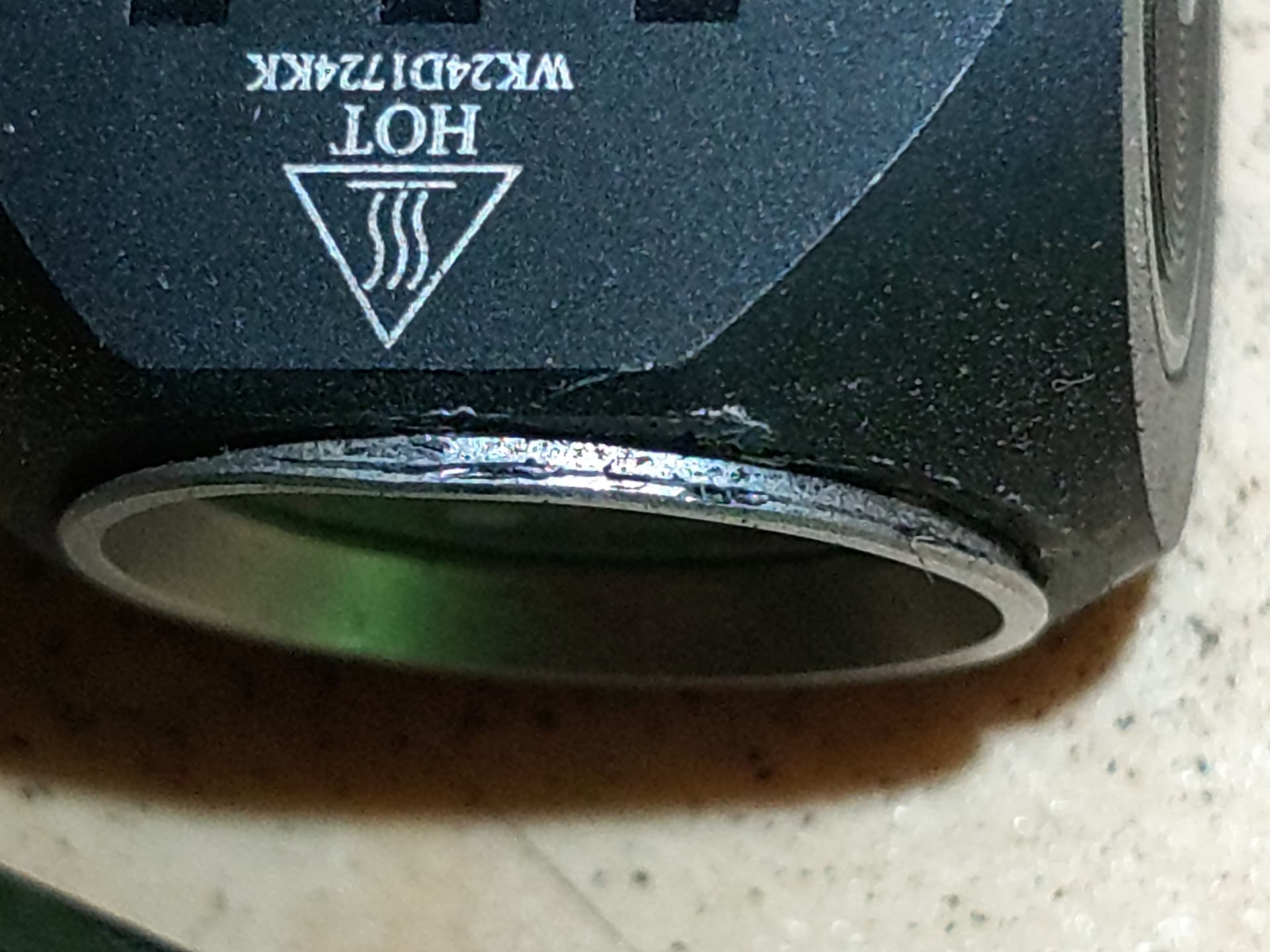
I used a very old hard tool steel screwdriver that was already damaged. Sharpened it up. A small tapity tap hammer. I decided to go after the outside lip.
Edit.
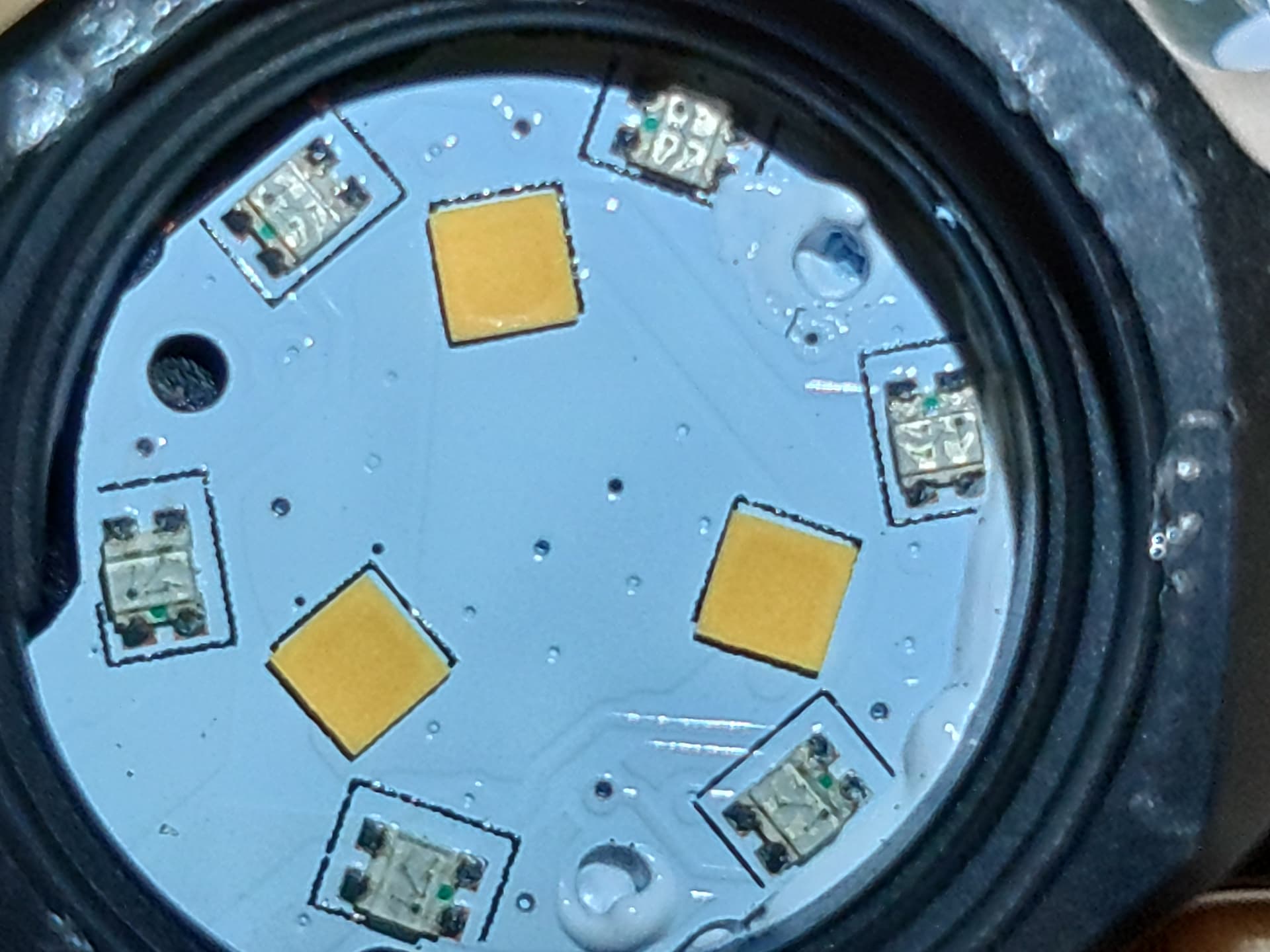
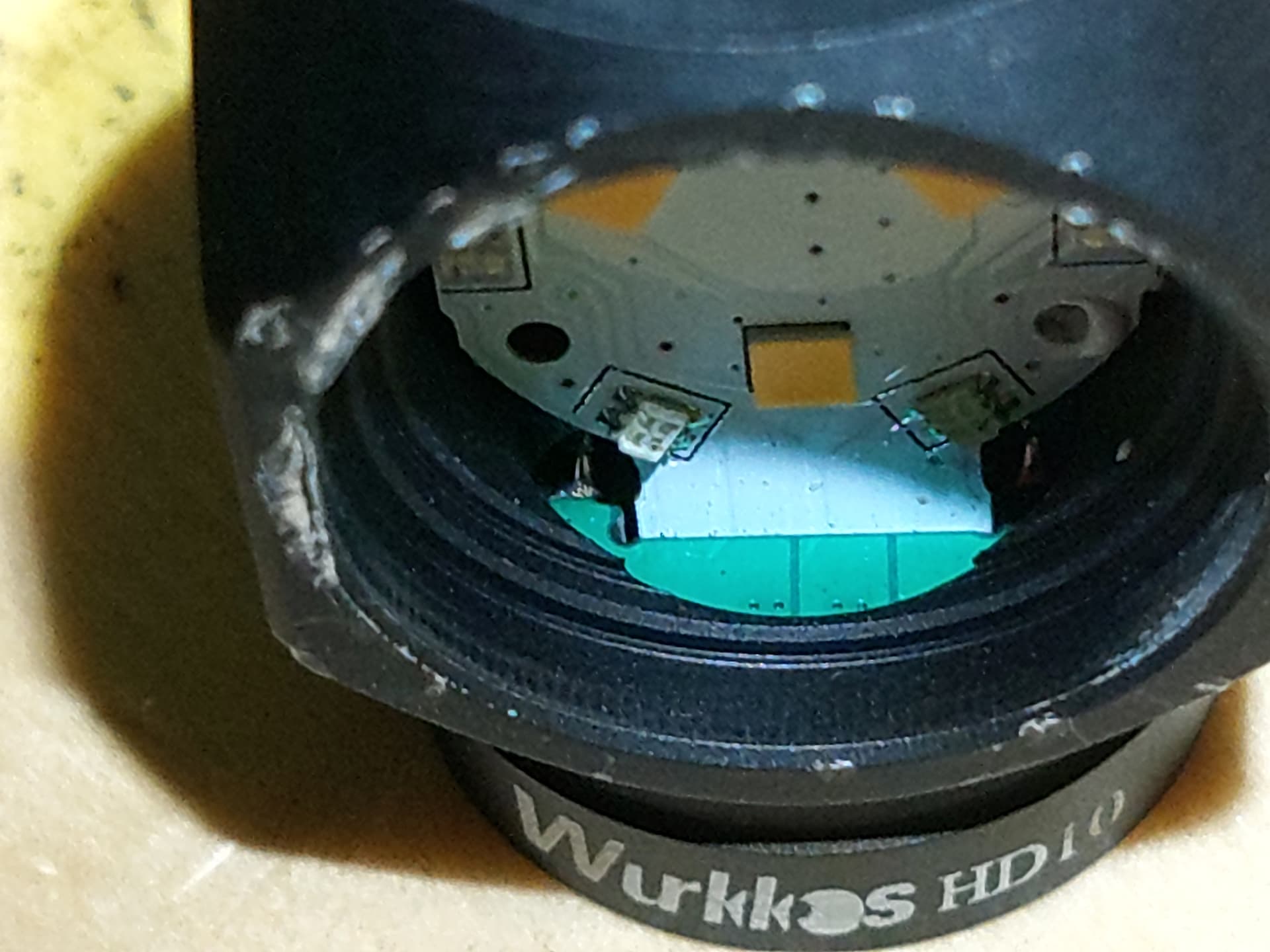
I think they might be pressing in the bezel before they solder the part exposed at the battery end.
I just tested, having only R accessible works, as long as the light is USB powered at the same time. I will solder it back together, and solder a tiny wire to the R pin so I can still access it.
Was my first time flashing Anduril, easier than I had expected. Flashed it to ts10-rgbaux for now. Hope it will work. But I confirmed all pins, pinout is identical.
I only wonder why they’re hidden… some kind of PCB layout difficulty? doesn’t seem probable as the PCB doesn’t look like it’s too crowded, at least on the ‘out’ side.
Guess what - I got the latest Anduril (TS10 RGBAUX) working. The light works flawlessly so far. My weird pseudo-lockout when I got stuck in a second channel is gone. The new Anduril feels very different, not sure if I like it better or not, but this FW flash got rid of a lot of issues…
To me it seems like they took the TS10 non-rgb firmware (which is dual channel, and has the aux configured as a second lighting channel), then added in the AUX from the TS26/TS10 rgb. The result was that Anduril thinks it is a 2 color channel light, and you can get stuck in a channel with no LEDs attached. No idea what happened there or why.
Yeah, puzzling that they went through all that to get a buggy result, when just using the standard, direct-from-TK firmware would have been much easier and also produced a perfect result.
Anyway, the good news is that they can fix it somewhat simply while the lights are still in the factory, by disassembling them and flashing the standard fw. The bad news is that, without exposed flashing pads, most people (myself included) won’t have the tools/skills/courage necessary to open up their lights and do the same.
Well, here’s to hoping they manage to flash all these lights with the correct firmware before getting any more of them out of their door…
Yikes Slide a utility knife blade under there next time. Better yet, two blades at the same time to put even pressure on it. This is for a different light but seems like it would also work for this one.
Great to see inside there, though! I’m looking forward to getting one eventually.
You could ask @thefreeman if he is interested in a collaboration on such matters - he made an Anduril driver for Emisar with outstanding performance recently, which runs off AA and 14500, has RGB aux and very high efficiency.
Probably easier to have him help than developing the same thing from scratch.



 Slide a utility knife blade under there next time. Better yet, two blades at the same time to put even pressure on it. This is for a different light but seems like it would also work for this one.