oh brilliant! the RGBW FCoB tapes i’m planning to use run on 24VDC anyway!
1 Thank
The controller is made so it can work with pretty much any supply between 6V and 25-30V (don’t remember the exact max voltages) 
You were EU based, right? I had to order 5 and only need 2-3… If you want one, I’d send it over at cost (but iirc they were kinda expensive, so might still not be too cheap).
1 Thank
Highly interested though not at cost, developers gotta eat too! I’ve never run WLED on a C6 though, apparently the C* types might not be able to handle network traffic and fx processing at the same time and i’d like to be able to control these over ArtNet, could you test that please?
I wanted to try WLED on it anyway, but I have no set up to properly test things. No smarthome setup as of yet, apart from a nodered that’s just monitoring a couple of sensors… Will see what I can do.
1 Thank
Hi ebastler, in one of your posts, you mentioned you got a new pair of Knipex wire strippers. How well did they work? Do you consider them top shelf? Thank you.
I’ve set up homeassistant on a pi, couldn’t get it to work with all 12 WLED lights in our home (some run moonmodules, some are barebones ESP8266s with 1M memory inside chinese smart bulbs running cut down WLED etc.), found out that polling all 9 Mi thermometers with PVVX FW would kill the storage in no time, unplugged it and went right back to just having synced WLEDs on internal timers and reading out the thermos with my watch and downloading the temp logs twice a year to make pretty graphs 
They are really nice for thicker wires. Struggling a bit with very thin very soft wires (tiny silicone wires) and thin wires with PTFE or similar insulation, but every standard PVC wire as well as most silicone wires I used so far down to like 28 AWG it cuts reliably at the first try without hurting the wires inside, or the sleeve behind the cut point.
2 Thanks
Continued a little on the S21Evo BST today… Hard to find motivation for PCB design after I leave the office after 8 hours of PCB design 
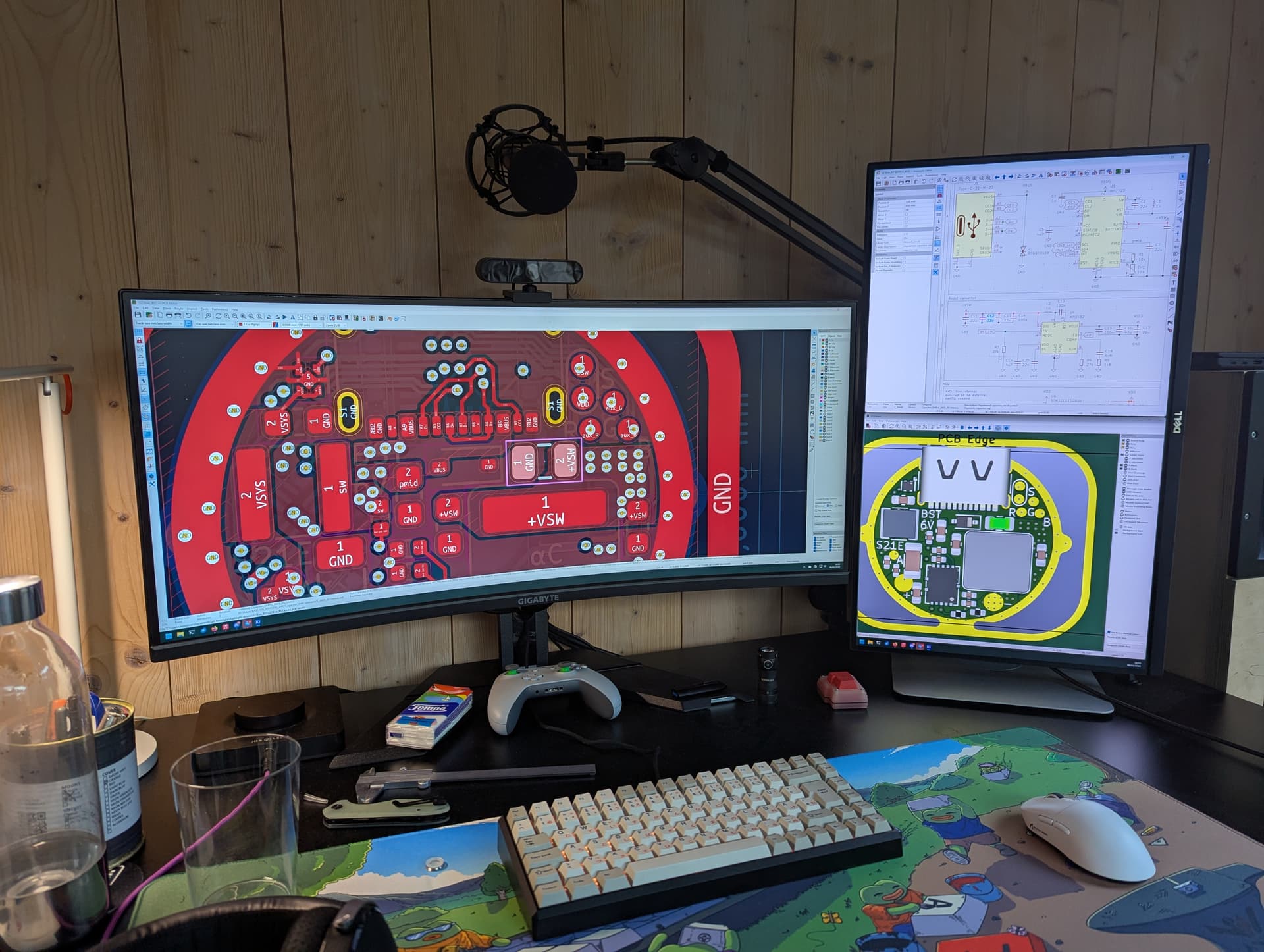
I routed the aux to the battery management chip instead of the battery so they can work during flashing without a battery.
Managed to squeeze a 0805 cap to the input voltage instead of one of the 0603 I had before. I’m already pushing the minimum specced capacity, and 0603 with such high capacity are not good and derate a lot (which means, less capacity than I’d like). 0805 will be better.
9 Thanks
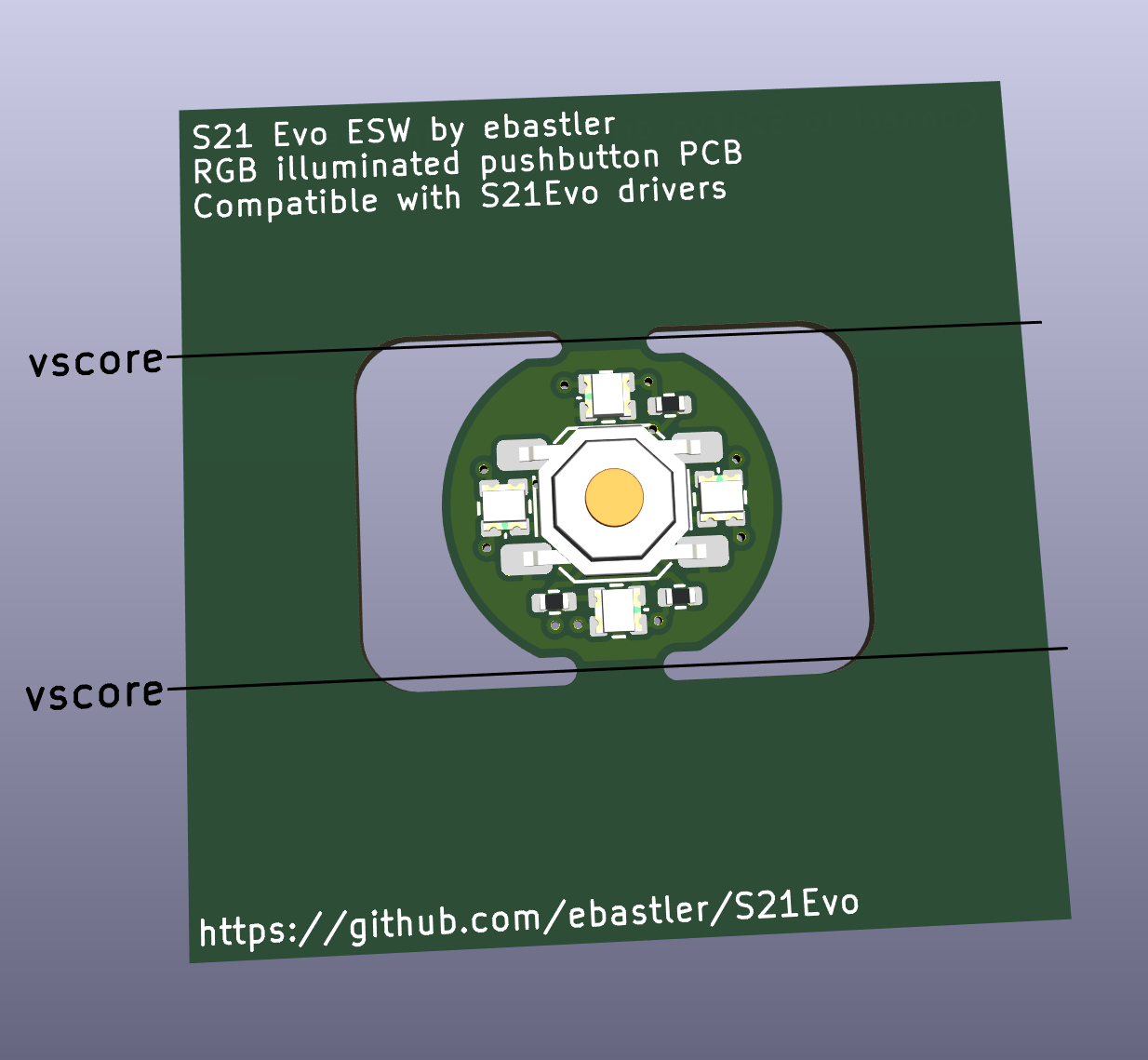
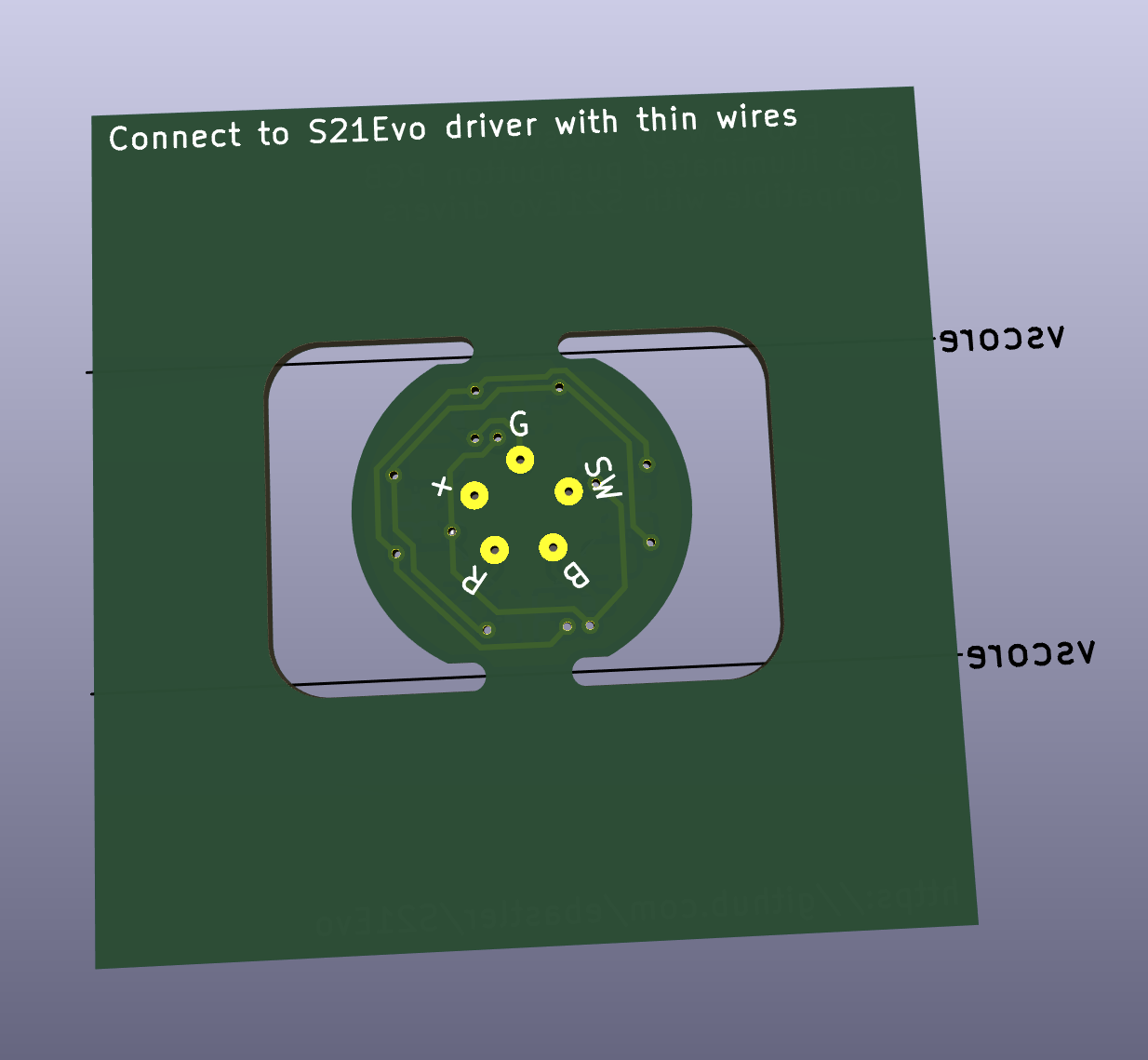
RGB e-switch PCB for S21E, with 4 LEDs.
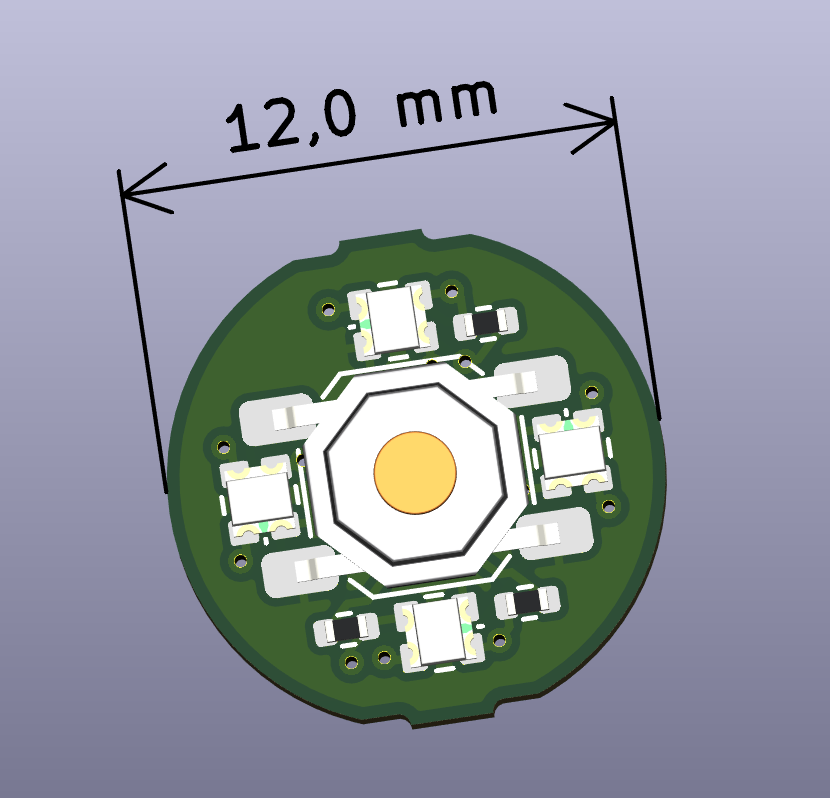
Soldering this will suck
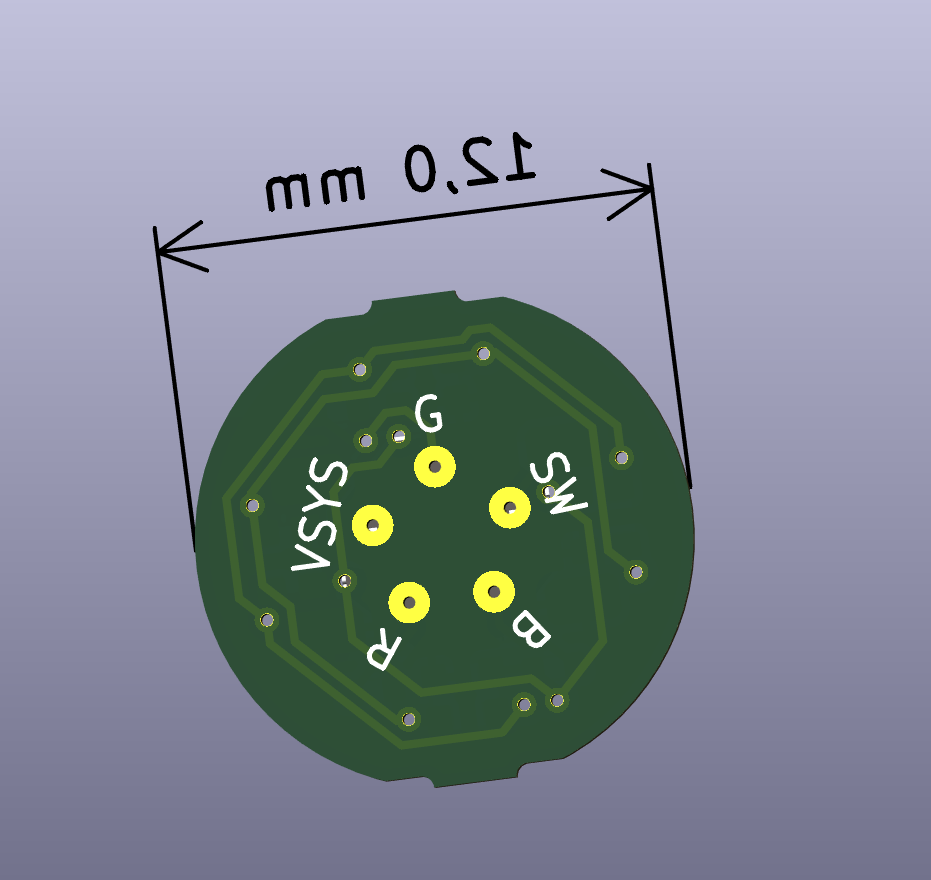
Note: Won’t work with any Anduril driver. My driver uses inverted logic for AUX LEDs compared to Anduril for technical reasons.
I handed in a pretty important project at work today that caused me some crunchtime. Celebrated by chilling with a glass of whiskey and some flashlight PCB design. For reference: my work is 8 hours of PCB design a day lol.
6 Thanks
Do you think I should replace this spring with a small PCB and one of Simons high current springs soldered to it? I’ll be pulling max 30W in this host with my custom driver.
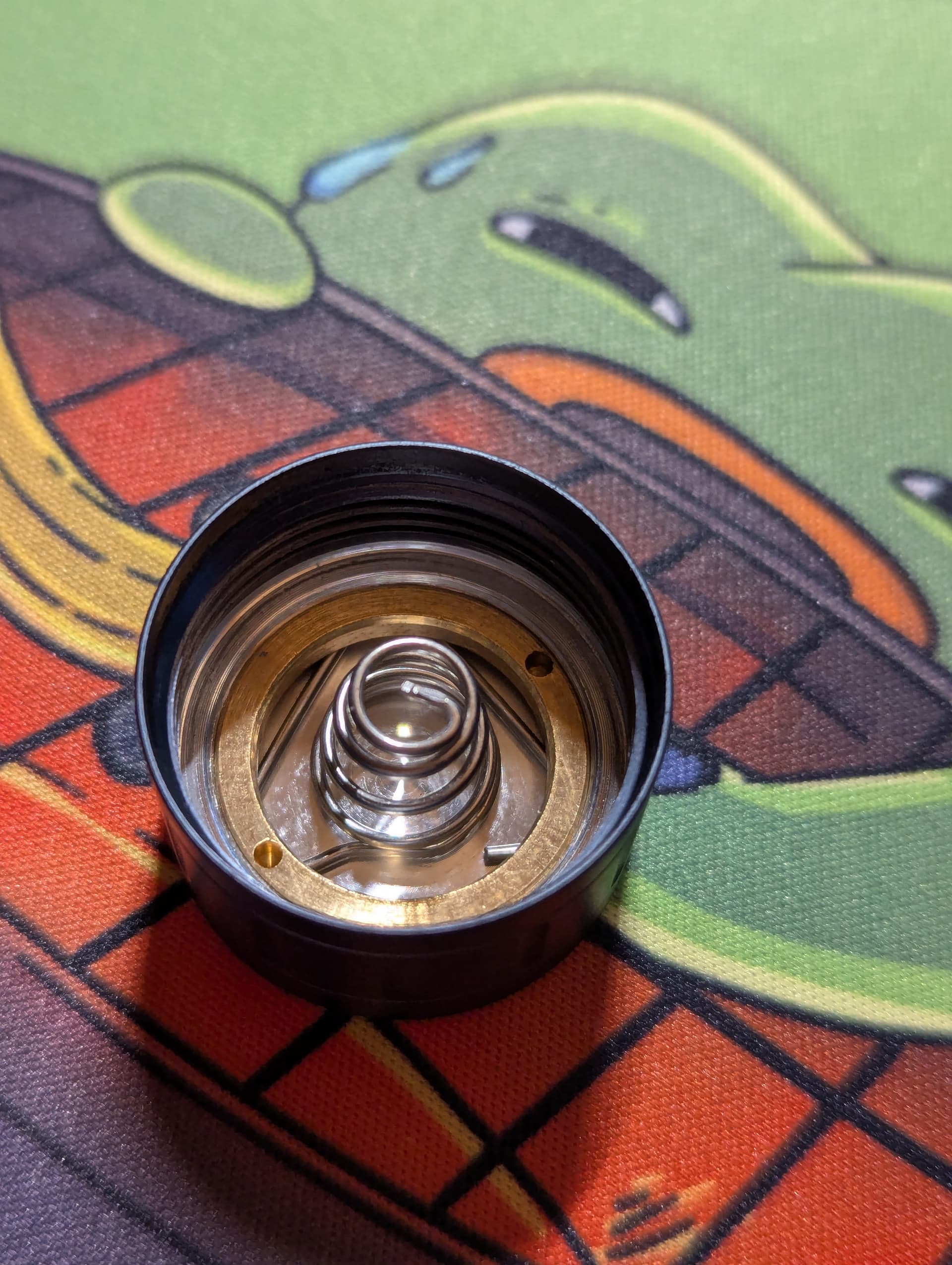
My solution would be to bypass that spring with a copper wick.
1 Thank
For 30W I think it would be fine.
What’s the thickness? Simon doesn’t list it on his site:

4 Thanks
I just uploaded it all to PCBWay, now I have to wait for their quote
I still feel like I should check everything 10 times more. I always hate ordering protos… Wish me luck that everything will work. The 5pc of the first batch I will need for myself and 2 close friends. As soon as it is confirmed working I would like to run a small batch for people who want to try it right away, and might want to help me with bug reports and feature requests for firmware development (which will take quite a while… Full FW from scratch…).
I have already talked to Simon. Nothing fixed yet, but once everything is production ready (e.g. my firmware has at least feature parity with the Convoy eswitch FW) he would be interested in adding the driver to his store, and maybe even as options during checkout. Note, this was just a chat between us two, and I could not give him even an estimated production price yet, so take it with a pinch of salt.
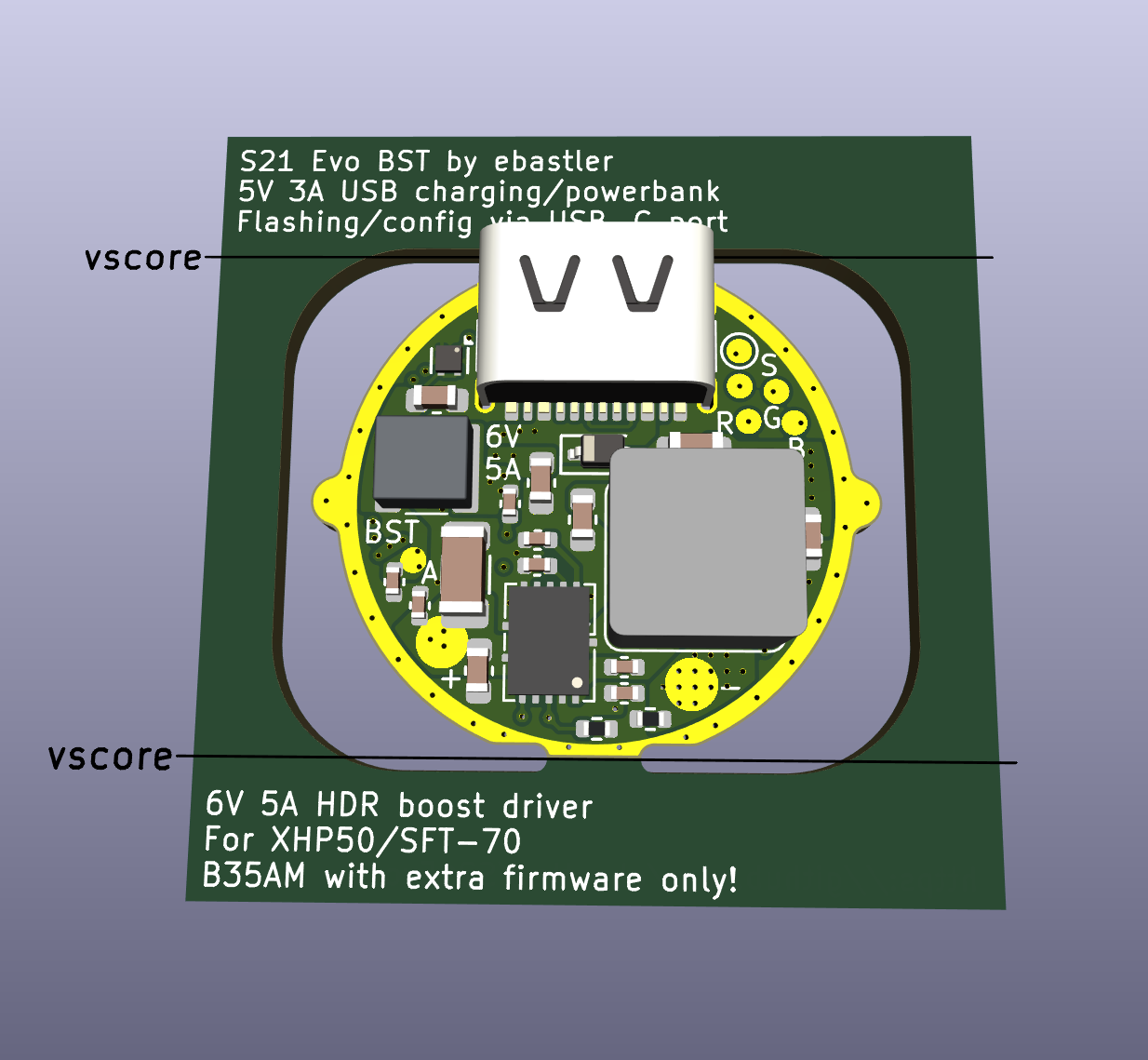
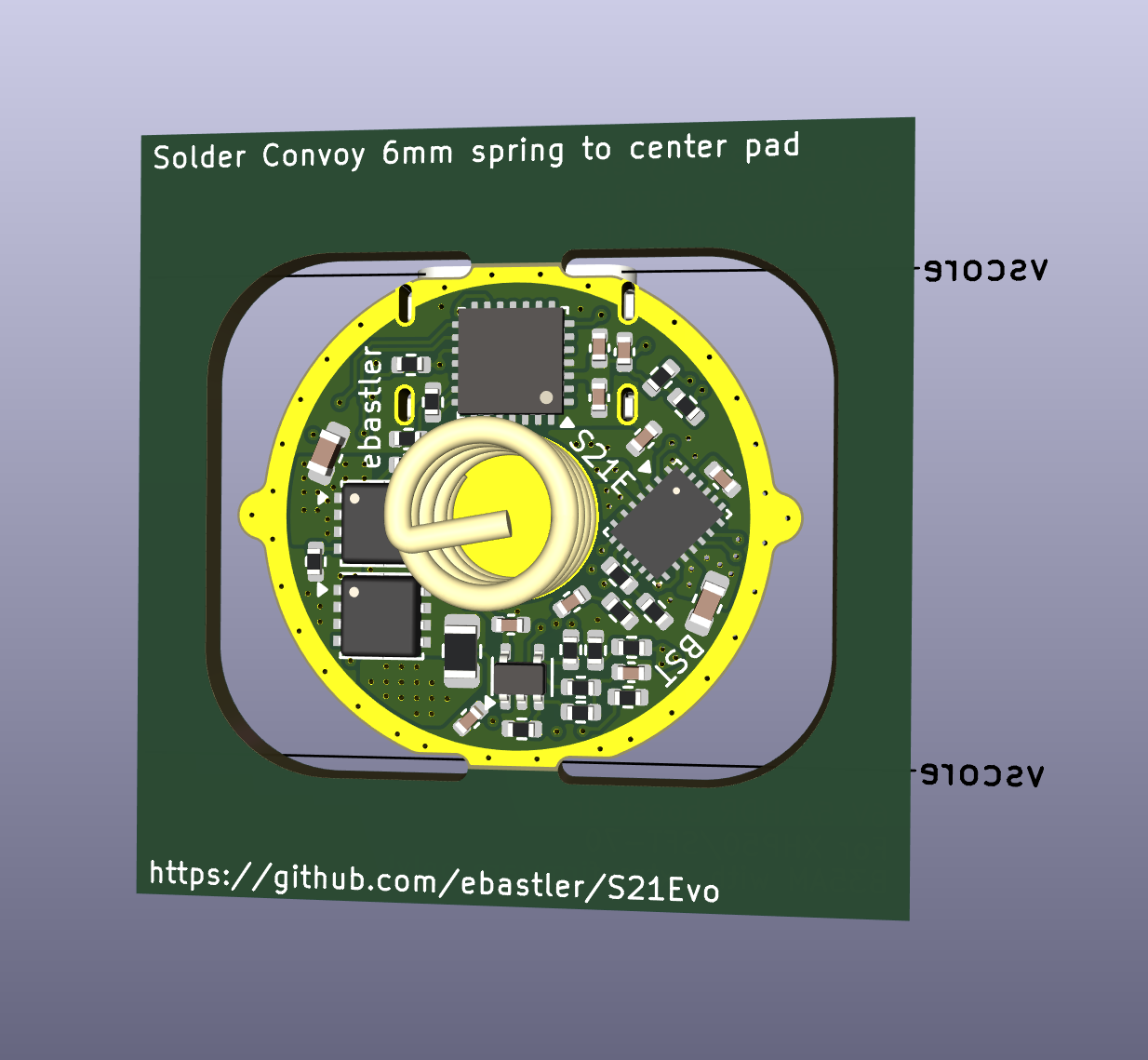
Final design 3D models are attached below. I used the frames for some additional info - not really important now as the protos end up with me, but once I publish the full sources it might become relevant. Please note, the repo is not yet up, so no point in typing that link 
My driver uses inverted logic compared to most other drivers for the aux LEDs (common anode LEDs, MCU pulls them to GND), which has technical reasons. My MCU runs at 2.8V, which is not enough for blue/green LEDs. Therefore the LEDs are supplied directly off the battery voltage. All GPIOs of the MCU can sink 5V, so that is no problem.
The same applies for the e-switch, which is connected between battery voltage and the MCU. When pressed, the MCU sees VBAT on the switch pin. This, again, has technical reasons - I am using PA14 on the MCU for the e-switch, which is also the BOOT0 pin. If BOOT0 is high while the chip is booting, it will enter the USB bootloader and can be reflashed via USB-C. Once the chip finished booting, it is a regular GPIO that can be used for other things, like the e-switch. This allows easy reflashing of the driver, without needing extra hardware or requiring some special software. I am very low on space on the PCB, so no extra hardware sounds great. Losen the tailcap (or remove the battery), hold the button down and plug the light into a computer.
10 Thanks
I would love to be a guinea pig for these, if i have to cover shipping or whatever you need let me know.
1 Thank
I’ll put you on the list of the second batch once the HW is confirmed working
Didn’t want to risk ordering 10-20pc of an unknown first proto.
2 Thanks
I’ve just received my first ESP32-S3 board to try out with WLED b/c they’re super tiny and it’s… apparently not trivial compared to classic ESP32 that just needed a bootloader flashed and the process is not well documented outside of discord 
1 Thank
I don’t have any experience with WLED, but installing Tasmota on pretty much any ESP32 is a matter of hooking it up to the PC and using their chrome web app or standalone application to install with a click, no difference between versions.
Not sure how WLED handles things.
1 Thank
There are some web flashers for WLED, one of them official, but my system is set up in a way that makes granting browser access to serial devices a pain so i just use esptool to flash binaries. WLED support for C* and S* series ESP32 is experimental, there are multiple new binaries involved aside from WLED itself and i’ve yet to find the files and addresses to write them to. I’m not sure the web flashers already include these either.
1 Thank
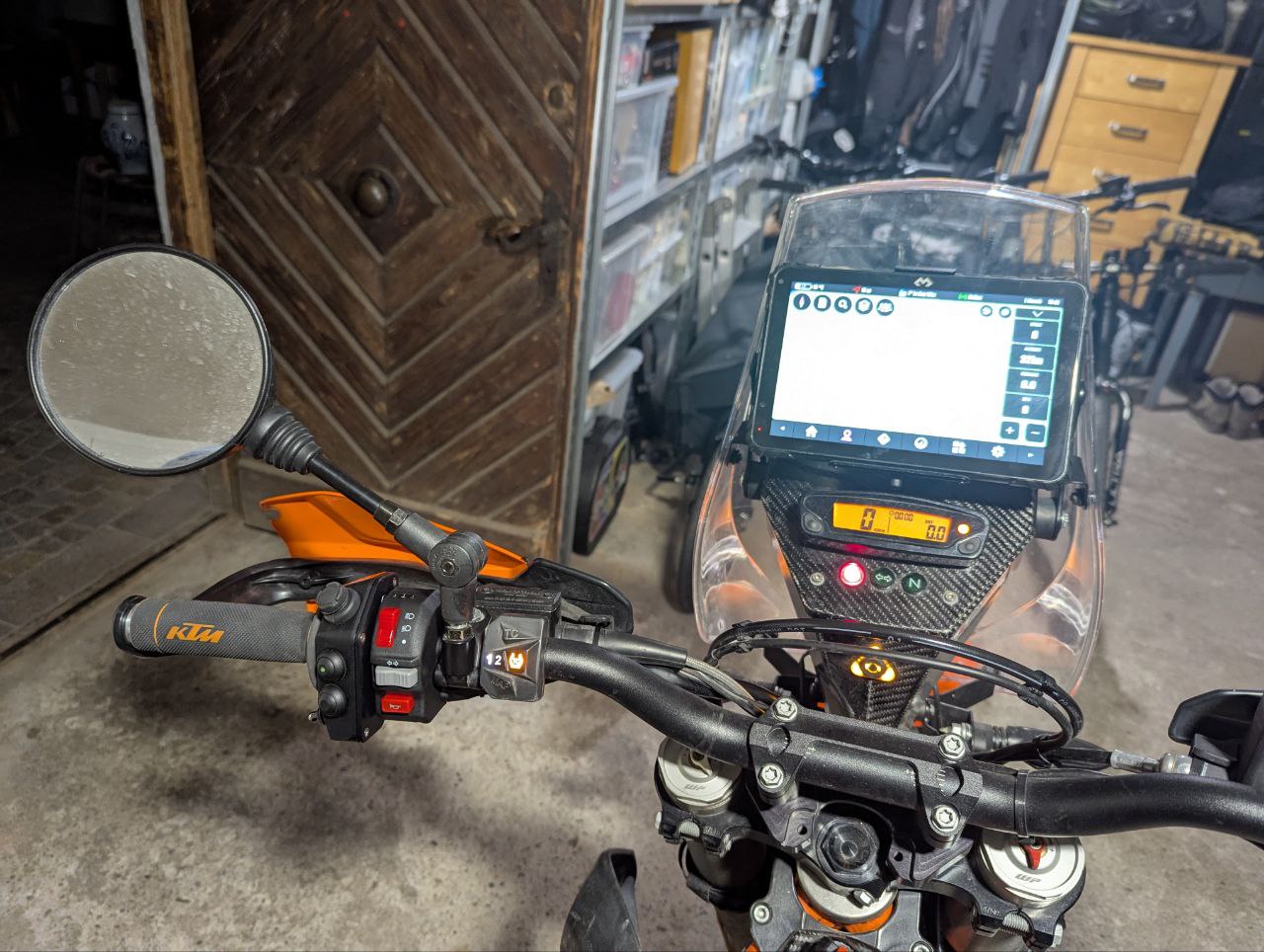
Today I replaced the light switch on my KTM with a slimmer aftermarket part. This allowed me to squeeze both the remote controller for the nav tablet and the light switch in more or less the same width as the original light switch took up by itself. The distance between the switch and the mirror on the second pic shows just how much slimmer the new one is.
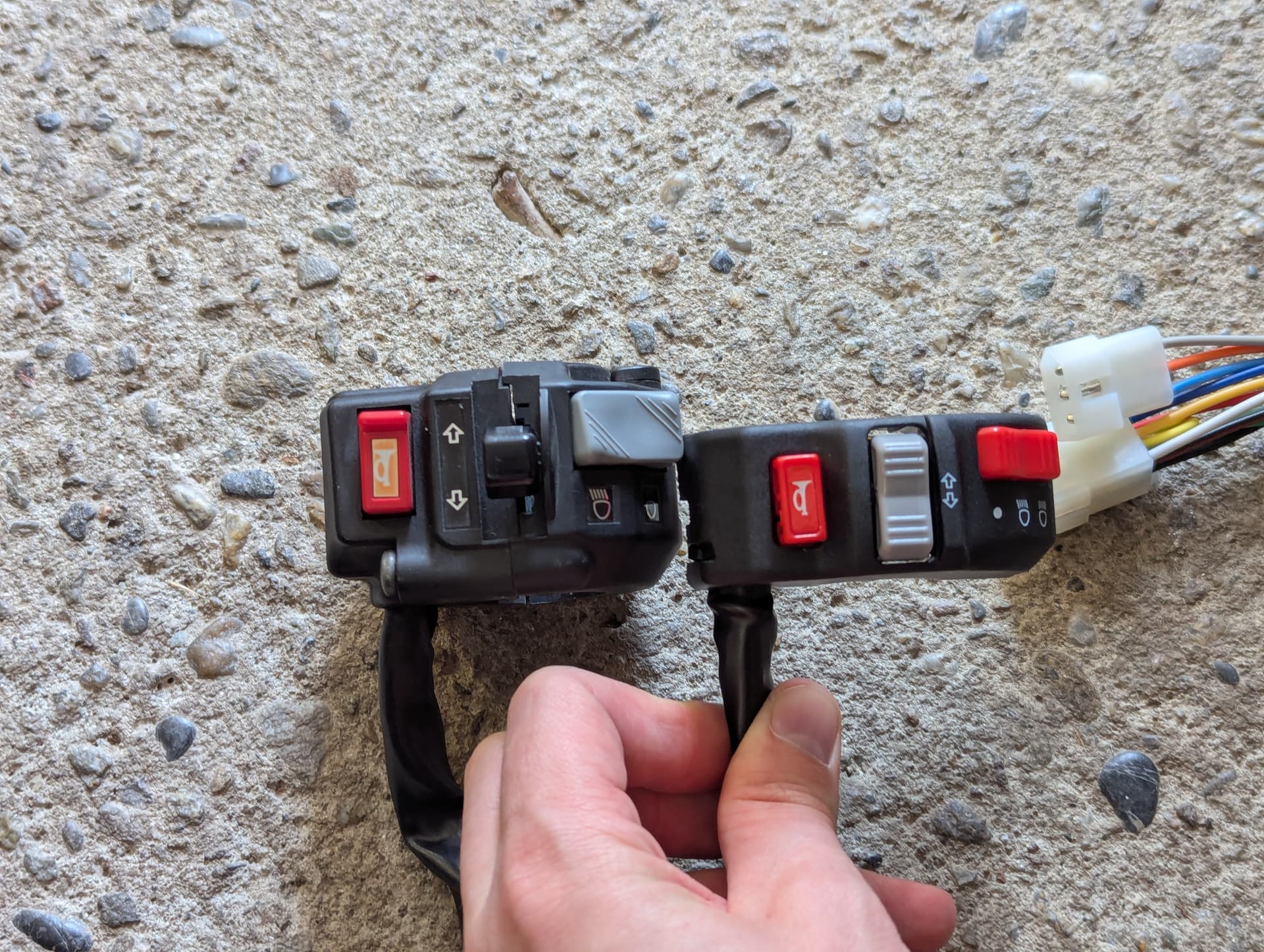
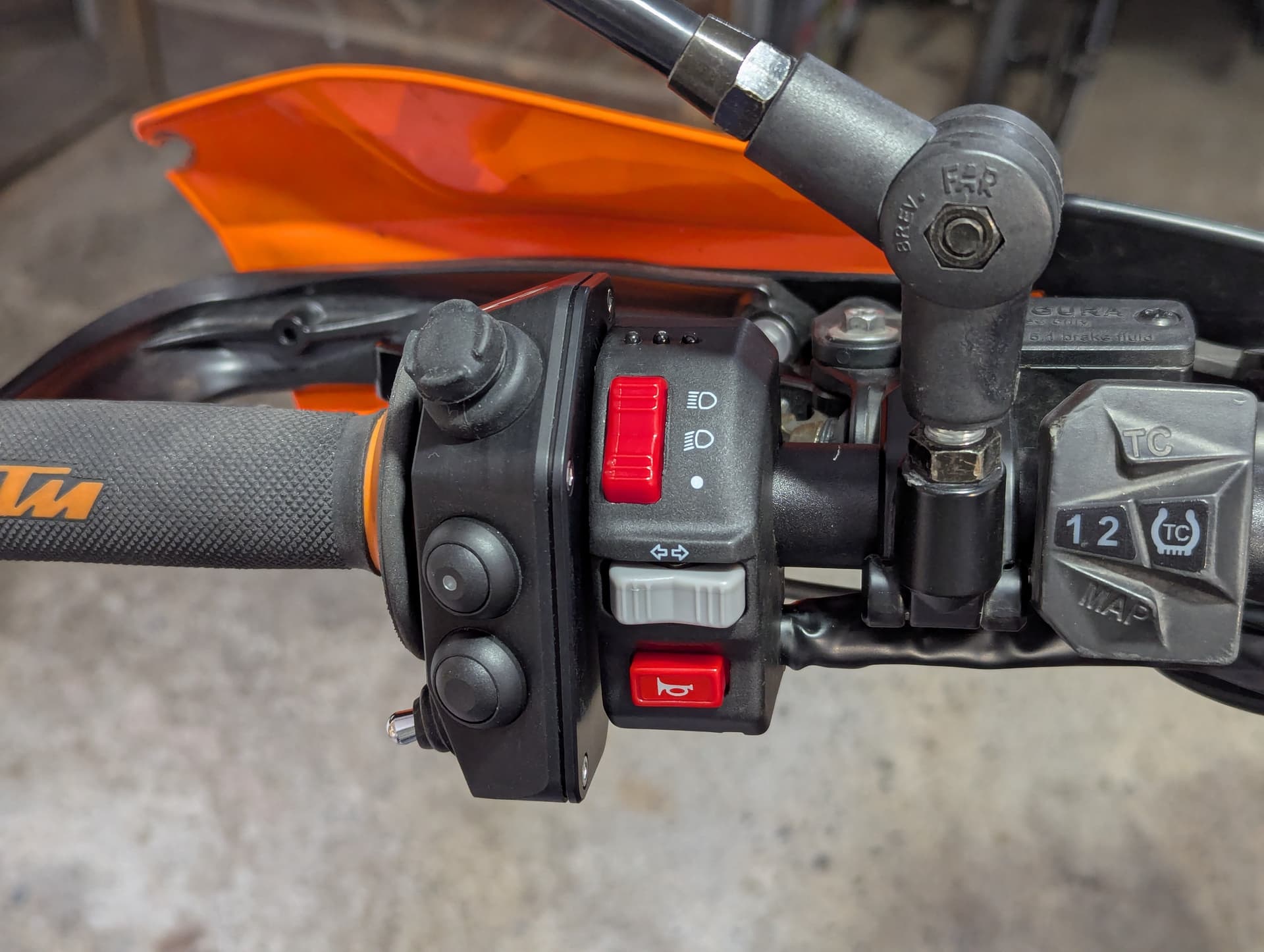
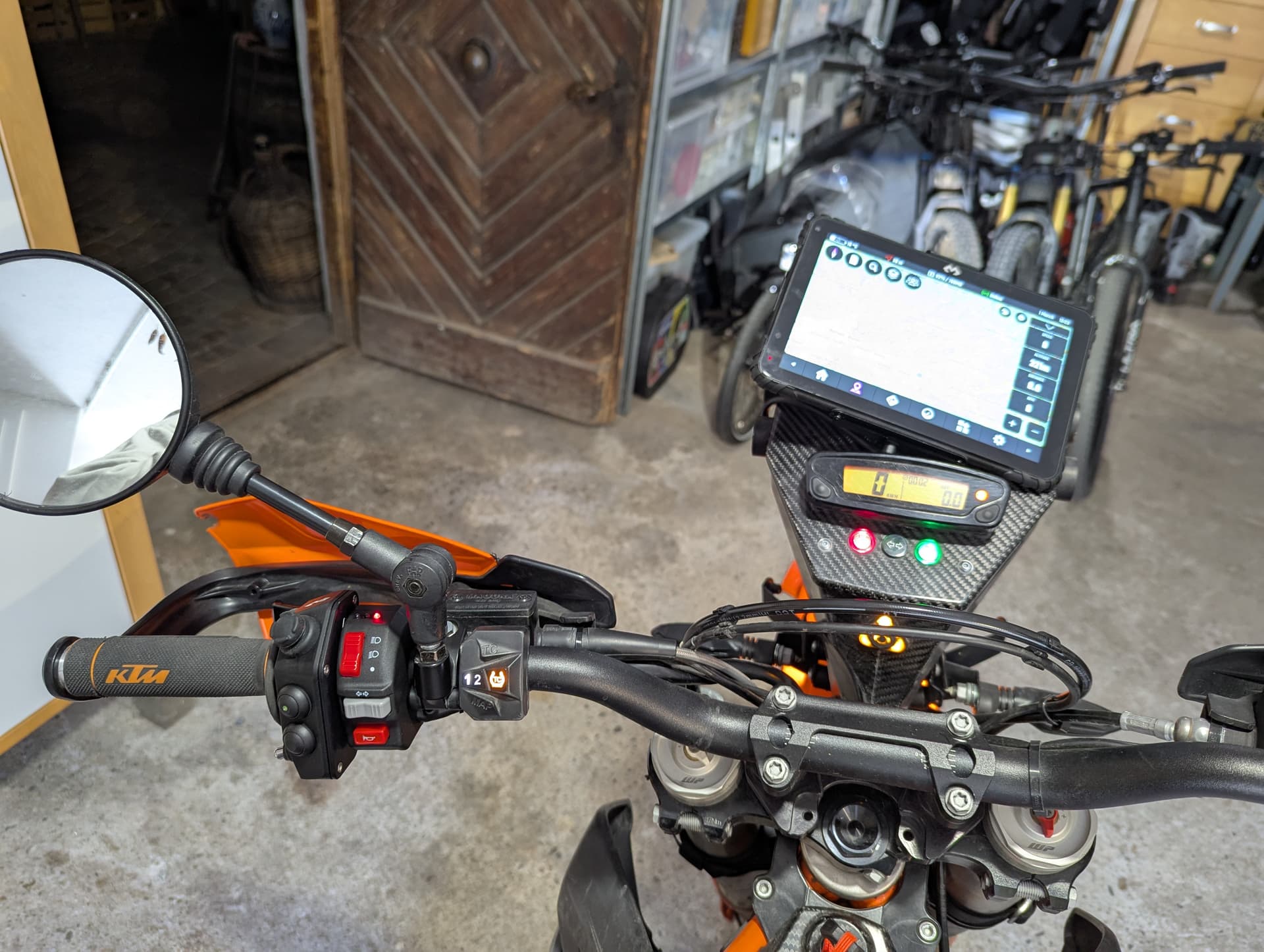
I’ve wired everything up now, but I had to leave before I managed to finish. I think I’ll finish mounting the tablet tomorrow.
EDIT: Finished today:
2 Thanks