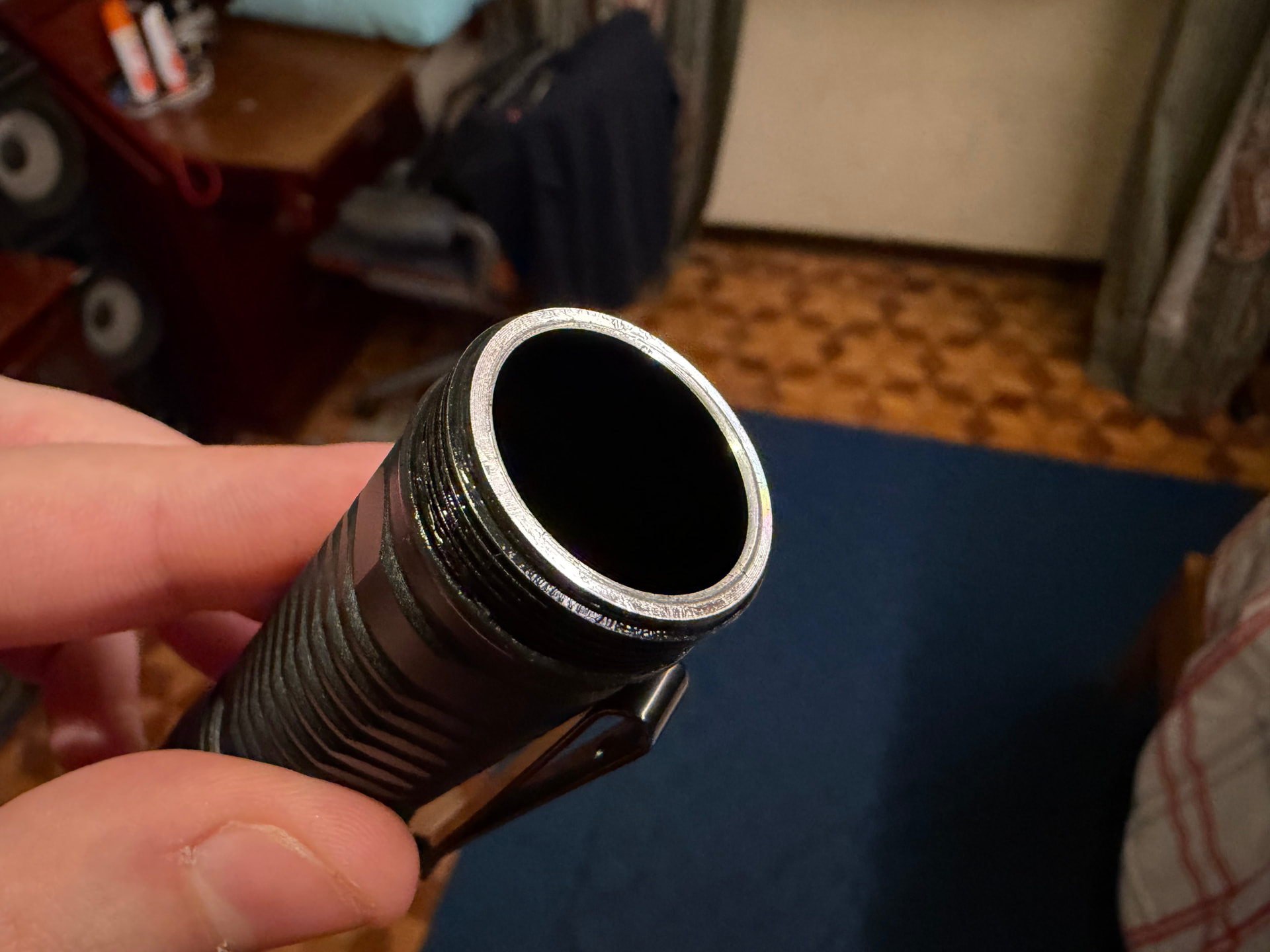
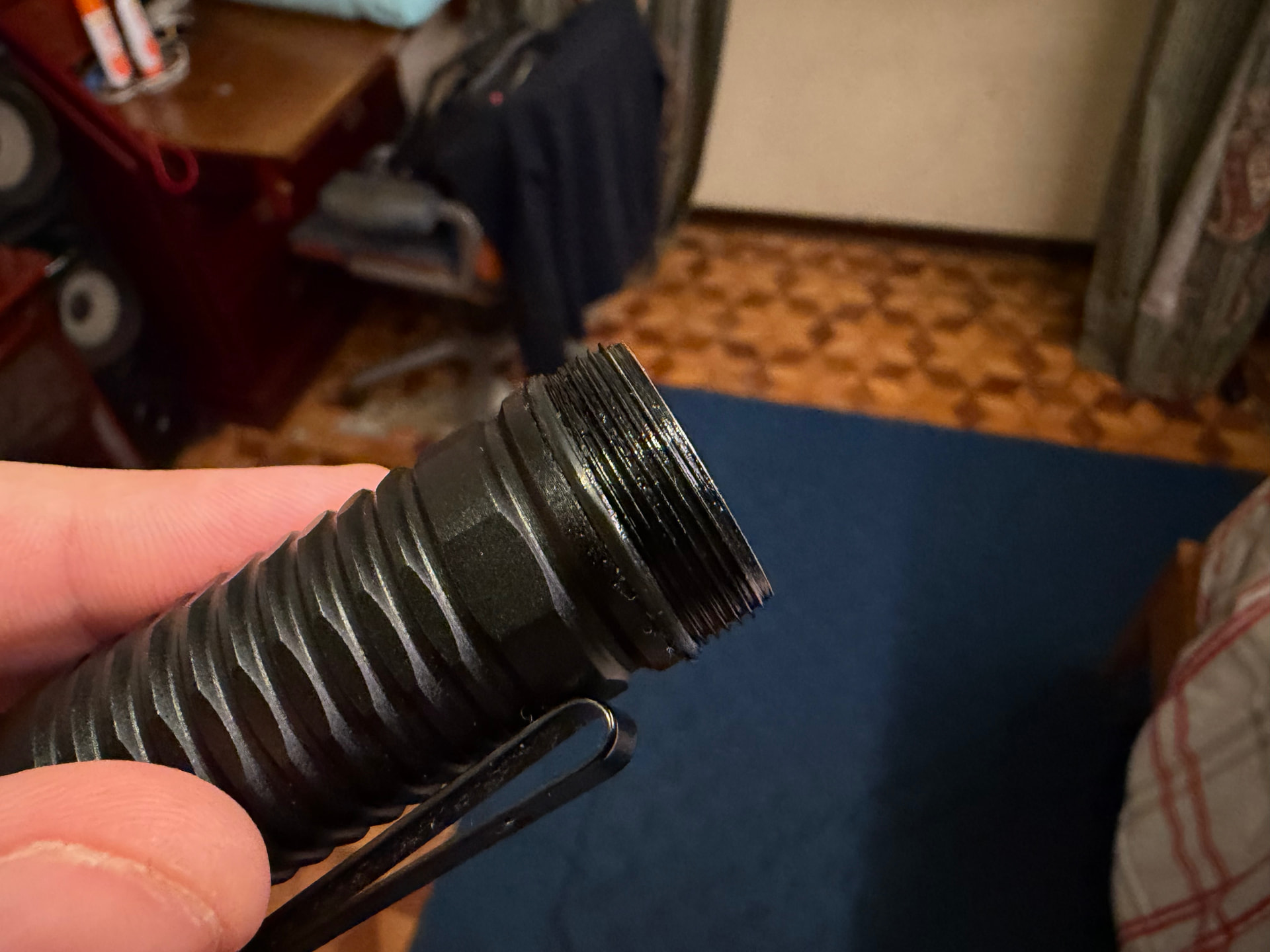
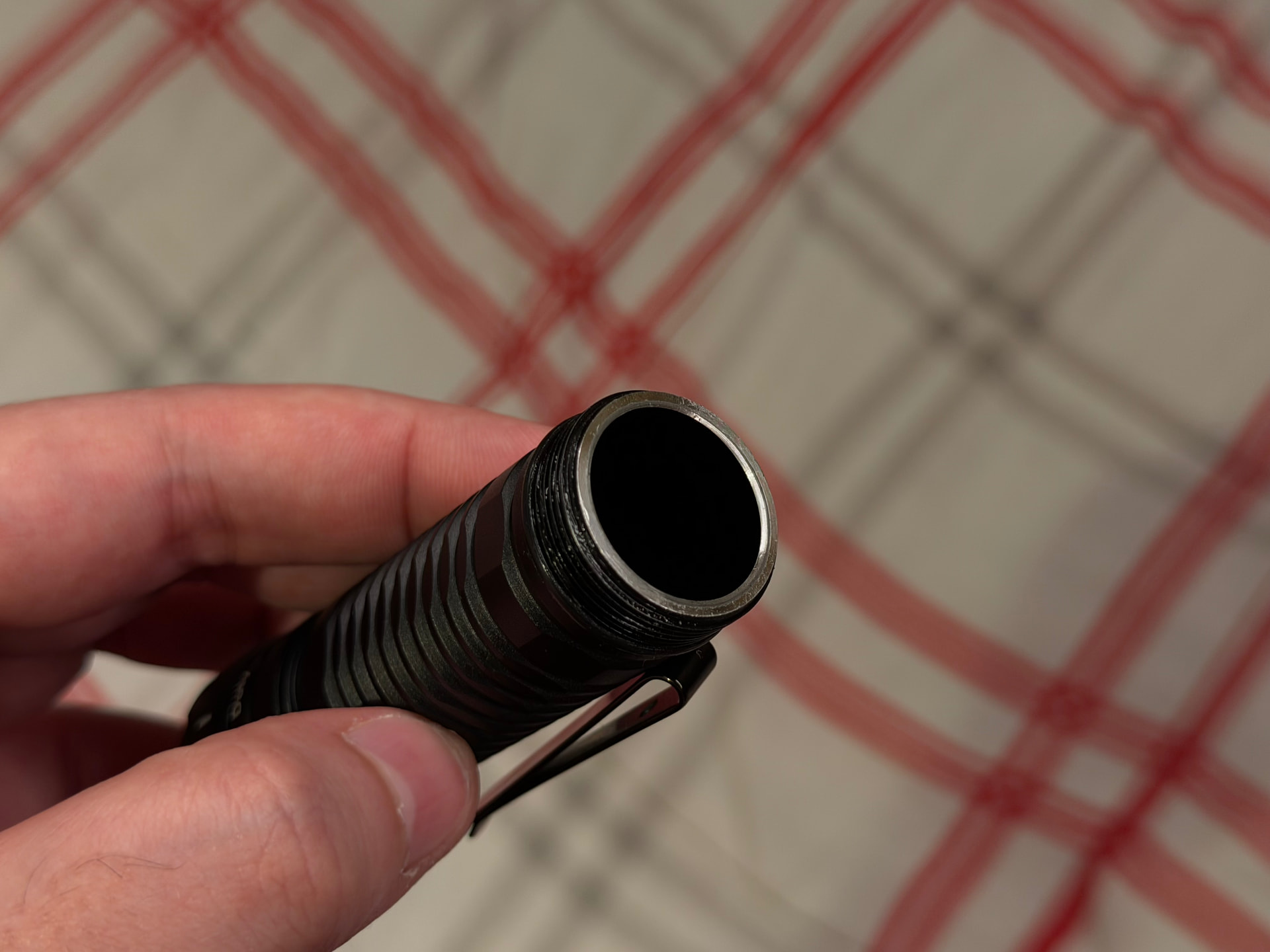
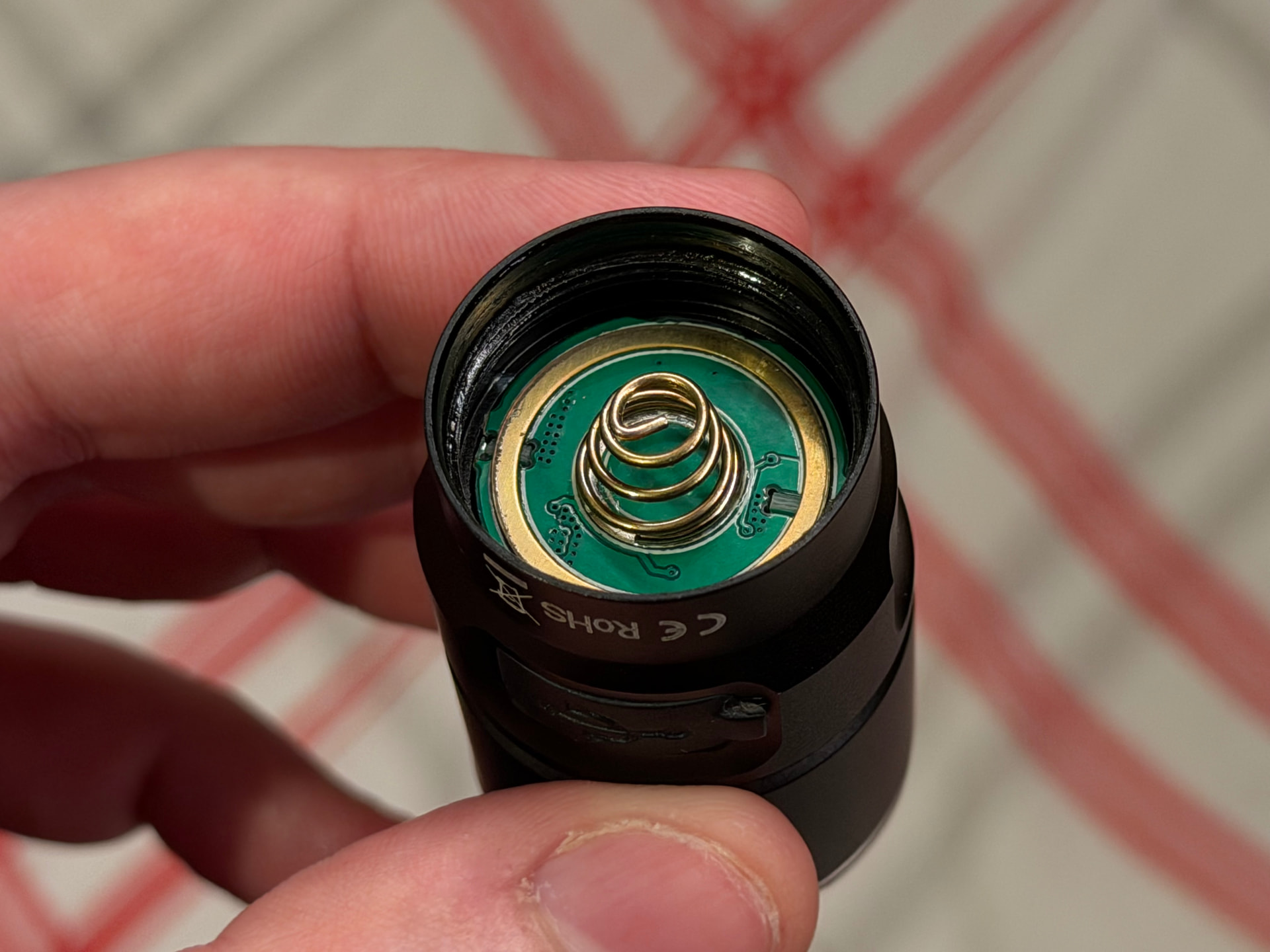
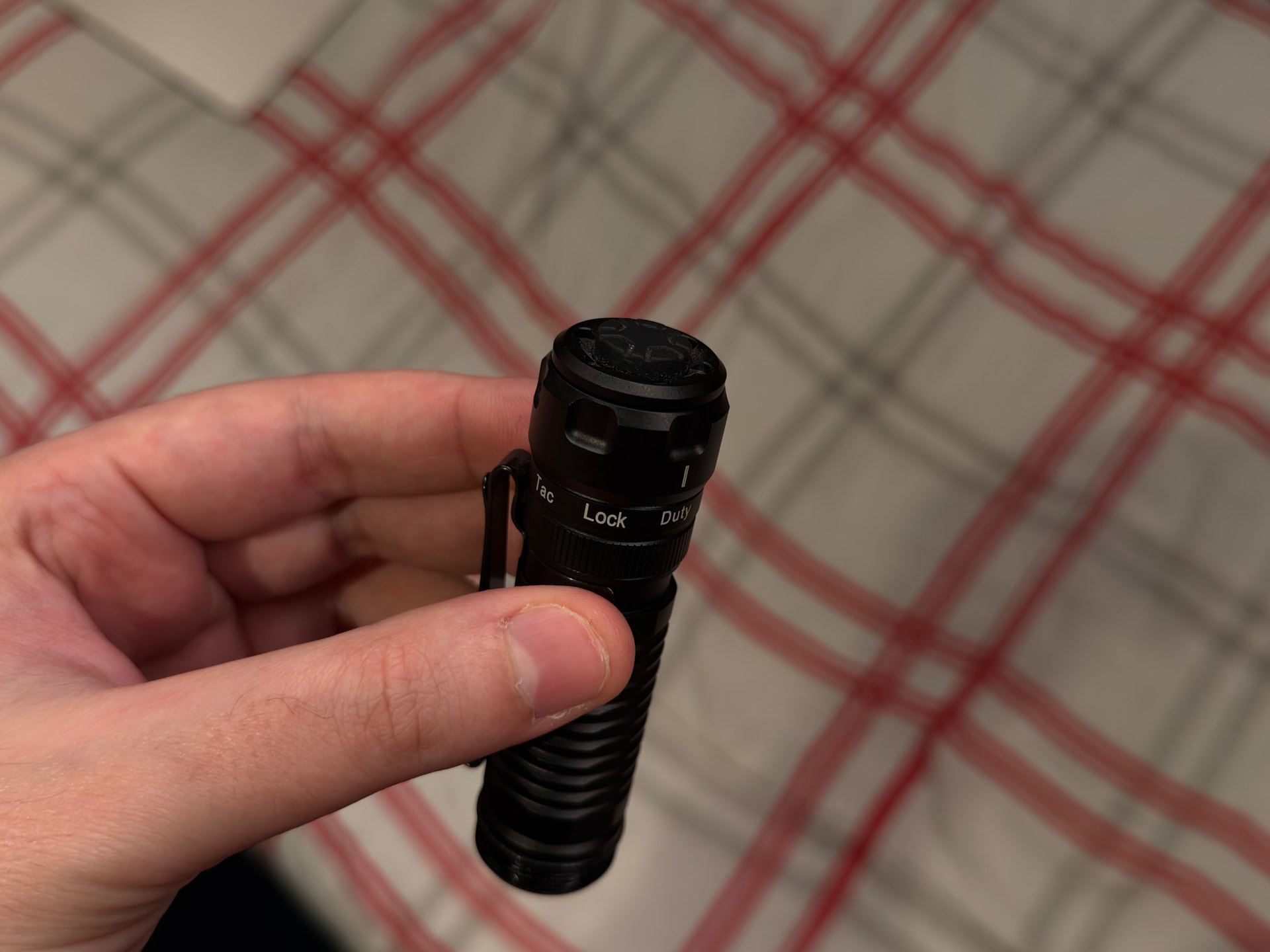
I did this on a Novatac with an FW Lume X1 driver so I could use an 18350, thanks to Dc38 who supplied the brass strips.
I think it would be nicer than the double tube design, especially since you could cut down on light diameter. Imagine the KR4 or similar with a slimmer body, would be much more pocket friendly. Even a 14500 light could approach Eagtac D3A size.
I think it could be done fairly easily. I’m still thinking it through. I just need to figure out KiCad and EasyEDA a little more. I’m imagining a redesigned tailswitch PCB with extra contact points to isolate the switch signal. I’ve been shopping on AliEx for different ribbon cables to see what is out there. Worst case scenario, a ribbon could be designed in KiCad/EasyEda and printed at JLC on flexpcb. I’ll probably just prototype the idea with scraps of ribbon though.
HDS runs a signal wire to the eSwitch, in a channel.. they rely on anodizing the inside of the body tube channel so the signal wire does not short to the body tube.
The KR1AA, TS10 and Lumintop FW series, also rely on anodizing, of the inner body tube, to prevent it from shorting to the outer body tube.
the HDS signal wire channel still adds thickness to the body tube… because the wire is recessed into the channel, to prevent it from rubbing against the battery.
Neither the Lumintop nor the Wurkkos use a spring washer to make contact with the inner body tube.. the addition of a spring washer to contact the inner body tube, is unique to Emisar.
I recall that’s how HDS lights work. They have a trench going up the length of the battery tube containing a rigid wire contact. I’m not sue it was any thinner than using 2 nested tubes though.
The driver doesn’t have to be in the head. I have a couple old budget lights that use an e-switch driver located in the tail. No extra contact path to the head at all. They seem to work fine. I assume this would require a driver specifically designed for this configuration.
Yeah, it could still end up fairly thick. But I think it has more potential for making it thin. Like, the battery could potentially be slightly off-center, so only the part with the signal wire would need to be thicker. Or the signal could use a really shallow channel with a ribbon.
True, but a tail driver makes front aux LEDs nearly impossible.
Yeah it should be off-center, but probably it cant be too thin, not for the ribbon part but for the spring loaded contact to be robust/reliable enough.
The other solution is piston design, where the cell is mechanically pushed from the tail “button” onto a switch on the driver. But i dont recall previous piston designs to be very reliable due to the cell lenght variation, some more engineering needed.
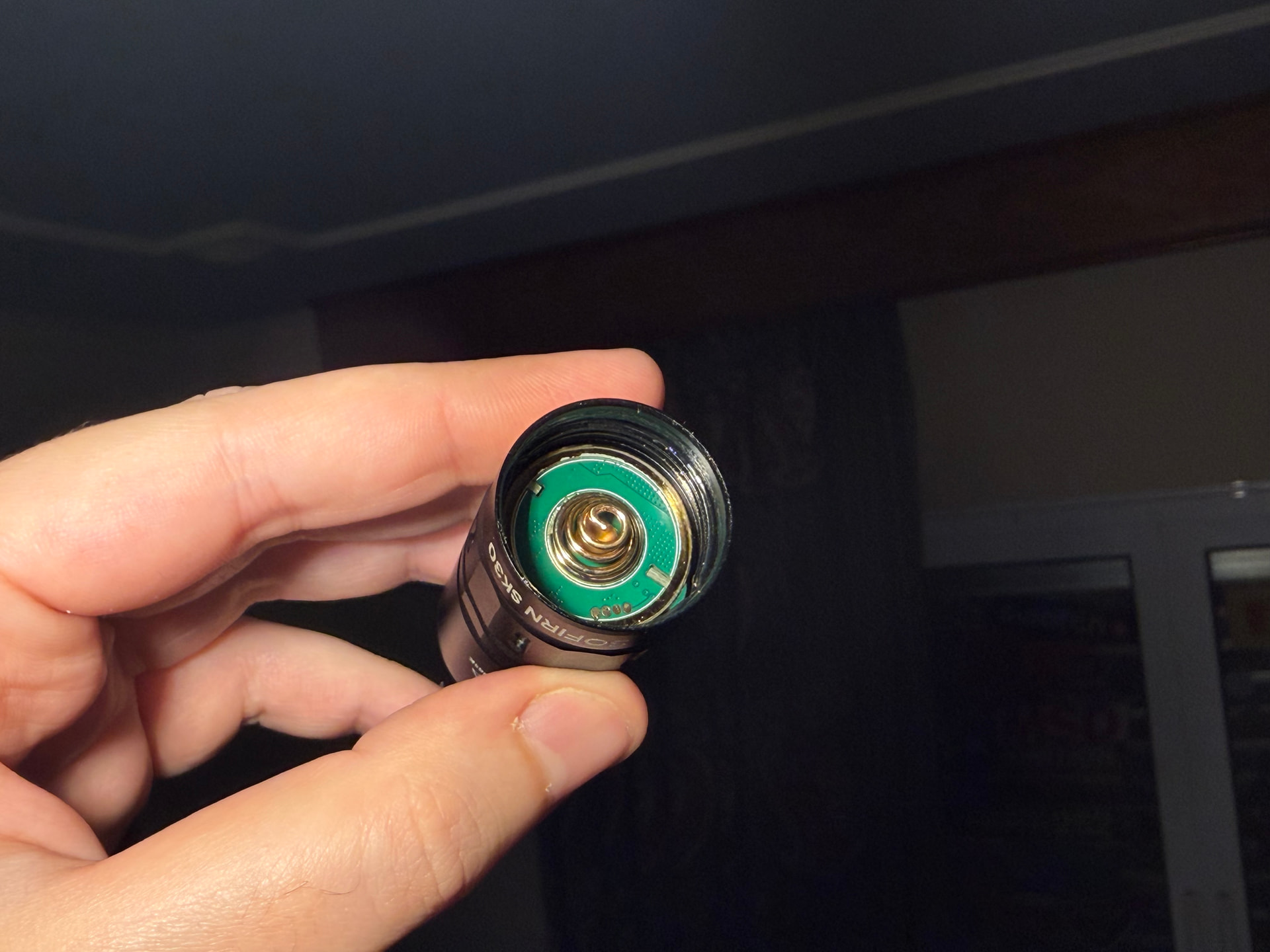
I have a Sofirn SK1 with a two stage electronic tail switch that does not have any inner tubing. Nor does any kind of special connection. Just like a mechanical switch. Any idea how that works?
my idea with the pd36r, if the “mechanichal” main switch is “off”, then how would the “e” mode switch be able to turn it on for momentary strobe? usually dual switches, the e is dead unless the mech is on. i heard somewhere that its not really mechanichal switch or something idk.
That’s also a good point. My Sofirn SK30 (Pd36r copy) also does not have an inner tube. Only one connection to the head. And it has two switches, one mechanical e one electronic. Sofirn is doing some witchcraft here.
I’d have to double check, but I believe the Wurkkos TD03 also does not have an inner tube design, however instead of just a tail e-switch, it has possibly two types of e-switch? There’s a momentary tail button, and then the 3-position rotary switch. Probably it has some type of driver inside just for the switches though.
I had SC33 and it had no anodization on threads. Tail spring was connected normally to flashlight body, but driver had no GND ring only switch ring. GND was directed via wire from flashlight body into the driver. There was 3 wires on led mcpcb, one of them was battery GND. Then the battery tube had electrically isolated tightly fitted tube, which did the switch signal duty.
Decided to try KR1AA. Hopefully it will be delivered next week to me.
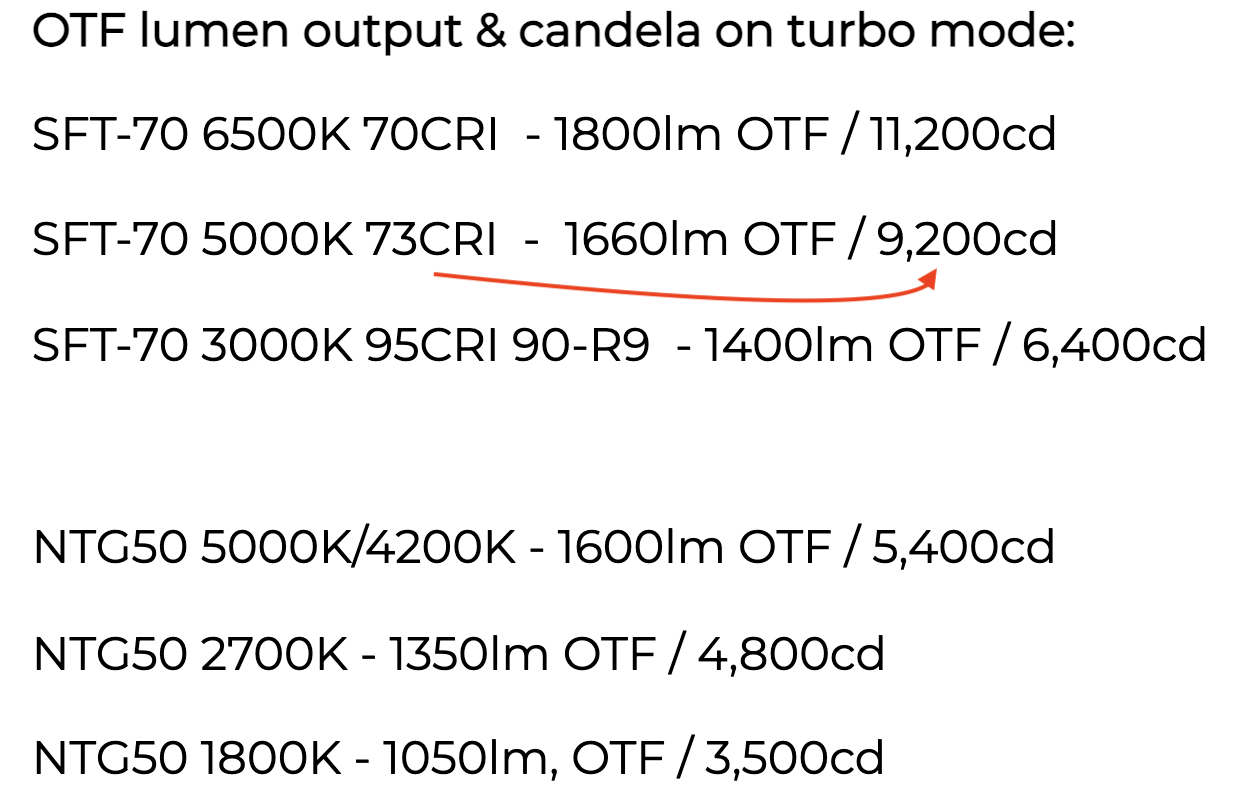
Selected build with SFT70 5000k which will be green fest but I do not see a point to have a light with same candela per lumen as D3AA.
For me edc sweat spot probably 5-30 range depending on how usefull spill. For example I prefer T6 nichia over M150 F35R since it has more usefull spill even if it has more candela so it still practical
Some ballpark numbers:
D3AA nichia 519a - 2.75 cd/lm
KR1AA SFT70 - 5.54 cd/lm
D3AA SFT25R - 10 cd/lm
Skillhunt M150 F35R - 16 cd/lm
Convoy T4 nichia 519a - 8 cd/lm
Convoy T6 nichia 519a - could not find a number probably in 25-35 cd/lm range
This may not be much help, but I have a 3000K SFT-70 KR1AA and it does reach out a bit more than my NTG50 4200K one.
I tend to prefer slightly throwier emitters in a small reflector light, since I can always get more flood by changing the optic on a triple or quad.
The 3000K SFT-70 seems to have a bit more reach than my NTG35 2700K in Eagtac D3A which has a smaller hotspot. It’s a kinda smooth orange peel reflector though. SST-20 in a Reylight Lanapple looks better to me than a domed Nichia, at least in beam profile.
I would say the 5000K SFT-70 should have a bit more punch than the 3000K, just like SFT-40.
yes..
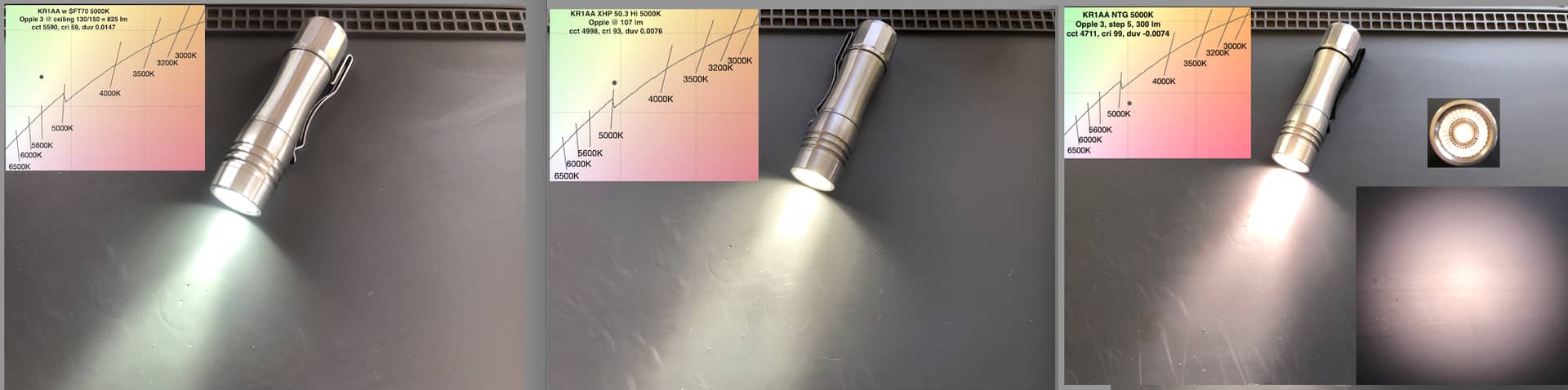
I recently realized that people that use their lights primarily outdoors and prioritize throw, dont really mind Low CRI and green tint.. it just makes foliage look more vibrant:
I otoh, really cant accept Low CRI, nor green tint.. my uses tend to be indoors and close range, and include targets with red pigments that are important to me: