I was playing around with my HD10 while sitting at the PC when it suddenly went to full brightness and got stuck there (from off or moonlight, can’t remember). I then unscrewed the tailcap, and when it came back on, it was aux lights only, and only did weird reactions to key presses but never turned the regular LEDs on.
I then reset it (tailcap off, hold button, tailcap back on) and that got it working normally again. The aux lights were doing wild patterns in lockout, but after switching it to advanced mode and setting it up as it was before it now works perfectly again. This was… Weird. Is that something that happens with Anduril every now and then, or a bug limited to this light?
Is it possible to get single color AUX with this light at all? All I can get is different patterns of flashing mulit-color AUX lights. All way to bright for something I would use.
Seeing this:
I have to think that there is a way. But I sure am not seeing it if there is .
Edit
7H. Keep holding and it will rotate through the 6 or so colors and the blinky options. Let it cycle through a few times release on the color you want.
7C changes it from low to high
7C changes it from high to blinking
7C changes it from blinking to off.
7C changes it from off to low.
TBH this pre-run release is disheartening in more ways than one. If we’re being honest, Wurkkos QC has been on a steady decline for a while. The original TS10 was with little exception a stellar product. Very few problems and very quick response/ resolution to individual issues, and I can attest to that. It seems as the model evolved and consumption grew, more and more buyers reported quality issues with the line. Personally, I gave up on it after the Ti version I received went haywire. Unfortunately, it was my favorite of all the releases. Prior to that, I wishfully advocated for the development of a TS10 equivalent headlamp after being smitten with the original product. It seemed like a natural progression, and would fill a void in the lack of lightweight, compact, high CRI headlamps available in the budget market. IMO, the original CSP emitters Wurkkos integrated into the TS10 were, and still are to me absolutely glorious in color rendering and output for that platform. Sadly, even those have degraded with each new release. The bins in my V2’s are increasingly above BBL and nowhere near as neutral as the V1 samples in my collection. There’s one of ten of my V1’s on my nightstand every night. They are nocturnal nirvana when it comes to needing illumination in the wee hours of the night. I envisioned the HD10 as a worthy alternative.
This may sound like an old man yelling at the clouds, and maybe it is, but I was sooooo looking forward to another Wurkkos “knock it out of the park” product in this HD10. I’m still open minded about the end product, but these reports thus far are not encouraging.
Edit
7H. Keep holding and it will rotate through the 6 or so colors and the blinky options. Let it cycle through a few times release on the color you want.
7C changes it from low to high
7C changes it from high to blinking
7C changes it from blinking to off.
7C changes it from off to low.
All of the above is to control the auxiliary lights when in standby or off.
All of the above also controls the auxiliary lights when you are in lockout. While in lockout proceed to clicking. So you can have the auxiliary lights do different things when off versus in lockout mode.
I discovered this today only, that is very cool. I have them on red/low in lockout, and battery status/low in normal mode. Super nice. The red does not bother me while sleeping, but is still bright enough to quickly spot the light. The battery status lighting is useful for battery charge at a quick glance.
So, I spent almost 2 hours in the basement, mapping the power draw in all aux colors/brightnesses and firefly and floor brightness from 2.8 to 4.2 V in 0.2V steps.
In doing so, the light crapped out multiple times. A anduril factory reset fixed the issues 100% for me every time.
I think narrowed it down to 2 things.
It does not like it if the main leds are on when the power turned off. The same happens for very short power removal (basically, bad contact when connecting battery, where it only loses contact for a moment).
I can semi-reproduce the issue by turning the light on, then turning the power supply off and after a bit back on. ~75% chance to “brick” the light. Factory reset always fixes it again though.
Could the other people who’s lights broke try a factory reset (remove battery, hold button, connect battery, keep holding button until it stops flashing)? I would like to know if the other errors reported are the same as mine, and therefore a software issue, or some other hardware issue. @wolfgirl42 you were one of the affected people, right?
Oh, one more thing: the light has a linear regulator, no Buck or Boost, sadly… Between 3V and 4.2V the battery current at a fixed main led level remains almost constant. This would not happen with a DC-DC driver, where at higher voltages I would measure lower currents.
Already tried factory reset both via 13H and power disconnect/button on reconnect, neither helps on mine - just resets the light without the main LEDs coming on at all.
I did a 13H factory reset yesterday. That fixed the voltage reading. And then I figured out using a chart that I assume applies how to disable the auxiliaries while in lockout.
The “disconnect hold button reconnect battery” is a factory reset method. Some report problems when the battery is low in performing that method with some lights.
Either way, having it plugged in and on while unscrewing either end or minor slips with your wires connected are going to cause some unknown amounts of clicks. So I kind of suspect that the who knows how many clicks were created while I was unscrewing one or both ends while the cord was plugged in caused my voltage and auxiliary problems. TK probably never anticipated that scenario. I would say don’t do it.
Yes I think so. At least my measurements suggest it. Constant battery current (regardless of battery voltage) in regulated modes, but in turbo higher battery voltage = higher current. That’s the behavior of a FET+linear regulator.
I had hoped for a DC-DC light… If it were possible to disassemble I would make an upgrade driver for it, but since it can’t be disassembled…
The issue was, I forgot to save since I was in a hurry and just closed the notebook. Apparently sleep in windows 11 is broken, so by the time I got back home and opened it, it was as if it were a fresh boot. Garbage OS.
My fault for trusting sleep to actually do it’s job and not randomly close all open programs, I guess.
Edit: repeated all measurements today. Did some Opple LM4 measurements with Simons new windows client (it’s so much nicer to use than the app) and took pictures. Now I only need to write it up and take some pics of beams and AUX once it gets dark, then I can publish.
You said it yourself. So why use it? Even if you need to run Windows-only software, it’s better to run Linux and then install a virtual machine with Windows in it. That way, you have a serious operating system taking care of the hardware (including sleep) so Windows doesn’t even know what’s happening (and much less can do any effing up) with the real hardware outside of its VM.
To say nothing of snapshots (Windows got bugged? simply roll back to the latest known-good snapshot), clones (bring up a brand new, known-good, separate Windows machine with a single click and a few seconds), security (Windows got a virus? it won’t be able to eff up any files nor anything in the real machine that you haven’t explicitly shared with the VM, and to disinfect, just roll back to the latest known-good snapshot, see above).
The list of awesome goes on, but I think you get the idea already… and the performance impact compared to running Windows directly is just about imperceptible if you have even minimally decent equipment.
I’ve been doing exactly that since 1999 (so, exactly a quarter century now) and it works just about perfectly.
If you aren’t familiar with Linux nor with any of its “ancestors” (Unix/*ixes) nor “cousins” (*BSDs) – as I’m pretty sure you aren’t, otherwise you wouldn’t be using that garbage OS to begin with – be assured the time investment to learn it is minimal and starts paying itself back almost immediately.
I tried. Have been dualbooting Arch/KDE with Win10 for years, and I either did all my work in Windows, or ended up rebooting every 20 minutes to switch around. Moving data in and out of a VM every 10 minutes ain’t fun either.
Everything I need exists in Windows, only about half of it for Linux. My old notebook still runs on Arch, so does my server, but my daily driver is Win11 only by now.


 - just resets the light without the main LEDs coming on at all.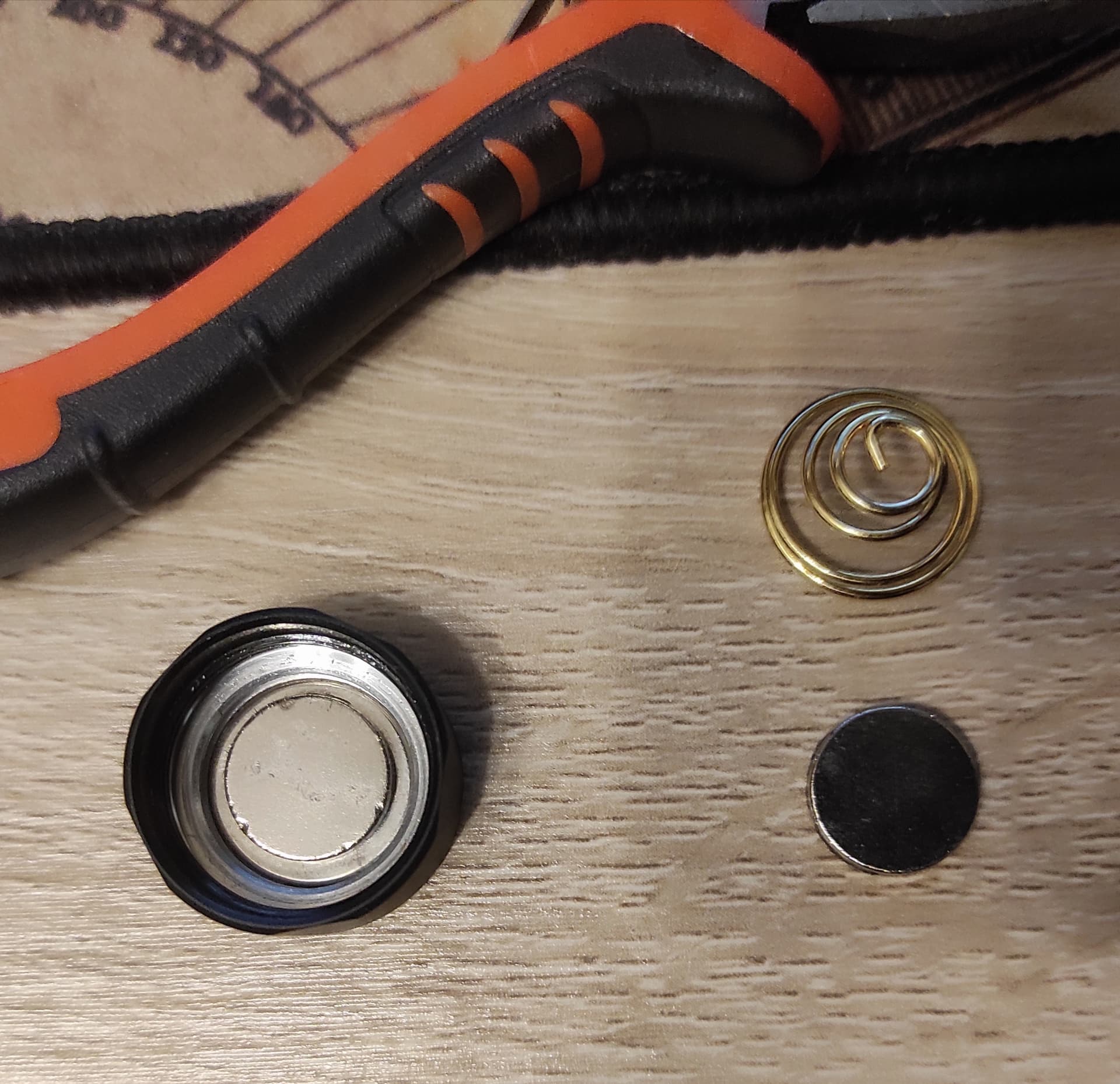
 and the performance impact compared to running Windows directly is just about imperceptible if you have even minimally decent equipment.